Tag: Soft Power

  • How Shanghai Saved the Jews

    I spent National day in Shanghai with my family, our first leisure trip back since we lived there in 2007. Like Beijing, Shanghai has caught a serious case of fabulous in the past five years. The French Concession, already precious when I lived there, now has more coffee houses, boutique bakeries and fashionable bars per hectare than San Francisco’s Mission District, which is no mean feat given SOMA’s hipster factor.

    Case in point: the street behind the apartment I lived in while I was in Shanghai used to be a wet market where you could have your Sunday chickens slaughtered and plucked while-u-wait (very convenient). It’s now a strip of coffee houses, boutique bakeries and fashionable bars. The apartment block itself is as dingy and miserable as ever, but I’m sure rents have gone up.

    I have no philosophical objection to this transformation. Wet markets and Shanghai summers go together exactly like you’d expect a bunch of unrefrigerated animal carcasses, dismembered frogs and fish innards to go with 35C temperatures and relentless humidity. And I have a taste for coffee and fine baked goods. Anyway, such is progress.

    My mom, who had never been to Shanghai, was in tow, so we made a round of The Sites, braving the staggering holiday crowds at the Bund, Luzjiazui, and so on. But one place where the crowds were not staggering was the Shanghai Jewish Refugees Museum, in stubbornly un-fabulous Hongkou district. Jews, it turns out, have an extensive history in Shanghai, originating from the Iraqi Jews who established trading houses there in the 19th century. Although I’m not observant, I am mostly Ukrainian Jew by ethnicity — Moss comes from my great grandfather, Abraham Mosiusnik, who emigrated at the turn of the 20th century — so it seemed something worth exploring.

    Before and during World War II tens of thousands of Jews fled Europe and arrived in Shanghai. Stateless, and disconnected from the established Jewish communities, they were settled in a ghetto in Hongkou, north of Suzhou Creek. Constructed in 1927, the elegant, brick Ohel Moishe synagogue served the Russian Jewish refugee community in the ghetto. About ten years ago it was converted to a museum with the support of the Shanghai city government.

    I don’t generally hold Chinese museums in high regard (though there are some exceptions, such as the Shaanxi Provincial Museum in Xi’an). Many Chinese museums have spectacular artifacts, whether lacquerware or locomotives, but, regardless of language, they are often bad at explanation and storytelling and beholden to the imperatives of The Official Narrative. This is a minor tragedy. The Forbidden City should be one of the great museums of the planet. It’s not. It’s a glorious structure holding a bunch of disconnected and poorly explained stuff. And, no, it’s not because Chiang Kai Shek took a lot of the good stuff to Taiwan (although he did).

    Following a Chinese volunteer docent on a tour, it didn’t take long to see that the Shanghai Jewish Refugees Museum suffers from a variety of the Chinese museum syndrome. Among other things, the tour led off with a comprehensive review of the awards and honors that have been bestowed upon the museum by Jewish groups and diplomats, and a recounting of the Chinese notables who have graced the premises. Always a worrying sign.

    The museum does, however, have a very clear and effectively transmitted narrative. It is this: the east-European Jewish refugees were saved by the charity and benevolence of China, welcomed in Shanghai when the so-called leaders of the free world, the United States and the United Kingdom, turned them away. This point is drummed home by multiple exhibits, including a brief but eye-catching movie presented on multiple overlapping translucent screens.

    The story is accurate, insofar as it goes, but as with many Chinese museums the Shanghai Jewish Refugees Museum is interesting less for what it includes than for what it elides. For example, it is true that Shanghai accepted the Jewish refugees at a time when the US and UK shamefully didn’t. But that was because Shanghai didn’t require an entry visa, so anyone could (and did) land there. Left unmentioned is that the open borders were the result of Shanghai’s status as foreign treaty port under the infamous Treaty of Nanking (the same one that ceded Hong Kong to the British after the First Opium War – and we know how the Chinese felt about that).

    Also absent is a full explanation of the reason why the Hongkou Jewish ghetto wasn’t liquidated late in the war, as the Germans were demanding. The decision to spare the Jews was made by the Japanese, who actually administered the city during the war. As the story goes, the Japanese were persuaded by the Shanghai rabbi Shimon Sholom Kalish. When asked by the Japanese government why the Germans hated Jews, the rabbi replied it was because, “we are orientals.” Or words to that effect; exactly what he said is a matter of dispute. But Chinese museums aren’t in the business of giving credit to the Japanese. It’s not their thing.

    Finally, due recognition is given to Ho Fengshan, the Chinese diplomat in Vienna who defied the orders of his superiors and distributed possibly thousands of exit visas to European Jews, allowing them to depart Europe for Shanghai. Nowhere, as far as I recall, is it mentioned that he was a Nationalist diplomat (or that he retired to the United States). This strikes me as a missed opportunity, given that defying the orders of your Nationalist superiors in support of something the Communists claim as a triumph would seem worth mentioning. (It’s also possible I misremember that display, as I didn’t take notes when I was there.)

    Whether or not the museum is worth a visit depends upon what you’re looking for. The ghetto is still there, in a row of tenements with graceful, Georgian facades, but it’s an unreclaimed Chinese ghetto now. The building housing the Ohel Moishe synagogue is beautiful, and some of the exhibits are interesting despite the layer of Chinese-style political correctness. The third floor is a sort of mini-Holocaust museum, which doesn’t add much to the story of the Jewish refugees in Shanghai, but does illustrate the perfidy of Europeans toward each other and explains why the refugees fled. The history of the Jews in Shanghai is genuinely interesting, and I was inspired by the museum to learn more about it, which is a good thing.

    Ultimately the Shanghai Jewish Refugees Museum may teach you less about the Jewish ghetto in wartime Shanghai than about how the Shanghai government wants to use that part of history in service of its own agenda. Still, if you’re willing to read between the lines, that’s pretty interesting in itself.

    Note: This post originally published on the defunct group blog Rectified.name.

    In the ghetto.
    In the ghetto.
  • I’ll Be the Judge of the Air Quality in These Parts

    When I was young, lithe* and had elastic knees I studied the Japanese martial art Aikido. Aikido is interesting for a couple of reasons. First, despite what you saw in all those Steven Segal movies, it is very much bound with a philosophy of acting in defense only. Second, in keeping with that philosophy, much of Aikido is designed around using an attacker’s energy against him. The harder you swing, the more you give an Aikido master to work with.

    The Vice-Minister of Environmental Protection swung hard two days ago when he called out the US Embassy for monitoring air quality and publishing the results through its well-known @BeijingAir Twitter feed. The Vice-Minister said:

    “Some foreign embassies and consulates in China are monitoring air quality and publishing the results themselves. It is not in accordance with the Vienna Convention on Diplomatic Relations and the Vienna Convention on Consular Relations, as well as environmental protection regulations of China.”

    For “some foreign embassies” you may read, “The Embassy of the United States of America,” which launched its Twitter feed back in 2008, that marvellous Olympic year when everything seemed possible.

    The Chinese government first complained about @BeijingAir in 2009, so this isn’t a new issue. The latest demand seemed like a classic soft-power own-goal: a prickly and legalistic attack on a service many people, foreigners and locals alike, rely upon. Journalist James Fallows, who has written at length on China’s soft power challenges, summed it up: “The country is better than this.” But leave it to the US State Department, which runs the embassy, to take the Ministry’s mighty swing and apply a little soft-power Aikido:

    [State Department spokesman Mark Toner] denied on Tuesday that publishing US air quality readings was in violation of the Vienna Convention as far as he was aware. He also said that Washington would have no problem if Chinese embassies wanted to start monitoring air quality in the US capital and sending out their own reports.

    That’s a nice bit of work, not only rejecting the legal argument but also reinforcing the relative openness of American society by extending a reciprocal invitation to the Chinese. Naturally, the Chinese wasted no time in declining the invitation and reiterating their argument:

    The Chinese government has no interest in monitoring and releasing air-quality readings for US cities, Foreign Ministry spokesman Liu Weimin said at the ministry’s regular news conference on Wednesday.

    “Foreign embassies and consulates are not legally qualified to conduct environmental monitoring and release this sort of data in China, nor do they have the professional capacity and conditions to do so,” Liu said. “

    There is a less charitable reading of the US comments, which could be interpreted as rubbing in the faces of the Chinese that the US is fully developed and has awesome air. (I have no idea what the air in DC is like, but it’s undoubtedly better than here.) But given the expressed interests of the Chinese people in better air and better information, Mr. Toner’s invitation seems ultimately an effective and graceful way to redirect the energy of the Ministry’s attack.

    What’s the Ministry’s main beef here? Is it legalistic? The Ministry claims that US monitoring is illegal under the convention that governs the establishment of diplomatic missions. Is it the publication of the data? Is it the application of international standards to the categorization of the data? Is it all of the above? Despite my admiration for the State Department response, the Chinese government does have some legitimate complaints. The US Embassy has only one monitor for an immense city. The Chinese have improved and expanded their own monitoring, including publishing hourly readings of PM2.5 information (see the second tab). And it is unfair to expect China to achieve today the same level of quality that the US had to implement the Clean Air Act to achieve. That was a 27year process.

    But air pollution in Beijing isn’t just bad, it’s Ben Hur chariot race epic. And it isn’t just pampered foreigners that care about the air, as a burst of Chinese outrage demonstrated last year. Despite a certain amount of desensitization, the air pollution issue in Beijing encroaches on two of the most sensitive areas of public communication: public health and your kids. For a public health risk communication program, trust and interpretation are critical. And they’re both at the heart of the reaction to @BeijingAir.

    Trust is in short supply these days, as we’ve seen from the rumor campaigns, and anything that calls into question the level of trust invested in official government information is likely to be considered sensitive. I’d guess that the biggest thorn in the Ministry of Environmental Protection’s side is not just that the US government is tweeting its own air quality readings, but that its readings appear to be more trusted than MEP’s own. There have been several instances of divergence between the Chinese and US readings, and this is a country where data have a history of being suborned to politics, even in air quality. Every time the US results are conspicuously worse than the Chinese results, it’s a slap in the face.

    Interpretation is what enables you to act on data. AQI numbers and “micrograms per cubic meter” are pretty abstract without some kind of framework for interpretation. The Chinese framework (bottom of the first tab) is conspicuously more liberal than the US one. The Chinese “acceptable” limit for micrograms per cubic meter of PM2.5 is up in territory that the US considers “unhealthy.” The Chinese AQI band for “moderately polluted” covers territory that any normal person considers awful. As for the bad days, the less said the better.

    People will drive without seatbelts, drink themselves into the gutter and smoke a carton of Zhongnanhai Lights a day, and still get bent about the air quality. But air quality is an imposed risk, and people always react more forcefully to imposed risks than risks of choice. Especially when those risks are imposed on their children and aged parents. (At least air pollution isn’t exotic. You want to have a major crisis? Have an imposed exotic risk like a nuclear power plant disaster or pandemic.) In such situations, a conservative framework seems much more appropriate, but it is politically more dangerous because you spend more time with the needle in the outrage-generating red zone. It’s telling that although the Chinese government now reports hourly PM2.5 data there is no framework for interpreting it on the page. All you get is raw milligrams-per-cubic meter and an unexplained “limit” of .075 mg/m3 in the fine print at the bottom. Pretty binary. Meanwhile, @BeijingAir merrily tells you how you should feel about the air from hour to hour, using unfortunate words like “hazardous” when things get thick. And let us not forget the infamous and murky “crazy bad” episode.

    Given that @BeijingAir is apparently both more trusted and painting a darker picture of the situation in Beijing, it seems likely that it will continue being a sore spot with the Chinese government. Maybe this is the real reason Twitter was blocked, although the rise of dozens of Chinese smartphone applications that relay proxied versions of the Twitter feed has rendered the block moot as far as @BeijingAir goes.

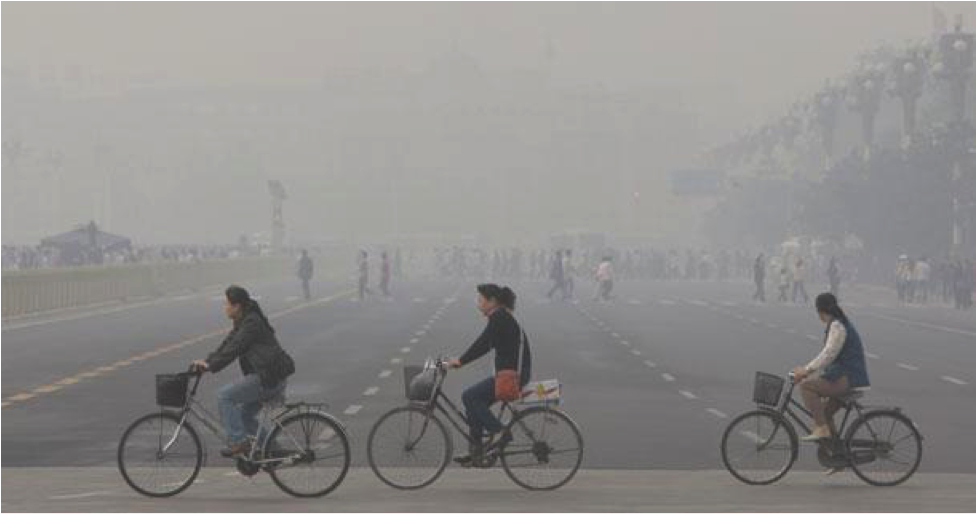
    As for me, if I could pick one thing to change in Beijing, I’d fix the air quality. Beijing on a clear day is a genuinely nice city. The colors pop, the parks look beautiful and you can see a huge stretch of the mountains from my office. Also, I long ago gave up the martial arts for running, which I find similarly meditative and a lot less bruising. When I get up at 6AM the first thing I do is check the Chinese Android appthat relays the latest @BeijingAir information to my phone in a very easy-to-interpret graphical format (it has a handy homescreen widget, too!). The information has to be hourly, and it has to be accurate. I have very strict rules: If AQI is below 100, I run. If it’s between 100 and 150 it depends on how long my planned run is and how long since my last run (the less running I have been able to do and the shorter my planned run, the more liberal I am). If it’s above 150, I go to the gym and lift weights instead.

    I go to the gym a lot more than I used to, and I run a lot less. This sucks for my running and peace of mind, but on the bright side, check out the shoulders on me.

    Another moderate day!
    Another moderate day!

    *OK, I was never really “lithe.”

    Note: Originally published on the defunct group blog Rectified.name.

  • The almighty soft-power princess bomb

    Chinese soft-power is doomed.

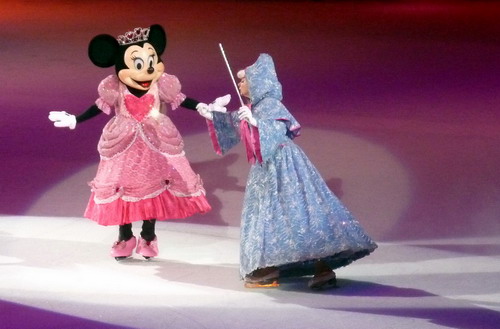
    I came to this conclusion a couple of weeks ago. The message was delivered in the form of a guy in a mouse suit on ice skates, and I received it loud and clear when Mrs. Imagethief and I took our son to see the Disney on Ice show at the Workers Gymnasium.

    Having a child recalibrates your pop culture consumption habits. Before Zach was born I was all about Led Zeppelin and Michael Bay movies. Even better: Led Zeppelin in Michael Bay movies. Mrs. Imagethief, despite what she may say to you, was pretty much the same, which is why we got married. I have few pop culture pretensions. I have some jazz and such, which I wheel out for brunches because no one other than me wants to listen to “When the Levee Breaks” over mimosas and pancakes. But mostly I was about the loudness and explosions.

    I still have my adolescent pleasures, but they’ve been crowded into the margins of my life by The Wiggles, Bob the Builder and Lightning McQueen. Mostly I’m OK with that. The Wiggles haven’t penetrated my workout mix yet, but I don’t have to leave the room when they’re on.

    But going to a Disney on Ice show seemed like sailing across some kind of event horizon and beginning an unrecoverable, light-speed plummet into the black hole of pop culture, at the singularity of which one might find such atomized debris as Cop Rock, Kevin Federline and the XFL.

    I have no objection to Disney per se. Back in my (nerd alert) laserdisc days I had a respectable assortment of neo-classic animated Disney films. Hakuna matata, dude. And I still go for Pixar stuff, although I suffer from the overexposure to Cars that afflicts every parent of a small boy. As they say, there are no toxins, only toxic doses, and I exceeded a toxic dose of Mater the tow truck quite some time ago. I’m just waiting for my gums to start bleeding.

    No, what I resisted on some visceral level, as I might resist a box of candy-frosted frog eyeballs, was the idea of Disney on Ice. With the exception of hockey, which, like Michael Bay movies, is redeemed by violence and thuggery, it’s hard to think of any performance that is improved by putting it on ice. Conceivably NASCAR and political debates (especially if the candidates get hockey gear), but after that, what? Hamlet? Radiohead? Even Olympic figure skating is really just the speck of sanitized-for-mass-consumption flotsam at the top of the vast, reality-show swamp that is everything else having to do with professional figure skating. It’s the back room stuff they should be broadcasting. Remember Tonya Harding?

    Despite the evidence supplied by my Michael Bay habit, I am sure some readers have concluded that I am some kind of rarefied cultural élite hopelessly distanced from the entertainments of normal people. After all, I spell “élite” with an “é.” But that’s cool. It’s my over-educated, west-coast leftnik pedigree, and I’ve come to terms with it and the conflicts that it has engendered. If I want to scoff at Disney on Ice over the chardonnay and New Yorker that I use to kill the time between pyrotechnic robot movies, I damned well will.

    Nevertheless, I went to Disney on Ice because when you have kids what you and your chardonnay want goes straight into the bin and what your kids want pretty much becomes the yardstick by which all recreation is evaluated. Hence my chronic Matertoxosis. So off we went.

    Actually, it was pretty good fun.

    No, really. As a parent you gain a certain appreciation for anything that can hold a three-year-old’s attention for ninety minutes. But despite the many layers of corporatism wrapped around it, it’s hard not enjoy a multi-villain extravaganza featuring Cruella DeVille, Jafar, Maleficent and about four other fiends in colorful hats.  I also added Disney on Ice to my expanding list of oddball things that now make me get all teary.

    But what really struck me was how successful the show was. They’d sold out the Worker’s Gymnasium and the seats were packed to the brim with Chinese kids, apparently all of whom had successfully argued their parents into springing for the light-up wands and inedible cosmo-sausage they were hawking at the mezzanine. Scalpers were doing a good trade on the way in. Whatever else is going on in Beijing, people will pony up for Disney on Ice.

    The only content that referenced China was two minutes of Mulan, who ranks in the Disney pantheon about where Jar Jar Binks ranks in the Star Wars pantheon, if not below. The show was, however translated into Chinese. It’s a bit surreal watching Caucasian skaters in eye-popping stage makeup nonsense-lip-synching to Chinese Disney character voiceovers.

    As an American it’s even weirder listening to Mickey Mouse himself in Chinese, not least because they nailed the voice. It was spooky. But also, much more than the Chinese audience, I think we Americans have internalized Mickey Mouse as an American symbol. I confess a bit of surprise that Mickey hasn’t replaced the eagle on the great seal of the United States of America. I have clear memories of a T-shirt from 1979 that said, “Hey, Iran!” and featured a cheery Mickey flipping the bird. I’m pretty sure it wasn’t an authorized product, but you never know. Could have been clever licensing. Give that mouse a shield, an olive branch and thirteen arrows and stand the hell back.

    But the fact was that Chinese families in droves were handing over 180RMB a head before snacks, beverages and sparkly wands to be exposed to possibly the basest layer of American pop culture. Meanwhile, China is exporting Confucius institutes, ponderous Zhang Yimou films, and a billboard in Times Square that nobody seems to understand. It’s an asymmetrical battle, and probably only going to get more so now that SARFT may be taking steps (zh) to ensure that entertainment television is rendered as unprofitable as possible for broadcasters in China. Am I missing anything?

    When Americans are paying $30 a pop to watch Xi Yangyang on ice, then I’ll know China is really getting somewhere. Until then, hakuna matata, dude.

    Fairy godmother, can you make Chinese TV better?
    Fairy godmother, can you make Chinese TV better?
  • Unsolicited advice for Xinhua’s new CNC TV news outfit

    To listen to people moan about the fact that China has sixty “Confucius Centers” in the US to America’s zilch-nada in China you’d think the Chinese were wrapping up hearts and minds around the planet while America gets relegated to the public diplomacy junk-heap alongside the usual despotic malcontents. While I’ll concede that China has an advantage in being able to roll out cultural centers in the US while smothering our own poorly funded efforts in red tape, I’m inclined to see that imbalance as the result of the tolerance and openness that have been part of America’s strength for the last 234 years. Give or take.

    Readers in America: When was the last time any of you went to a Confucius Center? I thought so. How about watched a Chinese television program or a Chinese movie that wasn’t directed by Zhang Yimou or Chen Kaige? See any Chinese brands last time you walked down the street? Ever had an American tell you they think Hu Jintao is super cool? Driven a Chinese car lately? Right. Whereas here, people feast on American pop culture (especially TV and movies), the street corners are a plague of American fast food labels and Buick is an aspirational brand. Leaving aside your opinions as to the value of McDonalds and Starbucks as ambassadors of American values, let’s not get all hysterical about the Confucius Centers or wallow in insecurity about America’s cultural influence until poor American refugees start seeking a better life in Fujian.

    In fact, China’s government is well aware of its soft-power deficit with regard to the US (see also this article on Danwei), and has been investing in building up its capabilities. International news is one of the key areas of investment, thus the revamping and expansion of China’s foreign-language media organizations. This has included a refresh of the venerable China Daily, the launch of the surprisingly interesting English edition of theGlobal Times, the revamping of CCTV’s English language station, and more. Most recently, the Wall Street Journal has an interesting story about Xinhua’s plans to roll out an international television news service:

    China’s state news agency announced the launch of a global English-language television channel, part of a broader international push by the country’s government media aimed at countering the dominance of Western news outlets and conveying a Chinese perspective on events.

    Xinhua news agency said trial broadcasts of the new 24-hour TV service, called China Network Corp., or CNC, will start Saturday, and the station will be fully operational July 1. CNC will be available by satellite, cable systems, the Internet and cellphones, Xinhua said, and will carry a range of programming on news, business and lifestyle issues.

    “CNC will offer an alternative source of information for a global audience and aims to promote peace and development by interpreting the world in a global perspective,” Xinhua quoted its president, Li Congjun, as saying at a launch ceremony Friday.

    Well, maybe.

    I fully understand and even support the motivation behind this. China is a globally important country and has a right to be represented in international media. And as American news media continues its slow-motion implosion, you’d think this would be a good time for them to make their move. Nevertheless, I have a history of rolling my eyes at Chinese efforts to improve their international media efforts. This is not because I am some kind of cynical bastard (although that might also be true) or because I doubt China’s technical competence (I do not). It is because I feel that the natural control-freak inclinations of the Chinese government toward media essentially preclude any ability to develop a news organization with real, international credibility.

    The objective–the real objective–is important. If the goal is simply to further disseminate the usual propaganda, then fine, they can do whatever they want. They’ll all feel good about themselves. But no one will watch.

    If, on the other hand, the goal is to develop an international media organization that can compete with what’s already offered in English and offer a legitimately different but respectable perspective, then they’ll need to break their traditional mold a bit. Al Jazeera is perhaps the model here. It emerged from a country and region not known for a liberal approach to media and established itself as a serious and credible news organization largely on the back of its Iraq and Afghan war coverage. It did so while still presenting a point of view that was a clear alternative to most western media. They were helped along by some good journalism and slick packaging.

    I don’t want to overwork the comparison. For one thing, Al Jazeera has had its problems (including serious personnel issues at their English service a couple of years ago). China certainly has the resources to try something similar to Al Jazeera, but it has some very different political and institutional factors to wrestle with than Qatar did. Also, the world isn’t necessarily screaming for an Asian alternative. Remember, Singapore has already tried the international TV news stunt with Channel News Asia, and it has had only modest international success at best. Even Al Jazeera kind of limped along for several years until it found its purpose and voice after 9/11 and the Afghanistan and Iraq wars. One hesitates to imagine a Chinese news organization blossoming in the heat of such a controversial international incident.

    So with all that in mind, here are a few things I think China should do if it is really serious about launching a successful international television news network.

    Base it in Hong Kong
    Let’s face it, as wonderful as Beijing is, nobody is going to take a Beijing-headquartered international news organization seriously. By my thorough calculations, credibility will increase by the square of the distance from Zhongnanhai. This will be especially true if your parent organization is formally a branch of the Central Publicity Department, as Xinhua is. Technically that probably makes Lima or Buenos Aires the best option, but since those might be impractical, how about Hong Kong? Hong Kong is an established media hub with a veneer of press freedom that will be important in helping a new network to establish itself. It’s visa situation will be easier for pundits and professionals, especially the foreigners (see the next point). And, hey, it’s still China, right? Beijing has no trouble calling the shots in Legco, so it could probably manage a Hong Kong-based media organization without too much headache.

    Hire pros to do it
    Al Jazeera raided the BBC Arabic service when it started, and then raided the BBC again when it started its English service. China should do something similar. There are a lot of good, unemployed journalists around these days, including TV journalists. Avoid the second-stringers and discount talent and hire some heavy hitters for the editing and mainstream talent. Go for some recognizable brand-names. This will be hard because most such people won’t want to work in a Chinese news organization. Basing it in Hong Kong will help, but people will have to believe it will be doing serious journalism.

    Also, make sure the production values are competitive with the best out there. No college broadcasting, please.

    Cover China for real
    This is another area where the Al Jazeera comparison breaks down. Al Jazeera was able to concede limits to its ability to cover its patron’s country, Qatar. Fortunately for them, nobody outside Qatar much cares what happens there, and there are plenty of sexier, more powerful and weirder places in the Gulf, let alone the broader middle East.

    This won’t work for China, however. China is pretty much story number one out of Asia these days. How a Chinese international news network covers China will be a key part of how it is evaluated by audiences. The real test will come when, inevitably, such an organization has to cover a serious disaster or bout of civil unrest in China. What plays domestically will not play internationally, especially when people are comparing the coverage to other international media organizations. With all due respect to the Chinese people, who have been poorly served by foreign media on more than one occasion, most people outside of China–even non-Westerners–don’t spend their time grumbling about how crappy and one-sided coverage of China is. So don’t waste too much energy tilting at that particular windmill.

    I’m not sure how China could manage this. It might have to credential its own news organization’s China journalists as foreign media. Now wouldn’t that be something.

    Less scolding, more seduction
    We understand that this operation is there to present China’s point of view, but a little bit of nuance is called for. Sometimes, the organization is going to have to cover the Dalai Lama, or Rebiyah Kadeer, Taiwan’s DPP, or other people the Chinese government finds distasteful. The moment the announcers start slipping into hostile language about black elements, jackals (jackals always get a bad rap), splittist criminals, etc. it’s all over. By all means, be more sympathetic to the Chinese government point of view, but do without with the theatrical, throwback language that alienates foreigners and reminds people that the propaganda mission always comes first. Find articulate, polished spokespeople to present the Chinese government point of view and let them, rather than the journalists or newsreaders, present the government’s points.

    Don’t forget the rest of the world
    It shouldn’t be all China, all the time. Global news organizations report on, yes, the globe. If the big news of the day is from somewhere outside of China, let’s make sure we don’t lead with what the Standing Committee did today, in protocol order, and doesn’t Uncle Wen look nice with the bouquet those schoolgirls gave him. That means opening a lot of bureaus and sending hardcore journalists to interesting places. With many western media organizations in retreat, there are plenty of parts of the globe that could and should be covered better, and where China might get better access than Western media organizations. Africa and Central Asia come to mind. China has the resources and can do this if it wants to.

    Or it could all be a fantasy. I’d be interested to see China come up with something polished, interesting and watchable. There have certainly been signs of life from corners of the Chinese English-language media in the last few years. But given the history, especially in the heavily state-managed regime of television, it’s hard to be optimistic.

  • Pardon me, but who gives a damn about Gong Li anyway?

    Imagethief was not in the least surprised to hear that Chinese netizens were outraged that movie actress Gong Li has taken Singapore citizenship. But then, Imagethief is not in the least surprised by anything that outrages Chinese netizens. Chinese netizens were outraged when Gong Li played a Japanese woman in “Memoirs of Geisha”, alongside fellow crypto-Chinese actress Zhang Ziyi. (In fact, all the leading roles in Memoirs of a Geisha were played by ethnic Chinese women, so if anyone should be outraged it’s the Japanese.) Chinese netizens often seem outraged by things that appear trivial to the rest of the world, such as the appearance of circles in provocative locations, kind-hearted attempts at mediation, and being French. Chinese netizens, in fact, often seem outraged by anything that transgresses against a hard-boiled nationalist line.

    Which suggests that we are actually talking about a certain segment of Chinese netizens, rather than Chinese netizens as a whole or Chinese people in general. Unfortunately this distinction didn’t survive Jane Macartney’s recent Times story on Ms. Gong. To be fair, Ms. Macartney’s story is clearly focused on nationalist online sentiment. Here’s the lede:

    A decision by one of China’s most famous film stars to take Singaporean nationality has set off an online furore with many ardent nationalists branding her a traitor and a shame to her native country.

    Following from there, rest of the story is actually reasonable and balanced. Unfortunately the headline, which is what most readers will see and which was probably written by a sub-editor in London, is general in a way designed to reinforce foreign perceptions of the Chinese as a bunch of xenophobic goons in Mao suits. Reasonable work by good China journalists often runs into problems like this, which may be why several of my foreign correspondent friends (you’ll understand if I don’t name names) think the editors at their organizations’ foreign desks are tools.

    Unfortunately the Internet-comment-as-vox-pop is a common technique in China reporting, and the colorful comments that often drive the stories usually can be traced back to that same rich vein of nationalism that surges through the Chinese Internet. While Imagethief, who has seen first-hand the PR damage that can be done when a stick is poked into the nationalist ant-nest, would never dismiss the importance of nationalism in China, there are some problems with this approach.

    First, as anyone who has spent any time on the Internet knows, you can find any opinion you want on it, no matter how outlandish. Second, it’s very easy to select from a skewed sample on the Internet (which in China represents an already skewed sample). It’s fine to discuss the opinions of a narrow sample as long as that’s how you represent it. But when it’s presented in a way that invites the drawing of broader conclusions, you step into dangerous territory. If the rest of the world based their opinion of America on the comments in American political blogs, they’d sterilize the country with neutron bombs. Some of them probably want to do it that anyway, but the point stands.

    This is particularly fraught in China, where Internet users are still only 19% of the population, and are demographically concentrated among male, urban youth (more here). So using Internet comments as a proxy for overall Chinese sentiment without some serious qualification, or even statistics, is dangerous.

    All of which is scholarly good fun, but ignores the biggest point: Who besides undersexed dorm-crawlers gives a damn what Gong Li does? Imagethief is willing to bet that if you stopped Chinese people at random on the street in Beijing and asked them how they felt about Gong Li taking Singaporean citizenship, the most often expressed sentiments would be, “Huh?”, “How can I do that?” and “Who are you and why are you talking to me?” Not necessarily in that order.

    I suspect most of this anger comes because some of these same netizens voted Gong Li “China’s Most Beautiful Person” in 2005. That’s gotta hurt. You say, “You’re China’s most beautiful!” She says, “Yeah, about that Chinese thing…” And for Singapore? For most people, this looks like pragmatism. But from a Chinese Internet nationalist point of view this has gotta be like stepping out of prom night for a smoke and finding your girlfriend making out with the football team’s waterboy in your Vega.*

    Well, maybe not that bad, but pretty bad anyway.

    Frankly, given the recent state of Gong Li’s oeuvre, Singapore is probably one of the few countries that would be particularly excited to land her. I’m sure it’s seen as a coup for the local artistic community and as validation of Singapore’s ambitions to be a “media hub” (whatever that means). But the state of the Singaporean movie industry can be summed up in three words: Liang Po Po.  If you don’t know what that is, count yourself lucky. In fact, thinking about it, it’s a miracle that China didn’t revoke Gong Li’s citizenship for the crime of appearing in “Miami Vice”. I watched “Miami Vice” for free and still felt violated. And Gong Li didn’t even serve in my country’s government. (Nor, thankfully, does Colin Farrel, although I’m open minded if Obama wants to offer Jamie Foxx a portfolio.)

    In fact, looking back over Gong Li’s last decade or so of work, it’s all a bit worrying. “Memoirs” was watchable if you squinted and jammed your fingers into your eyes until you got those little sparkly bursts of color. “2046″, I suppose, if you’re into that otherworldly Wong Kar Wai thing (Imagethief has no patience for it, but I’m an admitted philistine). Otherwise, set the wayback machine for 1992 and “The Story of Qiu Jiu”. It’s been downhill for the Gong Li-Zhang Yimou team since then. I mean, seriously, “Curse of the Golden Flower”? Curse of the costume department more likely.

    When Zhang Ziyi (who made her film debut in a Zhang Yimou movie herself) someday abandons Chinese citizenship the nationalist youth can crash on my couch and spend the night talking things out. Until then, get over it. There’s lots more important things to get worked up about, like the collapsing economy, the evaporation of the Himalayan glaciers that supply China’s water, or whether foreign bloggers are besmirching the country’s honor with snarky rants about formerly Chinese movie stars.

    *This never happened to me. I couldn’t get a date for prom night.

  • Illegal baby part 1: The strange case of the sluggish passport

    Note: This combines two original posts. In the first part, I suggest something to the Singaporean embassy. In the second part, they respond.

    Illegal baby part 1: The strange case of the sluggish passport
    July 1, 2008

    Anyone within earshot will know that Imagethief welcomed his son, Zachary, into the world last March 9th. The nearly four months since have been one long sleepless adventure. Despite my fatigue induced delirium, however, the experience has been a happy one. Like parents everywhere I take the most profound pleasure in things that non-parents wouldn’t even notice. This week’s new talent: Blowing damp, drooly raspberries. I glow just thinking about it. In Imagethief’s parenthood-addled mind, it is but the merest step from a wet raspberry to a full ride at Harvard.

    Having a baby means paperwork. Last week’s trip home to Singapore was case in point, as I spent my “holiday” dealing with health insurance for Zachary, life insurance for me, a will for everyone in the family, and various other “responsible parent” stuff. It all left me feeling rather old and grown up.

    Having a baby abroad means even more paperwork, as one must go through various registrations with various consulates and embassies in order to ensure that papers are obtained and the relevant authorities (“relevant authorities” is Imagethief’s top phrase for Summer ’08) don’t think you’re some kind of flesh peddler smuggling healthy Chinese babies out of the country for resale to monied but childless Western suburbanites.

    The racial distinction in the sentence above is important because Mrs. Imagethief is Singaporean and Zachary is thus Eurasian, with his looks falling less to the “Eur” and more to the “Asian”. Dad’s nose and ears, mom’s everything else if you must know. Considering my nose, this may not be the optimum distribution of features, but so it goes. Imagethief believes that mixed races are the future of mankind and is glad to be doing his part for ethnic homogeneity and conscientious outbreeding. (“Conscientious outbreeding” is Imagethief’s number-two phrase for Summer ’08.)

    But ethnicity isn’t everything. While it hasn’t always been the case, the trump-it-all organizing political concept of the last few hundred years has been the nation-state. Imagethief has mixed feelings about nation-states, especially as a proxy for good old-fashioned tribalism, but bows to the prevailing fashion. This means that my boy is a dual citizen, and entitled to both United States and Singaporean passports.

    Some people –especially my cynical Singaporean friends– might ask why bother with the Singapore citizenship. Singapore doesn’t permit dual citizenship for adults, and assuming that policy doesn’t change Zachary will eventually have to choose a nationality. But it is important to me that he have a say in that choice. He has roots and family in Singapore, and being part Singaporean will always be part of his identity. There is also a good chance that he will go to primary and secondary school in Singapore, where he will no doubt learn the finer points of Hokkien vulgarity. Should he remain a Singapore citizen or permanent resident, national service will fill any gaps in his vocabulary and ensure that he matriculates with a truly colorful assortment of multilingual profanity. I swell with paternal pride at the thought.

    So we duly registered Zachary’s birth at both embassies. And this is where the surprise lay. Singapore has a reputation for bureaucratic efficiency. Having participated in the registration of a business in Singapore, filed taxes there for many years, and applied for both work permits and permanent residency papers, Imagethief can attest that this reputation is largely justified. Singapore’s civil service is cool, crisp, courteous and efficient, and maintains comfortable waiting rooms with widescreen televisions invariably featuring either Mr. Bean reruns or Tom & Jerry cartoons. (Both can be watched silently and neither offends any of Singapore’s established religions or creeds, although I personally find Mr. Bean rather offensive.)

    The United States’ reputation for bureaucratic efficiency is less glittering. Thanks to America’s Global War on Terror (TM) this has been especially true in matters of travel and identification, with Vietnam or Soviet Russia seeming better comparisons than Singapore. So I fully expected Singapore to produce a passport within days while the US Embassy waited for the Department of Homeland Security to grind through a months-long analysis of whether my mixed-race, China-born baby constituted a clear and present danger to national security or intellectual property.

    I was exactly wrong. The US Embassy approved our application on the spot and had a passport ready one week later. Two weeks after applying, the only thing the Singapore embassy had managed to do was to call my wife and ask her to come back and sign an oath that she had not renounced her Singaporean citizenship. Somehow it didn’t occur to them to do this during her first visit. Going on two months later we have a recently delivered Singaporean citizenship certificate, but no passport. Thus, despite the fact that we travel to Singapore far more often than to the US, Zach’s Chinese visa is in his US passport, and he just completed his first visit to Singapore as a foreigner. I can stay as long as I want, but after ninety days he is baby non grata.

    That seems a shame, because Singapore has a problem: No babies. According to the CIA World Factbook, it has the third worst fertility rate in the world, at 1.08 children per woman. Only Hong Kong and Macau (where everyone is apparently too busy gambling to have babies) fare worse.

    In fact, that 1.08 is apparently misreported. A 2007 article from Singapore’s Channel News Asia (think CNN stripped of the things that make CNN interesting) gives a figure of 1.24 as the record low, from 2004, with 1.08 being the number for ethnic Chinese women.

    But that’s still pretty bad given that the ethnic Chinese are about 75% of Singapore’s population. And it means that the Malays, the most significant minority group, are doing most of the heavy lifting when it comes to having kids. The government is unlikely to admit this publicly, but I think they’d prefer ethnic status quo rather than a growing Malay minority that may upset Singapore’s carefully nurtured political balance.

    In addition to trying to encourage the immigration of educated professionals, Singapore has trundled out the incentives for having children. These apply to everyone, not just the reproductively-indifferent Chinese, and include grants of SGD$3,000 for the first two children, with even larger sums for the next two. But judging from the figures, the incentives don’t seem to have helped much. This is not too surprising. The “baby bonus” is nice, but having kids is a complex, long-term project and SGD$3,000 in Singapore is a couple of months rent even if you live in public housing. Personally Imagethief would much rather have free local childcare and less stress about whether his kids will get into a top school or languish in some also-ran academy for mouth-breathing troglodytes.

    Anyway, the long and short of it is that Singapore needs babies. And what it really wants, it will tell you over a teary, confessional piss-up (if a nation-state could do that), are the high-potential babies of prosperous, educated people. Precisely the people who don’t have children because they’re too busy chasing the brass ring and spending SGD$150 a pop to tank up their Lexus LS400s.

    So, if I may flatter myself, you’d think they’d be going overboard to ensure that the child of an educated, long-time permanent resident who works in China (a country Singapore prioritizes) and an educated, professional, Singaporean woman becomes a Singapore citizen. You’d think they’d have sent salesmen around while we were still pregnant, with brochures explaining why Singaporean citizenship is the best choice for our child. You’d think the embassy would have called to remind us of the top notch medical care and excellent schools that await my child in the motherland. You’d think they’d have had a passport tucked into an immense fruit basket waiting for us outside the delivery room with a letter from the Minister of Babies (or whomever) thanking us for doing our bit for the country’s future prosperity.

    But no. Two months later and I’m still waiting for a passport. And no fruit basket either. Which is a shame, because Singapore has outstanding fruit (even if it’s all imported). Meanwhile, Uncle Sam, who ranks near the top of the developed world fertility league tables and has no baby shortage at all, has stolen a march.

    Which brings me to complaint two: Singapore’s policy on dual citizenship. It’s not having any, thank you. Hence my boy’s impending Big Choice. For a country that wants to be the Switzerland of Asia, the antipathy to dual citizenship seems surprising, but I understand where it comes from. Singapore’s government fosters a national sense of vulnerability as a political tool. We’re economically fragile, surrounded by Indonesians, could lose it all in a heartbeat, etc. Work harder. A conviction that national loyalties can’t be divided under such precarious circumstances fits neatly into that picture. After all, when the going gets tough, those with foreign passports might just bail and leave the rest treading water (literally, if the challenge at hand is the rising sea level).

    Aside from assuming the worst of its citizens, the problem with this approach is that any visit to Western Australia will demonstrate that educated, prosperous Singaporeans aren’t waiting for permission to leave. As always, those who are most desirable will be those with the most options. As a nation that thrives on its international connections, Singapore needs to sell itself not just to foreigners, but also to its own citizens on an ongoing basis.

    Even though I’m a foreigner I consider myself pretty invested in Singapore. That’s why I want Zachary to have the option of choosing Singapore citizenship for himself someday. I would even consider taking Singapore citizenship myself if I didn’t have to renounce US citizenship to do it. Sorry, but that trade ain’t happening (America’s stone-age expatriate tax policies notwithstanding). And perhaps that’s QED for the Singapore government. If I’m not willing to make the big commitment, why should I be taken into the fold?

    But it all comes back to that desire to grow the population and encourage successful professionals to make Singapore home. Part of that is being flexible enough to do what’s necessary to make people feel welcome in a long term, raise-my-children-here kind of way. Singapore is afraid of its citizens hedging their bets, but that’s exactly what it does. That’s why my “permanent” residency expires every five years and why Singapore won’t tolerate dual citizenship. It’s a not a big deal for me, but it’s a shame for my boy, who will be part American and part Singaporean for the rest of his life, regardless of which passports he is allowed to carry.

    Encouragingly, things change. It wasn’t that long ago that Singaporean women married to foreigners weren’t allowed to register their children for Singaporean citizenship at all. If that can change, who knows what else might come to pass in the sixteen or so years that will pass before Zachary has to choose a nationality. Perhaps he will be part of Singapore’s first generation of dual-nationals.

    In the meantime, however, just getting that passport would be a good start.

    Illegal baby part 1A: The Singapore embassy sends a fruit basket
    July 26th, 2008

    About a month ago I wrote about the long time it was taking the Singapore embassy in Beijing to produce our son’s Singaporean passport. Reflecting my frustrations about various aspects of Singaporean citizenship policy, and what I see as the conflict between Singapore’s reluctance to accept dual citizenship and desire to have more citizens, I wrote the following:

    [If] I may flatter myself, you’d think [the government of Singapore would] be going overboard to ensure that the child of an educated, long-time permanent resident who works in China (a country Singapore prioritizes) and an educated, professional, Singaporean woman becomes a Singapore citizen. You’d think they’d have sent salesmen around while we were still pregnant, with brochures explaining why Singaporean citizenship is the best choice for our child. You’d think the embassy would have called to remind us of the top notch medical care and excellent schools that await my child in the motherland. You’d think they’d have had a passport tucked into an immense fruit basket waiting for us outside the delivery room with a letter from the Minister of Babies (or whomever) thanking us for doing our bit for the country’s future prosperity.

    Well, it did indeed take three months, but last Monday the Singaporean embassy finally came up with Zachary’s passport. Not only did they come up with it, but they sent two Singaporean embassy staff (as oppose to local couriers) around to our apartment to hand deliver it along with congratulations and a personal apology for it taking so long and, yes, a fruit basket:

    fruitbasket-corrected

    Technically it was more of a biscuit basket (for giggles, say that out loud) than a fruit basket, but the idea was the same. I have no idea if this is Singapore embassy SOP, they just felt they needed to make restitution for the delay or they are (gulp) reading this blog. The latter possibility is a little worrying considering some of the less than worshipful things I have written about Singapore’s government over the years. Any Singaporean readers who’ve registered the births of their children in Beijing are invited to let me know if they received the same treatment.

    The apology and fruit biscuit basket didn’t change how I feel about Singapore’s reluctance to allow dual citizenship for adults. But they did go a long ways toward defusing my annoyance at the delay in delivering Zach’s passport. Nothing like a touch of personal service and attention to mollify a disgruntled customer. Especially a blogging customer.

    Note: The passport was not actually tucked into the fruit basket. That’s my own arrangement.

    See Also:

    Illegal baby part 2: I fought the law and the law won

  • Notorious MDA: The Singapore government raps

    From time to time someone will ask me why I left Singapore for China. This is a fair question. I lived there for nearly a decade, Mrs. Imagethief is Singaporean, and I have great affection for the place. Usually I give some longish explanation about various professional and personal frustrations that were beginning to set in. From now on, however, I’ll simply be able to point people at this video on YouTube:

    Via Singapore ultrablogger Mr. Brown, this is a four and  a half minute hip hop video produced by Singapore’s Media Development Authority. The MDA is the statutory board that regulates media content in Singapore and, as you would expect from its name, promotes the development of Singapore’s media industry. The video features the senior management rapping about their respective roles.

    God help me, I don’t know where to start on this one. But I’ll try. Remember how embarassing it was when you were in high school and your parents tried to act “cool” in front of your friends? Now imagine they did that and commited the results to posterity on YouTube. In your name.

    It is often remarked that the Chinese government considers the Singapore government a role model for successful technocratic authoritarianism. Whatever the Chinese government learns from Singapore, let us pray that it does not absorb the idea that rapping bureaucrats is a good idea. The State Council has enough on its mind what with the Olympics, mass rural-urban migration and the Yangtze silting up behind the Three Gorges Dam. They don’t need to be spending nights in the studio trying to figure out what rhymes with “Zhongnanhai” over a phat groove.

    Also, there are several people featured in this video, but not one of them has any discernible rhythm. Statistically you’d think one could carry a beat in common time. We’re not talking bebop here, or some kind of freaky experimental meter. One, and two, and three, hit the BEAT. Count it off, it’s not that hard. Not that they had much to work with. There must be some kind of award for coming up with hip hop lyrics that include the phrases, “KPI”, “service oriented architecture” and “beautify our fusionopolis”. If you can’t bring yourself to watch the whole thing, the lyrics are here. It’s not much easier to read than to watch or listen to.

    Having dispensed with the artistic criticism, let me approach this from a public relations point of view.

    Imagethief is all for using new media. If I squint hard enough and jam my thumbs into my eyes I can kind of see the rationale for doing this (although it could just be the flash of my retinas detaching). You want to explain the role of your bureaucracy in a catchy way that reaches out to youth and the creative industry. And some credit must be extended to the MDA for having, well, the balls to try this.

    Unfortunately, a pigeon with a nail through its skull would still have the brain power to predict the inevitable result of this project: a catastrophic piece of self-ridicule that drags out for four-and-a-half painful minutes every reason why government involvement in creative industries is a disaster. And why Singapore’s media industry is, like the site of a bad plane crash, so much lifeless wreckage. Seriously, these are the people promoting the development of Singapore’s creative industries? They hardly seem qualified.

    Mind you, this is not an internal video that leaked out. Apparently the video was originally distributed with the softcopy version of the MDA’s most recent annual report. It is also available straight from the MDA website, although as of this writing the site was down, possibly due to unintentionally high server load as people gape in slack jawed amazement and slight embarrassment. That’s why I haven’t been able to work out if there is a press release that explains their rationale.

    I’d like to take a moment and differentiate Singapore’s media industry and regulators from Singaporeans in general. There are many creative and talented people in Singapore. However it is my observation that they prosper despite the best efforts of the government,  not because of them. Indeed, it has long been Imagethief’s position that the responsibility of government with regard to art should begin and end at cutting cheques for the things that are so edgy, experimental or niche that the market won’t support them. For that reason I see the words “Singapore” + “media” + “development” + “authority” as oxymoronic.

    Good communication flows from sincerity, and part of sincerity is being true to who you are. This is especially true in music, where authenticity is essential to the message. That’s why a Mississippi John Hurt record sounds deep-down good but a Joss Stone record, despite her manifest singing talent, sounds a little like a con. One of the great joys of music is of course how genres transcend their origins and find mass acceptance. That has certainly been true of hip hop, where the musical tent has widened a great deal since the days of Kurtis Blow. The Beastie Boys proved long ago that Jewish kids from Brooklyn could do it too.

    But the tent still isn’t wide enough for Singapore government bureaucrats. Even bureaucrats need to be true to themselves in communication. It doesn’t mean that they always have to use soul-deadening PowerPoint or white papers. By all means they should roll up their sleeves, loosen their ties, mingle with artists and tell it straight. But just they should also recognize their limitations. Someone in their communications department should have worked this out and told truth to power. Unfortunately the communications director of MDA is one of the people in the video.

    The result is a lot snarky blogging (including here) and yet another example of the Singapore government getting itself written up as “odd news”. That is not communication success.

    The Singapore MDA is not the first bunch of suits to fall victim to siren call of hip hop as a tool for youth communication. They’re following a trail already blazed (if that is the right word) by Singapore’s ruling People’s Action Party. The Hong Kong Institute of Chartered Public Accountants also gave it a try with similarly dismal results. But at least they had some babes and “the ‘Tute” sounds like something you can smoke through.

    Anyway, having made it this far you probably have a bad taste in your mouth. Turn up your speakers and clear your palate with this.

    See also:

    The always funny Talking Cock’s wicked take on this, with photos.

  • Did the “Genocide Olympics” influence China?

    Propaganda and censorship are two sides of the same coin. Both share the same goal: to enable an individual or organization to shape consensus in a group. They often work together. Censorship eliminates competing ideas, creating a void in which propaganda can be more effective. Having a coup? Seize the transmitters and studios so you control the message. It’s a time-honored strategy. Propaganda and censorship are related in another way. They both work cumulatively, over time. It’s not usually the “magic bullet” that drives consensus so much as the patient steering of discourse over time via many channels.

    But propaganda and censorship do have one difference. I wrote recently that the most powerful censorship is what you don’t see. That’s not always the case with propaganda. Brilliant propaganda can certainly be subtle. Think of manufactured word-of-mouth campaigns that cultivate something that feels like a grass-roots public groundswell. But brilliant propaganda can also be right in your face. There was nothing subtle about the 1934 Nazi Party rallies, but they were brilliant propaganda, as was Leni Reifenstahl’s film of the rallies, Triumph of the Will. That was propaganda as sensory overload and religious experience. And it was devastating in cultivating the Nazi mythology.

    The 1936 Olympiad was also propaganda, designed to showcase the grandeur of the Third Reich and the physical superiority of Hitler’s Aryan race. Like the 1934 rallies it was also filmed by Leni Reifenstahl. There was a problem with the Olympiad, however. It was hijacked by Jesse Owens, the black American sprinter who won four gold medals and undermined the messages that Hitler wanted to send to the world. Owens was a powerful, visual symbol and he himself became the lynchpin of a public mythology.

    Now it’s China’s turn. China is not Nazi Germany, but the 2008 Olympic Games is as symbolically important to China as the 1936 Games was to Hitler, if not more so. It is a monumental affair staggering under symbolic baggage, and it will be, once again, propaganda as a religious experience. Like the 1936 Olympiad, however, it is also vulnerable to being hijacked. Jesse Owens didn’t mean to undermine Hitler’s message. He just wanted to win. But that didn’t change his impact.

    China won’t have it so lucky. The Olympics is more than a sporting competition. It’s a global platform that makes a seductive lever for anyone with an agenda that they want to propel into the public consciousness. The modern Olympics has always been seen as an opportunity to make political statements. Hence Owens in 1936, Tommie Smith’s and John Carlos’ “black power” salute in Mexico City in 1968, the Black September hostage drama in 1972 in Munich (Germany star-crossed again), and the reciprocating Russian and American boycotts of 1980 and 1984. China’s Olympic games isn’t even the first time an authoritarian Asian nation has used the Olympics to debut on the global stage. That honor goes to Korea, for the Seoul games in 1988, when Korea was at the tail end of its authoritarian regime. You can even make a case that Japan beat Korea to the punch in 1964 when its summer games served as the stage for Japan’s symbolic postwar rehabilitation less than twenty years after the end of WWII.

    If all of this makes you feel a little grimy, remember that the modern Olympics exists specifically as a propaganda vehicle (and here I include marketing as a kind of propaganda). The IOC may call it a “movement”, evoking images of grass roots participation and noble sporting ideals, but that is propaganda itself, designed to draw a graceful fig leaf over the reality that the Olympics is a vast business venture –reportedly US$4 billion in revenue over its previous quadrennial cycle– driven by sponsorships and advertising. Sponsors take the messaging opportunity seriously, as well they should considering what they invest.

    China, hungry to be seen anew as a great power, had its own agenda in mind with the Olympics. Unfortunately for China, all the debate and controversy that swirls around its human rights, environmental and geopolitical issues is being dragged along in the Olympic slipstream. People have China axes to grind, and that beautiful Olympic fulcrum is too enticing to pass up. The 2008 Olympics was politicized from the moment it was awarded to Beijing, and will be more contentious than any games in modern memory. That’s a big deal considering the Olympics’ propaganda-splattered pedigree. In the PR industry we refer to the 2008 Olympics as “issues rich”, which is a polite way of saying, “watch this space for crisis”.

    That’s why “the genocide Olympics” is such a brilliant piece of propaganda. It is as un-subtle as you can get, and it looks like being effective.

    The phrase has emerged into the popular consciousness thanks to a campaign by actress and activist Mia Farrow and her son Ronan, most recently in an op-ed piece (also here) published in the Wall Street Journal and Boston Globe (and possibly elsewhere) in late March. Mia Farrow is just one of a constellation of people and groups with a China issue. In fact, Ms. Farrow’s real problem is with the Sudanese government’s sponsorship of widespread destruction and killing in the Darfur region. But China’s support for the Sudanese government and its investment in Sudan make it a convenient pressure point, and the Olympics provide that all-important leverage. The editorial says:

    [There] is now one thing that China may hold more dear than their unfettered access to Sudanese oil: their successful staging of the 2008 Summer Olympics. That desire may provide a lone point of leverage with a country that has otherwise been impervious to all criticism.

    Whether that opportunity goes unexploited lies in the hands of the high-profile supporters of these Olympic Games. Corporate sponsors like Johnson & Johnson, Coca-Cola, General Electric and McDonalds, and key collaborators like Mr. Spielberg, should be put on notice. For there is another slogan afoot, one that is fast becoming viral amongst advocacy groups; rather than “One World, One Dream,” people are beginning to speak of the coming “Genocide Olympics.”

    Does Mr. Spielberg really want to go down in history as the Leni Riefenstahl of the Beijing Games? Do the various television sponsors around the world want to share in that shame? Because they will. Unless, of course, all of them add their singularly well-positioned voices to the growing calls for Chinese action to end the slaughter in Darfur.

    The Farrows don’t take immediate credit for “the genocide Olympics”, and in fact the phrase has been circulating since at least last December, when the Washington Post ran an editorial by that title. The Boston Globe, extends a degree of credit to a Smith University professor named Eric Reeves who advocated the Olympic-China-Darfur link on their own op-ed page, three days after the Post piece ran. A week after Reeve’s piece, theGlobe ran another editorial that cited Reeves and did use the phrase “genocide Olympics”. (The Globe has been banging the drum very hard, and it launched the phrase again in a new editorial from May 8th, here republished in the International Herald Tribune.) The phrase also had a bout of publicity in March thanks to the Farrows, and has been resurrected in the past week or so thanks to the efforts of US politicians, including long-time China critic Tom Lantos and others:

    “We don’t want these Olympics to go down in the history books as the genocide Olympics,” said Lantos, chairman of the House of Representatives committee on foreign affairs.

    ***

    “It is outrageous that China is using the very symbol of international unity and brotherhood to further grind down the Tibetans and the Taiwanese who simply want to live their lives without interference from Beijing,” Lantos said.

    Two things are making this a successful campaign.

    First, the campaigners have a brilliant slogan. The genocide Olympics. It sticks in the head and it conjures up the worst possible set of associations. It fits on a T-shirt (which you can order), and it is evocative and emotive at a visceral level.

    Second, in a classic PR strategy, the advocates have marshaled what we in the biz call “a chorus of voices”. One angry person heaving around an incendiary phrase does not necessarily make for PR disaster. An expanding group of celebrities, politicians, activists and editorial writers heaving that phrase around does. Over time they will imprint “the genocide Olympics” on the public consciousness. (Mr. Reeves writes more about the campaign here.)

    The Farrows did something else brilliant. They appropriated an intensely powerful advocate in Steven Spielberg, who is advising the Beijing Olympic Committee, and they did it in the most audacious fashion possible. The Farrows compared the Jewish film director and Shoah (Holocaust) Foundation founder to Hitler’s own cinematic propagandist, Leni Riefenstahl. The drew a direct and highly visual line from 2008 to 1936, right through Mr. Spielberg’s chest, and turbocharged the genocide concept. Mr. Spielberg obliged by apparently personally lobbying China to take tougher action on Sudan.

    So is it all working?

    This is debatable. China is notoriously impervious to outside pressure. But China doesn’t necessarily need to be directly persuaded. If the “genocide Olympics” idea gains enough currency, major sponsors and other national governments will start to become queasy. If the activists can pressure Visa, McDonalds, Coca Cola, GE, Samsung et. al. (Lenovo is probably a write-off) then they’ll pressure Beijing and the IOC in turn. And the sponsors, who depend upon the image of the Olympics, control the money that is the life-blood of the “movement”.

    Despite its tradition of hard-headedness, China last week appointed a special envoy dedicated to the Darfur crisis. Earlier, shortly after the Farrows and Mr. Spielberg ratcheted up the pressure, China dispatched a “senior official”, Mr. Zhai Jun, to Sudan to push the Sudanese government to accept a UN peacekeeping force in Darfur. On April 12, the New York Times reported on Zhai in an article titled “Darfur collides with Olympics and China yields”. (Behind the Times paywall but can be read on Ms. Farrow’s website.) The article suggested a direct link between the campaign and the mission. Lest you think China is getting soft, however, Mr. Zhai is quoted in the article describing boycott advocates as, “either ignorant or ill natured”.

    Perhaps the link isn’t as direct as it seems. Last week I had coffee with an experienced China journalist who said he felt the article was reaching in linking the campaign directly to Zhai’s visit, and that China had already been in motion on Darfur. Indeed, the article itself says:

    During closed-door diplomatic meetings, Chinese officials have said they do not want any of their Darfur overtures linked to the Olympics, American and European officials said.

    In an e-mail message on Thursday, a spokesman for the Chinese Embassy in Washington warned anew against such a linkage. “If someone wants to pin Olympic Games and Darfur issue together to raise his/her fame, he/she is playing a futile trick,” the spokesman, Chu Maoming, wrote.

    But the Chinese would say that. After all, if they admit having been pressured once, the floodgates will open. Darfur is only one of the agendas swirling around the Olympics, and other interested parties will be watching to see to what extent the Olympics can be used to pressure Beijing.

    In another discussion I had last week, the regional managing director for one of my company’s cross-town rivals wondered aloud to me if China is ready for a “multi-stakeholder world”. That’s a PR flack’s way of wondering if the Chinese can gracefully juggle the pressures that will accumulate from governments, activists, Olympic sponsors, celebrities and everyone else who has one of those China axes to grind. Not every pressure campaign will have the in-your-face impact of “the genocide Olympics”, but more are certainly on the way. I think the success or failure of the Olympics will be determined not by the campaigns themselves, but by the grace and sensitivity with which China can respond to them. Angry rhetoric aside, if there is any sincerity to them them then China’s recent moves with regard to Sudan are promising.

    Unfortunately, it will be hard for China to shed its authoritarian and reactionary instincts. Just this week the country responded to a recent Tibet-oriented protest on the slopes of Mount Everest by cracking down on individual tourism to Tibet. That self-destructive move will generate exactly the kind of negative publicity that will remind the world of all of China’s faults, and ensure that the shadows continue to linger over 2008.

  • Asian media vows to make western media cry

    Imagethief was tickled to read today in Xinhua an article from the Boao Forum for Asia, an annual Chinese talking shop, on how Asian media will rise up to challenge western media juggernauts. It seems that Asians take umbrage that they are 96.2% of the world’s population and yet produce only 0.3% of its international media. Or something like that.

    The article makes many serious points:

    “The world is not flat actually,” Liu Jiang, deputy editor-in-chief of Xinhua News Agency, said at the annual conference of the Boao Forum for Asia (BFA), which was held over the weekend in the south China town of Boao.

    “The world is in reality a slop [sic] on which information flows downward from developed countries to developing countries and regions,” Liu said.

    “The World Is Flat” by the New York Times columnist Thomas Friedman has been frequently quoted to prove an alleged “magic power” of globalization by Bill Gates and other lecturers at the conference.

    The book figures out ten driving forces to grind the world flat, in each of which media play an important role.

    “Developed contrives, which have one seventh of the world population, have dominated two thirds of the total information flow,” Liu said. “However, globalization does not balance a horizontal world when it is grinding the world.”

    “Why do Asian media always yield to Western culture?” Felix Soh, deputy editor-in-chief of The Straits Times headquartered in Singapore, questioned in his speech at the sub-forum discussing globalization and the media.

    Imagethief has lived in Asia for over a decade and is a fan of Asia and things Asian. So he will try to address Mr. Soh’s question as delicately and constructively as possible.

    It’s because on average Asian media suck. Especially news media.

    Now this is not an entirely categorical statement. There are fine Asian newspapers and magazines, and, heaven knows, gifted Asian filmmakers and writers. But in general –and I am truly sorry for purely selfish reasons that this is the case– Asian commercial media is a desperate wasteland that teeters perpetually on the precarious knife-edge of irredeemability.

    Mr. Soh himself heads up one of the blazing test cases for the failed potential of Asian media. Imagethief needs to tread carefully here because he is really good friends with several Straits Times journalists, and they are hardworking, smart, talented people. But friends are honest with each other, so here it is: the Straits Times took the last train to dullsville and fell asleep in its seat and missed the stop. I know. I subscribed for years.

    The tragedy of this –the great, majestic, swooping tragedy– is that if any country was going to produce a credible pan-Asian newspaper it would be Singapore. It’s in the right place, it’s got the right people, and it speaks the right languages. It really is a regional hub. But it will never happen.

    I blame government. Governments, by and large, should not involve themselves in media. But Asia’s governments cannot, for the life of them, keep their grubby mitts off the media. And damned if they don’t have a near mystical talent for boiling the life out of it.

    I realize you can argue both aspects of the government involvement equation. The government-run chartered [see note below -WM] BBC, for its troubles, is one of the world’s great news gathering organizations. Too little government supervision of media and you get dangerously irresponsible or corrupt media.

    But too much government involvement and you get soul-destroying headlines like…well, just for fun, let’s see what the top story on the Straits Times website is right now:

    Need for S’pore to focus on sustainable construction: Grace Fu

    THERE is a scope to reduce the stockpile release price for granite from May onwards, Minister of State for National Development Grace Fu said.

    Gadzooks! And for good measure here’s the number two headline:

    Extraordinary govt, talent keep S’pore ahead, says MM (MM= Minister Mentor Lee Kuan Yew)

    Good gosh, two government headlines in a row. And this is typical. Back in Singapore we used to joke about what the above-the-fold government headline of the day would be.

    Arguably, this is what is important to Singaporeans (although this kind of stuff drives my Singaporean wife up the wall, but she married me so she’s probably deranged). And I realize it’s unfair to dump so much on the Straits Times. But if the editor is going to ask rhetorical questions about the subservience of Asian media, perhaps he should look close to home for the answer.

    This story is rewritten across the region. As long as Asian governments manage their news, censor their films, and interfere explicitly in culture then their newspapers will be treated as propaganda, their most talented artists will flee overseas and their people will wolf-down tawdry but lively foreign culture.

    So my recommendation for the governments of Asia is this: if you want a louder voice in the world, if you’re tired of being walked all over by imperialist western media, if you think you are being misrepresented on the global stage, then back the hell off. Set your own media free. It will probably rise to the challenge, and, I suspect, do it better without you breathing over its shoulder.

    But that’s a pipe dream. Here’s the end of that article:

    High level forums and meetings have been raised by media groups from China and members of Association of Southeast Asian Nations (ASEAN). An agreement of cooperation on communication signed by members of the Non-aligned Movement at Kuala Lumpur in 2005 has shown the developing countries’ strong willing to speak louder in the world.

    Delegates of Asian media attending the BFA conference reached the consensus that Asian media should shoulder a responsibility for broadcasting “a harmonious Asia” with “a harmonious Asian image” and provide a value of “harmonious region” to tell the world a real Asia.

    A “harmonious Asia”? Oh dear. Pass me the Financial Times.

    Note: I do give a tip of the hat to Singapore’s Chinese language daily, Lianhe Zaobao, which is popular in China.

    Update: Charlie (in comments below) [comments no longer available – WM] and another reader (by e-mail) have pointed out the important distinction between publicly funded media, such as BBC or NPR in the US, and state-managed media. I should have made that distinction clearer in the text. The BBC is, thus, probably used incorrectly as a positive example above. Unfortunately that kind of bottoms out the list of exceptions to thegovernment involvement = bad rule.

  • Olympics mean a softer touch for foreign correspondents, maybe

    Ed Cody of the Washington Post’s Beijing bureau has written an interesting story on a new decree from the Chinese government that will grant foreign correspondents in China significantly more freedom in the months before and after the games. The article is interesting for a few reasons. First, it suggests that the government might be working out a relatively more sophisticated approach to media management for the games; second it provides a window into some of the media management tactics they are preparing for; and third it explains how the current control regime has been more obnoxious than effective. Cody writes:

    A decree from Premier Wen Jiabao’s government said foreign reporters, whether assigned here permanently or visiting for the Olympics, will be allowed to roam most of the country freely and report without interference by local police or propaganda officials from Jan. 1, 2007, until Oct. 17, 2008. The Games are in August 2008.

    As explained by Foreign Ministry spokesman Liu Jianchao, the new rules departed clearly — if temporarily — from long-standing orders. They also marked a significant watershed for China, where information has long been treated as government property to be manipulated and controlled by propaganda officials.

    ***

    If followed by authorities across the country, [the decree would] for more than 21 months eliminate some major barriers to accurate reporting about China: regulations that legally oblige foreign correspondents to work through local propaganda officials when gathering news. Those restrictions, when followed, have limited frank conversation with Chinese people and emphasized the official version of news.

    I find this interesting because it suggests that the Chinese authorities are thinking a step beyond their normal control-oriented approach to information management. I don’t think much of how the Chinese government manages information. (I’m sure that statement does not come as a profound shock to regular readers of this site.) All governments want to control information and public perception, and all try to devise systems for doing so that reflect the realities of society, technology and the media environment. I think the Chinese government still drags along too much baggage from before China’s opening and subsequent economic boom, and the attendant explosion in the media and public access to information and communication tools. The CCP model still favors brute control of information over effective communication, and it shows in both domestic and international situations where better communication might be helpful.

    This is not just about the Internet. I am not a utopian when it comes to the power of the Internet to free people’s minds. If all Internet censorship in China was lifted tomorrow there would not be any significant change in China. (For some interesting analysis of related topics, see Ann Condi’s recent guest post in Danwei and Howard French’s comparison of the English and Chinese language versions Wikipedia, although the latter has also been fisked by Dave at Peking Duck.) But while the “un-story” approach works OK when there is a relatively small number of centralized media and limited options for personal communication, it works much less well in an era of blogging, instant-messaging, SMS and extensive international contact. At best China’s government would abandon the information control approach in favor of something more progressive. At the very least it needs to be supplemented by more effective communication. I do think the Chinese government is working on this, but they have a ways to go.

    I don’t for a moment believe the decree means that the government has abandoned its traditional approach to information management. It still hasn’t had anything meaningful to say about yesterday’s massive service interruption at Shanghai Pudong International Airport, for instance. But giving foreign correspondents more leeway in the run-up to the Olympics would accomplish two things. First, it’s a PR move in and of itself. “See? We’re improving!” But there is a second, deeper side to the move as well, and it has to do with what kind of incident would make the Olympics a PR failure for the Chinese government. And make no mistake: the Olympic Games are the most important external PR endeavor the modern Chinese government has ever embarked upon.

    Of course others know this. Because its a global event that attracts the eyes and ears of the world, the Olympic Games –especially the more popular summer games– are a convenient platform for people who have an issue they want to publicize. That’s why the US and Russia used boycotts of each others’ Olympics in 1980 and ’84 to make political points, why the 1976 Olympics were targeted by terrorists, and why any Olympic city is on guard against attempts to hijack the games for other agendas.

    China is, as we in the biz say, “issues rich”. And the Beijing Olympics will be the most “issues rich” (i.e. problematic) games since Los Angeles in 1984 (the Soviet boycott). No matter how you slice it, Seoul, Barcelona, Atlanta, Sydney and Athens just don’t compare. (When the Olympics were held in Barcelona, not all that long ago, Deng Xiaoping had just made the “southern tour” that marked China’s post-Tian’anmen reopening.) Aboriginal rights are great and all, but my China issues list is longer than the list of people Koko wanted to execute in The Mikado. Where do you want to start? FLG? Tibet? Uighur rights? Pollution? Censorship? Jailed journalists? Corruption? Rural poverty and migration? Activists are already sharpening their press releases and polishing their signs.

    But that’s expected. There will always be some kind of scandal. Atlanta even had a bombing. The games can survive a scandal, a protest, or even a bomb. What they can’t survive is a bad police reaction to such an event. Let’s put it this way: If a bunch of people assemble in Tian’anmen Square with pro-FLG banners, it’ll be annoying for the Chinese government, but not a disaster for the games. Even if a sweet-faced teenage girl douses herself in gasoline and sets herself on fire it will be tragic and sad, but not necessarily a catastrophe for the games. It is the government’s own actions during the games that will speak loudest, especially overreaction. If the Chinese cops bust up the demonstration, roust the TV crews and photographers and impound tapes and films it will then become a disaster, not least because every person in the vicinity with a modern mobile phone, Chinese or foreign, will have pictures and probably video anyway. (And if you want to start another revolution in China,  the best way to do it would be to try confiscating people’s mobile phones.) A harsh reaction means the story stops being about the protestors or even the originating issue and starts being about the what a bunch of thugs the Chinese government is and why did we give them the Olympics again? That’s a discussion the government will find hard to control once it gains momentum.

    I’m pretty sure the Chinese government and BOCOG know this, and if they don’t, their PR company –one of the major internationals and a competitor of my firm– is probably telling them (unless they’ve been told to keep their mitts off of strategy and are just grinding out press releases about the Fuwa). So telling authorities around the country to go easy on foreign correspondents is not only good PR now, but its a defensive move to guard against scandal escalation.

    There is however, a potential problem: provincial authorities have a flexible approach toward implementing central government decrees. Imagethief is willing to put real money down on the square that says, when push comes to shove, that provincial authorities will still detain and roust foreign correspondents that poke their noses into sensitive areas during the games, threats to call the Foreign Ministry notwithstanding. And hanging over this is the wide latitude for interpretation of what kind of reportage contravenes Chinese law. Also, the government probably knows that attempts to control the moves of something like ten thousand foreign correspondents will be like herding notepad and tape-recorder carrying cats. Indeed, Cody adds:

    In practice, foreign reporters in recent years frequently have managed to report on their own, speaking directly with Chinese people while using subterfuge and stealth to avoid getting caught by local police. Those who have been spotted, however, often have been detained, lectured and forced to write confessions that they broke the law. In many cases, their notes and camera equipment have been confiscated. At times, they have been shoved around by police.

    I believe the Washington Post has been on the receiving end of some of that shoving around, and I perhaps detect a bit of personal annoyance creeping through that paragraph. But maybe it’s just my conspiratorial nature. Since they don’t do much business coverage I don’t know any of the WaPo journalists personally, although I do like their China reporting.

    The  Chinese government is also, of course, making sure that the police are up to snuff on English and prepared with talking points (well, “dialogues” actually) in case they do run into any nosey foreign correspondents:

    A manual published by the Public Security Ministry and handed out to Beijing police, who are studying English in preparation for the Olympics, contained a dialogue making clear how ministry officials believe reporting should be approached. It described a hypothetical situation in which a policeman comes upon a foreign reporter inquiring about Falun Gong:

    “But Falun Gong has nothing to do with the games,” the policeman says.

    “What does that matter?” the reporter replies.

    “It’s beyond the permit.”

    “What permit?”

    “You’re a sports reporter. You should only cover the games.”

    “But I’m interested in Falun Gong.”

    “It’s beyond the limit of your coverage and illegal. As a foreign reporter in China, you should obey China law and do nothing against your status.”

    “Oh, I see. May I go now?”

    “No. Come with us.”

    Oh dear. Better work on that last part.

    A few hints for the Chinese authorities before the games. First, nothing is “beyond the permit”. Journalists are coming with their own agendas and they are going to write stories about anything and everything. When an emerging, baggage-laden country like China not only hosts the games, but intentionally makes them into a global coming-out party, every single issue in the country is automatically connected with the games. Like it or not. Covering the Olympics, which the Chinese government itself would probably admit are much more than a “sporting event”, is not just sports reporting. If the cops run in every journalist they find asking questions about topics the government finds uncomfortable, they’ll either build some new jails or have a fleet of 747s standing by to deport journalists who have their credentials revoked. I’d say start drafting the self-criticisms now and have them waiting in a stack ready to sign. That will save time.

    In the interest of making a contribution to the success of the games, Imagethief humbly suggests the following, improved approach to media management. It not only presents a better solution, it also more accurately reflects how an overworked foreign correspondent –especially one unused to working in China– might react to the situation:

    Cop: “But Falun Gong has nothing to do with the games.”

    Reporter:
    “Everything has to do with the games, Sherlock. That’s how it works.”

    Cop: “It’s beyond the permit.”

    Reporter: “Permit? What kind of happy horseshit is that?”

    Cop: “I’m sorry, I don’t understand your snappy English vernacular. You’re a sports reporter. You should only cover the games.”

    Reporter: “Say, Kojak, why don’t call up the Foreign Ministry? Tell them I’m going to publish a story on how local cops are harassing accredited journalists doing their jobs.”

    Cop: “It’s beyond the limit of your coverage and illegal. As a foreign reporter in China, you should obey China law and do nothing against your status.”

    Reporter: “My status? My status is pissed off, buddy. I gotta deadline here.”

    Cop: “Look! Over there! It’s Zhang Ziyi! And she’s naked!

    Problem solved. The Foreign Ministry can send payment to me care of this website.