When I cradled my newborn son, Zachary, in a daze in Beijing in 2008, the idea of him as a young man seemed as remote as the planet Neptune. Babies are all-consuming in their baby-ness and it’s hard to imagine someone as an adult when they’re the size of a pineapple, can’t hold their own head up and merrily shit themselves. There is so much growing-up to come! Jesus, when he’s eighteen I’ll be…well, best to not think about that.
A thing about time is that if you wait long enough, even the remotest of deadlines will eventually arrive. Zach turned eighteen in March, which makes me…well, still best to not think about that. He graduated from high school two weeks ago and I am all the things you’d expect: proud, a little sad, mystified at how the years of his childhood seem to have compressed into a heartbeat. Relieved that I don’t have to change diapers at 2AM anymore.
Despite mostly growing up in California, Zach is obligated to return to Singapore for 22 months of national service starting this August. When he was born, my wife and I didn’t know whether we would return to Singapore, where she is from, or to the US. We hedged our bets and got him both passports. The Singapore passport was hand-delivered to our apartment by two young embassy staffers along with a national service obligation and, to cushion the blow, a delightful gift basket. A reasonable trade, I thought, as I ate the butter cookies in the basket. Somebody had to eat them, and Zach didn’t have any teeth yet.
Friends have asked me over the years if I couldn’t get Zach out of national service, but this misunderstands my feelings. I am fully NS-pilled and excited for him to do it! This is easy for me to say since I’m definitely not the one doing it. But, in hindsight, a couple of years of discipline before I showed up for university would have done me good. I sacrificed my freshman year on the altar of monster bong rips and two-liter Sapporo mini-kegs before my parents gave me The Talk.
Fortunately, Zach is a better student than I was and has no discernible interest in monster bong rips, which are frowned upon in Singapore, or Sapporo mini-kegs, which start good but finish flat, warm and pungent, like a road-killed tanuki in a Hokkaido summer. He’s grown up knowing that NS was coming and seems to accept it as the price of being half-Singaporean.
My wife and I have always planned to return to Asia while Zach is in NS. For a long time this was a distantly appealing prospect that we chatted about with other parents at playdates full of six year olds. It was a thing that would happen, you know, someday, like AARP membership or a prescription for statins.
Well, motherfucker, someday is here and now we have to move back across the Pacific. I also get regular AARP membership pitches in the mail, which makes me…honestly, best not to think about that.
Evaluating a New York media scandal on the international beer metric
Twenty years ago last March, I wrote my first blog post about PR in China. I had been living and blogging in China for nine months, but my early posts focused on daily life and had titles like, “I successfully speak Chinese to people,” and “I shop,” and so on. These are real titles, not jokes. I was delirious with culture shock.1
When I finally wrote about work, I started with a post on a China PR practice that I found deeply weird. This was the “transportation claim,” the practice of giving every reporter who attended a press event an envelope of cash. Coming from obsessively Windexed Singapore, where I had started my PR career, this seemed sketchy. But my colleagues assured me that it was standard practice.
In those days the going rate was 200RMB (then about US$25) for a Beijing print reporter who had come from in town. There were different rates for television crews and out-of-town reporters.
Was giving a modest envelope of cash to a reporter who worked for state-owned media a violation of the U.S. Foreign Corrupt Practices Act? I didn’t know! But the leadership of the Beijing office of the big U.S. PR firm I worked at didn’t seem concerned, so, 🤷.
I jokingly titled that old post, “A scholarly analysis of the economics of PR in China.” In it, I used beer, the PR pro’s favorite commodity, as a unit to assess the value of the transportation claim on a purchasing-power parity basis. In 2005 you could get a tall Yanjing or a pint of Beijing Asahi for RMB3 if you knew where to drink. Deducting the average cost of two typical Beijing taxi rides from the transportation claim, I calculated you’d have about RMB150 left over, or enough for up to fifty beers.
In Singapore, which was my frame of reference, I calculated you’d need an envelope with a minimum of SGD$270 (about USD$180 at the time) to achieve the same thing.2 Hand a lot of those out and you would be at real risk of a sweaty afternoon in the basement of the Corrupt Practices Bureau.
Twenty years ago, I wrote a post on this old China blog, “Sanitized for My Protection,” in which I discussed my approach to self-censorship. The post was prompted by a reader comment asking me how I thought about the risks to myself as a resident foreigner blogging about China. The truth was, I hadn’t thought about it systematically, and it was interesting to give some shape to the risks and decisions that defined my writing.
I never felt like I had the luxury of shooting my mouth off with complete abandon. This was mostly professional caution. As I wrote last September, in the post inaugurating this Substack, my boss at the PR agency I was working for was not a fan of my blogging. She was a former Chinese diplomat, well attuned to Chinese government sensibilities, and conservative in matters of public expression.
I did get her into trouble once, in 2008. This was not through a blog post, but through a quote I gave to a reporter from The Guardian on China’s “50 Cent Party” (五毛党) of Internet propagandists. This is what ran in the story:
According to popular lore, and a number of Chinese bloggers, each post made pays 50 Chinese cents or five mao. It is not, by any stretch of the imagination, a lucrative occupation. William Moss, an account director at the public relations agency Burson-Marsteller, calculates that a post needs to be made every four minutes during a gruelling 72-hour working week if you are hoping to earn the bare minimum wage in one of the country’s bigger cities.
“Pocket money? Maybe. But I wouldn’t plan on sending the kids to college that way,” says Moss.
Sounds like me.
My sin was to imply that China’s nationalist astroturfers might not be receiving a living wage for their work in the service of the state. CIPRA, the government-linked China-International Public Relations Association, gave my boss an earful and she, in turn, gave me an earful. I probably laid low for a while after that, but, idk. It was a long time ago and I’m a fool.
A little over 20 years ago, a man I respected offered me a job I was interested in. This sent me into a panic.
I had been living in Singapore for eight years and was going stir crazy. Following two imploded Internet startups and the collapse of the dot-com bubble, I had switched to public relations, where paychecks were more reliable. Singapore is great, but very small. In those days you could reach the entire Singapore technology press corps by standing on the right street corner and shouting, though this was frowned upon.
In the early 2000s, if you were casting around Asia for The Action, there was only one answer. China had just acceded to the World Trade Organization, was open for business and on a globalization rocket ride. A Singaporean friend of mine from startup number 2 had spent some time working in Beijing and came back with tales of adventure. It was big! It was booming! Keep one hand on your wallet!
David in his natural environment. From his Instagram.
In June 2004, I quit a perfectly good job at a little PR firm in Singapore and went to Beijing to do a three month language program. Eight years in Singapore had made me a bit stir crazy and China, freshly through WTO accession, seemed like the place to be. Astoundingly enough, Mrs. Imagethief, who had been my wife for all of two years, blessed this batshit scheme. To this day, I think her willingness to say, “Yes, by all means, fuck off to China for a while,” explains the healthy state of our marriage.
I had done a couple of years with a Mandarin tutor in Singapore but I needed a forcing function to get me to Beijing. I signed up for a summer program with a fairly bullshit and now defunct language program that was near the famous Beijing Language and Culture University without, you know, being actually affiliated with it. The language instruction was mediocre, but the program got me a visa and put a roof over my head for three months. I’ll never forget the orientation speech. “Don’t eat the roadside chuans. You have no idea what they’re made from.” I ate a lot of roadside chuans because I reject authority.
At the end of the summer, I lined up some job interviews. I had only been in PR for a couple of years (after two imploded Internet startups in Singapore) and was still learning the trade. It says something about that go-go era that a PR newbie with zero China skills could even dream of landing work beyond the evergreen English teaching gig.
As it often is, the secret was a connection. The then head of Burson Marsteller Singapore had tried to recruit me that spring. Over coffee I told him my China scheme and he said he would make an introduction when I was ready. I got the introduction and the interview. Four years later, during the 2008 melamine crisis, he and I would spend a National Day golden week miserably locked in the Beijing office of a global food corporation with a big dairy business. Good times.
On a hot August day, I flagged a cheap Xiali taxi in Wudaokou and took the forty minute ride to China World Trade Center, at the intersection of Jianguomen Wai and the Third Ring Road. When you see aerial shots of traffic in meltdown in Beijing, it’s often that intersection, which looks like a freeway cloverleaf imagined by Heironymous Bosch. During the ride I sweated through my white dress shirt. The sweat leached years of accumulated grime out of the seatbelt and I walked into Burson China for the first time with a greasy, diagonal black stripe across my chest. Roger, the head of HR, yanked me aside and said, “Next time take an air conditioned taxi. We’ll pay for it.”
I had four interviews that day, black stripe and all. In three of them, I was acutely aware of, and perhaps slightly defensive of, my ignorance of all things China. But David did what he was so good at; he put me at ease and drew me into a thoughtful conversation. He radiated enthusiasm and curiosity and it was easy to feel comfortable and engaged. I forgot about my Xiali tattoo. Later, David would tell me, “you aced that interview,” so I’ve always assumed he was an advocate for my hiring. Regardless, Burson hired me and David and I started working on technology accounts together.
David was large in body, personality and voice – a head taller than me and, in those days, quite a bit wider. If my career in China were a bad movie, he would have been the grizzled veteran who showed me, the green-ass rookie, the ropes.
And, man, I was as green as a shamrock shake. China was incomprehensibly huge. Beijing was incomprehensibly huge. The district I lived in had the same population as Singapore. My language skills were crappy. I was elated every time I managed some aspect of normal life, like shopping (I’m sorry – where do I weigh the vegetables?), buying bed linens or taking the subway. The biggest press event I’d ever run in Singapore had been eighteen reporters (the local launch of Microsoft Office XP), and I thought I’d belted that shit out of the park like Barry Bonds. In China we’d have hundreds.
As I was staggering around, punch drunk and ignorant, David was my guide and coach. He taught me the craft and showed me how we, as foreigners, could be useful to our mostly international clients and our very talented Chinese colleagues. He showed me how to navigate the murky ethics of China’s media environment and instilled in me the value that one of our essential roles as PR counselors is to be the conscience of the organizations we work for, a lesson that has been a touchstone of my career. He was also a connector of people. Breakfast or lunch with David and [this person you gotta meet!] was a staple of my life in Beijing.
I admired David’s experience and connections in China. I admired his rainmaking talent (the same talent had put me at ease in my interview) and the trust he inspired in clients and prospects. I admired David’s command of the language. He would joke in Mandarin with our Chinese colleagues and banter effortlessly with taxi drivers. When they complimented his Mandarin, he would tell them, “It’s good enough to fool the Japanese.” This line killed.
David wasn’t the only person I learned from. I was absorbing lessons from our boss and from my Chinese colleagues, who rescued me on several occasions. In those days we could hire the absolute best and brightest; young professionals who had propelled themselves through China’s brutal educational system and into the most elite universities. They were a huge amount of fun to work with. But David was who I returned to discuss and process the torrent of stuff that I was absorbing.
David and I only worked together at Burson for a bit over a year, but we stayed in touch after he left to set up his own shop. In 2010, I left Burson and joined Motorola Mobility to lead their regional comms, a job I came to through a David connection. I became David’s client. He and I flew to Hong Kong together for a meeting. We landed in the teeth of a typhoon and suppressed our nervousness by talking so loudly that a guy in the row in front of us had to tell us to STFU. We went to Seoul and the head of Motorola Korea took us out for a cracking traditional meal where I, always up for a culinary challenge, tried fermented stingray. The next morning, my innards melted as we were stuck in a town car in a traffic jam over one of the bridges across the Han River. David talked me through it like I was having a bad LSD trip. We made it to our destination before I [choose one] comprehensively defiled the town car or made social media history as the foreigner relieving himself on the Mapo Bridge in front of the aghast commuters of Seoul.
David would not eat fermented stingray. He was an observant Jew, and kept kosher. Fermented stingray did not meet the rabbinical bar. I am from a non-observant family, so I am eating the damned fermented stingray wrapped in fatty pork, or the mystery chuans they warned us about in language school, because I have the freedom to and because I am also an idiot who can’t back down from a culinary challenge.
As long as we both lived in Beijing, David and I would meet for lunch every month or so. No stingray. Wherever we went, it had to serve something that, even if not technically kosher, wasn’t obviously transgressive. That ruled out a lot of Chinese food, so our usual maneuver was Pete’s Tex Mex, in northeast Beijing. After a while, the waitresses knew both our orders, which was kind of tragic. The food was adequate, but the conversation was always excellent. I would walk in and, invariably, Dave would already be there, at his usual table, colossal 17” Macbook open, greeting me with a huge grin. Often, he would have been holding court for a while, with appointments before and after. But, just as in the job interview years before, he had the ability to make me feel like the center of the world when it was my turn.
A decade ago, David and I both moved back to the US, me to the Bay Area and him to Southern California. We’d still get together when he was in the Valley. China receded, slowly at first, and then, during covid, rapidly. The last time I saw David was shortly before the pandemic. In a pleasing bit of symmetry (or, depending on how you look at it, an act of blistering unoriginality), our last meal together was at a mediocre Tex Mex place near my office in Santa Clara. Old habits. He was much thinner, but he still towered over me, and his voice still vibrated the windows. And he still made me feel like the center of the world.
I didn’t have much contact with him after that, other than the occasional text message or back and forth on Twitter. I could blame covid, I guess. But covid didn’t stop email and my life is full of people I should be keeping in better touch with, especially as the actuarial funnel begins to narrow to Keynesian inevitability. David was only three years older than me. There’s a lesson there, if I grope for it.
David was a connector of people. In China in the mid-2000s, he was the node at the center of a generation of comms pros, foreign and Chinese alike. After his son shared news of his death, the old network emerged to remember him. David had the ability to make you feel special when you were with him. But he was expansive with his friendship and support, in the best way, and you could see that in the threads. You could also see how much of his network had moved on from China in the last ten or twelve years. Some are still there, but many are now in California, Washington, DC, Singapore, London…
Times change. When I think back on the most intense period of my friendship and work with David, it was very much a product of those go-go post-WTO years. China was growing 10 percent a year. The technocrats were ascendant and the Olympics were coming. One could be unapologetically optimistic about engagement. And a doofus like me could appear in Beijing and, with the help of someone like David, build a meaningful career and some lasting friendships.
That time is over, I guess. I tell people that I miss China, but I don’t regret leaving. I feel like there was an arc to my life there and it ended when it was supposed to. But I am nostalgic. David was a huge part of that experience, and a connection back to those days of adventure. Now he’s gone, and it’s a different world.
See also: PRovoke’s obituary of David with comment from me and many others who knew and worked with him.
It started with the oven. In Singapore in 2001 I bought a used Sharp R-8H50(B)T Rotisserie combination microwave and convection oven from my buddy, Tuck Wai, for S$200. Say what you will about the Sharp Corporation, which is struggling, but that oven was The Bomb. It followed us from Singapore to Beijing to Shanghai and back to Beijing, proving its worth repeatedly in a country where most apartments don’t have ovens. It even survived one front panel change. It was the best S$200 I ever spent in my life. Tuck always regretted selling, a sure sign of a good deal.
Earlier this year the panel started to fail again, and no transplants were available. It was a protracted death, like a person with progressive organ failure. One by one, over the course of a couple of months, the buttons stopped working, slowly narrowing the list of things the oven could do. First we lost the grill. Then the convection function. Then the microwave time entry. The last gasp was the quick start. Goodnight, sweet prince, and flights of angels sing thee to thy rest.
Anyway, I’m not superstitious, and I don’t generally believe in portents, but if the death of our trusty Sharp Rotisserie isn’t a sign that change is in the wind, what is? So after eight and a half well-documented years in Beijing and 17 in Asia for me, we’re moving back to Palo Alto in January. I’m going because my company has asked me to move to the Silicon Valley office, very near where I grew up and where most of my family still live.
For a long time I resisted the idea of moving back to the United States. My self identity is largely based on being “the one who’s in Asia.” I was 27 when I left the US in 1995, six months out of graduate school and in most measurable ways a complete doofus. My personal and professional development has pretty much all been in Asia, and most of my friends and virtually all of my experience and network are out here.
Which, when you think about it, seems like a really good reason to do something different, even if that something is going home. Sometime in the last year or two my previously steadfast resistance to going home started to soften. Last May, when my boss proposed I come back to Sunnyvale, which is now where most of our senior execs are based, I found myself much more receptive to the idea than I would have expected.
There is no greater message behind our departure. I’m not disappointed in China. I haven’t been involved in public slanging matches with any Chinese celebrities. There is no shroud of legal action looming above me. I am, in fact, profoundly grateful to have been able to live and work in China for as long as I have. We all take it for granted, and piss and moan about the air and traffic and censored Internet and sketchy food because that’s our version of water-cooler sports talk. And we all rationalize a bit to be here. But step back and think about it for a moment. From your average suburban American perspective, who gets to live in China? Nobody, that’s who. It’s the stuff of fantasy and scarcely-believable tales from exotic relatives, like my mysterious uncle Stephen, who lived and worked in Hong Kong in the late 1980s. It has been a gift, and under other circumstances I would have remained here at least for a while.
But I was never in danger of staying forever, and nor are most other western expats. That’s why I was amused by the mass fluster that surrounded the public departures of Mark Kittoand Charlie Custer. All of a sudden foreigners were abandoning China! I know and like both Mark and Charlie, and admittedly much of the fluster was within our particular echo chamber, but, seriously, coverage in the New York Times, BusinessWeek and The Economist? Both of their personal experiences can be used to tell larger stories about life and power and business in China (and maybe I’m just jealous that my own departure is about as newsworthy as a bad air day), and both of their articles were great reads. But “foreigner departs China” is the very definition of dog-bites-man. The satirical site China Daily Show nailed it with a funny “dear John” letter from a foreigner to China.
“Foreigner stays in China,” now that’s a story. For an increasingly cosmopolitan and globally interconnected country, China isn’t really a place encourages foreigners to settle down. In fact, it goes out of its way to keep us at arm’s length. I should make a collage out of eight years of temporary residence certificates arranged around the confession I had to sign for registering my son’s birth with the police a few weeks late. Economic migrants bleed across the borders in search of something better, and perhaps some Vietnamese mail-order brides wind up here for the long haul, but in general foreigners don’t immigrate to China. We just visit, sometimes for a very long time.
In the end, there are only two possible outcomes for a foreigner in China: you either stay here for the rest of your life, or, sooner or later, you leave. If you were to diagram it, it would look something like this:
Fig. 1
That little dot encompasses the handful of old communists who settled here for ideological reasons, such as Israel Epstein and Sidney Shapiro, and maybe Carl Crook, who was born in Beijing. One or two businessmen I’ve met have been here for thirty or more years, and a couple of journalists I know are edging in that direction. Maybe Kaiser is here forever(though I doubt it). But even Sidney Rittenberg, famously “The Man Who Stayed Behind,” didn’t actually stay behind. He retired to Washington State in 1980. Of course, he was thrown in jail in China. Twice. You’d probably retire to Washington State, too. According to the People’s Daily, China has granted permanent residency to less than 5000 foreigners since it started doing so in 2004, and it made the news when Shanghai issued its first batch of green cards in 2005. It’s a safe bet that granting citizenship is even rarer.
We leave. That’s what we do. But just because leaving China is normal doesn’t mean something isn’t going on. Among my friends there has been a tangible change in mood in the last couple of years. A sense of excitement about being here that endured for many years has in many cases given way to a sense of weariness or indifference. The most common reaction when I tell people my company is moving me back to California is, “you’re so lucky!”
There’s nothing sinister happening. It’s just a generational change. My cohort is largely mid-career expatriates, many of whom, like me, had their children in China. As our lives have changed, so in many cases have our expectations and needs. At the same time, the China we arrived in has also changed profoundly. Change is part of what makes China exciting, and on balance much of the change has been good. But people come looking for different things, and for some China today is less appealing or simply different than whatever they arrived looking for.
So they move on, and new people come in. That’s as it should be. Out with the old, in with the new. One thing that has not changed is the number of students and young professionals interested in working in China or studying Chinese. One of the fun parts of my job is speaking to MBA and undergraduate student groups, and I always ask who actually wants to live and work in China. Trust me; the supply of young westerners interested in China is not in danger of drying up.
I quit a perfectly good job in Singapore in 2004 and came to China with rudimentary Mandarin and the dream of living here. It was a crazy stunt that worked out better than I could have ever imagined. I’ve not lived the hard-boiled life of my journalist friends, many of whom are forever getting tossed out of some hardscrabble village by local thugs. Nor did I arrive in the FEC era or spend two or three years in the boondocks. But I’ve had my share of adventures. I’ve bargained for long distance taxis in Yanji and ridden through the Zhalong Wetlands in the back of a xiaobengche, surrounded by crates of live fish. I got caught in a youthful waterfight in the alleys of old Kashgar. I’ve been invited into a Uighur house in Tuyoq for tea and sweets, and into the one-room hutong apartment of a family from Shanxi for homemade noodles. I stood on Tian’anmen Square with tens of thousands of Chinese people during the memorial a week after the Wenchuan earthquake. I was in the Bird’s Nest during its Olympic pomp. I helped companies wrestle with the melamine crisis and the acrimonious collapses of their Chinese joint ventures. I had huge stretches of unrestored Wall all to myself on spectacular, blue-sky days. I scuba dived on a sunken village in the dark and freezing depths of Qiandaohu, on sunken Great Wall in Tangshan, and with a whale shark in Dalian’s morose Tiger Bay aquarium. I walked from one-side of Beijing to the other and discovered neighborhoods I’d have never found any other way, and went for runs in the pre-dawn winter darkness when the city is as still and quiet as it ever gets. I spent a year in Shanghai and learned that it is every bit as cool as Beijing, in its own way. I made great friends and worked with amazingly talented Chinese colleagues who disabused me of every stereotype of Chinese employees. I wrote a silly blog that people actually read. And I raised a little boy who calls Beijing home and speaks Mandarin with an effortless fluency that I am scandalously jealous of.
They’re the experiences of a lifetime. Some scruffy air and occasional difficulty with Facebook seems a small price to bear. I’ll miss it, but it’s time to go. Here’s to the next generation of young westerners who are dreaming of living in China. May they all get the chance, and may their lives in China be as amazing and rewarding as mine has been.
“Who gets to live in China? Nobody, that’s who.” A great line from the post and one that reminds me of how fortunate I am to have lucked into my own “crazy stunt” to show up mid-career in China–with 3 kids and wife in tow–hoping to make a difference here. Hope your next leg of your journey is as exciting as your last, and that we get to share more of this next leg together as well!
Great post, Will. You already know I’ve always enjoyed your blog posts and your humor. Hope you’ll still be in Silicon Valley whenever I make the big move back to the Bay Area! Cheers!
Oh Will! I’ve loved reading your blog as I’ve moved back and forth from China. I’m sad to see it end. Thank you so much for your delightful commentary on the vagaries of life in China!
Best of luck with what comes next Will. Imagethief has been an insightful source of commentary on living and working in China. I hope we get to follow you into the next chapter here too.
And so the world turns. Life’s like that. I am sure the move back to the US will have new experiences that I’m sure you will write about and I look forward to reading.
Excellent farewell post Will. Must be a good feeling to know that so many people were reading this article that your server couldn’t handle the traffic right after you posted it.
I wish you a good transition to the Valley and I hope you’ll keep documenting your experiences on Imagethief. Good luck!
This is so fascinating considering I’m a 26-year old from California who just moved to Hong Kong three months ago. I must be part of the trend of young westerners aspiring to live in Asia. In my mind I’ve only given myself a few years to live here but in the end, who knows? Thanks for sharing your experience.
Great post, Will. I’ll always regret that we never met up during that year you were in Shanghai. (As I remember it, you pretty much left right after you arrived… I only had time to get like one text message in.)
And, in keeping with the “no drama” tone of your post… you can always come back.
I’ve never posted a comment on this blog, but I wanted to wish you the best on your transition and let you know that you’ve provided some wonderful insights across the years. They will be missed.
Hey Will, just stumbled across your blog today via a RT on twitter. This is my first visit to your website, your a great writer and look forward to reading more of your posts. You give an interesting insight into the long term life in China! Great Article!
I’ve really enjoyed following your posts about China over the years. As you say, we mostly end up leaving after a time – in my case because of the children’s education. At the moment it only seems possible to live short term in China (10 years at most), and there is a predominance of people who are either just out of college or have retired. expats are . I do wonder whether China will ever become residence- friendly for those of us in the 30+ age group.
Big thanks to everybody for the kind words here. With any luck, moving home will give me a rich, new vein of material to mine. After nearly two decades away the US seems approximately as weird to me now as China did when I first got here.
Bless your heart, you’re one of the few fellow Westerners in China whose drama-queening departures haven’t made me feel I owe China an apology for the rude-guest behavior of my compatriots. Thanks for going out with grace, and good luck.
Many thanks for hours of laughter and thinking. You’ve deepened all of our stay with insightful anaecdote as I’m sure you do wherever you go. Much appreciated.
I really appreciate how you articulated how so many of us really feel about China – we all complain about the air quality, the traffic, the sketchy food … but, in the end, I’m so grateful for the unbelievable experience I had living in one of the most fascinating countries in the world (though I could have done without the bug in my 西红柿炒鸡蛋 .
I’m also grateful for being one of the young professionals you spoke with – your insights and wisdom into both China and the PR realm has had a large effect on me and has helped me as I continue my journey. China may not have been forever, but it was an incredible and insightful chapter.
Good luck in Palo Alto. Let me know if business ever brings you to DC!
Will, I so enjoyed your BLOG post about leaving China. My husband and I lived in Shanghai for 3 years – 2008-2011 – LOVED IT. We are now back in Pittsburgh – living the life of grandparents and missing the mei meis and our fabulous Chinese friends. I think of them often and wonder if I will ever see them again. I hope so. Good luck in Sunnyvale – repatriating is very difficult.
Enjoyed your articles over the years, your articles along with Alan Paul’s gave me a different point of view and more insight into life in other parts of China other than Dongguan where I was based. If I had a written a “Why I Left China” post back in 2009 when I left it would have been a lot like this. Without the broken oven part. Sometimes, like when you’re at a good party, or visiting relatives, it’s just time to leave.
Keep writing though, the transition to living in U.S. is going to be a surprise, be interesting to see your take on the changes.
Great post, Will! Glad that the decision you were pondering has been made, and looking forward to catching up just about as often, now that I’m in Chicago and you’re in the Bay Area, as we did when we were both in Beijing!
“There’s nothing sinister happening. It’s just a generational change. My cohort is largely mid-career expatriates, many of whom, like me, had their children in China. As our lives have changed, so in many cases have our expectations and needs. At the same time, the China we arrived in has also changed profoundly. Change is part of what makes China exciting, and on balance much of the change has been good. But people come looking for different things, and for some China today is less appealing or simply different than whatever they arrived looking for.”
I thought the same to myself when the first round of “leaving China” letters did the rounds. People are just growing up.
Will,
I regret that during my 15 years in China, 13 of them in Beijing, we have never met. But thank you for this uplifting post of your experience and the knowledge that you are leaving with a happy heart full of memories that you cherish and which will linger for the rest of your life.
Easy transition to your hometown.
Warm regards,
David
Great comment I could feel how is your relationship with Asia and China, you have had amazing advedntures so you know china inside and out if that is possible but at least you can said you saw China more than others and the most important you had an open mind about China no an idea what China should be and you are not leaving with a bitter taste you are leaving with sorrow. China will always be in your heart and your boy who knows if he would be one of those future western to come back to his child coutry. Good luck back to EEUU, long life, I will look for you blog.
Vaya con Doritos. I’m sorry we never met, but have enjoyed your blog immensely and learned a helluva lot from it. You are one of the good guys and will be greatly missed.
A great post, and I wish you all the best. I’ve enjoyed your posts for years and hope you keep writing on Asia-related topics.
If you were six months out of grad school today and planning a career in Asia, what would be your advice? How are the opportunities different in China today for someone at that stage of life than they were in ’95?
Best wishes for life back in the US…
This isn’t a goodbye (you know how much I travel these days), but I’m just super grateful to have met you while you were still in town. This blog post is a prime example of what one can learn from you, and that’s what makes you awesome, wise buddy.
Now I’m going to vomit in penance for saying something nice.
You were one of the first China expats I followed on twitter way back before twitter was cool, and it’s great to see you finish your China years on a sweet note, with little fanfare or drama. Life moves on, people move on. Shame we never met during my three years in Asia, though. Best of luck in California!
Wow, just finished reading you are leaving China and heading where I live and work. I only spent three years living in China and still consider it my second home. In fact I brought part of China with me on my return, my wife. Welcome back to the Silicon Valley grind.
i moved to china in 1998 when i was 21 and will leave in early 2013 after 15 yrs. thx for the encouraging words and evoking poignant memories. good luck.
Thanks for this post, Will — I wish I found your site earlier.
As someone who has lived in China off and on since 1996 and has witnessed nearly three decades of changes there, I certainly agree with many of your points, especially that “There’s nothing sinister happening. It’s just a generational change.” I wrote about this very topic in a recent essay entitled ‘The China Expat in Exile’ in The World of Chinese Magazine (http://www.theworldofchinese.com/2012/09/the-china-expat-in-exile-a-response-to-the-mark-kitto-debate/). To me, it seems arbitrary to talk about expats ‘leaving China’ as if the only way we are connected to China is by living there permanently. Many of us do not have that *luxury* (due to family or work), but China is always a part of our lives; in fact, I find that living between borders had allowed me even greater access and understanding of both sides of the Pacific, something I may be too jaded to see if I lived permanently in the PRC.
Thank you for adding to the dialogue and I look forward to reading more here soon. And welcome to California — I’m sure you’ll like it here.
Best,
Kaitlin Solimine
Los Angeles, CA
Will – Great post. I’ve been back a little over 4 years now, and trust me in that you will find no shortage of material when you get back When I left I had spent (at that time) 30% of my life in Asia. Obviously the number will only get smaller, but the experience remains larger than life.
I wish continued success in the future!
Best of luck for what comes next.
I’ll be landing in Beijing around the time you’re leaving, we might even bump into each other at the airport
I plan on staying there for at least 5 years, already landed a job there, I consider myself among the lucky one in this regard.
I sure hope my time (that I hope will be much longer than 5 years, but it’s the girlfriend who’ll decide on that ) will be at least 25% as great as what you’ve just told us, and I would be pretty happy with less
This was a much better post than the two previous “expats leaving china” you were mentioning, and it bodes well for my future, so thank you again
Wish you continued success in the future (not being native english, I’m getting my inspiration from previous comments ), and please please please continue on writing like that. I’m sure Palo Alto is no less source of wonder than China was
Sometimes life in Beijing is like one of those Japanese game shows where they see how much torture people are willing to endure for surprisingly mediocre prizes. Picture the following and you’ve more or less got it:
“Mr. Ishihara, for a new desktop dumpling fridge you’ve been strapped naked to a hospital gurney in the burning sun for twelve hours. You’re pinking up nicely. Do you wish to continue?”
“Yes!”
“Then it’s time to raise the bar! Here comes a team of lingerie models to glue Gabonese fire ants to your testicles!”
“I can take it! Must…have…tiny…fridge!”
“Great! While they prepare the ants, let’s watch this secretly recorded video of you confessing erectile dysfunction at last week’s office drinking party!”
That’s us on the gurney. We’re all in it for the rush and the dubious prize while an oddball assortment of it-could-only-happen-here, Rube Goldberg discomforts repeatedly jabs its three-fingered cartoon glove into our sensitive bits. As long as you can take it, you live in Beijing. When, like Popeye the Sailor Man, you can’t stands no more, you pack up and head for more congenial shores. With a dumpling fridge, if you’re lucky.
This weekend’s finger to my sensitive bits involved the air conditioner in my apartment.
Let me tell you a bit about my apartment. Nominally in a “luxury” development, it’s horrendously expensive and situated in one of Beijing’s most fabulous areas. The amenities are good. There’s even a French bakery in the courtyard. But construction-wise it’s less luxury and more like what would happen if you got a pack of wild monkeys just drunk enough on Snow Beer to almost read a blueprint and fenced them into ten hectares of land with a pile of grade-B residential fittings and free-flow concrete. The caulking wanders off in random directions, the hot and cold indicators on the faucets are reversed, the “hardwood” flooring buckles in weird places, the towel racks droop, and when the wind blows, a majestic assortment of Jurassic aromas billows from the drains. There’s more, but you get the idea.
Still, I was hardened by a year in Shanghai, so in most ways I consider it pretty good as Chinese apartments go. The worst that can be said of the landlord is that she’s totally disinterested, which is way better than totally venal, which is always a possibility here. The landlord situation reminds me a bit of the shopworn parable about Confucius, the widow and the tiger:
One day the Master came upon a woman weeping at a grave. He said, “You weep as one afflicted by great sorrow.”
The woman replied, “It is true. My husband’s father was killed here by a tiger, and my husband also. Now the tiger has killed my son.”
“Why do you not leave this place?” asked the Master?
The woman replied, “The government here is not cruel.”
Replace “government” with “landlord” and it’s still more or less valid.
But the air conditioning problem is serious. Our apartment is hot and stuffy year round. Even in Beijing’s Siberian winter we pick up so much waste-heat from the neighboring apartments and poorly insulated piping that we often end up running a fan in our bedroom at night. As for summer, well, if you haven’t experienced August in Beijing you can simulate it by tying yourself to a burning coal stove and then having your friends hurl you into an open sewer. If you actually try this, put it on YouTube so everyone can benefit from your sacrifice. That’s how knowledge is born.
Anyway, we rely on our air conditioner. This sucks for us, because it is an enormous, fiddly contraption that looks like what might happen if Lockheed Corp. and Hubei People’s Steam Propulsion Systems Factory No. 182 jointly bid on air conditioners for TEPCO. This model, which is standard in our apartment complex due, one can only assume, to graft, is approximately the size of a 1968 Volkswagen Camper, and takes up the entire balcony outside my son’s room. Unlike a Volkswagen Camper, it uses water as a coolant, making it complex and prone to breakdown. But it does have the Camper’s woeful lack of power and tendency to choke in the face of modest demands.
In a masterstroke of engineering, our air conditioner also manages to combine the worst attributes of central and split air conditioning. Like central air conditioning, it has to be switched from “heat” mode to “cooling” by the property office, which puts us at the mercy of the government rather than the climate. The switchover involves one big button and just enough fiddling with valves to be complicated, but the good news is that regardless of official dates the property office usually folds in the face of a little hectoring.
Like a split aircon, however, the compressor draws on our household electricity (our breaker box emits an alarming buzz every time it turns on), and coolant pipes run through the ceiling to the vents in all the rooms. In our previous apartment, in the same complex, the pipe over the kitchen dripped condensation. During summer it reliably shorted out the gas leak detector in the kitchen ceiling about once a month, usually at three in the morning (we ran the aircon at night), triggering an electronic shriek that could curdle the fluid in your eyeballs. I would deal with this problem by blearily jamming a screwdriver into the alarm until it shut up, and then having the property office replace it. If we’d ever had an actual gas leak, the sparks created by my screwdriver surgery would have blown us all into the courtyard like Ed Norton’s furniture and condiments in “Fight Club.”
The compressor unit on the balcony is wired to a set of high-tech thermostats, all of which insist that every room in the house is always 25C regardless of actual temperature. When the sun expands into a red giant and incinerates the Earth a billion years from now, these thermostats will insist it is 25C right until the moment they evaporate. Whether you set the thermostats to 30C or 5C (which is where ours are all set), you get the same anemic trickle of semi-cool air from the vents.
But we take what we can get. Spring in Beijing is a season of hot days and cool nights. And dust and fuzz and pollution. The apartment warms up during the day and stays warm pretty much all night, forcing us to run the air conditioning even though the outside temperature has dropped. Any cooling is better than no cooling.
At 2AM on Saturday night I woke up bathed in sweat. The outside temperature was a crisp 12C, but our room had crept up to a broiling, humid 28.5C. The aircon vent was cheerily pumping out a stream of toasty, warm air.
Well, you say, turn it off and open the windows, genius. And in many places in the world this would be sound advice. But on Saturday night the air pollution AQI reading was 212. In China an AQI of 212 counts as “moderate,” but in the rest of the world it’s more like, Holy Jesus, Martha, it’s the apocalypse! Get the kids into the fallout shelter while I shoot the dog! You don’t really want to sleep in it. What’s the point of having $3,000 worth of Swedish air filters (yes, really) in the apartment if you’re just going to throw open the windows and let the scuzz in?
We let the scuzz in, at least for a while. But that led to another problem. Our previous apartment faced the courtyard from the 7th floor. Other than the occasional raving drunkard or 160db Phil Spector wall-of-sound throat-clearing hawk, it was reasonably quiet. On the rare clear-air nights we occasionally slept with the windows open just for the hell of it (although always with the risk of waking up to find the loess plateau in our bed).
Our current apartment faces the road between our complex and the neighboring ultra-mall. This road is small, but punches way above its weight in terms of congestion, perma-honking and random cacophony. To add insult to injury, when they built the mega-mall they somehow neglected to design in a loading dock. The result is that all deliveries to the mall are made at the entrance to the parking lot, which is just below our 16th floor apartment. This happens at the only time when they can partially block the road, which is the middle of the night. For a mall that sells a huge amount of really expensive stuff, these deliveries are not gentle. They often sound like someone backing a flatbed truck with busted shocks and a full load of plate glass and live hogs over a row of two-by-fours.
As long as our hermetically-sealing, double-paned windows are buttoned up, the noise doesn’t bother us. And, anemic as it is, if the air conditioning is working, we can keep the windows closed. But if the air conditioning fails, our choices rapidly dwindle to dying of heat exhaustion in our own bed, opening the windows and admitting the din and miasma of Satan’s workshop, or suicide.
At two in the morning, suicide doesn’t look all that bad, but we resisted. After my wife went out and poked futilely at the buttons on the compressor for a while, we went for heat exhaustion, turning off the compressor but keeping the windows shut. On Sunday morning the property office showed up, declared that we had somehow switched the air conditioning unit to “heat,” switched it back, and left. On Sunday evening the aircon ran refreshing and cool, as much as it ever does. Maybe it was our fault, I thought. Maybe we did something wrong.
And then Sunday night at 2AM we woke up bathed in sweat again. With a flashlight I went out to the balcony where the Beast lives and examined the controls. Outside it was pleasantly cool. The air conditioner had switched itself to “heat.” I switched it back to “cool.” The mechanics might be complex, but the controls are simple. There are only three buttons: On/Off, Heat and Cool, and an LED that displays “HE” or “CO” and the coolant temperature. It ran in “cool” mode for a minute or so. I watched the coolant temperature drop. And then it switched itself back to “heat.” I repeated this five times. Every time the air conditioner switched itself back to “heat.”
On top of all its other problems—the fiddly complexity, the anemic output, the buzzing breaker box—this cursed thing apparently thinks it’s smarter than us. When it’s warm outside, in the early evening or right at dusk, it chugs along merrily in cooling mode. The moment the temperature outside drops too much, it figures we must be freezing in our booties, and spontaneously switches itself into heat mode. Damn the thermostats (25C), full speed ahead!
Or, worse, it’s actually trying to kill us, like the possessed laundry press in the old Stephen King story, “The Mangler.” It wants to roast us to death in our sleep and let the cats feast on our remains, just for the sheer sport of it. I don’t know what happened to the previous tenant in our apartment. I do know that he left a fair amount of his stuff behind when he “moved out.” Coincidence?
I just made the last rent payment on our current contract. In about two months, we have to decide whether to move or to stay in the same place and accept the inevitable rent increase. On the one hand, the apartment is expensive and noisy and the air conditioning unit is apparently possessed by Satan and determined to destroy us all.
On the other hand, there are croissants downstairs and the government is not cruel.
It’s a tough call.
Note: This post originally published on the defunct group blog Rectified.name.
For many years I lived in Singapore, which is right on the equator and has roughly two seasons: slightly more rainy, and slightly less rainy. Otherwise, it was pretty much hot and humid throughout, which always used to freak me out a bit at Christmas. To an American, encountering Santa Claus in 30C heat is unexpected, like finding a live rattlesnake in your refrigerator. It’s always struck me as somewhat unnatural that Australians see Christmas as a summer phenomenon. What else do they do backwards? Maybe on Christmas morning, they randomly steal things and slap people.
One of the things I enjoyed about moving to Beijing, besides being further away from the antipodes, was clearly demarcated seasons. Winter was a genuine novelty. Summer was like Singapore, except with air that could delaminate plywood. Spring and autumn were glorious interludes, as long as you didn’t mind having the Gobi Desert airmailed to you from time to time. Seasons are the demarcations on the great clock of the year, the way you internalize the passage of time. So are television shows, the National People’s Conference and the ebb and flow of denim hot-pants on the teenage girls of Beijing, of course, but seasons are a more poetic way of doing it.
Since moving to Beijing I’ve found myself thinking in terms of how many winters and summers I’ve seen here. How many sandstorm seasons, and piling up of the throngs at Xiangshan. And how many times I’ve experienced the fuzz.
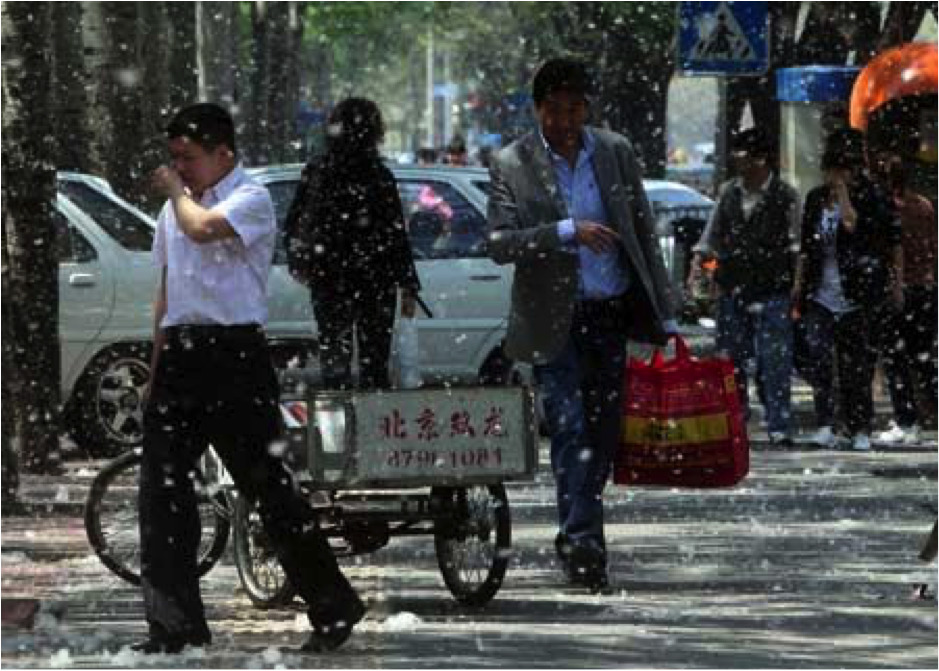
If you have ever been in Beijing in spring, you will know the fuzz. This is the floating shroud of gauzy puffs that blankets the city every April, thanks to Beijing’s large population of poplar and willow trees. It’s not a problem exclusive to Beijing. The offending species of poplars are widespread (you might know them as cottonwoods in the US), and where there are poplars there are poplar catkins and, thus, poplar fuzz.
And poplars are Beijing’s municipal tree, planted in rows along every median strip, bike lane and windbreak in the city, in great shivering ranks. A 1992 paper on the forestry of urban Beijing identifies two species of poplars as accounting for about 25 percent of the surveyed stock of trees, far outstripping the Chinese juniper trees in second place. It’s hard to imagine that their share has dwindled since then. Apparently, Beijing Forestry University even has an institute devoted to the study of Chinese white poplars, which confirms either the importance of the species, or all your worst fears about the treacherous vortex where the navel gazing currents of academia and municipal bureaucracy swirl together.
Willows aren’t as common as poplars, but based on my own observation what they lack in numbers they make up for in sheer fuzzogenic enthusiasm. In fact, it took me a long time to catch up to the fact that the willows were contributing. Years ago, when I asked a local what he called the trees that made the fuzz, he said “yangshu.” This confused me because I thought he meant willow, and I was pretty sure he was wrong. Fortunately I bit my tongue, or I’d have made an ass of myself on at least two counts. The problem comes from the similar names of the trees in Chinese. The white poplars are baiyang (白杨) or yangshu (杨树), the willows are yangliu ( 杨柳). The trees are not of the same genera, so perhaps in the antiquity of the Chinese language there is some lost etymological connection between 杨 and fuzz.
A further search of the literature reveals that ours are not the first generations to dwell upon the fuzz. A poem from the Six Dynasties period, in the first millennium AD, invokes the inherent eroticism of the poplar catkin thus:
We break off a branch of poplar catkins. A hundred birds sing in the tree. Lying beneath it in the garden, We talk to each other, Tongues in each other’s mouths.
Fuzz in their mouths, too, and any other orifices exposed during this little episode, but somehow that doesn’t make it into the poem.
Erotic charms aside notwithstanding, it is easy to hate on the fuzz. Apparently, it can entrap airborne pollen from other species, and become something of a little, allergenic bomb. I don’t have allergies, but I have to admit that, while I find the fuzz pleasant enough while it’s wafting in the air, it tends to collect into stodgy, grey piles the moment it hits ground. In this way it is rather like Beijing’s snow, which can blanket the city in a dreamy, white veil for a vanishingly brief moment before collapsing into verminous, sooty piles that skulk in the shade for weeks while collecting suspicious, yellow pockmarks.
A couple of years ago I took my son to play on the rides at Tuanjiehu Park, which are shaded by a particularly vigorous stand of white poplars. He and I both a good time watching the aunties use cigarette lighters to set great drifts of fuzz alight. It combusts like rocket fuel, so perhaps this wasn’t the best thing to be doing around dozens of toddlers, but it was entertaining. I have heard (though never confirmed) that the fuzz has been implicated in automobile fires after collecting in radiators. It has definitely contributed to yard and household fires, and the Internet has plenty ofearnest warnings urging homeowners to diligently police the fuzz.
To address Beijing’s share of these fuzzborne woes, the city government in 2007hatched a scheme to convert the offending, female poplars into docile, fuzz-free male poplars. Apparently, this has been a semi-regular endeavor. They should have consulted with me first as I have my own experience with quixotic nature-control plans. When I was in college I spent two years as part of my university’s ultra-secret ground squirrel control program. We used air rifles, traps and poison in an attempt to control a ground squirrel population that had exploded because, in a triumph of natural selection, ground squirrels have a much higher tolerance for drunk college students and acid rock than all of their natural predators. This program was an utter failure and in the end we signed articles of surrender and turned over our weapons. The ground squirrels are still there, 25 years later. We who dared take them on are all long gone. Poplar trees don’t move as fast as ground squirrels, but on the evidence of Beijing’s obvious failure to control the fuzz, they are equally crafty.
Personally, I like the fuzz. True, it catches on my head-stubble, gets all over the house and lurks under the couch, where it collects into dust-bunnies the size of Saint Bernards. But while airborne it’s cheery, and transient and a damn sight more congenial than the other harbinger of spring, the sand storms. It has also become one of the ways I mark time in Beijing. Another April of fuzz, another year gone by. A few more crows-feet around the eyes. Another sweaty, corrosive summer to grit my teeth for.
A few years ago I was driving to the airport for an early morning flight. Just outside the Fourth Ring Road, deep stands of white poplar line both sides of the airport expressway. It was the height of fuzz season, and a breeze was carrying dense flurries of the stuff across the road. The morning sun from the east backlit the fuzz, endowing it with a luminous, warm corona. For a moment I forgot all the anticipated miseries of economy-class domestic travel and just watched the fuzz. The moment it hit the ground it was dirt, but while it was in the air, it was magic. And anything that can bring a touch of magic to that benighted road is worth at least a little appreciation, isn’t it?
After seven years of taking taxis in Beijing I finally crossed the Rubicon of bourgeois colonialism and hired a car and driver. I now have two full time domestic employees, which seems somehow wrong. In the back of my mind lurks the ghost of the former graduate student adding up the cost of groceries as he shops so as not to exceed the cash in his wallet. What am I doing with domestic help? I’d hardly describe us as rich, but comfortably middle class by western standards goes a long way in Beijing. All the way to a car and driver, it turns out.
I’d resisted this maneuver for some time. For one thing, even in Beijing it’s rather a lot of money. Money that could significantly increase the floor space of our apartment if I wanted. Or go some ways toward covering an outrageous international school tuition bill. Or buy a lot of geeky toys. Or earn .00001% annual interest in a Chinese bank account. So why? Why burn thousands of RMB every month?
It wuz the taxis what done it.
I’ve taken a lot of taxis since arriving in Beijing. But for the past year, since joining Motorola, my usage has skyrocketed thanks to a twice-daily 40 minute commute. I’ve tried public transportation twice. That turns the commute into a 90 minute odyssey that leaves me looking and feeling like a wino who’s been gang-rolled by a college football team after a 36 hour Ripple bender.
I always viewed taxis as a kind of proxy for the overall state of wherever they are from. In Beijing the taxis are functional, but rough around the edges, kind of like the city itself. Every country’s taxis have their idiosyncrasies, but you can glean some insight from the overall level of comfort, city knowledge, cleanliness and service. To some degree you get what you pay for. London and Tokyo have excellent taxis, but you could cover your monthly mortgage with an airport fare in either town. On the other hand, Singapore taxis are also excellent and remain a relative bargain, especially considering how expensive everything else in Singapore seems to be getting. In Kuala Lumpur bring patience and negotiating skills.
So here is my list of the positive attributes of Beijing taxis:
They’re cheap
They’re metered
This is nothing to dismiss. Cheap and metered is a good thing, as anyone who’s had to navigate unmetered taxis knows. That’s one reason why I’ve stuck with taxis so long, and used them for my commute.
However, returning to the “you get what you pay for” theorem, here are the problems:
After a wholesale fleet upgrade that started about five years ago, the state of the art among Beijing taxis is still a Hyundai Elantra with a rear-seat pitch designed for Munchkins. As a result, the magazine rack that hangs behind the shotgun sear etches a groove in my knees. My shoes get tangled up in the seat undercarriage and look like they’ve been scoured with Brillo pads and broken glass. I can’t keep a shine longer than 24 hours. First thing I now do in any taxi is tilt the shotgun seat forward a few notches. The second thing I do is turn off the annoying seat-back advertising screen. Thank god you can turn them off, or I’d have to carry a roll of opaque tape with me.
The Elantras are a stupendous upgrade from the miserable Xialis that represented the great bulk of Beijing taxis when I arrived. But that is the most subterranean of low bars. The Xialis were only “cars” in the loosest sense of the word in that they had wheels and some variety of barely-internal combustion. Xialis vented their exhaust directly into the back seat. Xiali seatbelts used to leave black stripes on my white shirts. As small as the Elantras are, I had to dislocate my own hips to sit in the back seat of a Xiali, and risk electrocution from the wires and fuses dangling from the dashboard to sit in the front. If you slammed the door of a Xiali you might fly out the far side of the car. So the current cars are better, but not great.
This brings us to the other essential component: the drivers. There are some great taxi drivers in Beijing. But getting one has become sort of miraculous, like a surprise business class upgrade on a long-haul flight. And the good ones throw into sharp relief the dire service provided by so many drivers.
Beijing taxi drivers listen to the radio. Loud. Often to the gravelly-voiced storyteller who makes storm sounds with his mouth. When the front speakers are blown, back seat passengers get woofer-Sensurround storytelling. Asking the driver to turn down the radio is just one of many requests that can land you in a purgatory of passive-aggressive swerving, brake-jamming and teeth-sucking. Other sins include: Not going far enough; going anywhere when traffic is bad, which is always; suggesting a route that the driver is unaccustomed to; suggesting the diver focus on driving rather than texting or having a roaring argument with someone on the phone; requesting a destination the driver doesn’t know (surprisingly frequent); asking for some change in the climate arrangements; using a large bill; or rumpling the seat covers.
What is with the damned seat covers? Taxis the world over use vinyl seat covers because, Einstein, they’re durable and easy to clean. But in Beijing they use white fabric seat covers and then squint at you when you bring a three year old into the taxi because he might scuff the upholstery. Dude, three year olds will scuff the upholstery. That’s what they do. Have you seen my furniture?
I understand why the drivers get upset about the upholstery. Apparently the taxi companies fine them if the upholstery is dirty. But why don’t the taxi companies fine them for driving like maniacs? Or hugging the right lane so they crawl through on-ramp traffic? Or stopping to take leaks while they’re carrying fares? (Twice, recently.) Or waving off foreigners for locals? Or eating raw cloves of garlic? Or smoking in their taxis? Or filling up the trunk with miscellaneous crap so your luggage won’t fit? Why is it wrong to scuff the upholstery but OK for the cab to smell like the corpse of a dog that died from a three-pack-a-day Changhong habit is pickling in a box of garlic under the rear seat? Why?
And what about seatbelts?
Imagethief once had his life saved by a seatbelt in a bad, high-speed rollover accident. So I take seatbelts seriously. In Beijing working rear-seat seatbelts are almost as rare as courteous, friendly drivers. Oh, there’s a seatbelt alright. Trapped behind the bench seat. Or maybe the shoulder belt is in front of the bench, but it will be purely for decoration because the buckle is under the cushion. You usually get one or the other. Rarely both.
I know it’s a hard life in the Beijing taxi drivers, offering brutally long working days for meager wages. It’s become a semi-migrant job, filled by men (and the very occasional woman) from the outlying areas of Beijing municipality. I sympathize. While in grad school in the ’70s my own father was briefly a Yellow Cab driver in San Francisco. To this day he still tells stories about how miserable it was. And that was in San Francisco! I’d cheerfully pay more if it meant more comfort and better service. I tip when I get good service. But no matter how rough the job, taking your frustrations out on customers isn’t a recipe for success.
So after a year of ninety minutes a day of tooth-sucking, brake-jamming, actuarially damning, argumentative frustration, I’ve largely abandoned the taxis. I hired the highly-recommended driver of an ex-colleague who left China. I’m paying RMB6,000 per month plus gas. Seems like a lot, and I agonized about it a bit.
Last Wednesday was his first day of work. When I left the apartment, he was waiting for me downstairs. His car is a VW Jetta Santana. Not glamorous, but clean and with a spacious rear seat. He drove me across town for an event, went back to the house to shuttle my wife around, then met me at the end of the day to take me home. The ride back across town was an hour-and-a-half crawl through the worst of Beijing rush hour traffic. But the radio was off, the air conditioning was on and the service polite. I had enough space to open my laptop and work. I had a seatbelt.
It seems like a lot of money. But, yeah, I could get used to it.
Imagethief was an indifferent student in high school. My success in any given class was dictated by my level of personal interest in the topic. So I did OK at biology, which I liked, great in English and composition once I found a class that wasn’t numbingly dull, and appallingly in math, which held no appeal for me at all. God bless the University of California for weighing SAT scores so heavily in 1984, because if they only looked at my grades they probably would have assumed I applied by mistake and not even bothered to send me a rejection note. But, befitting someone who lives in China, I was a brilliant test taker and thus built the foundation for the success I enjoy to this day, such as it is.
Among the courses I blew at was physics, in which I eked a passing grade out by minuscule fractions of point. My problem with physics was that it was largely math, in which I already had little interest, and I really couldn’t see how any of it was going to be relevant to the rest of my life. I mean, figuring out planetary orbits? Isn’t that what NASA is for?
Life is, of course, all physics, as we discover when we get older and start banging into things. Not that it would help me to be able to work out how many newtons of force are generated when I bang my shin into the coffee table, but at least I’d have a layer of academic appreciation to filter the curse words through. This would be important as I have a young son who has (biology again) the three-year-old’s stupendous capacity to remember all words he hears and repeat them at inopportune times, like in front of his grandmother.
Children are also a regular reminder of influence of physics in daily life. Ballistics, gravity, impact, thermodynamics, and, during the diaper years, even radioactivity. My son is the remedial version of the high school physics class I doodled my way through all those years ago. This became apparent a week or two ago when we went down to Houhai to fool around on the ice. I generally enjoy a day on the frozen lakes once or twice a year, although it can get a bit nasty close to the thaw when a season’s worth of dead fish and turtles emerge from entombment. This year, we figured Zach was old enough to appreciate it as well. We didn’t do anything as silly as putting him on ice skates, or letting him walk around on the ice. Instead, I rented one of those sled-chairs that you nudge along with a couple of slender, metal poles. The chairs seat two people, so I put Zach in front and went stroking off across the ice.
People who haven’t tried them don’t appreciate how rigorous using the sled chairs is. The little poles are designed to make your hands cramp, and the chairs offer a spectacular combination of fairly high speed and a complete lack of steerability. The lakes get pretty crowded on midwinter weekends, and frankly it amazes me that more people don’t wind up in the hospital with chair runners through their calf muscles.
But you don’t have to have a collision to get in trouble with the chairs. You can get in trouble all by yourself. I discovered this when I had a brainstorm to make the chair spin in place. Now, this is where the physics really become interesting. I’d like to introduce you to two equations that I know were covered in my high school physics class, but which I dismissed at the time as being completely irrelevant to any experience I’d ever have.
First is the equation for centripetal force. This is the force that makes a body follow a curved path, and is often mistakenly referred to as “centrifugal force.” In the absence of a centripetal force, an object previously following a curved path will suddenly fly off on a path tangential to the curve. If you were on the Tilt-a-Whirl at some sketchy Chinese carnival, and the metal mesh behind you that was supplying the centripetal force keeping you on a curved path was suddenly to vanish (bad rust, let’s say), you would fly off on a path tangential to the curve defined by the edge of the Tilt-a-whirl. If you were lucky, you might land on a plush toy. If you were unlucky, you might land in a malatang or roast squid stall. Poor you. Anyway, the equation, courtesy of Wikipedia, looks like this:
We can ignore the center part. For our purposes force (F) = mass (m) times the velocity squared (v2) divided by the radius of the rotation. In this case, mass is the mass of my son, about 13 kilograms, velocity is (an off-the-cuff estimate) about 1.2 meters per second, and r is about 0.6 meters from the center of rotation to the seat of his pants. So F = 13kg x (1.44 meters per second squared) / .6 meters or 18.72 kg-m-s2 / .6 meters or 31 kg/m/s2. That’s 31 newtons of centripetal force if I’ve canceled the units correctly. But, remember, I nearly failed physics, so this could all be completely wrong. Suffice to say, a distinct degree of centripetal force was required to keep my son from suddenly flying off on a trajectory tangential to the curve.
The centripetal force in this case was supplied by the friction of my son’s jeans-clad rear end on the smooth, vinyl seat of the ice chair. It turns out that there is an equation for this as well. In this case, the equation for static, dry friction, which looks like this (also from Wikipedia):
Where the force of friction (Ff) is less than or equal to the coefficient of friction for the two surfaces involved (mu – the Greek letter that looks like “u” with a hernia) x the “normal” or perpendicular force (Fn), in this case, the weight of my son. The problem I have here is determining the coefficient of friction. It depends on the combination of surfaces involved, and is often looked up on a table that cross-references different kinds of materials likely to be in contact. Despite a thorough search of the Internet, however, I have been unable to locate the coefficient that describes new denim against worn vinyl, which seems like an oversight (hello, Detroit). There’s lots of stuff for metals, plastics, and even leather. But not my exact requirements. Also, there is obviously some deformation of the surfaces involved since neither is entirely rigid, and that would complicate this equation, but is probably unimportant for our purposes.
Anyway, the upshot was that close to the end of the first revolution of the chair, the friction of my son’s rear end on the vinyl seat proved unable to provide the necessary centripetal force to maintain a curved path, static friction became trickier kinetic friction (I don’t even want to go here, mathematically speaking), and eventually no friction, at which point Zachary assumed a ballistic trajectory tangential to the curve, at least until he landed face down on the ice. In fact, the coefficient of friction of just about anything on ice being rather low, he may have continued to slide for some time after impact.
At this point we leave the hard-and-fast world of physics, and enter the much grayer realm of shame. The first thing I did was check for broken teeth, since Zach has already cracked two in the course of regular, boy-like behavior. All teeth were intact, but he had split his lip and lost some skin on the ice. As lip wounds do, it bled copiously.
This being China, there is no shortage of aunties and grandmothers willing to tell anyone, especially foreigners, how miserable their parenting technique is. I have been admonished repeatedly for, among other things, bringing Zach out to the Summer Palace when he was an infant (too young!), dressing him inappropriately (he’ll freeze!) and swinging him around in the courtyard (you’ll pull his little arms out!). My wife has got to the point where she scolds people who provide unsolicited parenting advice. I usually take the more zen “I can’t understand you, I’m smiling and moving on” approach.
In the eyes of Chinese aunties I am sure there is a particularly sweaty corner of hell for people (read: foreigners) who drop their sons face down on the ice. And I could feel dozens of pairs of eyes on me as I slowly poled the chair back to the edge of the lake with my son holding a very bloody tissue to his mouth. This is now one of the three longest journeys of my life. The other two are both aviation-related.
The good news is that Zach had no injury that a cup of hot chocolate and a trip to Hutong Pizza couldn’t cure, and we were back to winter activities last weekend, riding inner tubes down the slope at the Chaoyang Park snow field without incident. But even now I can imagine what those aunties at the lake were thinking to themselves as they watched me bundle a bleeding Zach back to his mom: If he’d studied his physics in high school, this never would have happened.
Note: A little knowledge is obviously a dangerous thing, and it’s possible that the math above is completely wrong in ways I can’t begin to guess. Corrections welcome, but don’t overdo the pedantry. This is, after all, a humor post and not an actual physics lesson. Plus, I’m fragile.







 .
. When I left I had spent (at that time) 30% of my life in Asia. Obviously the number will only get smaller, but the experience remains larger than life.
 ), and please please please continue on writing like that. I’m sure Palo Alto is no less source of wonder than China was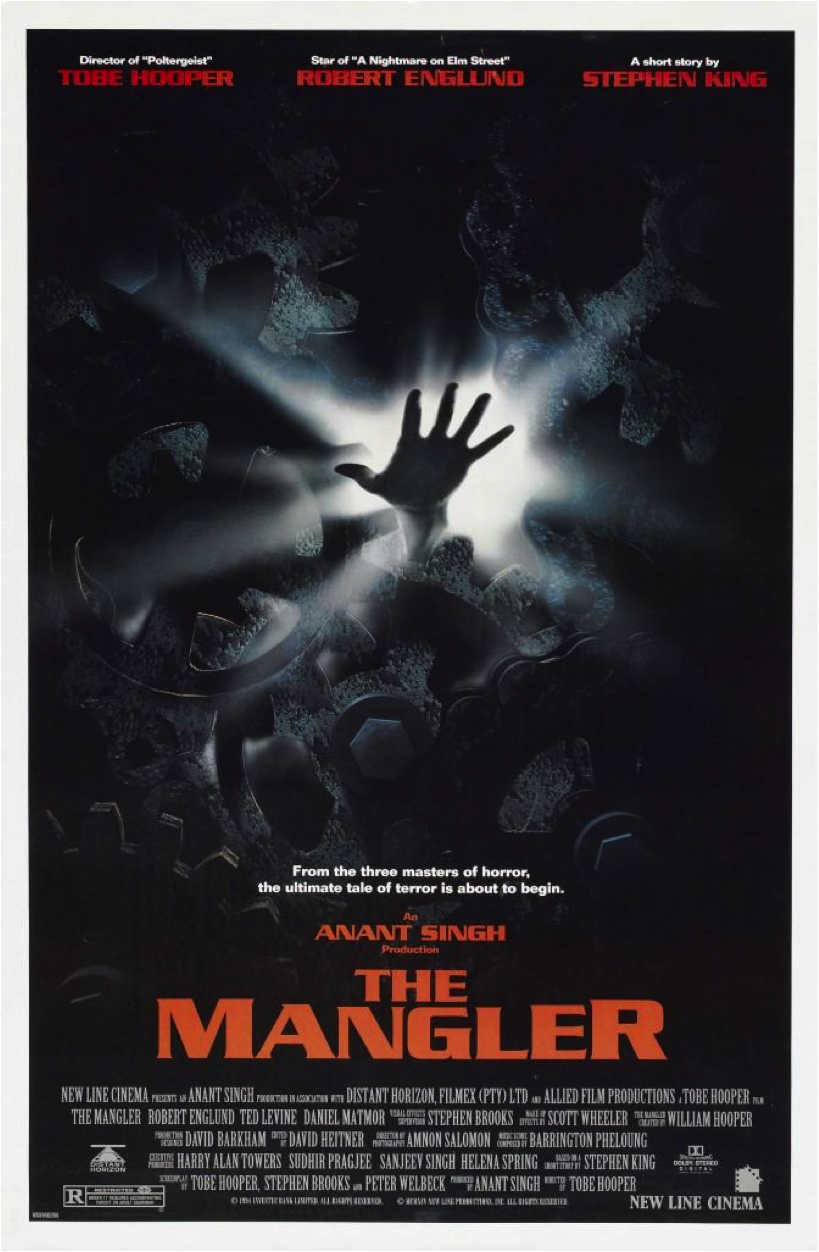



“Who gets to live in China? Nobody, that’s who.” A great line from the post and one that reminds me of how fortunate I am to have lucked into my own “crazy stunt” to show up mid-career in China–with 3 kids and wife in tow–hoping to make a difference here. Hope your next leg of your journey is as exciting as your last, and that we get to share more of this next leg together as well!
Great post, Will. You already know I’ve always enjoyed your blog posts and your humor. Hope you’ll still be in Silicon Valley whenever I make the big move back to the Bay Area! Cheers!
Oh Will! I’ve loved reading your blog as I’ve moved back and forth from China. I’m sad to see it end. Thank you so much for your delightful commentary on the vagaries of life in China!