My father’s memoir of the terrible epidemic of the 1980s
My parents separated in 1973, when I was six years old. I sometimes think the amazing thing is that they got together in the first place. They are very different people. My mom is tightly wound, organized and meticulous, the daughter of Jewish bourgeoisie from the Philadelphia suburbs. My dad is shambolic and improvisational, a dreamer and aspiring revolutionary, the child of British leftists.
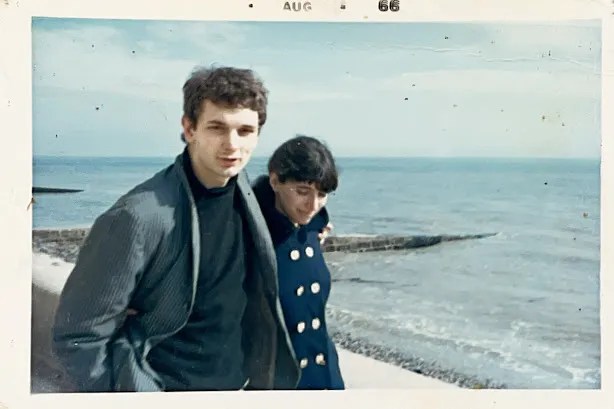
But when I look at old photographs of them together I see it. She’s the American anglophile abroad in London, waif-slim in a peacoat and ‘60s bangs. He’s raffish and good looking, a Hampstead rebel, pouting and restless. They look beautiful and intense, youth on the threshold of a new era.
They came to San Francisco in the late sixties, had two kids while still in their early twenties, me and my younger brother, and then it all fell apart. Then it fell together again for one more kid, my youngest brother. Then it all fell apart again in 1975 or 76, this time for good. My mom moved down to Palo Alto with my brothers. But my parents wanted to keep me in the same school I’d been going to, so I moved into my dad’s recently acquired ramshackle Victorian in the Castro.
In the late ‘70s, the school bus used to drop me off at 17th and Clayton, at the top of the hill between Cole Valley and the Castro. I would walk down 17th Street to Castro, and then up Castro to Liberty Street, where my dad’s house was. By then, the Castro had supplanted Polk Street as the epicenter of late ‘70s transgressive gay culture, and my walk took me right through the heart of it. This was the era of leather boys in assless chaps and chains, spilling out of the Phoenix bar and onto the sidewalk. I used to go into Mainline Gifts, next door, because they had an R2D2 cookie jar I was infatuated with. They also sold marzipan cakes shaped like giant dicks out of their glass deli case. That was the Castro in the late ‘70s. Also, I like marzipan. Make of that what you will.
A great thing about being a kid is that the neighborhood is just the neighborhood. I took the weirdness for granted, and nobody ever hassled me. But behind the good times and sex a contagion was lurking, about to devastate the generation of young men I walked past every afternoon.