Tag: Whatever

  • The Devil’s Air Conditioner and Other Tales of Woe

    Sometimes life in Beijing is like one of those Japanese game shows where they see how much torture people are willing to endure for surprisingly mediocre prizes. Picture the following and you’ve more or less got it:

    “Mr. Ishihara, for a new desktop dumpling fridge you’ve been strapped naked to a hospital gurney in the burning sun for twelve hours. You’re pinking up nicely. Do you wish to continue?”

    “Yes!”

    “Then it’s time to raise the bar! Here comes a team of lingerie models to glue Gabonese fire ants to your testicles!”

    “I can take it! Must…have…tiny…fridge!”

    “Great! While they prepare the ants, let’s watch this secretly recorded video of you confessing erectile dysfunction at last week’s office drinking party!”

    That’s us on the gurney. We’re all in it for the rush and the dubious prize while an oddball assortment of it-could-only-happen-here, Rube Goldberg discomforts repeatedly jabs its three-fingered cartoon glove into our sensitive bits. As long as you can take it, you live in Beijing. When, like Popeye the Sailor Man, you can’t stands no more, you pack up and head for more congenial shores. With a dumpling fridge, if you’re lucky.

    This weekend’s finger to my sensitive bits involved the air conditioner in my apartment.

    Let me tell you a bit about my apartment. Nominally in a “luxury” development, it’s horrendously expensive and situated in one of Beijing’s most fabulous areas. The amenities are good. There’s even a French bakery in the courtyard. But construction-wise it’s less luxury and more like what would happen if you got a pack of wild monkeys just drunk enough on Snow Beer to almost read a blueprint and fenced them into ten hectares of land with a pile of grade-B residential fittings and free-flow concrete. The caulking wanders off in random directions, the hot and cold indicators on the faucets are reversed, the “hardwood” flooring buckles in weird places, the towel racks droop, and when the wind blows, a majestic assortment of Jurassic aromas billows from the drains. There’s more, but you get the idea.

    Still, I was hardened by a year in Shanghai, so in most ways I consider it pretty good as Chinese apartments go. The worst that can be said of the landlord is that she’s totally disinterested, which is way better than totally venal, which is always a possibility here. The landlord situation reminds me a bit of the shopworn parable about Confucius, the widow and the tiger:

    One day the Master came upon a woman weeping at a grave. He said, “You weep as one afflicted by great sorrow.”

    The woman replied, “It is true. My husband’s father was killed here by a tiger, and my husband also. Now the tiger has killed my son.”

    “Why do you not leave this place?” asked the Master?

    The woman replied, “The government here is not cruel.”

    Replace “government” with “landlord” and it’s still more or less valid.

    But the air conditioning problem is serious. Our apartment is hot and stuffy year round. Even in Beijing’s Siberian winter we pick up so much waste-heat from the neighboring apartments and poorly insulated piping that we often end up running a fan in our bedroom at night. As for summer, well, if you haven’t experienced August in Beijing you can simulate it by tying yourself to a burning coal stove and then having your friends hurl you into an open sewer. If you actually try this, put it on YouTube so everyone can benefit from your sacrifice. That’s how knowledge is born.

    Anyway, we rely on our air conditioner. This sucks for us, because it is an enormous, fiddly contraption that looks like what might happen if Lockheed Corp. and Hubei People’s Steam Propulsion Systems Factory No. 182 jointly bid on air conditioners for TEPCO. This model, which is standard in our apartment complex due, one can only assume, to graft, is approximately the size of a 1968 Volkswagen Camper, and takes up the entire balcony outside my son’s room. Unlike a Volkswagen Camper, it uses water as a coolant, making it complex and prone to breakdown. But it does have the Camper’s woeful lack of power and tendency to choke in the face of modest demands.

    In a masterstroke of engineering, our air conditioner also manages to combine the worst attributes of central and split air conditioning. Like central air conditioning, it has to be switched from “heat” mode to “cooling” by the property office, which puts us at the mercy of the government rather than the climate. The switchover involves one big button and just enough fiddling with valves to be complicated, but the good news is that regardless of official dates the property office usually folds in the face of a little hectoring.

    Like a split aircon, however, the compressor draws on our household electricity (our breaker box emits an alarming buzz every time it turns on), and coolant pipes run through the ceiling to the vents in all the rooms. In our previous apartment, in the same complex, the pipe over the kitchen dripped condensation. During summer it reliably shorted out the gas leak detector in the kitchen ceiling about once a month, usually at three in the morning (we ran the aircon at night), triggering an electronic shriek that could curdle the fluid in your eyeballs. I would deal with this problem by blearily jamming a screwdriver into the alarm until it shut up, and then having the property office replace it. If we’d ever had an actual gas leak, the sparks created by my screwdriver surgery would have blown us all into the courtyard like Ed Norton’s furniture and condiments in “Fight Club.”

    The compressor unit on the balcony is wired to a set of high-tech thermostats, all of which insist that every room in the house is always 25C regardless of actual temperature. When the sun expands into a red giant and incinerates the Earth a billion years from now, these thermostats will insist it is 25C right until the moment they evaporate. Whether you set the thermostats to 30C or 5C (which is where ours are all set), you get the same anemic trickle of semi-cool air from the vents.

    But we take what we can get. Spring in Beijing is a season of hot days and cool nights. And dust and fuzz and pollution. The apartment warms up during the day and stays warm pretty much all night, forcing us to run the air conditioning even though the outside temperature has dropped. Any cooling is better than no cooling.

    At 2AM on Saturday night I woke up bathed in sweat. The outside temperature was a crisp 12C, but our room had crept up to a broiling, humid 28.5C. The aircon vent was cheerily pumping out a stream of toasty, warm air.

    Well, you say, turn it off and open the windows, genius. And in many places in the world this would be sound advice. But on Saturday night the air pollution AQI reading was 212. In China an AQI of 212 counts as “moderate,” but in the rest of the world it’s more like, Holy Jesus, Martha, it’s the apocalypse! Get the kids into the fallout shelter while I shoot the dog! You don’t really want to sleep in it. What’s the point of having $3,000 worth of Swedish air filters (yes, really) in the apartment if you’re just going to throw open the windows and let the scuzz in?

    We let the scuzz in, at least for a while. But that led to another problem. Our previous apartment faced the courtyard from the 7th floor. Other than the occasional raving drunkard or 160db Phil Spector wall-of-sound throat-clearing hawk, it was reasonably quiet. On the rare clear-air nights we occasionally slept with the windows open just for the hell of it (although always with the risk of waking up to find the loess plateau in our bed).

    Our current apartment faces the road between our complex and the neighboring ultra-mall. This road is small, but punches way above its weight in terms of congestion, perma-honking and random cacophony. To add insult to injury, when they built the mega-mall they somehow neglected to design in a loading dock. The result is that all deliveries to the mall are made at the entrance to the parking lot, which is just below our 16th floor apartment. This happens at the only time when they can partially block the road, which is the middle of the night. For a mall that sells a huge amount of really expensive stuff, these deliveries are not gentle. They often sound like someone backing a flatbed truck with busted shocks and a full load of plate glass and live hogs over a row of two-by-fours.

    As long as our hermetically-sealing, double-paned windows are buttoned up, the noise doesn’t bother us. And, anemic as it is, if the air conditioning is working, we can keep the windows closed. But if the air conditioning fails, our choices rapidly dwindle to dying of heat exhaustion in our own bed, opening the windows and admitting the din and miasma of Satan’s workshop, or suicide.

    At two in the morning, suicide doesn’t look all that bad, but we resisted. After my wife went out and poked futilely at the buttons on the compressor for a while, we went for heat exhaustion, turning off the compressor but keeping the windows shut. On Sunday morning the property office showed up, declared that we had somehow switched the air conditioning unit to “heat,” switched it back, and left. On Sunday evening the aircon ran refreshing and cool, as much as it ever does. Maybe it was our fault, I thought. Maybe we did something wrong.

    And then Sunday night at 2AM we woke up bathed in sweat again. With a flashlight I went out to the balcony where the Beast lives and examined the controls. Outside it was pleasantly cool. The air conditioner had switched itself to “heat.” I switched it back to “cool.” The mechanics might be complex, but the controls are simple. There are only three buttons: On/Off, Heat and Cool, and an LED that displays “HE” or “CO” and the coolant temperature. It ran in “cool” mode for a minute or so. I watched the coolant temperature drop. And then it switched itself back to “heat.” I repeated this five times. Every time the air conditioner switched itself back to “heat.”

    On top of all its other problems—the fiddly complexity, the anemic output, the buzzing breaker box—this cursed thing apparently thinks it’s smarter than us. When it’s warm outside, in the early evening or right at dusk, it chugs along merrily in cooling mode. The moment the temperature outside drops too much, it figures we must be freezing in our booties, and spontaneously switches itself into heat mode. Damn the thermostats (25C), full speed ahead!

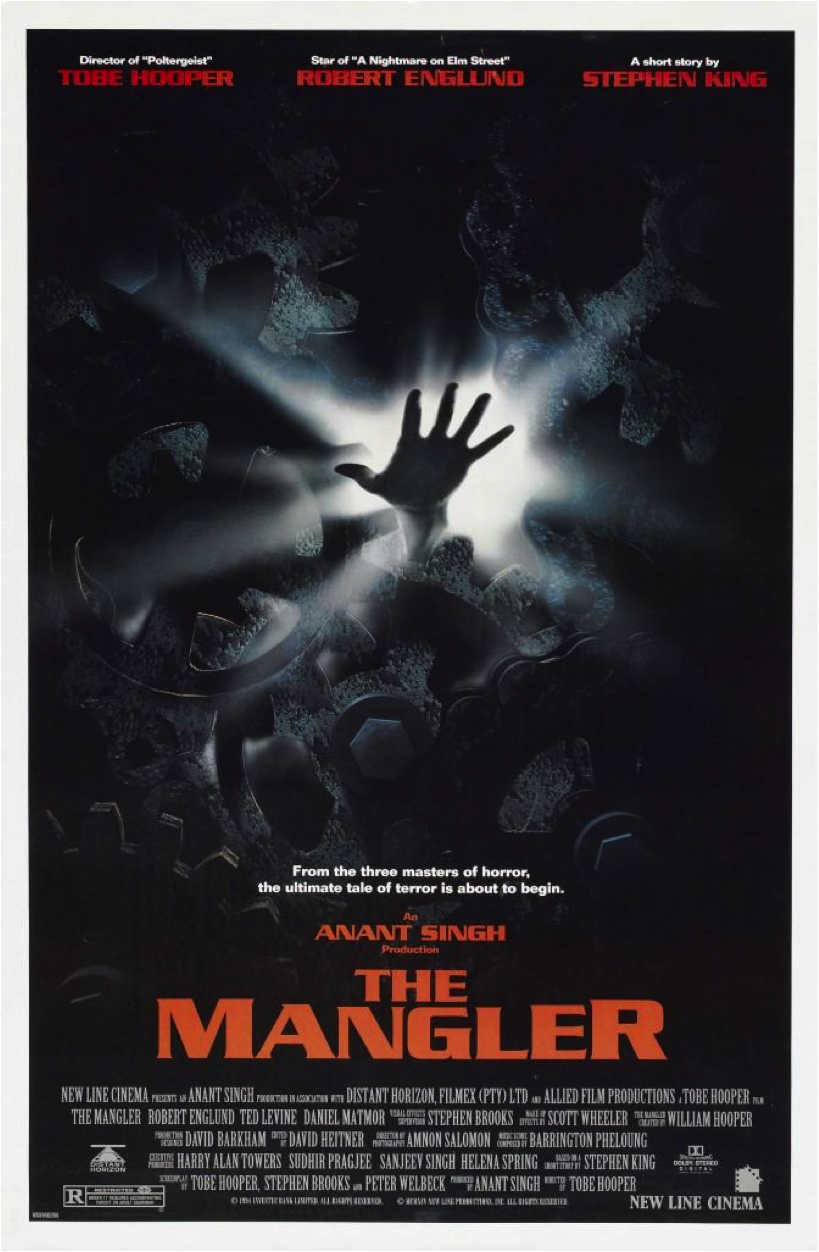
    Or, worse, it’s actually trying to kill us, like the possessed laundry press in the old Stephen King story, “The Mangler.” It wants to roast us to death in our sleep and let the cats feast on our remains, just for the sheer sport of it. I don’t know what happened to the previous tenant in our apartment. I do know that he left a fair amount of his stuff behind when he “moved out.” Coincidence?

    I just made the last rent payment on our current contract. In about two months, we have to decide whether to move or to stay in the same place and accept the inevitable rent increase. On the one hand, the apartment is expensive and noisy and the air conditioning unit is apparently possessed by Satan and determined to destroy us all.

    On the other hand, there are croissants downstairs and the government is not cruel.

    It’s a tough call.

    Note: This post originally published on the defunct group blog Rectified.name.
    But it's refreshingly cool!
    But it’s refreshingly cool!
  • In defense of the fuzz

    For many years I lived in Singapore, which is right on the equator and has roughly two seasons: slightly more rainy, and slightly less rainy. Otherwise, it was pretty much hot and humid throughout, which always used to freak me out a bit at Christmas. To an American, encountering Santa Claus in 30C heat is unexpected, like finding a live rattlesnake in your refrigerator. It’s always struck me as somewhat unnatural that Australians see Christmas as a summer phenomenon. What else do they do backwards? Maybe on Christmas morning, they randomly steal things and slap people.

    One of the things I enjoyed about moving to Beijing, besides being further away from the antipodes, was clearly demarcated seasons. Winter was a genuine novelty. Summer was like Singapore, except with air that could delaminate plywood. Spring and autumn were glorious interludes, as long as you didn’t mind having the Gobi Desert airmailed to you from time to time. Seasons are the demarcations on the great clock of the year, the way you internalize the passage of time. So are television shows, the National People’s Conference and the ebb and flow of denim hot-pants on the teenage girls of Beijing, of course, but seasons are a more poetic way of doing it.

    Since moving to Beijing I’ve found myself thinking in terms of how many winters and summers I’ve seen here. How many sandstorm seasons, and piling up of the throngs at Xiangshan. And how many times I’ve experienced the fuzz.

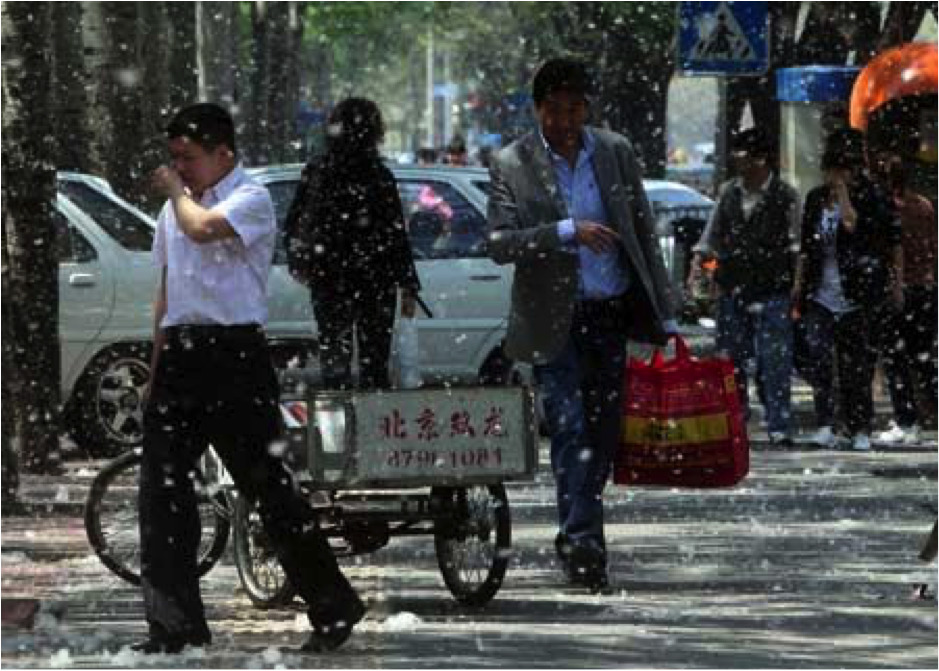
    If you have ever been in Beijing in spring, you will know the fuzz. This is the floating shroud of gauzy puffs that blankets the city every April, thanks to Beijing’s large population of poplar and willow trees. It’s not a problem exclusive to Beijing. The offending species of poplars are widespread (you might know them as cottonwoods in the US), and where there are poplars there are poplar catkins and, thus, poplar fuzz.

    And poplars are Beijing’s municipal tree, planted in rows along every median strip, bike lane and windbreak in the city, in great shivering ranks. A 1992 paper on the forestry of urban Beijing identifies two species of poplars as accounting for about 25 percent of the surveyed stock of trees, far outstripping the Chinese juniper trees in second place. It’s hard to imagine that their share has dwindled since then. Apparently, Beijing Forestry University even has an institute devoted to the study of Chinese white poplars, which confirms either the importance of the species, or all your worst fears about the treacherous vortex where the navel gazing currents of academia and municipal bureaucracy swirl together.

    Willows aren’t as common as poplars, but based on my own observation what they lack in numbers they make up for in sheer fuzzogenic enthusiasm. In fact, it took me a long time to catch up to the fact that the willows were contributing. Years ago, when I asked a local what he called the trees that made the fuzz, he said “yangshu.” This confused me because I thought he meant willow, and I was pretty sure he was wrong. Fortunately I bit my tongue, or I’d have made an ass of myself on at least two counts. The problem comes from the similar names of the trees in Chinese. The white poplars are baiyang (白杨) or yangshu (杨树), the willows are yangliu ( 杨柳). The trees are not of the same genera, so perhaps in the antiquity of the Chinese language there is some lost etymological connection between 杨 and fuzz.

    A further search of the literature reveals that ours are not the first generations to dwell upon the fuzz. A poem from the Six Dynasties period, in the first millennium AD, invokes the inherent eroticism of the poplar catkin thus:

    We break off a branch of poplar catkins.
    A hundred birds sing in the tree.
    Lying beneath it in the garden,
    We talk to each other,
    Tongues in each other’s mouths.

    Fuzz in their mouths, too, and any other orifices exposed during this little episode, but somehow that doesn’t make it into the poem.

    Erotic charms aside notwithstanding, it is easy to hate on the fuzz. Apparently, it can entrap airborne pollen from other species, and become something of a little, allergenic bomb. I don’t have allergies, but I have to admit that, while I find the fuzz pleasant enough while it’s wafting in the air, it tends to collect into stodgy, grey piles the moment it hits ground. In this way it is rather like Beijing’s snow, which can blanket the city in a dreamy, white veil for a vanishingly brief moment before collapsing into verminous, sooty piles that skulk in the shade for weeks while collecting suspicious, yellow pockmarks.

    A couple of years ago I took my son to play on the rides at Tuanjiehu Park, which are shaded by a particularly vigorous stand of white poplars. He and I both a good time watching the aunties use cigarette lighters to set great drifts of fuzz alight. It combusts like rocket fuel, so perhaps this wasn’t the best thing to be doing around dozens of toddlers, but it was entertaining. I have heard (though never confirmed) that the fuzz has been implicated in automobile fires after collecting in radiators. It has definitely contributed to yard and household fires, and the Internet has plenty ofearnest warnings urging homeowners to diligently police the fuzz.

    To address Beijing’s share of these fuzzborne woes, the city government in 2007hatched a scheme to convert the offending, female poplars into docile, fuzz-free male poplars. Apparently, this has been a semi-regular endeavor. They should have consulted with me first as I have my own experience with quixotic nature-control plans. When I was in college I spent two years as part of my university’s ultra-secret ground squirrel control program. We used air rifles, traps and poison in an attempt to control a ground squirrel population that had exploded because, in a triumph of natural selection, ground squirrels have a much higher tolerance for drunk college students and acid rock than all of their natural predators. This program was an utter failure and in the end we signed articles of surrender and turned over our weapons. The ground squirrels are still there, 25 years later. We who dared take them on are all long gone. Poplar trees don’t move as fast as ground squirrels, but on the evidence of Beijing’s obvious failure to control the fuzz, they are equally crafty.

    Personally, I like the fuzz. True, it catches on my head-stubble, gets all over the house and lurks under the couch, where it collects into dust-bunnies the size of Saint Bernards. But while airborne it’s cheery, and transient and a damn sight more congenial than the other harbinger of spring, the sand storms. It has also become one of the ways I mark time in Beijing. Another April of fuzz, another year gone by. A few more crows-feet around the eyes. Another sweaty, corrosive summer to grit my teeth for.

    A few years ago I was driving to the airport for an early morning flight. Just outside the Fourth Ring Road, deep stands of white poplar line both sides of the airport expressway. It was the height of fuzz season, and a breeze was carrying dense flurries of the stuff across the road. The morning sun from the east backlit the fuzz, endowing it with a luminous, warm corona. For a moment I forgot all the anticipated miseries of economy-class domestic travel and just watched the fuzz. The moment it hit the ground it was dirt, but while it was in the air, it was magic. And anything that can bring a touch of magic to that benighted road is worth at least a little appreciation, isn’t it?

    A little bit of magic.
    A little bit of magic.

    See also:

    Note: Originally published on the defunct group blog Rectified.name.
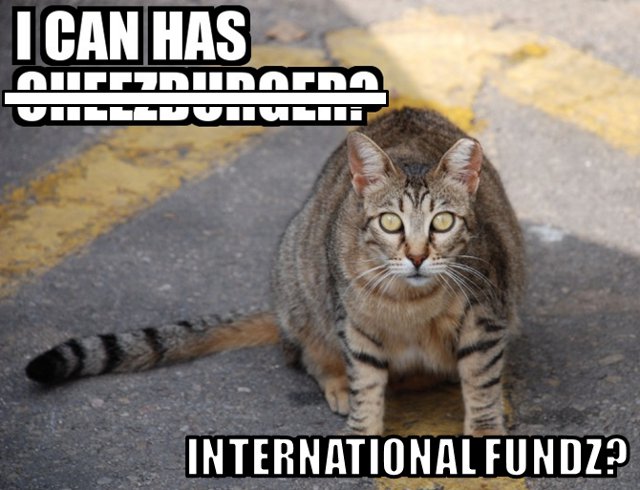
  • I can haz international funds?

    After seven years and change in China it’s hard not to come to the conclusion that the purpose of the Chinese banking system is to keep you from doing anything useful with your money. It is widely said that the Railway Ministry in China is the best surviving example of a reactionary Communist bureaucracy, and after recent events it’s hard to argue with that. But in my experience the big, state-owned banks are giving the Railway bureaucrats a run for their money.

    Many people speak in (relatively) glowing terms of the service provided by some of the newer commercial banks, such as China Merchants Bank or Bank of Communications. I have no experience with that, because both of the companies I have worked for in China have limited my options for paycheck deposit to two of the “big four” state banks (the ones Gordon Chang is always telling people are about to implode). Yes, I suppose I could open an account at one of the smaller banks and then move my paycheck every month, but the thought of having any more Chinese bank accounts than I absolutely need makes my liver spasm. Due to a bank switch by my old company, my year in Shanghai, the fact that Chinese banks don’t actually function in any recognized sense of the word “nationally,” and their conviction that joint accounts are some kind of rightist plot,  I’ve already left a daisy-chain of zombie accounts scattered across the country. Each has about RMB2 in it and no doubt at least one will be used to hijack my identity at some point in the future.

    I would bulldoze a field of spaniel puppies and nursery schoolgirls in fairy costumes to avoid a trip to the bank. Every trip to a big, state-owned bank is like the scene from the end of Beetlejuice where Michael Keaton is in the waiting room for hell with a ten-digit ticket while they serve number 14. It’s not so much the magnitude of the numbers as the glacial pace of the transactions. Teller window service numbers increment like Neptunian orbits – about one a century. If there are even two windows serving general business it’s your lucky day, and every transaction seems to involve a mortgage application in octuplicate and the structuring of some kind of derivative for a grandmother who speaks only a Guangxi provincial dialect, or the hand-counting of RMB100,000 in cash pulled from a man-bag. Surely no simple, retail banking transaction could take a freaking hour.

    But of course it could. I myself have been the jerk at the window on many an occasion, while some pensioner laotou at the head of the line pisses and moans loudly about drag-ass foreigners tying up the teller windows with their sketchy international transactions. It’s not that I want the transaction to take forever. I have much better things to be doing than sitting at a teller window, like pulling out my own toenails with needlenose pliers or eating a sandwich made of Wonder Bread and used crankcase grease. But the system moves at the pace it moves at, which is roughly the same pace as continental drift. You know how in 150 million years the San Francisco Bay Area will be in Alaska? That’s the exact same time your transaction will be complete.

    Given that using the ATM aside there is no such thing as a simple transaction at a Chinese bank, by far the most confounding thing I’ve had to do is to change large amounts of renminbi into foreign currency. Almost six years ago the CFO of my previous employer sat me down and explained that it would be in my best interest to switch my then US dollar salary into renminbi. Damn if he wasn’t right about that, because in the intervening years the renminbi has kicked the S&P500′s ass as an investment. In US dollar terms I’ve made out nicely since the renminbi started to appreciate back in ’05. Unfortunately my long-term savings currency is the Singapore dollar, which is basically flat in RMB terms, but I’m still killing it on the US dollar. Someday when I’m deported from the continent of Asia for writing uppity blogs that will come in useful.

    The catch, of course, is that the renminbi isn’t freely convertible. Oh, sure, it’s nominally convertible, but only in the same sense that nominally I could become a Navy SEAL. The process is designed to be painful enough to discourage me from actually trying in order to save everyone the trouble and embarrassment of watching me fail miserably, or die. That’s why over the past five years I have subjected myself to this process a grand total of twice. The last time was in 2009. The two years since then had both enabled me to accumulate a fair wad of renminbi savings and had dulled my memory of events just enough for trying a conversion to seem reasonable again.

    A sensible man suggested that I leave everything in renminbi. After all, the renminbi is still appreciating in US dollar terms, and it seems unlikely that the government will allow any of the big four banks to submarine. But the problem is that as useful as the renminbi is for settling bills in China (where a zero is added to my rent approximately every six months), it is completely illiquid as far as the rest of the world goes. Should I have a sudden need for money overseas, my accumulated renminbi savings in China would be worth about as much as a cargo container full of used cat litter. Interesting perhaps, but hard to pass off as legal tender. And the only thing more horrifying than trying a large-scale personal currency conversion in China is trying a large-scale personal currency conversion in China in a hurry.

    I set about gathering the necessary documentation. This included a chopped copy of my work contract, a chopped income statement from my company indicating how much I had been paid in the period covering the income I wished to exchange, and a receipt from the personal income tax office serving my employer that certified the payment of taxes assessed on the income for that period. Plus my passport with current visa and my employment permit (a small, passport-like booklet), which, although I am officially required to carry it at all times, has never been used for any other purpose in all my years in China.

    My first attempt was made at my bank branch in Wangjing. It ended in crushing failure when, after waiting an hour to be served, the bank informed me that my documentation would permit me to remit only 15% of the amount I actually wanted to send. Some squinting at the forms revealed that my HR department had procured the tax receipts for only a part of my tenure with the company, something I had somehow missed.

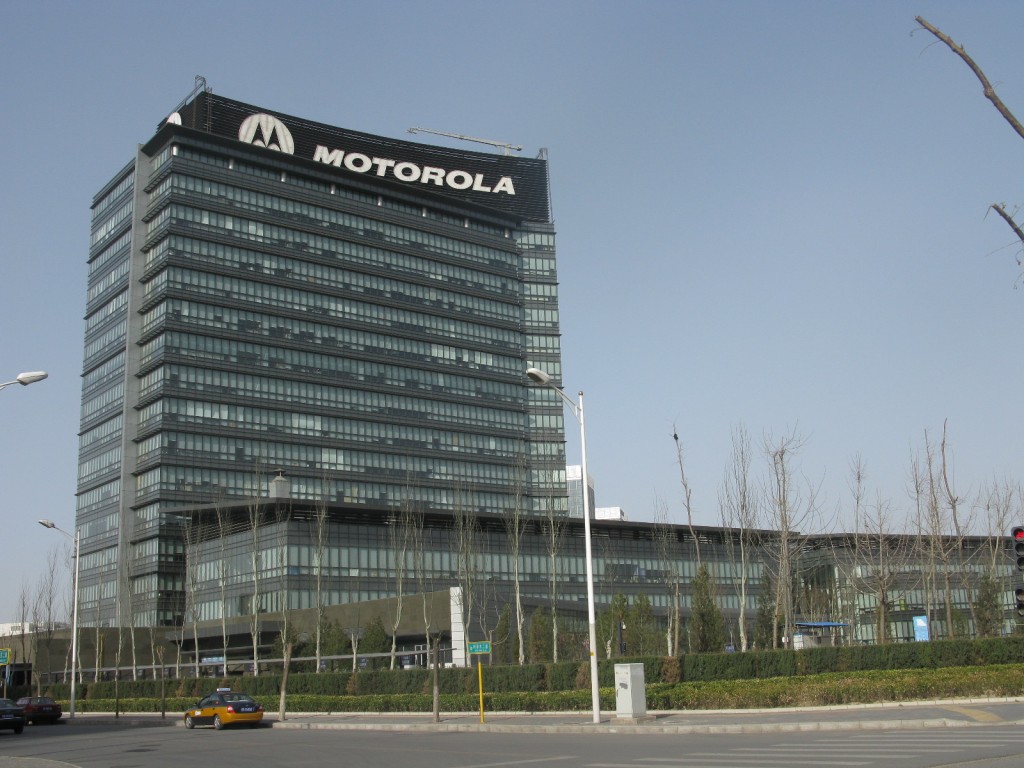
    There was, of course, a complexity. Since joining Motorola the company had split, and I had been employed by two different corporate entities in my time there. This required another round of documentation wrangling as I gathered the various contractual addenda reflecting my transfer and a new and more comprehensive set of tax receipts. Then, just to be safe and because the income I wanted to remit extended far enough back, I decided it would be sensible to also assemble the documentation from my previous job. I had most of this from my previous remittance in 2009, but I needed updated tax receipts. So I went to down to Oriental Plaza with my identification and contracts to get the receipts from the appropriate office.

    There was, of course, another complexity. I discovered that somehow the Oriental Plaza personal income tax bureau had a typo in my name, listing me as Dillon W. Moss instead of the correct Diccon W. Moss. Part of me wanted to laugh, as the Chinese tax bureau had suddenly transported me back to junior high-school, where the following was a typical first-roll-call-of-the-year experience:

    Teacher: Janet Martinez?
    Janet: Here!
    Teacher: Shawn Meacham?
    Shawn: Here!
    Teacher (hesitantly): Um. Uh. Dillon? Dillon Moss?
    Me: It’s Diccon.
    Teacher (incredulous): Deacon?
    Me: Diccon. Short “i”.
    Teacher: “Diccon?”
    Me: Yeah.
    Teacher: Diccon William Moss?
    Me (to the sound of tittering from other students): Yeah.
    Teacher: Oh. (Pause.) Are you sure?

    Repeat in next class, and so on. That’s why I started using my middle name.

    I get why a junior high teacher in Westwood would assume that “Diccon” is a typo for “Dillon”, but how would a Chinese person know that “Diccon” is unusual any more than a typical American would know that 张艺谋 is a real Chinese name and 草泥马 is a rude pun? It would have been funny except I knew from experience that the bank would deny me for so much as a molecule out of place on my paperwork –This molecule is void! No cash for you! NEXT!–, let alone a suspicious misspelling of my name that might indicate fraud or attempted financing of international terrorism.

    Fixing my name in the tax records required nothing so simple as me showing up with my ID or some other appropriate documentation. Instead, my prior employer had to re-file allthe paperwork from the period covered with my correct name. This took a month, during which I entertained dark visions of catastrophe detonating my Chinese savings. It wasn’t any more likely then than it was the prior two years, but that’s how the neurotic mind works. Now I can’t move my money at all? Weimar Republic, here we come!

     Eventually I got the corrected forms. In the end this is what I took to the bank:

    • Three chopped employment contracts
    • Two chopped income statements
    • Five tax bureau receipts covering different time periods and corporate entities
    • My savings passbook (they still use those here)
    • My passport (required for basically every transaction at a Chinese bank)
    • My employment permit
    • Two bank cards (just to be sure…)

    I had everything in a big manila envelope that I carried around clutched to my chest like a teenage schoolgirl. I felt like I was applying for citizenship.

    This system is needlessly complex. Many foreigners I know have no idea how to exchange large amounts of currency and no two expats I polled gave me the same verdict on the current state of requirements for buying large amounts foreign currency with legitimate income. Indeed, some foreigners I know have given up altogether and are simply waiting for China to open its capital account or have taken to flying cash out of the country (risky) and using money changers on the far end. Did you know that a money changer in Singapore will exchange 200,000 RMB for you if you give him a day’s notice? Now you do.

    The system is so complex that even the bank seems to wrestle with it. At the Oriental Plaza branch of my bank, where I finally completed the transaction, there were several alarming huddles behind the counter where tellers and managers conferred about the paperwork. I am usually pretty good at handling bank transactions in Chinese, but this time I’d brought a Chinese friend along just in case. If there is one thing that I know can break my Chinese it’s an unexpected clot of bank bureaucracy. I kept looking at her and asking, “Should I worry now?” She comforted me by saying, “Maybe. It’s hard to tell.”

    In the end they chopped all my applications for purchasing foreign currency and wiring it to Singapore and did that worrying thing where they bulldog-clip your completed paperwork together and toss it on a huge stack of similar paperwork. This the signal for you to depart and, if you’re me, compulsively check your online banking to see if the money appears at the far end, or if rats ate the paperwork before the data-entry trolls put it into the Babbage engine in the bank’s basement. 48 hours later, the correct amount of Singapore dollars appeared in my bank in Singapore. The whole process had taken three months to complete. I felt like running through the streets naked except for a party hat and an open bottle of Veuve Cliquot, but foreigners have been deported for much less so I settled for deep sigh of relief.

    But not too deep. In 2013 I’ll have to do it again.

    Note: The week I completed that transaction was a good one for the resolution of long-standing financial problems. I also received a refund check from the IRS for several thousand dollars following the incorrect assessment of extra taxes from 2009. It took me 13 months to get that check. But at least, unlike a Chinese bank account, the IRS paid a reasonable interest rate on the money.

    Really?
    Really?

    Note: In reconstituting my archives, this was the only post for which I also copied the comments, just because this is obviously such a source of shared misery.

    43 Responses to I can haz international funds?

    1. jen says:

      Great Post. We had similar experiences, but with the additional steps of:
      1) Going to our home branch, only to be told that international transfers were only handled by the main branch in Wangfujing
      2) Going to the main branch in Wangfujing (1 1/2-2 hours by car) to be told that our home branch was wrong and these international bank-to-bank wire transfers can only be handled by your home branch
      3) Going to the Lido branch of our Hong Kong Bank, which technically only serves high rollers but they were willing to help us in our desperation. After a good laugh over our go around with a “countryside” bank (I was still under the assumption we lived in a city until that point), they told us exactly what forms our home bank needed to use to complete the transaction. Yes, the HK bank knew better the systems of the “Big Four” Chinese bank than the tellers.
      4) Return to “Countryside” branch, armed with Knowledge! Is Power! and after another two hours (seated, though), successfully moved the maximum amount to HK bank. The next day, within minutes, made secure transfers ONLINE from HK to our US banks.

    2. ge says:

      haha jesus, no wonder you were ecstatic when you tweeted, it is freakin’ TEDIOUS!! good to hear it went through though.

    3. Shannon says:

      Or you can take the easy route — as I and many, many other expats do — and simply spend every single fen you earn.

      RMB “savings”?!? Just you being able to say that phrase drops my sympathy with your banking odyssey to roughly zero.

      Just kidding. Kinda. ;-)

      At least you’re not dealing with incoming WOFE funds denominated in foreign currencies prior to 2010. Back in them there olden days the — well let’s just say a big state-owned bank — would (totally illegally) simply expropriate the money for an indeterminable period to play the short term money-market with it.

      Not kidding. Not at all.

    4. Will says:

      @shannon – Actually, on the subject of spending every fen I earn, no joke. I used to buy all my big ticket items, like new computers, overseas. One product of this experience is that I’ve resolved to buy such things here so that I don’t use my foreign currency any more than I have to. Air tickets, too. Used to book through airline websites using overseas credit cards. Probably through local agents now. Yes, I realize this is surrendering to the government’s agenda, but what the hell. Whatever minimizes my paperwork.

    5. Terence says:

      Now I realize that you’re probably dealing in much larger amounts than I – but even for tens of thousands of RMB, I have used the Uyghurs outside of the Bank of China and gotten better than state rate. Of course then I end up with more USD cash in my pocket than I’ve ever had in my life (enough to buy a used economy car) and I’m nervous like an MIT student on his way to Las Vegas to count blackjack cards.

    6. Will says:

      @Terence: I’ve thought about it, but that still leaves me with the problem of either having to get a brick of dollars out of the country (carry on, or check through? Discuss…), or re-depositing the dollars into the bank and trying to wire it out. Not sure how the big banks will react if I walk up with a shoebox full of black market dollars and a grin. But if I saw me do that, I’d probably call the cops on myself.

    7. David says:

      Sounds like your employer won’t let you have two employment contracts – a China one and overseas. That sucks.

      Another option – as far as I know Chinese passport holders are allowed to change $50,000 a year into foreign currency so get a local to help. Don’t think they care too much about foreign currency been carried out, but they don’t like people carrying lot’s of RMB out. A friend of mine got caught carrying about RMB150,000 to HK and was fined 10% of the total amount.

    8. Shannon says:

      David wrote: ” A friend of mine got caught carrying about RMB150,000 to HK and was fined 10% of the total amount.”

      Jeez! Is that all!? I was imagining confiscation or worse. For 10%, I think the risk becomes *far* less.

    9. Marian Rosenberg says:

      @Shannon

      I am dealing with incoming WOFE funds in foreign currency.

      After 6 weeks the bank eventually sent the money back to the US and started the transaction over from scratch but only after I found the US bank’s Guangzhou phone number so they could confirm that the form the Chinese bank wanted really really honestly didn’t exist and never had existed and that the lack of the existence of such a form made it quite impossible to fill it out.

      The US bank’s Guangzhou office also had to explain to the Chinese bank how to send my money back.

      And once my money was back in the States, I needed to show them the US bank’s bank statement to prove that:
      a) they still charged me a transaction fee
      b) the number was larger than they thought

      In the end they did refund me for the transaction fee but I’m more than slightly disturbed that my refund happened in the branch manager’s office, off camera, with no forms or paperwork of any kind, and came out of her wallet. Not that I’m going to claim that I was never refunded or anything sleazy like that but I’ve got to wonder whose salary (or what slush pile) my fee is coming out of. It also means that there is no official recognition that this branch messed up super big.

    10. SIDNEY says:

      if you are really desperate you can always take the Macau route .. I have not tried it before but you can get a “gambling account” with the Wynn casino and deposit money there.. then you can freely transfer it between the Wynn Macau and the Wynn Vegas .. doesnt matter how big the amounts are aslong as you can proof the source of the money

      you can even do all of this without breaking any Chinese laws ..

      – you have lots of RMBs in Chinese bank account
      – none of the money is “illegal” / you paid tax on all of it
      – clear out your account
      – you have multiple entry visa
      – go to Zhuhai
      – cross the border holding the maximum RMB cash amount allowed
      – deposit money in Wynn casino “gambling acount”
      – cross the border every day for a week or aslong as it takes

      people are used to LARGE cash amounts in Macau .. its all ok over there

      it might sound like impossible to do if you have truely large amounts .. but both Zhuhai and Macau are very nice cities , just take a two week holiday here and cross the border each day

    11. Frank Fomby says:

      Edutainment at it’s finest Will. While still living in China I took a 14 month contract in Malaysia. When they transferred me money, I would go stand in line at UMB to receive my money, and generally got 100% in ringgit (RM). Not thinking about it, I booked a week stay in Bangkok (never again, Phuket is my Thailand destination) and flew over. I was shocked, SHOCKED that the hotel would not take RM or RMB… So 8pm on a Sunday, and no local currency or non RMB bank cards. Luckily, a friend of a friend ran a bar on 20th Soy nearby. He poured me a beer and disappeared with 5000 of my RM. He returned about 20 minutes later with a printed page from a currency exchange website, and the exact amount in Thai baht. He took nothing off the top for the transaction. Land of a thousand smiles indeed.

    12. Matt O says:

      Hey Will,

      I can’t speak for Singapore, but if you’re trying to move money to the States, as long as you keep are carrying less than $10,000, then you don’t have to claim it. You’ll get a few looks at your Stateside bank, but it’s doable (and as far as I can tell, completely legal). Space this out over a couple family visits and voila… You do have to accept the fact that you will be carrying a wad of cash in a traveler’s money belt, but I’m fairly certain that pickpockets do not abound on trans-pacific flights.

      Also, I never once changed money through the Bank of China. I accompanied a friend who was doing that early on and the experience, despite being entirely vicarious, was painful enough that I couldn’t fathom going through it myself. I suggest you find a…*ahem*…private money changer who’s reliable and stick with him/her. I changed somewhere between $20k and $25k USD through the guy I used before I left (spaced out over a couple years). All bills were legit and accepted on the US side.

    13. Homer says:

      So, in your opinion what is the least hassle bank in China? Perhaps a HK bank is better? I recently started working for a medium size factory and need to open a bank account. I also should be getting salary soon. I need to be able to transfer money back to the States if need be. I guess I am going to have to double check and make sure that this place can provide all the above documents. Nothing is easy here is it..

    14. Shannon says:

      @Marian Rosenberg

      My thoughts are with you. Those transactions can be absolute hell. My hair went salt’n’pepper over 2006-2009, and I blame the WOFE incomings that I was doing once a quarter.

      I once, for shits and giggles, demanded to see the local bank’s internal receipt paperwork (foreign banks will give you this if you ask) and was told that such paperwork was a “commercial secret in China”.

      So the computer system confirming that you’ve received *my* money that *I* have sent you — and I have here in my hand the internal sending paperwork from the foreign bank — is a “secret” eh? Riiiiiiiight. Actually, we both know that it’s illegal under the international banking rules you’ve signed up to to deny me access to that paperwork, and we both know that the bank received the money days ago, but we also both know that there’s no chance in hell that you’re going to admit either of these things.

      Good luck!

    15. Great post. I’ve been pondering this issue because my wife insists we save and I’m wondering how to get the funds out of China towards buying a house in Scotland. Now I find it’s even more complicated than I anticipated…!

    16. Marian Rosenberg says:

      @Shannon

      When the money came back into China this time, it still took another 3 hours of bank time for it to hit my account. Of course, I had to be there throughout the whole process in case something needed to be signed or filled out or double checked or translated.

      My personal favorite was when I was handed a form that already had my essentials printed out (company name, account number, originating account holder’s name, etc…) and was asked to write ALL THE SAME INFORMATION by hand underneath the printing and sign it.

      -M

    17. FOARP says:

      The first time I had to send money home it literally took me a whole day being ping-ponged between branches of the same bank (BoC), standing in queue (always, ALWAYS with someone jumping the line), doing and re-doing forms (“here’s a mistake, you’ll have to re-do the whole three-page form”), but I got it done.

      Having gone through all that, I thought that things would be much easier the second time. WRONG! I had all the same paper-work that I had used before, I was at the same branch, talking to the same people, transfering a similar amount of money to the same account, but suddenly they were insisting that I could only transfer as much money out of the country as I had paid in taxes, no more. Since this was in Shenzhen back when people were still paying 8% tax, obviously no amount of tax receipts would have mollified the staff there – so what could I do?

      I argued with them. I then called up a friend of mine who worked for another bank, and she argued with them. I came back the next day with a friend of mine who argued with them. I then argued with them some more. In all I spent three days arguing with the staff there, but the story (which everyone I knew insisted was false) remained the same – I couldn’t transfer more money out of the country than I had paid in tax.

      I then made one call to someone I knew who worked in the accounting department at the company I worked for – a major customer of this particular bank -asking him to confirm what the people at the bank were saying. Funnily enough, the next day I received a phone-call from the bank-manager saying that he was very sorry for the inconvenience, and that a car would come from the bank to pick me up so they could sort things out for me. I was taken directly to the Bank’s VIP room, where the transaction took about ten minutes – no more.

      Now , I hate this kind of queue-jumping through using connections, and, even more, I hate troubling colleagues with my private affairs, but the lesson I learned from this is that things could be sorted out quickly if people simply knew their jobs and didn’t have such a bad attitude about confirming whether what they though was correct actually was.

    18. ChinaMatt says:

      This brings back memories that will require therapy.

      Fortunately, I never had to exchange large sums of money. When I did exchange money for my vacation to the US and my move back, my wife went to the bank. All she needed was her ID card, Chinese passport, and single form filled out–no questions asked.

      And for some reason, banks in the US are getting to be almost as maddening. Or maybe it’s just my neighborhood.

    19. Marian Rosenberg says:

      @FOARP

      I have a shade less than USD 6000 already deposited in a personal banking account at a Chinese bank that also needs to be transferred into my WOFE’s minimum registered capital account.

      Bank says not possible to do this transfer, you should withdraw it in cash and go make the deposit that way.

      Sorry – but the reason the money is in my personal account is because minimum registered capital accounts can’t accept cash deposits.

      Bank says but we’ll have to exchange your dollars for renminbi before we can put them in the account.

      Sorry – but the account on the other end is ALSO a dollar account.

      Bank says not possible, you should withdraw it in cash etc… etc…

      Sorry – but the leader at the Hainan Office of the Foreign Exchange Bureau of the Treasure Department whose mobile phone number I can give you if you want TOLD ME that this was how to do it…

      Bank says “let me talk to my manager”

      (five minute huddle later)

      Okay, no problem … you just need to fill out this form…

    20. richard says:

      Memories of a post I wrote in 2003, when it was even harder to transfer money out of China:

      I had an awful day today. A classically bad day. At one point I was sure I was going to simply resign and go home. Home, as in America. And why was my day so bad? Because I had to go to the bank, because I need to get money wired to America to pay my mortgage there. Only the banks in Beijing don’t like people trading RMB, the currency of the PRC, for US dollars. It means less money will be spent here in China. They like to keep the money here, as RMB, and they are masterful at erecting every conceivable obstacle to letting you change RMB and spend it in another country. It’s very easy to take US money and put it into a bank in China. But oh, is it hard getting it out, at least as dollars.

      The bottom line is that I simply could not do it. I failed. I thank God I recognized several weeks ago that this could become a huge headache for me, and my company has agreed to pay my salary directly into my not-in-China bank account starting February 1. I won’t go into how I finally got the money to wire to the US; let’s just say it wasn’t easy and I hope I never have to go through such an ordeal again.

      It is at moments like this, when I was in the bank nearly in tears, that I really wonder what the fuck I am doing here.

      Things had become a lot better when I returned in 2007. I only had to wait two hours and not all day, and I was actually able to transfer to my US bank after filling out tons of paperwork and supplying proof of employment, etc. Progress, of sorts.

    21. laomei says:

      Been there, done that… yes it’s absolute hell.
      The last (and only time) I attempted it I too was given the runaround of being told “no, not here, you have to go to some other bank”. I eventually said fuck it and got a connection to a money changer who gave better rates than the banks did.

      Even simpler solution now is to just dump it into the wife’s account, go online, click button and hello any currency I want. I strongly advise getting a Chinese wife, not only is it easier than exchanging money at the bank on your own, it’s also much faster and more straightforward.

    22. Homer says:

      That’s China.

      My friend had pretty much the same thing happen but with the birth of his child. No single rooms available, doctors are all busy, nothing is happening, wife is in labor.

      One phone call to our boss. A private doctor comes in just for the birth, he is from another hospital, 2 nurses, a private room, etc.

      I had a beer with him the other day just after the birth of his son. He first words were… If I hadn’t made that call, nothing would of happened and it would of been impossible to give birth here in this hospital. Even with my wife and her mother being Chinese..

      It’s all the same. It all moves at the same pace. It all has the same solution.. Guanxi.

    23. Will says:

      @laomei Good advice, although my current (Singaporean) wife might not be so thrilled with that approach. Still, if it helps cover the bills…

    24. Pingback: Hao Hao Report
    25. This would be a lot funnier and much less tragic had I not been in that similar situation many times over the past 7 years….. still, this sentence is a classic:

      “I would bulldoze a field of spaniel puppies and nursery schoolgirls in fairy costumes to avoid a trip to the bank. ”
      you made my day

    26. bab says:

      I recently wired 125,000usd out of china back to the usa to buy a house….surely there has to be other avenues then these processes…or being married to a Chinese citizen carries ridiculous benefits. The only catch we had, was each member of her family–my wife, her mother, and her father, each had to do a single transaction of 25-50,000usd (which was RMB only moments earlier)…

      Badabing badaboom…three days, three trips to the bank, money in USA bank account, house purchased in full…not a bad week.

    27. Max says:

      A few months ago I had a similarly fun experience getting my pathetically small 7 years of “life savings” out of China when leaving for Singapore. It was just substantial enough that carrying it out by hand would’ve meant declaring it, taking it out over several trips, or risking getting caught not declaring. I tried all legal means but apparently foreigners are limited to USD 500 per day in foreign bank transfers. The fees on each $500 transfer, not to mention the amount of time I would’ve had to spend hanging out in Chinese banks, made that one a non-starter. The Bank of China staff themselves, who were sincerely helpful despite being functionally useless, said my best option was to convert the money on the black market and get a Chinese friend to do the foreign transfer for me using their USD 50,000 annual limit on transfers abroad. I got a recommendation from a friend about a reliable black-market moneychanger- that’s a fun story for another day but mostly because it was amazingly smooth. Then I got a Chinese friend to use a portion of her USD 50,000 annual limit on transferring funds abroad to help me out. I had to sweat for a few days waiting to see if the transfer went through. If it didn’t go through, the money would’ve been returned to my friend’s account. I trust her, but having what would equal several years of her annual income sitting in her savings account would surely be a little tempting for anyone. Luckily no problems and my money is out of there. Just in time to miss out on the recent CNY appreciation…

      On the flip side, it is amazing how easy it is to open a bank account in China. Just show them a passport and voila. Chinese laws are designed to suck in money, making China the Hotel California (or Roach Motel) of banking. I contrast this with Singapore, where I can’t open a bank account, sign up for cable TV, or internet plans, borrow a book from a library, use public sports facilities, or perform a multitude of other mundane activities, without an Employment Pass. Fingers crossed, should be getting one of those by early September.

    28. Nick says:

      I used the CCCB when I was teaching, and although the sum we wanted to take home wasn’t considerable, it was a huge amount of money for us. Because we had always banked at the CCCB, we went to the main branch and when they said ‘oh, we can’t do that’, we just went to another department. Materials required: every piece of paper we had ever been given that had red ink or the yuan symbol on it, sense of outraged entitlement to our own money. Total expenditure: 3.5 hours. The final solution included:
      1) a guy with a man-bag full of USD who had been sitting (alone? in the dark?) in a small closet off the vestibule of the bank and who was summoned by a gesture to the security guard. He didn’t work for the bank, but everybody there knew him. He did the money changing, discounted a tiny amount off the bank rate, and the bank counted and verified the money he changed. This was done to avoid paperwork and was an ironclad requirement of the final solution.
      2) two trainees on the second floor of the bank who taught themselves to do an international transfer, step by step, occasionally asking questions like “is your Bank of America headquartered in New York, or in Flushing?” When they finished, they said “well, we think that worked. We’re not sure how we’re supposed to tell whether or not it went through.”
      3) repeated, sincere promises not to ever tell any of the other foreign teachers that this had been done or that it was even possible.
      4) 6 cigarettes (although I have to say, none of the most helpful employees smoked, and most of them went to people who stood by ‘giving advice’ that was basically useless) for everyone else, and about 10 for me.

      Now I see that we got off easy! Three months is less time than it would take to go to the US and EARN a similar amount of money.

    29. Jasmine says:

      Having just spent a semester abroad in China and doing everything possible to avoid walking into a Chinese bank if possible, I laughed out loud throughout this piece. I don’t think the Chinese banking experience could have been explained better (or as humorously).

    30. Will says:

      @Max: When my business partner and I opened our UOB accounts in Singapore in 1995 we had all the necessary materials required to open the accounts. However, to receive checkbooks (necessary in Singapore then) we needed letters of recommendation from a current account holder. We didn’t know anyone who was a current account holder. When four more of our US colleagues arrived, they could open their accounts, and we, as current account holders, could give them letters of recommendations for checkbooks even though we ourselves couldn’t have them. Our friends suggested we cancel our accounts, re-open them, and they could then recommend us. I wanted to shoot myself.

      I still use that account, but I honestly can’t remember the last time I wrote a check drawn on it. Maybe 2001 or so.

      @nick: Great story. The black market seems to be consensus approach (even from the banks!). Unfortunately, as a spokesman for a global corporation there are certain risks inherent in extra-legal solutions, even if the bank itself is recommending them. Alas, it seems paperwork is my future.

      @Jasmine: Thanks. Turning frustration into black humor is my coping mechanism. The alternative is Xanax and it’s hard to get a prescription here.

    31. Sascha says:

      I use a moneychanger in China who has stacks of Euros, Dollars, Aussie Dollars, Pounds and other currencies in a briefcase in his home. I have seen it. After he exchanges my shopping bag full of RMB into a small stack of green bills, I put those bills in my backpack and go to HK.

      Obviously this only works if the shopping bag is not ALL red bills and the green stack is less than 6 inches thick.

      Western Union is another option, with toothgrinding fees.

    32. Pingback: Money » The Peking Duck
    33. FOARP says:

      Anyone else noticed how many of the folk on this thread have seemingly been told different things about what they need to do a bank transfer?

      @Will, this post is an example of an almost-dead breed – the Bad China Day post. It’s hey-day was in 05-06, before the GFW came into full effect,it’s apogee was on the pages of Sinocidal. It once ruled hundreds of blogs, with more appearing every week. It is now almost no more, even if the source of its inspiration is still alive and kicking.

    34. CN says:

      A friend who taught in China found a relatively painless way to transfer money out of China.

      As you may or may not know Bank of America and China Construction Bank are heavily invested in each other and so its a little easier to do certain transfers between them (such as being able to withdraw fee-less RMB from a CCB ATM using a BoA card).

      My friend was advised by the CCB main headquarters in the city he worked in to transfer his RMB to a CCB account in his Chinese girlfriend’s name then transfer it to his BoA account for a relatively small fee. It apparently avoided a lot of paper work required when a foreigner wants to transfer money out of China. The only thing you need is a Chinese friend you can trust. At least the bank was a smart by helping him try to simplify things. Prevents a lot of headaches.

    35. Jamar says:

      As someone who’s gone down the Western Union path before, as long as you have a little-used branch of Everbright (somewhat likely), the Agricultural Bank (less likely), or the Post Office (wishful thinking) near you, it’s relatively painless. Sure, if you’re handing them RMB it’s a max of $500 a day, including the sending fee that has to be paid in US$ as well, but better than the others in a pinch. Otherwise, there’s a reason my primary accounts are with Standard Chartered and BEA. The BOC account is only because school demands it for certain payments, and ICBC because no one else will issue me an unsecured RMB-denominated credit card.

    36. Will says:

      @FOARP: I consider myself a past-master of the bad China day post (and I remember Sinocidal well). Some of these still live under the “rants” tag. When I go through the more extensive offline archives it’s shocking how many involved banking in some way. Actually, to judge by the comment thread, this may be the single most painful thing for every expat in China. Or perhaps #2 after the GFW.

      As to this particular story being a bad China day, I like to think of it as the classic Hollywood arc, where an everyman hero encounters almost hopeless odds, but emerges battered but victorious at the end. It’s only missing Mila Kunis.

    37. Will says:

      Question to any and all: Does hawala exist in China, or is that just too freaky for the authorities here?

    38. Shannon says:

      Hawala: yes. But barring a mid-life religious experience that you haven’t told me about, you don’t qualify.

    39. Bob says:

      Oh life is SO tough when wondering what to do with our hundreds of thousands of dollars.

      So it takes time. Live in China? Just accept RMB is like this and get over it, thanking whoever that you have (1) money and (2) time.

    40. Will says:

      “Hundred of thousands”? Wow. I’d have accountants to handle this crap. Although then, to be fair, I’d probably write pay a ghost to write posts complaining about the accountants.

    41. mike says:

      “Good advice, although my current (Singaporean) wife might not be so thrilled with that approach. ”

      Current wife Will? Only current? Hope she is not reading this or could be a rolling pin on your return home

    42. Will says:

      @mike: What makes me think she hasn’t already clobbered me?

    43. trevelyan says:

      I will swear by China Merchant’s Bank. Not because they make it any easier to do this stuff, but because I’ve never had to wait more than about 45 minutes to see a teller at the Dongzhimen branch.

      In contrast, it once took three hours of waiting to withdraw the equivalent of about $2000 USD from my credit card from the main Yabaolu branch of the Bank of China. A number of people apparently complained about this, so they installed a large television that – to this day – plays endless re-runs of Tom and Jerry.

  • What I learned when I shaved my head

    I had a good run. I got more than forty years out of it. But I had to face the fact that my hair was in retreat and there was no going back. In fact, the front had already been beginning to thin as far back as 1999, when I (perhaps belatedly) cut off my long hair after sweating it out in Singapore for four years. Long hair in the tropics is, not to put too fine a point on it, stupid.

    It was a slow retreat and I was able nurse fantasies of a front-loaded hairline for a few more years. But the last couple of years it seemed the pace was accelerating and back was also beginning to feel more fuzzy than full. I’m not into the male pattern baldness look, so after two years of cutting my hair progressively more severely and mumbling about going all the way, I finally did. As a public service to others blessed the with consequences of a surfeit of testosterone (or just plain bad genetic luck), here are the five most important things I learned when I shaved my head.

    My skull is  weird

    Seriously. There are all sorts of little divots, traps and undulations, like a challenging golf course. Except round. The back of my skull is kind of flat. Is this true for everyone, or am I some kind of phrenological freakshow? The practical consequence of this is that it’s almost impossible to shave myself to completion because there always spots that I miss. And, of course, I can’t see most of it. Mrs. Imagethief has to help with skull cleanup to ensure I don’t wind up with some bizarre, postapocalyptic style involving little tufts of hair out of an otherwise glossy pate.

    Gillette should send me a dividend

    We have a baby hair trimmer that I’ve used to buzz my head, but it’s designed for, well, babies and tends to choke on the thicker patches. It also doesn’t get all the way down. So I finish with a wet shave. I never really thought about it, but my head is damn big, and the parts of my face I’ve shaved for years seem to account for something like ten percent of the overall surface area. Like Australia on a globe. Or at least that’s what it feels like. The result is that I go through blades at a terrifying rate, which is worrying because as anyone who shaves knows, Gillette charges for blades like they’re milled out of platinum. I guess I could go generic on the blades, but, dude, this is my HEAD we’re talking about. You don’t want to walk into the office with your skull all covered in little, bloody bits of toilet paper. People will talk.

    I am the human velcro

    Even a hot, wet skull-shave leaves my scalp with the texture of sharkskin. Rub it one direction and its frictionless and smooth like a sphere of Teflon. Rub it in the other direction and it will peel the skin off your hands like a belt sander. The result is that my head snags on shirts, pillows, car headrests, and pretty much anything covered with fabric. It also collects cat hair, Beijing’s endemic poplar fuzz, and any other loose detritus it comes in contact with. I’m going to have to start carrying one of those sticky lint-rollers for my head and giving myself a quick going over before meetings.

    My hair is fighting back

    After years of what looked like slow surrender, the prospect of extinction has encouraged my hair to fight a valiant rearguard action. I mean, this stuff grows back instantly. I ruin yet another ten dollar chromium uber-blade on Sunday evening, and by Monday morning my hair is already sprouting again. By midweek it’s walking tall, like Buford freaking Pusser. Where was all this vigor when I actually wanted it? I know, I know. Five o’clock shadow and all. But still, it seems like a cruel joke.

    I still don’t look like Vin Diesel

    I mean, what’s the deal with that? Where are the chicks with the head fetishes?

    Anyway, it’s refreshingly cool in summer. Try it out.

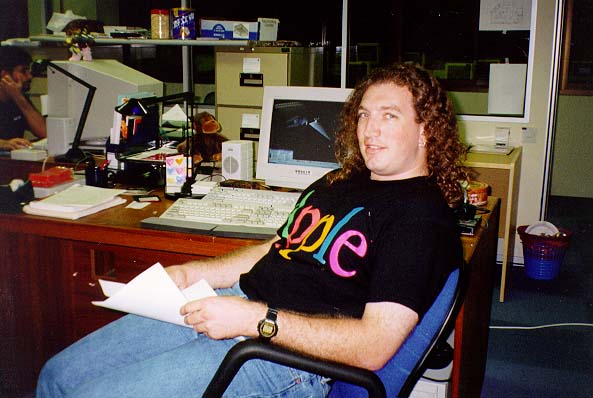
    Then: Singapore, 1995.
    Then: Singapore, 1995.
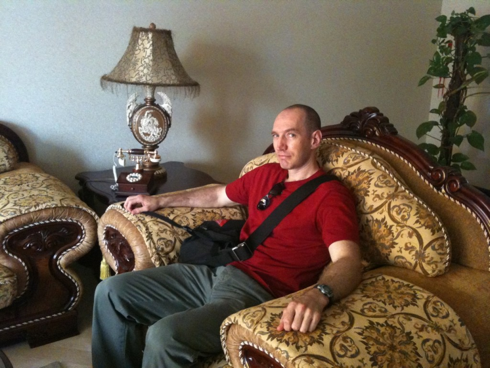
    Now: Beijing, 2011.
    Now: Beijing, 2011.
  • I suck at Christmas trees

    So I’m back in the US of A for Christmas and based on a sample size of two (my parents), I can report that the political mood here is bleak. My mom’s dog of many years died a week or two ago and one of the pressing post-mortem issues is what to do with the now faintly embarrassing “Obama” dog leash. Two years ago this was the shizznet. Today, like the word shizznet, it pretty much just annoys people.

    When you only come home occasionally, you notice strange things. Tonight I noticed that mom’s new oven, part of her recent kitchen renovations, displays not just the time, but also the day and date. Today, the oven announces, is Tuesday, December 21st, 2010. Why the hell does an oven need to know the date? It’s not like you’re going to put a turkey in and then program the thing to start it three weeks hence, right before you get back from London. I mean, you could, but no matter how you dress that turkey, it’s coming out stew.

    Still, it’s always nice to be back for Christmas. But now that we have a child it’s a much more fraught exercise. There’s nothing wrong with the child himself. He’s handsome, charming and funny — at least, inasmuch as any three year old can be. But he is also, like any three year old, the Amazing Human Vector, capable of introducing disease into any population anywhere. If we dropped him out of a B-2 over Afghanistan, our problems there would be over. Indiscriminate use of biological weapons is technically a violation of the Geneva Conventions, but that kind of thing doesn’t seem to bother us so much any more, so the US Air Force can contact me care of this blog if they’re interested in picking him up for, oh, let’s say 200 million bucks. It seems like a lot for a small boy, but is totally reasonable when you consider the strategic impact and the $2.2 billion sticker on the B2.

    Anyway, speaking of coming out stew, last year the Human Vector gave my entire family some kind of awful stomach illness that destroyed Christmas as thoroughly as if I’d filled the stockings with an emulsion of dogshit and gasoline and set them alight, presents and all. On one particularly bleak night Imagethief read all of Nathaniel Philbrick’s “Mayflower” in the bathroom, and that is not a svelte read. So we were pretty sure that by comparison this Christmas would be candy canes and cinnamon pixie-farts.

    With cinnamon pixie-farts in mind, we went over to the little-league field where the Sea Scouts run their Christmas tree lot. My mom’s current tenant had actually left an artificial Christmas tree, but I think artificial Christmas trees are like fat-free ice cream: unnatural simulacra of things that should be by nature joyous and indulgent. If you described a Christmas tree to a police sketch artist from Mars, you might get something that looked like this artificial tree.

    The Sea Scouts were in high spirits, busy dragging one of the volunteer clerks through the ring-like device they use to “net” Christmas trees so they are more compact for driving home. “It’s a boy!” yelled one, capturing in a nutshell what the scene was spookily reminiscent of. But it’s Christmas, so you have to celebrate a virgin birth, even if it’s the simulated virgin birth of an eighteen year old man being passed through a hoop of disposable red-and white netting. While they were cutting him out of the net we found a suitable tree: a six foot noble fir for $51. “Would you like the stand with that?” asked our clerk, who had not been run through the netting machine and was therefore still able to serve us.

    All the Sea Scouts trees come already mounted on broad stands made of green rebar and plastic buckets. The stands cost an extra twenty bucks, but make the tree “ready to trim”, as it were. My mom already has a Christmas tree stand that dates approximately from the Lyndon Johnson administration (really), but which has always been serviceable if a bit fiddly. It seemed excessive to me to pay an extra twenty bucks for a big hunk of rebar that would just get heaved into the recycling along with the tree two weeks hence, so I declined.

    Dumbest mistake ever.

    Here’s a bit of straightforward advice: get the stand. Just swallow the environmental consequences and the measly two bills and get the goddamned included stand. The tree will come in the front door and be ready for trimming and presents. No hassle. And no back problems.

    Ah, the back problems. Part of Imagethief’s genetic inheritance, along with a big schnozz, sweet tooth and tendency to wordy rants, is a gimpy back passed down from my father and exacerbated by years of sloppy gym technique and poor work posture. I am, it must be confessed, a sloucher. This has been my year of back problems. At 43, I should probably be grateful. My father blew his back out like a discount whitewall when he was ten years younger than I am now, and I’ve never found myself laid out on a living room floor for three days like he was. But I did have several spells of pain and stiffness culminating in a stinging pinched nerve that popped up a month ago after an ill-advised encounter with a leg-press machine (never again) and a weekend of vigorous walking, of all things. This made it impossible to run for two weeks.

    I like to run. With my eye on taking advantage of the pristine Bay Area air for some running (while I write this in fragrant Palo Alto, Beijing’s air is once again “hazardous”), I spent the last month carrying myself like an octogenarian grandmother in a Venetian glass factory. I bent from the knees to pick up lint. I even managed to preserve my back while handling my son, who is probably the single biggest factor in its recent deterioration. Three year olds, unlike dumbbells, are prone to suddenly squirm and throw you off balance in ways that can cause discs to rocket out of your spine like ninja throwing stars. They think this is funny and they learn interesting new words when it happens.

    I was rewarded for my care with a pain free back and more or less full range of motion. I even managed to get our two 23 kilo suitcases into PEK out of SFO without re-injuring myself, a feat roughly on par with creating cold fusion using two glasses of flat Dr. Pepper, some kidney beans and a soiled fork.

    But then I had to set up the Christmas tree.

    When you think about it, a Christmas tree is a really ungainly thing. It’s heavy, asymmetrical and the best handholds are buried deep inside, especially when you pay extra for a lush noble fir instead of some threadbare, piece-of-crap douglas fir. I lugged the thing awkwardly from the garage to the living room, only to find that the trunk was too short to fit into the LBJ retro-stand. This meant laying the tree down, going into the garage to dig the hacksaw out from behind the stack of plastic tubs in which my mom’s tenant is apparently storing his collection of lead ingots and anvils, and then getting on my hands and knees to saw the bottom ring of branches off of the tree so it would fit in the stand. Then a little more time on my hands and knees tightening the little collar bolts that hold the tree upright.

    When I was done with this, the tree stood proudly erect but I looked like the hunchback of Notre Dame after a night of rejection and a vicious beating by dockworkers drunk on mezcal shooters. An ill-advised attempt to take an afternoon run lasted exactly one half a block before I had to stop because every step felt like I was driving lemon-zest tent pegs into my hips. With fitness clearly out of the picture, I’ve pretty much been confined to an armchair and living on a diet of chocolate and ibuprofen ever since. I really, really wish I’d just paid the twenty bucks and got the tree with its included stand.

    But the good news is that it’s Christmas and my son, for all his proven lethality, was old enough to enjoy helping with the trimming of the tree and appears to have not imported some terrifying Chinese nursery school pathogen this year. Tomorrow my brothers arrive and the whole family will be together for the first time since last Christmas. In the face of so much good cheer, pissing and moaning about not having a working spine just seems like so much crabbiness. And we won’t be having any of that, will we?

    A merry Christmas to all Imagethief readers.

    Merry Christmas from the human vector.
    Merry Christmas from the human vector.
  • Not enough radiation in your skull and other problems with retail

    Modern Beijing, as distinct from the leafy, 1960s loufang neighborhoods and the hutongs, is an unlovely town at the best of times. No acreage of hanging glass curtain walls can make up for the viscerally alienating nature of the razor-edged, neo-Stalinist SOE office buildings lining the boulevards on the west side of town. The malls and commercial developments of the east side are little better. Wanda Plaza looks like what Albert Speer would have built in Berlin if the Third Reich had lasted into the age of shopping malls. And there are plenty worse than that.

    My own neighborhood is no great prize. It abuts one of those monster intersections on greater Chang’an Avenue that are like urban planning fever dreams – a vast and lethal plane of asphalt ruled by a squawking tribe of crossing-guards that lives in the permanent shadow of a monster overpass, like Brothers Grimm trolls with orange vests. At rush hour the whole thing seizes into gridlock, offering a pretty good preview of what the traffic in Hell will be like. The Guohua power plant’s 500 foot visible-from-space smokestack looms over everything. One of my favorite mental games is looking up at it from different spots in the neighborhood and trying to work out whether it would land on me if it tipped over in my direction. The answer usually is yes.  And people think high school trigonometry is useless.

    Two factors redeem the neighborhood. First, it is within walking distance of the congenial Tuanjiehu, Hujialou and Yanjingli neighborhoods, and the Tonghui canal, which isn’t exactly scenic but is useful for running. Second, it’s convenient, with a subway station, easy access to the Third and Fourth Rings (important for my commute), and a dynamite selection of amenities.

    There is naturally some ebb and flow in those amenities. In early 2008, when Mrs. Imagethief and I returned from a year in Shanghai, we moved into China Central Place Apartments. Soon thereafter workers started converting the previously vacant commercial building in front of  the apartments into an Italian delicatessen and restaurant complex. Having then recently spent a week immersed in the culinary delights of Tuscany, this seemed like a fantastic thing. Exotic sausages and cheeses on our doorstep! Score!

    The reality was rather less inspiring. The Piazza Italia turned out to be three floors of mediocrity: A middlebrow Italian supermarket attached to a cafeteria and an unremarkable restaurant. The curse of the Piazza Italia was demonstrated by its deli. With all the treasures of Italy to choose from, it stuck resolutely to Italian food cliches. I like Parma ham and Parmesan cheese as much as the next guy, but trust me when I say there is much more to Italian deli. For me, the Piazza’s high point came the day Mrs. Imagethief, Zachary and I ate lunch at the cafeteria and found ourselves dining at the table next to Italian prime minister Silvio Berlusconi. Say what you will about the Italians, they’re not hung up about who’s in the restaurant with their leader.

    It was thus moderately disappointing but not in the least surprising when the Piazza rolled over and died. I expressed my grief by rummaging through the wine area and buying several bottles of nice Brunello at knockdown prices. Merchants at Sanyuanli market did a roaring trade in surplus Parmesan for several months thereafter. And Mrs. Imagethief and I started wondering what business might occupy the three newly vacated floors of retail space with an eye watering rent bill.

    I was hoping for a three-floor Jenny Lou, which will tell you how realistic I am. Our neighborhood lost its Jenny Lou three or four years ago, which is a shame because none of the other local shopping options is much good for imports. The BHG Marketplace in the basement of the Shin Kong Place ultramall has pretensions, but mostly it just charges otherworldly prices for produce available for one quarter the price 300 meters away. But, hey, you can get Japanese Cokes for 12rmb.

    In that way, BHG Marketplace is representative of Shin Kong as a whole: glossy, but mostly useless. Take out the Din Tai Feng, the food court and the coffee places, and rest is a waste of space. But maybe that’s just me. I am a man of plain tastes and there are only so many Bvlgari trinkets that I need. And, as I discovered when I tried to buy a jacket a couple of years ago, nothing in the department store fits me. I’m much better off at the Jimmy and Tommy Foreign Trade Club in Sunshine 100. So I guess I have no business assaulting the Piazza Italia for being “middlebrow.”

    After it lay fallow for a few months, work finally began on the abandoned Piazza. We asked the security guards what was being put in, but nobody seemed to know. “A car showroom,” said one. The first sign of trouble came when workers erected an enormous, welded hoarding around the building, concealing it from sight. Concealed buildings in China seldom lead to anything good. A second sign came when the hoarding on one part of the building indicated that it was being subdivided into a cluster of luxury watch boutiques. Finally, the took down the hoardings from the other part and revealed…a three story Burberry boutique.

    If you had asked me to make a list of things that they could have put in the abandoned Piazza that would have been of the least use to me, it would have read like this:

    1. A minefield.
    2. A malarial swamp.
    3. A smelting works.
    4. A Burberry boutique.

    The black, plasticky facade of the Burberry boutique would have been bad enough on its own, but it gained that extra measure of vulgarity thanks to that defining architectural cliche of modern Beijing (after the hanging glass curtain wall), the colossal video screen. In fact, it being a corner lot, one video screen wasn’t enough. There are two house-sized video screens from which endless loops of prancing Eurotrash in plaid trenchcoats can be beamed to the entire neighborhood.

    Our neighborhood was already blessed with an abundance of kinetic distractions, including the semi-animated front of the over-lit Shin Kong mall itself and the usual assortment of kaleidoscopic neon signage and red LED crawls in office windows. But if there is one thing I’ve learned over my years in Beijing, it is that there is no neighborhood so tacky that it can’t be debased just that little bit more.

    It’s hard to transmit the effect of these screens unless you stand in front of them. They’re so bright they can etch your shadow into the sidewalk like atomic explosions. When people stand in front of these things you can see their skeletons and surgical implants. They literally cast a glow over the entire area. The first time Burberry started them up I thought it was large-scale welding works reflecting off of the neighboring buildings. At least my apartment gets only what reflects off of the side of Shin Kong. God help the poor souls living on the east side of Blue Castle who will now be bathed in a nonstop glow of high-energy Burberon particles. They’ll have to install lead-lined curtains or eventually the poor souls will all go thoroughly insane and have to be exiled to some remote corner of Hainan where they can wile away their miserable last days fruitlessly banging damp coconuts together in a wretched attempt to rediscover the technology of fire and cook their meager strands of monkey meat.

    Admittedly, a worst-case scenario, but when you see these screens you’ll know what I’m talking about. If this was Ginza, fine, but this is a partially residential neighborhood. A MyGym looks out over that intersection. Think of the little children!

    I presume they’ll take a cue from the Shin Kong mothership and shut down the illumination at 10:30, but Beijing’s winter sunset comes at about 4:30 PM, which is a lot of time to be exposed to a nonstop loop of fluorescent luxury propaganda. And during the testing phase, all bets are off. A few nights ago I woke up at 2AM and the damned things were on, casting a ghostly flicker across my living room walls.

    I should not be surprised. Our descent into neighborhood tackiness began earlier this year when the property office made the catastrophic decision to line the clubhouse in the middle of our courtyard with animated, green strip lights. This not only made it completely impossible to sit at the outside tables at the coffee shops in the courtyard, but it cast the entire courtyard in a color drawn straight from Pantone’s “Radioactive Monster Puke” palette. Giant video screens were a logical next step. Face the courtyard. Face the street. Face the vast power station. You’re pretty much damned in any direction.

    I guess I should count my blessings. Burberry may have colossal video screens, but at least they didn’t stoop to that other well-worn tactic of Beijing retail marketing: a pair of blown speakers outside the front door blasting distorted Mandarin-pop at a volume that can kill small dogs and knock the magpies out of trees two neighborhoods away.

    But they haven’t opened the watch boutiques yet, so that could still be coming.

    Only much, much bigger.
    Only much, much bigger.
  • The last king of Guanhu

    Continuing my exploration of the zaniest fixtures and furnishings in China, this weekend I looked at a lovely apartment in Greenlake Place (Guanhu) that was thoroughly trashed by this living room set:

    guanhu

    When I finally get around to overthrowing that small, African nation like I’ve been planning, this is the furniture I’ll want in my throne room (although perhaps re-upholstered in leopard or zebra skin). Until then, a bit too grand for my entirely modest ass. Oh, and whether I’m god-king of Botswana or not, that telephone will have to go.

  • Poorly thought out adventures in commuting

    In the grip of my darkest and most bourgeois moments I actually considered buying a car and hiring a driver. So, it’s come to this… I thought, as I hovered over a digital map of Beijing. I have to get one of those Buick vans. No matter how I traced the route or arranged the useless layers of meta-data in Google Maps I had to face up to reality. My new office was in the sticks.

    More specifically, it was in Wangjing. North Wangjing, hard against the Fifth Ring Road. The Fifth is commonly accepted as the dividing line between the frothy, urban Beijing of Apple Stores and upscale dining and the great void of the Chinese hinterland where all is windswept grist for broody New York Times articles about how miserable the rest of the world has it. Well, and also Tongzhou. Never mind that when I moved to Beijing the Fourth Ring Road was that line.

    You can tell the office is in a neighborhood that didn’t exist three years ago. The building is as gorgeous and new as a space station and just as isolated from amenities and comforts. The nearest Starbucks is at least two kilometers away. In Beijing in 2010 more than two kilometers from Starbucks is the qualification for a rural hukou. I brought a French press to office.

    I am strong enough to confront my flaws (although weak enough wrap that confrontation in a layer of prickly humor). By the standards of my Chinese colleagues this is, I admit, jello-kneed schoolgirl bitching. Many of them live outside the Fifth and have commutes that sound lifted from the darker pages of Jack London novels, where people die freezing for want of a twist of jerky somewhere on the track from Fort Yukon to Unalakleet. Just substitute a bendy-bus for the dog sled. Against this, even the commute from Dawang Rd. to Wangjing is lower middle-distance at best, like one of those mid-range Olympic track races that is too long to be exciting but too short to be impressive and that nobody remembers who won.

    I, however, have been spoiled. For six years my distance from the office has ranged from a five minute walk to a five-stop straight shot on subway line 1. Even the latter is the Beijing commute equivalent of schlepping from the couch to the fridge during a commercial break for a half-full can of Duncan-Hines frosting and a Pabst Blue Ribbon.

    Although I toyed seriously with the idea of either buying a car or hiring a car and driver, in the end my socialist* pedigree won out. For my first day at the new job I decided to take public transport.

    Man, was that stupid.

    It looked good on the map, though. From my house I can take the line 1 subway one stop to Guomao. Then it’s a straight shot north on line 10 to the Shaoyaoju interchange and one more stop on line 13 to Wangjing West. From there a short bus ride. Simple!

    If you read the New York Times you probably scan the occasional Tom Friedman column where he hyperventilates about how fast the Chinese are building infrastructure for which Americans have lost the blueprints. Subways, for instance. The statistics for Beijing are magnificent: Thirty lines planned, totaling over 1000 kilometers of track. Everyone living within the Fourth Ring to be able to walk to a station in fifteen minutes. Sounds like The Future!

    Sure. It’s Logan’s Run. But with the subway system from The Warriors.

    There are two reasons for this. First, adding more lines and interchanges has certainly made the entire system more useful. But the number of people riding has gone up as something like a cubic function of the number of track kilometers. In the course of two years my old line 1 commute went from crowded but tolerable to needing to lubricate yourself with Astroglide and use a prybar to get on or off the train. Combined with the casual Chinese disdain for off first, on second it’s a miracle the platforms aren’t entirely covered with bits of scalp and shards of broken teeth.

    Second, the planners of the Beijing subway system haven’t really figured out the whole idea of the subway interchange. In Singapore, subway interchanges are designed such that trains that make the most natural connections pull up on opposite sides of the same platform. Walk thirty air-conditioned feet, get on the next train. Now that’s the future!

    But why build an actual subway interchange when you can just build a long, sweaty tunnel between stations in adjacent neighborhoods? Changing trains in Beijing is a little bit like changing airport terminals, right down to the surprising number of people dragging luggage. Add the rush hour crowds and idiotic security screening chokepoints and it’s almost (though not quite) as bad as checking in at JFK.

    It took me an hour to get from my house to Wangjing West station. When I finally staggered off the third train I was ready to bail on the bus and head for a taxi. Except that Wangjing West apparently serves as the informal transportation hub for the entire Wangjing new town, which means that at any given moment there are zero authorized taxis and about fifty black cabs. I don’t generally like taking black cabs, although I do it from time to time, so I reverted to the bus.

    Big mistake. Should have taken the black cab. Beijing subway platform minders are good at cramming an apparently limitless number of people onto a train, but they have nothing on the bus drivers. Beijing’s bus drivers have taken that skill and extended it into a rarefied art form of otherworldly magnificence. The driver of the bus I took used a combination of eye-watering verbal abuse, physical bullying and backyard-steel-furnace socialist will power to get people stacked three deep in the bus. Mine was the Very. Last. Stop.

    Except that I accidentally got off a stop early and had to walk the last kilometer. There isn’t much in Wangjing and they space out the bus stops like railroad towns. An hour and twenty minutes after leaving the house I got to the office, late and looking like I had been caught in a kitchen fire at a Bob’s Big Boy. I felt virtuous, but exhausted and dumber than a chicken on roofies. Some of my colleagues do this daily. In both directions. This, not the threat of cyberwar, is why America should be scared of China.

    So I’ve been taking the taxi. I did the math. Sure, it adds up, but it’s still way cheaper than a regular car and driver, let alone buying my own car. About 25% of the taxi cost is offset by my having to brew my own coffee (which says something about the magnitude of my coffee habit). And it gave me the gossamer thin rationalization I needed to justify my iPad (thus instantly cancelling out something like two year’s worth of coffee savings). A quiet half-hour each way alone with my electronic newspapers. Well, quiet except for the ubiquitous radio story teller who makes wet lightning-and-thunder noises with his mouth.

    I’ve come to terms with the cost. I’ve come to terms with my increased contribution to global warming. The only thing that really worries me is the feeling that a taxi-based commute in Beijing is actuarial equivalent of moving to Detroit and developing a habit for convenience store robbery. After all, few Beijing taxis have seatbelts and most are driven by people with the patience and deliberation of a fox terrier that has been whipped with car antennas. If you hear of a pileup on the fourth ring and a white man being whisked to hospital to have an iPad removed from his abdominal cavity that’ll be me. If you hear of a taxi driver being whisked to hospital with an iPad embedded in his skull and an angry white man being questioned by police, that will also be me.

    *by American standards.

    You can't get there from here.
    You can’t get there from here.
  • Imagethief movie minute: Wolverines, oil wells and balls of marine brass

    For sheer surreality you gotta love Hollywood. And I’m not even talking about the films. Two PR-worthy Hollywood moments to remark upon today. First, the imminent arrival of the needless remake of cold war teen action flick Red Dawn has finally caught the attention of the Chinese press. Western media are reporting that the chest-thumping Global Times has published not one but two editorials slamming the movie:

    “U.S. reshoots Cold War movie to demonize China” and “American movie plants hostile seeds against China,” read the Monday and Tuesday editorials in the Beijing-based Global Times, whose daily circulation, in Chinese and English editions, is about 1.5 million.

    Coming on the heels of secretary of state Hilary Clinton’s China visit, the commentaries said the $42 million film, directed by Dan Bradley and starring Connor Cruise (son of Tom Cruise and Nicole Kidman), “is deeply rooted in Americans’ fear of China’s rise.”

    “Despite the world’s focus on U.S.-China relations in the strategic and economic dialogue and their increasing economic connections, China can still feel U.S. distrust and fear, especially among its people. Americans’ suspicions about China are the best ground for the hawks to disseminate fear and doubt, which is the biggest concern with the movie ‘Red Dawn,’” one commentary said.

    Well, maybe. Imagethief prefers to think that the remake of Red Dawn is rooted less in Americans’ “fear of China’s rise” than in Hollywood’s lack of imagination and desire to make a buck. But there may be some relationship between the two. I also understand the knee jerk instinct to issue fierce denunciations of the film in the interest of national pride, global harmony, etc. And considering that there was some chatter about this film here in China last March I’m actually kind of surprised it took this long.

    Nevertheless, once again the best PR advice in this situation would have been to shut up. From Hollywood’s point of view, having the nationalist cousin of the People’s Daily rail against the film is better marketing than getting a picture of Connor Cruise with an assault rifle and one of those tractor-pull girls stamped on the forehead of every teenage boy in America. The US press is bound to report on it and it will do nothing but stoke the buzz of the movie back home. This is yet another classic example of “PRing the problem”. Even assuming the objective is to show domestic audiences that the powers-that-be are appropriately outraged, it’s counterproductive on some level.

    But Imagethief isn’t just here to criticize. Like all good consultants (or, former consultants), I come bearing solutions! There is a far, far better way for the Chinese to combat these kinds of silly, sinophobic movies. A way that would make Sun Tzu himself stroke his beard in appreciation. That is for the Chinese to seed their spies throughout Hollywood, use blackmail and honey-traps to build influence in the great Hollywood talent agencies and, whenever they get word that a project they don’t like is going into develop, use their leverage to ensure that Kevin Costner gets attached to it. Problem solved.

    Speaking of Kevin Coster, who has apparently invested heavily in the development of a technology for helping to clean up oil spills, that brings us to our next topic: The great oil spill. (Imagethief is good for artful segues, if little else.) For some reason, this spill has been bringing the Hollywood technologists out of the woodwork.  James Cameron, director of a relentless string of uber-hits and serial inventor of motion picture technologies, recently offered his expertise to BP, who are currently wrestling with a small problem at the bottom of the Gulf of Mexico. In fact, BP’s string of recent failure is something like the mirror-world reflection of Cameron’s own success. From the New York Times:

    “Over the last few weeks I’ve watched, as we all have, with growing horror and heartache, watching what’s happening in the Gulf and thinking those morons don’t know what they’re doing,” Cameron said at the All Things Digital technology conference.

    Cameron, the director of “Avatar” and “Titanic,” has worked extensively with robot submarines and is considered an expert in undersea filming. He did not say explicitly who he meant when he referred to “those morons.”

    His comments came a day after he participated in a meeting at the U.S. Environmental Protection Agency headquarters in Washington to “brainstorm” solutions to the oil spill.

    Cameron said he has offered to help the government and BP in dealing with the spill. He said he was “graciously” turned away by the British energy giant.

    Well, after calling them “morons”, he’s not likely to be invited back. Nevertheless, as the article points out, Cameron’s involvement is not as totally ridiculous as it appears at first 3D look. The guy has backed a lot of underwater R&D. Arguably, investing in the development of remotely operated vehicles for filming is not quite the same as remotely operated vehicles for capping runaway oil wells, but nevertheless it wasn’t totally zany. If you think of him as an “underwater documentarian” it all makes much more sense than if you think of him as “director of Avatar“. Forgive me, but I’m a PR man. This is how my mind works.

    I can, however, understand why BP turned the guy down. This is Jim Cameron we’re talking about, after all. Whatever you think about his movies, the guy is a force of nature. I mean, what if he actually fixed it? Headline: Hollywood director rescues flailing oil firm. BP would be finished. Forever.

    The ocean be damned, that was a PR risk they just couldn’t take.

    See also:

    I'll fix your pipe, pinheads.
    I’ll fix your pipe, pinheads.
  • Down the rabbit hole in Kansai

    So here’s how it goes. Someone inconveniently dies on your airplane just as it is about to take off. You experience an odd mix of feelings. On the one hand, you sympathize with the family and feel bad for their tragic loss in the least dignified of circumstances. No one should have to die in the economy class of a non-moving airplane. On the other hand, you think to yourself, man, is my connection screwed. You are a bad person and will burn in hell.

    But first you will burn in Kansai. Kansai is the international airport in Osaka. That is a lie. Kansai is the international airport that is somewhere in the same general vicinity of Japan as Osaka. On a clear day, you might see Osaka in the distance as you fly into Kansai. Or, then again, you might not. Kansai is where you are supposed to change planes for Hawaii. You want to be in Hawaii. Hawaii has warm breezes, palm trees, and girls in bikinis. You have packed clothes for Hawaii. They are thin clothes.

    Kansai is on an artificial island they built somewhere in the general vicinity of Osaka because to build an airport on existing land near the city would have been a silly idea, and not used enough concrete. Kansai is apparently sinking slowly. This must really piss people off. Or, then again, maybe it doesn’t. After all, keeping the airport from sinking will keep construction companies busy for decades. Japan likes to keep its construction companies busy. Japan invented the idea of the “bridge to nowhere”. Most places build a useless bridge from somewhere to nowhere. In Japan, they build a bridge from nowhere to nowhere. They are that committed.

    There is a bridge from Kansai Airport to Rinku. Rinku is nowhere. It is certainly not in Osaka. Arguably the airport is somewhere, but it’s nowhere you would want to be. The bridge from Rinku to Kansai is a bridge from nowhere to nowhere. It also has a train. Eat that, Gravina Island.

    You need to take a bus over the bridge to nowhere. A young lady from the airline meets you at the jetway, escorts you through the airport and puts you on the bus. She bows and scrapes constantly. She is a professional bower and scraper called into service to apologize for the inconvenience of your delay. She bows and scrapes so hard that she leaves a scuff mark from the jetway through the terminal, through quarantine, through immigration and through customs. She is, however, incapable of arranging meal vouchers for you. This leads to more bowing and scraping. Your back gets sore as you watch her. You are disarmed but feel like an idiot for it.

    Waiting for the bus you realize that clothing for Hawaii is inappropriate for late winter in Osaka. Or Rinku. Or wherever the hell it is you are. You are cheered, however, by the fact that the bus is full of pretty ANA stewardesses. ANA has very pretty stewardesses. And they can do CPR. This may be useful if you pass out from the cold while waiting for the bus. On the other hand, it didn’t help the guy on the plane you were on earlier. They told that guy not to fall asleep, and look what happened to him. If you hear a stewardess telling you not to fall asleep, panic.

    The bus drives you and the stewardesses over the bridge to nowhere and drops you in front of a splendid, gleaming hotel. This is not your hotel. This is the stewardesses’ hotel. Your hotel is across the street, over a footbridge that you must drag your bags over. It is not tall and gleaming. It is short and squat and looks like a Chinese hospital with a Japanese convenience store embedded in it. There are no stewardesses staying there. There is apparently nobody staying there except for you. The convenience store is useful because the restaurant is closed. Who would want to eat dinner in the evening? Who stays in Rinku? Only the stewardesses, and they’re in the nice hotel across the street. Tough shit, hombre.

    The hotel room is small. It reminds you of the single-occupancy dormitory room you stayed in twenty years ago in college except with a tiny, little, Munchkin-sized ensuite bathroom with an intergalactic toilet in it. They spared no expense on the toilet. The pillows, however, are apparently stuffed with something that gives them the consistency of sacks full of Tylenol gel-caps. This does not seem restful. There is a bilingual New Testament and a bilingual Teachings of Buddha. If you’re an atheist, you’d better have brought your own reading material.

    The room has a view of Rinku. Rinku is nowhere. From this room you cannot even see the bridge. That is one of the room’s redeeming features. Another redeeming feature is that it has a television. The guide on the desk says that channel 1 is the BBC. This is a lie. Channel 1 is showing an infomercial for Japanese lingerie. This is not as exciting as it sounds. This is your grandmother’s lingerie. This is almost certainly not the lingerie that the stewardesses are wearing. The BBC is nowhere to be found. There is Internet, however. Thank god for that, because this is Japan and your mobile phone and Blackberry are only good for talking to the voices in your head. Those voices are telling you to turn off the TV.

    The mini-bar is not a redeeming feature. It is empty. Foreigners are not trusted with a full mini-bar. They might get drunk and head for the stewardess hotel across the street. This would be disorderly. You flip through the hotel service guide in the desk. There is an entry for the mini-bar. It says “Room refrigerators have no drinks.” No shit, Sherlock. I guess the money for the toilet had to come from someplace. You are referred to the convenience store. The Japanese have an answer for everything. But they still have no meal vouchers.

    Breakfast isn’t until 9 tomorrow morning and you are in Rinku in winter watching an infomercial for bad Japanese lingerie in a hotel room with an empty mini bar and James T. Kirk’s crapper. You should be on your way to Hawaii. Travel is great.

    IMG_0263
    Phasers on kill.