Month: January 2010

  • Google detonates the China corporate communications script

    Imagethief stumbled blearily to his computer this morning expecting a relaxed scan of the news but found the Chinese Twittersphere ablaze with the news of Google’s bombshell blog post, which went up in the middle of the night early this morning our time. Titled “A new approach to China”, the post, by Google’s Senior Vice President for Corporate Development and Chief Legal Officer, David Drummond, was essentially a public threat to withdraw from China. As such, it was as direct a challenge to the Chinese authorities as I have ever seen in a piece of public corporate communication.

    The first half of the post discusses alleged hacking attempts on Google, apparently with the aims of both recovering Google source code and accessing the Gmail accounts of dissidents. But the second half of the post is more interesting. The money grafs below (emphasis mine):

    We launched Google.cn in January 2006 in the belief that the benefits of increased access to information for people in China and a more open Internet outweighed our discomfort in agreeing to censor some results. At the time we made clear that “we will carefully monitor conditions in China, including new laws and other restrictions on our services. If we determine that we are unable to achieve the objectives outlined we will not hesitate to reconsider our approach to China.”

    These attacks and the surveillance they have uncovered–combined with the attempts over the past year to further limit free speech on the web–have led us to conclude that we should review the feasibility of our business operations in China. We have decided we are no longer willing to continue censoring our results on Google.cn, and so over the next few weeks we will be discussing with the Chinese government the basis on which we could operate an unfiltered search engine within the law, if at all. We recognize that this may well mean having to shut down Google.cn, and potentially our offices in China.

    No doubt a great deal has transpired behind the scenes in the lead up to this announcement. To save time, here’s what I don’t know:

    • Whether this is linked to rumors of Google’s possible withdrawal from China and staff exodus that circulated several weeks ago.
    • The relative weights of the hacking issue, censorship issue and Google’s business struggles in China in leading the company to make this statement.
    • What, if any, discussions Google had with Chinese authorities prior to making this statement (they speak of discussions “over the next few weeks”), or whether there are actually continuing negotiations.
    • Whether recent blocks of Google Docs and Google Groups in China contributed to this decision.
    • Whether Google would have done this if their business in China was stronger. China contributes a minuscule portion of Google’s revenue.
    • What will actually happen to Google’s business in China in the long run.

    Here is what I do know:

    Google has taken the China corporate communications playbook, wrapped it in oily rags, doused it in gasoline and dropped a lit match on it. In China, foreign companies tend to be deferential to the authorities to the point of obsequiousness, in a way that you would almost certainly never encounter in the United States or Europe. Scan any foreign company’s China press releases and count the number of times you see the phrase, “commitment to China”. Demonstrating “alignment with the Chinese government’s agenda” is an accepted tenet of corporate positioning and corporate social responsibility work in China. This is testament to the degree of direct power that the Chinese authorities wield over the fortunes of foreign businesses in China. Even when foreign companies are in dispute with the Chinese government they tend to offer criticism obliquely as long as they have a business stake or operations in the country. Note, for example, the scrupulous diplomacy of Rio Tinto’s communications concerning the detention of its employees last summer, a far more serious situation than anything Google has encountered (although also with far more money at stake).

    In this situation Google has undertaken a bet-the-farm confrontational communications approach in China. They will not have made this decision lightly. Dressed up in the polite language above is what is essentially an ultimatum: Allow us to present uncensored search results to our Chinese users or we’ll walk. The Chinese government is not likely to cave to an ultimatum from a foreign company, no matter how decorously delivered. As Richard Waters of the FT has pointed out, the language does leave some wiggle room for further negotiation. However, Imagethief cannot imagine a circumstance in which the Chinese government will give Google free reign, especially in the current, highly restrictive climate for Internet services. Barring some surprising developments, the clock would therefore appear to be ticking for Google.cn, if not Google’s overall operations in China. It will be very interesting to see how this plays out.

    Would Google continue with an office in China if there was no Google.cn site? They could still conduct R&D here, for instance. But Google’s R&D operations in China have been troubled (remember the Sogou IME scandal?) and if the security issues are taken at face value continuing operations here in the absence of a local business to support might simply be extra risk. Consider how many China R&D operations are “PR&D”, designed to demonstrate that essential “commitment to China” in support of a revenue-generating business in China. It’s not that real R&D doesn’t happen here, but how many companies do high-level, primary R&D in China in the absence of an on-shore business and supporting government relations program? And could Google attract talent to a pariah operation? Distraught Chinese netizens are already laying flowers at Google’s China headquarters.

    The Wall Street Journal’s story (sub) on the unfolding situation makes some interesting points (emphasis again mine):

    The common assumption, however, is that no matter how onerous the limitations and challenges faced by foreign companies in China, the market is too big and important to walk away from.

    That calculation has forced a number of foreign firms to accept conditions in China that they might not tolerate elsewhere. The country has 338 million Internet users as of June, more than any other country.

    Google would be the most high-profile Western company in recent years to draw a line under the kind of compromises it is prepared to make and walk away from China.

    It would be an extremely rare case of a foreign company taking a stand on human rights, and placing that issue over commercial considerations. A number of foreign companies exited China after the Chinese army crushed student protesters around Tiananmen Square in 1989. But they mostly came back in the following years.

    A Google withdrawal would also be an implicit rejection of the argument made by many technology companies that their presence in China overall helps expand access to information for Chinese citizens, despite censorship.

    That’s the very last line in the story, but I found it one of the most interesting. If you followed the original justifications offered by many American Internet companies for launching businesses in China, or the congressional hearings on the matter in 2006, you will recall that the argument that even a censored presence in China improved access to information for Chinese Internet users was central. If Google repudiates that argument it will put pressure on other American Internet firms currently toeing the regulatory line in China, especially Microsoft, and weaken one of their core public arguments for a continued presence in China. Then again, it may also represent an opportunity for them. After all, “Google” doesn’t phoneticize well in Chinese, as the flap over the “谷歌” branddemonstrated. But “Bing” works quite nicely indeed.

    This only the latest chapter –albeit potentially a critical one– in the very interesting story of Google in China. Someone needs to write the book. Anyone want to step forward for that?

    See also:

    • Rebecca MacKinnon’s roundup of responses.
    • James Fallows’ analysis on how this development fits into a broader picture of increasingly tense economic relationships for China.
    • Sarah Lacy in TechCrunch, citing tweets from both Bill Bishop (@niubi — now also blogging again at Digicha) and Marc van der Chijs (@chijs).
    • Brief US State Department statement.
    • CNBC interview with David Drummond (Video – also embedded below): “We’re not saying one way or the other whether the attacks were state sponsored…” Note also the silly use of the word, “cyberterrorists” by the interviewer.
    • Brief, relatively straightforward report from the People’s Daily online (Chinese).
    • Chinese telecoms analyst Xiang Ligang calls it “psychological warfare”, doesn’t think Google will pull the trigger, and doesn’t think it will be a cataclysm if they do (if I read it correctly – Chinese).

    Updates:

    “In a world in which we are so used to public relations massaging of messages, this stands out as a direct declaration. It’s amazing,” said Jonathan Zittrain, professor of Internet law at Harvard Law School and co-director of Harvard’s Berkman Center for Internet & Society.

    The fallout will be interesting. I can’t recall a single case of a major international company with operations in China taking a stand like this. As someone who agreed with Google’s reasoning when it entered China, I also support this move. If it cannot operate here in accordance with its global standards, it should leave. I have given up on getting my own website unblocked by the government and am resigned to the fact that it’s only accessible to people who are outside China or know the technical tricks to get over the Great Firewall.

    I’d rather be outside the wall and free than inside it with the icy hand of the censor around my throat.

    • Wired’s “Threat Level” blog on some of the considerations within Google (via @kaiserkuo).
    • Full disclosure: Imagethief is a supporter of foreign Internet services operating in China. Elaboration in this comment, below, in response to a point from a reader.
    • Isaac Mao’s open letter to Google (English), via Harvard’s “Difficult Problems in Cyberlaw” blog.
    • Xinhua English report on the statement: “‘It is still hard to say whether Google will quit China or not. Nobody knows,’ the official said.”
    • Gady Epstein’s column on Forbes.com: “Dreams of Internet openness in China appear to be a fantasy.” Indeed.
    • Evgeny Morozov punctures the feelgood balloon at Foreign Policy: “If…you believe that [Google] did the right thing in China by offering their limited service (rather than no service at all), I don’t see how this move could make you feel good…”

    http://plus.cnbc.com/rssvideosearch/action/player/id/1383977803/code/cnbcplayershare
  • Paul Midler’s “Poorly Made in China”: Mischief, mayhem, soap

    As a general rule, Imagethief dislikes business books, especially instructional ones. I find them tedious and most of them age faster than caviar on a car dashboard. There are, however, exceptions. Most of these are either books based on journalistic reporting of business events, such as, say, Kurt Eichenwald’s “Conspiracy of Fools”, or on personal narratives of business conducted in extremis. Tim Clissold’s “Mr. China”, to this day the definitive “doing business in China” narrative and probably on the shelves of many Imagethief readers, is the defining example of the latter.

    One of the magnificent things about China is that it seems to provide a bottomless well of business-in-extremis stories. Like many PR pros, I followed with some interest the great product quality scandals of 2007 and 2008, not least because it has a direct bearing on my work when companies discover that something they manufacture in China is [choose one] toxic/sharp/disintegrating/radioactive/manufactured by child slaves. (That list could be extended, but you get the point.) I was thus pleased when a copy of Paul Midler’s “Poorly Made in China” landed on my desk some months ago. However, it went into the long queue on my nightstand and didn’t actually get read for some months until after I received it. Considering my recently ended blog hiatus, this was perhaps for the best.

    In fact, despite my interest in the topic, I was a little reluctant at first to get stuck into Mr. Midler’s book. From the subtitle, “An insider’s account of the tactics behind China’s production game,” and somewhat staid cover art I was expecting something didactic, in the style of the business books I tend not to like. Do not, as the old adage goes, judge a book by its cover. I was pleasantly surprised to find that “Poorly Made in China” is in fact a well told personal narrative of Mr. Midler’s own experiences helping foreign companies to arrange manufacturing relationships in South China. Once opened, I found it entertaining and enlightening (a rare combination also recently attained by Jonathan Fenby’s “Penguin History of Modern China”, one of the books ahead of Mr. Midler’s in my queue, which I recommend to all China expats not already versed in modern Chinese history).

    Most of the story concerns Mr. Midler’s work with an American client manufacturing personal care products (e.g. soaps and shampoos) in China. What could go wrong with soap, you ask? Plenty, it turns out, and the story revolves around the struggle of Mr. Midler and his client to maintain quality standards (of the product, the packaging, the factory sanitation — you name it) in the teeth of entrenched Chinese business habits that seem to give rise to corner-cutting at every imaginable opportunity and a few unimaginable ones. From this main thread Mr. Midler branches off into other interesting stories and illustrations.

    “So what?” you may be saying to yourself. Chinese manufacturers cut corners at every opportunity. What else is new? Even my Singaporean mother-in-law knows this. “Keep a hand on your wallet,” she warned me when I announced my intention to move myself and her daughter to China six years ago. Needless to say, my personal experience here has been much more positive than she expected, but much of the mainstream reporting on the product quality crises of the last couple of years took a similarly one-dimensional China-as-villain tone.

    With that in mind, the value of Mr. Midler’s book is two-fold. First, Mr. Midler tells his story as someone who, despite all the frustrations and adventures, seems to never have lost his basic affection for China. He never falls back on the trope of villainy. “Sister”, the owner of the Chinese soap factory that figures in much of the book, is presented not as a criminal or predator, but as someone trying very hard to succeed in a particular business context. This leads to the second, and main value of “Poorly Made in China”: Mr. Midler does an excellent job of explaining in a readable way that context of Chinese business, and the social, cultural, and economic forces that have shaped the practices of people like Sister. He explains how western buyers and Chinese businesses have created a delicate and sometimes dangerous symbiosis in an environment of ruthless competition, price pressure and complex webs of relationships. The book is critical, but not judgmental, which I found refreshing.

    Even if you’re not in manufacturing or dealing with the consequences of manufacturing problems (as we PR people sometimes do), you may find the book interesting as a study in the forces that have shaped Chines business over thirty years of turbocharged economic growth. Many of these forces that have shaped Chinese manufacturers may be at work in your industry as well. They’re certainly at work in mine. Against this reality, efforts such as the following, while admirable for the move toward international public communication, seem modest indeed.

    http://v.blog.sohu.com/fo/v4/3844191

    Disclaimer: The publisher and author provided Imagethief with a complementary review copy of “Poorly Made in China”. Make of that what you will. Imagethief gladly accepts review copies, but cannot guarantee that he will read or like books furnished.

    Note: Title of this post with apologies to the marketing team for the film “Fight Club”.

  • Seriously? They blocked IMDB?

    Imagethief is as annoyed by the Great Firewall (or Net Nanny or what-have-you) as anyone who lives in China and uses overseas social networks. One of the great joys of mypox-afflicted Christmas vacation was having one of my annual bursts of unfettered Internet use. After months of sipping my Internet through the narrow and frequently blocked swizzle-stick of Chinese “broadband” it’s always refreshing to turn the VPN off and draw my Internet through the big-bore bubble tea straw of an American or Singaporean ISP.

    Still, say what you will about the GFW, it does provide those of us who live in China with one of our most enduring parlor games: Who’s blocked? Why? Who goes down next? What’s accessible again? What does it all mean? Buy? Sell? Hold? Stockpile turnips? Trying to read the tea leaves of the GFW is the Kreminology of  21st Century Beijing, especially for us nerdy blogging types.

    Most of the time, as misguided as it might appear to us bourgeois foreigners, we can at least discern the rationale for GFW decisions. Apple highlights an album dedicated to Tibet on iTunes, so they get slapped for a while. Yeeyan starts translating foreign news a little too freely so the great, sweaty thumb comes down on them like the Monty Python foot of censorship. Microblogs outside the control of the big media groups looking a little too much like group organizing tools? Adios, muchachos. Sorry about all those venture capital deals. In its own way, the GFW is a window into the fever dreams of the Chinese government, albeit a small window in serious need of a spritz of Windex and a roll of “Brawny” paper towls.

    But I have to confess I am totally mystified as to why this week the Chinese authorities decided to block the Internet Movie Database (IMDb). Yes, there are most certainly entries in IMDb that are counter to Chinese doctrine (“Seven Years in Tibet”, etc.), but you’d struggle to find them through the updates on development of the sequel to “The Hangover” and such. All of that “hurt-the-feelings-of-the-Chinese-people” stuff is also available in more practical and influential form on any number of other sites such as iTunes, Google and Amazon.

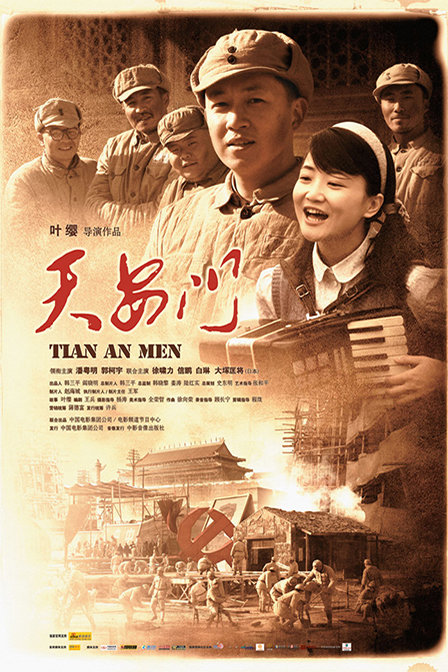
    If anyone has a good explanation for why this happened, I’d love to hear it. Is it personal? Perhaps it’s because a search for “Tiananmen” yields plenty of misguided Western propaganda while shamefully omitting China Film Corporation’s feel-good National Day picture of the same name*? Who knows. Simply by virtue of its impenetrability and apparent capriciousness, this move puts the GFW dangerously close to self-parody territory. What’s next to be blocked in the interest of the correct guidance of public opinion? Hello Kitty? ESPN? Funny-or-die? The mind reels.

    *This was last year’s lightweight counterpart to the more serious but less watchable “Founding of a Republic.” Imagethief really wants to know what the deal with the girl with the accordion was. She’s on the poster foreground, but in the film for all of about ninety seconds, thus constituting the sum-total of the sex appeal as far as Imagethief is concerned. This, although scant, was admittedly ninety seconds more sex-appeal than “Founding of a Republic” had.

    Update:

    Also blocked, for the first time as far as I know, is Imagethief. Puts me in good company, along with Danwei.

    Update 2:

    Apparently blocked only in Beijing. Imagethief, it seems, is suitable for the decadent financiers of Pudong, but not for the refined sensibilities of Zhongnanhai. I don’t know what to think.

    Think,
    Think, “Die Hard”, only communist, funnier and with an accordion girl.
  • We’re back, plus the great Christmas pox of ’09

    On Sunday Imagethief arrived in Beijing from two well-earned holiday weeks in the San Francisco Bay Area. Flying with Zachary), now 22 months, is always an adventure. He’s a well traveled kid, but a well-traveled two year old is like a well-traveled troglodyte. Even at their best, social habits are wanting. I’m not especially superstitious, but I knew we were headed for trouble on the return flight when, at about the International Date Line, the woman seated across the aisle from me said, “He seems very well behaved.” Thus jinxed, the last three hours consisted of full-on, bawling meltdown as we became one of those families that other people on airplanes dream of pushing out an open door 35,000 feet above the trackless, ice-clad wastes of Siberia. During one particularly tantrumy spell I even dreamed of pushing myself out.

    The definition of “hell on earth” is touching down in Beijing during the blizzard of the century after a twelve-hour flight in steerage with a sleepless toddler who is entering the hallucinatory/psychotic stage of fatigue. Beijing’s taxi drivers had collectively decided to wait the whole deep-freeze out, so the taxi queues looked like round-the-block Depression-era breadlines with luggage carts. This is when something unprecedented happened: We were invited to the front of a queue by Chinese people. Say what you will about Beijing, but it’s a great town to have a kid in, even if that kid is in twelve-gauge, double-barrel meltdown.

    The drive home took another hour as we slo-mo fishtailed our way along the No. 2 airport express way, which resembled a snowed-in version of Iraq’s famous “highway of death” from the first Gulf War. Nevertheless, we made it home just as the last of the twilight slid away. Three boiled dumplings later, the kid went to bed. As I lowered him into his crib, he flashed me a huge and utterly sincere grin (as opposed to his normal, cheesy and exaggerated one), as if to say, “Father, from the bottom of my heart bless you for putting my tired ass to bed.” The last time I was that happy to go to bed myself I had just watched the sun rise after a poor-man’s bender of Red Horse ’40s and Taco Bell while still in college. This I do not recommend for anyone over the age of 22.

    I’d been counting down to this Christmas holiday since roughly August, when I went on blog hiatus and commenced five months of particularly grueling work. In my head, I constructed all these fantasies of two weeks of complete indolence and gluttony. These plans were duly torpedoed by my son, who had diarrhea on the plane. This turned out to be caused by a stomach flu that infected me, both my parents and my sister-in-law. After spending our third day in Palo Alto sponging up toddler-vomit (from the rug, the hallway, the dog) and with me paralyzed with fever on the couch, we took Patient Zero (formerly Zachary) to a local clinic in Palo Alto. There the doctor said there was nothing much to do but wait it out, and asked us if we’d had direct contact with his vomit or feces. I had a flashback to changing runny, poop-sodden diapers in the matchbox-bathroom of United steerage three days before. In such a confined space perhaps Iron Man or a trained doctor in one of those plague movie bunny suits could have avoided direct contact with fecal matter. I, however, could not. (Also, thanks to the American health system, I still have no idea how much I’m being charged for this consult.)

    The upshot was that I spent the whole first week of the holiday with no appetite whatsoever, which means I probably gained a little less holiday weight than usual. But I also had to apologize to everyone else who was laid up, including my mother, who spent an un-festive Christmas day in bed with a fever (on top of wrestling with an automotive soap opera too complicated and depressing to recount here). My sister-in-law paid us back, however, as she and my brother traded their infant daughter’s cold for our stomach flu. Zachary had the pleasure of being sick in both directions, but with completely different secretions. You gotta love parenthood.

    Nevertheless, Imagethief made the best of his vacation under the circumstances. With an heroic effort in week two, I’m pretty sure that I compensated for most of the first week’s caloric deficit. You can accomplish splendid things with egg nog if you put your mind to it. Plus, Elliott Ng of CNReviews, whom I also saw recently in Beijing, was kind enough to treat me to a burrito the size of a Pres-To-Log over an extensive conversation about China blogging. That alone probably put a pound back on.

    This brings me to two announcements. First: The great Imagethief blog hiatus is officially over. I’m not sure what kind of pace I’ll maintain, but I intend to get back to regular blogging and it won’t be hard to top the average of two posts a month since last August. Thanks to any remaining readers who have stuck around for five months of relative inactivity. Your Imagethief decoder rings are in the mail.

    Second: One reason why I have the time to blog again is that I have started a six-month sabbatical from work in order to return to my languishing Chinese studies. In fact, it’s only a partial sabbatical as I will still be working a couple of days a week so I don’t have to dip into my savings and can keep my family’s visas and health insurance in good order (the insurance thing is looking pretty key after Christmas). But three days a week will be spent with my tutor and my nose in the textbooks and Chinese newspapers. A hat tip to my employers, who have been spectacularly cooperative about the whole thing. This is pretty experimental, and we’ll see how it all goes, but I’m excited.

    Finally, I’d like to wish all readers a belated by sincere happy new year. Here’s hoping 2010 is better than 2009, and that the teens are an improvement on the naughties.

    On Sunday Imagethief arrived in Beijing from two well-earned holiday weeks in the San Francisco Bay Area. Flying with Zachary), now 22 months, is always an adventure. He’s a well traveled kid, but a well-traveled two year old is like a well-traveled troglodyte. Even at their best, social habits are wanting. I’m not especially superstitious, but I knew we were headed for trouble on the return flight when, at about the International Date Line, the woman seated across the aisle from me said, “He seems very well behaved.” Thus jinxed, the last three hours consisted of full-on, bawling meltdown as we became one of those families that other people on airplanes dream of pushing out an open door 35,000 feet above the trackless, ice-clad wastes of Siberia. During one particularly tantrumy spell I even dreamed of pushing myself out.

    The definition of “hell on earth” is touching down in Beijing during the blizzard of the century after a twelve-hour flight in steerage with a sleepless toddler who is entering the hallucinatory/psychotic stage of fatigue. Beijing’s taxi drivers had collectively decided to wait the whole deep-freeze out, so the taxi queues looked like round-the-block Depression-era breadlines with luggage carts. This is when something unprecedented happened: We were invited to the front of a queue by Chinese people. Say what you will about Beijing, but it’s a great town to have a kid in, even if that kid is in twelve-gauge, double-barrel meltdown.

    The drive home took another hour as we slo-mo fishtailed our way along the No. 2 airport express way, which resembled a snowed-in version of Iraq’s famous “highway of death” from the first Gulf War. Nevertheless, we made it home just as the last of the twilight slid away. Three boiled dumplings later, the kid went to bed. As I lowered him into his crib, he flashed me a huge and utterly sincere grin (as opposed to his normal, cheesy and exaggerated one), as if to say, “Father, from the bottom of my heart bless you for putting my tired ass to bed.” The last time I was that happy to go to bed myself I had just watched the sun rise after a poor-man’s bender of Red Horse ’40s and Taco Bell while still in college. This I do not recommend for anyone over the age of 22.

    I’d been counting down to this Christmas holiday since roughly August, when I went on blog hiatus and commenced five months of particularly grueling work. In my head, I constructed all these fantasies of two weeks of complete indolence and gluttony. These plans were duly torpedoed by my son, who had diarrhea on the plane. This turned out to be caused by a stomach flu that infected me, both my parents and my sister-in-law. After spending our third day in Palo Alto sponging up toddler-vomit (from the rug, the hallway, the dog) and with me paralyzed with fever on the couch, we took Patient Zero (formerly Zachary) to a local clinic in Palo Alto. There the doctor said there was nothing much to do but wait it out, and asked us if we’d had direct contact with his vomit or feces. I had a flashback to changing runny, poop-sodden diapers in the matchbox-bathroom of United steerage three days before. In such a confined space perhaps Iron Man or a trained doctor in one of those plague movie bunny suits could have avoided direct contact with fecal matter. I, however, could not. (Also, thanks to the American health system, I still have no idea how much I’m being charged for this consult.)

    The upshot was that I spent the whole first week of the holiday with no appetite whatsoever, which means I probably gained a little less holiday weight than usual. But I also had to apologize to everyone else who was laid up, including my mother, who spent an un-festive Christmas day in bed with a fever (on top of wrestling with an automotive soap opera too complicated and depressing to recount here). My sister-in-law paid us back, however, as she and my brother traded their infant daughter’s cold for our stomach flu. Zachary had the pleasure of being sick in both directions, but with completely different secretions. You gotta love parenthood.

    Nevertheless, Imagethief made the best of his vacation under the circumstances. With an heroic effort in week two, I’m pretty sure that I compensated for most of the first week’s caloric deficit. You can accomplish splendid things with egg nog if you put your mind to it. Plus, Elliott Ng of CNReviews, whom I also saw recently in Beijing, was kind enough to treat me to a burrito the size of a Pres-To-Log over an extensive conversation about China blogging. That alone probably put a pound back on.

    This brings me to two announcements. First: The great Imagethief blog hiatus is officially over. I’m not sure what kind of pace I’ll maintain, but I intend to get back to regular blogging and it won’t be hard to top the average of two posts a month since last August. Thanks to any remaining readers who have stuck around for five months of relative inactivity. Your Imagethief decoder rings are in the mail.

    Second: One reason why I have the time to blog again is that I have started a six-month sabbatical from work in order to return to my languishing Chinese studies. In fact, it’s only a partial sabbatical as I will still be working a couple of days a week so I don’t have to dip into my savings and can keep my family’s visas and health insurance in good order (the insurance thing is looking pretty key after Christmas). But three days a week will be spent with my tutor and my nose in the textbooks and Chinese newspapers. A hat tip to my employers, who have been spectacularly cooperative about the whole thing. This is pretty experimental, and we’ll see how it all goes, but I’m excited.

    Finally, I’d like to wish all readers a belated by sincere happy new year. Here’s hoping 2010 is better than 2009, and that the teens are an improvement on the naughties.

    Mophead

    Happy new year from patient zero!