Tag: Journalism

  • Good News! The Press is Out to Get You

    A couple of weeks ago I gave a talk about PR in China to a journalism class at Beijing Foreign Studies University. In any student talk the Q&A is always the most fun, and this group was no exception. Among the many good questions asked was whether it was easier to do PR in China because, as I had discussed in my talk, the Chinese media is generally cozier with businesses than their Western counterparts.

    Easier to get stories? Yes. Easier to achieve meaningful results with the public? No.

    I was reminded of this question by the recent expulsion of hard-charging Al Jazeera English correspondent Melissa Chan, and subsequent closure of the AJE bureau in China after the Ministry of Foreign Affairs refused to accredit another AJE journalist. I didn’t know Melissa well, though I had met her, but I respected her reporting and willingness to insert herself into uncomfortable situations, and I was disappointed to see her go. Reporting on China will be impoverished a bit.

    That, of course, was the point. The Chinese government has never been comfortable with an adversarial media, and Melissa’s reporting was, like that of much of the foreign press corps, pretty adversarial from their point of view. This discomfort is deeper than cursory annoyance at embarrassing foreign gadflies (although I presume that is part of it). It arises from one of the fundamental philosophies of Leninist political parties: the media are considered Party organs and, as with other Party organs, expected to serve the interests of the Party first and foremost. Media that don’t fit into that model are suspect by definition. You can see this philosophy expressed in the mechanisms of control that the Chinese government maintains over all domestic media, and in the government’s struggles to come to terms with the rise of social media that resist conformity with established power structures.

    The Party’s model is rather different from the fundamental philosophy of Western media: that it should be the fourth estate, entrusted with challenging the business and government establishment in the interest of the people. You are welcome to argue about how effective Western media have been in this role in recent years, and there are plenty of exceptions, but as a founding principle the idea of the fourth estate is alive and well and inextricably bound up with our Western ideas of what the media should be (and with the value judgments we render on media that doesn’t conform to that principle). A functional, adversarial media is a necessary component of Western-style liberal democracy, unless you have total faith in politicians and institutions.

    I am not going to comment further on the specifics of the Al Jazeera situation (some links to good articles below), but in light of the Chinese government’s recent struggle with rumors and trust issues, it’s worth reflecting on why an adversarial media is sometimes useful, even to the establishment. This is what I discussed with the students at Beiwai.

    As a news junkie who still pays for several subscriptions, I’m most definitely a fan of adversarial media model (you could also call it an “independent media” model, but independence is only valuable in that enables an adversarial position). There is nothing like a fantastic piece of investigative reporting that rips the lid off of some secret or scandal or that illuminates the dark corners of business or politics. As long as it’s not my dark corner, that is.*

    As a PR practitioner with a company reputation to defend, I’ve experienced firsthand the adversarial media model’s short-term ability to create sleepless nights and great puddles of cubicle sweat. But nevertheless, I still appreciate its value in the long-term. That’s because people are more likely to trust media that challenges me than one they know to be compliant with me, and I need media that the public trusts to get my message out, whether that message is a corporate one, a product review or whatever. If I have to do more work to get coverage in that kind of media, and tolerate some negative coverage as well, so be it.

    In China, on average, relationships between businesses and the media tend to be closer and less adversarial than in the west. There is also a range of ethical problems, including poor separation of advertising and editorial, the “transportation claim” subsidy-in-disguise, and more. Together, these make it easier for companies to earn –or buy– good coverage in local media than it would be in many other markets. But they also mean that the public is relatively more skeptical of much of the coverage and turns to alternative voices for much of its information and insight, many of them on microblogs . The result is a devalued media that makes even our best earned coverage less useful and influential, and that makes it harder for me to manage misinformation and rumors about my company.

    Sound familiar?

    These are generalizations. There are excellent journalists and excellent media in China, and crappy ones in the west. But the overall gap in trust is real. The real sign of progress here will not be in the government showing more tolerance for confrontational Western media, but in its tolerating the emergence of a fully independent, professionalized and adversarial Chinese media. That change, when it happens, will be driven by Chinese journalists. In some ways, it’s already happening.

    For those of us in the establishment, there is value in learning to deal with an adversarial media, and in being good at telling our stories and getting our messages across in media that are willing to challenge us, and that therefore lend credibility to the claims that survive their scrutiny. But if you’ve never had to deal with that kind of media, you haven’t developed the skills necessary to do so, and you rely on a tradition of control and management to get your message across, then you are in the realm of propaganda and will face the consequences in terms of diminished trust.

    And if your situation is so precarious that there is no way to tell a positive story when engaging with adversarial media? Well, then, your problems are much bigger and deeper than PR skills. Or one uppity journalist.

    * Just kidding. Naturally, I have no actual dark corners.

    See also:

    On the Al Jazeera situation:

    On the difficulty of reporting in China:

    Note: This post originally published on the defunct group blog Rectified.name.
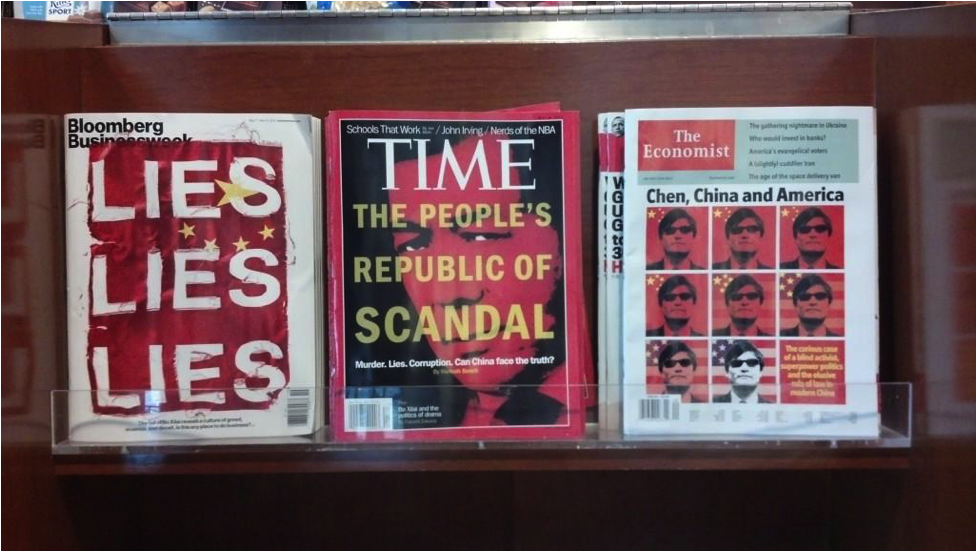
    Good news? A magazine stand at SFO's international terminal on Monday.
    Good news? A magazine stand at SFO’s international terminal on Monday.
  • Four lessons from the Burson-Facebook fiasco

    I’m ridiculously late to this, as usual, but people keep asking me about the Burson-Facebook thing because of my years at Burson, so I thought I’d post the gist of the response I’ve been giving. If you’re not familiar with the story of Burson’s ill-fated project stirring up FUD about Google on behalf of Facebook, you can read about it here.

    But first, some housekeeping. I worked for Burson-Marsteller for six years, all here in China. It was a great experience. Much of what I know about PR and virtually all of what I know about doing PR in China I learned at Burson. I still use Burson-Marsteller China as an agency, and hold the people there in the highest regard. All agencies make mistakes. No one in PR wants to damage the reputation of a client, or their own agency. When it happens, we try to learn from it.

    I don’t know what the chain of events involved in the Burson-Facebook project was, and I don’t know any of the people involved. I have no inside track. But as an industry observer, and in the spirit of learning from the situation, here are four lessons to take from this episode:

    If it will embarrass you to have a pitch go public, it’s a bad pitch

    The art of selling stories or viewpoints to journalists, bloggers or the public is a pitch. In writing or verbally, a pitch should stand alone as something you’d be comfortable going public on its own. If a pitch doesn’t pass that test, and its public release would embarrass you, your agency or your client, it’s a bad pitch. Any pitch that doesn’t identify the interest behind it is by definition a bad pitch, because lack of disclosure in a pitch suggests that someone would be embarrassed to be connected with it.  Rethink the strategy. Yes, this tars a whole branch of political PR based on anonymous leaks. So be it.

    There’s nothing wrong with criticizing a rival…transparently

    It’s silly to pretend that slamming competitors isn’t part of PR. In the industry it’s called “depositioning”, a sanitized word that suggests some lingering discomfort. Outside it might be called smearing or, for those in the tech industry, FUD (fear, uncertainty and doubt). So what’s the difference between a smear and a legit piece of competitive PR? Transparency, for one thing. There is nothing wrong with criticizing a rival (or a client’s rival) or pointing journalists at their shortcomings. But you’d better be prepared to stand behind your claims, and that means being well researched and transparent.

    PR instincts and journalism instincts are not the same

    PR agencies hire a lot of ex-journalists for their story instincts and their usefulness in media relations due to their contacts and credibility with other journalists (more on this below). But the fit isn’t always natural. Someone senior from a global agency other than Burson told me recently that they have about a ten percent long-term stick-rate from their senior journalist hires in the US. I’m not surprised.

    One problem is that although they overlap, journalist instincts and PR instincts are not the same. Oversimplified, journalistic instincts emphasize spotting and piecing together stories while PR instincts often emphasize identifying and managing risks. We spend as many years and as much work developing our instincts as journalists spend developing theirs. Any crossover in either direction means a learning curve. The risk that should have been spotted in this particular case was that the backstory of the pitch –an anonymous client paying a major PR firm to slam Google on privacy– was more interesting than the pitch itself.

    Set a thief to catch a thief

    Despite the blurring of the line between mainstream media and blogging, journalists and bloggers are different. If you send a bad pitch to a mainstream journalist, generally it just dies (perhaps along with some of your credibility). If you send a bad pitch to a blogger, there’s every chance it’s going to published and ridiculed. Welcome to blogging. This isn’t 2003, and everyone should be up on this. I understand hiring mainstream journalists to pitch other mainstream journalists, but it seems to me that the PR industry has been slow to embrace using bloggers the same way. As a blogging PR person I don’t think bloggers are particularly more resistant to working in PR, but I definitely think they respond to PR differently than mainstream journalists. And that’s definitely true for tech bloggers.

    Thoughts? Feel free to argue with me.

    See also:

    Lou Hoffman’s “Ishmael’s Corner”: More to the Facebook PR campaign against Google story

  • Alibaba’s Alizila is PR. Be proud!

    I just read a post from Forbes’ Hana Alberts on Alizila, a homegrown company news site for the Alibaba Group. Alibaba has hired an experienced journalist, Time Magazine veteran Jim Erickson, to develop the articles for the site:

    Erickson isn’t “selling out” in the traditional sense of the word, that is, he’s not morphing into a press release writer or a corporate communications executive. He will instead remain a reporter — just one who’s getting a paycheck from the only company on his beat. Call him a corporate journalist.

    Erickson, who co-wrote a biography of Bill Gates, is the managing editor of the site — and, at the moment, its only writer. Alibaba, which believes this initiative is the first of its kind, say it’s not a marketing tool but rather a “quasi-independent news outlet.”

    “All my life I’ve known journalists who have gone over to what we call ‘the dark side,’” Erickson says. After 25 years in journalism and a brutal layoff, he felt Alibaba offered him a middle ground: “I could still be a journalist, but I wouldn’t be subject to the same constant financial pressures.”

    I’ll give this to Alibaba Group: I think they’re one of the few Chinese firms that gets international PR. Granted Alibaba is not cut from the same cultural cloth as the big SOEs and red-chip firms, but even controlling for that they’ve done a good job telling their story.

    Although it still feels like a work-in-progress (and is labeled “beta”), Alizila is a good idea. This is the digital age, and as mainstream media are stretched ever more thinly companies need to get better at telling their own stories directly to the audiences that matter to them.

    But I wonder about two things. First is the effort taken to stress that Mr. Erickson remains a journalist and not a PR person. As a PR person, when I look at this site I see PR: A house platform for telling stories about the company and making the company more visible.

    In the end, can you be a journalist in the sense most of us understand it and report impartially on a daily basis on the company cutting your paycheck? What will happen when there’s a real crisis or serious problem that demands coverage or investigation? What will happen the first time someone in an executive suite wants to kill or amend one of Mr. Erickson’s stories?

    Some of the stories on Alizila do delve into Alibaba’s challenges, but none of them is what I would call confrontational. Ms. Alberts quotes Mr. Erickson remarking on an Alizila article he wrote on Alibaba’s efforts to tackle counterfeits on the site, saying, “I’m certainly not going for the jugular, but if you’re in PR it goes against every instinct in your body, because you are drawing attention to the fact that there are fakes on the website.”

    I’m in PR, and as an outside observer it doesn’t go against every instinct in my body. The availability of pirate goods on Alibaba isn’t a secret that’s being suddenly revealed. Personally, I’d see a post on steps the company is taking to control a known problem, even one that embeds some criticisms or discusses past problems, as generally positive. If that story had been on a third-party news site, I’d grade it as positive with regards to Alibaba because of the emphasis on the company’s actions to resolve the problems and the positioning of the piracy problem as a widespread issue afflicting the entire industry (a classic PR technique, “broadening”). If it had been a story earned through PR, it’d be good PR.

    The second question is why jump through hoops to make this look like a news site rather than harnessing Mr. Erickson’s talent and experience as a straightforward company blogger? He could cover the same topics, dig into general industry news, use a more engaging voice, and probably achieve similar visibility results for the company, without having to maintain what to me seems like an unsustainable air of impartiality. He could be an advocate in the best possible way.

    Perhaps it has to do with how the audience they’re trying to reach will perceive a blog as against something that looks like a news site (although they’re also active on several conspicuously American social media networks). Or perhaps it’s simply the approach that everyone is comfortable with. There is a blog on Alizila, but although the posts seem shorter than the “news” articles, the voice is similar.

    Ultimately, Alizila is PR. There’s nothing wrong with that. They should embrace it and be proud. Get past the “dark side” stuff. Good, honest communication and good storytelling are both part of good PR. And there is certainly a role for journalistic skills in good PR, nutting out the stories and telling them well (which is why our industry is full of ex-journalists, although Imagethief is not among them). But trying to distance such efforts from PR strikes me as disservice to PR and journalism alike.

    With all that in mind, I think Alizila is interesting, especially coming from a Chinese company. I’m curious to see where they take it and if they launch a Chinese version.

  • Unsolicited advice for Xinhua’s new CNC TV news outfit

    To listen to people moan about the fact that China has sixty “Confucius Centers” in the US to America’s zilch-nada in China you’d think the Chinese were wrapping up hearts and minds around the planet while America gets relegated to the public diplomacy junk-heap alongside the usual despotic malcontents. While I’ll concede that China has an advantage in being able to roll out cultural centers in the US while smothering our own poorly funded efforts in red tape, I’m inclined to see that imbalance as the result of the tolerance and openness that have been part of America’s strength for the last 234 years. Give or take.

    Readers in America: When was the last time any of you went to a Confucius Center? I thought so. How about watched a Chinese television program or a Chinese movie that wasn’t directed by Zhang Yimou or Chen Kaige? See any Chinese brands last time you walked down the street? Ever had an American tell you they think Hu Jintao is super cool? Driven a Chinese car lately? Right. Whereas here, people feast on American pop culture (especially TV and movies), the street corners are a plague of American fast food labels and Buick is an aspirational brand. Leaving aside your opinions as to the value of McDonalds and Starbucks as ambassadors of American values, let’s not get all hysterical about the Confucius Centers or wallow in insecurity about America’s cultural influence until poor American refugees start seeking a better life in Fujian.

    In fact, China’s government is well aware of its soft-power deficit with regard to the US (see also this article on Danwei), and has been investing in building up its capabilities. International news is one of the key areas of investment, thus the revamping and expansion of China’s foreign-language media organizations. This has included a refresh of the venerable China Daily, the launch of the surprisingly interesting English edition of theGlobal Times, the revamping of CCTV’s English language station, and more. Most recently, the Wall Street Journal has an interesting story about Xinhua’s plans to roll out an international television news service:

    China’s state news agency announced the launch of a global English-language television channel, part of a broader international push by the country’s government media aimed at countering the dominance of Western news outlets and conveying a Chinese perspective on events.

    Xinhua news agency said trial broadcasts of the new 24-hour TV service, called China Network Corp., or CNC, will start Saturday, and the station will be fully operational July 1. CNC will be available by satellite, cable systems, the Internet and cellphones, Xinhua said, and will carry a range of programming on news, business and lifestyle issues.

    “CNC will offer an alternative source of information for a global audience and aims to promote peace and development by interpreting the world in a global perspective,” Xinhua quoted its president, Li Congjun, as saying at a launch ceremony Friday.

    Well, maybe.

    I fully understand and even support the motivation behind this. China is a globally important country and has a right to be represented in international media. And as American news media continues its slow-motion implosion, you’d think this would be a good time for them to make their move. Nevertheless, I have a history of rolling my eyes at Chinese efforts to improve their international media efforts. This is not because I am some kind of cynical bastard (although that might also be true) or because I doubt China’s technical competence (I do not). It is because I feel that the natural control-freak inclinations of the Chinese government toward media essentially preclude any ability to develop a news organization with real, international credibility.

    The objective–the real objective–is important. If the goal is simply to further disseminate the usual propaganda, then fine, they can do whatever they want. They’ll all feel good about themselves. But no one will watch.

    If, on the other hand, the goal is to develop an international media organization that can compete with what’s already offered in English and offer a legitimately different but respectable perspective, then they’ll need to break their traditional mold a bit. Al Jazeera is perhaps the model here. It emerged from a country and region not known for a liberal approach to media and established itself as a serious and credible news organization largely on the back of its Iraq and Afghan war coverage. It did so while still presenting a point of view that was a clear alternative to most western media. They were helped along by some good journalism and slick packaging.

    I don’t want to overwork the comparison. For one thing, Al Jazeera has had its problems (including serious personnel issues at their English service a couple of years ago). China certainly has the resources to try something similar to Al Jazeera, but it has some very different political and institutional factors to wrestle with than Qatar did. Also, the world isn’t necessarily screaming for an Asian alternative. Remember, Singapore has already tried the international TV news stunt with Channel News Asia, and it has had only modest international success at best. Even Al Jazeera kind of limped along for several years until it found its purpose and voice after 9/11 and the Afghanistan and Iraq wars. One hesitates to imagine a Chinese news organization blossoming in the heat of such a controversial international incident.

    So with all that in mind, here are a few things I think China should do if it is really serious about launching a successful international television news network.

    Base it in Hong Kong
    Let’s face it, as wonderful as Beijing is, nobody is going to take a Beijing-headquartered international news organization seriously. By my thorough calculations, credibility will increase by the square of the distance from Zhongnanhai. This will be especially true if your parent organization is formally a branch of the Central Publicity Department, as Xinhua is. Technically that probably makes Lima or Buenos Aires the best option, but since those might be impractical, how about Hong Kong? Hong Kong is an established media hub with a veneer of press freedom that will be important in helping a new network to establish itself. It’s visa situation will be easier for pundits and professionals, especially the foreigners (see the next point). And, hey, it’s still China, right? Beijing has no trouble calling the shots in Legco, so it could probably manage a Hong Kong-based media organization without too much headache.

    Hire pros to do it
    Al Jazeera raided the BBC Arabic service when it started, and then raided the BBC again when it started its English service. China should do something similar. There are a lot of good, unemployed journalists around these days, including TV journalists. Avoid the second-stringers and discount talent and hire some heavy hitters for the editing and mainstream talent. Go for some recognizable brand-names. This will be hard because most such people won’t want to work in a Chinese news organization. Basing it in Hong Kong will help, but people will have to believe it will be doing serious journalism.

    Also, make sure the production values are competitive with the best out there. No college broadcasting, please.

    Cover China for real
    This is another area where the Al Jazeera comparison breaks down. Al Jazeera was able to concede limits to its ability to cover its patron’s country, Qatar. Fortunately for them, nobody outside Qatar much cares what happens there, and there are plenty of sexier, more powerful and weirder places in the Gulf, let alone the broader middle East.

    This won’t work for China, however. China is pretty much story number one out of Asia these days. How a Chinese international news network covers China will be a key part of how it is evaluated by audiences. The real test will come when, inevitably, such an organization has to cover a serious disaster or bout of civil unrest in China. What plays domestically will not play internationally, especially when people are comparing the coverage to other international media organizations. With all due respect to the Chinese people, who have been poorly served by foreign media on more than one occasion, most people outside of China–even non-Westerners–don’t spend their time grumbling about how crappy and one-sided coverage of China is. So don’t waste too much energy tilting at that particular windmill.

    I’m not sure how China could manage this. It might have to credential its own news organization’s China journalists as foreign media. Now wouldn’t that be something.

    Less scolding, more seduction
    We understand that this operation is there to present China’s point of view, but a little bit of nuance is called for. Sometimes, the organization is going to have to cover the Dalai Lama, or Rebiyah Kadeer, Taiwan’s DPP, or other people the Chinese government finds distasteful. The moment the announcers start slipping into hostile language about black elements, jackals (jackals always get a bad rap), splittist criminals, etc. it’s all over. By all means, be more sympathetic to the Chinese government point of view, but do without with the theatrical, throwback language that alienates foreigners and reminds people that the propaganda mission always comes first. Find articulate, polished spokespeople to present the Chinese government point of view and let them, rather than the journalists or newsreaders, present the government’s points.

    Don’t forget the rest of the world
    It shouldn’t be all China, all the time. Global news organizations report on, yes, the globe. If the big news of the day is from somewhere outside of China, let’s make sure we don’t lead with what the Standing Committee did today, in protocol order, and doesn’t Uncle Wen look nice with the bouquet those schoolgirls gave him. That means opening a lot of bureaus and sending hardcore journalists to interesting places. With many western media organizations in retreat, there are plenty of parts of the globe that could and should be covered better, and where China might get better access than Western media organizations. Africa and Central Asia come to mind. China has the resources and can do this if it wants to.

    Or it could all be a fantasy. I’d be interested to see China come up with something polished, interesting and watchable. There have certainly been signs of life from corners of the Chinese English-language media in the last few years. But given the history, especially in the heavily state-managed regime of television, it’s hard to be optimistic.

  • Don’t scoop the reporter who interviews you, and other PR basics

    Last Wednesday, the 21st, the IT news channel of giant Chinese portal Sohu published the transcript of an interview of Sohu CEO Charles Zhang by Hong Kong-based BusinessWeekjournalist Bruce Einhorn. All well and good, you might think. Chinese portals regularly translate and run foreign media articles, and it makes sense that a portal might want to run a high-profile interview with its boss. But there were two problems. First, the interview was on the rather sensitive topic of the dueling IPR lawsuits between Sohu and Youku. Second, BusinessWeek hadn’t run the story yet.

    Alerted by YouKu, BusinessWeek presumably put pressure on Sohu because the Chinese interview transcript vanished by the next day, along with many of the reprints on other Chinese websites. If you’re curious, and read Chinese, a few instances remain online. TheBusinessWeek story by Mr. Einhorn is also now available online. It is interesting to compare the two, although Imagethief suggests reading the transcript with some caution for reasons that shall be explained below.

    Imagethief has no idea what transpired between Mr. Einhorn and Sohu in arranging and conducting the interview, but I’d bet actual money that an agreement for Sohu to publish their own transcript of the interview was not part of the deal. Another Western business journalist told me today that such a move was pretty likely to piss off a publication on any number of levels. Really, I didn’t have much trouble guessing that on my own. In general, Chinese companies have a lot to learn about working with Western media, but I can’t imagine the Economic Observer, 21st Century Business Herald or Caijing (even with its current woes) sitting still for such a move either. The fast removal of the transcript from Sohu suggests that publication took BusinessWeek by surprise.

    There were a couple of problems with what Sohu did. First, and most basically, they used a journalist’s interview to create and publish material that pre-empted that journalist’s story. That’s just plain rude, and probably won’t be soon forgotten. As a media organization itself, Sohu, of all companies, should know better. But it goes beyond that. Mr. Einhorn is an experienced journalist writing for a publication with a reputation to protect. As you would expect, his story on the lawsuits between the two companies is balanced and includes quotes from both Sohu and Youku.

    The transcript published on Sohu, however, included only brief questions and Mr. Zhang’s responses. Sohu’s introduction presents the transcript as “an interview with BusinessWeekjournalist Bruce Einhorn”, which is literally correct, but appropriates BusinessWeek’scredibility for a one-sided view on a contentious issue. That same introduction characterizes Sohu rival Youku extremely negatively, saying that the discussion would, “reveal the details of Youku’s piracy and rights infringement.” Not much balance there.BusinessWeek might run executive Q&As, but it’s safe to say they wouldn’t stake out such a negative position in an article that didn’t give Youku space to respond, and that wasn’t backed up by copious facts and extensive reporting. Interviews are raw material. A transcript of a single interview is not a story, and putting BusinessWeek’s name on the interview is a misrepresentation.

    Readers also have no way of knowing if the transcript is accurate or how it may have been edited. Any Q&A interview is likely to be edited, but a publication editing a Q&A for tightness or focus is not the same thing as a company editing a transcript to better present its point of view. Imagethief knows from experience that editing of interview transcripts by PR teams is common practice in China (many journalists expect a transcript by e-mail following an interview), and a reading with a critical eye is well advised. However, the imprimatur of BusinessWeek on the transcript implies that BusinessWeek itself had the final cut, not Sohu. That looks like another misrepresentation.

    It’s sensible policy for companies and PR teams to record their own versions of interviews with journalists. A recording enables you to check the accuracy of final quotes, provides leverage if you need a correction or clarification, and can help out if the journalist has a problem with their own recording (it has been known to happen). Recorded interviews with experienced spokespeople can also often be good source material for messages, sound-bites and other content. However, publishing or leaking recordings or transcripts in their entirety is a bad idea if you want to preserve your media relationships.

    There is only one situation in which I would suggest to a client publishing verbatim portions of an interview transcript. If a story has already run with an inaccurate or wildly out-of-context quote that I feel misrepresents a spokesperson or client company, and if I can’t get the publication to correct the quote or issue a clarification, I might suggest that the client publish an appropriate excerpt of the transcript on a PR page or company blog. I would only recommend an excerpt, and I would include an explanatory note of why the excerpt is being published and a link to the original article. I would also notify the publication that I was going to do this.

    Running the transcript also hints at a deeper issue. It would have been simplicity itself to have a Sohu journalist interview Mr. Zhang for the exact same responses (or to put the same material on Mr. Zhang’s blog, which appears to have been fallow since July). An admittedly cursory search of Sohu today didn’t turn up any such articles since the founding of the Alliance last month. Why not?

    News organizations are generally disinterested (as opposed to uninterested) in the news they are reporting. When reporting on issues in which they have an interest, such as the fortunes of their parent companies, good news organizations take pains to be balanced in order to preserve their reputations. There are op-ed pages and blogs for points-of-view (not to mention the occasional leaked letter to ownership). Sohu is hardly a disinterested party in the lawsuit with Youku or in the fortunes of the Online Video Anti Piracy Alliance, which it founded and largely speaks for. Running the transcript of the BusinessWeekinterview might just have been a mistake. Or it might have seemed like a way for Sohu to have the best of both worlds: A splendidly one-sided interview that carried that authority of a respected, international business magazine and that didn’t seem to compromise their own newsroom.

    But in the long run you can’t have it both ways. And for a company listed on America’s NASDAQ, annoying Western business media in attempt to have it both ways is probably not a great PR strategy.

    Disclosures: I found out about this episode from a friend who works for Youku. In my job I also regularly work with journalists from Sohu’s news organization, all of whom are completely professional. I have no opinion on the merits of the various lawsuits flying back and forth between Youku and Sohu.

  • Was the China corruption website collapse story “newsiness”?

    The greatest contribution that comedian Stephen Colbert has made to modern society is the concept of “truthiness”. Reading from the Wikipedia definition, truthiness is:

    …a satirical term to describe things that a person claims to know intuitively or “from the gut” without regard to evidence, logic, intellectual examination, or facts.

    Miraculously, the entry goes on for another 3400 words on the concept of truthiness, proving not so much that truthiness is an important concept as that Wikipedia is balls-out for pop culture. Nevertheless, “truthiness” has transcended its comic-neologism origins to become a legitimate word, which says something about the zeitgeist.

    Imagethief wishes that Colbert had similarly enshrined the concept of “newsiness”. Borrowing from the definition above, newsiness could be described as a satirical term to describe things that a person claims is important or newsworthy without regard to evidence, logic, intellectual examination or facts. It feels like news, whether it really is or not.

    This is something that we flacks are familiar with. At our worst PR types trade in newsiness, packaging up bits of corporate dander and passing them off as significant. But we’re not exclusively to blame. Sometimes newsiness arises spontaneously in the form of a story that is less than meets the eye. Last week’s story concerning the collapse of the National Bureau of Corruption Prevention’s new website under apparently heavy traffic strikes me as an example of newsiness.

    Foreign coverage of this story can be traced backed to a Beijing Youth Daily article, which I don’t have a link for, and a subsequent English-language Xinhua report that was deftlymassaged into final form by our own Chris O’Brien of Beijing Newspeak. The story was that the recently constituted National Bureau of Corruption Prevention, a relatively toothless body set up to “collect and analyze information” on corruption, launched a new website that included a guestbook function enabling members of the public to post semi-anonymous comments. However the website crashed within hours of launch due to a “large number of visitors”.

    This fits very nicely into one of those social-issue memes that define much foreign news coverage of China, and that often take the form of “a nation struggling with [insert social issue here]“. Examples are a nation struggling with pollution; a nation struggling with censorship; a nation struggling with Internet addiction; and so on. The issues are set up via colorful or heartstring-yanking anectodes often involving stoic, salt-of-the-earth 老百姓 types recalling their woes, and rounded out with a mix of quotes from NGOs/overseas experts/local academics/old China hands and the kind of eye-popping statistics that China excels at generating and that make pretty much any problem here seem thoroughly intractable.

    In fact, much good journalism is done this way and it works well for the home audience that reads one newspaper. But if, like Imagethief, you are a news junkie living in China and you read vast troughs of China coverage from a range of publications, it’s hard not not to notice the formula.

    This system also promotes the dissemination of lightweight stories that simply fit into issues established by precedent. This particular story originated via the Xinhua article, which seems to have originated as a “why our website went down” disclosure formality. It plugged nicely into the “nation struggling with corruption” meme and was duly picked up by the foreign press, almost all of which cited the Xinhua article. The tone and detail of the foreign stories vary a bit, but looking at the headlines and ledes a clear mental picture emerges:

    Reuters:
    China anti-graft Web site felled by “too many hits”
    BEIJING (Reuters) – A Chinese government Web site encouraging citizens to report corruption crashed on its first day under the weight of too many hits.

    AFP:
    China anti-graft website crashes under public complaints
    BEIJING (AFP) — The website of China’s new anti-graft bureau crashed shortly after going online due to the huge volume of messages from the public complaining about rampant corruption, state media said Wednesday.

    Telegraph:
    China’s new anti-corruption website crashes
    A Chinese government website set up for the public to complain about corruption crashed within a day of launching under the volume of cases reported.

    The website was constructed by the National Bureau of Corruption Prevention to collect information on corrupt activities as part of an ongoing purge by the Beijing authorities.

    Associated Press:
    Anti-graft Web site swamped in China
    BEIJING: A new Web site created by China’s anti-corruption bureau crashed after barely a day because too many visitors had tried to log on to register complaints, state media reported Wednesday.

    Washington Post:
    Chinese Assail Official Misconduct With Fervor
    BEIJING, Dec. 19 — China’s new National Bureau of Corruption Prevention thought it would be a good idea to open a Web site for citizens to denounce crooked officials. The idea was so good that the site was immediately deluged this week by irate Chinese, overwhelming the system and causing several crashes during the first two days of operation.

    So what did you see in your head? Imagethief saw an image of zillions of oppressed Chinese people desperately clicking on the NBCP’s web page. This is image was helped along by the recent, widely publicized woes of BOCOG’s Olympic ticket sales website, which really did crash under the fevered clicking of zillions of people. But unlike the Olympic ticketing stories, in which the actual traffic and transaction load on the site was reported, the only figure in any of the stories above is the number of pages of comments, ranging from 16 to “more than 20″. Only the AP story lists a specific number of comments: 250. An NBCP official was quoted in the Xinhua article as saying, “The number of visitors was very large and beyond our expectations.”

    Well, yes, but what were your expectations?

    Hoping to find more information, Imagethief took himself to the site for a first-hand look. As of last Friday there were still about 20 pages of comments, each with fifteen individual posts, for a total of about 300. Anyone who has spent time on a popular Chinese blog or in the forums knows that this is pretty small beer. For comparison, when CCTV 9 anchor Rui Chenggang condemned the Forbidden City Starbucks on his Sina blog just under a year ago, he got 450 comments in 24 hours, on his way to nearly 3000. Sam Flemming’s CIC, which monitors Chinese online buzz, tracked over 4 million posts on automobiles in the three-month period from April-June of this year (full report — PDF, registration required).

    These are not entirely fair comparisons. The degree of freedom people feel to comment about corruption is not the same as they feel to comment on the Chery QQ or foreign coffee shops, and the overlap of corruption victims with Internet users is smaller than that of car aficionados. But it does introduce some perspective on what constitutes a “hot” online issue in China.

    Corruption is a real issue here. The corruption website collapse story is neat enough to tie a Christmas bow around, and the foreign reports are all factually accurate, insofar as they essentially relay the Xinhua report. But what does this incident really say about Chinese society and the problem of corruption? There is a big difference between a site that was designed to support tens or hundreds of thousands of simultaneous visitors and was still overwhelmed by crushing demand, such as the Olympic ticketing site, and a small-potatoes site that fell over under moderate traffic or because it was designed, programmed or tested badly. Imagethief designed and developed e-commerce sites for many years and can assure readers that this a common problem. But “China anti-graft website collapses under public complaints”, to borrow one of the headlines above, is going to get many more people reading than, “China anti-graft website collapses because of poor programming”.

    Fine. That’s the news business. Gotta get eyeballs on the page, and Imagethief, a subway commuter who reads on the way to the office, likes a punchy newspaper as much as the next guy. No harm in relaying a vacuous Xinhua story (sorry, Chris — not your fault), especially when it fits so neatly into an existing pigeonhole. It’s still “newsiness”, but if nothing else it can help keep our minds off of much more worrying things, like the ever dumber things American politicians are saying about China.

  • What to make of Edwin Maher?

    Imagethief found the LA Times article on CCTV9′s western anchorman, Edwin Maher, quite interesting. I didn’t have time to comment on it when it first appeared, but in general I found the story balanced as it presented both criticisms and defenses of Maher’s choice to work for Chinese state-owned media. It was, thus, interesting to see some of the subsequent discussion that emerged, especially at Black and White Cat, which translated aGlobal Times article excoriating the western press for criticizing Maher.

    Rather than rehash old ground, I will point you to Cam MacMurchy’s latest post at Zhongnanhai, which, I think, does a very good job of answering the Global Timescriticisms and analyzing the original story. It’s well worth a read.

    I will, however, add a few other thoughts.

    What is it about westerners who appear on television that attracts our particular ire? Anyone wanting to look deeper into this phenomenon need only consider Dashan. If there is a foreigner who elicits more widespread contempt from fellow western expatriates I’ve yet to encounter him (or her). One friend of mine attributed this to latent racism. It’s all very well to live and work in China, but to be seen acting ridiculous for the entertainment of the Chinese is taboo. My friend memorably referred to this as the “Dance, monkey!” syndrome.

    Maher seems to have earned himself the same kind of contempt. Even Imagethief has written unkind things about him in past. But everyone who works in business in China is complicit with the Chinese government to some degree. We’re all doing our bit to prop up the State. An explicit part of my job is helping foreign companies to pander to the Chinese government. That’s why we’re always helping companies to talk about their “commitment to China”.

    It’s true that anything having to do with propaganda or censorship touches a particularly raw nerve in people from liberal democracies (including Imagethief), but there are plenty of other westerners working in the Chinese media. Imagethief has met many bright people who work or have worked for Xinhua, China Radio International and the China Daily.  One of them, Xinhua polisher Chris O’brien, writes Beijing Newspeak, one of the best China blogs around. The now defunct Positive Solutions gave us an entertaining inside look at the China Daily for nearly two years. (Positive Solutions author Charlie has since gone on to more glamorous things, like many other western veterans of Chinese media.) Cam himself is a Chinese media veteran.

    But both Chris and Charlie also excelled at taking their employers down a peg, and giving the rest of us amusing glimpses of the mechanisms driving state-owned English language media. I believe they were forgiven because they were seen as our spies inside; people who obviously didn’t buy into the product. And, of course, neither of them was in a publicly visible or bylined role.

    And this is where Maher is different. He is very visible and in the LA Times piece he is unapologetic. I believe that’s what leads those of us who don’t know him personally to dismiss him. We observers of China’s state-owned media have perfected our airs of cynical dismissal. We know how it works. We know the agenda. We can read between the big and clumsily drawn lines. We’re always happy to ridicule its amateurism and censorship. Armed with our prejudices, when confronted with someone who publicly buys into the mission of China’s English language media we are forced to see them as either dupe or collaborator. And also, if you want to be incendiary, as race traitor. None of those labels allows much room for nuance or charity.

    I don’t know Edwin Maher and I don’t think it is fair for me to judge him as an individual. On the other hand, I think it’s perfectly fair for me, or anyone else who watches CCTV9, to judge him as a media professional. Other than as a crude barometer of the Chinese government’s agenda I don’t have much time for CCTV9, or any of the state-run English language media. Their failure isn’t in presenting the Chinese government’s point of view, but in doing so spectacularly clumsily. Maher shouldn’t be criticized for helping the Chinese government to tell its story. If anything, he should be criticized for not helping them to tell it better.

    See also:

    Inside Chinese state TV (Informed Comment – H/T ESWN)

  • Nobody said media-whoring would be easy

    If you follow the Internet in China, you may have heard of a young man who goes by the online name “Zola” (or “Zuola” to be perfectly correct). He has been billed as “China’s first citizen journalist“. Zola first attracted widespread attention when he blogged from the site of Chongqing’s famous (and now demolished) nail house in late March. He also popped upat the recent demonstrations opposing construction of a chemical plant in Xiamen.

    It all fit the model of the crusading online journalist/blogger quite nicely. Fame, fortune and –who knows?– perhaps even hot chicks beckoned. Then Zola decided he was going to take a crack at Google, and his fortunes took a turn for the worse.

    In what seems to be a move taken from the Michael Moore playbook, Zola showed up at Google’s Haidian R&D office in Beijing armed with a video camera and confronted a security guard and then a receptionist about a customer service problem. The gist of his complaint appears to be that he was victimized by click fraud and then, in resolving that, shortchanged about seventy bucks he claims he was owed by Google. Neither the bemused security guard nor the Google receptionist was much help. The security guard palmed Zola off onto the receptionist (possibly the best move he made that week) and the receptionist alternated between futile attempts to steer Zola into Google’s normal online customer service channels and sullen silence.

    Zola posted a ten-minute video of the confrontation on YouKu, which Bingfeng kindly posted a link to. It’s in Chinese, but a rough English transcript can be found on Reading China.

    If Zola was expecting to be lauded for putting a burr up Google’s ass, he was, as we used to say in college, on crack (I was going to say “in high school” but I went to high school before the crack epidemic). He was instead pretty ruthlessly savaged in comments to his blog and on the YouKu video. The situation appears to have been aggravated by a bout of petulance over lack of public appreciation for his efforts in the Xiamen PX incident and an admirably honest but image- tarnishing confession that, really, he’s just in it to get famous.

    China blogger and commenter-at-large Feng37 was helpful enough to send me a rough translation he did of some of the harsh criticism being launched in Zola’s direction. Here are three consecutive beauties in Chinese and English from Zola’s Bullog blog:

    4 支持
    [匿名] 火星 @ 2007-6-19 16:24:49
    你直言不讳求名求钱,足够坦诚。但你动机如此纯粹,作为公民记者,不免让人对你的职业操守和诚信额度担心。

    you’re straight up about wanting fame and money, that’s honest enough. But if your motives are so pure, as a citizen reporter, people can’t help worry about your professionalism, personal integrity and honesty.

    [匿名] emlary @ 2007-6-19 23:08:47
    网上那么多骂你的人,看来你离出名不远了,不知道你对客服是怎么理解的,不过看来在你之前已经有很多人去过google公司了,对于一点小事就睚眦必报,你觉得真的有这个必要吗?
    So many people cursing you out on the internet, it looks as though you’re not too far away from getting famous. I don’t know what your understanding of customer service is, but it looks as though many people have been to Google before you…do you really think it’s necessary to get revenge and report on something to small and irrelevant?

    [匿名] 给你一个警告 @ 2007-6-19 23:21:34
    你太SB了,小子北京不是你想进就进的更不是你想出就出的
    You stupid little cunt, Beijing isn’t a place you can just walk into when you feel like it and leave when you want.

    And it gets worse. It’s hard being a celebrity, isn’t it?

    As Feng37 pointed out, Bullog does not allow blog owners to delete comments (an interesting and debatably worthy policy). His new blog, http://www.alouz.com/, does allow that, and I am told he’s been making use of that function to purge the unfavorable comments.

    In our communications about this issue, Feng37 asked me what advice “a PR 高手” (flattering, if perhaps a tad exaggerated) such as myself would give to Zola at this stage. I am sucker for this kind of challenge, so as much as I hate to be the john to Zola’s media whoring I am going make some suggestions. This is free advice and it’s worth every penny Zola has paid for it.

    1) It’s not about you

    You were in a good situation when you were covering the Chongqing nailhouse story. You had a sympathetic subject colorfully personified in Wu Ping, a relatively clear villain in the sinister developers, and a nicely unfolding drama that encapsulated a serious issue facing China. The Xiamen PX case had much the same drama and similar social relevance. Then you followed up these two immense dramas by going to Google to complain about seventy bucks they owe you. Spot the inconsistency.

    By making yourself the focus of what was a comparatively trivial complaint, you also made yourself look petty and unsympathetic. People are generally not interested in sympathizing with the observer, but with the subject. If you wanted to complain about Google’s customer service, you should have found someone else trapped in their Kafkaesque customer service maze and gone to bat for that person. It’s OK for you be manipulative, that’s part of the art form, so pick someone as tragic and photogenic as you can find. A cancer-stricken orphan with a website, for instance. But you need to channel someone else’s misery, not your own. That enables you to remain comfortably heroic.

    2) Pick your villains carefully and don’t humanize them any more than you have to

    Google could make a good villain, heaven knows. In the space of three years they have gone from the plucky little startup everyone was rooting for to sprawling, secretive and vaguely sinister monolith that could be the next Microsoft assuming Microsoft knew every little thing about you right down to what kind of p*rn gets you off. But not everyone hates Google. They still have a lot of fans even here in China. Furthermore, it is possible to make a naturally unsympathetic entity (and Google has definitely become that) sympathetic by personifying it in a way that undermines your crusade. In this case, Google was personified by the receptionist who was clearly totally unable to resolve your situation no matter how much you harangued her. In the end I felt sorrier for her than I did for you (although this whole episode revealed some issues for Google China as well — more on that later). The lesson is to go after people who represent power or who are actual gatekeepers for power (like, gulp, their PR people). Next time pick on Kaifu Lee.

    3) Grow a thick skin

    As they say, the only thing worse than being talked about is not being talked about. If you’ve already confessed that your motive is fame then you better be prepared for the reality that just because people know who you are doesn’t necessarily mean they will like you. And the more you appear to be shamelessly self promoting, the more people will naturally lean toward disdain. Think Furong Jiejie, who never seemed to realize that the joke was on her and ended up being famous (briefly) and unintentionally tragic and embarassing. You don’t want your fame to be of the car-wreck variety.

    But even if you are at your best, people will criticize you for any of a number of reasons. Suck it up, dude, and show some confidence. Soak up the criticism and, indeed, revel in it. The price of being a lone crusader is being lone crusader. Show some spine and treat the unbelievers as gnats unworthy of swatting. And remember your basic blogging etiquette: Don’t delete comments or posts if it can be avoided. Consider the fact that controversy on your websites will attract readers and that perhaps you should be cultivating it.

    4) Never forget that the Internet is the lowest rung of celebrity

    American radio star Howard Stern once said that radio was the lowest rung of the celebrity ladder (and as someone who used to work in radio, I empathize). Fortunately for him, the Internet has finally given him someone to look down upon. Audiences are fickle and celebrity is volatile and often short-lived. That’s especially true of Internet celebrity, which lends itself to transient, “flavor of the moment” fads and freakshows (see Furong Jiejie, above). Durable Internet celebrity is surpassingly rare. We’re all disposable on the Internet. Sucks, doesn’t it? In 1968 a smart man named Andy Warhol said, “In the future everyone will be world-famous for fifteen minutes.” He may have envisioning an Internet-powered world like the one we live in today. Or he may simply have been on dope. It was 1968, after all. But the essential truth of the statement remains. It is important, therefore, not to let Internet celebrity go to your head. Whatever else, don’t act like a movie star until you actually become one.

    5) If you’re going to make it about you, consider the value of irony

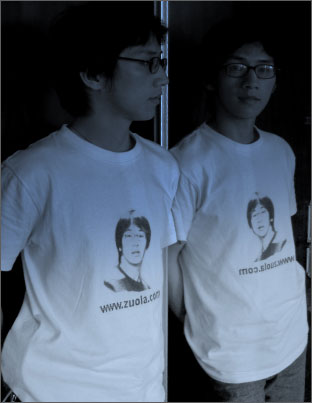
    OK, so maybe you’re going to ignore that first piece of advice and make it about you. There is a way it can be done. I note that the front page of your new website has a picture of you gazing into a mirror while wearing a T-shirt emblazoned with–a picture of you. I desperately hope this is meant to be a gentle bit of self-satire. Because if it’s not self-satire then you really are headed for same lonely, post-Warholian purgatory currently inhabited by William Hung (look him up).

    If you are willing to mock yourself, then you can ignore most of the rules above. But you then need to recognize that your mission has changed from citizen journalist to comic entertainer. Not everyone has the fortitude to make a career out of irony or self-ridicule, and my guess is that’s not what you want. So think it over carefully because this route will take 100 percent commitment, and it will be hard to mix with the kind of stories that got you notoriety in the first place.

    Reflect upon Mr. Moore

    I mentioned crusading film-maker Michael Moore on purpose. In crafting this advice, I considered quite a bit what makes Mr. Moore successful. He seems to be in the mold to which you aspire (metaphorically speaking — I don’t think you’ll ever be that big). Michael Moore is an utterly polarizing artist, but whether you love him or hate him he is undeniably a hit. Moore injects himself into his stories, but he is never the subject, only a conduit or engaged observer of someone else’s plight. He chooses his villains wisely (from an American perspective), knowing that his choices will generate controversy that will attract attention. And he is teflon-coated when it comes to criticism. Millions of people hate him. But millions also love him and he is world famous.

    So that’s my advice. It is offered constructively. I think China benefits from having citizen journalists, and I encourage you to keep at it and get world famous. Don’t take the media-whore comment too seriously. You’ve already confessed. And, after all, many of us in the blogging and PR biz are media- whores ourselves. We can all whore together. That is what the Internet is all about, isn’t it?

    That doesn’t sound like PR advice…

    Readers may be thinking to themselves that the above is more advice on Zola’s craft than his PR. But for a media celebrity –even an aspiring one– the two are often related. The persona is the PR. The answer to Zola’s public perception problem doesn’t lie in anything he can say or write, but in how he defines his public persona. Looked at another way, we PR people are often accused of crafting slick, empty words to rescue people or companies from bad situations. Sometimes that’s true. But PR at its best is helping a client to find a genuine, constructive solution to a problem and then communicating the solution. This is especially true in crisis situations, and I think it’s safe to say that Zola has had something of a little crisis. Therefore I have proposed what I think is a solution

    Bonus advice for Google China:

    Despite the fact that Zola’s Google stunt went wrong, Google doesn’t get a free pass from Imagethief. A basic rule of PR is that in this day and age everyone is a public representative of your company. This is doubly true of a company like Google that is famous, controversial, and the subject of much discussion in China. That secretary was sitting in a Google lobby and wearing a Google T-shirt. How is it that she (and for that matter the security guard) wasn’t briefed on what to do when a journalist came to the front desk? And in the era of blogging and the Internet, anyone waving a camera around in the lobby, even if they are raising a customer service complaint, needs to be treated like a journalist. Especially by the world’s biggest Internet company, which happens to own a huge blogging engine and world’s biggest video-sharing website. Connect the dots, people.

    In fact, a good policy might be to assume anyone who comes into the lobby is a journalist until conclusively proven otherwise.

    So give the poor girl at the front desk some clear guidance on what to do in that situation, and a simple escalation path she can follow when she is dealing with someone with a camera. That doesn’t mean escalating to security or the police, unless the story you want going public is “How I was roughed up by Google”. Have someone on call who is media trained, savvy and knows enough about customer service to answer questions on the record. Who knows? You might find that these kinds of situations can be turned into PR opportunities.

    Hey, nice shirt!
    Hey, nice shirt!
  • I say “tomato”, you say “massacre”, let’s call the whole thing off

    It is a truism of public relations and communication that he who controls the language with which an issue is defined controls the debate. If you can attach your terminology to a situation, you have leverage over public opinion. Don’t like the inheritance tax? Label it a “death tax”. Is that guy with the AK-47 a gunman or a freedom fighter? Is the person with the explosive vest a martyr or a terrorist? Which label works for you? Did that politician lie or misspeak? War or police action? “Dead-enders”, insurgency or civil war? If you can assign the language you can frame the discussion.

    The power of language is especially apparent when words are emotionally charged. There is a reason why there are grinding political conflicts about when and how to apply the word “genocide”. The word demands action and commitment. The obtuse language of diplomacy has essentially developed to allow governments to escape commitment when it is inconvenient. You can debate and prevaricate about “internal displacement”, “human rights” and even “ethnic cleansing”. Once something is accepted in popular discourse as “genocide” the debate is over. Act or be complicit.

    “Massacre” is a similarly charged word. The dictionary definition is: “The unnecessary, indiscriminate killing of a large number of human beings or animals, as in barbarous warfare or persecution or for revenge or plunder”. Indiscriminate killing. Barbarous. These are the things that “massacre” evokes. It is a word to describe a deed of evil.

    That’s why Imagethief has followed with some interest the controversy generated by Ma Lik, Chairman of Democratic Alliance for the Betterment and Progress of Hong Kong (DAB), one of Hong Kong’s political parties. The DAB is often described as “pro-Beijing”, and with his recent comment, Ma has left little doubt. Last Wednesday’s South China Morning Post* reported on Ma Lik’s statments on the front page, under the headline, “Fury at DAB chief’s Tiananmen tirade”. The lede said it all:

    Hong Kong will not be ready for universal sufferage until around 2022 because the people lack national identity and many still believe there was a massacre in Tiananmen Square in 1989, the leader of the main pro-Beijing party said yesterday.

    ***

    [Ma] said one example to show Hong Kong society was not mature was people’s belief that pro-democracy advocates were “massacred” in Tiananmen Square in 1989.

    The quotation marks are theirs. It is the word “massacre” itself that is in contention, as became clear when the story got to the quotes:

    “We should not say the Communist Party massacred people on June 4. I never said that nobody was killed, but it was not a massacre,” Mr. Ma told a media gathering less than three weeks before the 18th anniversary of the bloody crackdown on protesting students. “A massacre would mean the Communist Party intentionally killed people with machine guns indiscriminately.”

    Indeed. See the definition above. In addition to Ma’s own comments, the interesting thing in the paragraph above is the use of the word “crackdown” by the newspaper to describe the incident. Newspapers are, of course, wary of making emotional judgments about events, and language like “massacre” does render judgment. That’s why when you Google Tiananmen + crackdown you get a lot of newspaper articles. “Crackdown” has become an accepted, non-judgmental way of defining what happened on that late spring day in 1989.Google Tiananmen + massacre and you get plenty of returns, but fewer newspaper pieces. (You get a lot of CNN online articles, however.)

    For the sake of comparison, the dictionary defines “crackdown” as, “the severe or stern enforcement of regulations, laws, etc., as to root out abuses or correct a problem” or, slightly more forcefully, as, “an act or example of forceful regulation, repression, or restraint”. So we get as far as repression.

    Massacre or crackdown? You decide.

    I wasn’t there, but I’ll inject something judgmental into this piece. It’s part of journalist John Pomfret’s first-hand account of the events of that day from his excellent book,Chinese Lessons:

    The soldiers began to fire live ammunition low into the crowd, hitting people in the stomach and legs. The night, balmy with a calm breeze, crackled with automatic gunfire. People fled in all directions. Some returned, rocks in hand. Armored personnel carriers rolled onto the bridge and began cutting the busses aside, cutting a path into the inner city.

    I was petrified. Because I had never heard live gunfire before, it took me a few minutes to realize that I, too, could get shot. I was standing about one hundred feet north of the intersection. A crowd surrounded me and began yelling: “They are shooting us! They are shooting us! They are shooting the people!” I saw in their eyes a wild insistence. “You must report this to the world,” yelled one man. Then  the bullets zinged in our direction. I found what I took to be relative safety by lying flat on thw asphalt, pinne dup against a curb. Others ran. I remember thinking they must be crazy. As I lay on the ground with my cheek against the roadbed, I saw several demonstrators fall. The armored personnel carriers had done their work, ramming a channel through the burning busses. Then came the troop trucks, fifty of them rolling through the cumpled roadblock. Random gunfire killed a housekeeper on the fourteenth floor of one building. Another woman was wounded as she looked out of an eighth-floor window.

    So is it a massacre? These are the kinds of things we foreigners have to go on when we assign words to events like what happened in Tiananmen Square or elsewhere in Beijing on that day. (In the passage above Pomfret is writing about Muxidi Bridge, to the west of Tiananmen. Pomfret himself uses “crackdown”.)

    Citing the above won’t satisfy Ma Lik. Part of his complaint is that he feels that the events of 1989 are being defined by foreigners. Or so I interpret from this quote:

    “The government should say what actually happened on June 4… It is not something that teachers can teach whatever they want about. Are saying [what happened] should be decided by gweilos?

    The ellipsis and brackets are the Post’s.

    In fact Ma Lik is doing two things. One is an extremely clumsy but otherwise garden-variety political language control maneuver. He is attempting to define the language used to describe the events of June 4th 1989 in order to serve a particular political agenda. He may also believe what he is saying whole-heartedly. Attempts to manipulate language are not necessarily cynical or dishonest, although they certainly can be.

    But there is a second, and to my mind spookier, part of his statements that I have not seen remarked upon much in initial or follow-up coverage. It is hinted it at in that last quote. This is that Ma Lik wants not only to redefine the language that is used to describe the Tiananmen Square events, but that he wants to institutionalize that redefinition as a pre-requisite for universal suffrage in Hong Kong. According to the Post,

    [Ma] said local students had not received proper “national education” since the handover and many still “care nothing” about the mainland.

    And later,

    Mr Ma, who is not known as an outspoken, hard-core leftist, said universal suffrage could not be introduced before the public adopted “heart-felt” patriotism.

    In other words, “you’re not mature enough to be trusted with democracy”. This old saw, played to various melodies, is a favorite of undemocratic regimes across Asia.

    Ma has climbed down a bit from his initial statements. A follow-up Post story (paywall) reports:

    Mr Ma, who left for Guangzhou after speaking on the radio programme, said he was only trying to call for more rational and balanced views towards the incident. “I think what is most important is to find out the whole truth.”

    He also said it was not his intention to ask the Hong Kong government to issue a definitive guideline to schools on how the crackdown should be taught. He only thought teachers should not “teach whatever they wanted”.

    I don’t think any reasonable person would disagree with that. No one thinks teachers should have an unfettered reach to teach whatever they want. That’s why we have standards and curricula. In the US, school curricula, especially with regard to things like evolution, are the subject of vigorous, noisy debate. That is as it should be. The difference is that in the US no one who didn’t want to be labeled a crank would argue that a doctrinal viewpoint across society is a pre-requisite for a successful democracy.

    That’s the thing about democracy; by it’s very nature it accepts that people will have different viewpoints, different beliefs and different opinions about important events and topics. They will use different language to describe the same thing. They will fight compete vigorously with each other to define the political environment in the language of their choosing, in order to reflect their beliefs and politics. That’s the contest of ideas that is fundamental to healthy  democracy. It is the essence of democracy.

    If Ma wants to suggest that what happened in Tiananmen wasn’t a massacre that should be his right in a democracy or any society that allows freedom of speech. After all, you can’t have a true democracy without freedom of political speech, even if that sometimes yields ideas that are distasteful to some. To suggest, however, that homogeneous belief is a prerequisite for democracy is not only to utterly miss the point of democracy, it is also, sadly, to render the very idea irrelevant.

    See also:

    ESWN: Ma Lik’s comments on June 4th.

    *Sorry, I don’t have a link for this article. The South China Morning Post not only has an all-consuming paywall, but it also has the single worst search engine and archiving system of any online newspaper I have ever dealt with.

  • Asian media vows to make western media cry

    Imagethief was tickled to read today in Xinhua an article from the Boao Forum for Asia, an annual Chinese talking shop, on how Asian media will rise up to challenge western media juggernauts. It seems that Asians take umbrage that they are 96.2% of the world’s population and yet produce only 0.3% of its international media. Or something like that.

    The article makes many serious points:

    “The world is not flat actually,” Liu Jiang, deputy editor-in-chief of Xinhua News Agency, said at the annual conference of the Boao Forum for Asia (BFA), which was held over the weekend in the south China town of Boao.

    “The world is in reality a slop [sic] on which information flows downward from developed countries to developing countries and regions,” Liu said.

    “The World Is Flat” by the New York Times columnist Thomas Friedman has been frequently quoted to prove an alleged “magic power” of globalization by Bill Gates and other lecturers at the conference.

    The book figures out ten driving forces to grind the world flat, in each of which media play an important role.

    “Developed contrives, which have one seventh of the world population, have dominated two thirds of the total information flow,” Liu said. “However, globalization does not balance a horizontal world when it is grinding the world.”

    “Why do Asian media always yield to Western culture?” Felix Soh, deputy editor-in-chief of The Straits Times headquartered in Singapore, questioned in his speech at the sub-forum discussing globalization and the media.

    Imagethief has lived in Asia for over a decade and is a fan of Asia and things Asian. So he will try to address Mr. Soh’s question as delicately and constructively as possible.

    It’s because on average Asian media suck. Especially news media.

    Now this is not an entirely categorical statement. There are fine Asian newspapers and magazines, and, heaven knows, gifted Asian filmmakers and writers. But in general –and I am truly sorry for purely selfish reasons that this is the case– Asian commercial media is a desperate wasteland that teeters perpetually on the precarious knife-edge of irredeemability.

    Mr. Soh himself heads up one of the blazing test cases for the failed potential of Asian media. Imagethief needs to tread carefully here because he is really good friends with several Straits Times journalists, and they are hardworking, smart, talented people. But friends are honest with each other, so here it is: the Straits Times took the last train to dullsville and fell asleep in its seat and missed the stop. I know. I subscribed for years.

    The tragedy of this –the great, majestic, swooping tragedy– is that if any country was going to produce a credible pan-Asian newspaper it would be Singapore. It’s in the right place, it’s got the right people, and it speaks the right languages. It really is a regional hub. But it will never happen.

    I blame government. Governments, by and large, should not involve themselves in media. But Asia’s governments cannot, for the life of them, keep their grubby mitts off the media. And damned if they don’t have a near mystical talent for boiling the life out of it.

    I realize you can argue both aspects of the government involvement equation. The government-run chartered [see note below -WM] BBC, for its troubles, is one of the world’s great news gathering organizations. Too little government supervision of media and you get dangerously irresponsible or corrupt media.

    But too much government involvement and you get soul-destroying headlines like…well, just for fun, let’s see what the top story on the Straits Times website is right now:

    Need for S’pore to focus on sustainable construction: Grace Fu

    THERE is a scope to reduce the stockpile release price for granite from May onwards, Minister of State for National Development Grace Fu said.

    Gadzooks! And for good measure here’s the number two headline:

    Extraordinary govt, talent keep S’pore ahead, says MM (MM= Minister Mentor Lee Kuan Yew)

    Good gosh, two government headlines in a row. And this is typical. Back in Singapore we used to joke about what the above-the-fold government headline of the day would be.

    Arguably, this is what is important to Singaporeans (although this kind of stuff drives my Singaporean wife up the wall, but she married me so she’s probably deranged). And I realize it’s unfair to dump so much on the Straits Times. But if the editor is going to ask rhetorical questions about the subservience of Asian media, perhaps he should look close to home for the answer.

    This story is rewritten across the region. As long as Asian governments manage their news, censor their films, and interfere explicitly in culture then their newspapers will be treated as propaganda, their most talented artists will flee overseas and their people will wolf-down tawdry but lively foreign culture.

    So my recommendation for the governments of Asia is this: if you want a louder voice in the world, if you’re tired of being walked all over by imperialist western media, if you think you are being misrepresented on the global stage, then back the hell off. Set your own media free. It will probably rise to the challenge, and, I suspect, do it better without you breathing over its shoulder.

    But that’s a pipe dream. Here’s the end of that article:

    High level forums and meetings have been raised by media groups from China and members of Association of Southeast Asian Nations (ASEAN). An agreement of cooperation on communication signed by members of the Non-aligned Movement at Kuala Lumpur in 2005 has shown the developing countries’ strong willing to speak louder in the world.

    Delegates of Asian media attending the BFA conference reached the consensus that Asian media should shoulder a responsibility for broadcasting “a harmonious Asia” with “a harmonious Asian image” and provide a value of “harmonious region” to tell the world a real Asia.

    A “harmonious Asia”? Oh dear. Pass me the Financial Times.

    Note: I do give a tip of the hat to Singapore’s Chinese language daily, Lianhe Zaobao, which is popular in China.

    Update: Charlie (in comments below) [comments no longer available – WM] and another reader (by e-mail) have pointed out the important distinction between publicly funded media, such as BBC or NPR in the US, and state-managed media. I should have made that distinction clearer in the text. The BBC is, thus, probably used incorrectly as a positive example above. Unfortunately that kind of bottoms out the list of exceptions to thegovernment involvement = bad rule.