Month: April 2007

  • Asian media vows to make western media cry

    Imagethief was tickled to read today in Xinhua an article from the Boao Forum for Asia, an annual Chinese talking shop, on how Asian media will rise up to challenge western media juggernauts. It seems that Asians take umbrage that they are 96.2% of the world’s population and yet produce only 0.3% of its international media. Or something like that.

    The article makes many serious points:

    “The world is not flat actually,” Liu Jiang, deputy editor-in-chief of Xinhua News Agency, said at the annual conference of the Boao Forum for Asia (BFA), which was held over the weekend in the south China town of Boao.

    “The world is in reality a slop [sic] on which information flows downward from developed countries to developing countries and regions,” Liu said.

    “The World Is Flat” by the New York Times columnist Thomas Friedman has been frequently quoted to prove an alleged “magic power” of globalization by Bill Gates and other lecturers at the conference.

    The book figures out ten driving forces to grind the world flat, in each of which media play an important role.

    “Developed contrives, which have one seventh of the world population, have dominated two thirds of the total information flow,” Liu said. “However, globalization does not balance a horizontal world when it is grinding the world.”

    “Why do Asian media always yield to Western culture?” Felix Soh, deputy editor-in-chief of The Straits Times headquartered in Singapore, questioned in his speech at the sub-forum discussing globalization and the media.

    Imagethief has lived in Asia for over a decade and is a fan of Asia and things Asian. So he will try to address Mr. Soh’s question as delicately and constructively as possible.

    It’s because on average Asian media suck. Especially news media.

    Now this is not an entirely categorical statement. There are fine Asian newspapers and magazines, and, heaven knows, gifted Asian filmmakers and writers. But in general –and I am truly sorry for purely selfish reasons that this is the case– Asian commercial media is a desperate wasteland that teeters perpetually on the precarious knife-edge of irredeemability.

    Mr. Soh himself heads up one of the blazing test cases for the failed potential of Asian media. Imagethief needs to tread carefully here because he is really good friends with several Straits Times journalists, and they are hardworking, smart, talented people. But friends are honest with each other, so here it is: the Straits Times took the last train to dullsville and fell asleep in its seat and missed the stop. I know. I subscribed for years.

    The tragedy of this –the great, majestic, swooping tragedy– is that if any country was going to produce a credible pan-Asian newspaper it would be Singapore. It’s in the right place, it’s got the right people, and it speaks the right languages. It really is a regional hub. But it will never happen.

    I blame government. Governments, by and large, should not involve themselves in media. But Asia’s governments cannot, for the life of them, keep their grubby mitts off the media. And damned if they don’t have a near mystical talent for boiling the life out of it.

    I realize you can argue both aspects of the government involvement equation. The government-run chartered [see note below -WM] BBC, for its troubles, is one of the world’s great news gathering organizations. Too little government supervision of media and you get dangerously irresponsible or corrupt media.

    But too much government involvement and you get soul-destroying headlines like…well, just for fun, let’s see what the top story on the Straits Times website is right now:

    Need for S’pore to focus on sustainable construction: Grace Fu

    THERE is a scope to reduce the stockpile release price for granite from May onwards, Minister of State for National Development Grace Fu said.

    Gadzooks! And for good measure here’s the number two headline:

    Extraordinary govt, talent keep S’pore ahead, says MM (MM= Minister Mentor Lee Kuan Yew)

    Good gosh, two government headlines in a row. And this is typical. Back in Singapore we used to joke about what the above-the-fold government headline of the day would be.

    Arguably, this is what is important to Singaporeans (although this kind of stuff drives my Singaporean wife up the wall, but she married me so she’s probably deranged). And I realize it’s unfair to dump so much on the Straits Times. But if the editor is going to ask rhetorical questions about the subservience of Asian media, perhaps he should look close to home for the answer.

    This story is rewritten across the region. As long as Asian governments manage their news, censor their films, and interfere explicitly in culture then their newspapers will be treated as propaganda, their most talented artists will flee overseas and their people will wolf-down tawdry but lively foreign culture.

    So my recommendation for the governments of Asia is this: if you want a louder voice in the world, if you’re tired of being walked all over by imperialist western media, if you think you are being misrepresented on the global stage, then back the hell off. Set your own media free. It will probably rise to the challenge, and, I suspect, do it better without you breathing over its shoulder.

    But that’s a pipe dream. Here’s the end of that article:

    High level forums and meetings have been raised by media groups from China and members of Association of Southeast Asian Nations (ASEAN). An agreement of cooperation on communication signed by members of the Non-aligned Movement at Kuala Lumpur in 2005 has shown the developing countries’ strong willing to speak louder in the world.

    Delegates of Asian media attending the BFA conference reached the consensus that Asian media should shoulder a responsibility for broadcasting “a harmonious Asia” with “a harmonious Asian image” and provide a value of “harmonious region” to tell the world a real Asia.

    A “harmonious Asia”? Oh dear. Pass me the Financial Times.

    Note: I do give a tip of the hat to Singapore’s Chinese language daily, Lianhe Zaobao, which is popular in China.

    Update: Charlie (in comments below) [comments no longer available – WM] and another reader (by e-mail) have pointed out the important distinction between publicly funded media, such as BBC or NPR in the US, and state-managed media. I should have made that distinction clearer in the text. The BBC is, thus, probably used incorrectly as a positive example above. Unfortunately that kind of bottoms out the list of exceptions to thegovernment involvement = bad rule.
  • How to turn one terrible scandal into two

    Note: This includes two posts originally published on back-to-back days.

    Part 1: How to turn one terrible scandal into two

    Imagethief loves watching companies hang themselves. Unless they are his clients, in which case he has fits watching them hang themselves because it means sleepless nights in the glow of the computer eating greasy dinners out of Styrofoam boxes.

    Fortunately for me, China Railway 12th Bureau Group Company is not one of my clients. For one thing, if they were, I’d advise them to change their name. I had to look at the original article twice to transcribe it. I’m sorry, but if you’re not a law firm you have no business having five nouns in your company name.

    More importantly, they have just committed one of the great PR sins: the busted coverup. From AP, via BusinessWeek:

    Police have detained 10 people in charge of building a new subway line for the 2008 Beijing Olympics after one of the project’s tunnels collapsed, trapping six workers, state media said Friday.

    ***

    Construction company China Railway 12th Bureau Group Co., was suspected of trying to cover up the accident and delaying rescue efforts that might have saved lives, Xinhua said.

    Police have detained 10 people including the project supervisor and the tunnel’s designers, Xinhua said. It did not give their names or say if they had been formally charged with any crime.

    Xinhua said the construction company sealed the site immediately after the accident, confiscated employees’ mobile phones and ordered people not to talk to police or media.

    The company did not report the accident to city authorities until eight hours after it occurred, it said, citing unidentified Beijing officials.

    You would think that after the great Songhua River disaster of ’05 people would have learned their lessons about this. But it’s hard to overcome those olde fashioned instincts, and probably even harder when you are working on a marquee project that is part of Beijing’s pre-Olympic rectification program.

    By definition, no one really knows how many successful coverups there are. However, I’d bet there really aren’t many. It all comes down to the old adage that two people can keep a secret if one them gets a lead tattoo. I am not sure any peer-reviewed scholarly work has been done in this area, but I am convinced that as the number of people involved in a coverup goes up, the risk of it being blown increases far more than in linear fashion. I betting that risk increases as at least the square of the number of people involved.

    So you can confiscate all the mobile phones you want, and you can order people not to talk, but sooner or later somebody will. And probably sooner. And even if they don’t, people –family members and friends for instance– tend to notice a lot of sudden deaths.

    Now China Railway 12th Bureau Group Co. (or CR12BGC as I like to think of it) has two crises on its hands: the possibly negligent deaths of twelve workers, plus a mass arrest of its executives and supervisors. Instead of looking negligent, they now look negligent, sleazy and criminal. Congratulations! It’s not easy to self-destruct that dramatically without being discovered trafficking in kiddie pr*n. Good luck explaining all this to the press.

    Unless the government bans all coverage of the situation. This is China, after all, and the rules remain a little different. I realize also that CR12BGC is probably not the most progressive company when it comes to communication. But despite the high level of government intervention, China now has a scrappy, modern media that loves a good scandal. The sooner Chinese companies learn how to deal with this, the better things will go for them.

    We PR people are widely unloved. There is some justification for this. As an industry we have a history of taking on unsavory clients and disagreeable jobs. But its also unfair in some ways. In crisis situations we spend a lot of time giving variations on the following straightforward advice to our clients:

    1. Don’t lie.
    2. Be mindful of your legal risk and prudent in communication, but don’t try to hide or distort the facts of what actually happened.
    3. Don’t lie. (Again.)

    Writ large or small, successful crisis communication is about clearly explaining your side of what happened and being publicly seen to take all practical steps to address the crisis and assist the people affected. You can’t bring back the dead, but you can take care of the living, understand what went wrong, visibly cooperate with authorities and demonstrate a commitment to learning from mistakes. It might not do anything about your legal liability, but it will help your reputation and generally costs less in the long run than the alternatives. And if you do get prosecuted, a constructive approach looks a lot better in court than an attempted cover up.

    Plus its hard to work a crisis when all your spokespeople are in jail.

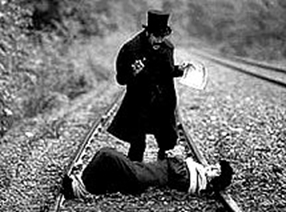
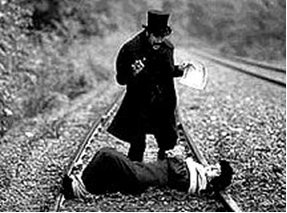
    Gasp! It's the China Railway 12th Bureau Group Co.!
    Gasp! It’s the China Railway 12th Bureau Group Co.!

    Part 2: Beijing subway collapse: Whose crisis is it?

    Following up on yesterday’s post about the Beijing subway collapse, I saw an interesting article (subscription) by Mei Fong in yesterday’s Wall Street Journal, Asia. (I try to get that right ever since one of their journalists explained to our staff in Beijing that it’s not the “Asian Wall Street Journal” any more, and that we had better get with the times.)

    Because of its galvanizing effect on everyone with a China agenda, the Beijing Olympics has been described within my industry as “issues rich”. This is PR code for “shitstorm waiting to happen”, and is the kind of thing that usually leaves PR men cackling to themselves and planning expensive purchases. (Or, at my pay grade, grocery shopping.)

    Among the many China issues that people get in a twist about is migrant laborers. There are by the government’s own estimates 115 million of them. For perspective, that’s less than 10% of the population of China, but more than 35% of the population of the United States. And I’m not sure the government is counting everyone.

    A lot of these migrant workers are currently in Beijing, slaving away on extremely high-profile, deadline-sensitive projects that are part of the city’s pre-Olympic renovation. People have noticed this. Mei writes:

    [Beijing’s] haste to meet its construction deadlines has resulted in round-the-clock work for the armies of often poorly paid, badly equipped migrant workers who build most of these projects. Some work shifts that can last as long as 24 hours.

    The relatively poor working conditions of migrant workers has come under greater media scrutiny in recent months, causing international labor groups — many already critical of China’s poor human-rights record — to put greater pressure on the International Olympic Committee to improve the situation.

    IOC spokeswoman Giselle Davies said in an email that “our understanding is that all efforts have been made both in terms of safety — specifically putting precaution first, and also in terms of transparent management.”

    Does the IOC really believe that? Even if it doesn’t, is there anything else it could say without admitting culpability and precipitating its own crisis? How about:

    “The IOC is aware of the widespread exploitation of Chinese migrant laborers, the mistreatment they commonly suffer and the appalling and unsafe conditions they endure. We sympathize completely. But we also believe that during the pomp of the opening ceremony, amidst the pageantry, grandeur and fireworks, no one will be thinking about a few bones in the foundations.”

    Maybe not. OK, what Ms. Davies says isn’t as bad as my idiot scenario above. Note the weasel words, though: “Our understanding is…” That phrase is the IOC’s absolution. It transfers responsibility onto BOCOG and the Chinese government. They told us everything is OK. But for credibility it depends upon you and me believing that the chain of honest communication and transparency from labor contractors to construction subcontractors to primary contractors to the municipal government and BOCOG is intact. Do you really believe that? Of the Chinese construction industry? And if you don’t, then should the IOC?

    I realize I am dissecting one partial statement out of context here. But that’s what the public will see, so that’s what will inform people’s opinions.

    As for BOCOG, it has duelling priorities:

    Priority 1) Have a glamorous and untarnished Olympic Games that mark China’s emergence on the International stage.

    Priority 2) Get the goddamn thing done in time and on budget.

    So which priority will win, and whose reputations will get trashed in the process?

    493 days, 6 hours, 51 minutes and 17 seconds to go as of this posting.

    Gasp! It's BOCOG and the IOC!
    Gasp! It’s BOCOG and the IOC!