Month: April 2009

  • Chinese cyberspies? Sheer lies and heinous fabrications!

    Alright, I confess I made up the “heinous fabrications” bit. But the “sheer lies” sound bite comes straight from China’s Ministry of Foreign Affairs, which has clearly worked hard to make sure that its representatives around the world are working from the same talking points.

    China has found itself accused of a lot of hacking recently. A March 28 New York Timesarticle covered the dreaded “GhostNet”; innocent computers ruthlessly compelled to do the bidding of alleged shadowy overlords in Beijing (which bidding was, apparently, to screw with Tibetan exile organizations). More recently, a story in the Wall Street Journalreported on attempts to hack into the systems controlling America’s power grid, some of which apparently originated from China and Russia.

    The Chinese government had chances to rebut both stories. Here is a Beijing-based Ministry of Foreign Affairs spokesman responding to a “GhostNet” question in a regular media Q&A the day after John Markoff’s story broke in the Times:

    “I have noted before that the Chinese Government has always taken cyber-safety very seriously. We resolutely oppose any crime including hacking that destroys the internet or computer network, which is stipulated in relevant Chinese laws and regulations. The current problem is, some people overseas are indulged in fabricating the sheer lies of the so-called cyber-spies in China. What I have seen is a ghost of “Cold War” and a virus of “the China Threat” mentality. The China Threat virus on those haunted by the Cold War ghost strikes from time to time. Their attempt to defame China will get nowhere.”

    And here is Chinese Embassy spokesman in Washington DC responding to the electric grid issue in the Journal (responding in writing, I would guess):

    [The Chinese government] “resolutely oppose[s] any crime, including hacking, that destroys the Internet or computer network” and has laws barring the practice. China was ready to cooperate with other countries to counter such attacks, he said, and added that “some people overseas with Cold War mentality are indulged in fabricating the sheer lies of the so-called cyberspies in China.”

    Well, that’s message discipline for you. And it would be admirable discipline indeed, were the talking points not the usual throwback language that always sounds better coming off of a red-ink woodcut with a picture of Mao in a sunburst than off of the pages of, say, theWall Street Journal. The only thing reminiscent of the Cold War here are those quotes.

    Of course the Chinese government, like all governments with access to electricity, is probably involved in computer-espionage and computer-warfare programs. But it obviously has to deny any involvement in polite company. That’s a given, and no-one can blame them. There are even some good bits and pieces in both responses above: “Always taken cyber-safety very seriously”, “oppose [activities] that destroy the Internet”, and “ready to cooperate with other countries”. Unfortunately, the usual, overly scandalized language wrapped around those bits and pieces does nothing to help. It makes the spokespeople sound, to abuse Shakespeare’s Queen Gertrude, like they are protesting too much. The good stuff gets lost.

    If I was rewriting their talking points, I would take a classic broadening approach where you turn the accusation everyone’s problem. You can see the beginnings of this in the embassy spokesman’s quote. I might suggest something like this, which takes the good bits from both responses and loses the righteous anger:

    “The Chinese government takes Internet security very seriously, and is opposed to any activities, including hacking, that make the Internet less secure or less useful. Internet security is a concern for everyone who uses a computer. As you know, internet use has been growing rapidly in China. This year we passed 300 million users, and now have more people online than any other country. The Internet has been a great contributor to growth and innovation in China, so no one takes these issues more seriously than we do.”

    If you wanted to be extra-saucy, you could build a bit on the embassy spokesman’s cooperation statement and say,

    “We stand ready to cooperate with the governments of other Internet using nations to find ways to improve global Internet security for all users.”

    Less quotable, perhaps (short of a threat to kill the questioner’s pets, what wouldn’t be?), but also much less of that how dare you? tone that comes off so defensively. As we say in PR, you can’t control the questions you get asked, but you can always control the answer you give. Why not take the opportunity to say something positive instead of just reeling off an angry denunciation of the charges?

    And if you read the responses above carefully, denunciations is what they are. There is no outright denial in either of them. I doubt that’s a legal maneuver (after all, what are you going to do, sue them?) so much as a chosen rhetorical technique: Attack the credibility of the charge rather than denying it. If so, it’s shrewd on a certain level. Denials always look terrible in print. “I never stole those panties!” has “cover pull quote” written all over it. That’s why we always tell spokespeople not to “repeat the negative” in a question. But there are many things that could better replace an outright denial than straw men fabricating sheer lies.

    See also:

    James Fallows: What should we make of this Chinese cyber-spy story?

    Schneier on Security: US power grid hacked, everyone panic! Welcome perspective:

    Honestly, I am much more worried about random errors and undirected worms in the computers running our infrastructure than I am about the Chinese military. I am much more worried about criminal hackers than I am about government hackers.

    Nart Villeneuve of the Internet Censorship Explorer on the hype-factor in the article.
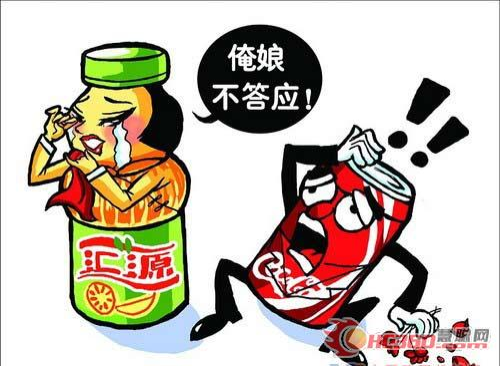
  • Coke, Huiyuan and the audiences that matter

    Nothing as timely as the blogs, I tell you. As everyone on the planet now knows, the Coke-Huiyuan deal has fallen through. It retrospect, it wasn’t particularly surprising. It broke new ground in size, and public sentiment was never behind the deal. David Wolf and Dan Harris have both written good posts about this, and I recommend taking the time to check out both.

    I have been trying to find finely-parsed and academic way of stating a basic truth, and it hasn’t worked out. So here it is in plain language: If you’re a large foreign firm taking over a Chinese firm, prepare to be flogged in public. And prepare for it before you announce your acquisition.

    Here is a basic PR lesson to go along with that: Part of selling any acquisition is convincing stakeholders of the value that the acquisition will bring in terms that make sense to them. That last part is the detail that often gets lost. In a perfect capitalist world (if you don’t see that as oxymoronic) it would be easy to explain the value of an acquisition to the key stakeholders on all sides of the deal. “Dollars” and a business case would do the trick.

    However the real world is messy, not every stakeholder is interested in the share price premium, and I think we can all agree that China is a long way from being a perfect capitalist world. Some of its complexities are nicely captured in a summary of the unwritten rules guiding foreign acquisitions assembled by Dan and Steve at China Law Blog and included in the post linked above:

    Foreigners are permitted to purchase large, state-owned enterprises that suffer from financial difficulty, provided the foreign investor agrees to restructure the purchased company.

    Foreigners are permitted to purchase non-majority interests in strong, successful Chinese companies, but only if there is some added benefit, such as transfer of technology, advanced management or access to foreign markets.

    Foreigners are not permitted to purchase a majority interest in a large and financially successful Chinese company. Even smaller companies are off the table if they are financially sound and work in a core technology field or have created a strong or historically important brand.

    I’m a PR man, so I am compelled by some mystical force to reduce these rules to something I can work with: Perception. When you understand how you are perceived by different audiences, you can begin to figure how to communicate and act in way that will reinforce those perceptions if they are good, or change them if they are bad. So here is what China Law Blog’s rules say to me about how foreign companies and foreign acquisitions are perceived in China:

    • The government and a loud and influential slice of the grass roots automatically perceives the motives of foreign companies as suspect
    • The state perceives foreign acquisitions of Chinese companies as value-destroying by default, even if they’re good for shareholders, therefore it perceives value differently than shareholders do
    • A foreign acquisition can be perceived to add value if there is explicit upside with regard to national priorities

    This lays out the difficult communication challenge for any company in Coke’s position. Note the really small role of “what’s good for shareholders” in the above. Therefore, in communicating about a major planned acquisition in China, and knowing that both government and popular backlash are likely, leading with shareholder value might not be the ideal approach. But here is Coke’s statement of September 3rd (it’s the same inChinese):

    “This acquisition will deliver value to our shareholders and provide a unique opportunity to strengthen our business in China, especially since the juice segment is so dynamic and fast growing in China. It is also further evidence of our deep commitment to China and to providing Chinese consumers with the beverage choices that meet their needs,” Mr Kent said.

    If successful with the offers, the Company will use its expertise as a global beverage company to further develop the Huiyuan brand to address the evolving needs of consumers. There are anticipated synergies that will drive operational efficiencies, particularly in the Huiyuan business’ production footprint and in Coca-Cola’s distribution and raw material purchasing capabilities.

    When I read that, here is the order of priorities I see in the messaging:

    1. Coke shareholders
    2. Coke’s business in China
    3. Chinese consumers
    4. Huiyuan’s success

    That’s a perfectly good set of messages for Coke’s investors and stakeholders back home. But I might reverse that list if I was writing this for Chinese audiences. I also see a message on how Coke’s global experience will benefit Huiyuan. Viewed one way, that seems wonderful and constructive. Viewed through a nationalist looking-glass, which is how many foreign acquisitions are seen, it could seem paternalistic.

    This statement was just the initial announcement and one slice of all the communication that took place, and by most measures it is fine (although “commitment to China” messages are such a pro-forma recitation as to have become essentially meaningless). But it’s an interesting glimpse into the formula that often guides MNC communication in these situations.

    Huiyuan didn’t post a statement of their own on the day the deal was announced, but two days later they published on their site a congratulatory note from the government of Wanrong county, where they are headquartered. This is also formulaic, but in a locally relevant way. The fact that it’s a local government statement — a third-party endorsement — is a bit of communication in itself. The first two paragraphs are congratulations and a recap of Huiyuan’s history. The last paragraph reads (in loose translation):

    The successful merger of Coca Cola, the world’s largest beverage company, with Huiyuan Group will inevitably foster a win-win situation and create more excellent social and economic benefits. We will create an excellent environment for the development of business creativity and promote the common progress of both sides.

    There’s plenty of pro-forma recitation in this statement as well, but it’s recitation that speaks directly to local priorities. Coke’s statement, on the other hand, reads like a communique primarily to Coke’s shareholders, who were probably the one stakeholder group that was on-board with the plan from the beginning.

    But other stakeholder groups were driving the outcome. Just a day or so before the deal was spiked a further glimpse into the process was afforded by a Reuters article optimistically titled, “Coke expected to get OK for China Huiyuan deal“. The lede is interesting, because it ties Coke’s prospects for success directly to a fortuitously-timed package of new China investments announced earlier this month:

    Chinese authorities are expected to grant a conditional approval soon to Coca-Cola Co (KO.N) for its $2.5 billion purchase of Huiyuan Juice after the world’s largest soft drinks maker pledged to invest another $2 billion in China over the next three years.

    But the telling stuff is further down in the article:

    Beijing’s influential Caijing magazine reported last month the MOC held a closed-door hearing on December 26 to seek advice and hear from Huiyuan’s domestic rivals and drinks industry groups.

    Some participants objected to the deal, citing protection of Huiyuan as a national brand as well as concerns about Coca-Cola’s growing monopoly power in China’s soft drink markets where small local juice makers may be hurt.

    ***

    Lawyers and bankers close to the process say the political pressures on the government over this deal have been significant.

    While Beijing wants to signal that China is open to foreign investment, it does not want to be seen as easily surrendering national interests and brands, said the sources.

    ***

    “Beijing decided to give the deal a serious and tough review after it saw growing concerns and objections from Huiyuan’s local rivals and some pro-nationalism marketwatchers,” said [an anonymous source].

    Again, it’s not the individual statements themselves that are important, but more the overall approaches and priorities they suggest. In the end, only Coke and Huiyan know exactly what steps they took to communicate about the deal to the public and to regulators and other people in the government with an interest in the outcome. Coke has been doing business globally since forever and in China since 1979, and I have no doubt they worked multiple channels very hard. But they still seemed surprised by the backlash.

    A friend of Imagethief’s who follows these things reports that Coke PR people at a recent conference had the point of view that they were acting within the law, and that China’s netizens thus had nothing to complain about (this is second-hand, so take it as such). This might be true at a strictly rational level. But rationality is relative, especially in matters of national pride. And, as any parent knows, not having anything to complain about has never stopped anyone from complaining.

    If I boil all of the above down into one rule for such situations, this is what ends up stuck to the bottom of the pot: Foreign companies making significant acquisitions in China should assume that the default starting communications position is “in trouble”, and plan appropriately. In fairness, Chinese companies making major acquisitions in the US should probably make the same assumption. In his post linked above, David Wolf writes:

    Any acquisition of a local firm by a foreign company demands a communications effort directed at both the general public and the policy making elite that makes a logical, intelligent, and sensitive case for the purchase. The bigger the buy, the better you need to be at the communications.

    So true. And this was the biggest buy of all, so far.

    See also:

    And several posts from the Wall Street Journal’s “China Journal” blog, which followed the deal closely:

    "Mother doesn't consent."
    “Mother doesn’t consent.”