Recently Imagethief and family went to Xi’an for a weekend. As everyone does, we went to see the terracotta warriors. That was fine, but the real highlight of the trip was the apartment we stayed in, which was decorated top-to-bottom in replica terracotta warriors and had a working Chinese-style guillotine. But, hey, it also had free Internet, a fridge full of very cheap beer, and was a five minute walk from the downtown ethnic Hui area, which has awesome food. At 500RMB a night, what wasn’t to like? A video tour of the apartment below. It was shot on a phone camera, so it’s not exactly Cinemascope, but it does include a guillotine demonstration!
For those reading this on Facebook (which does not import the YouTube videos), the video is here. Photographs from the trip, including those in the video, are on Flickr here.
The apartment was one of four owned and rented out by the day by a guy named Clarence Guo. Clarence used to be a taxi driver. After a few years shuttling tourists to and from the terracotta warriors he realized he could do better as a tour-guide and provider of what we shall call “themed lodging”, so he taught himself the history, wrote a book about the warriors, and bought and refurbished the apartments. We also hired him as our tour guide, which worked out pretty well although he’s clearly a bit burned out on the whole warrior thing after ten-odd years.
I had only one complaint about the apartment. Despite having a toddler in tow, it was not the guillotine. It was that Clarence’s creative renovations left zero noise isolation between the apartments and there was an extremely loud family of Israeli tourists staying next door to us. But all in, it was a pretty good deal. E-mail me for Clarence’s phone numbe if you’re ever planning a trip to Xi’an and have no issues with guillotines or sleeping in a bedroom full of terracotta warriors, you can. More comments from customers on TripAdvisor.
Update – China friendly version now online:
China-friendly Tudou version now online since YouKu, my usual Chinese option, went into some kind of weird suck-fit and refused to let me upload — three times. Never happened before. For those not used to it, Tudou has a pre-roll ad and a heavily spangled presentation. You’ve been warned.
In the grip of my darkest and most bourgeois moments I actually considered buying a car and hiring a driver. So, it’s come to this… I thought, as I hovered over a digital map of Beijing. I have to get one of those Buick vans. No matter how I traced the route or arranged the useless layers of meta-data in Google Maps I had to face up to reality. My new office was in the sticks.
More specifically, it was in Wangjing. North Wangjing, hard against the Fifth Ring Road. The Fifth is commonly accepted as the dividing line between the frothy, urban Beijing of Apple Stores and upscale dining and the great void of the Chinese hinterland where all is windswept grist for broody New York Times articles about how miserable the rest of the world has it. Well, and also Tongzhou. Never mind that when I moved to Beijing the Fourth Ring Road was that line.
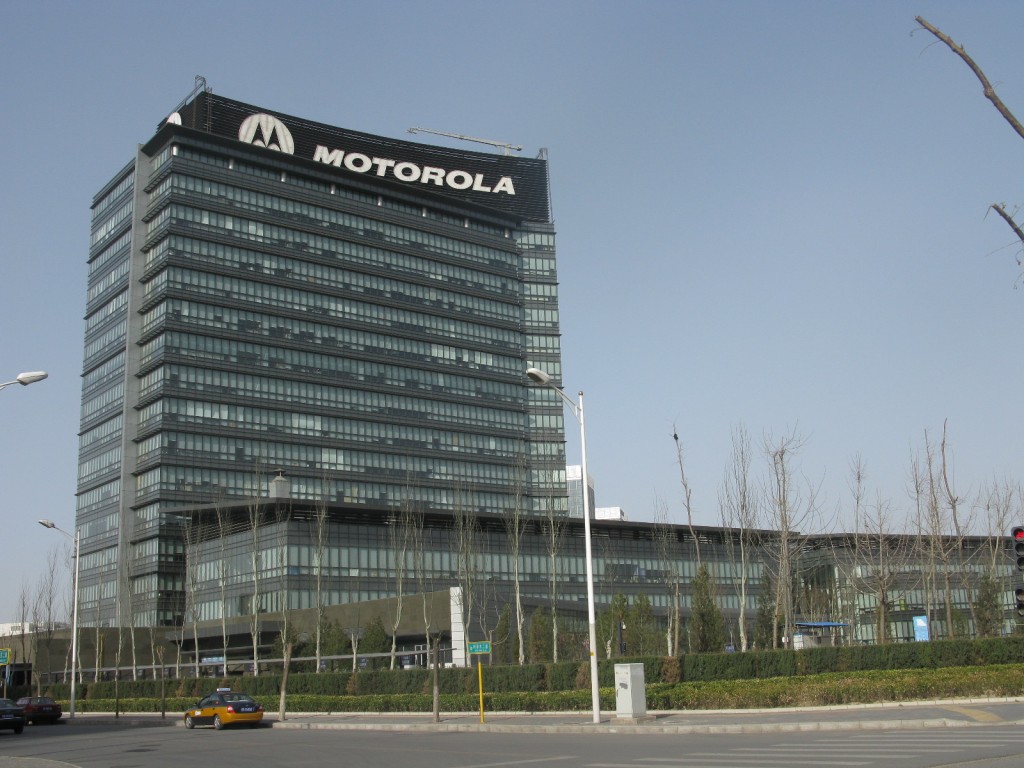
You can tell the office is in a neighborhood that didn’t exist three years ago. The building is as gorgeous and new as a space station and just as isolated from amenities and comforts. The nearest Starbucks is at least two kilometers away. In Beijing in 2010 more than two kilometers from Starbucks is the qualification for a rural hukou. I brought a French press to office.
I am strong enough to confront my flaws (although weak enough wrap that confrontation in a layer of prickly humor). By the standards of my Chinese colleagues this is, I admit, jello-kneed schoolgirl bitching. Many of them live outside the Fifth and have commutes that sound lifted from the darker pages of Jack London novels, where people die freezing for want of a twist of jerky somewhere on the track from Fort Yukon to Unalakleet. Just substitute a bendy-bus for the dog sled. Against this, even the commute from Dawang Rd. to Wangjing is lower middle-distance at best, like one of those mid-range Olympic track races that is too long to be exciting but too short to be impressive and that nobody remembers who won.
I, however, have been spoiled. For six years my distance from the office has ranged from a five minute walk to a five-stop straight shot on subway line 1. Even the latter is the Beijing commute equivalent of schlepping from the couch to the fridge during a commercial break for a half-full can of Duncan-Hines frosting and a Pabst Blue Ribbon.
Although I toyed seriously with the idea of either buying a car or hiring a car and driver, in the end my socialist* pedigree won out. For my first day at the new job I decided to take public transport.
Man, was that stupid.
It looked good on the map, though. From my house I can take the line 1 subway one stop to Guomao. Then it’s a straight shot north on line 10 to the Shaoyaoju interchange and one more stop on line 13 to Wangjing West. From there a short bus ride. Simple!
If you read the New York Times you probably scan the occasional Tom Friedman column where he hyperventilates about how fast the Chinese are building infrastructure for which Americans have lost the blueprints. Subways, for instance. The statistics for Beijing are magnificent: Thirty lines planned, totaling over 1000 kilometers of track. Everyone living within the Fourth Ring to be able to walk to a station in fifteen minutes. Sounds like The Future!
Sure. It’s Logan’s Run. But with the subway system from The Warriors.
There are two reasons for this. First, adding more lines and interchanges has certainly made the entire system more useful. But the number of people riding has gone up as something like a cubic function of the number of track kilometers. In the course of two years my old line 1 commute went from crowded but tolerable to needing to lubricate yourself with Astroglide and use a prybar to get on or off the train. Combined with the casual Chinese disdain for off first, on second it’s a miracle the platforms aren’t entirely covered with bits of scalp and shards of broken teeth.
Second, the planners of the Beijing subway system haven’t really figured out the whole idea of the subway interchange. In Singapore, subway interchanges are designed such that trains that make the most natural connections pull up on opposite sides of the same platform. Walk thirty air-conditioned feet, get on the next train. Now that’s the future!
But why build an actual subway interchange when you can just build a long, sweaty tunnel between stations in adjacent neighborhoods? Changing trains in Beijing is a little bit like changing airport terminals, right down to the surprising number of people dragging luggage. Add the rush hour crowds and idiotic security screening chokepoints and it’s almost (though not quite) as bad as checking in at JFK.
It took me an hour to get from my house to Wangjing West station. When I finally staggered off the third train I was ready to bail on the bus and head for a taxi. Except that Wangjing West apparently serves as the informal transportation hub for the entire Wangjing new town, which means that at any given moment there are zero authorized taxis and about fifty black cabs. I don’t generally like taking black cabs, although I do it from time to time, so I reverted to the bus.
Big mistake. Should have taken the black cab. Beijing subway platform minders are good at cramming an apparently limitless number of people onto a train, but they have nothing on the bus drivers. Beijing’s bus drivers have taken that skill and extended it into a rarefied art form of otherworldly magnificence. The driver of the bus I took used a combination of eye-watering verbal abuse, physical bullying and backyard-steel-furnace socialist will power to get people stacked three deep in the bus. Mine was the Very. Last. Stop.
Except that I accidentally got off a stop early and had to walk the last kilometer. There isn’t much in Wangjing and they space out the bus stops like railroad towns. An hour and twenty minutes after leaving the house I got to the office, late and looking like I had been caught in a kitchen fire at a Bob’s Big Boy. I felt virtuous, but exhausted and dumber than a chicken on roofies. Some of my colleagues do this daily. In both directions. This, not the threat of cyberwar, is why America should be scared of China.
So I’ve been taking the taxi. I did the math. Sure, it adds up, but it’s still way cheaper than a regular car and driver, let alone buying my own car. About 25% of the taxi cost is offset by my having to brew my own coffee (which says something about the magnitude of my coffee habit). And it gave me the gossamer thin rationalization I needed to justify my iPad (thus instantly cancelling out something like two year’s worth of coffee savings). A quiet half-hour each way alone with my electronic newspapers. Well, quiet except for the ubiquitous radio story teller who makes wet lightning-and-thunder noises with his mouth.
I’ve come to terms with the cost. I’ve come to terms with my increased contribution to global warming. The only thing that really worries me is the feeling that a taxi-based commute in Beijing is actuarial equivalent of moving to Detroit and developing a habit for convenience store robbery. After all, few Beijing taxis have seatbelts and most are driven by people with the patience and deliberation of a fox terrier that has been whipped with car antennas. If you hear of a pileup on the fourth ring and a white man being whisked to hospital to have an iPad removed from his abdominal cavity that’ll be me. If you hear of a taxi driver being whisked to hospital with an iPad embedded in his skull and an angry white man being questioned by police, that will also be me.
For sheer surreality you gotta love Hollywood. And I’m not even talking about the films. Two PR-worthy Hollywood moments to remark upon today. First, the imminent arrival of the needless remake of cold war teen action flick Red Dawn has finally caught the attention of the Chinese press. Western media are reporting that the chest-thumping Global Times has published not one but two editorials slamming the movie:
“U.S. reshoots Cold War movie to demonize China” and “American movie plants hostile seeds against China,” read the Monday and Tuesday editorials in the Beijing-based Global Times, whose daily circulation, in Chinese and English editions, is about 1.5 million.
Coming on the heels of secretary of state Hilary Clinton’s China visit, the commentaries said the $42 million film, directed by Dan Bradley and starring Connor Cruise (son of Tom Cruise and Nicole Kidman), “is deeply rooted in Americans’ fear of China’s rise.”
“Despite the world’s focus on U.S.-China relations in the strategic and economic dialogue and their increasing economic connections, China can still feel U.S. distrust and fear, especially among its people. Americans’ suspicions about China are the best ground for the hawks to disseminate fear and doubt, which is the biggest concern with the movie ‘Red Dawn,’” one commentary said.
Well, maybe. Imagethief prefers to think that the remake of Red Dawn is rooted less in Americans’ “fear of China’s rise” than in Hollywood’s lack of imagination and desire to make a buck. But there may be some relationship between the two. I also understand the knee jerk instinct to issue fierce denunciations of the film in the interest of national pride, global harmony, etc. And considering that there was some chatter about this film here in China last March I’m actually kind of surprised it took this long.
Nevertheless, once again the best PR advice in this situation would have been to shut up. From Hollywood’s point of view, having the nationalist cousin of the People’s Daily rail against the film is better marketing than getting a picture of Connor Cruise with an assault rifle and one of those tractor-pull girls stamped on the forehead of every teenage boy in America. The US press is bound to report on it and it will do nothing but stoke the buzz of the movie back home. This is yet another classic example of “PRing the problem”. Even assuming the objective is to show domestic audiences that the powers-that-be are appropriately outraged, it’s counterproductive on some level.
But Imagethief isn’t just here to criticize. Like all good consultants (or, former consultants), I come bearing solutions! There is a far, far better way for the Chinese to combat these kinds of silly, sinophobic movies. A way that would make Sun Tzu himself stroke his beard in appreciation. That is for the Chinese to seed their spies throughout Hollywood, use blackmail and honey-traps to build influence in the great Hollywood talent agencies and, whenever they get word that a project they don’t like is going into develop, use their leverage to ensure that Kevin Costner gets attached to it. Problem solved.
Speaking of Kevin Coster, who has apparently invested heavily in the development of a technology for helping to clean up oil spills, that brings us to our next topic: The great oil spill. (Imagethief is good for artful segues, if little else.) For some reason, this spill has been bringing the Hollywood technologists out of the woodwork. James Cameron, director of a relentless string of uber-hits and serial inventor of motion picture technologies, recently offered his expertise to BP, who are currently wrestling with a small problem at the bottom of the Gulf of Mexico. In fact, BP’s string of recent failure is something like the mirror-world reflection of Cameron’s own success. From the New York Times:
“Over the last few weeks I’ve watched, as we all have, with growing horror and heartache, watching what’s happening in the Gulf and thinking those morons don’t know what they’re doing,” Cameron said at the All Things Digital technology conference.
Cameron, the director of “Avatar” and “Titanic,” has worked extensively with robot submarines and is considered an expert in undersea filming. He did not say explicitly who he meant when he referred to “those morons.”
His comments came a day after he participated in a meeting at the U.S. Environmental Protection Agency headquarters in Washington to “brainstorm” solutions to the oil spill.
Cameron said he has offered to help the government and BP in dealing with the spill. He said he was “graciously” turned away by the British energy giant.
Well, after calling them “morons”, he’s not likely to be invited back. Nevertheless, as the article points out, Cameron’s involvement is not as totally ridiculous as it appears at first 3D look. The guy has backed a lot of underwater R&D. Arguably, investing in the development of remotely operated vehicles for filming is not quite the same as remotely operated vehicles for capping runaway oil wells, but nevertheless it wasn’t totally zany. If you think of him as an “underwater documentarian” it all makes much more sense than if you think of him as “director of Avatar“. Forgive me, but I’m a PR man. This is how my mind works.
I can, however, understand why BP turned the guy down. This is Jim Cameron we’re talking about, after all. Whatever you think about his movies, the guy is a force of nature. I mean, what if he actually fixed it? Headline: Hollywood director rescues flailing oil firm. BP would be finished. Forever.
The ocean be damned, that was a PR risk they just couldn’t take.