It’s not that I can’t pee. That would be time to rush for the emergency room and get catheterized, something that (so far) I have not had to do. But for several years the stream has been getting thinner. There is also turbulence in what should be—forgive me for this—a smooth, laminar flow.
I’m told that this is a normal part of male aging. The prostate enlarges. The urethra is compressed. Take it in stride, like hair growing from your ears or junk mail from the AARP. Fair. I’m pushing 60 and I count myself lucky that, other than back pain, I haven’t had to manage chronic health issues. It couldn’t last forever.
Reduced flow has led to some embarrassing moments. Once this happened at Changi Airport in Singapore as I was waiting with my family to board a 15 hour flight back to the U.S., an awkward moment to low-key wet yourself. I’ll often sit to pee if that is option. Most men’s bathrooms at public venues have a high urinal-to-stall ratio, so this can be a pain. I know that women have lived with this inconvenience since the Greeks invented theater 2500 years ago. But also, as you’ve suspected, men are filthy.
I like to think that I am an intellectual, above comparing myself to other men in superficial ways. But when I’m squeezing out a thin stream and the guy one stall over sounds like he’s emptying a margarita pitcher into the bowl, I can’t help but think, fucking large-bore show-off, I hope you get hit by a Cybertruck and dragged three blocks before the driver notices. Uncharitable, I know.
In one of the most traumatizing rituals of American life, I recently had to switch health insurers. For thirteen years I’d been with an HMO, where the insurer is also the provider and all the costs are internalized, so you are made to go through elaborate rituals and attestations before you can see a specialist. This saves money for the HMO and you’re never going to get a surprise bill, but the failure mode is death because they missed a problem.
I had raised the slow cinching of my prostate with two doctors at the HMO a few years ago. Neither felt it was worth escalation, which was probably correct at the time, though I did get my inaugural digital rectal exam. It was quicker and less mortifying than I had feared. Societies have all sorts of rituals for welcoming young men into adulthood, from the bar-mitzvahs of Brooklyn to the bullet ants of the Satere-Mawé. But we all get ushered into old age with a finger up the ass.
My wife thinks this is hilarious. When I sulked about it, she reminded me that I haven’t had a lifetime of pelvic exams and mammograms. “At least you don’t get the speculum,” she said. Implied: you wuss.
Squid-wearers call for mankind’s extermination, but some say we should hear them out
DES MOINES, Iowa—Aug 31, 2025—Debate raged today over the sudden popularity of head-worn squids in this normally sedate midwestern city.
First noticed in social media posts from a handful of local residents demanding the immediate and unconditional surrender of humanity, the unconventional headwear has since become widespread. Students, professionals, and even the mayor have flaunted the oozing accessories.
The appearance of the social posts and tentacular headgear was first reported in “Obvious Shit More People Should Be Talking About,” a newsletter written by Rachel Kaplan, a Des Moines-based independent journalist.
At first confined to this historic agricultural capital, the trend has since spread to other cities in the region, with people in Cedar Rapids, Omaha and St. Louis sporting so-called “brain squids”.
The new fashion is linked with an emerging set of beliefs based on the conquest of all human life and its subjugation to the demands of a mysterious authority figure sometimes referred to as “the supreme mollusk.”
Doing comms when a leader is ousted. Also, travel fun!
I just got home from a trip that took me around the world, from San Francisco to Amsterdam, from Amsterdam to Taiwan, and then back home.
I arrived in Amsterdam at 6AM on a Monday morning with a full work day ahead. It’s always a treat to stay awake and productive after a sleepless flight and an early arrival. By the afternoon my eyeballs are vibrating like tuning forks. Finally going to sleep after one of these days is the purest bliss. It’s like rediscovering the whole idea of a bed. It’s so soft and welcoming and flat!
This newsletter is soft and welcoming. Why not subscribe?Subscribed
The hotel in Amsterdam was joined to the airport by a long corridor, which was convenient for everyone flying in for our event. But I stayed in a room with an inward-facing “atrium view” and for three days I saw little unfiltered daylight. This creates a space-station vibe that is bad for your body clock. Who cares what time it is when you’re unshackled from Earth’s natural rhythms like a Morlock?
After a long-haul flight, the thing I want most is a shower to remove the film of plane-sweat and the lingering scent of disposable upholstery and economy class ravioli. The hot shower is one of the crowning creations of industrial civilization, something so pure and good it seems impossible that you could fuck it up. Unfortunately, some malignant tinkerer invented the “rain” style shower head, the kind mounted in the ceiling directly above you.
I assume hotels install rain showers out of sadism. The shower cubicle is inevitably designed so you have to stand directly under the shower head to use the valves. These will be elaborate, like the controls of a steam locomotive, and nothing will be labeled. Just a collection of unmarked brass cranks and levers. I guess wrong 100% of the time and get blasted from above by the initial rush of cold water. What’s wrong with on/off, hot/cold? If I wanted horrifying Victorian plumbing, I’d live in London.1
Then it was on to Taipei, a brutal 18-hour travel day. I had a three-hour layover in Munich, so I tried to talk my way into a Star Alliance lounge on the back of my outrageously expensive airline-affiliated credit card. According to my inexpert reading of the alchemical matrix on the credit card’s website, this should have worked, but the woman at the counter wasn’t having it. There is no walk of shame longer than the one after you’ve been tossed from the rope-line of a middlebrow airport lounge by a woman with a German accent. No cheese cubes for you!
Flying from Europe to Taiwan is weird now due to the need to wind around various war zones and hot spots. The flight path looked like the pilots were slightly drunk and having trouble flying in a straight line. The world is troubled and unstable and everywhere there is strife and tension. If only there were something—some kind of Forum—where leaders from government, business and civil society could come together to discuss meaningful solutions and collaborate to make the world a better place…
I threw my back out. It happened as I was out for a pre-dawn run. One moment I was a gliding athletic superman, the picture of health. The next, blam!, I was hobbled and shuffling, one hand on my spine and one foot in the grave. After a few minutes I was able to gingerly jog home. For the next couple of weeks my exercise routine was limited to walks and stretching.
Among the things that my brothers and I inherited from our father is that we’re tall and we all have janky backs. I woke up with my first sore back on my thirtieth birthday. At the time, I thought, so much for my youth. That was 27 years ago.
My back episodes are often multi-step disasters. There is a priming incident—I think of it as pulling the pin on a grenade—with a random delay of 0 seconds to three weeks until the actual explosion.
This time, there were two possible priming incidents. The first was a hike on my last trip to Taiwan. The path between Tiger Mountain and Elephant Mountain in Taipei is mostly stone stairs up and down. It was belting rain and the path was slippery and during a descent I slipped on the edge of a step and landed on the next step down. It was just a few centimeters, but my knee was locked and I felt the shockwave go through my hips and into my lower back with a flash of pain. I thought, gonna pay for that later.
The second possible priming incident was the trip home, later that week.
If you gathered the world’s greatest scientists and asked them to create a device to destroy the human spine with maximum efficiency, they would create a baggage carousel. Consider: after twelve hours of enforced immobility in a seat with an interstellar void where lumbar support should be, you will have to drag an awkwardly shaped, 23-kilogram bag off a moving belt and over the lip of the carousel. This will require you to bend from the waist in exactly the way you are warned to never do when lifting heavy objects. If you’re unlucky and your bag is on the inside of the belt, god help you.
I’m back in Taiwan this week. Since the beginning of September I’ve spent more than a month here, spread over three trips. In general, it’s been a delight! And a welcome opportunity to dust off my appallingly decayed Mandarin.
But, man, am I struggling with traditional characters.
I was never what you’d call literate in Chinese. But I could navigate everyday situations, signs, instructions, menus, bank transactions and the like. That was generally enough to get me through life. With time to spare, and a dictionary, I could even manage the occasional lightweight newspaper article.
I started studying Chinese in Singapore and then lived in China, both of which use simplified characters for everyday purposes. This is not the case in Taiwan, which still uses traditional characters, and I’ve found myself catapulted back into more or less complete illiteracy.
There are two kinds of people in America: those with good credit, and Morlocks who live below ground and emerge at night to steal your children. Returning to the US after my years abroad I found myself condemned to the underworld by one of the big wireless operators. I was in a carrier store trying to open a billed mobile phone account for my wife. How hard could it be? I’m a US citizen with a well-paid job at a brand-name company. I wore a shirt and shoes.
The discussion went something like this:
How long have you been at your current address? Oh really, that short? Well, where did you live before that? I’m sorry, where? Are you sure? I didn’t know Americans could live there. Anyway, since you’ve been in your current address less than six months I’ll have to run a credit check. What was your last address in the United States? Really? THAT’S NOT WHAT THE CREDIT BUREAU SAYS.
And that was where things ground to non-negotiable halt. Twice.
Six months out of graduate school and flat broke, I hadn’t been a deft steward of my own finances when I left the United States in 1995. I was underemployed and maxed on three credit cards, all charging student-card interest rates that fell somewhere between payday loan and the guy who broke your uncle’s kneecaps. I was also carrying enough student loan debt to notice, although not enough to make me a heartbreaking case study in one of those stories about how student debt is ruining America.
In Singapore I got my first real paycheck ever, for an amount of money that seemed absurd at the time but was in fact a lowball tradeoff for the equity that was supposed to make me rich someday, but didn’t. I immediately did two things. Less responsibly, I ran out and bought a thousand-dollar, 29-inch 16×9 JVC tube television set. It weighed 80kg and seemed like a television from The Future. It had a remote control so complicated that the button-encrusted top flipped open like a door to reveal a whole second layer of buttons underneath.
More responsibly, I paid off all my debts. As long as I lived in Asia I was never in debt again. I was terrifically smug about this, but it was less the product of saintliness and more the product of living in places where home and car ownership were simply impractical.
In 2001, when I’d been in Singapore for five years, the state of California dunned my tiny brokerage account for money it thought I owed for 2000 taxes. This came as a surprise to me as I’d had no income in California since 1995, and precious little before then (though, as a self-employed writer, what income there was had been ferociously taxed). In a kind of reverse green card process, I assembled a mighty dossier to prove to the bureaucracy that I didn’t live in the US and had no interest in doing so. I eventually got the money back, but the episode convinced me that it might be a good idea to sever my remaining links to the suddenly grabby state of California. I closed my inactive brokerage account, cancelled all the credit cards and even let my driver’s license lapse.
It seemed like a good idea at the time. After all, I had a Singapore credit card and driver’s license, and was getting paid in Singapore dollars and living most of my life in Asia. And I had little interest in moving back to the United States. What could go wrong?
Smash cut to twelve years later as I stand in the Palo Alto shop of one of the major US wireless carriers, futilely explaining why I, an employee in good standing of a company they buy zillions of phones from, should be granted a post-paid account for my wife.
Sorry, this is America, comrade. We don’t care how they do things back in Whereveritwasistan that you were living in, or how good your credit is with the Communists. In America the credit bureaus are the unseeing judge. The power on high. The remote, Olympian force that casually dispenses destiny. Woe betide the mortal who has had no apparent credit for more than a decade, and who gives a prior address that that doesn’t match up with whatever is etched into the Great Stone Tablet.
What was etched into the Great Stone Tablet next to my name, I later discovered, was an address in Forest Hill, West Virginia. This was a surprise to me as I’d never been to West Virginia, let alone lived there. Apparently, one of my Singapore postal codes shared several digits with a zip code in Forest Hill, West Virginia. Who knew?
I did what one does when the gods are displeased with you. I submitted a request to have my records corrected. With the credit bureaus at least you can do this online, and no goat sacrifice is called for (though they are not actively discouraged). Amazingly enough, my prayers were heard and sort of answered. My prior US address was amended to the correct one, and on my third attempt to get a phone line all my information was confirmed by the Great Stone Tablet. There was rejoicing and 4G connectivity. I’d never been so happy to get a bill.
But a phone line was just the first, wobbly baby step in the reconstruction of my credit. After all, I was becoming a creature of the American suburbs again. Cars. A house. The respect and admiration of my peers. All of it would require credit.
Though I had dissolved nearly every other aspect of my US financial existence, I had fortunately kept the checking account I opened in San Francisco in 1991. I’d like to say that this was some great act of financial foresight, but it was mostly to avoid fees when spending money on visits home. An American debit card also came in handy for buying stuff on iTunes when I lived abroad. When I moved back to the US I wired all my savings into that account. After years of wrestling with Chinese banks I am hard pressed to say anything good about any bank anywhere, and my US bank was deeply soiled in the collapse of the housing bubble. But due to my suddenly swelling account of long-standing they were willing to give me a new Visa card on the spot. And you know how it is with credit card issuers. Like a flock of crows, once one of them has its beak in you they all want a taste.
The other cornerstone of my rising credit edifice was a car. My wife and I started car shopping in earnest a few weeks after arriving back in the US. We were prudent, restrained and utterly Silicon Valley in selecting a slightly used Prius in an un-manly shade of powder blue that demurely suggested, “I will never attract the attention of the police, so give it all you got.”
As happens in the car buying process, the backslapping salesman handed me over to the finance guy with the slightly-too-wide smile who tried to up-sell me on the warranties, anti-scratch film, Scotch-Guard, and so forth. I was prepared to write a check for the full price of the car when he made his one and only successful up-sell: a loan.
“We’ll finance it if you like,” he said.
I made a kind of Scooby-Doo surprise noise. Uhhrrrr? Having been cowed into total surrender by the wireless operator that wouldn’t let me open an 80-dollar-a-month billed account, it seemed astounding to me that I could casually finance a car to the tune of tens of thousands of dollars.
Ah, but this is the American car business. A car is a secured loan. Cars are a pillar of the economy. They’ll finance a dead body to buy a car in the US of A as long as it can twitch enough to make an ink spot on the contract. They’ll even finance you, comrade, for the low, low rate of 4.5%.
This is a totally obscene rate for a car loan, but I wasn’t disposed to ask too many questions. “Hey,” Wide Smile said, reading my mind with uncanny accuracy, “if you want to take out a mortgage someday, this will help.” So I twitched enough to sign on the dotted line.
In fact, the ghosts of my no-credit years weren’t done haunting me. The Toyota dealer tried to pass my loan onto another giant, gruesome American bank. That bank sent me a letter that said, roughly, “We’d rather not, since you don’t seem to exist.” The dealer then tried their luck with a much smaller, regional bank, which was thrilled to take on my loan. I repaid their faith by paying off the loan in six months, before they could earn much from it. So maybe the big bank was on to something.
Last month the reconstruction of my US credit hit its logical peak. I took out a mortgage so my wife and I could buy a little ranch house in Redwood City. This was what everything else had been leading up to. The point behind re-establishing credit in the first place. When I started the mortgage process I had been back in the US for a year and a half. I had a colorful assortment of credit cards and two car loans, one paid off and one active. I had credit ratings in the high-respectable band. When the mortgage broker ran my numbers, he positively glowed. “You’re gold plated,” he said. “Start shopping.”
Ah, but we’d been here before.
I’d applied for a thirty-year fixed-rate mortgage because, let’s face it, interest rates aren’t going to get any lower unless civilization collapses. It was all green lights until it wasn’t. The mortgage broker called me and explained that the tawdry investment bank that buys their thirty-year fixed loans wouldn’t buy one with my name on it because I didn’t have three lines of credit that had been open for at least two years. I only had one. This, I assumed, was my Singapore Citibank Visa card of long standing.
That meant switching to a ten-year adjustable mortgage because the broker’s company doesn’t resell those, and thus they require only one mature line of credit. And that, in turn, means refinancing sometime next year when my new credit lines are sufficiently grown-up, in order to not have to spend the next decade rooting for civilization to collapse so my ARM doesn’t blow up. Awesome. But at least the mortgage company ate the origination fees – a surprising display of remorse from a financial company, as all the evidence suggests that finance is the industry for which the term “remorseless” was invented.
It turned out that the one sufficiently old line of credit that I did have was not my Singapore Visa card. As I’d always suspected, my superb overseas credit remained invisible to the American credit-industrial complex, which views everything outside the United States as rumor and innuendo. That helpful, lone line of credit that was the slender difference between mortgage and no mortgage was an old Chase Visa account I’d thought among those cancelled when I’d dismantled my American finances in 2001. An account for which I no longer have any records at all and which, the mortgage broker told me, hadn’t actually been used in more than a decade. I’d been haunted by the ghost of my old credit one last time.
So here we are. Less than two years after failing to open a phone line for my wife, I have multiple credit cards. I have a car loan. I have a mortgage. I’ve gone from being debt-free and socking money into the bank to owing hundreds of thousands of dollars on an amortization schedule that lasts until my 77th birthday. All of this I desired.
I’m assimilated. I’m indebted. The system loves me now, and wants me to borrow. If that doesn’t complete my return to America, what does?
Sometimes life in Beijing is like one of those Japanese game shows where they see how much torture people are willing to endure for surprisingly mediocre prizes. Picture the following and you’ve more or less got it:
“Mr. Ishihara, for a new desktop dumpling fridge you’ve been strapped naked to a hospital gurney in the burning sun for twelve hours. You’re pinking up nicely. Do you wish to continue?”
“Yes!”
“Then it’s time to raise the bar! Here comes a team of lingerie models to glue Gabonese fire ants to your testicles!”
“I can take it! Must…have…tiny…fridge!”
“Great! While they prepare the ants, let’s watch this secretly recorded video of you confessing erectile dysfunction at last week’s office drinking party!”
That’s us on the gurney. We’re all in it for the rush and the dubious prize while an oddball assortment of it-could-only-happen-here, Rube Goldberg discomforts repeatedly jabs its three-fingered cartoon glove into our sensitive bits. As long as you can take it, you live in Beijing. When, like Popeye the Sailor Man, you can’t stands no more, you pack up and head for more congenial shores. With a dumpling fridge, if you’re lucky.
This weekend’s finger to my sensitive bits involved the air conditioner in my apartment.
Let me tell you a bit about my apartment. Nominally in a “luxury” development, it’s horrendously expensive and situated in one of Beijing’s most fabulous areas. The amenities are good. There’s even a French bakery in the courtyard. But construction-wise it’s less luxury and more like what would happen if you got a pack of wild monkeys just drunk enough on Snow Beer to almost read a blueprint and fenced them into ten hectares of land with a pile of grade-B residential fittings and free-flow concrete. The caulking wanders off in random directions, the hot and cold indicators on the faucets are reversed, the “hardwood” flooring buckles in weird places, the towel racks droop, and when the wind blows, a majestic assortment of Jurassic aromas billows from the drains. There’s more, but you get the idea.
Still, I was hardened by a year in Shanghai, so in most ways I consider it pretty good as Chinese apartments go. The worst that can be said of the landlord is that she’s totally disinterested, which is way better than totally venal, which is always a possibility here. The landlord situation reminds me a bit of the shopworn parable about Confucius, the widow and the tiger:
One day the Master came upon a woman weeping at a grave. He said, “You weep as one afflicted by great sorrow.”
The woman replied, “It is true. My husband’s father was killed here by a tiger, and my husband also. Now the tiger has killed my son.”
“Why do you not leave this place?” asked the Master?
The woman replied, “The government here is not cruel.”
Replace “government” with “landlord” and it’s still more or less valid.
But the air conditioning problem is serious. Our apartment is hot and stuffy year round. Even in Beijing’s Siberian winter we pick up so much waste-heat from the neighboring apartments and poorly insulated piping that we often end up running a fan in our bedroom at night. As for summer, well, if you haven’t experienced August in Beijing you can simulate it by tying yourself to a burning coal stove and then having your friends hurl you into an open sewer. If you actually try this, put it on YouTube so everyone can benefit from your sacrifice. That’s how knowledge is born.
Anyway, we rely on our air conditioner. This sucks for us, because it is an enormous, fiddly contraption that looks like what might happen if Lockheed Corp. and Hubei People’s Steam Propulsion Systems Factory No. 182 jointly bid on air conditioners for TEPCO. This model, which is standard in our apartment complex due, one can only assume, to graft, is approximately the size of a 1968 Volkswagen Camper, and takes up the entire balcony outside my son’s room. Unlike a Volkswagen Camper, it uses water as a coolant, making it complex and prone to breakdown. But it does have the Camper’s woeful lack of power and tendency to choke in the face of modest demands.
In a masterstroke of engineering, our air conditioner also manages to combine the worst attributes of central and split air conditioning. Like central air conditioning, it has to be switched from “heat” mode to “cooling” by the property office, which puts us at the mercy of the government rather than the climate. The switchover involves one big button and just enough fiddling with valves to be complicated, but the good news is that regardless of official dates the property office usually folds in the face of a little hectoring.
Like a split aircon, however, the compressor draws on our household electricity (our breaker box emits an alarming buzz every time it turns on), and coolant pipes run through the ceiling to the vents in all the rooms. In our previous apartment, in the same complex, the pipe over the kitchen dripped condensation. During summer it reliably shorted out the gas leak detector in the kitchen ceiling about once a month, usually at three in the morning (we ran the aircon at night), triggering an electronic shriek that could curdle the fluid in your eyeballs. I would deal with this problem by blearily jamming a screwdriver into the alarm until it shut up, and then having the property office replace it. If we’d ever had an actual gas leak, the sparks created by my screwdriver surgery would have blown us all into the courtyard like Ed Norton’s furniture and condiments in “Fight Club.”
The compressor unit on the balcony is wired to a set of high-tech thermostats, all of which insist that every room in the house is always 25C regardless of actual temperature. When the sun expands into a red giant and incinerates the Earth a billion years from now, these thermostats will insist it is 25C right until the moment they evaporate. Whether you set the thermostats to 30C or 5C (which is where ours are all set), you get the same anemic trickle of semi-cool air from the vents.
But we take what we can get. Spring in Beijing is a season of hot days and cool nights. And dust and fuzz and pollution. The apartment warms up during the day and stays warm pretty much all night, forcing us to run the air conditioning even though the outside temperature has dropped. Any cooling is better than no cooling.
At 2AM on Saturday night I woke up bathed in sweat. The outside temperature was a crisp 12C, but our room had crept up to a broiling, humid 28.5C. The aircon vent was cheerily pumping out a stream of toasty, warm air.
Well, you say, turn it off and open the windows, genius. And in many places in the world this would be sound advice. But on Saturday night the air pollution AQI reading was 212. In China an AQI of 212 counts as “moderate,” but in the rest of the world it’s more like, Holy Jesus, Martha, it’s the apocalypse! Get the kids into the fallout shelter while I shoot the dog! You don’t really want to sleep in it. What’s the point of having $3,000 worth of Swedish air filters (yes, really) in the apartment if you’re just going to throw open the windows and let the scuzz in?
We let the scuzz in, at least for a while. But that led to another problem. Our previous apartment faced the courtyard from the 7th floor. Other than the occasional raving drunkard or 160db Phil Spector wall-of-sound throat-clearing hawk, it was reasonably quiet. On the rare clear-air nights we occasionally slept with the windows open just for the hell of it (although always with the risk of waking up to find the loess plateau in our bed).
Our current apartment faces the road between our complex and the neighboring ultra-mall. This road is small, but punches way above its weight in terms of congestion, perma-honking and random cacophony. To add insult to injury, when they built the mega-mall they somehow neglected to design in a loading dock. The result is that all deliveries to the mall are made at the entrance to the parking lot, which is just below our 16th floor apartment. This happens at the only time when they can partially block the road, which is the middle of the night. For a mall that sells a huge amount of really expensive stuff, these deliveries are not gentle. They often sound like someone backing a flatbed truck with busted shocks and a full load of plate glass and live hogs over a row of two-by-fours.
As long as our hermetically-sealing, double-paned windows are buttoned up, the noise doesn’t bother us. And, anemic as it is, if the air conditioning is working, we can keep the windows closed. But if the air conditioning fails, our choices rapidly dwindle to dying of heat exhaustion in our own bed, opening the windows and admitting the din and miasma of Satan’s workshop, or suicide.
At two in the morning, suicide doesn’t look all that bad, but we resisted. After my wife went out and poked futilely at the buttons on the compressor for a while, we went for heat exhaustion, turning off the compressor but keeping the windows shut. On Sunday morning the property office showed up, declared that we had somehow switched the air conditioning unit to “heat,” switched it back, and left. On Sunday evening the aircon ran refreshing and cool, as much as it ever does. Maybe it was our fault, I thought. Maybe we did something wrong.
And then Sunday night at 2AM we woke up bathed in sweat again. With a flashlight I went out to the balcony where the Beast lives and examined the controls. Outside it was pleasantly cool. The air conditioner had switched itself to “heat.” I switched it back to “cool.” The mechanics might be complex, but the controls are simple. There are only three buttons: On/Off, Heat and Cool, and an LED that displays “HE” or “CO” and the coolant temperature. It ran in “cool” mode for a minute or so. I watched the coolant temperature drop. And then it switched itself back to “heat.” I repeated this five times. Every time the air conditioner switched itself back to “heat.”
On top of all its other problems—the fiddly complexity, the anemic output, the buzzing breaker box—this cursed thing apparently thinks it’s smarter than us. When it’s warm outside, in the early evening or right at dusk, it chugs along merrily in cooling mode. The moment the temperature outside drops too much, it figures we must be freezing in our booties, and spontaneously switches itself into heat mode. Damn the thermostats (25C), full speed ahead!
Or, worse, it’s actually trying to kill us, like the possessed laundry press in the old Stephen King story, “The Mangler.” It wants to roast us to death in our sleep and let the cats feast on our remains, just for the sheer sport of it. I don’t know what happened to the previous tenant in our apartment. I do know that he left a fair amount of his stuff behind when he “moved out.” Coincidence?
I just made the last rent payment on our current contract. In about two months, we have to decide whether to move or to stay in the same place and accept the inevitable rent increase. On the one hand, the apartment is expensive and noisy and the air conditioning unit is apparently possessed by Satan and determined to destroy us all.
On the other hand, there are croissants downstairs and the government is not cruel.
It’s a tough call.
Note: This post originally published on the defunct group blog Rectified.name.
A lot has changed in the China blogosphere since I first put (virtual) pen to paper for Imagethief in June, 2004. I can’t think of many blogs that are still around from those days in anything like their original form. The Peking Duck and John Pasden’s Sinosplice come to mind. Even the venerable Danwei has undergone a transformation. In general, the renewal is good. Jeremy Goldkorn (of Danwei), Kaiser Kuo and I talked about this on Sinica in July 2010, when we celebrated the death –and rebirth– of the China blog.
But I thought it was worth revisiting China blog history today because it is, to the best of my knowledge, the fifth anniversary of the shuttering of Talk Talk China. This was the brain-droppings of three anonymous, long-time China expats who went by the nommes-du-snark of Dan, Dawanr and DD (no, I don’t know who they were). For about a year and a half, in 2005 and 2006 it was consistently the funniest, angriest China blog out there, and a wicked channel for the collected frustrations and gripes of the China expat community. This being the days before Twitter vacuumed up “the conversation”, it also had thermonuclear comment threads, as you’d expect.
I remember Talk Talk China not just because of the anniversary of its closing, but because of one post in particular, called “The Cycle of Funk.” It may be to this day the truest thing I have ever read regarding the experience of being a foreigner in China. While many of the rough edges of expat life here have been whittled away by the transformation of Beijing into fairly cosmopolitan city, enough remain so that I find myself thinking of this post pretty regularly.
But also, there has been a general shift in mood among much of the expat community in the past two years, as many foreigners I thought were here for the duration have started talking openly about life beyond China. This is purely anecdotal, and I have no data to back it up, but it’s enough of a trend that several other people I know have picked up on it. Rich Brubaker of the long running “All Roads Lead to China” business blog wrote a post touching on this just yesterday. It would seem that the “cycle of funk” is not just a personal thing, but perhaps a social one.
Talk Talk China is off the air, but thanks to the Internet Archive’s “Wayback Machine” much of the oeuvre, including the Cycle of Funk is still online. However, it is a pain to nut out. As a public service, and totally without permission, I am going to take the liberty of reposting the Cycle of Funk here. If Dan, Dawanr or DD want to send me a cease-and-desist, they know where to find me:
The Cycle of Funk May 24th, 2006 by Dan
Y’know, not every day is a bad China day. Sure, at TTC this is the case but for most people, a bad China day occurs only every now and then. However, for my entire time in China, I have noticed a particular trend among all laowai that I call “The cycle of funk”. No matter how much you love China, the little things that bother you will start to gather in a little ball of rage deep within you and sooner or later that ball of hate and spite needs to be released (often obnoxiously). That’s fine. It’s understandable. When it gets to that point no one can tell you whether or not your rage is justified. What is important to note is that this clearly comes and goes in a cycle. I imagine for most people the frequency and intensity of maximum funk decreases with time however the length of maximum funk and the intensity of said funk will likely vary widely for each person.
It is important to note that, in most cases, maximum funk is initiated not by some massive occurrence but usually by some small innocuous thing. Basically, you’re already at the edge and it is the very next thing that sets you off.
Remember, when you’re having a supremely awful bad China day and you are trying to tear the roof off the sucker, try to find where you are in your funk cycle. If you have obtained maximum funk you can relax knowing that it ain’t getting any worse and it will only get better…at least until the next funk hits.
After running less than two years Talk Talk China wound up pretty suddenly for reasons I don’t recall. Sinocidal tried to carry the snark-bucket for a while, but never played at the same level and it has long since gone by the wayside. These days I seem to carry the burden of being the “funny” China blogger (although George Ding of The Hypermodern and now The Beijinger’s back page is giving me a run for my money). Anyway, I’ve thoroughly shirked this burden, as any glance at post count for the past year or two demonstrates. But when they were at their best, the guys behind Talk Talk China were funnier and definitely more succinct than I was. And let’s face it, we need all the humor we can get.
So I commemorate five years since the end of Talk Talk China. For what it’s worth, I’m not in danger of leaving China any time soon. It’s been pretty good to me and my family. Nor am I particularly grouchy about it at this moment. But as anyone who has read Imagethief for any length of time knows, I’d be lying if I told you I was immune to the cycle of funk. And so would you.
After seven years and change in China it’s hard not to come to the conclusion that the purpose of the Chinese banking system is to keep you from doing anything useful with your money. It is widely said that the Railway Ministry in China is the best surviving example of a reactionary Communist bureaucracy, and after recent events it’s hard to argue with that. But in my experience the big, state-owned banks are giving the Railway bureaucrats a run for their money.
Many people speak in (relatively) glowing terms of the service provided by some of the newer commercial banks, such as China Merchants Bank or Bank of Communications. I have no experience with that, because both of the companies I have worked for in China have limited my options for paycheck deposit to two of the “big four” state banks (the ones Gordon Chang is always telling people are about to implode). Yes, I suppose I could open an account at one of the smaller banks and then move my paycheck every month, but the thought of having any more Chinese bank accounts than I absolutely need makes my liver spasm. Due to a bank switch by my old company, my year in Shanghai, the fact that Chinese banks don’t actually function in any recognized sense of the word “nationally,” and their conviction that joint accounts are some kind of rightist plot, I’ve already left a daisy-chain of zombie accounts scattered across the country. Each has about RMB2 in it and no doubt at least one will be used to hijack my identity at some point in the future.
I would bulldoze a field of spaniel puppies and nursery schoolgirls in fairy costumes to avoid a trip to the bank. Every trip to a big, state-owned bank is like the scene from the end of Beetlejuice where Michael Keaton is in the waiting room for hell with a ten-digit ticket while they serve number 14. It’s not so much the magnitude of the numbers as the glacial pace of the transactions. Teller window service numbers increment like Neptunian orbits – about one a century. If there are even two windows serving general business it’s your lucky day, and every transaction seems to involve a mortgage application in octuplicate and the structuring of some kind of derivative for a grandmother who speaks only a Guangxi provincial dialect, or the hand-counting of RMB100,000 in cash pulled from a man-bag. Surely no simple, retail banking transaction could take a freaking hour.
But of course it could. I myself have been the jerk at the window on many an occasion, while some pensioner laotou at the head of the line pisses and moans loudly about drag-ass foreigners tying up the teller windows with their sketchy international transactions. It’s not that I want the transaction to take forever. I have much better things to be doing than sitting at a teller window, like pulling out my own toenails with needlenose pliers or eating a sandwich made of Wonder Bread and used crankcase grease. But the system moves at the pace it moves at, which is roughly the same pace as continental drift. You know how in 150 million years the San Francisco Bay Area will be in Alaska? That’s the exact same time your transaction will be complete.
Given that using the ATM aside there is no such thing as a simple transaction at a Chinese bank, by far the most confounding thing I’ve had to do is to change large amounts of renminbi into foreign currency. Almost six years ago the CFO of my previous employer sat me down and explained that it would be in my best interest to switch my then US dollar salary into renminbi. Damn if he wasn’t right about that, because in the intervening years the renminbi has kicked the S&P500′s ass as an investment. In US dollar terms I’ve made out nicely since the renminbi started to appreciate back in ’05. Unfortunately my long-term savings currency is the Singapore dollar, which is basically flat in RMB terms, but I’m still killing it on the US dollar. Someday when I’m deported from the continent of Asia for writing uppity blogs that will come in useful.
The catch, of course, is that the renminbi isn’t freely convertible. Oh, sure, it’s nominally convertible, but only in the same sense that nominally I could become a Navy SEAL. The process is designed to be painful enough to discourage me from actually trying in order to save everyone the trouble and embarrassment of watching me fail miserably, or die. That’s why over the past five years I have subjected myself to this process a grand total of twice. The last time was in 2009. The two years since then had both enabled me to accumulate a fair wad of renminbi savings and had dulled my memory of events just enough for trying a conversion to seem reasonable again.
A sensible man suggested that I leave everything in renminbi. After all, the renminbi is still appreciating in US dollar terms, and it seems unlikely that the government will allow any of the big four banks to submarine. But the problem is that as useful as the renminbi is for settling bills in China (where a zero is added to my rent approximately every six months), it is completely illiquid as far as the rest of the world goes. Should I have a sudden need for money overseas, my accumulated renminbi savings in China would be worth about as much as a cargo container full of used cat litter. Interesting perhaps, but hard to pass off as legal tender. And the only thing more horrifying than trying a large-scale personal currency conversion in China is trying a large-scale personal currency conversion in China in a hurry.
I set about gathering the necessary documentation. This included a chopped copy of my work contract, a chopped income statement from my company indicating how much I had been paid in the period covering the income I wished to exchange, and a receipt from the personal income tax office serving my employer that certified the payment of taxes assessed on the income for that period. Plus my passport with current visa and my employment permit (a small, passport-like booklet), which, although I am officially required to carry it at all times, has never been used for any other purpose in all my years in China.
My first attempt was made at my bank branch in Wangjing. It ended in crushing failure when, after waiting an hour to be served, the bank informed me that my documentation would permit me to remit only 15% of the amount I actually wanted to send. Some squinting at the forms revealed that my HR department had procured the tax receipts for only a part of my tenure with the company, something I had somehow missed.
There was, of course, a complexity. Since joining Motorola the company had split, and I had been employed by two different corporate entities in my time there. This required another round of documentation wrangling as I gathered the various contractual addenda reflecting my transfer and a new and more comprehensive set of tax receipts. Then, just to be safe and because the income I wanted to remit extended far enough back, I decided it would be sensible to also assemble the documentation from my previous job. I had most of this from my previous remittance in 2009, but I needed updated tax receipts. So I went to down to Oriental Plaza with my identification and contracts to get the receipts from the appropriate office.
There was, of course, another complexity. I discovered that somehow the Oriental Plaza personal income tax bureau had a typo in my name, listing me as Dillon W. Moss instead of the correct Diccon W. Moss. Part of me wanted to laugh, as the Chinese tax bureau had suddenly transported me back to junior high-school, where the following was a typical first-roll-call-of-the-year experience:
Teacher: Janet Martinez?
Janet: Here!
Teacher: Shawn Meacham?
Shawn: Here!
Teacher (hesitantly): Um. Uh. Dillon? Dillon Moss?
Me: It’s Diccon.
Teacher (incredulous): Deacon?
Me: Diccon. Short “i”.
Teacher: “Diccon?”
Me: Yeah.
Teacher: Diccon William Moss?
Me (to the sound of tittering from other students): Yeah.
Teacher: Oh. (Pause.) Are you sure?
Repeat in next class, and so on. That’s why I started using my middle name.
I get why a junior high teacher in Westwood would assume that “Diccon” is a typo for “Dillon”, but how would a Chinese person know that “Diccon” is unusual any more than a typical American would know that 张艺谋 is a real Chinese name and 草泥马 is a rude pun? It would have been funny except I knew from experience that the bank would deny me for so much as a molecule out of place on my paperwork –This molecule is void! No cash for you! NEXT!–, let alone a suspicious misspelling of my name that might indicate fraud or attempted financing of international terrorism.
Fixing my name in the tax records required nothing so simple as me showing up with my ID or some other appropriate documentation. Instead, my prior employer had to re-file allthe paperwork from the period covered with my correct name. This took a month, during which I entertained dark visions of catastrophe detonating my Chinese savings. It wasn’t any more likely then than it was the prior two years, but that’s how the neurotic mind works. Now I can’t move my money at all? Weimar Republic, here we come!
Eventually I got the corrected forms. In the end this is what I took to the bank:
Three chopped employment contracts
Two chopped income statements
Five tax bureau receipts covering different time periods and corporate entities
My savings passbook (they still use those here)
My passport (required for basically every transaction at a Chinese bank)
My employment permit
Two bank cards (just to be sure…)
I had everything in a big manila envelope that I carried around clutched to my chest like a teenage schoolgirl. I felt like I was applying for citizenship.
This system is needlessly complex. Many foreigners I know have no idea how to exchange large amounts of currency and no two expats I polled gave me the same verdict on the current state of requirements for buying large amounts foreign currency with legitimate income. Indeed, some foreigners I know have given up altogether and are simply waiting for China to open its capital account or have taken to flying cash out of the country (risky) and using money changers on the far end. Did you know that a money changer in Singapore will exchange 200,000 RMB for you if you give him a day’s notice? Now you do.
The system is so complex that even the bank seems to wrestle with it. At the Oriental Plaza branch of my bank, where I finally completed the transaction, there were several alarming huddles behind the counter where tellers and managers conferred about the paperwork. I am usually pretty good at handling bank transactions in Chinese, but this time I’d brought a Chinese friend along just in case. If there is one thing that I know can break my Chinese it’s an unexpected clot of bank bureaucracy. I kept looking at her and asking, “Should I worry now?” She comforted me by saying, “Maybe. It’s hard to tell.”
In the end they chopped all my applications for purchasing foreign currency and wiring it to Singapore and did that worrying thing where they bulldog-clip your completed paperwork together and toss it on a huge stack of similar paperwork. This the signal for you to depart and, if you’re me, compulsively check your online banking to see if the money appears at the far end, or if rats ate the paperwork before the data-entry trolls put it into the Babbage engine in the bank’s basement. 48 hours later, the correct amount of Singapore dollars appeared in my bank in Singapore. The whole process had taken three months to complete. I felt like running through the streets naked except for a party hat and an open bottle of Veuve Cliquot, but foreigners have been deported for much less so I settled for deep sigh of relief.
But not too deep. In 2013 I’ll have to do it again.
Note: The week I completed that transaction was a good one for the resolution of long-standing financial problems. I also received a refund check from the IRS for several thousand dollars following the incorrect assessment of extra taxes from 2009. It took me 13 months to get that check. But at least, unlike a Chinese bank account, the IRS paid a reasonable interest rate on the money.
Really?
Note: In reconstituting my archives, this was the only post for which I also copied the comments, just because this is obviously such a source of shared misery.
Great Post. We had similar experiences, but with the additional steps of:
1) Going to our home branch, only to be told that international transfers were only handled by the main branch in Wangfujing
2) Going to the main branch in Wangfujing (1 1/2-2 hours by car) to be told that our home branch was wrong and these international bank-to-bank wire transfers can only be handled by your home branch
3) Going to the Lido branch of our Hong Kong Bank, which technically only serves high rollers but they were willing to help us in our desperation. After a good laugh over our go around with a “countryside” bank (I was still under the assumption we lived in a city until that point), they told us exactly what forms our home bank needed to use to complete the transaction. Yes, the HK bank knew better the systems of the “Big Four” Chinese bank than the tellers.
4) Return to “Countryside” branch, armed with Knowledge! Is Power! and after another two hours (seated, though), successfully moved the maximum amount to HK bank. The next day, within minutes, made secure transfers ONLINE from HK to our US banks.
Or you can take the easy route — as I and many, many other expats do — and simply spend every single fen you earn.
RMB “savings”?!? Just you being able to say that phrase drops my sympathy with your banking odyssey to roughly zero.
Just kidding. Kinda.
At least you’re not dealing with incoming WOFE funds denominated in foreign currencies prior to 2010. Back in them there olden days the — well let’s just say a big state-owned bank — would (totally illegally) simply expropriate the money for an indeterminable period to play the short term money-market with it.
@shannon – Actually, on the subject of spending every fen I earn, no joke. I used to buy all my big ticket items, like new computers, overseas. One product of this experience is that I’ve resolved to buy such things here so that I don’t use my foreign currency any more than I have to. Air tickets, too. Used to book through airline websites using overseas credit cards. Probably through local agents now. Yes, I realize this is surrendering to the government’s agenda, but what the hell. Whatever minimizes my paperwork.
Now I realize that you’re probably dealing in much larger amounts than I – but even for tens of thousands of RMB, I have used the Uyghurs outside of the Bank of China and gotten better than state rate. Of course then I end up with more USD cash in my pocket than I’ve ever had in my life (enough to buy a used economy car) and I’m nervous like an MIT student on his way to Las Vegas to count blackjack cards.
@Terence: I’ve thought about it, but that still leaves me with the problem of either having to get a brick of dollars out of the country (carry on, or check through? Discuss…), or re-depositing the dollars into the bank and trying to wire it out. Not sure how the big banks will react if I walk up with a shoebox full of black market dollars and a grin. But if I saw me do that, I’d probably call the cops on myself.
Sounds like your employer won’t let you have two employment contracts – a China one and overseas. That sucks.
Another option – as far as I know Chinese passport holders are allowed to change $50,000 a year into foreign currency so get a local to help. Don’t think they care too much about foreign currency been carried out, but they don’t like people carrying lot’s of RMB out. A friend of mine got caught carrying about RMB150,000 to HK and was fined 10% of the total amount.
I am dealing with incoming WOFE funds in foreign currency.
After 6 weeks the bank eventually sent the money back to the US and started the transaction over from scratch but only after I found the US bank’s Guangzhou phone number so they could confirm that the form the Chinese bank wanted really really honestly didn’t exist and never had existed and that the lack of the existence of such a form made it quite impossible to fill it out.
The US bank’s Guangzhou office also had to explain to the Chinese bank how to send my money back.
And once my money was back in the States, I needed to show them the US bank’s bank statement to prove that:
a) they still charged me a transaction fee
b) the number was larger than they thought
In the end they did refund me for the transaction fee but I’m more than slightly disturbed that my refund happened in the branch manager’s office, off camera, with no forms or paperwork of any kind, and came out of her wallet. Not that I’m going to claim that I was never refunded or anything sleazy like that but I’ve got to wonder whose salary (or what slush pile) my fee is coming out of. It also means that there is no official recognition that this branch messed up super big.
if you are really desperate you can always take the Macau route .. I have not tried it before but you can get a “gambling account” with the Wynn casino and deposit money there.. then you can freely transfer it between the Wynn Macau and the Wynn Vegas .. doesnt matter how big the amounts are aslong as you can proof the source of the money
you can even do all of this without breaking any Chinese laws ..
– you have lots of RMBs in Chinese bank account
– none of the money is “illegal” / you paid tax on all of it
– clear out your account
– you have multiple entry visa
– go to Zhuhai
– cross the border holding the maximum RMB cash amount allowed
– deposit money in Wynn casino “gambling acount”
– cross the border every day for a week or aslong as it takes
people are used to LARGE cash amounts in Macau .. its all ok over there
it might sound like impossible to do if you have truely large amounts .. but both Zhuhai and Macau are very nice cities , just take a two week holiday here and cross the border each day
Edutainment at it’s finest Will. While still living in China I took a 14 month contract in Malaysia. When they transferred me money, I would go stand in line at UMB to receive my money, and generally got 100% in ringgit (RM). Not thinking about it, I booked a week stay in Bangkok (never again, Phuket is my Thailand destination) and flew over. I was shocked, SHOCKED that the hotel would not take RM or RMB… So 8pm on a Sunday, and no local currency or non RMB bank cards. Luckily, a friend of a friend ran a bar on 20th Soy nearby. He poured me a beer and disappeared with 5000 of my RM. He returned about 20 minutes later with a printed page from a currency exchange website, and the exact amount in Thai baht. He took nothing off the top for the transaction. Land of a thousand smiles indeed.
I can’t speak for Singapore, but if you’re trying to move money to the States, as long as you keep are carrying less than $10,000, then you don’t have to claim it. You’ll get a few looks at your Stateside bank, but it’s doable (and as far as I can tell, completely legal). Space this out over a couple family visits and voila… You do have to accept the fact that you will be carrying a wad of cash in a traveler’s money belt, but I’m fairly certain that pickpockets do not abound on trans-pacific flights.
Also, I never once changed money through the Bank of China. I accompanied a friend who was doing that early on and the experience, despite being entirely vicarious, was painful enough that I couldn’t fathom going through it myself. I suggest you find a…*ahem*…private money changer who’s reliable and stick with him/her. I changed somewhere between $20k and $25k USD through the guy I used before I left (spaced out over a couple years). All bills were legit and accepted on the US side.
So, in your opinion what is the least hassle bank in China? Perhaps a HK bank is better? I recently started working for a medium size factory and need to open a bank account. I also should be getting salary soon. I need to be able to transfer money back to the States if need be. I guess I am going to have to double check and make sure that this place can provide all the above documents. Nothing is easy here is it..
My thoughts are with you. Those transactions can be absolute hell. My hair went salt’n’pepper over 2006-2009, and I blame the WOFE incomings that I was doing once a quarter.
I once, for shits and giggles, demanded to see the local bank’s internal receipt paperwork (foreign banks will give you this if you ask) and was told that such paperwork was a “commercial secret in China”.
So the computer system confirming that you’ve received *my* money that *I* have sent you — and I have here in my hand the internal sending paperwork from the foreign bank — is a “secret” eh? Riiiiiiiight. Actually, we both know that it’s illegal under the international banking rules you’ve signed up to to deny me access to that paperwork, and we both know that the bank received the money days ago, but we also both know that there’s no chance in hell that you’re going to admit either of these things.
Great post. I’ve been pondering this issue because my wife insists we save and I’m wondering how to get the funds out of China towards buying a house in Scotland. Now I find it’s even more complicated than I anticipated…!
When the money came back into China this time, it still took another 3 hours of bank time for it to hit my account. Of course, I had to be there throughout the whole process in case something needed to be signed or filled out or double checked or translated.
My personal favorite was when I was handed a form that already had my essentials printed out (company name, account number, originating account holder’s name, etc…) and was asked to write ALL THE SAME INFORMATION by hand underneath the printing and sign it.
The first time I had to send money home it literally took me a whole day being ping-ponged between branches of the same bank (BoC), standing in queue (always, ALWAYS with someone jumping the line), doing and re-doing forms (“here’s a mistake, you’ll have to re-do the whole three-page form”), but I got it done.
Having gone through all that, I thought that things would be much easier the second time. WRONG! I had all the same paper-work that I had used before, I was at the same branch, talking to the same people, transfering a similar amount of money to the same account, but suddenly they were insisting that I could only transfer as much money out of the country as I had paid in taxes, no more. Since this was in Shenzhen back when people were still paying 8% tax, obviously no amount of tax receipts would have mollified the staff there – so what could I do?
I argued with them. I then called up a friend of mine who worked for another bank, and she argued with them. I came back the next day with a friend of mine who argued with them. I then argued with them some more. In all I spent three days arguing with the staff there, but the story (which everyone I knew insisted was false) remained the same – I couldn’t transfer more money out of the country than I had paid in tax.
I then made one call to someone I knew who worked in the accounting department at the company I worked for – a major customer of this particular bank -asking him to confirm what the people at the bank were saying. Funnily enough, the next day I received a phone-call from the bank-manager saying that he was very sorry for the inconvenience, and that a car would come from the bank to pick me up so they could sort things out for me. I was taken directly to the Bank’s VIP room, where the transaction took about ten minutes – no more.
Now , I hate this kind of queue-jumping through using connections, and, even more, I hate troubling colleagues with my private affairs, but the lesson I learned from this is that things could be sorted out quickly if people simply knew their jobs and didn’t have such a bad attitude about confirming whether what they though was correct actually was.
This brings back memories that will require therapy.
Fortunately, I never had to exchange large sums of money. When I did exchange money for my vacation to the US and my move back, my wife went to the bank. All she needed was her ID card, Chinese passport, and single form filled out–no questions asked.
And for some reason, banks in the US are getting to be almost as maddening. Or maybe it’s just my neighborhood.
I have a shade less than USD 6000 already deposited in a personal banking account at a Chinese bank that also needs to be transferred into my WOFE’s minimum registered capital account.
Bank says not possible to do this transfer, you should withdraw it in cash and go make the deposit that way.
Sorry – but the reason the money is in my personal account is because minimum registered capital accounts can’t accept cash deposits.
Bank says but we’ll have to exchange your dollars for renminbi before we can put them in the account.
Sorry – but the account on the other end is ALSO a dollar account.
Bank says not possible, you should withdraw it in cash etc… etc…
Sorry – but the leader at the Hainan Office of the Foreign Exchange Bureau of the Treasure Department whose mobile phone number I can give you if you want TOLD ME that this was how to do it…
Bank says “let me talk to my manager”
(five minute huddle later)
Okay, no problem … you just need to fill out this form…
Memories of a post I wrote in 2003, when it was even harder to transfer money out of China:
I had an awful day today. A classically bad day. At one point I was sure I was going to simply resign and go home. Home, as in America. And why was my day so bad? Because I had to go to the bank, because I need to get money wired to America to pay my mortgage there. Only the banks in Beijing don’t like people trading RMB, the currency of the PRC, for US dollars. It means less money will be spent here in China. They like to keep the money here, as RMB, and they are masterful at erecting every conceivable obstacle to letting you change RMB and spend it in another country. It’s very easy to take US money and put it into a bank in China. But oh, is it hard getting it out, at least as dollars.
The bottom line is that I simply could not do it. I failed. I thank God I recognized several weeks ago that this could become a huge headache for me, and my company has agreed to pay my salary directly into my not-in-China bank account starting February 1. I won’t go into how I finally got the money to wire to the US; let’s just say it wasn’t easy and I hope I never have to go through such an ordeal again.
It is at moments like this, when I was in the bank nearly in tears, that I really wonder what the fuck I am doing here.
Things had become a lot better when I returned in 2007. I only had to wait two hours and not all day, and I was actually able to transfer to my US bank after filling out tons of paperwork and supplying proof of employment, etc. Progress, of sorts.
Been there, done that… yes it’s absolute hell.
The last (and only time) I attempted it I too was given the runaround of being told “no, not here, you have to go to some other bank”. I eventually said fuck it and got a connection to a money changer who gave better rates than the banks did.
Even simpler solution now is to just dump it into the wife’s account, go online, click button and hello any currency I want. I strongly advise getting a Chinese wife, not only is it easier than exchanging money at the bank on your own, it’s also much faster and more straightforward.
My friend had pretty much the same thing happen but with the birth of his child. No single rooms available, doctors are all busy, nothing is happening, wife is in labor.
One phone call to our boss. A private doctor comes in just for the birth, he is from another hospital, 2 nurses, a private room, etc.
I had a beer with him the other day just after the birth of his son. He first words were… If I hadn’t made that call, nothing would of happened and it would of been impossible to give birth here in this hospital. Even with my wife and her mother being Chinese..
It’s all the same. It all moves at the same pace. It all has the same solution.. Guanxi.
This would be a lot funnier and much less tragic had I not been in that similar situation many times over the past 7 years….. still, this sentence is a classic:
“I would bulldoze a field of spaniel puppies and nursery schoolgirls in fairy costumes to avoid a trip to the bank. ”
you made my day
I recently wired 125,000usd out of china back to the usa to buy a house….surely there has to be other avenues then these processes…or being married to a Chinese citizen carries ridiculous benefits. The only catch we had, was each member of her family–my wife, her mother, and her father, each had to do a single transaction of 25-50,000usd (which was RMB only moments earlier)…
Badabing badaboom…three days, three trips to the bank, money in USA bank account, house purchased in full…not a bad week.
A few months ago I had a similarly fun experience getting my pathetically small 7 years of “life savings” out of China when leaving for Singapore. It was just substantial enough that carrying it out by hand would’ve meant declaring it, taking it out over several trips, or risking getting caught not declaring. I tried all legal means but apparently foreigners are limited to USD 500 per day in foreign bank transfers. The fees on each $500 transfer, not to mention the amount of time I would’ve had to spend hanging out in Chinese banks, made that one a non-starter. The Bank of China staff themselves, who were sincerely helpful despite being functionally useless, said my best option was to convert the money on the black market and get a Chinese friend to do the foreign transfer for me using their USD 50,000 annual limit on transfers abroad. I got a recommendation from a friend about a reliable black-market moneychanger- that’s a fun story for another day but mostly because it was amazingly smooth. Then I got a Chinese friend to use a portion of her USD 50,000 annual limit on transferring funds abroad to help me out. I had to sweat for a few days waiting to see if the transfer went through. If it didn’t go through, the money would’ve been returned to my friend’s account. I trust her, but having what would equal several years of her annual income sitting in her savings account would surely be a little tempting for anyone. Luckily no problems and my money is out of there. Just in time to miss out on the recent CNY appreciation…
On the flip side, it is amazing how easy it is to open a bank account in China. Just show them a passport and voila. Chinese laws are designed to suck in money, making China the Hotel California (or Roach Motel) of banking. I contrast this with Singapore, where I can’t open a bank account, sign up for cable TV, or internet plans, borrow a book from a library, use public sports facilities, or perform a multitude of other mundane activities, without an Employment Pass. Fingers crossed, should be getting one of those by early September.
I used the CCCB when I was teaching, and although the sum we wanted to take home wasn’t considerable, it was a huge amount of money for us. Because we had always banked at the CCCB, we went to the main branch and when they said ‘oh, we can’t do that’, we just went to another department. Materials required: every piece of paper we had ever been given that had red ink or the yuan symbol on it, sense of outraged entitlement to our own money. Total expenditure: 3.5 hours. The final solution included:
1) a guy with a man-bag full of USD who had been sitting (alone? in the dark?) in a small closet off the vestibule of the bank and who was summoned by a gesture to the security guard. He didn’t work for the bank, but everybody there knew him. He did the money changing, discounted a tiny amount off the bank rate, and the bank counted and verified the money he changed. This was done to avoid paperwork and was an ironclad requirement of the final solution.
2) two trainees on the second floor of the bank who taught themselves to do an international transfer, step by step, occasionally asking questions like “is your Bank of America headquartered in New York, or in Flushing?” When they finished, they said “well, we think that worked. We’re not sure how we’re supposed to tell whether or not it went through.”
3) repeated, sincere promises not to ever tell any of the other foreign teachers that this had been done or that it was even possible.
4) 6 cigarettes (although I have to say, none of the most helpful employees smoked, and most of them went to people who stood by ‘giving advice’ that was basically useless) for everyone else, and about 10 for me.
Now I see that we got off easy! Three months is less time than it would take to go to the US and EARN a similar amount of money.
Having just spent a semester abroad in China and doing everything possible to avoid walking into a Chinese bank if possible, I laughed out loud throughout this piece. I don’t think the Chinese banking experience could have been explained better (or as humorously).
@Max: When my business partner and I opened our UOB accounts in Singapore in 1995 we had all the necessary materials required to open the accounts. However, to receive checkbooks (necessary in Singapore then) we needed letters of recommendation from a current account holder. We didn’t know anyone who was a current account holder. When four more of our US colleagues arrived, they could open their accounts, and we, as current account holders, could give them letters of recommendations for checkbooks even though we ourselves couldn’t have them. Our friends suggested we cancel our accounts, re-open them, and they could then recommend us. I wanted to shoot myself.
I still use that account, but I honestly can’t remember the last time I wrote a check drawn on it. Maybe 2001 or so.
@nick: Great story. The black market seems to be consensus approach (even from the banks!). Unfortunately, as a spokesman for a global corporation there are certain risks inherent in extra-legal solutions, even if the bank itself is recommending them. Alas, it seems paperwork is my future.
@Jasmine: Thanks. Turning frustration into black humor is my coping mechanism. The alternative is Xanax and it’s hard to get a prescription here.
I use a moneychanger in China who has stacks of Euros, Dollars, Aussie Dollars, Pounds and other currencies in a briefcase in his home. I have seen it. After he exchanges my shopping bag full of RMB into a small stack of green bills, I put those bills in my backpack and go to HK.
Obviously this only works if the shopping bag is not ALL red bills and the green stack is less than 6 inches thick.
Western Union is another option, with toothgrinding fees.
Anyone else noticed how many of the folk on this thread have seemingly been told different things about what they need to do a bank transfer?
@Will, this post is an example of an almost-dead breed – the Bad China Day post. It’s hey-day was in 05-06, before the GFW came into full effect,it’s apogee was on the pages of Sinocidal. It once ruled hundreds of blogs, with more appearing every week. It is now almost no more, even if the source of its inspiration is still alive and kicking.
A friend who taught in China found a relatively painless way to transfer money out of China.
As you may or may not know Bank of America and China Construction Bank are heavily invested in each other and so its a little easier to do certain transfers between them (such as being able to withdraw fee-less RMB from a CCB ATM using a BoA card).
My friend was advised by the CCB main headquarters in the city he worked in to transfer his RMB to a CCB account in his Chinese girlfriend’s name then transfer it to his BoA account for a relatively small fee. It apparently avoided a lot of paper work required when a foreigner wants to transfer money out of China. The only thing you need is a Chinese friend you can trust. At least the bank was a smart by helping him try to simplify things. Prevents a lot of headaches.
As someone who’s gone down the Western Union path before, as long as you have a little-used branch of Everbright (somewhat likely), the Agricultural Bank (less likely), or the Post Office (wishful thinking) near you, it’s relatively painless. Sure, if you’re handing them RMB it’s a max of $500 a day, including the sending fee that has to be paid in US$ as well, but better than the others in a pinch. Otherwise, there’s a reason my primary accounts are with Standard Chartered and BEA. The BOC account is only because school demands it for certain payments, and ICBC because no one else will issue me an unsecured RMB-denominated credit card.
@FOARP: I consider myself a past-master of the bad China day post (and I remember Sinocidal well). Some of these still live under the “rants” tag. When I go through the more extensive offline archives it’s shocking how many involved banking in some way. Actually, to judge by the comment thread, this may be the single most painful thing for every expat in China. Or perhaps #2 after the GFW.
As to this particular story being a bad China day, I like to think of it as the classic Hollywood arc, where an everyman hero encounters almost hopeless odds, but emerges battered but victorious at the end. It’s only missing Mila Kunis.
“Hundred of thousands”? Wow. I’d have accountants to handle this crap. Although then, to be fair, I’d probably write pay a ghost to write posts complaining about the accountants.
I will swear by China Merchant’s Bank. Not because they make it any easier to do this stuff, but because I’ve never had to wait more than about 45 minutes to see a teller at the Dongzhimen branch.
In contrast, it once took three hours of waiting to withdraw the equivalent of about $2000 USD from my credit card from the main Yabaolu branch of the Bank of China. A number of people apparently complained about this, so they installed a large television that – to this day – plays endless re-runs of Tom and Jerry.
After seven years of taking taxis in Beijing I finally crossed the Rubicon of bourgeois colonialism and hired a car and driver. I now have two full time domestic employees, which seems somehow wrong. In the back of my mind lurks the ghost of the former graduate student adding up the cost of groceries as he shops so as not to exceed the cash in his wallet. What am I doing with domestic help? I’d hardly describe us as rich, but comfortably middle class by western standards goes a long way in Beijing. All the way to a car and driver, it turns out.
I’d resisted this maneuver for some time. For one thing, even in Beijing it’s rather a lot of money. Money that could significantly increase the floor space of our apartment if I wanted. Or go some ways toward covering an outrageous international school tuition bill. Or buy a lot of geeky toys. Or earn .00001% annual interest in a Chinese bank account. So why? Why burn thousands of RMB every month?
It wuz the taxis what done it.
I’ve taken a lot of taxis since arriving in Beijing. But for the past year, since joining Motorola, my usage has skyrocketed thanks to a twice-daily 40 minute commute. I’ve tried public transportation twice. That turns the commute into a 90 minute odyssey that leaves me looking and feeling like a wino who’s been gang-rolled by a college football team after a 36 hour Ripple bender.
I always viewed taxis as a kind of proxy for the overall state of wherever they are from. In Beijing the taxis are functional, but rough around the edges, kind of like the city itself. Every country’s taxis have their idiosyncrasies, but you can glean some insight from the overall level of comfort, city knowledge, cleanliness and service. To some degree you get what you pay for. London and Tokyo have excellent taxis, but you could cover your monthly mortgage with an airport fare in either town. On the other hand, Singapore taxis are also excellent and remain a relative bargain, especially considering how expensive everything else in Singapore seems to be getting. In Kuala Lumpur bring patience and negotiating skills.
So here is my list of the positive attributes of Beijing taxis:
They’re cheap
They’re metered
This is nothing to dismiss. Cheap and metered is a good thing, as anyone who’s had to navigate unmetered taxis knows. That’s one reason why I’ve stuck with taxis so long, and used them for my commute.
However, returning to the “you get what you pay for” theorem, here are the problems:
After a wholesale fleet upgrade that started about five years ago, the state of the art among Beijing taxis is still a Hyundai Elantra with a rear-seat pitch designed for Munchkins. As a result, the magazine rack that hangs behind the shotgun sear etches a groove in my knees. My shoes get tangled up in the seat undercarriage and look like they’ve been scoured with Brillo pads and broken glass. I can’t keep a shine longer than 24 hours. First thing I now do in any taxi is tilt the shotgun seat forward a few notches. The second thing I do is turn off the annoying seat-back advertising screen. Thank god you can turn them off, or I’d have to carry a roll of opaque tape with me.
The Elantras are a stupendous upgrade from the miserable Xialis that represented the great bulk of Beijing taxis when I arrived. But that is the most subterranean of low bars. The Xialis were only “cars” in the loosest sense of the word in that they had wheels and some variety of barely-internal combustion. Xialis vented their exhaust directly into the back seat. Xiali seatbelts used to leave black stripes on my white shirts. As small as the Elantras are, I had to dislocate my own hips to sit in the back seat of a Xiali, and risk electrocution from the wires and fuses dangling from the dashboard to sit in the front. If you slammed the door of a Xiali you might fly out the far side of the car. So the current cars are better, but not great.
This brings us to the other essential component: the drivers. There are some great taxi drivers in Beijing. But getting one has become sort of miraculous, like a surprise business class upgrade on a long-haul flight. And the good ones throw into sharp relief the dire service provided by so many drivers.
Beijing taxi drivers listen to the radio. Loud. Often to the gravelly-voiced storyteller who makes storm sounds with his mouth. When the front speakers are blown, back seat passengers get woofer-Sensurround storytelling. Asking the driver to turn down the radio is just one of many requests that can land you in a purgatory of passive-aggressive swerving, brake-jamming and teeth-sucking. Other sins include: Not going far enough; going anywhere when traffic is bad, which is always; suggesting a route that the driver is unaccustomed to; suggesting the diver focus on driving rather than texting or having a roaring argument with someone on the phone; requesting a destination the driver doesn’t know (surprisingly frequent); asking for some change in the climate arrangements; using a large bill; or rumpling the seat covers.
What is with the damned seat covers? Taxis the world over use vinyl seat covers because, Einstein, they’re durable and easy to clean. But in Beijing they use white fabric seat covers and then squint at you when you bring a three year old into the taxi because he might scuff the upholstery. Dude, three year olds will scuff the upholstery. That’s what they do. Have you seen my furniture?
I understand why the drivers get upset about the upholstery. Apparently the taxi companies fine them if the upholstery is dirty. But why don’t the taxi companies fine them for driving like maniacs? Or hugging the right lane so they crawl through on-ramp traffic? Or stopping to take leaks while they’re carrying fares? (Twice, recently.) Or waving off foreigners for locals? Or eating raw cloves of garlic? Or smoking in their taxis? Or filling up the trunk with miscellaneous crap so your luggage won’t fit? Why is it wrong to scuff the upholstery but OK for the cab to smell like the corpse of a dog that died from a three-pack-a-day Changhong habit is pickling in a box of garlic under the rear seat? Why?
And what about seatbelts?
Imagethief once had his life saved by a seatbelt in a bad, high-speed rollover accident. So I take seatbelts seriously. In Beijing working rear-seat seatbelts are almost as rare as courteous, friendly drivers. Oh, there’s a seatbelt alright. Trapped behind the bench seat. Or maybe the shoulder belt is in front of the bench, but it will be purely for decoration because the buckle is under the cushion. You usually get one or the other. Rarely both.
I know it’s a hard life in the Beijing taxi drivers, offering brutally long working days for meager wages. It’s become a semi-migrant job, filled by men (and the very occasional woman) from the outlying areas of Beijing municipality. I sympathize. While in grad school in the ’70s my own father was briefly a Yellow Cab driver in San Francisco. To this day he still tells stories about how miserable it was. And that was in San Francisco! I’d cheerfully pay more if it meant more comfort and better service. I tip when I get good service. But no matter how rough the job, taking your frustrations out on customers isn’t a recipe for success.
So after a year of ninety minutes a day of tooth-sucking, brake-jamming, actuarially damning, argumentative frustration, I’ve largely abandoned the taxis. I hired the highly-recommended driver of an ex-colleague who left China. I’m paying RMB6,000 per month plus gas. Seems like a lot, and I agonized about it a bit.
Last Wednesday was his first day of work. When I left the apartment, he was waiting for me downstairs. His car is a VW Jetta Santana. Not glamorous, but clean and with a spacious rear seat. He drove me across town for an event, went back to the house to shuttle my wife around, then met me at the end of the day to take me home. The ride back across town was an hour-and-a-half crawl through the worst of Beijing rush hour traffic. But the radio was off, the air conditioning was on and the service polite. I had enough space to open my laptop and work. I had a seatbelt.
It seems like a lot of money. But, yeah, I could get used to it.







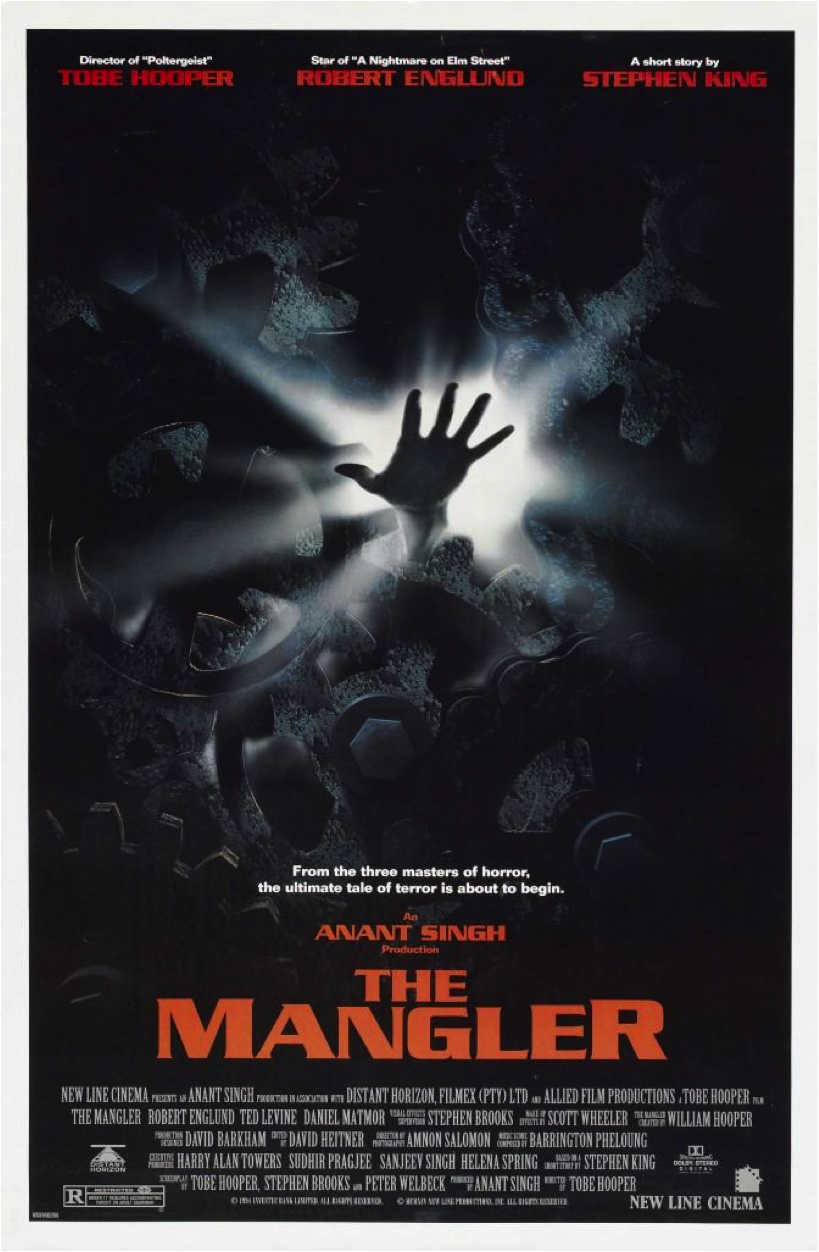



Great Post. We had similar experiences, but with the additional steps of:
1) Going to our home branch, only to be told that international transfers were only handled by the main branch in Wangfujing
2) Going to the main branch in Wangfujing (1 1/2-2 hours by car) to be told that our home branch was wrong and these international bank-to-bank wire transfers can only be handled by your home branch
3) Going to the Lido branch of our Hong Kong Bank, which technically only serves high rollers but they were willing to help us in our desperation. After a good laugh over our go around with a “countryside” bank (I was still under the assumption we lived in a city until that point), they told us exactly what forms our home bank needed to use to complete the transaction. Yes, the HK bank knew better the systems of the “Big Four” Chinese bank than the tellers.
4) Return to “Countryside” branch, armed with Knowledge! Is Power! and after another two hours (seated, though), successfully moved the maximum amount to HK bank. The next day, within minutes, made secure transfers ONLINE from HK to our US banks.
haha jesus, no wonder you were ecstatic when you tweeted, it is freakin’ TEDIOUS!! good to hear it went through though.
Or you can take the easy route — as I and many, many other expats do — and simply spend every single fen you earn.
RMB “savings”?!? Just you being able to say that phrase drops my sympathy with your banking odyssey to roughly zero.
Just kidding. Kinda.
At least you’re not dealing with incoming WOFE funds denominated in foreign currencies prior to 2010. Back in them there olden days the — well let’s just say a big state-owned bank — would (totally illegally) simply expropriate the money for an indeterminable period to play the short term money-market with it.
Not kidding. Not at all.
@shannon – Actually, on the subject of spending every fen I earn, no joke. I used to buy all my big ticket items, like new computers, overseas. One product of this experience is that I’ve resolved to buy such things here so that I don’t use my foreign currency any more than I have to. Air tickets, too. Used to book through airline websites using overseas credit cards. Probably through local agents now. Yes, I realize this is surrendering to the government’s agenda, but what the hell. Whatever minimizes my paperwork.
Now I realize that you’re probably dealing in much larger amounts than I – but even for tens of thousands of RMB, I have used the Uyghurs outside of the Bank of China and gotten better than state rate. Of course then I end up with more USD cash in my pocket than I’ve ever had in my life (enough to buy a used economy car) and I’m nervous like an MIT student on his way to Las Vegas to count blackjack cards.
@Terence: I’ve thought about it, but that still leaves me with the problem of either having to get a brick of dollars out of the country (carry on, or check through? Discuss…), or re-depositing the dollars into the bank and trying to wire it out. Not sure how the big banks will react if I walk up with a shoebox full of black market dollars and a grin. But if I saw me do that, I’d probably call the cops on myself.
Sounds like your employer won’t let you have two employment contracts – a China one and overseas. That sucks.
Another option – as far as I know Chinese passport holders are allowed to change $50,000 a year into foreign currency so get a local to help. Don’t think they care too much about foreign currency been carried out, but they don’t like people carrying lot’s of RMB out. A friend of mine got caught carrying about RMB150,000 to HK and was fined 10% of the total amount.
David wrote: ” A friend of mine got caught carrying about RMB150,000 to HK and was fined 10% of the total amount.”
Jeez! Is that all!? I was imagining confiscation or worse. For 10%, I think the risk becomes *far* less.
@Shannon
I am dealing with incoming WOFE funds in foreign currency.
After 6 weeks the bank eventually sent the money back to the US and started the transaction over from scratch but only after I found the US bank’s Guangzhou phone number so they could confirm that the form the Chinese bank wanted really really honestly didn’t exist and never had existed and that the lack of the existence of such a form made it quite impossible to fill it out.
The US bank’s Guangzhou office also had to explain to the Chinese bank how to send my money back.
And once my money was back in the States, I needed to show them the US bank’s bank statement to prove that:
a) they still charged me a transaction fee
b) the number was larger than they thought
In the end they did refund me for the transaction fee but I’m more than slightly disturbed that my refund happened in the branch manager’s office, off camera, with no forms or paperwork of any kind, and came out of her wallet. Not that I’m going to claim that I was never refunded or anything sleazy like that but I’ve got to wonder whose salary (or what slush pile) my fee is coming out of. It also means that there is no official recognition that this branch messed up super big.
if you are really desperate you can always take the Macau route .. I have not tried it before but you can get a “gambling account” with the Wynn casino and deposit money there.. then you can freely transfer it between the Wynn Macau and the Wynn Vegas .. doesnt matter how big the amounts are aslong as you can proof the source of the money
you can even do all of this without breaking any Chinese laws ..
– you have lots of RMBs in Chinese bank account
– none of the money is “illegal” / you paid tax on all of it
– clear out your account
– you have multiple entry visa
– go to Zhuhai
– cross the border holding the maximum RMB cash amount allowed
– deposit money in Wynn casino “gambling acount”
– cross the border every day for a week or aslong as it takes
people are used to LARGE cash amounts in Macau .. its all ok over there
it might sound like impossible to do if you have truely large amounts .. but both Zhuhai and Macau are very nice cities , just take a two week holiday here and cross the border each day
Edutainment at it’s finest Will. While still living in China I took a 14 month contract in Malaysia. When they transferred me money, I would go stand in line at UMB to receive my money, and generally got 100% in ringgit (RM). Not thinking about it, I booked a week stay in Bangkok (never again, Phuket is my Thailand destination) and flew over. I was shocked, SHOCKED that the hotel would not take RM or RMB… So 8pm on a Sunday, and no local currency or non RMB bank cards. Luckily, a friend of a friend ran a bar on 20th Soy nearby. He poured me a beer and disappeared with 5000 of my RM. He returned about 20 minutes later with a printed page from a currency exchange website, and the exact amount in Thai baht. He took nothing off the top for the transaction. Land of a thousand smiles indeed.
Hey Will,
I can’t speak for Singapore, but if you’re trying to move money to the States, as long as you keep are carrying less than $10,000, then you don’t have to claim it. You’ll get a few looks at your Stateside bank, but it’s doable (and as far as I can tell, completely legal). Space this out over a couple family visits and voila… You do have to accept the fact that you will be carrying a wad of cash in a traveler’s money belt, but I’m fairly certain that pickpockets do not abound on trans-pacific flights.
Also, I never once changed money through the Bank of China. I accompanied a friend who was doing that early on and the experience, despite being entirely vicarious, was painful enough that I couldn’t fathom going through it myself. I suggest you find a…*ahem*…private money changer who’s reliable and stick with him/her. I changed somewhere between $20k and $25k USD through the guy I used before I left (spaced out over a couple years). All bills were legit and accepted on the US side.
So, in your opinion what is the least hassle bank in China? Perhaps a HK bank is better? I recently started working for a medium size factory and need to open a bank account. I also should be getting salary soon. I need to be able to transfer money back to the States if need be. I guess I am going to have to double check and make sure that this place can provide all the above documents. Nothing is easy here is it..
@Marian Rosenberg
My thoughts are with you. Those transactions can be absolute hell. My hair went salt’n’pepper over 2006-2009, and I blame the WOFE incomings that I was doing once a quarter.
I once, for shits and giggles, demanded to see the local bank’s internal receipt paperwork (foreign banks will give you this if you ask) and was told that such paperwork was a “commercial secret in China”.
So the computer system confirming that you’ve received *my* money that *I* have sent you — and I have here in my hand the internal sending paperwork from the foreign bank — is a “secret” eh? Riiiiiiiight. Actually, we both know that it’s illegal under the international banking rules you’ve signed up to to deny me access to that paperwork, and we both know that the bank received the money days ago, but we also both know that there’s no chance in hell that you’re going to admit either of these things.
Good luck!
Great post. I’ve been pondering this issue because my wife insists we save and I’m wondering how to get the funds out of China towards buying a house in Scotland. Now I find it’s even more complicated than I anticipated…!
@Shannon
When the money came back into China this time, it still took another 3 hours of bank time for it to hit my account. Of course, I had to be there throughout the whole process in case something needed to be signed or filled out or double checked or translated.
My personal favorite was when I was handed a form that already had my essentials printed out (company name, account number, originating account holder’s name, etc…) and was asked to write ALL THE SAME INFORMATION by hand underneath the printing and sign it.
-M
The first time I had to send money home it literally took me a whole day being ping-ponged between branches of the same bank (BoC), standing in queue (always, ALWAYS with someone jumping the line), doing and re-doing forms (“here’s a mistake, you’ll have to re-do the whole three-page form”), but I got it done.
Having gone through all that, I thought that things would be much easier the second time. WRONG! I had all the same paper-work that I had used before, I was at the same branch, talking to the same people, transfering a similar amount of money to the same account, but suddenly they were insisting that I could only transfer as much money out of the country as I had paid in taxes, no more. Since this was in Shenzhen back when people were still paying 8% tax, obviously no amount of tax receipts would have mollified the staff there – so what could I do?
I argued with them. I then called up a friend of mine who worked for another bank, and she argued with them. I came back the next day with a friend of mine who argued with them. I then argued with them some more. In all I spent three days arguing with the staff there, but the story (which everyone I knew insisted was false) remained the same – I couldn’t transfer more money out of the country than I had paid in tax.
I then made one call to someone I knew who worked in the accounting department at the company I worked for – a major customer of this particular bank -asking him to confirm what the people at the bank were saying. Funnily enough, the next day I received a phone-call from the bank-manager saying that he was very sorry for the inconvenience, and that a car would come from the bank to pick me up so they could sort things out for me. I was taken directly to the Bank’s VIP room, where the transaction took about ten minutes – no more.
Now , I hate this kind of queue-jumping through using connections, and, even more, I hate troubling colleagues with my private affairs, but the lesson I learned from this is that things could be sorted out quickly if people simply knew their jobs and didn’t have such a bad attitude about confirming whether what they though was correct actually was.
This brings back memories that will require therapy.
Fortunately, I never had to exchange large sums of money. When I did exchange money for my vacation to the US and my move back, my wife went to the bank. All she needed was her ID card, Chinese passport, and single form filled out–no questions asked.
And for some reason, banks in the US are getting to be almost as maddening. Or maybe it’s just my neighborhood.
@FOARP
I have a shade less than USD 6000 already deposited in a personal banking account at a Chinese bank that also needs to be transferred into my WOFE’s minimum registered capital account.
Bank says not possible to do this transfer, you should withdraw it in cash and go make the deposit that way.
Sorry – but the reason the money is in my personal account is because minimum registered capital accounts can’t accept cash deposits.
Bank says but we’ll have to exchange your dollars for renminbi before we can put them in the account.
Sorry – but the account on the other end is ALSO a dollar account.
Bank says not possible, you should withdraw it in cash etc… etc…
Sorry – but the leader at the Hainan Office of the Foreign Exchange Bureau of the Treasure Department whose mobile phone number I can give you if you want TOLD ME that this was how to do it…
Bank says “let me talk to my manager”
(five minute huddle later)
Okay, no problem … you just need to fill out this form…
Memories of a post I wrote in 2003, when it was even harder to transfer money out of China:
Things had become a lot better when I returned in 2007. I only had to wait two hours and not all day, and I was actually able to transfer to my US bank after filling out tons of paperwork and supplying proof of employment, etc. Progress, of sorts.
Been there, done that… yes it’s absolute hell.
The last (and only time) I attempted it I too was given the runaround of being told “no, not here, you have to go to some other bank”. I eventually said fuck it and got a connection to a money changer who gave better rates than the banks did.
Even simpler solution now is to just dump it into the wife’s account, go online, click button and hello any currency I want. I strongly advise getting a Chinese wife, not only is it easier than exchanging money at the bank on your own, it’s also much faster and more straightforward.
That’s China.
My friend had pretty much the same thing happen but with the birth of his child. No single rooms available, doctors are all busy, nothing is happening, wife is in labor.
One phone call to our boss. A private doctor comes in just for the birth, he is from another hospital, 2 nurses, a private room, etc.
I had a beer with him the other day just after the birth of his son. He first words were… If I hadn’t made that call, nothing would of happened and it would of been impossible to give birth here in this hospital. Even with my wife and her mother being Chinese..
It’s all the same. It all moves at the same pace. It all has the same solution.. Guanxi.
@laomei Good advice, although my current (Singaporean) wife might not be so thrilled with that approach. Still, if it helps cover the bills…
This would be a lot funnier and much less tragic had I not been in that similar situation many times over the past 7 years….. still, this sentence is a classic:
“I would bulldoze a field of spaniel puppies and nursery schoolgirls in fairy costumes to avoid a trip to the bank. ”
you made my day
I recently wired 125,000usd out of china back to the usa to buy a house….surely there has to be other avenues then these processes…or being married to a Chinese citizen carries ridiculous benefits. The only catch we had, was each member of her family–my wife, her mother, and her father, each had to do a single transaction of 25-50,000usd (which was RMB only moments earlier)…
Badabing badaboom…three days, three trips to the bank, money in USA bank account, house purchased in full…not a bad week.
A few months ago I had a similarly fun experience getting my pathetically small 7 years of “life savings” out of China when leaving for Singapore. It was just substantial enough that carrying it out by hand would’ve meant declaring it, taking it out over several trips, or risking getting caught not declaring. I tried all legal means but apparently foreigners are limited to USD 500 per day in foreign bank transfers. The fees on each $500 transfer, not to mention the amount of time I would’ve had to spend hanging out in Chinese banks, made that one a non-starter. The Bank of China staff themselves, who were sincerely helpful despite being functionally useless, said my best option was to convert the money on the black market and get a Chinese friend to do the foreign transfer for me using their USD 50,000 annual limit on transfers abroad. I got a recommendation from a friend about a reliable black-market moneychanger- that’s a fun story for another day but mostly because it was amazingly smooth. Then I got a Chinese friend to use a portion of her USD 50,000 annual limit on transferring funds abroad to help me out. I had to sweat for a few days waiting to see if the transfer went through. If it didn’t go through, the money would’ve been returned to my friend’s account. I trust her, but having what would equal several years of her annual income sitting in her savings account would surely be a little tempting for anyone. Luckily no problems and my money is out of there. Just in time to miss out on the recent CNY appreciation…
On the flip side, it is amazing how easy it is to open a bank account in China. Just show them a passport and voila. Chinese laws are designed to suck in money, making China the Hotel California (or Roach Motel) of banking. I contrast this with Singapore, where I can’t open a bank account, sign up for cable TV, or internet plans, borrow a book from a library, use public sports facilities, or perform a multitude of other mundane activities, without an Employment Pass. Fingers crossed, should be getting one of those by early September.
I used the CCCB when I was teaching, and although the sum we wanted to take home wasn’t considerable, it was a huge amount of money for us. Because we had always banked at the CCCB, we went to the main branch and when they said ‘oh, we can’t do that’, we just went to another department. Materials required: every piece of paper we had ever been given that had red ink or the yuan symbol on it, sense of outraged entitlement to our own money. Total expenditure: 3.5 hours. The final solution included:
1) a guy with a man-bag full of USD who had been sitting (alone? in the dark?) in a small closet off the vestibule of the bank and who was summoned by a gesture to the security guard. He didn’t work for the bank, but everybody there knew him. He did the money changing, discounted a tiny amount off the bank rate, and the bank counted and verified the money he changed. This was done to avoid paperwork and was an ironclad requirement of the final solution.
2) two trainees on the second floor of the bank who taught themselves to do an international transfer, step by step, occasionally asking questions like “is your Bank of America headquartered in New York, or in Flushing?” When they finished, they said “well, we think that worked. We’re not sure how we’re supposed to tell whether or not it went through.”
3) repeated, sincere promises not to ever tell any of the other foreign teachers that this had been done or that it was even possible.
4) 6 cigarettes (although I have to say, none of the most helpful employees smoked, and most of them went to people who stood by ‘giving advice’ that was basically useless) for everyone else, and about 10 for me.
Now I see that we got off easy! Three months is less time than it would take to go to the US and EARN a similar amount of money.
Having just spent a semester abroad in China and doing everything possible to avoid walking into a Chinese bank if possible, I laughed out loud throughout this piece. I don’t think the Chinese banking experience could have been explained better (or as humorously).
@Max: When my business partner and I opened our UOB accounts in Singapore in 1995 we had all the necessary materials required to open the accounts. However, to receive checkbooks (necessary in Singapore then) we needed letters of recommendation from a current account holder. We didn’t know anyone who was a current account holder. When four more of our US colleagues arrived, they could open their accounts, and we, as current account holders, could give them letters of recommendations for checkbooks even though we ourselves couldn’t have them. Our friends suggested we cancel our accounts, re-open them, and they could then recommend us. I wanted to shoot myself.
I still use that account, but I honestly can’t remember the last time I wrote a check drawn on it. Maybe 2001 or so.
@nick: Great story. The black market seems to be consensus approach (even from the banks!). Unfortunately, as a spokesman for a global corporation there are certain risks inherent in extra-legal solutions, even if the bank itself is recommending them. Alas, it seems paperwork is my future.
@Jasmine: Thanks. Turning frustration into black humor is my coping mechanism. The alternative is Xanax and it’s hard to get a prescription here.
I use a moneychanger in China who has stacks of Euros, Dollars, Aussie Dollars, Pounds and other currencies in a briefcase in his home. I have seen it. After he exchanges my shopping bag full of RMB into a small stack of green bills, I put those bills in my backpack and go to HK.
Obviously this only works if the shopping bag is not ALL red bills and the green stack is less than 6 inches thick.
Western Union is another option, with toothgrinding fees.
Anyone else noticed how many of the folk on this thread have seemingly been told different things about what they need to do a bank transfer?
@Will, this post is an example of an almost-dead breed – the Bad China Day post. It’s hey-day was in 05-06, before the GFW came into full effect,it’s apogee was on the pages of Sinocidal. It once ruled hundreds of blogs, with more appearing every week. It is now almost no more, even if the source of its inspiration is still alive and kicking.
A friend who taught in China found a relatively painless way to transfer money out of China.
As you may or may not know Bank of America and China Construction Bank are heavily invested in each other and so its a little easier to do certain transfers between them (such as being able to withdraw fee-less RMB from a CCB ATM using a BoA card).
My friend was advised by the CCB main headquarters in the city he worked in to transfer his RMB to a CCB account in his Chinese girlfriend’s name then transfer it to his BoA account for a relatively small fee. It apparently avoided a lot of paper work required when a foreigner wants to transfer money out of China. The only thing you need is a Chinese friend you can trust. At least the bank was a smart by helping him try to simplify things. Prevents a lot of headaches.
As someone who’s gone down the Western Union path before, as long as you have a little-used branch of Everbright (somewhat likely), the Agricultural Bank (less likely), or the Post Office (wishful thinking) near you, it’s relatively painless. Sure, if you’re handing them RMB it’s a max of $500 a day, including the sending fee that has to be paid in US$ as well, but better than the others in a pinch. Otherwise, there’s a reason my primary accounts are with Standard Chartered and BEA. The BOC account is only because school demands it for certain payments, and ICBC because no one else will issue me an unsecured RMB-denominated credit card.
@FOARP: I consider myself a past-master of the bad China day post (and I remember Sinocidal well). Some of these still live under the “rants” tag. When I go through the more extensive offline archives it’s shocking how many involved banking in some way. Actually, to judge by the comment thread, this may be the single most painful thing for every expat in China. Or perhaps #2 after the GFW.
As to this particular story being a bad China day, I like to think of it as the classic Hollywood arc, where an everyman hero encounters almost hopeless odds, but emerges battered but victorious at the end. It’s only missing Mila Kunis.
Question to any and all: Does hawala exist in China, or is that just too freaky for the authorities here?
Hawala: yes. But barring a mid-life religious experience that you haven’t told me about, you don’t qualify.
Oh life is SO tough when wondering what to do with our hundreds of thousands of dollars.
So it takes time. Live in China? Just accept RMB is like this and get over it, thanking whoever that you have (1) money and (2) time.
“Hundred of thousands”? Wow. I’d have accountants to handle this crap. Although then, to be fair, I’d probably
writepay a ghost to write posts complaining about the accountants.“Good advice, although my current (Singaporean) wife might not be so thrilled with that approach. ”
Current wife Will? Only current? Hope she is not reading this or could be a rolling pin on your return home
@mike: What makes me think she hasn’t already clobbered me?
I will swear by China Merchant’s Bank. Not because they make it any easier to do this stuff, but because I’ve never had to wait more than about 45 minutes to see a teller at the Dongzhimen branch.
In contrast, it once took three hours of waiting to withdraw the equivalent of about $2000 USD from my credit card from the main Yabaolu branch of the Bank of China. A number of people apparently complained about this, so they installed a large television that – to this day – plays endless re-runs of Tom and Jerry.