The neutral path Ed Sheeran wanted to take was always a mirage
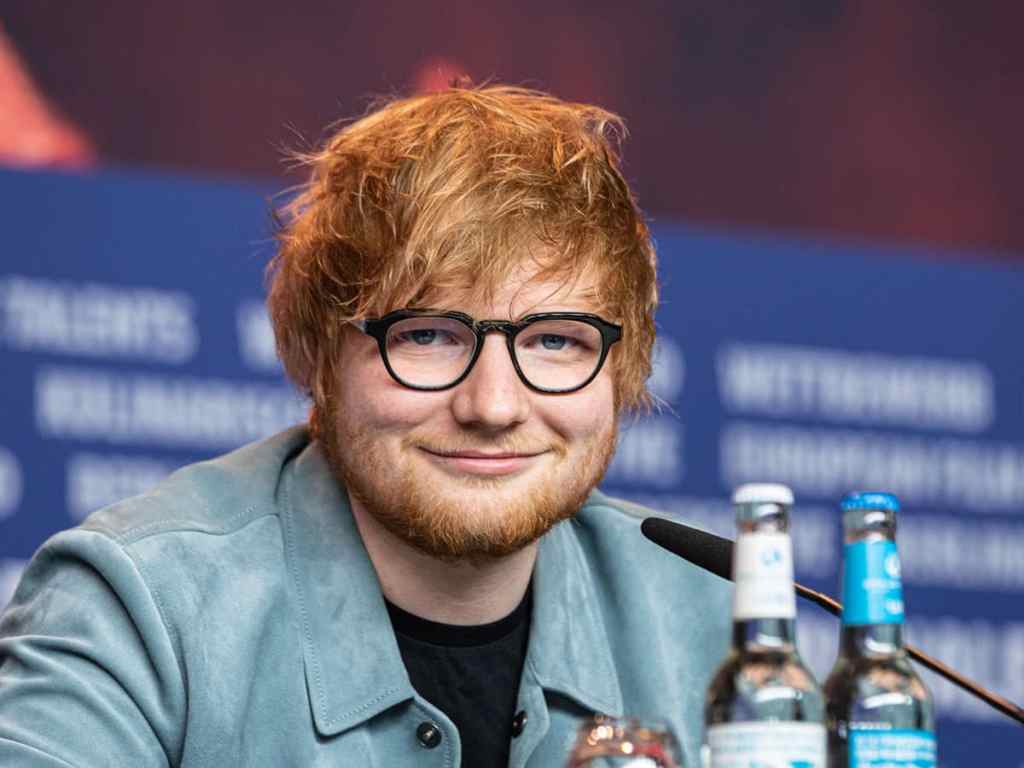
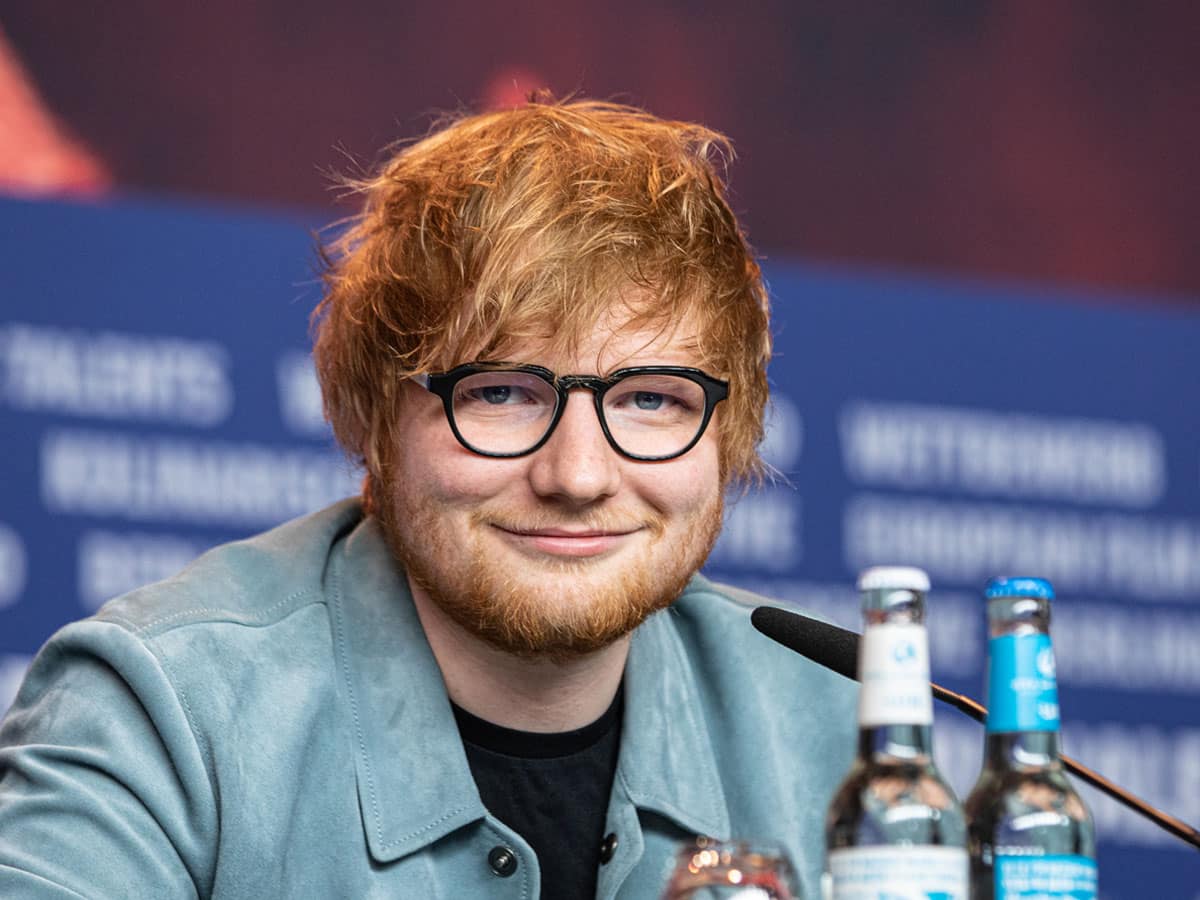
Full disclosure: I have never knowingly heard a Macklemore or Ed Sheeran song. I gather that Sheeran is an occupationally tousled, red-headed Yorkshire pop-muppet, while Macklemore is like if you diluted a level tablespoon of Eminem into a gallon of room-temperature Seattle tap water. They’ve been performing together on a stadium tour that Sheeran is headlining and that is billed as “The Loop” and tragically not as “Ginger/Danger.” I am available for branding work.
Until last week I was safely sheltered from Sheeran and Macklemore behind my generational armor. But the disintegration of their US tour over Macklemore’s public support for Palestine was interesting, so I’ve had to pay attention, fml. I assume some of you are healthy and not as terminally online as I am, so we’re going start with the back-story.
The Washington Post has a good summary of the situation, but here are the major beats:
- On September 7th, speaking from stage at a concert in New Jersey, Macklemore made about two minutes of “free Palestine” remarks. Macklemore is an imperfect vessel for pro-Palestine messages. Back in 2014, he performed as a horrifying Jewish caricature. He apologized and swore it was inadvertent, but you be the judge.
- On Monday, September 14th, Macklemore said in an Instagram post (😡) that, “Ed Sheeran and his team have made the decision to remove me from The Loop tour.”1 Macklemore said that Sheeran had told him that Robert Kraft, billionaire owner of the New England Patriots football team (derogatory) and of Gillette Stadium, where the tour was scheduled to play, had made the demand after Macklemore’s Palestine remarks. Kraft is Jewish, tightly aligned with the ADL, and AIPAC and has been a strong supporter of Israel and the IDF. He’s also the founder and primary backer of the Blue Square Alliance, of the “Stand up to Jew Hate” television ads.
- Sheeran responded on Instagram (😡😡) with a long statement, “laying out some facts.” I’ve pasted the whole thing below because we’re going to have fun annotating it. It’s bad.
- On Wednesday, the 16th, Macklemore put his money where his mouth was (again on Instagram, 😡😡😡), and announced he was donating $1 million of his earnings from the tour to Palestinian relief organizations. He invited Robert Kraft to match the donation.
- Also on Wednesday, the Gillette Stadium account on Instagram (😡😡😡😡) published a statement from Kraft, which said (both-sides trigger warning) “all lives are worth protecting” and that “Ed…asked me to commit $2 million to match his donation to aid in the region…” The statement did not actually confirm that Kraft would make such a donation to “the region.” ¯\_(ツ)_/¯
- And finally, on Wednesday, a bunch of Ed Sheeran’s other supporting acts and backing band members quit in solidarity with Macklemore. Some were publicly diplomatic toward Sheeran, but the equal-opportunity assassins at satirical newspaper The Onion were not.
- Deliciously, right as the scandal was kicking off, Guitar Center, which is like if Skeletor operated a chain of overpriced music stores, launched a contest in which “YOU COULD OPEN FOR ED SHEERAN!” This was instantly hijacked in entertainingly profane ways.
- As all of this was happening, Sheeran received vocal support on X.com from English far-right agitator and world-champion racist Tommy Robinson, while YouTube children’s personality and neighborhood saint Ms. Rachel announced on Instagram (😡😡😡😡😡) that she would match Macklemore’s $1 million donation.
If you’re gaining Tommy Robinson and losing Ms. Rachel, you are in trouble! But the show must go on, by contract.
The mirage of the neutral path
Let’s establish the playing field. The Hamas attack on Israel of October 7, 2023 was a brutal act of terrorism and a horrifying crime. Israel’s response in Gaza has claimed tens of thousands of civilian victims and members of the current Israeli government have made statements that suggest their motivations are broader than simply eliminating Hamas. Meanwhile, America (and much of the world) has a real and rising antisemitism problem. But accusations of antisemitism have also been weaponized for political purposes in the US. Amidst all of this, the American public’s view of Israel has cratered since 2023. It’s views of Palestinians have stayed relatively flat, despite America’s chronic islamophobia.
In the words of the prophet Flavor Flav, it all adds up to a funky situation.2 I can’t blame anyone for tiptoeing as delicately as possible through this minefield. But I found Sheeran’s statement “laying out some facts” unsatisfying. Here it is in full. I’ve highlighted and [annotated] some interesting bits.
I am appalled by the conflict between Israel and Palestine. The suffering and pain caused on both sides is a human tragedy. [Israel and Palestine, not Israel and Hamas. Both-sides alert – fine on its face, but elides that since October 7th, 2023, most of the suffering has been directed at Palestinians in Gaza, which is the issue at hand.] There are too many wars across the world causing immeasurable pain, none of which should be tolerated.
Macklemore asked to join my tour last year and I agreed, because I respect him as an artist. [This feels shifty. “Macklemore came to me. Don’t blame me!” Otherwise, why even include it?]
As with all my support acts, I agree that they play a setlist of their choosing.
After Macklemore’s performances at my New Jersey shows, venues on my upcoming tour dates communicated that they would pull the shows if he was still supporting. I was informed that this stance was based on how Macklemore conveyed part of his message during his performance, rather than on everything that was said. [What does that mean and why does it matter at all? We can all watch the video. Sheeran is raising questions that go unanswered.] I spoke with the venues at length all week to try and build a bridge.
One of those people was Robert Kraft. I was also involved in direct talks with promoters along with activists on both sides to try and find a mutual resolution for all, but the venue’s and promoter’s decision was final.
Macklemore coming off tour was the promoter’s decision, it was not mine. Macklemore’s contract for the tour was with the promoter, not me. [“Don’t blame me! I’m a smol ginger bean who has only sold 200 million records and 126 billion streams worldwide and I have no power at all in this dynamic.”]
I would never let down the fans who had made plans, nor would I abandon the touring crew and the other support acts and musicians who rely on me for work and to make a living. [“Why I didn’t take a moral stand. I’m thinking of you, (Bane voice) the people!” This is actually a recitation of stakeholders that will become important to us, below.]
I have always used my platform and music to bring people from all
backgrounds and cultures together and this won’t ever change. Those who have been to one of my shows will know that they are about unity, joy, escapism, love, and a place for everyone to feel welcome.I am not complicit. [Don’t say what you aren’t. Say what you are. Why would you introduce the word “complicit” and give everyone an easy pull quote?] I have my personal views on this devastating conflict. Just because I choose not to speak publicly, it doesn’t mean I don’t have them, and it doesn’t mean I don’t care. Nor does it mean I don’t support causes in my own, personal way. [Again, invites a question he doesn’t seem to want to answer. “What causes? How have you supported them? Are any of them the Palestinians?”]
There is a reason I do not use my professional platform for politics – my audience includes young people, often children, of all backgrounds. [Leave the kids out of it. You sing about waking up drunk “on the right side of the wrong bed” and drinking and smoking cigarettes at age fifteen. That’s OK for kids, but politics will scorch their little ears? Also, Sheeran has publicly taken political positions on several occasions.] Those who come to my shows do not expect a political forum. I respect Macklemore’s strength of purpose to stand up and shout for what he believes. However, there is room for multiple approaches to the same end: peace. I choose to use my fame and platform to be a place of safety and sanctuary, to maintain diplomacy and keep conversations open, not closed. If we only focus on shouting the loudest, nothing will ever change. There are different approaches to being an advocate for change. [This comes off as a neg of Macklemore. He has “the strength of purpose to stand up and shout” but “if we only focus on shouting the loudest…” The ability to shout, figuratively, is one of the main tools of celebrities with huge platforms and lots of cultural capital.]
I have spent this week trying to build bridges, to find a solution and unfortunately, was unable to do so. I know who I am, both as a person and as an artist, and those who know my heart know my values too.
Ed
The whole statement is squishy. I have values but you won’t know what they are. I support causes but won’t tell you what or how. I respect Macklemore but his approach was wrong. Sheeran is the superstar and headliner, but he deflects responsibility everywhere else: to Kraft, the promoters, the audience, Macklemore. There is a Sheeran-shaped hole in place of anything that feels like a principle or moral bedrock.
The problem is that Sheeran is trying to articulate a neutral path that doesn’t exist. If that path ever existed, it vanished the moment Kraft and the promoters delivered an ultimatum. Forget the statement. Once the ultimatum arrived, what mattered was Sheeran’s possible actions. These were: align with Kraft and the promoters at the expense of Macklemore, and implicitly against the Palestinian people, or align with Macklemore, and implicitly with the Palestinian people. Any other option was a mirage.
To be fair, Sheeran had a range of stakeholders to satisfy. The obvious ones are the following, ordered in the priority his actions and statements implied:
- The promoters and venue owners (want a show, but only without Macklemore)
- His audience and fans (want a show)
- The crews working on and supporting his shows and the other businesses that stood to benefit (want a show)
- His supporting acts and backing musicians and the community of performers they represent (want Macklemore supported)
In this model, the wants of the promoters and venue owners conflict with the wants of the supporting acts and backing musicians. In fact, almost all the pressure aligns in the direction of, “have a show.” That’s the easy choice and path of least resistance. That’s the path the money wants.
But that doesn’t mean it’s the right path! The point of having principles and some moral bedrock is to help you assess if the hard choice is in fact the correct one. Sheeran presented his actions as favoring his fans, but he looked spineless and his supporting acts and backing band walked. That’s a bad look, even before you get to being dunked on by Ms. Rachel.
Seeing the bigger crisis
I’ve poked fun at this situation, and it is funny as long as you view the crisis as, “Ed has to save his show while being yelled at by everyone.”
But you can widen your field of view and see a bigger, less funny crisis. One where a billionaire venue owner with specific political beliefs dictated what a popular artist could say from the stage about an important and arguably mainstream issue. That is a precedent that leads in bad directions. It’s one thing for an artist to choose to be apolitical on stage. It’s another altogether for venue owners and promoters to ban politics that they disagree with. That feels like something an artist of Sheeran’s stature should have a point of view on.
A lot hinges on how you hear Macklemore’s remarks. Are they antisemitic and therefore beyond the pale? I don’t hear it, but others might.3 As I noted, Macklemore is an imperfect messenger. But one reason the Israel-Hamas war is fiendishly difficult to navigate is that there has been a bitter three-year struggle to define the boundaries of acceptable public speech about the conflict, especially when that speech involves support for Palestinians. This incident was a skirmish in that broader struggle.
How you define this crisis, and the width of your field of view, determines the actions and messages that you consider. I can’t tell you what Ed Sheeran should have done, because I’m just some guy and not a huge pop act powering an economy worth hundreds of millions of dollars. Sheeran is acting as not just Ed Sheeran, artist, but as CEO of Ed Sheeran, Inc. It’s hard to analyze a company’s actions from the outside. You don’t know the details of the business and its stakeholders and risks, including the legal risks, which might be substantial.
But I can tell you what I would have respected much more than his mushy statement, above. Even if Sheeran didn’t want to take a position on the Palestinians, he could have set as his moral bedrock artists’ rights to express their personal opinions and beliefs from stage. This would have meant telling Kraft and the promoters that he wouldn’t remove Macklemore from the tour. It would have put control of the situation in Macklemore’s hands, letting him decide whether he stays on and the concert is spiked, or he withdraws and it continues. If he steps down voluntarily, Sheeran is spared a world of grief.
That’s all a risk, with big financial stakes! But it’s anchored in a clear principle, and it would have let Sheeran issue a statement like this (using some of his language):
After Macklemore’s recent remarks calling for a free Palestine, Robert Kraft and the promoters of The Loop tour demanded that he not perform with us at Gillette Stadium later this month.
The world is complicated and sometimes difficult. That’s why I have always used my platform and music to bring people from all backgrounds and cultures together and this won’t ever change. Those who have been to one of my shows will know that they are about unity, joy, escapism, love, and a place for everyone to feel welcome.
However, as a performer, I also know the power of being able to speak my truth to the audience, and the privilege of having a platform that lets me reach millions of people. That’s why I will always support the right of artists to speak and sing freely and passionately about the things that matter to them and move them, and the right of the audience to decide for themselves how they feel about it.
I am standing by my friend Macklemore because I respect his strength of purpose to stand up for what he personally believes. That’s something we as artists should all be willing to do.
I will not ask Macklemore to leave the tour, and I will respect whatever decision he makes. There is nothing I want more than to perform for my fans in New England, and I look forward to doing that, whether at Gillette Stadium later this month, or at another venue and time.
Maybe the show would have been cancelled, and it still elides an explicit stance on Palestine. But it would have set forth a real principle and showed that Sheeran was willing to stand by it, even if that was the hard decision. This also flips the prioritization of Sheeran’s stakeholders, putting the community of artists and performers—Sheeran’s peers—at the top and the venue owners and promoters at the bottom. Where this places the fans depends on what you think Sheeran’s duty to them is. Is his duty just to deliver a show? Or is it something deeper? Only Sheeran can decide that.
Ultimately, Sheeran couldn’t escape picking a side in the Israel-Palestine issue. He just picked the side with power, by default. Maybe that was the sensible business decision. Sheeran played solo for a packed house in Philadelphia on Saturday, the 20th, just days after all of this went down. There were a few protestors, but nothing that affected the show. He even addressed Gaza, a bit of damage control.
But the damage to Sheeran’s reputation is done, the skirmish is lost, and the window for public discourse about Gaza and the Palestinians is a little bit narrower than it was before. In his statement, Sheeran wrote that he chose to use his fame and platform to “keep conversations open, not closed.” But his actions helped to slam the door shut.
Originally published on Substack
Update 9/24:
I finally saw video of Sheeran’s remarks in Philadelphia on the 20th. He acknowledges the speech issue, which is good. The proof will be next time he has to make a hard choice, but it’s a start.
- The use of Instagram as the celebrity public communication platform is annoying as fuck as you have to scroll through multiple image tiles of text, but I get why they do it. It is where their audiences are. ↩︎
- From Public Enemy’s “911 is a Joke.” I’ve always heard it as “fuckin’ situation” and I always will, but that’s not what the official documentation says. ↩︎
- If you’re wondering, I’m Jewish. My ancestors on both sides fled Russia and Ukraine for the US and the UK respectively at the turn of the 20th century. ↩︎