Tag: Olympics

  • Why I don’t care about the opening ceremony’s fraudulent footprints

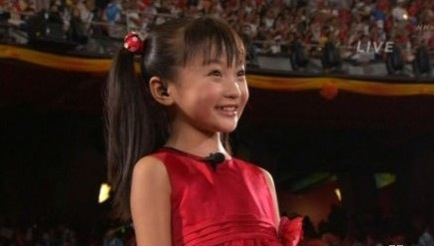
    Or so you would start to believe from the press reports over the last day. Some have dwelt upon the lip-synched singing of hyper-precious Lin Miaoke, the impossibly apple-cheeked munchkin girl who “sang” the laudatory and self-referentially titled “I sing for my motherland” without toppling over in shock at the thought of being watched live by 90,000 people and countless millions on live television. She must have been on ketamine, because I would have frozen like fudge in Fargo. And I generally have no problem with public speaking.

    More reports have focused on the somewhat more scandalous replacement of the “giant footprints” fireworks display with a computer-generated special effect.

    Here is what Imagethief thinks of both of these revelations: So what?

    I got news for you: Li Ning wasn’t really flying either. If they’d really wanted him to fly they would have shot him out of an air cannon in a flaming suit and he could have lit the torch as he sailed over it and out of the stadium into the Great Beyond of the Olympic Green.

    Damn, forget Zhang Yimou. With ideas like that, I oughtta plan these events.

    The Olympic opening ceremony may have represented many things, but “veracity” was not among them. I thought it was a pretty good show. But let’s face it: it packaged Chinese culture as vulgar burlesque and reduced the legendary 5000 years of history to arena-rock light show. The whole thing was one giant special effect from beginning to end. But I don’t care. I like vulgar burlesque and arena-rock light shows. This was my kinda show!

    In fact, arguably Olympic Beijing, tarted up, hyper-sanitized, stripped of automobiles and resolutely micro-managed for two weeks, is something of a colossal special effect in and of itself. Among all this surely one digital process shot can be forgiven.

    Even the Olympics themselves can be thought of the same way. Overmarketed, pompous, awash in idiotic pseudo-religious symbolism (remenber the “priestess”-infested torch lighting ceremony?), and rife with doping and age scandals, they’re certainly a yard or two from what most of us would consider “reality”. It’s well off the deep-end of showbiz, and showbiz is all about illusion. And I write all of this as someone who’s relatively excited about the games! But you have to be clear-eyed about these things.

    The only grudge I hold about the footsteps is that it was a particularly cool idea. I even said, “That’s cool!” to Mrs. Imagethief while we were watching it on the immense TV that my landlord so graciously installed in my apartment. So, yes, I was fooled. My bad. But I was still entertained by the shot, which is more than can be said for the oxygen-destroying tedium of the totally un-retouched parade of national teams. If anything, I could have used a little less veracity there. (On that note, NBC denies editing the parade to make the US team come out later in the US broadcast. Imagethief suggests that the turgid pace of the parade simply made it seem like eternity before the US team came out.)

    As for munchkin girl, of course she was lip synching. While we were watching her I turned to Mrs. Imagethief and said, “The munchkin is lip synching.” This doesn’t make me a genius. It simply makes me someone who grew up watching Superbowl halftime shows, the Grammy Awards, and other lip-synch classics.

    In fact, on that note, and overlooking the two hour Grand March of Tedium and my various bitchy comments above, I give the opening ceremony pretty high marks. The first part was legitimately spectacular, and I enjoyed the finale as well. Yes, I think Zhang and the Gang could have done themselves a favor and left out the footprints if they didn’t think it would work. Or simply taken their chances on the helicopter chase. But I’m sure they were all biting their nails to quick during the entire four hour extravaganza already. Has anybody tracked sales of Tums (or the Chinese equivalent) in Beijing over the past month?

    In fact, the soporific parade aside, the only other things I’d have voted to remove from the ceremony were the absurd hand-doves of peace, the goose-stepping soldiers and slow march of the Olympic flag around the entire circumference of the field in the statium. The soldiers kindled unpleasant associations for many foreigners, and the flag march simply came way too late in the show for such draggy self-indulgence.

    But good marks on the whole. I’d say that the London 2012 crew (remember, there will be another Olympics after this one, assuming the sun doesn’t explode) has its work cut out for them. Imagethief has just one bit of advice for them: Keep it under two hours. At four hours, the Beijing ceremony was longer than the Oscars (speaking of fraudulent). Keep it short, leave ‘em wanting more. Everyone will love you for it. Or at least I will.

    And that’s gotta be worth something, right?

    What? Me? Sing?
    What? Me? Sing?
  • Bang! China shoots its own Olympic PR in the foot

    Imagethief, who has bid for something on the order of RMB12,000 worth of Olympic tickets, is trying resolutely to remain optimistic about the Games. Unfortunately, it’s proving harder as time goes by. Tomorrow marks the one-year-remaining milestone. This should be an opportunity for Beijing to highlight progress, turn the excitement crank, and demonstrate that has the patience and forbearance that will be necessary for a successful Olympics. However yesterday brought an important test of China’s patience and forbearance, and China failed it.

    The problem is that while tomorrow’s milestone date is a legitimate time for celebration and anticipation, it was inevitably also going to be a perfect date for a dry-run by the many activist groups that want to appropriate the Olympics for their own agendas or score points against China. Sure enough, that is what has happened. Reporters Sans Frontieres,Human Rights Watch, the Committee to Protect Journalists and Amnesty International all chose this week to release announcements or hold protests.

    Of these, the RSF protest yesterday was most provocative. Activists wearing T-shirts and carrying signs that portrayed the Olympic rings as handcuffs staged a demonstration on a highway bridge near BOCOG’s headquarters. To add an extra measure of discomfort for Beijing, IOC Chairman Jacques Rogge happens to be in China right now.

    Unfortunately, reports say that foreign correspondents covering the protest were detained by police for one or two hours afterward and “roughed up”. From the AP coverage:

    [Uniformed] and plainclothes police physically restrained reporters coming down from the pedestrian bridge, pushing and pulling them, seizing IDs and refusing to allow them to leave the scene. Reporters were detained in a parking lot directly opposite the Olympics office tower, facing the Beijing 2008 logo and Olympic rings on the outside of the building.

    Journalists were allowed to leave after about two hours, with no explanation from police about why they were detained.

    A woman in the spokesman’s office of the Foreign Ministry said she did not know about the case and would look into it. Liu Wei from the information office of the Beijing Olympics Organizing Committee said she was not aware of the situation and had no comment.

    If that isn’t playing right into RSF’s hands I honestly don’t know what is. I found the reports somewhat confusing and had to dig around to get a clear idea if the journalists detained on site were protest participants or locally credentialed reporters covering the event. But it appears to be the latter. RSF’s own release suggests much the same.

    The best thing for Beijing to do under these circumstances would have been to err on the side of tolerance and allow the protest to proceed under supervision. Credit is earned slowly, painfully and in tiny increments while setbacks come in great, heaving leaps, and activists can win the PR battle by baiting the Chinese authorities into overreacting. Detaining journalists on the scene, under any circumstances, was asking for trouble.

    The result is not only that the protest is probably getting more coverage than it would have otherwise, but that the tone is distinctly nastier from Beijing’s point of view. Coming on the heels of last week’s widely covered FCCC survey and at the same time as all the other reports listed above, it looks very bad and reinforces people’s fears of what might go wrong during the Games themselves.

    The PR rule of thumb operating here is that response to an issue can become the issue if it is handled badly. That is a rule that Beijing needs to stay mindful of. Unfortunately, it seems likely that not all of China’s bureaucracies will be on the same page about this. It is entirely possible that BOCOG and the Public Security Bureau will have different opinions on how these kinds of situations should be handled. This might be someplace where the IOC could provide a little visible leadership, but they have stayed silent until now.

    Fair or not, China will be judged differently than other countries that host the Olympic Games. Now matter how glamorous the venues, how exciting the games, or how successful China’s athletes, the Games will be judged in large part based upon how gracefully Beijing can manage the inevitable protests. That is the price China pays for hosting the Games in a political environment that disdains many of the freedoms that the Games’ primary audiences abroad take for granted. The Financial Times‘ Beijing Bureau Chief, Richard McGregor puts it nicely:

    Over more than a decade Beijing has gradually defused pressure over its human rights record. Through remorseless diplomacy and skilful use of its growing economic clout, it has sidelined western complaints about human rights and marginalised the non-governmental lobbies that seek to promote them.

    The Olympics, however, are offering China’s critics a moment in the sun, and they have grabbed it eagerly.

    McClatchy’s Tim Johnson also captures the risk Beijing faces nicely:

    Because of China’s history of quashing revolt, any protest has the potential to become an iconic image, like the moment when U.S. athletes Tommie Smith and John Carlos raised their fists in a “black power” salute at the 1968 games in Mexico City.

    That’s an important thought to bear in mind. It will be interesting to look back a year and a month from now and see what the iconic image of the Games is. I sincerely hope it will be a moment of athletic triumph or a moment of Olympic splendor in one of those magnificent venues.

    After all, the Olympics are a magnificent opportunity for China. An opportunity not only to showcase the country’s development and rightful place on the international stage, but also to explore a more constructive way of engaging with the activists and NGOs that, for better or for worse, will be interested in China for decades to come.

    But the heavier a hand that Beijing takes in dealing with dissent and protests before and during the games, the higher the chance that the iconic image of Beijing 2008 will be something that dispels the goodwill the Olympics could create and reduces those opportunities to dust.

  • Did the “Genocide Olympics” influence China?

    Propaganda and censorship are two sides of the same coin. Both share the same goal: to enable an individual or organization to shape consensus in a group. They often work together. Censorship eliminates competing ideas, creating a void in which propaganda can be more effective. Having a coup? Seize the transmitters and studios so you control the message. It’s a time-honored strategy. Propaganda and censorship are related in another way. They both work cumulatively, over time. It’s not usually the “magic bullet” that drives consensus so much as the patient steering of discourse over time via many channels.

    But propaganda and censorship do have one difference. I wrote recently that the most powerful censorship is what you don’t see. That’s not always the case with propaganda. Brilliant propaganda can certainly be subtle. Think of manufactured word-of-mouth campaigns that cultivate something that feels like a grass-roots public groundswell. But brilliant propaganda can also be right in your face. There was nothing subtle about the 1934 Nazi Party rallies, but they were brilliant propaganda, as was Leni Reifenstahl’s film of the rallies, Triumph of the Will. That was propaganda as sensory overload and religious experience. And it was devastating in cultivating the Nazi mythology.

    The 1936 Olympiad was also propaganda, designed to showcase the grandeur of the Third Reich and the physical superiority of Hitler’s Aryan race. Like the 1934 rallies it was also filmed by Leni Reifenstahl. There was a problem with the Olympiad, however. It was hijacked by Jesse Owens, the black American sprinter who won four gold medals and undermined the messages that Hitler wanted to send to the world. Owens was a powerful, visual symbol and he himself became the lynchpin of a public mythology.

    Now it’s China’s turn. China is not Nazi Germany, but the 2008 Olympic Games is as symbolically important to China as the 1936 Games was to Hitler, if not more so. It is a monumental affair staggering under symbolic baggage, and it will be, once again, propaganda as a religious experience. Like the 1936 Olympiad, however, it is also vulnerable to being hijacked. Jesse Owens didn’t mean to undermine Hitler’s message. He just wanted to win. But that didn’t change his impact.

    China won’t have it so lucky. The Olympics is more than a sporting competition. It’s a global platform that makes a seductive lever for anyone with an agenda that they want to propel into the public consciousness. The modern Olympics has always been seen as an opportunity to make political statements. Hence Owens in 1936, Tommie Smith’s and John Carlos’ “black power” salute in Mexico City in 1968, the Black September hostage drama in 1972 in Munich (Germany star-crossed again), and the reciprocating Russian and American boycotts of 1980 and 1984. China’s Olympic games isn’t even the first time an authoritarian Asian nation has used the Olympics to debut on the global stage. That honor goes to Korea, for the Seoul games in 1988, when Korea was at the tail end of its authoritarian regime. You can even make a case that Japan beat Korea to the punch in 1964 when its summer games served as the stage for Japan’s symbolic postwar rehabilitation less than twenty years after the end of WWII.

    If all of this makes you feel a little grimy, remember that the modern Olympics exists specifically as a propaganda vehicle (and here I include marketing as a kind of propaganda). The IOC may call it a “movement”, evoking images of grass roots participation and noble sporting ideals, but that is propaganda itself, designed to draw a graceful fig leaf over the reality that the Olympics is a vast business venture –reportedly US$4 billion in revenue over its previous quadrennial cycle– driven by sponsorships and advertising. Sponsors take the messaging opportunity seriously, as well they should considering what they invest.

    China, hungry to be seen anew as a great power, had its own agenda in mind with the Olympics. Unfortunately for China, all the debate and controversy that swirls around its human rights, environmental and geopolitical issues is being dragged along in the Olympic slipstream. People have China axes to grind, and that beautiful Olympic fulcrum is too enticing to pass up. The 2008 Olympics was politicized from the moment it was awarded to Beijing, and will be more contentious than any games in modern memory. That’s a big deal considering the Olympics’ propaganda-splattered pedigree. In the PR industry we refer to the 2008 Olympics as “issues rich”, which is a polite way of saying, “watch this space for crisis”.

    That’s why “the genocide Olympics” is such a brilliant piece of propaganda. It is as un-subtle as you can get, and it looks like being effective.

    The phrase has emerged into the popular consciousness thanks to a campaign by actress and activist Mia Farrow and her son Ronan, most recently in an op-ed piece (also here) published in the Wall Street Journal and Boston Globe (and possibly elsewhere) in late March. Mia Farrow is just one of a constellation of people and groups with a China issue. In fact, Ms. Farrow’s real problem is with the Sudanese government’s sponsorship of widespread destruction and killing in the Darfur region. But China’s support for the Sudanese government and its investment in Sudan make it a convenient pressure point, and the Olympics provide that all-important leverage. The editorial says:

    [There] is now one thing that China may hold more dear than their unfettered access to Sudanese oil: their successful staging of the 2008 Summer Olympics. That desire may provide a lone point of leverage with a country that has otherwise been impervious to all criticism.

    Whether that opportunity goes unexploited lies in the hands of the high-profile supporters of these Olympic Games. Corporate sponsors like Johnson & Johnson, Coca-Cola, General Electric and McDonalds, and key collaborators like Mr. Spielberg, should be put on notice. For there is another slogan afoot, one that is fast becoming viral amongst advocacy groups; rather than “One World, One Dream,” people are beginning to speak of the coming “Genocide Olympics.”

    Does Mr. Spielberg really want to go down in history as the Leni Riefenstahl of the Beijing Games? Do the various television sponsors around the world want to share in that shame? Because they will. Unless, of course, all of them add their singularly well-positioned voices to the growing calls for Chinese action to end the slaughter in Darfur.

    The Farrows don’t take immediate credit for “the genocide Olympics”, and in fact the phrase has been circulating since at least last December, when the Washington Post ran an editorial by that title. The Boston Globe, extends a degree of credit to a Smith University professor named Eric Reeves who advocated the Olympic-China-Darfur link on their own op-ed page, three days after the Post piece ran. A week after Reeve’s piece, theGlobe ran another editorial that cited Reeves and did use the phrase “genocide Olympics”. (The Globe has been banging the drum very hard, and it launched the phrase again in a new editorial from May 8th, here republished in the International Herald Tribune.) The phrase also had a bout of publicity in March thanks to the Farrows, and has been resurrected in the past week or so thanks to the efforts of US politicians, including long-time China critic Tom Lantos and others:

    “We don’t want these Olympics to go down in the history books as the genocide Olympics,” said Lantos, chairman of the House of Representatives committee on foreign affairs.

    ***

    “It is outrageous that China is using the very symbol of international unity and brotherhood to further grind down the Tibetans and the Taiwanese who simply want to live their lives without interference from Beijing,” Lantos said.

    Two things are making this a successful campaign.

    First, the campaigners have a brilliant slogan. The genocide Olympics. It sticks in the head and it conjures up the worst possible set of associations. It fits on a T-shirt (which you can order), and it is evocative and emotive at a visceral level.

    Second, in a classic PR strategy, the advocates have marshaled what we in the biz call “a chorus of voices”. One angry person heaving around an incendiary phrase does not necessarily make for PR disaster. An expanding group of celebrities, politicians, activists and editorial writers heaving that phrase around does. Over time they will imprint “the genocide Olympics” on the public consciousness. (Mr. Reeves writes more about the campaign here.)

    The Farrows did something else brilliant. They appropriated an intensely powerful advocate in Steven Spielberg, who is advising the Beijing Olympic Committee, and they did it in the most audacious fashion possible. The Farrows compared the Jewish film director and Shoah (Holocaust) Foundation founder to Hitler’s own cinematic propagandist, Leni Riefenstahl. The drew a direct and highly visual line from 2008 to 1936, right through Mr. Spielberg’s chest, and turbocharged the genocide concept. Mr. Spielberg obliged by apparently personally lobbying China to take tougher action on Sudan.

    So is it all working?

    This is debatable. China is notoriously impervious to outside pressure. But China doesn’t necessarily need to be directly persuaded. If the “genocide Olympics” idea gains enough currency, major sponsors and other national governments will start to become queasy. If the activists can pressure Visa, McDonalds, Coca Cola, GE, Samsung et. al. (Lenovo is probably a write-off) then they’ll pressure Beijing and the IOC in turn. And the sponsors, who depend upon the image of the Olympics, control the money that is the life-blood of the “movement”.

    Despite its tradition of hard-headedness, China last week appointed a special envoy dedicated to the Darfur crisis. Earlier, shortly after the Farrows and Mr. Spielberg ratcheted up the pressure, China dispatched a “senior official”, Mr. Zhai Jun, to Sudan to push the Sudanese government to accept a UN peacekeeping force in Darfur. On April 12, the New York Times reported on Zhai in an article titled “Darfur collides with Olympics and China yields”. (Behind the Times paywall but can be read on Ms. Farrow’s website.) The article suggested a direct link between the campaign and the mission. Lest you think China is getting soft, however, Mr. Zhai is quoted in the article describing boycott advocates as, “either ignorant or ill natured”.

    Perhaps the link isn’t as direct as it seems. Last week I had coffee with an experienced China journalist who said he felt the article was reaching in linking the campaign directly to Zhai’s visit, and that China had already been in motion on Darfur. Indeed, the article itself says:

    During closed-door diplomatic meetings, Chinese officials have said they do not want any of their Darfur overtures linked to the Olympics, American and European officials said.

    In an e-mail message on Thursday, a spokesman for the Chinese Embassy in Washington warned anew against such a linkage. “If someone wants to pin Olympic Games and Darfur issue together to raise his/her fame, he/she is playing a futile trick,” the spokesman, Chu Maoming, wrote.

    But the Chinese would say that. After all, if they admit having been pressured once, the floodgates will open. Darfur is only one of the agendas swirling around the Olympics, and other interested parties will be watching to see to what extent the Olympics can be used to pressure Beijing.

    In another discussion I had last week, the regional managing director for one of my company’s cross-town rivals wondered aloud to me if China is ready for a “multi-stakeholder world”. That’s a PR flack’s way of wondering if the Chinese can gracefully juggle the pressures that will accumulate from governments, activists, Olympic sponsors, celebrities and everyone else who has one of those China axes to grind. Not every pressure campaign will have the in-your-face impact of “the genocide Olympics”, but more are certainly on the way. I think the success or failure of the Olympics will be determined not by the campaigns themselves, but by the grace and sensitivity with which China can respond to them. Angry rhetoric aside, if there is any sincerity to them them then China’s recent moves with regard to Sudan are promising.

    Unfortunately, it will be hard for China to shed its authoritarian and reactionary instincts. Just this week the country responded to a recent Tibet-oriented protest on the slopes of Mount Everest by cracking down on individual tourism to Tibet. That self-destructive move will generate exactly the kind of negative publicity that will remind the world of all of China’s faults, and ensure that the shadows continue to linger over 2008.

  • How to turn one terrible scandal into two

    Note: This includes two posts originally published on back-to-back days.

    Part 1: How to turn one terrible scandal into two

    Imagethief loves watching companies hang themselves. Unless they are his clients, in which case he has fits watching them hang themselves because it means sleepless nights in the glow of the computer eating greasy dinners out of Styrofoam boxes.

    Fortunately for me, China Railway 12th Bureau Group Company is not one of my clients. For one thing, if they were, I’d advise them to change their name. I had to look at the original article twice to transcribe it. I’m sorry, but if you’re not a law firm you have no business having five nouns in your company name.

    More importantly, they have just committed one of the great PR sins: the busted coverup. From AP, via BusinessWeek:

    Police have detained 10 people in charge of building a new subway line for the 2008 Beijing Olympics after one of the project’s tunnels collapsed, trapping six workers, state media said Friday.

    ***

    Construction company China Railway 12th Bureau Group Co., was suspected of trying to cover up the accident and delaying rescue efforts that might have saved lives, Xinhua said.

    Police have detained 10 people including the project supervisor and the tunnel’s designers, Xinhua said. It did not give their names or say if they had been formally charged with any crime.

    Xinhua said the construction company sealed the site immediately after the accident, confiscated employees’ mobile phones and ordered people not to talk to police or media.

    The company did not report the accident to city authorities until eight hours after it occurred, it said, citing unidentified Beijing officials.

    You would think that after the great Songhua River disaster of ’05 people would have learned their lessons about this. But it’s hard to overcome those olde fashioned instincts, and probably even harder when you are working on a marquee project that is part of Beijing’s pre-Olympic rectification program.

    By definition, no one really knows how many successful coverups there are. However, I’d bet there really aren’t many. It all comes down to the old adage that two people can keep a secret if one them gets a lead tattoo. I am not sure any peer-reviewed scholarly work has been done in this area, but I am convinced that as the number of people involved in a coverup goes up, the risk of it being blown increases far more than in linear fashion. I betting that risk increases as at least the square of the number of people involved.

    So you can confiscate all the mobile phones you want, and you can order people not to talk, but sooner or later somebody will. And probably sooner. And even if they don’t, people –family members and friends for instance– tend to notice a lot of sudden deaths.

    Now China Railway 12th Bureau Group Co. (or CR12BGC as I like to think of it) has two crises on its hands: the possibly negligent deaths of twelve workers, plus a mass arrest of its executives and supervisors. Instead of looking negligent, they now look negligent, sleazy and criminal. Congratulations! It’s not easy to self-destruct that dramatically without being discovered trafficking in kiddie pr*n. Good luck explaining all this to the press.

    Unless the government bans all coverage of the situation. This is China, after all, and the rules remain a little different. I realize also that CR12BGC is probably not the most progressive company when it comes to communication. But despite the high level of government intervention, China now has a scrappy, modern media that loves a good scandal. The sooner Chinese companies learn how to deal with this, the better things will go for them.

    We PR people are widely unloved. There is some justification for this. As an industry we have a history of taking on unsavory clients and disagreeable jobs. But its also unfair in some ways. In crisis situations we spend a lot of time giving variations on the following straightforward advice to our clients:

    1. Don’t lie.
    2. Be mindful of your legal risk and prudent in communication, but don’t try to hide or distort the facts of what actually happened.
    3. Don’t lie. (Again.)

    Writ large or small, successful crisis communication is about clearly explaining your side of what happened and being publicly seen to take all practical steps to address the crisis and assist the people affected. You can’t bring back the dead, but you can take care of the living, understand what went wrong, visibly cooperate with authorities and demonstrate a commitment to learning from mistakes. It might not do anything about your legal liability, but it will help your reputation and generally costs less in the long run than the alternatives. And if you do get prosecuted, a constructive approach looks a lot better in court than an attempted cover up.

    Plus its hard to work a crisis when all your spokespeople are in jail.

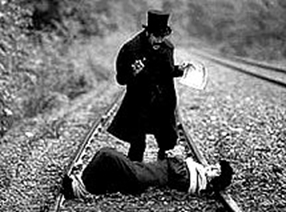
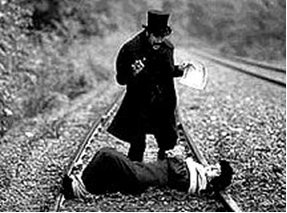
    Gasp! It's the China Railway 12th Bureau Group Co.!
    Gasp! It’s the China Railway 12th Bureau Group Co.!

    Part 2: Beijing subway collapse: Whose crisis is it?

    Following up on yesterday’s post about the Beijing subway collapse, I saw an interesting article (subscription) by Mei Fong in yesterday’s Wall Street Journal, Asia. (I try to get that right ever since one of their journalists explained to our staff in Beijing that it’s not the “Asian Wall Street Journal” any more, and that we had better get with the times.)

    Because of its galvanizing effect on everyone with a China agenda, the Beijing Olympics has been described within my industry as “issues rich”. This is PR code for “shitstorm waiting to happen”, and is the kind of thing that usually leaves PR men cackling to themselves and planning expensive purchases. (Or, at my pay grade, grocery shopping.)

    Among the many China issues that people get in a twist about is migrant laborers. There are by the government’s own estimates 115 million of them. For perspective, that’s less than 10% of the population of China, but more than 35% of the population of the United States. And I’m not sure the government is counting everyone.

    A lot of these migrant workers are currently in Beijing, slaving away on extremely high-profile, deadline-sensitive projects that are part of the city’s pre-Olympic renovation. People have noticed this. Mei writes:

    [Beijing’s] haste to meet its construction deadlines has resulted in round-the-clock work for the armies of often poorly paid, badly equipped migrant workers who build most of these projects. Some work shifts that can last as long as 24 hours.

    The relatively poor working conditions of migrant workers has come under greater media scrutiny in recent months, causing international labor groups — many already critical of China’s poor human-rights record — to put greater pressure on the International Olympic Committee to improve the situation.

    IOC spokeswoman Giselle Davies said in an email that “our understanding is that all efforts have been made both in terms of safety — specifically putting precaution first, and also in terms of transparent management.”

    Does the IOC really believe that? Even if it doesn’t, is there anything else it could say without admitting culpability and precipitating its own crisis? How about:

    “The IOC is aware of the widespread exploitation of Chinese migrant laborers, the mistreatment they commonly suffer and the appalling and unsafe conditions they endure. We sympathize completely. But we also believe that during the pomp of the opening ceremony, amidst the pageantry, grandeur and fireworks, no one will be thinking about a few bones in the foundations.”

    Maybe not. OK, what Ms. Davies says isn’t as bad as my idiot scenario above. Note the weasel words, though: “Our understanding is…” That phrase is the IOC’s absolution. It transfers responsibility onto BOCOG and the Chinese government. They told us everything is OK. But for credibility it depends upon you and me believing that the chain of honest communication and transparency from labor contractors to construction subcontractors to primary contractors to the municipal government and BOCOG is intact. Do you really believe that? Of the Chinese construction industry? And if you don’t, then should the IOC?

    I realize I am dissecting one partial statement out of context here. But that’s what the public will see, so that’s what will inform people’s opinions.

    As for BOCOG, it has duelling priorities:

    Priority 1) Have a glamorous and untarnished Olympic Games that mark China’s emergence on the International stage.

    Priority 2) Get the goddamn thing done in time and on budget.

    So which priority will win, and whose reputations will get trashed in the process?

    493 days, 6 hours, 51 minutes and 17 seconds to go as of this posting.

    Gasp! It's BOCOG and the IOC!
    Gasp! It’s BOCOG and the IOC!
  • Olympics mean a softer touch for foreign correspondents, maybe

    Ed Cody of the Washington Post’s Beijing bureau has written an interesting story on a new decree from the Chinese government that will grant foreign correspondents in China significantly more freedom in the months before and after the games. The article is interesting for a few reasons. First, it suggests that the government might be working out a relatively more sophisticated approach to media management for the games; second it provides a window into some of the media management tactics they are preparing for; and third it explains how the current control regime has been more obnoxious than effective. Cody writes:

    A decree from Premier Wen Jiabao’s government said foreign reporters, whether assigned here permanently or visiting for the Olympics, will be allowed to roam most of the country freely and report without interference by local police or propaganda officials from Jan. 1, 2007, until Oct. 17, 2008. The Games are in August 2008.

    As explained by Foreign Ministry spokesman Liu Jianchao, the new rules departed clearly — if temporarily — from long-standing orders. They also marked a significant watershed for China, where information has long been treated as government property to be manipulated and controlled by propaganda officials.

    ***

    If followed by authorities across the country, [the decree would] for more than 21 months eliminate some major barriers to accurate reporting about China: regulations that legally oblige foreign correspondents to work through local propaganda officials when gathering news. Those restrictions, when followed, have limited frank conversation with Chinese people and emphasized the official version of news.

    I find this interesting because it suggests that the Chinese authorities are thinking a step beyond their normal control-oriented approach to information management. I don’t think much of how the Chinese government manages information. (I’m sure that statement does not come as a profound shock to regular readers of this site.) All governments want to control information and public perception, and all try to devise systems for doing so that reflect the realities of society, technology and the media environment. I think the Chinese government still drags along too much baggage from before China’s opening and subsequent economic boom, and the attendant explosion in the media and public access to information and communication tools. The CCP model still favors brute control of information over effective communication, and it shows in both domestic and international situations where better communication might be helpful.

    This is not just about the Internet. I am not a utopian when it comes to the power of the Internet to free people’s minds. If all Internet censorship in China was lifted tomorrow there would not be any significant change in China. (For some interesting analysis of related topics, see Ann Condi’s recent guest post in Danwei and Howard French’s comparison of the English and Chinese language versions Wikipedia, although the latter has also been fisked by Dave at Peking Duck.) But while the “un-story” approach works OK when there is a relatively small number of centralized media and limited options for personal communication, it works much less well in an era of blogging, instant-messaging, SMS and extensive international contact. At best China’s government would abandon the information control approach in favor of something more progressive. At the very least it needs to be supplemented by more effective communication. I do think the Chinese government is working on this, but they have a ways to go.

    I don’t for a moment believe the decree means that the government has abandoned its traditional approach to information management. It still hasn’t had anything meaningful to say about yesterday’s massive service interruption at Shanghai Pudong International Airport, for instance. But giving foreign correspondents more leeway in the run-up to the Olympics would accomplish two things. First, it’s a PR move in and of itself. “See? We’re improving!” But there is a second, deeper side to the move as well, and it has to do with what kind of incident would make the Olympics a PR failure for the Chinese government. And make no mistake: the Olympic Games are the most important external PR endeavor the modern Chinese government has ever embarked upon.

    Of course others know this. Because its a global event that attracts the eyes and ears of the world, the Olympic Games –especially the more popular summer games– are a convenient platform for people who have an issue they want to publicize. That’s why the US and Russia used boycotts of each others’ Olympics in 1980 and ’84 to make political points, why the 1976 Olympics were targeted by terrorists, and why any Olympic city is on guard against attempts to hijack the games for other agendas.

    China is, as we in the biz say, “issues rich”. And the Beijing Olympics will be the most “issues rich” (i.e. problematic) games since Los Angeles in 1984 (the Soviet boycott). No matter how you slice it, Seoul, Barcelona, Atlanta, Sydney and Athens just don’t compare. (When the Olympics were held in Barcelona, not all that long ago, Deng Xiaoping had just made the “southern tour” that marked China’s post-Tian’anmen reopening.) Aboriginal rights are great and all, but my China issues list is longer than the list of people Koko wanted to execute in The Mikado. Where do you want to start? FLG? Tibet? Uighur rights? Pollution? Censorship? Jailed journalists? Corruption? Rural poverty and migration? Activists are already sharpening their press releases and polishing their signs.

    But that’s expected. There will always be some kind of scandal. Atlanta even had a bombing. The games can survive a scandal, a protest, or even a bomb. What they can’t survive is a bad police reaction to such an event. Let’s put it this way: If a bunch of people assemble in Tian’anmen Square with pro-FLG banners, it’ll be annoying for the Chinese government, but not a disaster for the games. Even if a sweet-faced teenage girl douses herself in gasoline and sets herself on fire it will be tragic and sad, but not necessarily a catastrophe for the games. It is the government’s own actions during the games that will speak loudest, especially overreaction. If the Chinese cops bust up the demonstration, roust the TV crews and photographers and impound tapes and films it will then become a disaster, not least because every person in the vicinity with a modern mobile phone, Chinese or foreign, will have pictures and probably video anyway. (And if you want to start another revolution in China,  the best way to do it would be to try confiscating people’s mobile phones.) A harsh reaction means the story stops being about the protestors or even the originating issue and starts being about the what a bunch of thugs the Chinese government is and why did we give them the Olympics again? That’s a discussion the government will find hard to control once it gains momentum.

    I’m pretty sure the Chinese government and BOCOG know this, and if they don’t, their PR company –one of the major internationals and a competitor of my firm– is probably telling them (unless they’ve been told to keep their mitts off of strategy and are just grinding out press releases about the Fuwa). So telling authorities around the country to go easy on foreign correspondents is not only good PR now, but its a defensive move to guard against scandal escalation.

    There is however, a potential problem: provincial authorities have a flexible approach toward implementing central government decrees. Imagethief is willing to put real money down on the square that says, when push comes to shove, that provincial authorities will still detain and roust foreign correspondents that poke their noses into sensitive areas during the games, threats to call the Foreign Ministry notwithstanding. And hanging over this is the wide latitude for interpretation of what kind of reportage contravenes Chinese law. Also, the government probably knows that attempts to control the moves of something like ten thousand foreign correspondents will be like herding notepad and tape-recorder carrying cats. Indeed, Cody adds:

    In practice, foreign reporters in recent years frequently have managed to report on their own, speaking directly with Chinese people while using subterfuge and stealth to avoid getting caught by local police. Those who have been spotted, however, often have been detained, lectured and forced to write confessions that they broke the law. In many cases, their notes and camera equipment have been confiscated. At times, they have been shoved around by police.

    I believe the Washington Post has been on the receiving end of some of that shoving around, and I perhaps detect a bit of personal annoyance creeping through that paragraph. But maybe it’s just my conspiratorial nature. Since they don’t do much business coverage I don’t know any of the WaPo journalists personally, although I do like their China reporting.

    The  Chinese government is also, of course, making sure that the police are up to snuff on English and prepared with talking points (well, “dialogues” actually) in case they do run into any nosey foreign correspondents:

    A manual published by the Public Security Ministry and handed out to Beijing police, who are studying English in preparation for the Olympics, contained a dialogue making clear how ministry officials believe reporting should be approached. It described a hypothetical situation in which a policeman comes upon a foreign reporter inquiring about Falun Gong:

    “But Falun Gong has nothing to do with the games,” the policeman says.

    “What does that matter?” the reporter replies.

    “It’s beyond the permit.”

    “What permit?”

    “You’re a sports reporter. You should only cover the games.”

    “But I’m interested in Falun Gong.”

    “It’s beyond the limit of your coverage and illegal. As a foreign reporter in China, you should obey China law and do nothing against your status.”

    “Oh, I see. May I go now?”

    “No. Come with us.”

    Oh dear. Better work on that last part.

    A few hints for the Chinese authorities before the games. First, nothing is “beyond the permit”. Journalists are coming with their own agendas and they are going to write stories about anything and everything. When an emerging, baggage-laden country like China not only hosts the games, but intentionally makes them into a global coming-out party, every single issue in the country is automatically connected with the games. Like it or not. Covering the Olympics, which the Chinese government itself would probably admit are much more than a “sporting event”, is not just sports reporting. If the cops run in every journalist they find asking questions about topics the government finds uncomfortable, they’ll either build some new jails or have a fleet of 747s standing by to deport journalists who have their credentials revoked. I’d say start drafting the self-criticisms now and have them waiting in a stack ready to sign. That will save time.

    In the interest of making a contribution to the success of the games, Imagethief humbly suggests the following, improved approach to media management. It not only presents a better solution, it also more accurately reflects how an overworked foreign correspondent –especially one unused to working in China– might react to the situation:

    Cop: “But Falun Gong has nothing to do with the games.”

    Reporter:
    “Everything has to do with the games, Sherlock. That’s how it works.”

    Cop: “It’s beyond the permit.”

    Reporter: “Permit? What kind of happy horseshit is that?”

    Cop: “I’m sorry, I don’t understand your snappy English vernacular. You’re a sports reporter. You should only cover the games.”

    Reporter: “Say, Kojak, why don’t call up the Foreign Ministry? Tell them I’m going to publish a story on how local cops are harassing accredited journalists doing their jobs.”

    Cop: “It’s beyond the limit of your coverage and illegal. As a foreign reporter in China, you should obey China law and do nothing against your status.”

    Reporter: “My status? My status is pissed off, buddy. I gotta deadline here.”

    Cop: “Look! Over there! It’s Zhang Ziyi! And she’s naked!

    Problem solved. The Foreign Ministry can send payment to me care of this website.