When I cradled my newborn son, Zachary, in a daze in Beijing in 2008, the idea of him as a young man seemed as remote as the planet Neptune. Babies are all-consuming in their baby-ness and it’s hard to imagine someone as an adult when they’re the size of a pineapple, can’t hold their own head up and merrily shit themselves. There is so much growing-up to come! Jesus, when he’s eighteen I’ll be…well, best to not think about that.
A thing about time is that if you wait long enough, even the remotest of deadlines will eventually arrive. Zach turned eighteen in March, which makes me…well, still best to not think about that. He graduated from high school two weeks ago and I am all the things you’d expect: proud, a little sad, mystified at how the years of his childhood seem to have compressed into a heartbeat. Relieved that I don’t have to change diapers at 2AM anymore.
Despite mostly growing up in California, Zach is obligated to return to Singapore for 22 months of national service starting this August. When he was born, my wife and I didn’t know whether we would return to Singapore, where she is from, or to the US. We hedged our bets and got him both passports. The Singapore passport was hand-delivered to our apartment by two young embassy staffers along with a national service obligation and, to cushion the blow, a delightful gift basket. A reasonable trade, I thought, as I ate the butter cookies in the basket. Somebody had to eat them, and Zach didn’t have any teeth yet.
Friends have asked me over the years if I couldn’t get Zach out of national service, but this misunderstands my feelings. I am fully NS-pilled and excited for him to do it! This is easy for me to say since I’m definitely not the one doing it. But, in hindsight, a couple of years of discipline before I showed up for university would have done me good. I sacrificed my freshman year on the altar of monster bong rips and two-liter Sapporo mini-kegs before my parents gave me The Talk.
Fortunately, Zach is a better student than I was and has no discernible interest in monster bong rips, which are frowned upon in Singapore, or Sapporo mini-kegs, which start good but finish flat, warm and pungent, like a road-killed tanuki in a Hokkaido summer. He’s grown up knowing that NS was coming and seems to accept it as the price of being half-Singaporean.
My wife and I have always planned to return to Asia while Zach is in NS. For a long time this was a distantly appealing prospect that we chatted about with other parents at playdates full of six year olds. It was a thing that would happen, you know, someday, like AARP membership or a prescription for statins.
Well, motherfucker, someday is here and now we have to move back across the Pacific. I also get regular AARP membership pitches in the mail, which makes me…honestly, best not to think about that.
A little over 20 years ago, a man I respected offered me a job I was interested in. This sent me into a panic.
I had been living in Singapore for eight years and was going stir crazy. Following two imploded Internet startups and the collapse of the dot-com bubble, I had switched to public relations, where paychecks were more reliable. Singapore is great, but very small. In those days you could reach the entire Singapore technology press corps by standing on the right street corner and shouting, though this was frowned upon.
In the early 2000s, if you were casting around Asia for The Action, there was only one answer. China had just acceded to the World Trade Organization, was open for business and on a globalization rocket ride. A Singaporean friend of mine from startup number 2 had spent some time working in Beijing and came back with tales of adventure. It was big! It was booming! Keep one hand on your wallet!
No one is more surprised than I am. Trees are green and wonderful. I love trees!
Except for this tree. I hate this tree.
The tree I hate is a big Douglas fir, about 100 feet tall. It grows in my neighbor’s yard, right up against the fence along the property line. It is thick and stout and extends half its canopy over my house and yard.
I didn’t start out hating the tree. When we first looked at the house I thought, hey! Nice and shady! Somehow my real estate agent, who was otherwise superb, did not bring himself to say, “You know, it looks great. But I gotta tell you, you’re going to hate that fucking tree.”
It didn’t take long. We moved into the house in November. By December the tree was dropping a continuous rain of desiccated needles and pinecones. The first time I went up onto the roof I thought I’d wandered into a campsite. I swept and bagged and spent a merry afternoon on my hands and knees mucking buckets of rotting needles and cones out of the gutters while trying not to teeter off of the edge and become one of those statistics about mundane things that are actually much more dangerous than terrorism.
The tree has perfected teleportation. It quantum-tunnels inch-long needles into my underwear drawer, under the couch cushions, into my bed, and into the carpet fibers. In summer the tree swaps the needles for drifts of weightless little fir blossoms. These have colonized the house like tribbles. There are always a few stuck to the bottom of my socks.
Shortly after moving in we called an arborist to thin out the fir branches over our property. He also pruned the Japanese maple in our front yard. It turns out you need a Japanese maple specialist to prune your Japanese maple or apparently you risk a diplomatic garden incident. A Japanese maple arborist is exactly like any other arborist, but more fabulously priced. But I don’t hate the Japanese maple because, being Japanese, it’s well engineered and punctual. In autumn it turns bright red for thirty days and then drops all of its leaves in one glorious, crimson sneeze.
The arborist pruned the fir tree ruthlessly, but it didn’t occur to him that, unlike a genteel Japanese maple, a thuggish fir tree would bear a grudge. First, one of the pruned branches pierced my roof, which we discovered during a freakishly heavy rainstorm in December when water started dripping into the master bedroom at two in the morning. But at least that was fixable. More insidiously, the tree leaked great gobbets of pinesap from every knot, nick and stump where it had been pruned.
Pinesap is like a mix of superglue and ground glass. It coats the wooden stairs between our dining area and the garden. It drips onto the skylights and hardens into dusty, sticky little humps that have to be etched off with a putty knife. It gets tracked into the house and leaves indelible pinesap marks on the floors. The cats hate it. It makes gravel stick to their feet. A cat with gravel cemented between its toes is not a happy cat. When it walks across the floor it goes click…click…click…click, and then, when it rabbits its foot against the floor to try to dislodge the pebble, clicketyclicketyclickety. This is funny and tragic in a way that only an aggrieved cat can achieve, and might almost be worth forgiving the tree for. But then the cat sulks away to the bedroom and hides under my comforter where, miraculously, the pebble and any needles also glued to its feet will dislodge so I can find them when I go to sleep. Have I mentioned the satanic combination of pinesap and cat hair?
At this point you may be thinking, hey, asshole, you managed to buy a house in the Valley, so excuse me if I don’t get all weepy about your tree and shit. And you’d be right to think that. In the playbook of humble-bragged first-world problems, this is dangerously close to complaining about having to get your Maserati tuned.
But the tree was the beginning of my education in the dark secrets of home ownership. When you buy your first house you stray into a foggy, rumsfeldian arena of unknown unknowns. Sure, you look for the obvious stuff. Closet space. Appliances. A history of gruesome axe murders. (Don’t laugh – a friend of mine got a deal on a murder house in Potrero Hill.) But if you’ve never owned a house before, there is a whole galaxy of things that simply don’t occur to you.
Crawl spaces don’t occur to you. I have some advice: if your house has a crawl space underneath it, never look there. It’s like gazing at Medusa. Nothing but darkness, hate and serpents. Or, to be more accurate, spiders. I sent an electrician in there to pull some Ethernet cable. It takes a brave and well-compensated man to enter Hades just so I can have better Internet in the bedroom. My strategy for the crawl space is to pretend it doesn’t exist, and isn’t two feet beneath my sleeping body every night. Nope, nothing beneath my head except a concrete slab and the San Andreas Fault, thank you very much.
Rat urine doesn’t occur to you. When we had the house checked, the inspector pointed out that there were some rat droppings on top of the furnace. We had rat-proofers seal up all the gaps, above and below. They also suggested that the old insulation was probably soaked in decades of rat urine. This might or might not have been true, but it definitely stuck in my head. No one wants to spend their nights sandwiched between spiders below and rat piss above. So, new insulation.
Then we had a guy come over to clean years of accumulated pine needles out of the air conditioning unit, which is at fir tree ground-zero and seemed likely to burst into flames. While he was there he checked the inside of the furnace and ducts. Full of rat turds. We’d pretty much been blowing atomized rat turds directly into our faces all winter. You can have a slick Nest thermostat and turn on your heat from another continent, but it’s not smart enough to send a message back warning you that your ducts are a rat outhouse and you’re probably going to die of leptospirosis so don’t bother coming home. For $250 you’d think they could engineer that in.
Squirrels don’t occur to you. And why would they? Squirrels are cute, harmless woodland creatures that eat nuts and stuff. But in the tree I hate there lives a squirrel I also hate. There is no bird feeder that he can’t get to and open. No wire he cannot scale. No barrier he cannot penetrate. He is the Savoir-Faire of squirrels. Which makes me poor old Klondike Kat.
And he has squirrel balls of solid brass. A couple of weeks ago Mrs. Imagethief and I were sitting at the dining room table when we heard a strange scrunching noise echoing through the house. It took us a minute to figure out where it was coming from. The squirrel was sitting on the alley gate under the tree and gnawing on my house. Just gnawing on my fucking house.
The squirrel is pure evil. The squirrel dug up the flower pots. The squirrel ate the strawberries off the vine. The squirrel emptied all of the sunflower seeds out of the bird feeder and then, I swear, he laughed at the birds. This squirrel would shoot a man just to watch him die. If he had opposable thumbs, that is, and not cute little squirrel hands.
I once though of houses as permanent, enduring objects. But now that I own a house, that turns out to be an illusion. The house is really just the contours of the front lines in a foolhardy war that I declared on nature the moment I signed my mortgage papers. Its shape is sustained only so long as I fight. Nature’s arsenal is earthquakes, weather, the tree, the squirrel, the rats, termites, mold, moisture, time and the simple inevitability of thermodynamics. Mine is whatever meager shekels are left in my bank account after a Silicon Valley down payment. In the long run, nature is going to win and claim the house. I win if nature claims me first.
So you can mock this for the privileged rant that it is. But the fact is that, rich man, poor man, somewhere out there is a squirrel with hard eyes and a shiv with your name on it. Maybe you haven’t found him yet.
There are two kinds of people in America: those with good credit, and Morlocks who live below ground and emerge at night to steal your children. Returning to the US after my years abroad I found myself condemned to the underworld by one of the big wireless operators. I was in a carrier store trying to open a billed mobile phone account for my wife. How hard could it be? I’m a US citizen with a well-paid job at a brand-name company. I wore a shirt and shoes.
The discussion went something like this:
How long have you been at your current address? Oh really, that short? Well, where did you live before that? I’m sorry, where? Are you sure? I didn’t know Americans could live there. Anyway, since you’ve been in your current address less than six months I’ll have to run a credit check. What was your last address in the United States? Really? THAT’S NOT WHAT THE CREDIT BUREAU SAYS.
And that was where things ground to non-negotiable halt. Twice.
Six months out of graduate school and flat broke, I hadn’t been a deft steward of my own finances when I left the United States in 1995. I was underemployed and maxed on three credit cards, all charging student-card interest rates that fell somewhere between payday loan and the guy who broke your uncle’s kneecaps. I was also carrying enough student loan debt to notice, although not enough to make me a heartbreaking case study in one of those stories about how student debt is ruining America.
In Singapore I got my first real paycheck ever, for an amount of money that seemed absurd at the time but was in fact a lowball tradeoff for the equity that was supposed to make me rich someday, but didn’t. I immediately did two things. Less responsibly, I ran out and bought a thousand-dollar, 29-inch 16×9 JVC tube television set. It weighed 80kg and seemed like a television from The Future. It had a remote control so complicated that the button-encrusted top flipped open like a door to reveal a whole second layer of buttons underneath.
More responsibly, I paid off all my debts. As long as I lived in Asia I was never in debt again. I was terrifically smug about this, but it was less the product of saintliness and more the product of living in places where home and car ownership were simply impractical.
In 2001, when I’d been in Singapore for five years, the state of California dunned my tiny brokerage account for money it thought I owed for 2000 taxes. This came as a surprise to me as I’d had no income in California since 1995, and precious little before then (though, as a self-employed writer, what income there was had been ferociously taxed). In a kind of reverse green card process, I assembled a mighty dossier to prove to the bureaucracy that I didn’t live in the US and had no interest in doing so. I eventually got the money back, but the episode convinced me that it might be a good idea to sever my remaining links to the suddenly grabby state of California. I closed my inactive brokerage account, cancelled all the credit cards and even let my driver’s license lapse.
It seemed like a good idea at the time. After all, I had a Singapore credit card and driver’s license, and was getting paid in Singapore dollars and living most of my life in Asia. And I had little interest in moving back to the United States. What could go wrong?
Smash cut to twelve years later as I stand in the Palo Alto shop of one of the major US wireless carriers, futilely explaining why I, an employee in good standing of a company they buy zillions of phones from, should be granted a post-paid account for my wife.
Sorry, this is America, comrade. We don’t care how they do things back in Whereveritwasistan that you were living in, or how good your credit is with the Communists. In America the credit bureaus are the unseeing judge. The power on high. The remote, Olympian force that casually dispenses destiny. Woe betide the mortal who has had no apparent credit for more than a decade, and who gives a prior address that that doesn’t match up with whatever is etched into the Great Stone Tablet.
What was etched into the Great Stone Tablet next to my name, I later discovered, was an address in Forest Hill, West Virginia. This was a surprise to me as I’d never been to West Virginia, let alone lived there. Apparently, one of my Singapore postal codes shared several digits with a zip code in Forest Hill, West Virginia. Who knew?
I did what one does when the gods are displeased with you. I submitted a request to have my records corrected. With the credit bureaus at least you can do this online, and no goat sacrifice is called for (though they are not actively discouraged). Amazingly enough, my prayers were heard and sort of answered. My prior US address was amended to the correct one, and on my third attempt to get a phone line all my information was confirmed by the Great Stone Tablet. There was rejoicing and 4G connectivity. I’d never been so happy to get a bill.
But a phone line was just the first, wobbly baby step in the reconstruction of my credit. After all, I was becoming a creature of the American suburbs again. Cars. A house. The respect and admiration of my peers. All of it would require credit.
Though I had dissolved nearly every other aspect of my US financial existence, I had fortunately kept the checking account I opened in San Francisco in 1991. I’d like to say that this was some great act of financial foresight, but it was mostly to avoid fees when spending money on visits home. An American debit card also came in handy for buying stuff on iTunes when I lived abroad. When I moved back to the US I wired all my savings into that account. After years of wrestling with Chinese banks I am hard pressed to say anything good about any bank anywhere, and my US bank was deeply soiled in the collapse of the housing bubble. But due to my suddenly swelling account of long-standing they were willing to give me a new Visa card on the spot. And you know how it is with credit card issuers. Like a flock of crows, once one of them has its beak in you they all want a taste.
The other cornerstone of my rising credit edifice was a car. My wife and I started car shopping in earnest a few weeks after arriving back in the US. We were prudent, restrained and utterly Silicon Valley in selecting a slightly used Prius in an un-manly shade of powder blue that demurely suggested, “I will never attract the attention of the police, so give it all you got.”
As happens in the car buying process, the backslapping salesman handed me over to the finance guy with the slightly-too-wide smile who tried to up-sell me on the warranties, anti-scratch film, Scotch-Guard, and so forth. I was prepared to write a check for the full price of the car when he made his one and only successful up-sell: a loan.
“We’ll finance it if you like,” he said.
I made a kind of Scooby-Doo surprise noise. Uhhrrrr? Having been cowed into total surrender by the wireless operator that wouldn’t let me open an 80-dollar-a-month billed account, it seemed astounding to me that I could casually finance a car to the tune of tens of thousands of dollars.
Ah, but this is the American car business. A car is a secured loan. Cars are a pillar of the economy. They’ll finance a dead body to buy a car in the US of A as long as it can twitch enough to make an ink spot on the contract. They’ll even finance you, comrade, for the low, low rate of 4.5%.
This is a totally obscene rate for a car loan, but I wasn’t disposed to ask too many questions. “Hey,” Wide Smile said, reading my mind with uncanny accuracy, “if you want to take out a mortgage someday, this will help.” So I twitched enough to sign on the dotted line.
In fact, the ghosts of my no-credit years weren’t done haunting me. The Toyota dealer tried to pass my loan onto another giant, gruesome American bank. That bank sent me a letter that said, roughly, “We’d rather not, since you don’t seem to exist.” The dealer then tried their luck with a much smaller, regional bank, which was thrilled to take on my loan. I repaid their faith by paying off the loan in six months, before they could earn much from it. So maybe the big bank was on to something.
Last month the reconstruction of my US credit hit its logical peak. I took out a mortgage so my wife and I could buy a little ranch house in Redwood City. This was what everything else had been leading up to. The point behind re-establishing credit in the first place. When I started the mortgage process I had been back in the US for a year and a half. I had a colorful assortment of credit cards and two car loans, one paid off and one active. I had credit ratings in the high-respectable band. When the mortgage broker ran my numbers, he positively glowed. “You’re gold plated,” he said. “Start shopping.”
Ah, but we’d been here before.
I’d applied for a thirty-year fixed-rate mortgage because, let’s face it, interest rates aren’t going to get any lower unless civilization collapses. It was all green lights until it wasn’t. The mortgage broker called me and explained that the tawdry investment bank that buys their thirty-year fixed loans wouldn’t buy one with my name on it because I didn’t have three lines of credit that had been open for at least two years. I only had one. This, I assumed, was my Singapore Citibank Visa card of long standing.
That meant switching to a ten-year adjustable mortgage because the broker’s company doesn’t resell those, and thus they require only one mature line of credit. And that, in turn, means refinancing sometime next year when my new credit lines are sufficiently grown-up, in order to not have to spend the next decade rooting for civilization to collapse so my ARM doesn’t blow up. Awesome. But at least the mortgage company ate the origination fees – a surprising display of remorse from a financial company, as all the evidence suggests that finance is the industry for which the term “remorseless” was invented.
It turned out that the one sufficiently old line of credit that I did have was not my Singapore Visa card. As I’d always suspected, my superb overseas credit remained invisible to the American credit-industrial complex, which views everything outside the United States as rumor and innuendo. That helpful, lone line of credit that was the slender difference between mortgage and no mortgage was an old Chase Visa account I’d thought among those cancelled when I’d dismantled my American finances in 2001. An account for which I no longer have any records at all and which, the mortgage broker told me, hadn’t actually been used in more than a decade. I’d been haunted by the ghost of my old credit one last time.
So here we are. Less than two years after failing to open a phone line for my wife, I have multiple credit cards. I have a car loan. I have a mortgage. I’ve gone from being debt-free and socking money into the bank to owing hundreds of thousands of dollars on an amortization schedule that lasts until my 77th birthday. All of this I desired.
I’m assimilated. I’m indebted. The system loves me now, and wants me to borrow. If that doesn’t complete my return to America, what does?
Early last year I moved back to the San Francisco Bay Area after seventeen years in Asia. The number one thing people here asked me about that was, “What do you think of the Niners this year?” because, when push comes to shove, most of them would rather have a biopsy than hear about my weird foreign adventures in Far Far Away.
Occasionally, someone would be reckless enough to express polite interest. In these rare cases, they often asked the same thing: was there reverse culture shock coming back to the United States after so long away? The answer they wanted was, “Yes. After my time in the far Orient, your customs and ways are strange to me. Please, what is a ‘Chipotle’?” Unfortunately for them, the answer they got was: Maybe.
It all depends what you mean by “culture shock.” If you mean grand mal culture shock, that overwhelming alienation and disorientation that leaves you babbling and wide-eyed, the answer is no. I know what that kind of culture shock feels like because I had it when I moved to Singapore in 1995 and again when I moved to Beijing in 2004. In both cases I was incoherent for weeks. I spent my first months in Beijing staggering around in a daze with my language school classmates like a herd of stunned, white sheep who could communicate only by bleating and clustering together for safety. Just ordering successfully in a restaurant was a nerve-wracking triumph.
It was also a huge amount of fun. Culture shock is inextricable from adventure, and I’m nostalgic for that time. One reason I moved to Beijing was to recapture the excitement that faded over the years in Singapore.
As cultural stunts go, China was an epic win. I became competent at living and working there, but the sense of adventure never did fade. One of China’s charms is an enduring, vaguely hallucinatory quality that drapes over even mundane experiences, like a paisley bedspread over an old, vinyl sofa. It has a way of keeping you just a bit off balance, which makes life interesting.
Or maybe it’s just me. But, at any rate, after nearly a decade there I left and returned to Silicon Valley, which has hallucinatory qualities of its own. Hence, one might think, reverse culture shock. America! Guns, God and Google busses!
But for modern expatriates I don’t think reverse culture shock is a thing. Maybe if, in the days of the British East India Company, you spent six months sailing around the Cape of Good Hope and thirty years in the malarial subcontinent surrounded by glowering sepoys while your family died of cholera one-by-one, you might have reverse culture shock when you got home to find that James Watt had invented the steam engine in your absence.
But in the twenty-first century? Hallucinations notwithstanding, I had the Internet, regular visits home, and easy if not always entirely legal access to the bounties of American media and pop culture. Say what you will about Facebook, but it keeps you from feeling all that far away. When I moved back to Palo Alto everything was pretty much right where I left it. The town was richer, sleeker and more self-infatuated, but, under the surface, recognizably the same place I’d grown up in.
The essence of expatriate life in China is overcoming friction and petty annoyances. Air. Traffic. Dubious food. Spitting. Temporary residence certificates. Endless massage and pirate satellite TV flyers under the front door. Banks. God help me, the banks. Ability to reconcile oneself all of this, and even to find the humor in it, separated the foreigners who would thrive in China from those who would stagger back to Hong Kong or home after six months.
With a few exceptions, like a nonexistent credit rating, life back in Palo Alto felt frictionless. And we didn’t just move back to my hometown, we moved back into my actual childhood home. Specifically, my mother’s house, where I had last lived in 1988. We did this because we were advised to not change our address while Mrs. Imagethief was applying for her green card, an experience that is not hallucinatory in the slightest unless you hallucinate paperwork.
Extended-family living led to some tension, several awkward weeks and a few intense discussions about boundaries and space. I’d venture that family shock was more traumatic than culture shock for me and Mrs. Imagethief, who had to deal with that most delicate of Asian family dynamics, that of the daugher-in-law parachuted into the mother-in-law’s home turf.
Still, it worked out OK, and proximity to family has been one of the great joys of the return. Especially since we got our own place, which is, neatly, close enough to my mother to be filial, but far enough away that she can’t smell the sambal frying.
As I think back on my first year back in the Valley, there were really only two moments when I was flummoxed into total immobility in a way that happened to me on a more or less daily basis my first few months in China. Both times involved that particular American pathology, overwhelming choice.
The first time was in the beer aisle of the Noe Valley Whole Foods in San Francisco, on my way to watch the 2013 Superbowl at my father’s house in the city. When I left the United States there was no craft beer movement, per se. In college we drank two-liter Sapporo mini-kegs. The less said about that the better. If we were particularly flush we might pick up a case of Henry Weinhardt’s or Moosehead, which was exotic because it was from far Canada. When I moved abroad, in 1995, you could demonstrate your upscale credentials by drinking Sam Adams, or Anchor Steam, or, if you were feeling dangerously sexy, Red Hawk or Sierra Nevada.
In Singapore we didn’t drink beer because it was too expensive. In China all we drank was Yanjing, the local brew from Beijing’s northern suburbs. It was cheap, watery swill, but that meant you could pack it away pretty much all evening long without becoming too wasted. This had certain advantages when devouring some incandescent Hunanese feast on Beijing’s sultry, summer evenings.
In the Noe Valley Whole Foods I stood staring at label after label, each of which was some variation on the formula eccentric behavior + humorous animal + character-filled-location + IPA. Prancing Piglet Barn Brewed IPA. 10% alcohol by volume, 90% hops. Take that, you lager-sipping, orientalist pansy. I hope your skull doesn’t cave in.
I stood there gawping at the beer menagerie for five minutes. As god was my witness, I had no idea what to buy. There wasn’t a case of Henry’s in sight. Mrs. Imagethief suggested I, you know, ask for a recommendation. But asking a supermarket clerk for a beer recommendation is like asking another man to measure your penis. It’s just not something you do outside of the Frat House. I’m an adult American man. I’m supposed to know which fucking beer to buy.
Mrs. Imagethief broke the logjam by picking more or less at random. It was fine (though hoppy), and after a year of intense counseling from my brothers I’ve developed a working familiarity with craft brews that enables me to function in San Francisco social circles without making too much of an ass of myself.
The second time I was paralyzed in my tracks was the first time I ate at one of the free employee restaurants at a glamorous Silicon Valley company that shall go nameless. I finished my meal and dutifully carried my tray to the drop-off, where I was confronted with the most dizzying array of waste receptacles I have ever seen. In China there was pretty much one waste receptacle. About two thirds of the time, it was the ground or a randomly placed pile. In the rare places that had multiple receptacles discipline was loosely observed since everyone understood that, regardless of what you threw where, China’s informal economy was going to handle the sorting more efficiently than you ever could.
In the employee cafeteria I gawped at six color-coded bins like a thunderstruck hillbilly while sleek young people effortlessly navigated according to some politically correct recycling code that my decrepit, Yanjing-poisoned brain failed to resolve. I waited for a lull, checked to see if anyone was looking, furtively tipped everything into “landfill”, and sidled out while trying to maintain a facade of earnest, environmental conscientiousness.
Beer and recycling. That’s what counted for culture shock upon returning to the Bay Area. There have been other struggles, but most of them have been logistical in nature rather than cultural. Coming home doesn’t have the glamour or romance of hurling oneself into the smog shrouded, neon-lit nights of Beijing. In its own way, the Valley may be every bit as strange. But even after so many years away, it’s still home.
Note: I have copied forward the comments from the original post.
10 Responses to Reverse Culture Shock and Other Myths
Just to be an @$$, I make sure people know I’m foreign by asking about Chipotle, but pronouncing it as “Chuh-poe-tuhl”. Then, watch their eyes widen, and jaws drop.
But seriously, even if you started getting a hankering for things from China, there are so many Chinese enclaves in California. You got a 99 Ranch Market in Mountainview, you can get your 火鍋 fix in Milpitas (where there’s another 99 Ranch market), the only difference would be paying bay area prices–that’ll make your wallet cry.
What a great post. Great description of the joy of serious Asian culture shock. I laughed out loud at the bit about real reverse culture shock being returning and finding that the steam engine had been invented!
A very thoughtful post. Well done. I have sometimes wondered what going home would be like. Well, only wondered. Not enough to actually pack up and return the way you have.
Loved this post! Thanks or sharing. I have no plans to return to the US anytime soon, but I often wonder what would “shock” me back there.
I’ve experienced the craft beer reverse culture shock on trips home, too! Fortunately I’ve always gone to the grocery store armed with beer recommendations for friends, and didn’t get too beerstruck.
Interesting about the cafeteria thing… Google in Shanghai has probably 2-3 waste receptacles in their cafeteria, which I imagine is a compromise between “normal China” and what happens in the California Google campus.
Great post! Most people that moved to California from China don’t seem to have culture shock, I’ve observed. Try moving somewhere else, it is a bit more difficult. China has a fuzzy, warm hallucination – any problems and ayi will take care of it. In the U.S., the hallucinations are like cold water in the face: Home Depot staff, insurance brokers. What language are they speaking? Good luck!
Good post. Personally, if there was anything resembling reverse culture-shock, it was back in 2005 when I first returned to the UK for a few months after finishing my Chinese studies, when I discovered that:
1) No-one wants to hear your humble-brag-laden expat stories.
2) That protective blanket/fish-in-a-goldfish-bowl feeling you have as an expat is gone.
3) People genuinely aren’t that impressed by the fact that you’ve lived overseas and learned the language. If anything it marks you out as a bit strange.
Back in my Taiwan days, in 2001, when British beers and foods were almost impossible to come by, and when calling home involved standing in the middle of the street using the pay-phone at my local 7/11 waiting for my phone-card to run out, yeah it was just about possible to feel pretty far away from home. Globalisation and technological advances pretty much did away with that.
For my part, I found that it was more of a ‘shock’ moving back to the UK from the US, than it was moving from China back to the UK. I put this down to my expectations of similarity – making the differences stand out all the more.
Hi Will, we met a few years ago at AmCham’s MAP Forum through Zeke. I just moved back to Georgia a few months ago. Georgia feels pretty much the same as when we left. Most obvious changes to me were all related to food — similar to what you mentioned. My father-in-law remarked that his generation was all about the music. Ours is food. When in China, I loved calling myself a foodie. Here, I just whisper, “I love eating, that’s all”.
Though my most embarrassing thing so far is going shopping, thinking I was signing up for one of those membership cards that give you discounts, and then exiting the store 15 mins later with a bloody new credit card, much to my husband’s chagrin.
I miss China sometimes, but America’s pretty awesome. Have fun in San Francisco!
It started with the oven. In Singapore in 2001 I bought a used Sharp R-8H50(B)T Rotisserie combination microwave and convection oven from my buddy, Tuck Wai, for S$200. Say what you will about the Sharp Corporation, which is struggling, but that oven was The Bomb. It followed us from Singapore to Beijing to Shanghai and back to Beijing, proving its worth repeatedly in a country where most apartments don’t have ovens. It even survived one front panel change. It was the best S$200 I ever spent in my life. Tuck always regretted selling, a sure sign of a good deal.
Earlier this year the panel started to fail again, and no transplants were available. It was a protracted death, like a person with progressive organ failure. One by one, over the course of a couple of months, the buttons stopped working, slowly narrowing the list of things the oven could do. First we lost the grill. Then the convection function. Then the microwave time entry. The last gasp was the quick start. Goodnight, sweet prince, and flights of angels sing thee to thy rest.
Anyway, I’m not superstitious, and I don’t generally believe in portents, but if the death of our trusty Sharp Rotisserie isn’t a sign that change is in the wind, what is? So after eight and a half well-documented years in Beijing and 17 in Asia for me, we’re moving back to Palo Alto in January. I’m going because my company has asked me to move to the Silicon Valley office, very near where I grew up and where most of my family still live.
For a long time I resisted the idea of moving back to the United States. My self identity is largely based on being “the one who’s in Asia.” I was 27 when I left the US in 1995, six months out of graduate school and in most measurable ways a complete doofus. My personal and professional development has pretty much all been in Asia, and most of my friends and virtually all of my experience and network are out here.
Which, when you think about it, seems like a really good reason to do something different, even if that something is going home. Sometime in the last year or two my previously steadfast resistance to going home started to soften. Last May, when my boss proposed I come back to Sunnyvale, which is now where most of our senior execs are based, I found myself much more receptive to the idea than I would have expected.
There is no greater message behind our departure. I’m not disappointed in China. I haven’t been involved in public slanging matches with any Chinese celebrities. There is no shroud of legal action looming above me. I am, in fact, profoundly grateful to have been able to live and work in China for as long as I have. We all take it for granted, and piss and moan about the air and traffic and censored Internet and sketchy food because that’s our version of water-cooler sports talk. And we all rationalize a bit to be here. But step back and think about it for a moment. From your average suburban American perspective, who gets to live in China? Nobody, that’s who. It’s the stuff of fantasy and scarcely-believable tales from exotic relatives, like my mysterious uncle Stephen, who lived and worked in Hong Kong in the late 1980s. It has been a gift, and under other circumstances I would have remained here at least for a while.
But I was never in danger of staying forever, and nor are most other western expats. That’s why I was amused by the mass fluster that surrounded the public departures of Mark Kittoand Charlie Custer. All of a sudden foreigners were abandoning China! I know and like both Mark and Charlie, and admittedly much of the fluster was within our particular echo chamber, but, seriously, coverage in the New York Times, BusinessWeek and The Economist? Both of their personal experiences can be used to tell larger stories about life and power and business in China (and maybe I’m just jealous that my own departure is about as newsworthy as a bad air day), and both of their articles were great reads. But “foreigner departs China” is the very definition of dog-bites-man. The satirical site China Daily Show nailed it with a funny “dear John” letter from a foreigner to China.
“Foreigner stays in China,” now that’s a story. For an increasingly cosmopolitan and globally interconnected country, China isn’t really a place encourages foreigners to settle down. In fact, it goes out of its way to keep us at arm’s length. I should make a collage out of eight years of temporary residence certificates arranged around the confession I had to sign for registering my son’s birth with the police a few weeks late. Economic migrants bleed across the borders in search of something better, and perhaps some Vietnamese mail-order brides wind up here for the long haul, but in general foreigners don’t immigrate to China. We just visit, sometimes for a very long time.
In the end, there are only two possible outcomes for a foreigner in China: you either stay here for the rest of your life, or, sooner or later, you leave. If you were to diagram it, it would look something like this:
Fig. 1
That little dot encompasses the handful of old communists who settled here for ideological reasons, such as Israel Epstein and Sidney Shapiro, and maybe Carl Crook, who was born in Beijing. One or two businessmen I’ve met have been here for thirty or more years, and a couple of journalists I know are edging in that direction. Maybe Kaiser is here forever(though I doubt it). But even Sidney Rittenberg, famously “The Man Who Stayed Behind,” didn’t actually stay behind. He retired to Washington State in 1980. Of course, he was thrown in jail in China. Twice. You’d probably retire to Washington State, too. According to the People’s Daily, China has granted permanent residency to less than 5000 foreigners since it started doing so in 2004, and it made the news when Shanghai issued its first batch of green cards in 2005. It’s a safe bet that granting citizenship is even rarer.
We leave. That’s what we do. But just because leaving China is normal doesn’t mean something isn’t going on. Among my friends there has been a tangible change in mood in the last couple of years. A sense of excitement about being here that endured for many years has in many cases given way to a sense of weariness or indifference. The most common reaction when I tell people my company is moving me back to California is, “you’re so lucky!”
There’s nothing sinister happening. It’s just a generational change. My cohort is largely mid-career expatriates, many of whom, like me, had their children in China. As our lives have changed, so in many cases have our expectations and needs. At the same time, the China we arrived in has also changed profoundly. Change is part of what makes China exciting, and on balance much of the change has been good. But people come looking for different things, and for some China today is less appealing or simply different than whatever they arrived looking for.
So they move on, and new people come in. That’s as it should be. Out with the old, in with the new. One thing that has not changed is the number of students and young professionals interested in working in China or studying Chinese. One of the fun parts of my job is speaking to MBA and undergraduate student groups, and I always ask who actually wants to live and work in China. Trust me; the supply of young westerners interested in China is not in danger of drying up.
I quit a perfectly good job in Singapore in 2004 and came to China with rudimentary Mandarin and the dream of living here. It was a crazy stunt that worked out better than I could have ever imagined. I’ve not lived the hard-boiled life of my journalist friends, many of whom are forever getting tossed out of some hardscrabble village by local thugs. Nor did I arrive in the FEC era or spend two or three years in the boondocks. But I’ve had my share of adventures. I’ve bargained for long distance taxis in Yanji and ridden through the Zhalong Wetlands in the back of a xiaobengche, surrounded by crates of live fish. I got caught in a youthful waterfight in the alleys of old Kashgar. I’ve been invited into a Uighur house in Tuyoq for tea and sweets, and into the one-room hutong apartment of a family from Shanxi for homemade noodles. I stood on Tian’anmen Square with tens of thousands of Chinese people during the memorial a week after the Wenchuan earthquake. I was in the Bird’s Nest during its Olympic pomp. I helped companies wrestle with the melamine crisis and the acrimonious collapses of their Chinese joint ventures. I had huge stretches of unrestored Wall all to myself on spectacular, blue-sky days. I scuba dived on a sunken village in the dark and freezing depths of Qiandaohu, on sunken Great Wall in Tangshan, and with a whale shark in Dalian’s morose Tiger Bay aquarium. I walked from one-side of Beijing to the other and discovered neighborhoods I’d have never found any other way, and went for runs in the pre-dawn winter darkness when the city is as still and quiet as it ever gets. I spent a year in Shanghai and learned that it is every bit as cool as Beijing, in its own way. I made great friends and worked with amazingly talented Chinese colleagues who disabused me of every stereotype of Chinese employees. I wrote a silly blog that people actually read. And I raised a little boy who calls Beijing home and speaks Mandarin with an effortless fluency that I am scandalously jealous of.
They’re the experiences of a lifetime. Some scruffy air and occasional difficulty with Facebook seems a small price to bear. I’ll miss it, but it’s time to go. Here’s to the next generation of young westerners who are dreaming of living in China. May they all get the chance, and may their lives in China be as amazing and rewarding as mine has been.
“Who gets to live in China? Nobody, that’s who.” A great line from the post and one that reminds me of how fortunate I am to have lucked into my own “crazy stunt” to show up mid-career in China–with 3 kids and wife in tow–hoping to make a difference here. Hope your next leg of your journey is as exciting as your last, and that we get to share more of this next leg together as well!
Great post, Will. You already know I’ve always enjoyed your blog posts and your humor. Hope you’ll still be in Silicon Valley whenever I make the big move back to the Bay Area! Cheers!
Oh Will! I’ve loved reading your blog as I’ve moved back and forth from China. I’m sad to see it end. Thank you so much for your delightful commentary on the vagaries of life in China!
Best of luck with what comes next Will. Imagethief has been an insightful source of commentary on living and working in China. I hope we get to follow you into the next chapter here too.
And so the world turns. Life’s like that. I am sure the move back to the US will have new experiences that I’m sure you will write about and I look forward to reading.
Excellent farewell post Will. Must be a good feeling to know that so many people were reading this article that your server couldn’t handle the traffic right after you posted it.
I wish you a good transition to the Valley and I hope you’ll keep documenting your experiences on Imagethief. Good luck!
This is so fascinating considering I’m a 26-year old from California who just moved to Hong Kong three months ago. I must be part of the trend of young westerners aspiring to live in Asia. In my mind I’ve only given myself a few years to live here but in the end, who knows? Thanks for sharing your experience.
Great post, Will. I’ll always regret that we never met up during that year you were in Shanghai. (As I remember it, you pretty much left right after you arrived… I only had time to get like one text message in.)
And, in keeping with the “no drama” tone of your post… you can always come back.
I’ve never posted a comment on this blog, but I wanted to wish you the best on your transition and let you know that you’ve provided some wonderful insights across the years. They will be missed.
Hey Will, just stumbled across your blog today via a RT on twitter. This is my first visit to your website, your a great writer and look forward to reading more of your posts. You give an interesting insight into the long term life in China! Great Article!
I’ve really enjoyed following your posts about China over the years. As you say, we mostly end up leaving after a time – in my case because of the children’s education. At the moment it only seems possible to live short term in China (10 years at most), and there is a predominance of people who are either just out of college or have retired. expats are . I do wonder whether China will ever become residence- friendly for those of us in the 30+ age group.
Big thanks to everybody for the kind words here. With any luck, moving home will give me a rich, new vein of material to mine. After nearly two decades away the US seems approximately as weird to me now as China did when I first got here.
Bless your heart, you’re one of the few fellow Westerners in China whose drama-queening departures haven’t made me feel I owe China an apology for the rude-guest behavior of my compatriots. Thanks for going out with grace, and good luck.
Many thanks for hours of laughter and thinking. You’ve deepened all of our stay with insightful anaecdote as I’m sure you do wherever you go. Much appreciated.
I really appreciate how you articulated how so many of us really feel about China – we all complain about the air quality, the traffic, the sketchy food … but, in the end, I’m so grateful for the unbelievable experience I had living in one of the most fascinating countries in the world (though I could have done without the bug in my 西红柿炒鸡蛋 .
I’m also grateful for being one of the young professionals you spoke with – your insights and wisdom into both China and the PR realm has had a large effect on me and has helped me as I continue my journey. China may not have been forever, but it was an incredible and insightful chapter.
Good luck in Palo Alto. Let me know if business ever brings you to DC!
Will, I so enjoyed your BLOG post about leaving China. My husband and I lived in Shanghai for 3 years – 2008-2011 – LOVED IT. We are now back in Pittsburgh – living the life of grandparents and missing the mei meis and our fabulous Chinese friends. I think of them often and wonder if I will ever see them again. I hope so. Good luck in Sunnyvale – repatriating is very difficult.
Enjoyed your articles over the years, your articles along with Alan Paul’s gave me a different point of view and more insight into life in other parts of China other than Dongguan where I was based. If I had a written a “Why I Left China” post back in 2009 when I left it would have been a lot like this. Without the broken oven part. Sometimes, like when you’re at a good party, or visiting relatives, it’s just time to leave.
Keep writing though, the transition to living in U.S. is going to be a surprise, be interesting to see your take on the changes.
Great post, Will! Glad that the decision you were pondering has been made, and looking forward to catching up just about as often, now that I’m in Chicago and you’re in the Bay Area, as we did when we were both in Beijing!
“There’s nothing sinister happening. It’s just a generational change. My cohort is largely mid-career expatriates, many of whom, like me, had their children in China. As our lives have changed, so in many cases have our expectations and needs. At the same time, the China we arrived in has also changed profoundly. Change is part of what makes China exciting, and on balance much of the change has been good. But people come looking for different things, and for some China today is less appealing or simply different than whatever they arrived looking for.”
I thought the same to myself when the first round of “leaving China” letters did the rounds. People are just growing up.
Will,
I regret that during my 15 years in China, 13 of them in Beijing, we have never met. But thank you for this uplifting post of your experience and the knowledge that you are leaving with a happy heart full of memories that you cherish and which will linger for the rest of your life.
Easy transition to your hometown.
Warm regards,
David
Great comment I could feel how is your relationship with Asia and China, you have had amazing advedntures so you know china inside and out if that is possible but at least you can said you saw China more than others and the most important you had an open mind about China no an idea what China should be and you are not leaving with a bitter taste you are leaving with sorrow. China will always be in your heart and your boy who knows if he would be one of those future western to come back to his child coutry. Good luck back to EEUU, long life, I will look for you blog.
Vaya con Doritos. I’m sorry we never met, but have enjoyed your blog immensely and learned a helluva lot from it. You are one of the good guys and will be greatly missed.
A great post, and I wish you all the best. I’ve enjoyed your posts for years and hope you keep writing on Asia-related topics.
If you were six months out of grad school today and planning a career in Asia, what would be your advice? How are the opportunities different in China today for someone at that stage of life than they were in ’95?
Best wishes for life back in the US…
This isn’t a goodbye (you know how much I travel these days), but I’m just super grateful to have met you while you were still in town. This blog post is a prime example of what one can learn from you, and that’s what makes you awesome, wise buddy.
Now I’m going to vomit in penance for saying something nice.
You were one of the first China expats I followed on twitter way back before twitter was cool, and it’s great to see you finish your China years on a sweet note, with little fanfare or drama. Life moves on, people move on. Shame we never met during my three years in Asia, though. Best of luck in California!
Wow, just finished reading you are leaving China and heading where I live and work. I only spent three years living in China and still consider it my second home. In fact I brought part of China with me on my return, my wife. Welcome back to the Silicon Valley grind.
i moved to china in 1998 when i was 21 and will leave in early 2013 after 15 yrs. thx for the encouraging words and evoking poignant memories. good luck.
Thanks for this post, Will — I wish I found your site earlier.
As someone who has lived in China off and on since 1996 and has witnessed nearly three decades of changes there, I certainly agree with many of your points, especially that “There’s nothing sinister happening. It’s just a generational change.” I wrote about this very topic in a recent essay entitled ‘The China Expat in Exile’ in The World of Chinese Magazine (http://www.theworldofchinese.com/2012/09/the-china-expat-in-exile-a-response-to-the-mark-kitto-debate/). To me, it seems arbitrary to talk about expats ‘leaving China’ as if the only way we are connected to China is by living there permanently. Many of us do not have that *luxury* (due to family or work), but China is always a part of our lives; in fact, I find that living between borders had allowed me even greater access and understanding of both sides of the Pacific, something I may be too jaded to see if I lived permanently in the PRC.
Thank you for adding to the dialogue and I look forward to reading more here soon. And welcome to California — I’m sure you’ll like it here.
Best,
Kaitlin Solimine
Los Angeles, CA
Will – Great post. I’ve been back a little over 4 years now, and trust me in that you will find no shortage of material when you get back When I left I had spent (at that time) 30% of my life in Asia. Obviously the number will only get smaller, but the experience remains larger than life.
I wish continued success in the future!
Best of luck for what comes next.
I’ll be landing in Beijing around the time you’re leaving, we might even bump into each other at the airport
I plan on staying there for at least 5 years, already landed a job there, I consider myself among the lucky one in this regard.
I sure hope my time (that I hope will be much longer than 5 years, but it’s the girlfriend who’ll decide on that ) will be at least 25% as great as what you’ve just told us, and I would be pretty happy with less
This was a much better post than the two previous “expats leaving china” you were mentioning, and it bodes well for my future, so thank you again
Wish you continued success in the future (not being native english, I’m getting my inspiration from previous comments ), and please please please continue on writing like that. I’m sure Palo Alto is no less source of wonder than China was
Sometimes life in Beijing is like one of those Japanese game shows where they see how much torture people are willing to endure for surprisingly mediocre prizes. Picture the following and you’ve more or less got it:
“Mr. Ishihara, for a new desktop dumpling fridge you’ve been strapped naked to a hospital gurney in the burning sun for twelve hours. You’re pinking up nicely. Do you wish to continue?”
“Yes!”
“Then it’s time to raise the bar! Here comes a team of lingerie models to glue Gabonese fire ants to your testicles!”
“I can take it! Must…have…tiny…fridge!”
“Great! While they prepare the ants, let’s watch this secretly recorded video of you confessing erectile dysfunction at last week’s office drinking party!”
That’s us on the gurney. We’re all in it for the rush and the dubious prize while an oddball assortment of it-could-only-happen-here, Rube Goldberg discomforts repeatedly jabs its three-fingered cartoon glove into our sensitive bits. As long as you can take it, you live in Beijing. When, like Popeye the Sailor Man, you can’t stands no more, you pack up and head for more congenial shores. With a dumpling fridge, if you’re lucky.
This weekend’s finger to my sensitive bits involved the air conditioner in my apartment.
Let me tell you a bit about my apartment. Nominally in a “luxury” development, it’s horrendously expensive and situated in one of Beijing’s most fabulous areas. The amenities are good. There’s even a French bakery in the courtyard. But construction-wise it’s less luxury and more like what would happen if you got a pack of wild monkeys just drunk enough on Snow Beer to almost read a blueprint and fenced them into ten hectares of land with a pile of grade-B residential fittings and free-flow concrete. The caulking wanders off in random directions, the hot and cold indicators on the faucets are reversed, the “hardwood” flooring buckles in weird places, the towel racks droop, and when the wind blows, a majestic assortment of Jurassic aromas billows from the drains. There’s more, but you get the idea.
Still, I was hardened by a year in Shanghai, so in most ways I consider it pretty good as Chinese apartments go. The worst that can be said of the landlord is that she’s totally disinterested, which is way better than totally venal, which is always a possibility here. The landlord situation reminds me a bit of the shopworn parable about Confucius, the widow and the tiger:
One day the Master came upon a woman weeping at a grave. He said, “You weep as one afflicted by great sorrow.”
The woman replied, “It is true. My husband’s father was killed here by a tiger, and my husband also. Now the tiger has killed my son.”
“Why do you not leave this place?” asked the Master?
The woman replied, “The government here is not cruel.”
Replace “government” with “landlord” and it’s still more or less valid.
But the air conditioning problem is serious. Our apartment is hot and stuffy year round. Even in Beijing’s Siberian winter we pick up so much waste-heat from the neighboring apartments and poorly insulated piping that we often end up running a fan in our bedroom at night. As for summer, well, if you haven’t experienced August in Beijing you can simulate it by tying yourself to a burning coal stove and then having your friends hurl you into an open sewer. If you actually try this, put it on YouTube so everyone can benefit from your sacrifice. That’s how knowledge is born.
Anyway, we rely on our air conditioner. This sucks for us, because it is an enormous, fiddly contraption that looks like what might happen if Lockheed Corp. and Hubei People’s Steam Propulsion Systems Factory No. 182 jointly bid on air conditioners for TEPCO. This model, which is standard in our apartment complex due, one can only assume, to graft, is approximately the size of a 1968 Volkswagen Camper, and takes up the entire balcony outside my son’s room. Unlike a Volkswagen Camper, it uses water as a coolant, making it complex and prone to breakdown. But it does have the Camper’s woeful lack of power and tendency to choke in the face of modest demands.
In a masterstroke of engineering, our air conditioner also manages to combine the worst attributes of central and split air conditioning. Like central air conditioning, it has to be switched from “heat” mode to “cooling” by the property office, which puts us at the mercy of the government rather than the climate. The switchover involves one big button and just enough fiddling with valves to be complicated, but the good news is that regardless of official dates the property office usually folds in the face of a little hectoring.
Like a split aircon, however, the compressor draws on our household electricity (our breaker box emits an alarming buzz every time it turns on), and coolant pipes run through the ceiling to the vents in all the rooms. In our previous apartment, in the same complex, the pipe over the kitchen dripped condensation. During summer it reliably shorted out the gas leak detector in the kitchen ceiling about once a month, usually at three in the morning (we ran the aircon at night), triggering an electronic shriek that could curdle the fluid in your eyeballs. I would deal with this problem by blearily jamming a screwdriver into the alarm until it shut up, and then having the property office replace it. If we’d ever had an actual gas leak, the sparks created by my screwdriver surgery would have blown us all into the courtyard like Ed Norton’s furniture and condiments in “Fight Club.”
The compressor unit on the balcony is wired to a set of high-tech thermostats, all of which insist that every room in the house is always 25C regardless of actual temperature. When the sun expands into a red giant and incinerates the Earth a billion years from now, these thermostats will insist it is 25C right until the moment they evaporate. Whether you set the thermostats to 30C or 5C (which is where ours are all set), you get the same anemic trickle of semi-cool air from the vents.
But we take what we can get. Spring in Beijing is a season of hot days and cool nights. And dust and fuzz and pollution. The apartment warms up during the day and stays warm pretty much all night, forcing us to run the air conditioning even though the outside temperature has dropped. Any cooling is better than no cooling.
At 2AM on Saturday night I woke up bathed in sweat. The outside temperature was a crisp 12C, but our room had crept up to a broiling, humid 28.5C. The aircon vent was cheerily pumping out a stream of toasty, warm air.
Well, you say, turn it off and open the windows, genius. And in many places in the world this would be sound advice. But on Saturday night the air pollution AQI reading was 212. In China an AQI of 212 counts as “moderate,” but in the rest of the world it’s more like, Holy Jesus, Martha, it’s the apocalypse! Get the kids into the fallout shelter while I shoot the dog! You don’t really want to sleep in it. What’s the point of having $3,000 worth of Swedish air filters (yes, really) in the apartment if you’re just going to throw open the windows and let the scuzz in?
We let the scuzz in, at least for a while. But that led to another problem. Our previous apartment faced the courtyard from the 7th floor. Other than the occasional raving drunkard or 160db Phil Spector wall-of-sound throat-clearing hawk, it was reasonably quiet. On the rare clear-air nights we occasionally slept with the windows open just for the hell of it (although always with the risk of waking up to find the loess plateau in our bed).
Our current apartment faces the road between our complex and the neighboring ultra-mall. This road is small, but punches way above its weight in terms of congestion, perma-honking and random cacophony. To add insult to injury, when they built the mega-mall they somehow neglected to design in a loading dock. The result is that all deliveries to the mall are made at the entrance to the parking lot, which is just below our 16th floor apartment. This happens at the only time when they can partially block the road, which is the middle of the night. For a mall that sells a huge amount of really expensive stuff, these deliveries are not gentle. They often sound like someone backing a flatbed truck with busted shocks and a full load of plate glass and live hogs over a row of two-by-fours.
As long as our hermetically-sealing, double-paned windows are buttoned up, the noise doesn’t bother us. And, anemic as it is, if the air conditioning is working, we can keep the windows closed. But if the air conditioning fails, our choices rapidly dwindle to dying of heat exhaustion in our own bed, opening the windows and admitting the din and miasma of Satan’s workshop, or suicide.
At two in the morning, suicide doesn’t look all that bad, but we resisted. After my wife went out and poked futilely at the buttons on the compressor for a while, we went for heat exhaustion, turning off the compressor but keeping the windows shut. On Sunday morning the property office showed up, declared that we had somehow switched the air conditioning unit to “heat,” switched it back, and left. On Sunday evening the aircon ran refreshing and cool, as much as it ever does. Maybe it was our fault, I thought. Maybe we did something wrong.
And then Sunday night at 2AM we woke up bathed in sweat again. With a flashlight I went out to the balcony where the Beast lives and examined the controls. Outside it was pleasantly cool. The air conditioner had switched itself to “heat.” I switched it back to “cool.” The mechanics might be complex, but the controls are simple. There are only three buttons: On/Off, Heat and Cool, and an LED that displays “HE” or “CO” and the coolant temperature. It ran in “cool” mode for a minute or so. I watched the coolant temperature drop. And then it switched itself back to “heat.” I repeated this five times. Every time the air conditioner switched itself back to “heat.”
On top of all its other problems—the fiddly complexity, the anemic output, the buzzing breaker box—this cursed thing apparently thinks it’s smarter than us. When it’s warm outside, in the early evening or right at dusk, it chugs along merrily in cooling mode. The moment the temperature outside drops too much, it figures we must be freezing in our booties, and spontaneously switches itself into heat mode. Damn the thermostats (25C), full speed ahead!
Or, worse, it’s actually trying to kill us, like the possessed laundry press in the old Stephen King story, “The Mangler.” It wants to roast us to death in our sleep and let the cats feast on our remains, just for the sheer sport of it. I don’t know what happened to the previous tenant in our apartment. I do know that he left a fair amount of his stuff behind when he “moved out.” Coincidence?
I just made the last rent payment on our current contract. In about two months, we have to decide whether to move or to stay in the same place and accept the inevitable rent increase. On the one hand, the apartment is expensive and noisy and the air conditioning unit is apparently possessed by Satan and determined to destroy us all.
On the other hand, there are croissants downstairs and the government is not cruel.
It’s a tough call.
Note: This post originally published on the defunct group blog Rectified.name.
For many years I lived in Singapore, which is right on the equator and has roughly two seasons: slightly more rainy, and slightly less rainy. Otherwise, it was pretty much hot and humid throughout, which always used to freak me out a bit at Christmas. To an American, encountering Santa Claus in 30C heat is unexpected, like finding a live rattlesnake in your refrigerator. It’s always struck me as somewhat unnatural that Australians see Christmas as a summer phenomenon. What else do they do backwards? Maybe on Christmas morning, they randomly steal things and slap people.
One of the things I enjoyed about moving to Beijing, besides being further away from the antipodes, was clearly demarcated seasons. Winter was a genuine novelty. Summer was like Singapore, except with air that could delaminate plywood. Spring and autumn were glorious interludes, as long as you didn’t mind having the Gobi Desert airmailed to you from time to time. Seasons are the demarcations on the great clock of the year, the way you internalize the passage of time. So are television shows, the National People’s Conference and the ebb and flow of denim hot-pants on the teenage girls of Beijing, of course, but seasons are a more poetic way of doing it.
Since moving to Beijing I’ve found myself thinking in terms of how many winters and summers I’ve seen here. How many sandstorm seasons, and piling up of the throngs at Xiangshan. And how many times I’ve experienced the fuzz.
If you have ever been in Beijing in spring, you will know the fuzz. This is the floating shroud of gauzy puffs that blankets the city every April, thanks to Beijing’s large population of poplar and willow trees. It’s not a problem exclusive to Beijing. The offending species of poplars are widespread (you might know them as cottonwoods in the US), and where there are poplars there are poplar catkins and, thus, poplar fuzz.
And poplars are Beijing’s municipal tree, planted in rows along every median strip, bike lane and windbreak in the city, in great shivering ranks. A 1992 paper on the forestry of urban Beijing identifies two species of poplars as accounting for about 25 percent of the surveyed stock of trees, far outstripping the Chinese juniper trees in second place. It’s hard to imagine that their share has dwindled since then. Apparently, Beijing Forestry University even has an institute devoted to the study of Chinese white poplars, which confirms either the importance of the species, or all your worst fears about the treacherous vortex where the navel gazing currents of academia and municipal bureaucracy swirl together.
Willows aren’t as common as poplars, but based on my own observation what they lack in numbers they make up for in sheer fuzzogenic enthusiasm. In fact, it took me a long time to catch up to the fact that the willows were contributing. Years ago, when I asked a local what he called the trees that made the fuzz, he said “yangshu.” This confused me because I thought he meant willow, and I was pretty sure he was wrong. Fortunately I bit my tongue, or I’d have made an ass of myself on at least two counts. The problem comes from the similar names of the trees in Chinese. The white poplars are baiyang (白杨) or yangshu (杨树), the willows are yangliu ( 杨柳). The trees are not of the same genera, so perhaps in the antiquity of the Chinese language there is some lost etymological connection between 杨 and fuzz.
A further search of the literature reveals that ours are not the first generations to dwell upon the fuzz. A poem from the Six Dynasties period, in the first millennium AD, invokes the inherent eroticism of the poplar catkin thus:
We break off a branch of poplar catkins. A hundred birds sing in the tree. Lying beneath it in the garden, We talk to each other, Tongues in each other’s mouths.
Fuzz in their mouths, too, and any other orifices exposed during this little episode, but somehow that doesn’t make it into the poem.
Erotic charms aside notwithstanding, it is easy to hate on the fuzz. Apparently, it can entrap airborne pollen from other species, and become something of a little, allergenic bomb. I don’t have allergies, but I have to admit that, while I find the fuzz pleasant enough while it’s wafting in the air, it tends to collect into stodgy, grey piles the moment it hits ground. In this way it is rather like Beijing’s snow, which can blanket the city in a dreamy, white veil for a vanishingly brief moment before collapsing into verminous, sooty piles that skulk in the shade for weeks while collecting suspicious, yellow pockmarks.
A couple of years ago I took my son to play on the rides at Tuanjiehu Park, which are shaded by a particularly vigorous stand of white poplars. He and I both a good time watching the aunties use cigarette lighters to set great drifts of fuzz alight. It combusts like rocket fuel, so perhaps this wasn’t the best thing to be doing around dozens of toddlers, but it was entertaining. I have heard (though never confirmed) that the fuzz has been implicated in automobile fires after collecting in radiators. It has definitely contributed to yard and household fires, and the Internet has plenty ofearnest warnings urging homeowners to diligently police the fuzz.
To address Beijing’s share of these fuzzborne woes, the city government in 2007hatched a scheme to convert the offending, female poplars into docile, fuzz-free male poplars. Apparently, this has been a semi-regular endeavor. They should have consulted with me first as I have my own experience with quixotic nature-control plans. When I was in college I spent two years as part of my university’s ultra-secret ground squirrel control program. We used air rifles, traps and poison in an attempt to control a ground squirrel population that had exploded because, in a triumph of natural selection, ground squirrels have a much higher tolerance for drunk college students and acid rock than all of their natural predators. This program was an utter failure and in the end we signed articles of surrender and turned over our weapons. The ground squirrels are still there, 25 years later. We who dared take them on are all long gone. Poplar trees don’t move as fast as ground squirrels, but on the evidence of Beijing’s obvious failure to control the fuzz, they are equally crafty.
Personally, I like the fuzz. True, it catches on my head-stubble, gets all over the house and lurks under the couch, where it collects into dust-bunnies the size of Saint Bernards. But while airborne it’s cheery, and transient and a damn sight more congenial than the other harbinger of spring, the sand storms. It has also become one of the ways I mark time in Beijing. Another April of fuzz, another year gone by. A few more crows-feet around the eyes. Another sweaty, corrosive summer to grit my teeth for.
A few years ago I was driving to the airport for an early morning flight. Just outside the Fourth Ring Road, deep stands of white poplar line both sides of the airport expressway. It was the height of fuzz season, and a breeze was carrying dense flurries of the stuff across the road. The morning sun from the east backlit the fuzz, endowing it with a luminous, warm corona. For a moment I forgot all the anticipated miseries of economy-class domestic travel and just watched the fuzz. The moment it hit the ground it was dirt, but while it was in the air, it was magic. And anything that can bring a touch of magic to that benighted road is worth at least a little appreciation, isn’t it?
In my years here, I have participated in passionate and heated debates on virtually all aspects of Chinese politics and society. What is the true nature of the government? Can the Chinese educational system produce creativity? Is the country rising or falling? All of these topics are capable of rending friendships, dividing rooms and spoiling a perfectly good dinner party. And yet none produces the same level of incandescent conflict as the question of whether or not China can do desserts.
China has an evident sweet-tooth. A walk down the candy aisle of any Chinese supermarket is trip to a tinsel-wrapped wonderland of waxy treats of infinite variety. True, I’m occasionally sucker-punched by spicy dried beef, which is often wrapped like candy, but a lot of it actually is candy, at least loosely defined. And what Chinese restaurant meal is complete without the fruit plate? If you’re lucky, the fruit plate might even be spouting dry-ice fog. Dinner and a show – what could be sweeter? One of the very first gifts I was given after starting work in China was a box of tangyuan. (I learned an important lesson:tangyuan are meant to be cooked. Hence the “tang“.) And the price people in this town will pay for Häagen-Dazs is second only to the price they will pay for ridiculous luxury watches, a phenomenon I’ve been able to study since our overheated local Häagen-Dazs shop is just around the corner from our local ridiculous-luxury-watch boutique.
It’s not just urban. The meanest, most wretched outhouse of a rural provision shop will somehow manage an ice-cream cooler, even if the refrigeration is powered by a mule on a treadmill or local orphans trudging around a giant “wheel-of-pain” like the one that turned a skinny waif into Arnold Schwarzenegger in “Conan the Barbarian.” I once had fresh made ice cream in a one-donkey town in Xinjiang in the foothills of the Pamir Mountains. It was awesome. Possibly because I was on the verge of heatstroke at the time.
Which raises a question: Does one need to be under some kind of physical duress to appreciate desserts in China? Admittedly, I have a roaring sweet tooth, apparently inherited from my father. I might my strap my own son into the wheel of pain if Häagen-Dazs Rum Raisin ice cream came out of the far end, especially given that it costs $13 a pint here. But ultimately, I’m open minded when it comes to Chinese desserts. I don’t just mean desserts obtained in China, but also desserts drawn from Chinese cuisine. Deep fried pumpkin bisuits. Red bean buns. Glutinous rice confections. Hot walnut soup. I’m pretty much OK with all of them. I still get bricks of blown honey when I walk through Qianmen, despite their proven ability to epoxy my jaws together for hours.
And yet the derision I’ve come in for from western friends is shocking. I could tell foreigners that my hobby is driving two-inch galvanized roofing nails through the skulls of live ferrets and they’d get less worked than they do when I tell them I like Chinese desserts. This leads me to ask: Is it them, or is it me? Are they right? Is that I’ve finally gone native and this is how its expressed itself? Instead of fleeing into the mountains of Yunnan to start a sustainable flax farm I’ve simply decided that its OK to eat black sesame paste? Or are they narrow minded conventionalists whose eyes are fogged with a lethal mix of Oreo dust and crème brûlée?
I won’t stand for that kind of cultural dessert imperialism myself. A century of hardship inculcates flexibility in confectionery. Just as almost anything can be food in China (especially southern China), so can nearly anything be dessert. If all you have is mutton and molasses, by god you’re having molasses sweetened mutton floss for dessert.
But these ethnic treats take you only so far. Perhaps the most fertile ground lies in fusion desserts, where Chinese (or Asian) sensibilities collide with western ingredients or traditions. It’s unfair, but some places were blessed more by dessert providence than others. The French, at least after the enlightenment, had butter and flour and invented European pâtisserie. The Indonesians had palm sugar and coconut milk and invented cendol (and you haven’t lived until you’ve had a really good cendol). And China had…well, China had pluck. And legumes. But it’s been willing to recombine, which goes a long way. After all, what better illustrates the potential of modern China than the shaping of foreign ideas to suit Chinese circumstances? Hence the entirely respectable red-bean ice-cream stick. (Although the less said about the phallic corn-dildo ice cream stick the better.)
This trait reaches its zenith is in its ability to take components that under other circumstances I’d be utterly contemptuous of and fashion them into miracles. I experienced this during a recent dinner with my colleagues at a restaurant called Green Tea, a sort of upper-middlebrow Hangzhou place with pretensions. Dinner was fine. But when they got to dessert they earned a place in my heart forever.
When I moved to Singapore in 1995 I discovered the phenomenon that I came to think of as “Japanese-style” bakeries. If you live anywhere in Asia, you’ll recognize this genre of store as offering a range of vaguely sweet, soft white breads, sausage rolls and alarming-looking combinations of cheese and sugar. I’m expansive about desserts, but I’m a bread snob so I’ve always been completely disdainful of the entire genre. Seriously: My standards are high. I wept when the Fauchon in Shin Kong Place went out of business. They were priced and stocked for Marie Antoinette’s snottier cousin, but their breads were the best in Beijing as long as they were in business – and were the only thing I ever bought, which was symptomatic of their problem, I guess. Respectable French pâtisserie Comptoirs de France opened in Beijing four years ago and it took them until last month to come up with a loaf of bread I like (the sourdough).
I’m also reasonably discerning about Ice Cream. Longtime readers will know that Mrs. Imagethief is a nutritionist. Among the many things I’ve learned from her is this: if you must indulge, do it right and don’t fart around with the small-time stuff. If you’re going to have ice cream and suffer the attendant guilt, you might as well have good ice cream. Bi-Rite salted caramel*, for example, or Strauss Mint Chip. Who wants to pound out the extra kilometers just because you caved on a pint of Baxy? No one, that’s who. So, like Nancy Reagan, I just say no to the soft bread and flavorless ice cream.
Or, I did. Until that dinner at Green Tea.
My colleagues ordered the house specialty dessert, 面包诱惑, which means something like “bread temptation,” though I think “bread seduction” would be better. This is a cube of warm, freshly-baked, soft white bread, sliced into twenty-seven smaller cubes (three cubed – think about the geometry) with a scoop of generic vanilla ice cream melting on top. The heat from the bread melts the ice cream, which runs down into the cracks between the bread cubes and soaks into the crumb and, well, it’s just alchemy, dammit, because the result is gustatory lead transformed into dessert gold. I swear when the waitress carried the first one in the world turned to slow motion while “Thus Spoke Zarathustra” played in my head. You’ll know that as the music that Stanley Kubrick used at the beginning of “2001: A Space Odyssey” to introduce us to a twenty-minute segment of a featureless monolith teaching apes to beat each other to death, which says something important, though I’m not sure what.
It is the call of the Sirens rendered into cheap bread and ice cream because, speaking of monoliths and ape-like behavior, we ate three of these things. By which I mostly mean thatI ate three of them. I am told that other restaurants have cribbed the idea, but that so far they all lack some…je ne sais quois. Worryingly, I’ve also learned that there is a branch of Green Tea around the corner from my house.
So, is it a Chinese dessert? Well, not really, I suppose. But it’s Chinese ingenuity applied to Western components with bang-up results. And if that isn’t domestic innovation, well then, what the hell is? The government should be proud.
A lot has changed in the China blogosphere since I first put (virtual) pen to paper for Imagethief in June, 2004. I can’t think of many blogs that are still around from those days in anything like their original form. The Peking Duck and John Pasden’s Sinosplice come to mind. Even the venerable Danwei has undergone a transformation. In general, the renewal is good. Jeremy Goldkorn (of Danwei), Kaiser Kuo and I talked about this on Sinica in July 2010, when we celebrated the death –and rebirth– of the China blog.
But I thought it was worth revisiting China blog history today because it is, to the best of my knowledge, the fifth anniversary of the shuttering of Talk Talk China. This was the brain-droppings of three anonymous, long-time China expats who went by the nommes-du-snark of Dan, Dawanr and DD (no, I don’t know who they were). For about a year and a half, in 2005 and 2006 it was consistently the funniest, angriest China blog out there, and a wicked channel for the collected frustrations and gripes of the China expat community. This being the days before Twitter vacuumed up “the conversation”, it also had thermonuclear comment threads, as you’d expect.
I remember Talk Talk China not just because of the anniversary of its closing, but because of one post in particular, called “The Cycle of Funk.” It may be to this day the truest thing I have ever read regarding the experience of being a foreigner in China. While many of the rough edges of expat life here have been whittled away by the transformation of Beijing into fairly cosmopolitan city, enough remain so that I find myself thinking of this post pretty regularly.
But also, there has been a general shift in mood among much of the expat community in the past two years, as many foreigners I thought were here for the duration have started talking openly about life beyond China. This is purely anecdotal, and I have no data to back it up, but it’s enough of a trend that several other people I know have picked up on it. Rich Brubaker of the long running “All Roads Lead to China” business blog wrote a post touching on this just yesterday. It would seem that the “cycle of funk” is not just a personal thing, but perhaps a social one.
Talk Talk China is off the air, but thanks to the Internet Archive’s “Wayback Machine” much of the oeuvre, including the Cycle of Funk is still online. However, it is a pain to nut out. As a public service, and totally without permission, I am going to take the liberty of reposting the Cycle of Funk here. If Dan, Dawanr or DD want to send me a cease-and-desist, they know where to find me:
The Cycle of Funk May 24th, 2006 by Dan
Y’know, not every day is a bad China day. Sure, at TTC this is the case but for most people, a bad China day occurs only every now and then. However, for my entire time in China, I have noticed a particular trend among all laowai that I call “The cycle of funk”. No matter how much you love China, the little things that bother you will start to gather in a little ball of rage deep within you and sooner or later that ball of hate and spite needs to be released (often obnoxiously). That’s fine. It’s understandable. When it gets to that point no one can tell you whether or not your rage is justified. What is important to note is that this clearly comes and goes in a cycle. I imagine for most people the frequency and intensity of maximum funk decreases with time however the length of maximum funk and the intensity of said funk will likely vary widely for each person.
It is important to note that, in most cases, maximum funk is initiated not by some massive occurrence but usually by some small innocuous thing. Basically, you’re already at the edge and it is the very next thing that sets you off.
Remember, when you’re having a supremely awful bad China day and you are trying to tear the roof off the sucker, try to find where you are in your funk cycle. If you have obtained maximum funk you can relax knowing that it ain’t getting any worse and it will only get better…at least until the next funk hits.
After running less than two years Talk Talk China wound up pretty suddenly for reasons I don’t recall. Sinocidal tried to carry the snark-bucket for a while, but never played at the same level and it has long since gone by the wayside. These days I seem to carry the burden of being the “funny” China blogger (although George Ding of The Hypermodern and now The Beijinger’s back page is giving me a run for my money). Anyway, I’ve thoroughly shirked this burden, as any glance at post count for the past year or two demonstrates. But when they were at their best, the guys behind Talk Talk China were funnier and definitely more succinct than I was. And let’s face it, we need all the humor we can get.
So I commemorate five years since the end of Talk Talk China. For what it’s worth, I’m not in danger of leaving China any time soon. It’s been pretty good to me and my family. Nor am I particularly grouchy about it at this moment. But as anyone who has read Imagethief for any length of time knows, I’d be lying if I told you I was immune to the cycle of funk. And so would you.





 .
. When I left I had spent (at that time) 30% of my life in Asia. Obviously the number will only get smaller, but the experience remains larger than life.
 ), and please please please continue on writing like that. I’m sure Palo Alto is no less source of wonder than China was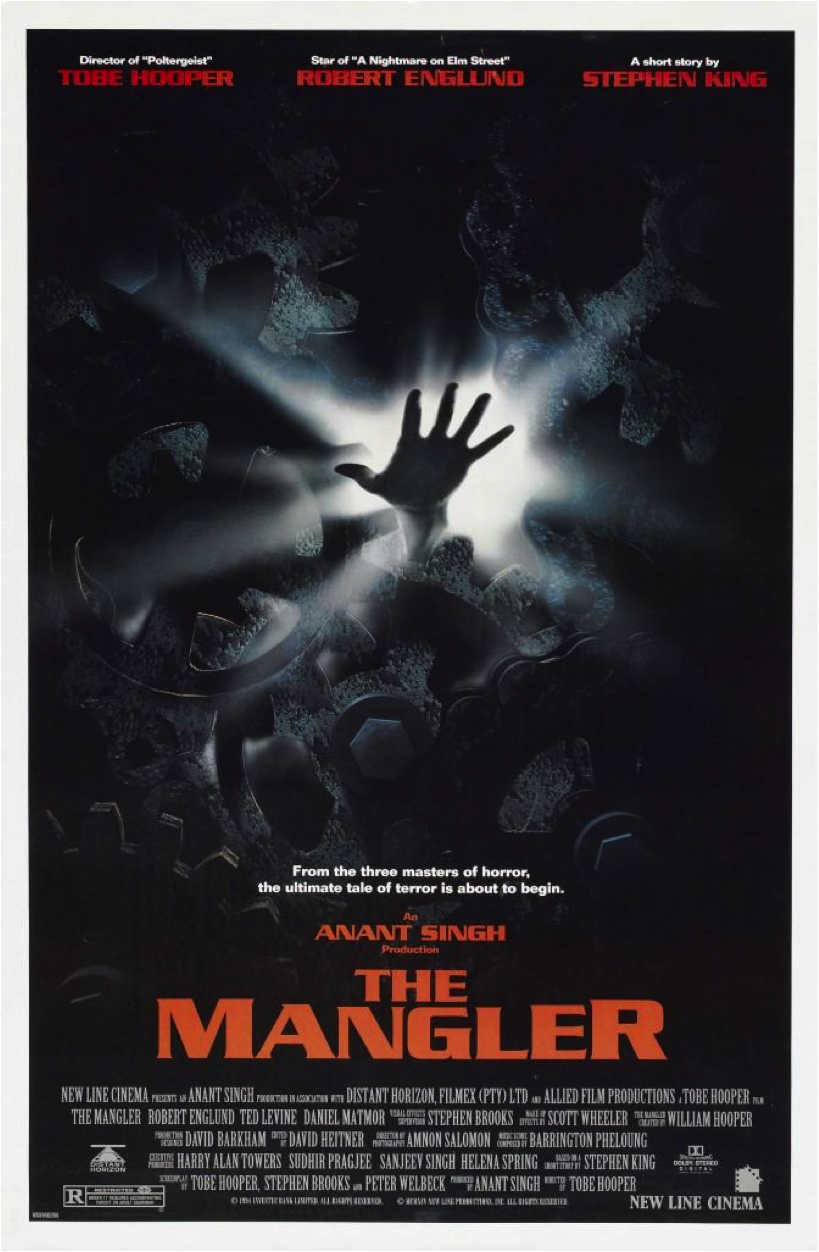
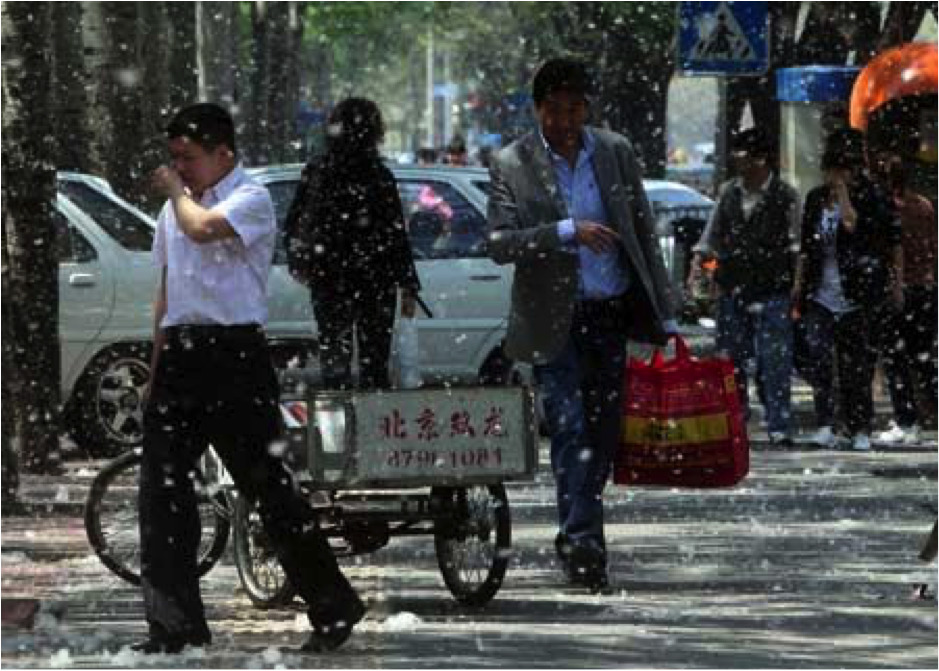
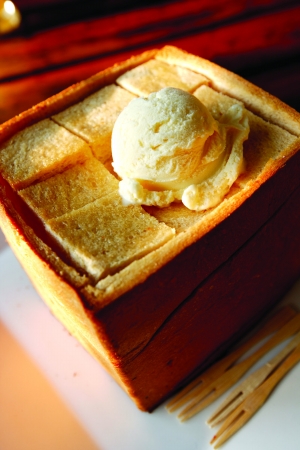

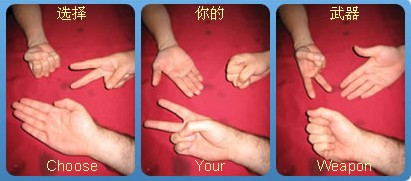


Just to be an @$$, I make sure people know I’m foreign by asking about Chipotle, but pronouncing it as “Chuh-poe-tuhl”. Then, watch their eyes widen, and jaws drop.
But seriously, even if you started getting a hankering for things from China, there are so many Chinese enclaves in California. You got a 99 Ranch Market in Mountainview, you can get your 火鍋 fix in Milpitas (where there’s another 99 Ranch market), the only difference would be paying bay area prices–that’ll make your wallet cry.
What a great post. Great description of the joy of serious Asian culture shock. I laughed out loud at the bit about real reverse culture shock being returning and finding that the steam engine had been invented!
A very thoughtful post. Well done. I have sometimes wondered what going home would be like. Well, only wondered. Not enough to actually pack up and return the way you have.
Loved this post! Thanks or sharing. I have no plans to return to the US anytime soon, but I often wonder what would “shock” me back there.
I’ve experienced the craft beer reverse culture shock on trips home, too! Fortunately I’ve always gone to the grocery store armed with beer recommendations for friends, and didn’t get too beerstruck.
Interesting about the cafeteria thing… Google in Shanghai has probably 2-3 waste receptacles in their cafeteria, which I imagine is a compromise between “normal China” and what happens in the California Google campus.
Great post, 18 months was a long wait, but well worth it.
Great post! Most people that moved to California from China don’t seem to have culture shock, I’ve observed. Try moving somewhere else, it is a bit more difficult. China has a fuzzy, warm hallucination – any problems and ayi will take care of it. In the U.S., the hallucinations are like cold water in the face: Home Depot staff, insurance brokers. What language are they speaking? Good luck!
Good post. Personally, if there was anything resembling reverse culture-shock, it was back in 2005 when I first returned to the UK for a few months after finishing my Chinese studies, when I discovered that:
1) No-one wants to hear your humble-brag-laden expat stories.
2) That protective blanket/fish-in-a-goldfish-bowl feeling you have as an expat is gone.
3) People genuinely aren’t that impressed by the fact that you’ve lived overseas and learned the language. If anything it marks you out as a bit strange.
Back in my Taiwan days, in 2001, when British beers and foods were almost impossible to come by, and when calling home involved standing in the middle of the street using the pay-phone at my local 7/11 waiting for my phone-card to run out, yeah it was just about possible to feel pretty far away from home. Globalisation and technological advances pretty much did away with that.
Interesting that your examples are both to do with choice. I also happened upon this TED talk today, that provides a window into cultural differences in perceptions of choice:http://www.ted.com/talks/sheena_iyengar_on_the_art_of_choosing
For my part, I found that it was more of a ‘shock’ moving back to the UK from the US, than it was moving from China back to the UK. I put this down to my expectations of similarity – making the differences stand out all the more.
Hi Will, we met a few years ago at AmCham’s MAP Forum through Zeke. I just moved back to Georgia a few months ago. Georgia feels pretty much the same as when we left. Most obvious changes to me were all related to food — similar to what you mentioned. My father-in-law remarked that his generation was all about the music. Ours is food. When in China, I loved calling myself a foodie. Here, I just whisper, “I love eating, that’s all”.
Though my most embarrassing thing so far is going shopping, thinking I was signing up for one of those membership cards that give you discounts, and then exiting the store 15 mins later with a bloody new credit card, much to my husband’s chagrin.
I miss China sometimes, but America’s pretty awesome. Have fun in San Francisco!