
Nobody said media-whoring would be easy

If you follow the Internet in China, you may have heard of a young man who goes by the online name “Zola” (or “Zuola” to be perfectly correct). He has been billed as “China’s first citizen journalist“. Zola first attracted widespread attention when he blogged from the site of Chongqing’s famous (and now demolished) nail house in late March. He also popped upat the recent demonstrations opposing construction of a chemical plant in Xiamen.

It all fit the model of the crusading online journalist/blogger quite nicely. Fame, fortune and –who knows?– perhaps even hot chicks beckoned. Then Zola decided he was going to take a crack at Google, and his fortunes took a turn for the worse.

In what seems to be a move taken from the Michael Moore playbook, Zola showed up at Google’s Haidian R&D office in Beijing armed with a video camera and confronted a security guard and then a receptionist about a customer service problem. The gist of his complaint appears to be that he was victimized by click fraud and then, in resolving that, shortchanged about seventy bucks he claims he was owed by Google. Neither the bemused security guard nor the Google receptionist was much help. The security guard palmed Zola off onto the receptionist (possibly the best move he made that week) and the receptionist alternated between futile attempts to steer Zola into Google’s normal online customer service channels and sullen silence.

Zola posted a ten-minute video of the confrontation on YouKu, which Bingfeng kindly posted a link to. It’s in Chinese, but a rough English transcript can be found on Reading China.

If Zola was expecting to be lauded for putting a burr up Google’s ass, he was, as we used to say in college, on crack (I was going to say “in high school” but I went to high school before the crack epidemic). He was instead pretty ruthlessly savaged in comments to his blog and on the YouKu video. The situation appears to have been aggravated by a bout of petulance over lack of public appreciation for his efforts in the Xiamen PX incident and an admirably honest but image- tarnishing confession that, really, he’s just in it to get famous.

China blogger and commenter-at-large Feng37 was helpful enough to send me a rough translation he did of some of the harsh criticism being launched in Zola’s direction. Here are three consecutive beauties in Chinese and English from Zola’s Bullog blog:

4 支持
[匿名] 火星 @ 2007-6-19 16:24:49
你直言不讳求名求钱,足够坦诚。但你动机如此纯粹,作为公民记者,不免让人对你的职业操守和诚信额度担心。

you’re straight up about wanting fame and money, that’s honest enough. But if your motives are so pure, as a citizen reporter, people can’t help worry about your professionalism, personal integrity and honesty.

[匿名] emlary @ 2007-6-19 23:08:47
网上那么多骂你的人,看来你离出名不远了,不知道你对客服是怎么理解的,不过看来在你之前已经有很多人去过google公司了,对于一点小事就睚眦必报,你觉得真的有这个必要吗?
So many people cursing you out on the internet, it looks as though you’re not too far away from getting famous. I don’t know what your understanding of customer service is, but it looks as though many people have been to Google before you…do you really think it’s necessary to get revenge and report on something to small and irrelevant?

[匿名] 给你一个警告 @ 2007-6-19 23:21:34
你太SB了,小子北京不是你想进就进的更不是你想出就出的
You stupid little cunt, Beijing isn’t a place you can just walk into when you feel like it and leave when you want.

And it gets worse. It’s hard being a celebrity, isn’t it?

As Feng37 pointed out, Bullog does not allow blog owners to delete comments (an interesting and debatably worthy policy). His new blog, http://www.alouz.com/, does allow that, and I am told he’s been making use of that function to purge the unfavorable comments.

In our communications about this issue, Feng37 asked me what advice “a PR 高手” (flattering, if perhaps a tad exaggerated) such as myself would give to Zola at this stage. I am sucker for this kind of challenge, so as much as I hate to be the john to Zola’s media whoring I am going make some suggestions. This is free advice and it’s worth every penny Zola has paid for it.

1) It’s not about you

You were in a good situation when you were covering the Chongqing nailhouse story. You had a sympathetic subject colorfully personified in Wu Ping, a relatively clear villain in the sinister developers, and a nicely unfolding drama that encapsulated a serious issue facing China. The Xiamen PX case had much the same drama and similar social relevance. Then you followed up these two immense dramas by going to Google to complain about seventy bucks they owe you. Spot the inconsistency.

By making yourself the focus of what was a comparatively trivial complaint, you also made yourself look petty and unsympathetic. People are generally not interested in sympathizing with the observer, but with the subject. If you wanted to complain about Google’s customer service, you should have found someone else trapped in their Kafkaesque customer service maze and gone to bat for that person. It’s OK for you be manipulative, that’s part of the art form, so pick someone as tragic and photogenic as you can find. A cancer-stricken orphan with a website, for instance. But you need to channel someone else’s misery, not your own. That enables you to remain comfortably heroic.

2) Pick your villains carefully and don’t humanize them any more than you have to

Google could make a good villain, heaven knows. In the space of three years they have gone from the plucky little startup everyone was rooting for to sprawling, secretive and vaguely sinister monolith that could be the next Microsoft assuming Microsoft knew every little thing about you right down to what kind of p*rn gets you off. But not everyone hates Google. They still have a lot of fans even here in China. Furthermore, it is possible to make a naturally unsympathetic entity (and Google has definitely become that) sympathetic by personifying it in a way that undermines your crusade. In this case, Google was personified by the receptionist who was clearly totally unable to resolve your situation no matter how much you harangued her. In the end I felt sorrier for her than I did for you (although this whole episode revealed some issues for Google China as well — more on that later). The lesson is to go after people who represent power or who are actual gatekeepers for power (like, gulp, their PR people). Next time pick on Kaifu Lee.

3) Grow a thick skin

As they say, the only thing worse than being talked about is not being talked about. If you’ve already confessed that your motive is fame then you better be prepared for the reality that just because people know who you are doesn’t necessarily mean they will like you. And the more you appear to be shamelessly self promoting, the more people will naturally lean toward disdain. Think Furong Jiejie, who never seemed to realize that the joke was on her and ended up being famous (briefly) and unintentionally tragic and embarassing. You don’t want your fame to be of the car-wreck variety.

But even if you are at your best, people will criticize you for any of a number of reasons. Suck it up, dude, and show some confidence. Soak up the criticism and, indeed, revel in it. The price of being a lone crusader is being lone crusader. Show some spine and treat the unbelievers as gnats unworthy of swatting. And remember your basic blogging etiquette: Don’t delete comments or posts if it can be avoided. Consider the fact that controversy on your websites will attract readers and that perhaps you should be cultivating it.

4) Never forget that the Internet is the lowest rung of celebrity

American radio star Howard Stern once said that radio was the lowest rung of the celebrity ladder (and as someone who used to work in radio, I empathize). Fortunately for him, the Internet has finally given him someone to look down upon. Audiences are fickle and celebrity is volatile and often short-lived. That’s especially true of Internet celebrity, which lends itself to transient, “flavor of the moment” fads and freakshows (see Furong Jiejie, above). Durable Internet celebrity is surpassingly rare. We’re all disposable on the Internet. Sucks, doesn’t it? In 1968 a smart man named Andy Warhol said, “In the future everyone will be world-famous for fifteen minutes.” He may have envisioning an Internet-powered world like the one we live in today. Or he may simply have been on dope. It was 1968, after all. But the essential truth of the statement remains. It is important, therefore, not to let Internet celebrity go to your head. Whatever else, don’t act like a movie star until you actually become one.

5) If you’re going to make it about you, consider the value of irony

OK, so maybe you’re going to ignore that first piece of advice and make it about you. There is a way it can be done. I note that the front page of your new website has a picture of you gazing into a mirror while wearing a T-shirt emblazoned with–a picture of you. I desperately hope this is meant to be a gentle bit of self-satire. Because if it’s not self-satire then you really are headed for same lonely, post-Warholian purgatory currently inhabited by William Hung (look him up).

If you are willing to mock yourself, then you can ignore most of the rules above. But you then need to recognize that your mission has changed from citizen journalist to comic entertainer. Not everyone has the fortitude to make a career out of irony or self-ridicule, and my guess is that’s not what you want. So think it over carefully because this route will take 100 percent commitment, and it will be hard to mix with the kind of stories that got you notoriety in the first place.

Reflect upon Mr. Moore

I mentioned crusading film-maker Michael Moore on purpose. In crafting this advice, I considered quite a bit what makes Mr. Moore successful. He seems to be in the mold to which you aspire (metaphorically speaking — I don’t think you’ll ever be that big). Michael Moore is an utterly polarizing artist, but whether you love him or hate him he is undeniably a hit. Moore injects himself into his stories, but he is never the subject, only a conduit or engaged observer of someone else’s plight. He chooses his villains wisely (from an American perspective), knowing that his choices will generate controversy that will attract attention. And he is teflon-coated when it comes to criticism. Millions of people hate him. But millions also love him and he is world famous.

So that’s my advice. It is offered constructively. I think China benefits from having citizen journalists, and I encourage you to keep at it and get world famous. Don’t take the media-whore comment too seriously. You’ve already confessed. And, after all, many of us in the blogging and PR biz are media- whores ourselves. We can all whore together. That is what the Internet is all about, isn’t it?

That doesn’t sound like PR advice…

Readers may be thinking to themselves that the above is more advice on Zola’s craft than his PR. But for a media celebrity –even an aspiring one– the two are often related. The persona is the PR. The answer to Zola’s public perception problem doesn’t lie in anything he can say or write, but in how he defines his public persona. Looked at another way, we PR people are often accused of crafting slick, empty words to rescue people or companies from bad situations. Sometimes that’s true. But PR at its best is helping a client to find a genuine, constructive solution to a problem and then communicating the solution. This is especially true in crisis situations, and I think it’s safe to say that Zola has had something of a little crisis. Therefore I have proposed what I think is a solution

Bonus advice for Google China:

Despite the fact that Zola’s Google stunt went wrong, Google doesn’t get a free pass from Imagethief. A basic rule of PR is that in this day and age everyone is a public representative of your company. This is doubly true of a company like Google that is famous, controversial, and the subject of much discussion in China. That secretary was sitting in a Google lobby and wearing a Google T-shirt. How is it that she (and for that matter the security guard) wasn’t briefed on what to do when a journalist came to the front desk? And in the era of blogging and the Internet, anyone waving a camera around in the lobby, even if they are raising a customer service complaint, needs to be treated like a journalist. Especially by the world’s biggest Internet company, which happens to own a huge blogging engine and world’s biggest video-sharing website. Connect the dots, people.

In fact, a good policy might be to assume anyone who comes into the lobby is a journalist until conclusively proven otherwise.

So give the poor girl at the front desk some clear guidance on what to do in that situation, and a simple escalation path she can follow when she is dealing with someone with a camera. That doesn’t mean escalating to security or the police, unless the story you want going public is “How I was roughed up by Google”. Have someone on call who is media trained, savvy and knows enough about customer service to answer questions on the record. Who knows? You might find that these kinds of situations can be turned into PR opportunities.
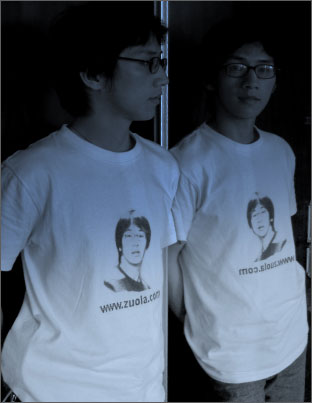
Hey, nice shirt!
Hey, nice shirt!

Posted in Uncategorized | Tagged , , , , , | Comments Off on Nobody said media-whoring would be easy

China’s food crisis PR strategy: Blame everyone else

A few weeks into China’s rippling food quality crisis a PR strategy is coming into view. It’s a classic one: blame everyone else. Unfortunately, it’s not likely to be all that effective because of two things. First, China does actually have long-standing problems with food and drug quality. Second, China’s poor history of transparency makes it hard for them to dispel suspicion (a problem that also dogs their disease-related communication).

The recent affair began with the discovery that vegetable protein shipped from China to the USA and used in pet food had been contaminated with melamine, a plastic that can make the overall protein level appear higher. Melamine also destroys the kidneys of cats, as it happens, so the contamination was discovered.

In classic fashion, China’s initial response was to deny everything. As a crisis PR strategy this sucked. Nothing makes you look sillier and less credible than retracting a categorical denial made in haste. It taints every following communication. In fact it wasn’t entirely China’s fault. Initially AQSIQ, China’s quality monitor, wasn’t looking for melamine, but another suspected contaminant. But obscure mitigating technical factors don’t tend to play well in the court of public opinion, or excuse prudence. In the face of further disclosure, the Chinese government’s subsequent choices were to appear dissembling or incompetent.

Every country has its fair share of food quality problems. In my native USA E. coli bacterial contaminations are something of a national sport, and I can remember plenty of food poisoning scandals. Eric Schlosser’s book, Fast Food Nation, makes fine reading if you are interested in the topic. The FDA conveniently puts its “refusal reports” –the reports of imports rejected– online. If you want to be horrified, read the Mexican list. Food contamination is not an exclusively Chinese problem.

China’s government has grabbed onto this idea as part of its defense. It has been helped by some recent developments, including the rejection of a shipment of Evian for alleged bacterial taint (a case that stokes the fire of another China PR issue, Danone’s legal war with Wahaha — see this interesting post from China Law Blog) and the discovery of Melamine in some US-manufactured animal feed ingredients. Li Yuanping, director general of the government’s Import and Export Food Safety Bureau, also pointed out that China has in the past rejected US products due to Salmonella contamination, and asserted that China’s record on food exports is slightly better than the United States. Li offered up some winning quotes:

“Ninety-nine percent is a relatively high percentage of suitable goods,” Li Yuanping, director general of the government’s Import and Export Food Safety Bureau, said at a news conference. “Facts speak more loudly than anything. . . . From what I have told you, you can see China has a very sound system that can guarantee the safety of food exported abroad.”

***

“No food-inspection system is foolproof,” he said. “It’s like an airplane. Flying is said to be the safest way to travel, but sometimes you have plane crashes.”

Bad choice of words in Imagethief’s opinion. You think an airline would communicate that way? But I haven’t been hired to advise the Chinese government.

Graceless rhetoric aside, Li might actually be right. But perception is everything. Frank Luntz, a conservative pollster, wrote a pretty good book about public communication called Words that Work in which he relentlessly drove home a key point: It isn’t what you say, it’s what people hear (in fact, that’s the subtitle). You say “99% are good”. Americans in bathed in relentless media coverage will hear, “1% might kill you”. Roll the dice and move your mice.

Like a premature categorical denial, “everyone else sucks too” is considered a weak strategy around our office. You think China’s national ambition is to suck only as hard as everyone else? I think they want to be better. More importantly, as far as the audience is concerned we’re not talking about everyone else. We’re talking about export-driven China, which has a great deal at stake in overseas perceptions of its food quality. In international trade, food and drug safety issues get entangled with every other hot button issue. And in the US right now China is second possibly only to Iraq as the hottest of hot-button countries.

To illustrate, let’s look at that Mexican example above. America simply doesn’t have as big an axe to grind about Mexican imports (except for immigrants) as it does about Chinese ones. Mexico isn’t the emerging strategic rival. Mexico doesn’t hold a trillion dollars worth of American debt. You don’t hear about America’s trade deficit with Mexico (about a quarter the size of the one with China in 2006). By and large, Mexico doesn’t threaten American agriculture so much as it props it up with cheap labor.

You get the idea.

Agenda hockey

Following the great melamine scandal of ’07 a few other China-linked disasters have emerged into public view. In early May the New York Times ran a lengthy investigative report on tainted cough syrup in Panama killing people. The cause was toxic, cheap ethylene glycol from China sold as harmless but more expensive glycerine and used in the manufacturing. The ethylene glycol has been getting around, apparently, as it has also found its way into Chinese toothpaste (proxy link) exported to Panama, the Dominican Republic, Costa Rica (and, for good measure, smuggled into Nicaragua) and, it has been discovered, the United States.

As far back as mid-May, Dave Barboza of the New York Times and International Herald Tribune was writing about China’s “credibility problem” surrounding food exports. The situation has not improved since then. Barboza points out that a thirty-billion dollar a year export business it at risk. And that’s where the agendas come into play. The Washington Post, among others, has run op-ed columns editorializing about Chinese food imports in pretty strong terms. Here’s a recent lede:

And what is madame’s dining preference this evening? Scallops coated with putrefying bacteria? Or mushrooms laced with illegal pesticides?

These delicacies and more were among the hundred-plus foods from China that our Food and Drug Administration detained at U.S. ports last month, Rick Weiss reported in Sunday’s Post. Detained and sent back to the importers, who ofttimes sent them back to us again.

Yuck. The Rick Weiss story linked to in that op-ed piece is headlined “Tainted Chinese imports common”. That’ll stick in people’s heads.

China is busy trying to persuade the United States to allow imports of Chinese frozen chicken, among other things. What stories do you think American chicken farming companies are busy reminding Congress of right now? The Boston Globe, which is not much of a China cheerleader (they regularly run op-ed pieces on China and Darfur and have played a big role in the “Genocide Olympics” campaign), was running gross-out stories on Chinese chicken farming way back in early May, before this whole episode even kicked into high gear. More recently, the American press has been reminding everyone that their vitamins all come from China. That story was by McClatchy’s Tim Johnson, who also wrote an interesting post about this on his blog. Check it out to see some interesting public reaction.

So the picture that is emerging is of a food and drug supervision apparatus that is hopelessly broken and that has been for some time. This will be no surprise to anyone who lives in China, where food scandals fall from the skies like the Shanghai plum rains. But it’s making waves overseas now, with enormous business implications. You might think that a serious, soul-searching look at the state of domestic regulation and enforcement, vigorously communicated, would be China’s solution.

You would be wrong.

The blame game

China certainly takes the situation seriously. In fact, seriously enough that English-language state media in China, in the form of the China Daily, excoriated China’s regulators for their crappy communication (here reported on by the AP). That is significant. In fact, suggesting something of an editorial slant, the China Daily also went so far as to publish a Wall Street Journal story titled “China confronts crisis over food safety” in its entirety on the China Daily website, with attribution and an external link.

The popular Southern Metropolis Daily also ran a column by journalist and blogger Lian Yue, translated by Danwei, that linked the food safety problem to broader problems in China. I don’t know if similar commentaries ran elsewhere in Chinese language media. Anyone who has seen anything should post a comment.

But the official response from the government, represented largely by AQSIQ, has been essentially to blame anyone and anything but the system.

In the case of the Panamanian cough syrup, the deputy head of AQSIQ blamed Panamanian traders, an account disputed elsewhere. In the case of the tainted toothpaste, China is accusing the American FDA of sensationalizing the situation. In that same story the head of AQSIQ’s food safety division accused the foreign media of the same thing, describing their reporting on the scandals, in an exquisite choice of words, as “wanton”.

The charge of media sensationalism may be justified to a degree, but blaming the media is almost never an effective PR strategy. It carries an inescapable whiff of Scooby-Doo, as in, “I would have got away with too, if wasn’t those meddling kid reporters!”

Finally, the Chinese government is blaming its former drug chief, Zheng Xiaoyu, for the entire situation (interestingly, a Google search for his name this morning causes Nanny to issue the deadly “server reset” message). The unlinkable South China Morning Post drove the point home with a headline last Friday that read, “Corrupt drug chief blamed for scandals.” AQSIQ and the State Food and Drug Administration (SFDA) double-teamed on this one:

SFDA spokeswoman Yan Jiangying said the agency should not be blamed for Zheng’s mistakes. “I want to highlight that we should not dismiss the entire drug supervisions system because of a single person, Zheng Xiaoyu, and we should not extend the mistakes made by a single person, Zheng Xiaoyu, to the mistakes of the entire system,” she said.

So its Zheng Xiaoyu’s fault if you had any trouble reading between the lines. And people say the Chinese are cryptic.

When China rolls somebody’s head over a scandal it’s not always a metaphor. To show how serious it is about that accusation, Beijing has sentenced the hapless Zheng to death. It has been a long fall for the man who was tasked with cleaning up in the wake of the awful Anhui baby formula scandal of 2004.

Killing the wrong chicken

Let’s go back to Frank Luntz’ point about it not being what you say but what people hear. Executions have a proud tradition as public communication. China thinks that the message that they are sending  with Zheng’s sentence is, “We are goddamn serious about this.” Imagethief is willing to bet that the signal received by overseas audiences will be, “We are so thoroughly corrupt that we had to execute our former top drug regulator.” The question going through heads overseas will be, “Well, whom haven’t they caught yet?”

Executing a mandarin probably won’t have any effect at all on the small processors and exporters who seem to be responsible for most of the problems. Zheng is too far removed from them. Unless small companies feel the weight of enforcement landing squarely on their own shoulders, with an attendant shift in the overall risk/reward equation, their behavior won’t change.

The lingering question is whether a combination of endemic corruption and industry fragmentation render the problem unsolvable. An Imagethief commenter named Jim recently made a good point. He wrote:

Processing millions of tons of food, through millions of workers in tens of thousands of large and small companies, with high cost-cutting motivations, from millions of farms through thousands of transportation companies to millions of sellers to tens of millions of buyers, is hard.

Yes, it is. But I’m an optimist and China needs to show that it is serious about regulating that very process and enforcing vigorously if they want to get past this episode. And they need to clearly communicate exactly what they are doing to both domestic and overseas audiences. Good crisis PR isn’t about bluffing your way past a real problem, it’s about explaining what you are doing to solve it. No one will expect China’s food problems to be fixed quickly, but people can be pretty forgiving in the face of some contrition and obvious effort.

The other option is to keep pointing fingers elsewhere. That might save face and keep people at home happy, but it won’t influence overseas audiences who will keep hearing in the most visceral terms possible how broken China’s regulatory system is. Doors will slam on Chinese imports. Overseas manufacturers conscious of their own brands will look elsewhere for ingredients. And the Chinese government will look foolish and self destructive when the next scandal boils out of the bowels of a broken system.

Posted in Uncategorized | Tagged , , , , , , , | Comments Off on China’s food crisis PR strategy: Blame everyone else

Stupidvator

One of the fine things about moving to a new city is that you always encounter something you’ve never seen before. In Shanghai I experienced the thriving majesty of the Huangpu river, the early-morning army of huishou men and women that prowl the city with bells made of pot lids, the glittering towers of Pudong (better from a distance), and the shady intimacy of the French Concession. Less charmingly, I also experienced the most annoying elevator ever made.

I’ve been riding elevators for many years and I like to claim a fair mastery of their use. I am not mystified by their operation, don’t think they are magic, and am pretty sure that I am not being teleported when I use one. When an elevator door closes on a car packed with people and opens to emptiness, I don’t assume the passengers have been disintegrated or dumped into a pool of crocodiles (although from time to time I have wished for that). Rather, I assume they have debarked conveniently upon the floors of their choosing. Yep, elevators and I are old and trusted friends.

Until now. In Shanghai I stumbled upon a type of elevator I had never seen before. An elevator that rewrites fundamentals of how one summons and uses an elevator. An elevator that shifts not only people, but paradigms of elevator operation.

It also lives in my apartment building and annoys me no end.

The difference is deceptively simple. Instead of a call button on the outside and an array of floor selection buttons on the inside, our elevator has a single calculator-style keypad on the outside. The keypad serves two elevator shafts. To summon an elevator one presses the button or buttons for the desired floor. I live on the seventh floor, so I press “7″. If I lived on the 19th floor (I can but dream) I would press “1″ then “9″. The LCD panel acknowledges my input and flashes an arrow to show which shaft I should wait by. If I enter an invalid floor number like 968 (don’t think I haven’t tried), I get a demure “?” in return.

When the elevator arrives, an LED panel inside the inner door frame shows which floors the car will be stopping so you can verify that you have in fact waited by the correct shaft as directed.

Simple, no?

No. This is a perfect example of taking an elegant, robust, time-tested system and over-engineering it into finicky obnoxiousness. Thank you, Schindler Elevator Corp, for gifting this upon the world.

First of all, no elevator should need an A4-sized plaque of directions explaining how to use it, but that’s what our elevator has. Apparently it confuses enough old people and children that the instructions were necessary. Perhaps people were just piling up in the lobby. I can explain normal elevator usage in four bullet points, just in case I happen to run into a Shipibo tribal elder in the lobby of a building:

  1. Press the call button
  2. When the elevator arrives, step inside
  3. Press the button for the desired floor
  4. When you arrive at the desired floor, as indicated by the display, get out

But this elevator needs illustrations and arrows to make clear its method of operation.

Imagethief presumes the select-floor-first method of elevator operation is supposed to speed things up. If everyone waiting for an elevator has selected a floor already, a mighty electronic brain somewhere in the bowels of the building can super-compute an elevator routing solution of maximum efficiency. But our buildings supercomputing brain must have blown a tube because our elevators take forever to show up. I think, freed from the simple linear order of normal elevator operation, the brain gets hung up on some kind of neurosis. Sure I could get the kids in the lobby now, but that auntie on twelve is only going two floors…What do I do? Confronted with this strategic calculation, it elects to punt. It’s just one more example of how much a single bad algorithm can fuck up your day.

And there are some other disadvantages to the system.

First, let’s say you’re running for a normal elevator. As long as you make it through the door, you’re home free. You can press the button for your desired floor at leisure. You can even set down your groceries to do it. But with our elevator that doesn’t work. You’ve got to get your floor entered before you step on, which means speedy key work before the doors close, or jamming a hand in to open the doors and then entering the floor outside while everyone else waits. Trust me, when you’re all flustered from your run and have ten pounds of cat litter hanging from one wrist and thirty eggs from the other, a fast floor-entry isn’t as easy as it seems.

This situation is aggravated if there are several people scrambling because each person has to enter his or her floor outside as well. Unlike a traditional elevator where as many people can press buttons as can simultaneously get their grubby little fingers near the panel, this system is strictly one-at-a-time. We have more than twenty floors, so at peak period this can take a while. Queue up.

Of course, when you’re in a hurry you sometimes sacrifice some accuracy. Thus when going down I have entered “11″ or “12″ instead of “1″ on a couple of occasions. Tough luck. I’m committed. And if you step inside the car before you notice, there is no bailout option. You can’t press the button for the next floor along and make a graceful exit. It’s the round-trip.

Furthermore, I have been conditioned for the past 39 years to press a floor button after I get on the elevator. I just can’t shake this habit. After I step into my building’s elevator I have to suppress the desire to jam my index finger into the bare, stainless steel repeatedly. People in my building already think I am wierd enough and anything more is likely to scare them. I suppose I could stab the “close door” button, but I have already conditioned myself to avoid that because nothing annoys me more than passengers who want to “drive” the elevator, and spend their time working the “open door” and “close door” buttons repeatedly.

There is also a social aspect to the process as well. We all get in; we all enter our floors; and we all enjoy the cameraderie of the elevator. Everybody knows who is going where. None of this cryptic skulking by the panel outside.

This is all just one more sign that I am getting old and increasingly reject newfangled “conveniences” that disrupt my entrenched habits. You say “iPod”. I say radioactive brain-scrambler. So be it. I welcome crankiness, and you can expect more of it as I confront my inevitable 40th birthday and propulsion into actual adulthood (I’ve been procrastinating it successfully so far).

In that spirit I’d like to go beyond criticizing my apartment’s elevators and say that I reject the idea of electronic controls for elevators completely. I’ve had it with blinking lights and fabulous electro-conductive buttons with ethereal, blue lighting like the elevators at my office (they light up for nothing; don’t even look at the button for a floor you don’t want to stop on). I want my elevators controlled by a person. And not one of those sullen girls who operate the elevators in old apartment buildings in Beijing. They can’t be bothered to look up from their books, and they knock off at midnight forcing you to walk down ungodly flights of stairs on your way home from late-night beer-swilling sessions with Chinese friends. I want no part of that. I want my elevator operated by a height-impaired man named “Rudy” who wears a velvet waistcoat and a fez and who salutes when I enter the car. This is China; shouldn’t be too hard to arrange.

And as long as I am complaining, what is it with bathroom icons in bars? I’ve been seeing a lot of “pipes” and “high-heeled shoes” to indicate men’s and ladies’ rooms these days. This is totally unsatisfactory. What are you supposed to do if you’re a pipe-smoking woman? Or a drag queen in heels? What about if you are pipe-smoking drag queen? You might simply give up in confused frustration and take a leak in the hallway. I don’t know about you, but stumbling across a pipe-smoking drag queen taking a leak in the hallway throws me off my game. And I grew up in San Francisco’s Castro district in the seventies. Let’s not encourage it in Xintiandi.

Posted in Uncategorized | Tagged , , , | Comments Off on Stupidvator

I say “tomato”, you say “massacre”, let’s call the whole thing off

It is a truism of public relations and communication that he who controls the language with which an issue is defined controls the debate. If you can attach your terminology to a situation, you have leverage over public opinion. Don’t like the inheritance tax? Label it a “death tax”. Is that guy with the AK-47 a gunman or a freedom fighter? Is the person with the explosive vest a martyr or a terrorist? Which label works for you? Did that politician lie or misspeak? War or police action? “Dead-enders”, insurgency or civil war? If you can assign the language you can frame the discussion.

The power of language is especially apparent when words are emotionally charged. There is a reason why there are grinding political conflicts about when and how to apply the word “genocide”. The word demands action and commitment. The obtuse language of diplomacy has essentially developed to allow governments to escape commitment when it is inconvenient. You can debate and prevaricate about “internal displacement”, “human rights” and even “ethnic cleansing”. Once something is accepted in popular discourse as “genocide” the debate is over. Act or be complicit.

“Massacre” is a similarly charged word. The dictionary definition is: “The unnecessary, indiscriminate killing of a large number of human beings or animals, as in barbarous warfare or persecution or for revenge or plunder”. Indiscriminate killing. Barbarous. These are the things that “massacre” evokes. It is a word to describe a deed of evil.

That’s why Imagethief has followed with some interest the controversy generated by Ma Lik, Chairman of Democratic Alliance for the Betterment and Progress of Hong Kong (DAB), one of Hong Kong’s political parties. The DAB is often described as “pro-Beijing”, and with his recent comment, Ma has left little doubt. Last Wednesday’s South China Morning Post* reported on Ma Lik’s statments on the front page, under the headline, “Fury at DAB chief’s Tiananmen tirade”. The lede said it all:

Hong Kong will not be ready for universal sufferage until around 2022 because the people lack national identity and many still believe there was a massacre in Tiananmen Square in 1989, the leader of the main pro-Beijing party said yesterday.

***

[Ma] said one example to show Hong Kong society was not mature was people’s belief that pro-democracy advocates were “massacred” in Tiananmen Square in 1989.

The quotation marks are theirs. It is the word “massacre” itself that is in contention, as became clear when the story got to the quotes:

“We should not say the Communist Party massacred people on June 4. I never said that nobody was killed, but it was not a massacre,” Mr. Ma told a media gathering less than three weeks before the 18th anniversary of the bloody crackdown on protesting students. “A massacre would mean the Communist Party intentionally killed people with machine guns indiscriminately.”

Indeed. See the definition above. In addition to Ma’s own comments, the interesting thing in the paragraph above is the use of the word “crackdown” by the newspaper to describe the incident. Newspapers are, of course, wary of making emotional judgments about events, and language like “massacre” does render judgment. That’s why when you Google Tiananmen + crackdown you get a lot of newspaper articles. “Crackdown” has become an accepted, non-judgmental way of defining what happened on that late spring day in 1989.Google Tiananmen + massacre and you get plenty of returns, but fewer newspaper pieces. (You get a lot of CNN online articles, however.)

For the sake of comparison, the dictionary defines “crackdown” as, “the severe or stern enforcement of regulations, laws, etc., as to root out abuses or correct a problem” or, slightly more forcefully, as, “an act or example of forceful regulation, repression, or restraint”. So we get as far as repression.

Massacre or crackdown? You decide.

I wasn’t there, but I’ll inject something judgmental into this piece. It’s part of journalist John Pomfret’s first-hand account of the events of that day from his excellent book,Chinese Lessons:

The soldiers began to fire live ammunition low into the crowd, hitting people in the stomach and legs. The night, balmy with a calm breeze, crackled with automatic gunfire. People fled in all directions. Some returned, rocks in hand. Armored personnel carriers rolled onto the bridge and began cutting the busses aside, cutting a path into the inner city.

I was petrified. Because I had never heard live gunfire before, it took me a few minutes to realize that I, too, could get shot. I was standing about one hundred feet north of the intersection. A crowd surrounded me and began yelling: “They are shooting us! They are shooting us! They are shooting the people!” I saw in their eyes a wild insistence. “You must report this to the world,” yelled one man. Then  the bullets zinged in our direction. I found what I took to be relative safety by lying flat on thw asphalt, pinne dup against a curb. Others ran. I remember thinking they must be crazy. As I lay on the ground with my cheek against the roadbed, I saw several demonstrators fall. The armored personnel carriers had done their work, ramming a channel through the burning busses. Then came the troop trucks, fifty of them rolling through the cumpled roadblock. Random gunfire killed a housekeeper on the fourteenth floor of one building. Another woman was wounded as she looked out of an eighth-floor window.

So is it a massacre? These are the kinds of things we foreigners have to go on when we assign words to events like what happened in Tiananmen Square or elsewhere in Beijing on that day. (In the passage above Pomfret is writing about Muxidi Bridge, to the west of Tiananmen. Pomfret himself uses “crackdown”.)

Citing the above won’t satisfy Ma Lik. Part of his complaint is that he feels that the events of 1989 are being defined by foreigners. Or so I interpret from this quote:

“The government should say what actually happened on June 4… It is not something that teachers can teach whatever they want about. Are saying [what happened] should be decided by gweilos?

The ellipsis and brackets are the Post’s.

In fact Ma Lik is doing two things. One is an extremely clumsy but otherwise garden-variety political language control maneuver. He is attempting to define the language used to describe the events of June 4th 1989 in order to serve a particular political agenda. He may also believe what he is saying whole-heartedly. Attempts to manipulate language are not necessarily cynical or dishonest, although they certainly can be.

But there is a second, and to my mind spookier, part of his statements that I have not seen remarked upon much in initial or follow-up coverage. It is hinted it at in that last quote. This is that Ma Lik wants not only to redefine the language that is used to describe the Tiananmen Square events, but that he wants to institutionalize that redefinition as a pre-requisite for universal suffrage in Hong Kong. According to the Post,

[Ma] said local students had not received proper “national education” since the handover and many still “care nothing” about the mainland.

And later,

Mr Ma, who is not known as an outspoken, hard-core leftist, said universal suffrage could not be introduced before the public adopted “heart-felt” patriotism.

In other words, “you’re not mature enough to be trusted with democracy”. This old saw, played to various melodies, is a favorite of undemocratic regimes across Asia.

Ma has climbed down a bit from his initial statements. A follow-up Post story (paywall) reports:

Mr Ma, who left for Guangzhou after speaking on the radio programme, said he was only trying to call for more rational and balanced views towards the incident. “I think what is most important is to find out the whole truth.”

He also said it was not his intention to ask the Hong Kong government to issue a definitive guideline to schools on how the crackdown should be taught. He only thought teachers should not “teach whatever they wanted”.

I don’t think any reasonable person would disagree with that. No one thinks teachers should have an unfettered reach to teach whatever they want. That’s why we have standards and curricula. In the US, school curricula, especially with regard to things like evolution, are the subject of vigorous, noisy debate. That is as it should be. The difference is that in the US no one who didn’t want to be labeled a crank would argue that a doctrinal viewpoint across society is a pre-requisite for a successful democracy.

That’s the thing about democracy; by it’s very nature it accepts that people will have different viewpoints, different beliefs and different opinions about important events and topics. They will use different language to describe the same thing. They will fight compete vigorously with each other to define the political environment in the language of their choosing, in order to reflect their beliefs and politics. That’s the contest of ideas that is fundamental to healthy  democracy. It is the essence of democracy.

If Ma wants to suggest that what happened in Tiananmen wasn’t a massacre that should be his right in a democracy or any society that allows freedom of speech. After all, you can’t have a true democracy without freedom of political speech, even if that sometimes yields ideas that are distasteful to some. To suggest, however, that homogeneous belief is a prerequisite for democracy is not only to utterly miss the point of democracy, it is also, sadly, to render the very idea irrelevant.

See also:

ESWN: Ma Lik’s comments on June 4th.

*Sorry, I don’t have a link for this article. The South China Morning Post not only has an all-consuming paywall, but it also has the single worst search engine and archiving system of any online newspaper I have ever dealt with.

Posted in Uncategorized | Tagged , , , | Comments Off on I say “tomato”, you say “massacre”, let’s call the whole thing off

Did the “Genocide Olympics” influence China?

Propaganda and censorship are two sides of the same coin. Both share the same goal: to enable an individual or organization to shape consensus in a group. They often work together. Censorship eliminates competing ideas, creating a void in which propaganda can be more effective. Having a coup? Seize the transmitters and studios so you control the message. It’s a time-honored strategy. Propaganda and censorship are related in another way. They both work cumulatively, over time. It’s not usually the “magic bullet” that drives consensus so much as the patient steering of discourse over time via many channels.

But propaganda and censorship do have one difference. I wrote recently that the most powerful censorship is what you don’t see. That’s not always the case with propaganda. Brilliant propaganda can certainly be subtle. Think of manufactured word-of-mouth campaigns that cultivate something that feels like a grass-roots public groundswell. But brilliant propaganda can also be right in your face. There was nothing subtle about the 1934 Nazi Party rallies, but they were brilliant propaganda, as was Leni Reifenstahl’s film of the rallies, Triumph of the Will. That was propaganda as sensory overload and religious experience. And it was devastating in cultivating the Nazi mythology.

The 1936 Olympiad was also propaganda, designed to showcase the grandeur of the Third Reich and the physical superiority of Hitler’s Aryan race. Like the 1934 rallies it was also filmed by Leni Reifenstahl. There was a problem with the Olympiad, however. It was hijacked by Jesse Owens, the black American sprinter who won four gold medals and undermined the messages that Hitler wanted to send to the world. Owens was a powerful, visual symbol and he himself became the lynchpin of a public mythology.

Now it’s China’s turn. China is not Nazi Germany, but the 2008 Olympic Games is as symbolically important to China as the 1936 Games was to Hitler, if not more so. It is a monumental affair staggering under symbolic baggage, and it will be, once again, propaganda as a religious experience. Like the 1936 Olympiad, however, it is also vulnerable to being hijacked. Jesse Owens didn’t mean to undermine Hitler’s message. He just wanted to win. But that didn’t change his impact.

China won’t have it so lucky. The Olympics is more than a sporting competition. It’s a global platform that makes a seductive lever for anyone with an agenda that they want to propel into the public consciousness. The modern Olympics has always been seen as an opportunity to make political statements. Hence Owens in 1936, Tommie Smith’s and John Carlos’ “black power” salute in Mexico City in 1968, the Black September hostage drama in 1972 in Munich (Germany star-crossed again), and the reciprocating Russian and American boycotts of 1980 and 1984. China’s Olympic games isn’t even the first time an authoritarian Asian nation has used the Olympics to debut on the global stage. That honor goes to Korea, for the Seoul games in 1988, when Korea was at the tail end of its authoritarian regime. You can even make a case that Japan beat Korea to the punch in 1964 when its summer games served as the stage for Japan’s symbolic postwar rehabilitation less than twenty years after the end of WWII.

If all of this makes you feel a little grimy, remember that the modern Olympics exists specifically as a propaganda vehicle (and here I include marketing as a kind of propaganda). The IOC may call it a “movement”, evoking images of grass roots participation and noble sporting ideals, but that is propaganda itself, designed to draw a graceful fig leaf over the reality that the Olympics is a vast business venture –reportedly US$4 billion in revenue over its previous quadrennial cycle– driven by sponsorships and advertising. Sponsors take the messaging opportunity seriously, as well they should considering what they invest.

China, hungry to be seen anew as a great power, had its own agenda in mind with the Olympics. Unfortunately for China, all the debate and controversy that swirls around its human rights, environmental and geopolitical issues is being dragged along in the Olympic slipstream. People have China axes to grind, and that beautiful Olympic fulcrum is too enticing to pass up. The 2008 Olympics was politicized from the moment it was awarded to Beijing, and will be more contentious than any games in modern memory. That’s a big deal considering the Olympics’ propaganda-splattered pedigree. In the PR industry we refer to the 2008 Olympics as “issues rich”, which is a polite way of saying, “watch this space for crisis”.

That’s why “the genocide Olympics” is such a brilliant piece of propaganda. It is as un-subtle as you can get, and it looks like being effective.

The phrase has emerged into the popular consciousness thanks to a campaign by actress and activist Mia Farrow and her son Ronan, most recently in an op-ed piece (also here) published in the Wall Street Journal and Boston Globe (and possibly elsewhere) in late March. Mia Farrow is just one of a constellation of people and groups with a China issue. In fact, Ms. Farrow’s real problem is with the Sudanese government’s sponsorship of widespread destruction and killing in the Darfur region. But China’s support for the Sudanese government and its investment in Sudan make it a convenient pressure point, and the Olympics provide that all-important leverage. The editorial says:

[There] is now one thing that China may hold more dear than their unfettered access to Sudanese oil: their successful staging of the 2008 Summer Olympics. That desire may provide a lone point of leverage with a country that has otherwise been impervious to all criticism.

Whether that opportunity goes unexploited lies in the hands of the high-profile supporters of these Olympic Games. Corporate sponsors like Johnson & Johnson, Coca-Cola, General Electric and McDonalds, and key collaborators like Mr. Spielberg, should be put on notice. For there is another slogan afoot, one that is fast becoming viral amongst advocacy groups; rather than “One World, One Dream,” people are beginning to speak of the coming “Genocide Olympics.”

Does Mr. Spielberg really want to go down in history as the Leni Riefenstahl of the Beijing Games? Do the various television sponsors around the world want to share in that shame? Because they will. Unless, of course, all of them add their singularly well-positioned voices to the growing calls for Chinese action to end the slaughter in Darfur.

The Farrows don’t take immediate credit for “the genocide Olympics”, and in fact the phrase has been circulating since at least last December, when the Washington Post ran an editorial by that title. The Boston Globe, extends a degree of credit to a Smith University professor named Eric Reeves who advocated the Olympic-China-Darfur link on their own op-ed page, three days after the Post piece ran. A week after Reeve’s piece, theGlobe ran another editorial that cited Reeves and did use the phrase “genocide Olympics”. (The Globe has been banging the drum very hard, and it launched the phrase again in a new editorial from May 8th, here republished in the International Herald Tribune.) The phrase also had a bout of publicity in March thanks to the Farrows, and has been resurrected in the past week or so thanks to the efforts of US politicians, including long-time China critic Tom Lantos and others:

“We don’t want these Olympics to go down in the history books as the genocide Olympics,” said Lantos, chairman of the House of Representatives committee on foreign affairs.

***

“It is outrageous that China is using the very symbol of international unity and brotherhood to further grind down the Tibetans and the Taiwanese who simply want to live their lives without interference from Beijing,” Lantos said.

Two things are making this a successful campaign.

First, the campaigners have a brilliant slogan. The genocide Olympics. It sticks in the head and it conjures up the worst possible set of associations. It fits on a T-shirt (which you can order), and it is evocative and emotive at a visceral level.

Second, in a classic PR strategy, the advocates have marshaled what we in the biz call “a chorus of voices”. One angry person heaving around an incendiary phrase does not necessarily make for PR disaster. An expanding group of celebrities, politicians, activists and editorial writers heaving that phrase around does. Over time they will imprint “the genocide Olympics” on the public consciousness. (Mr. Reeves writes more about the campaign here.)

The Farrows did something else brilliant. They appropriated an intensely powerful advocate in Steven Spielberg, who is advising the Beijing Olympic Committee, and they did it in the most audacious fashion possible. The Farrows compared the Jewish film director and Shoah (Holocaust) Foundation founder to Hitler’s own cinematic propagandist, Leni Riefenstahl. The drew a direct and highly visual line from 2008 to 1936, right through Mr. Spielberg’s chest, and turbocharged the genocide concept. Mr. Spielberg obliged by apparently personally lobbying China to take tougher action on Sudan.

So is it all working?

This is debatable. China is notoriously impervious to outside pressure. But China doesn’t necessarily need to be directly persuaded. If the “genocide Olympics” idea gains enough currency, major sponsors and other national governments will start to become queasy. If the activists can pressure Visa, McDonalds, Coca Cola, GE, Samsung et. al. (Lenovo is probably a write-off) then they’ll pressure Beijing and the IOC in turn. And the sponsors, who depend upon the image of the Olympics, control the money that is the life-blood of the “movement”.

Despite its tradition of hard-headedness, China last week appointed a special envoy dedicated to the Darfur crisis. Earlier, shortly after the Farrows and Mr. Spielberg ratcheted up the pressure, China dispatched a “senior official”, Mr. Zhai Jun, to Sudan to push the Sudanese government to accept a UN peacekeeping force in Darfur. On April 12, the New York Times reported on Zhai in an article titled “Darfur collides with Olympics and China yields”. (Behind the Times paywall but can be read on Ms. Farrow’s website.) The article suggested a direct link between the campaign and the mission. Lest you think China is getting soft, however, Mr. Zhai is quoted in the article describing boycott advocates as, “either ignorant or ill natured”.

Perhaps the link isn’t as direct as it seems. Last week I had coffee with an experienced China journalist who said he felt the article was reaching in linking the campaign directly to Zhai’s visit, and that China had already been in motion on Darfur. Indeed, the article itself says:

During closed-door diplomatic meetings, Chinese officials have said they do not want any of their Darfur overtures linked to the Olympics, American and European officials said.

In an e-mail message on Thursday, a spokesman for the Chinese Embassy in Washington warned anew against such a linkage. “If someone wants to pin Olympic Games and Darfur issue together to raise his/her fame, he/she is playing a futile trick,” the spokesman, Chu Maoming, wrote.

But the Chinese would say that. After all, if they admit having been pressured once, the floodgates will open. Darfur is only one of the agendas swirling around the Olympics, and other interested parties will be watching to see to what extent the Olympics can be used to pressure Beijing.

In another discussion I had last week, the regional managing director for one of my company’s cross-town rivals wondered aloud to me if China is ready for a “multi-stakeholder world”. That’s a PR flack’s way of wondering if the Chinese can gracefully juggle the pressures that will accumulate from governments, activists, Olympic sponsors, celebrities and everyone else who has one of those China axes to grind. Not every pressure campaign will have the in-your-face impact of “the genocide Olympics”, but more are certainly on the way. I think the success or failure of the Olympics will be determined not by the campaigns themselves, but by the grace and sensitivity with which China can respond to them. Angry rhetoric aside, if there is any sincerity to them them then China’s recent moves with regard to Sudan are promising.

Unfortunately, it will be hard for China to shed its authoritarian and reactionary instincts. Just this week the country responded to a recent Tibet-oriented protest on the slopes of Mount Everest by cracking down on individual tourism to Tibet. That self-destructive move will generate exactly the kind of negative publicity that will remind the world of all of China’s faults, and ensure that the shadows continue to linger over 2008.

Posted in Uncategorized | Tagged , , , , , , , , | Comments Off on Did the “Genocide Olympics” influence China?

Asian media vows to make western media cry

Imagethief was tickled to read today in Xinhua an article from the Boao Forum for Asia, an annual Chinese talking shop, on how Asian media will rise up to challenge western media juggernauts. It seems that Asians take umbrage that they are 96.2% of the world’s population and yet produce only 0.3% of its international media. Or something like that.

The article makes many serious points:

“The world is not flat actually,” Liu Jiang, deputy editor-in-chief of Xinhua News Agency, said at the annual conference of the Boao Forum for Asia (BFA), which was held over the weekend in the south China town of Boao.

“The world is in reality a slop [sic] on which information flows downward from developed countries to developing countries and regions,” Liu said.

“The World Is Flat” by the New York Times columnist Thomas Friedman has been frequently quoted to prove an alleged “magic power” of globalization by Bill Gates and other lecturers at the conference.

The book figures out ten driving forces to grind the world flat, in each of which media play an important role.

“Developed contrives, which have one seventh of the world population, have dominated two thirds of the total information flow,” Liu said. “However, globalization does not balance a horizontal world when it is grinding the world.”

“Why do Asian media always yield to Western culture?” Felix Soh, deputy editor-in-chief of The Straits Times headquartered in Singapore, questioned in his speech at the sub-forum discussing globalization and the media.

Imagethief has lived in Asia for over a decade and is a fan of Asia and things Asian. So he will try to address Mr. Soh’s question as delicately and constructively as possible.

It’s because on average Asian media suck. Especially news media.

Now this is not an entirely categorical statement. There are fine Asian newspapers and magazines, and, heaven knows, gifted Asian filmmakers and writers. But in general –and I am truly sorry for purely selfish reasons that this is the case– Asian commercial media is a desperate wasteland that teeters perpetually on the precarious knife-edge of irredeemability.

Mr. Soh himself heads up one of the blazing test cases for the failed potential of Asian media. Imagethief needs to tread carefully here because he is really good friends with several Straits Times journalists, and they are hardworking, smart, talented people. But friends are honest with each other, so here it is: the Straits Times took the last train to dullsville and fell asleep in its seat and missed the stop. I know. I subscribed for years.

The tragedy of this –the great, majestic, swooping tragedy– is that if any country was going to produce a credible pan-Asian newspaper it would be Singapore. It’s in the right place, it’s got the right people, and it speaks the right languages. It really is a regional hub. But it will never happen.

I blame government. Governments, by and large, should not involve themselves in media. But Asia’s governments cannot, for the life of them, keep their grubby mitts off the media. And damned if they don’t have a near mystical talent for boiling the life out of it.

I realize you can argue both aspects of the government involvement equation. The government-run chartered [see note below -WM] BBC, for its troubles, is one of the world’s great news gathering organizations. Too little government supervision of media and you get dangerously irresponsible or corrupt media.

But too much government involvement and you get soul-destroying headlines like…well, just for fun, let’s see what the top story on the Straits Times website is right now:

Need for S’pore to focus on sustainable construction: Grace Fu

THERE is a scope to reduce the stockpile release price for granite from May onwards, Minister of State for National Development Grace Fu said.

Gadzooks! And for good measure here’s the number two headline:

Extraordinary govt, talent keep S’pore ahead, says MM (MM= Minister Mentor Lee Kuan Yew)

Good gosh, two government headlines in a row. And this is typical. Back in Singapore we used to joke about what the above-the-fold government headline of the day would be.

Arguably, this is what is important to Singaporeans (although this kind of stuff drives my Singaporean wife up the wall, but she married me so she’s probably deranged). And I realize it’s unfair to dump so much on the Straits Times. But if the editor is going to ask rhetorical questions about the subservience of Asian media, perhaps he should look close to home for the answer.

This story is rewritten across the region. As long as Asian governments manage their news, censor their films, and interfere explicitly in culture then their newspapers will be treated as propaganda, their most talented artists will flee overseas and their people will wolf-down tawdry but lively foreign culture.

So my recommendation for the governments of Asia is this: if you want a louder voice in the world, if you’re tired of being walked all over by imperialist western media, if you think you are being misrepresented on the global stage, then back the hell off. Set your own media free. It will probably rise to the challenge, and, I suspect, do it better without you breathing over its shoulder.

But that’s a pipe dream. Here’s the end of that article:

High level forums and meetings have been raised by media groups from China and members of Association of Southeast Asian Nations (ASEAN). An agreement of cooperation on communication signed by members of the Non-aligned Movement at Kuala Lumpur in 2005 has shown the developing countries’ strong willing to speak louder in the world.

Delegates of Asian media attending the BFA conference reached the consensus that Asian media should shoulder a responsibility for broadcasting “a harmonious Asia” with “a harmonious Asian image” and provide a value of “harmonious region” to tell the world a real Asia.

A “harmonious Asia”? Oh dear. Pass me the Financial Times.

Note: I do give a tip of the hat to Singapore’s Chinese language daily, Lianhe Zaobao, which is popular in China.

Update: Charlie (in comments below) [comments no longer available – WM] and another reader (by e-mail) have pointed out the important distinction between publicly funded media, such as BBC or NPR in the US, and state-managed media. I should have made that distinction clearer in the text. The BBC is, thus, probably used incorrectly as a positive example above. Unfortunately that kind of bottoms out the list of exceptions to thegovernment involvement = bad rule.

Posted in Uncategorized | Tagged , , , , , , , | Comments Off on Asian media vows to make western media cry

How to turn one terrible scandal into two

Note: This includes two posts originally published on back-to-back days.

Part 1: How to turn one terrible scandal into two

Imagethief loves watching companies hang themselves. Unless they are his clients, in which case he has fits watching them hang themselves because it means sleepless nights in the glow of the computer eating greasy dinners out of Styrofoam boxes.

Fortunately for me, China Railway 12th Bureau Group Company is not one of my clients. For one thing, if they were, I’d advise them to change their name. I had to look at the original article twice to transcribe it. I’m sorry, but if you’re not a law firm you have no business having five nouns in your company name.

More importantly, they have just committed one of the great PR sins: the busted coverup. From AP, via BusinessWeek:

Police have detained 10 people in charge of building a new subway line for the 2008 Beijing Olympics after one of the project’s tunnels collapsed, trapping six workers, state media said Friday.

***

Construction company China Railway 12th Bureau Group Co., was suspected of trying to cover up the accident and delaying rescue efforts that might have saved lives, Xinhua said.

Police have detained 10 people including the project supervisor and the tunnel’s designers, Xinhua said. It did not give their names or say if they had been formally charged with any crime.

Xinhua said the construction company sealed the site immediately after the accident, confiscated employees’ mobile phones and ordered people not to talk to police or media.

The company did not report the accident to city authorities until eight hours after it occurred, it said, citing unidentified Beijing officials.

You would think that after the great Songhua River disaster of ’05 people would have learned their lessons about this. But it’s hard to overcome those olde fashioned instincts, and probably even harder when you are working on a marquee project that is part of Beijing’s pre-Olympic rectification program.

By definition, no one really knows how many successful coverups there are. However, I’d bet there really aren’t many. It all comes down to the old adage that two people can keep a secret if one them gets a lead tattoo. I am not sure any peer-reviewed scholarly work has been done in this area, but I am convinced that as the number of people involved in a coverup goes up, the risk of it being blown increases far more than in linear fashion. I betting that risk increases as at least the square of the number of people involved.

So you can confiscate all the mobile phones you want, and you can order people not to talk, but sooner or later somebody will. And probably sooner. And even if they don’t, people –family members and friends for instance– tend to notice a lot of sudden deaths.

Now China Railway 12th Bureau Group Co. (or CR12BGC as I like to think of it) has two crises on its hands: the possibly negligent deaths of twelve workers, plus a mass arrest of its executives and supervisors. Instead of looking negligent, they now look negligent, sleazy and criminal. Congratulations! It’s not easy to self-destruct that dramatically without being discovered trafficking in kiddie pr*n. Good luck explaining all this to the press.

Unless the government bans all coverage of the situation. This is China, after all, and the rules remain a little different. I realize also that CR12BGC is probably not the most progressive company when it comes to communication. But despite the high level of government intervention, China now has a scrappy, modern media that loves a good scandal. The sooner Chinese companies learn how to deal with this, the better things will go for them.

We PR people are widely unloved. There is some justification for this. As an industry we have a history of taking on unsavory clients and disagreeable jobs. But its also unfair in some ways. In crisis situations we spend a lot of time giving variations on the following straightforward advice to our clients:

  1. Don’t lie.
  2. Be mindful of your legal risk and prudent in communication, but don’t try to hide or distort the facts of what actually happened.
  3. Don’t lie. (Again.)

Writ large or small, successful crisis communication is about clearly explaining your side of what happened and being publicly seen to take all practical steps to address the crisis and assist the people affected. You can’t bring back the dead, but you can take care of the living, understand what went wrong, visibly cooperate with authorities and demonstrate a commitment to learning from mistakes. It might not do anything about your legal liability, but it will help your reputation and generally costs less in the long run than the alternatives. And if you do get prosecuted, a constructive approach looks a lot better in court than an attempted cover up.

Plus its hard to work a crisis when all your spokespeople are in jail.

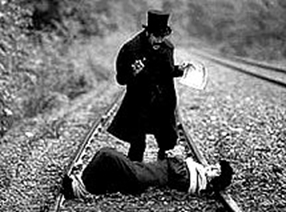
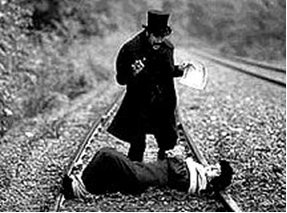
Gasp! It's the China Railway 12th Bureau Group Co.!

Gasp! It’s the China Railway 12th Bureau Group Co.!

Part 2: Beijing subway collapse: Whose crisis is it?

Following up on yesterday’s post about the Beijing subway collapse, I saw an interesting article (subscription) by Mei Fong in yesterday’s Wall Street Journal, Asia. (I try to get that right ever since one of their journalists explained to our staff in Beijing that it’s not the “Asian Wall Street Journal” any more, and that we had better get with the times.)

Because of its galvanizing effect on everyone with a China agenda, the Beijing Olympics has been described within my industry as “issues rich”. This is PR code for “shitstorm waiting to happen”, and is the kind of thing that usually leaves PR men cackling to themselves and planning expensive purchases. (Or, at my pay grade, grocery shopping.)

Among the many China issues that people get in a twist about is migrant laborers. There are by the government’s own estimates 115 million of them. For perspective, that’s less than 10% of the population of China, but more than 35% of the population of the United States. And I’m not sure the government is counting everyone.

A lot of these migrant workers are currently in Beijing, slaving away on extremely high-profile, deadline-sensitive projects that are part of the city’s pre-Olympic renovation. People have noticed this. Mei writes:

[Beijing’s] haste to meet its construction deadlines has resulted in round-the-clock work for the armies of often poorly paid, badly equipped migrant workers who build most of these projects. Some work shifts that can last as long as 24 hours.

The relatively poor working conditions of migrant workers has come under greater media scrutiny in recent months, causing international labor groups — many already critical of China’s poor human-rights record — to put greater pressure on the International Olympic Committee to improve the situation.

IOC spokeswoman Giselle Davies said in an email that “our understanding is that all efforts have been made both in terms of safety — specifically putting precaution first, and also in terms of transparent management.”

Does the IOC really believe that? Even if it doesn’t, is there anything else it could say without admitting culpability and precipitating its own crisis? How about:

“The IOC is aware of the widespread exploitation of Chinese migrant laborers, the mistreatment they commonly suffer and the appalling and unsafe conditions they endure. We sympathize completely. But we also believe that during the pomp of the opening ceremony, amidst the pageantry, grandeur and fireworks, no one will be thinking about a few bones in the foundations.”

Maybe not. OK, what Ms. Davies says isn’t as bad as my idiot scenario above. Note the weasel words, though: “Our understanding is…” That phrase is the IOC’s absolution. It transfers responsibility onto BOCOG and the Chinese government. They told us everything is OK. But for credibility it depends upon you and me believing that the chain of honest communication and transparency from labor contractors to construction subcontractors to primary contractors to the municipal government and BOCOG is intact. Do you really believe that? Of the Chinese construction industry? And if you don’t, then should the IOC?

I realize I am dissecting one partial statement out of context here. But that’s what the public will see, so that’s what will inform people’s opinions.

As for BOCOG, it has duelling priorities:

Priority 1) Have a glamorous and untarnished Olympic Games that mark China’s emergence on the International stage.

Priority 2) Get the goddamn thing done in time and on budget.

So which priority will win, and whose reputations will get trashed in the process?

493 days, 6 hours, 51 minutes and 17 seconds to go as of this posting.

Gasp! It's BOCOG and the IOC!

Gasp! It’s BOCOG and the IOC!

Posted in Uncategorized | Tagged , , , , , | Comments Off on How to turn one terrible scandal into two

The devil wears Prada and won’t rent me an apartment

Imagethief hates looking for an apartment. Once I am comfortable someplace, I’ll tend to stick with it unless there is some external factor that forces me to move. That could be a raise that lets me upgrade, the relocation of my office, a crack house opening downstairs (if it was noisy) or, just for example, moving to another city.

A few months ago I briefly looked at apartments in Beijing before ultimately bargaining my rent down and staying put. After that experience, I wrote a post (rant, really) that summed up my feelings about apartment hunting in China. My major complaint was that Chinese landlords are unchallenged in their ability to select the worst, tackiest, ugliest possible furniture for any given apartment.

So I was understandably staggered when just a bit over a week ago I walked into a rental apartment in Shanghai that had some of the nicest furniture I had ever seen. The apartment was gorgeous, with a tasteful paint job, reasonable lighting (another rarity in a country obsessed with colored fluorescent tubes and baroque chandeliers), simple moldings and truly elegant and comfortable furniture. It was on Julu Rd., a ten minute walk from my office, and near a wet market and several pleasant restaurants and cafes. It was quiet and had a big balcony. To top it off, the rent was reasonable. Its only drawback was a microscopic, Hong Kong-style kitchen. But Mrs. Imagethief and I figured we could live with it if we kept our elbows in.

There was, naturally, a complication. I have cats. I had warned the agent beforehand that I have cats. “I have cats,” I said, to minimize confusion. “I don’t want to waste time. Make sure any apartment we look at doesn’t mind cats.” This instruction, along with several others of lower importance, like my budget range, was ignored.

As we looked at the apartment I asked the agent, “How does the owner feel about cats?”

“There are some concerns,” he said.

Undaunted, I said that I was interested. He said he would look further into the cat issue and let me know.

The next day I was requested to appear at the apartment along with my cats so the landlady could evaluate them. I explained that the cats were still in Beijing and an introduction would be somewhat impractical. A compromise was struck. Could I bring photographs instead?

I had Mrs. Imagethief send me the most cuddly, harmless, nauseatingly cute, aw-shucks photograph of the cats that she could locate (see below) and I printed it out in color. What I didn’t point out is that the reason the cats are so serene is this photo is that they are in shock from being transported from Singapore to Beijing and spending 48 hours in Chinese animal impound. In a spectacular piece of extra-credit work, Mrs. Imagethief also shot a digital video that convincingly shows that the cats will energetically scratch a scratching post but cannot be enticed to sink their claws into the sofa. Unfortunately, I couldn’t get that video into a portable format in time to take with me.

I arrived at the apartment at the designated time and waited along with the agent. When the landlady swished in I knew I was in trouble. She was immaculate. From the perfect hairstyle down to the tiny pair of sparkly, silver shoes, she was a picture of high-fashion perfection. She also radiated a brittle arrogance that I associated immediately with one or two of my particularly fabulous ex-colleagues, a trademark of those Chinese women that have painstakingly and fastidiously elevated themselves above the long-underwear dowdiness that still pervades so much of the country.

She did not, in short, appear to be the kind of person well-disposed to a dusting of cat hair on every surface.

She was also not the landlady. She was the landlady’s good friend. The landlady herself was pregnant in Hong Kong, and this woman had been entrusted with the task of vetting potential tenants. It was a responsibility she took seriously. Where did I work? How long had I been in China? Was I single? Did I absolutely have to keep the cats? Wouldn’t stuffed cats do just as well?

Still, she was supportive in her own way. “I can see that you have good taste,” she said with the deadpan sincerity with which you might compliment an extremely simple third-grader, “because you like this apartment.”

You see, she explained, the concern is that the furniture is all imported. The bed alone, I was warned, was worth some RMB 20,000. And it was nothing against animals in general. She had a dog, after all. (I could picture it — something microscopic and high strung. A colicky cotton ball with a diamond collar, protruding eyes and an angry snarl.) Dogs stay on the floor. But cats, well, they like to jump on top of things. And her friend, I had to understand, was her colleague from Vogue, and she was very serious about the condition of her apartment.

Vogue.

I had watched “The Devil Wears Prada” a week or two before and had laughed off the attitude as Hollywood hyperbole. And yet here it was in front of me, big as life. They reallyare that self-consciously fabulous. I am the product of a bookishly unstylish bloodline and I have no experience dealing with this sort of person. It was like being in the presence of an extremely fashionable space alien. I mean, what common ground do you really have?

Well, she had heard of my company. I guess that was something.

She said she would go back and discuss it with her friend. She also suggested that they would put a list of all the furniture and its values into the contract (actually a sensible idea). Then she turned to the agent and in Mandarin laid down the bottom line on rent. It was incrementally higher than I wanted to pay, and I was slightly annoyed that she didn’t say it directly to me. But it didn’t matter. I had already written off the apartment.

Even if her absent friend had agreed to my tenancy I had mentally abandoned it about the time I was indirectly complemented on my taste. The world is full of imperfect and obsessive landlords, but the thought of having a phalanx of neurotic fashionistas riding shotgun on my tenancy was more than I could tolerate. It wasn’t just the cats. I’m big, klutzy and drop things. I sit on the couch after sweaty workouts. Mrs. Imagethief and I cook smokey, spicy things that stink up the house, and then eat off the coffee table while we watch TV. I drop my underwear on the bedroom floor. Mrs. Imagethief and I would have made noisy, spring-rattling whoopee on that expensive, imported bed. There is a reason why leases have “normal wear and tear” clauses, and that reason is me.

And I have enough stress in my life without having it transmitted at me by a landlady who’s going to worry if I sit on the couch in riveted Levis, let alone do any of the things above.

The next day, even before we heard back from the landlady’s friend, I called the agent and told him to forget it. That was probably exactly what the owner was hoping for, but it spared us all the uncomfortable last dance.

I defaulted to my second choice. It’s in an uglier building and it’s a tattier apartment. The couch looks like it was lifted from a frat house yard sale and the dining room table is so hopeless I told the agent to get rid of it. But the place is big, nicely painted, and has an enormous kitchen and an unobstructed view of the entire eastern half of the city. It’s a five minute walk from the office.

And the landlord doesn’t care about cats. For that kind of serenity, I’ll go downmarket.

Would you trust them on your couch?

Would you trust them on your couch?

Posted in Uncategorized | Tagged , , , | Comments Off on The devil wears Prada and won’t rent me an apartment

A funny thing happened on the way to political re-education

Imagethief was morbidly fascinated to find a Reuters article over the weekend that explains how the Chinese Propaganda Ministry has launched a point-based “demerit” system to try to encourage proper behavior from the print media:

CHINA’S Communist Party propaganda department has launched a points-based penalty system to try to rein in the increasingly muck-raking print media, a Hong Kong newspaper reported today.

Media outlets will be allocated a dozen points that the propaganda department and the government media regulator can deduct one, three, six or all 12 at a time, the newspaper quoted unnamed sources as saying.

It was not clear how the severity of a perceived infringement would be judged, but penalties would range from warnings and dismissals to closure of the publication, it said.

***

“The new system is a clear message that the top leadership wants a peaceful social environment ahead of the 17th Party Congress and next year’s Olympic games,” the newspaper quoted a senior state media executive as saying.

The media point system was similar to China’s driver license point system whereby deducted for moving violations.

And, in fact, similar to systems used for penalizing motorists all over the world. This begs the question, for the first offence can a media organization send its staff to the Propaganda Ministry’s comedy media school and have the points restored, like going to comedy traffic school for a first offense in the US? After all, the government here has a tradition of political re-education. Why not work a few laughs in along the way?

Sure, right now you’re thinking to yourself, I don’t think the propaganda ministry is a humorous organization. But with a little work it could be. For instance, a favorite disciplinary tool here is the “self-criticism”. Anyone who pays attention to comedy knows that self-criticism is at the heart of much comedy. It’s Woody Allen’s entire oeuvre, after all. Could it be that hard to work comedy into other aspects of media discipline? I don’t think so.

Join me now as we look in on the Ministry’s comedy re-education school. An unnamed media organization has been slapped with three demerit points for unauthorized portrayal of a pig during the Chinese New Year Festivities, in contravention of recently announced regulations:

Cadre: Good evening, comrades. I am Mr. Wei and I will be conducting your political re-education today.

Editors and journalists: Good evening comrade Wei.

Cadre: You know, it’s great to see you all here today. I hear you got sent up for showing an advertisement with a pig in it during New Year. Honestly, muslims, who can figger ‘em out? You know they don’t eat pork? They don’t eat pork! How crazy is that? Say, that reminds me of a joke. A man was walking by a village when he saw a pig with a wooden leg. Not quite sure of what he was seeing, he went up to the house and knocked on the door. A peasant answered the door and the man said, “I was walking by and saw a pig with a wooden leg and I just had to find out why!”

“Well” the farmer answered,”that is a really special pig. Our house was on fire and that pig dragged my whole family out and saved our lives.”

“But why the wooden leg?” asked the man.

“Well,” the farmer replied,”a pig that special you wouldn’t eat all at once!”

Uproarious laughter.

Cadre: Yeah, the great thing about Hanification of the west is that you’ll finally be able to get a decent pork bun in Kashgar.

Chuckles.

Cadre: So how do you think the ministry found out about your pig advertisement?

Editor: They read our newspaper?

Cadre: Nah, somebody squealed! (Rimshot)

Laughter.

Cadre: Honestly, it’s not really your fault. The party believes that religion is the opiate of the masses. It just makes people crazy. (Twiddles index finger at temple.) Say, that reminds me of another joke. A Hindu, a rabbi and a capitalist are driving through thenongcun when their car breaks down. Fortunately they find a farmhouse nearby. The peasant tells them that he has only space for two more people to sleep inside the house. They are welcome to it, but one of them will have to sleep in the shed outside.

Well, after much discussion, the Hindu volunteers to go to the shed. A few moments later there’s a knock on the house door. It’s the Hindu. He explains that there is a cow in the shed, and cows are sacred to Hindus and he can’t possibly sleep in the barn with a sacred cow.

Annoyed, the rabbi volunteers to go sleep in the shed. A few moments later, a knock on the door. The rabbi explains that there’s a pig in the shed and that he, being orthodox, can’t spend the night in the shed with a pig.

So the capitalist says that he will go to the shed. A few minutes later there’s a knock on the door. It’s the cow and the pig!

Hearty laughter.

Cadre: But, crazy or not, the big Hu says we have to promote a harmonious society, right? So what do you think will happen if you publish another pig advertisement?

Journalist: We’ll lose another three demerit points?

Cadre: No, you’ll all be dragged out to the quarry and shot in the back of the head.

Stunned silence.

Cadre: Hey, just kidding.

Nervous laughter.

Cadre: You guys should have seen the looks on your faces. But seriously, folks, you’re a wonderful audience. Give yourselves a big hand.

Yes, it would be a laff riot.

Posted in Uncategorized | Tagged , , , | Comments Off on A funny thing happened on the way to political re-education

Apartmental, a part mental

As regular readers will know, Imagethief has been on cross-assignment to his company’s Shanghai office in recent weeks. The company is, meanwhile, attempting to persuade me to consider semi-permanent reassignment to Shanghai. I have not yet made a decision about this (and if my landlord in Beijing is reading this, we’ll talk).

In general, I really like the company I work for. They’ve taken good care of me, provided training, put up with my idiosyncrasies, and were patient with me while I spent my early months wrapping my head around the cataclysmic, nationwide fun-house that is the Chinese media. Because of that I was willing to listen to when they suggested that relocation to Shanghai might be good for my professional development.

They say that whichever Chinese city you come to first is the one you build an attachment to. I suppose this argument might break down if your first port of call was Linfen. But I came to Beijing by choice, and I’ve certainly become affectionate for the city. Beijing, for all its impersonal ministries and immense boulevards, has an intimacy and a grungy, eccentric streak that really appeals to me. In a little under three years, I’ve really come to think of Beijing as home.

It doesn’t hurt that I’ve been surrounded by old Beijing-hands who are naturally contemptuous of Shanghai (Schwankert, I’m talking about you), or that I’ve been writing about the city’s eccentricities for That’s Beijing semi-regularly. So I came to Shanghai with the casual, Shanghai? Pfeh! disdain of the confirmed Beijinger.

Imagine my surprise at discovering that Shanghai is really not bad at all. It has a very different feel than Beijing, for sure. As David Wolf said to me over lunch Friday, in explaining the difference, “Beijing was created to be an imperial capital. It has always been a Chinese city. Shanghai was created to be a treaty port, and foreigners have always been a part of its identity.” He also advised me to make regular trips back to Beijing for sanity checks. Fair enough. But I’ve quite enjoyed the time I’ve been spending in Shanghai, and the city has its own personality and charm, if that is the word to use. My office and apartment are both in a very pleasant part of town, which does help.

Speaking of my apartment, however, I have some complaints.

The company provided the apartment for me to use during my cross-assignment. A previous expatriate employee of ours had lived in it for about four months and had then left China. The week before my Christmas break I had quick look in the apartment to see if it was habitable. It was, depending upon your point of view, a relatively high-end local apartment, or a relatively low-end international apartment. Perhaps the latter, given that it had international cable TV channels. It had plenty of room for me and occasional visits from Mrs. Imagethief. My conclusion was that it was generally fine, although I would have to bring some bedding from Singapore. I told our Shanghai office manager she didn’t need to have an ahyi work it over before my return. That was an inexcusable, rookie error. What can I say? It was night, I was rushed. My due diligence was not superb.

I returned from my Christmas vacation in the US on Saturday, January 6th. On the 7th I flew to Shanghai and went straight to the apartment. There, alone with a suitcase in the dark of a Shanghai winter evening, jetlagged into irascibility, the flimsiness of my earlier appraisal became clear. As did the bachelor existence of the previous occupant. I had not bothered to open the refrigerator during my brief, pre-Christmas visit. Monumental mistake. The entire contents consisted of two rotting, three-week old pieces of meat and a box of Ferrero Rocher candies now infused with the smell of decaying flesh. The rest of the food supply was two things of instant noodles and a huge pile of little sugar sachets stolen from every restaurant and bar in the French Concession.

Three years ago when I first moved to China and did my Wordlink Education language program, they put me up in a very similar two-bedroom apartment. It was fine, but made no provision for the fact that some people might like to cook and eat at home. The total kitchen implements consisted of a frying pan, a chopper, a cutting board, two bowls, two Chinese soup spoons (the boat-shaped ceramic ones that are hard to use for sugaring coffee) and some chopsticks. I had to go down to the CRC supermarket in Wudaokou’s Huaqing Jiayuan apartments and buy a saucepan, fork, knife, round-bottomed pan, plastic colander and a plate. (And I only got this far after several tragic days of trying to eat salad with chopsticks. Oil-slicked cherry tomatoes are a bitch to eat with chopsticks, no matter how dexterous you are.)

Buying forks and can-openers when you’re in the heady rush of fresh-arrival and wide-eyed, goldang, lookit that! culture-shock is fine. It’s all part of the adventure. And I was surrounded by threadbare college students, so living like one was a blast of juvenile nostalgia. I went through a somewhat more substantial stocking of my own apartment in Beijing some months later, culminating in the shipping of my accumulated household worth of stuff from Singapore when my move to China become final.

You forget when you’ve lived in a house or apartment for a while just how much stuff accumulates. Some of it is junk, but some of it is really useful. The great thing about my apartment in Beijing is that it has everything I need (and plenty that I don’t): Dishes, utensils, tools, cables, connectors, bric-a-brac, Q-Tips, spare Kleenex, nail clippers, scissors, scotch tape, shoe polish, laundry detergent, a sewing kit, and so on off into infinity. The apartment in Shanghai had a wok, four bowls, four plates, Chinese spoons, chopsticks, a chopper and cutting boards. It also had, inexplicably, an upright piano. I don’t play piano.

Barring the piano, this was so close to the contents of my Wudaokou apartment that for a moment I thought I had slipped back in time.

And here is where I get cranky. I am now thirty-nine and a (semi) respected China business professional. I have lived here for three years. My wife and pets are here. I have a network. I can get around in Chinese. I did not want to have to relive my starving student days by buying a fucking can opener. I believe that if you are trying to woo someone into uprooting themselves from city A and shipping their wife, worldly possessions and fuzzy kitty cats to city B, you need to do everything possible to make that person think city B is paradise on earth. Three months in a luxurious service apartment refreshingly free of carrion and stocked to the gills with conveniences seems like a good place to start. Once they sign on the dotted line you can always pull a bait-and-switch. But remember, it’s bait first then switch.

I also had to come to grips with the legendary consequences of the south-of-the -Yangtze government heating edict. This is one of those remnants of central planning that make China fascinating at an academic level and a pain in the ass at a practical one. My apartment in Beijing seals like a spaceship (although, like a spaceship, you can also run out of air and die if you don’t ventilate it from time to time). I don’t even need to turn the marvelous central-heat on. The apartment stores solar energy.

My temporary Shanghai apartment, however, leaks like a straw hat and is apparently heated by a small man from Guangxi who rubs sticks together somewhere in the duct-work above the ceilings. At least that’s what it sounds like. He needs to rub the sticks together for four or five hours before they generate enough heat so that my breath doesn’t fog in the living room. I needed to sort out the arcane timing system which is based on oracle bones and bedsprings. Apparently I am supposed to set the timer to turn the heat on about one hour after I leave the house in the morning. That will ensure that the apartment is damply tepid about the time I get home, rather than arctic. I think the answer is a vastly larger television that would generate supplemental heat, but for some reason the company isn’t buying my arguments.

I can’t imagine why not.

Posted in Uncategorized | Tagged , , , , | Comments Off on Apartmental, a part mental