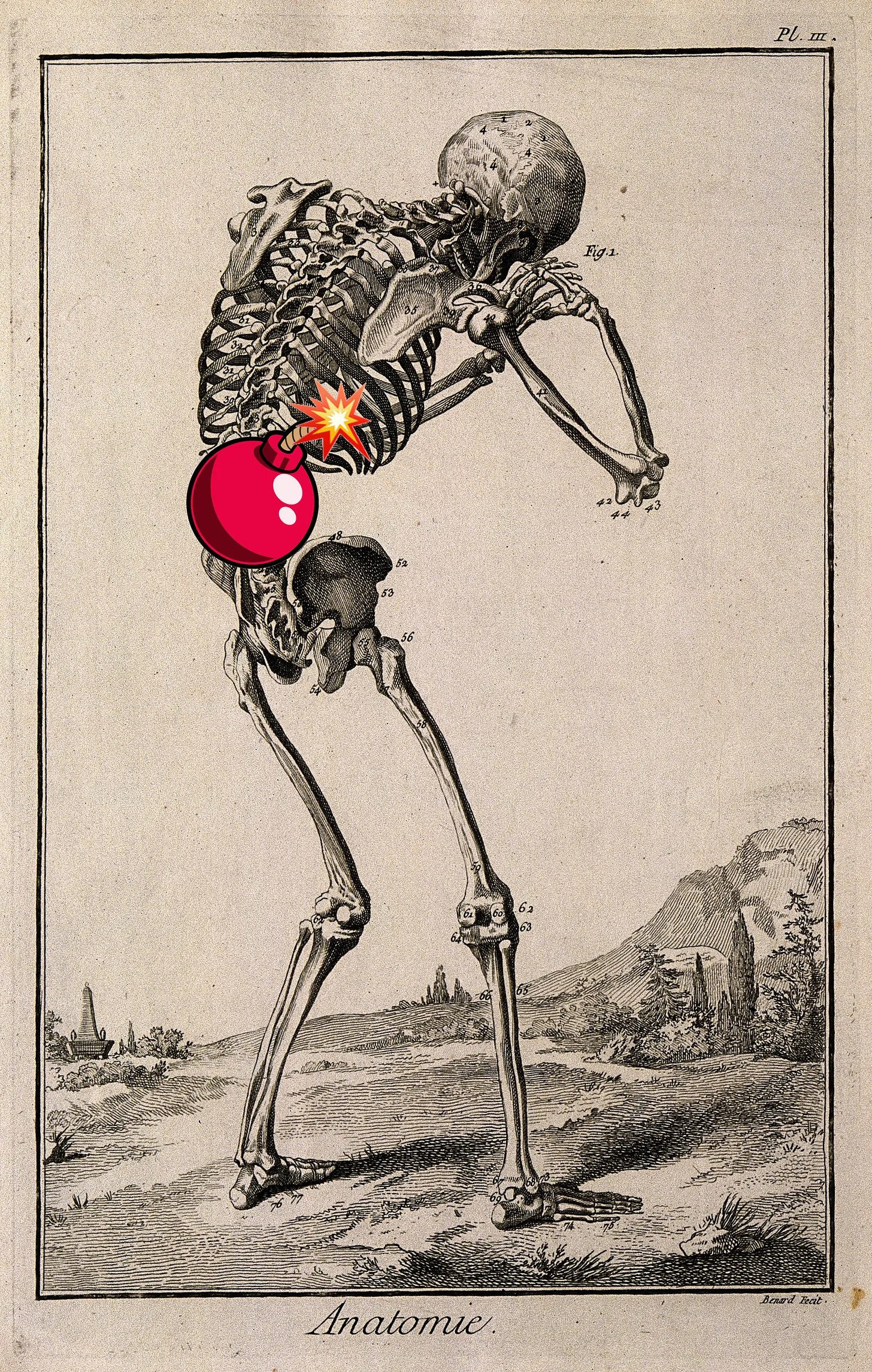
Holiday special: An advanced socialist dessert culture

In my years here, I have participated in passionate and heated debates on virtually all aspects of Chinese politics and society. What is the true nature of the government? Can the Chinese educational system produce creativity? Is the country rising or falling? All of these topics are capable of rending friendships, dividing rooms and spoiling a perfectly good dinner party. And yet none produces the same level of incandescent conflict as the question of whether or not China can do desserts.

China has an evident sweet-tooth. A walk down the candy aisle of any Chinese supermarket is trip to a tinsel-wrapped wonderland of waxy treats of infinite variety. True, I’m occasionally sucker-punched by spicy dried beef, which is often wrapped like candy, but a lot of it actually is candy, at least loosely defined. And what Chinese restaurant meal is complete without the fruit plate? If you’re lucky, the fruit plate might even be spouting dry-ice fog. Dinner and a show – what could be sweeter? One of the very first gifts I was given after starting work in China was a box of tangyuan. (I learned an important lesson: tangyuan are meant to be cooked. Hence the “tang“.) And the price people in this town will pay for Häagen-Dazs is second only to the price they will pay for ridiculous luxury watches, a phenomenon I’ve been able to study since our overheated local Häagen-Dazs shop is just around the corner from our local ridiculous-luxury-watch boutique.

It’s not just urban. The meanest, most wretched outhouse of a rural provision shop will somehow manage an ice-cream cooler, even if the refrigeration is powered by a mule on a treadmill or local orphans trudging around a giant “wheel-of-pain” like the one that turned a skinny waif into Arnold Schwarzenegger in “Conan the Barbarian.” I once had fresh made ice cream in a one-donkey town in Xinjiang in the foothills of the Pamir Mountains. It was awesome. Possibly because I was on the verge of heatstroke at the time.

Which raises a question: Does one need to be under some kind of physical duress to appreciate desserts in China? Admittedly, I have a roaring sweet tooth, apparently inherited from my father. I might my strap my own son into the wheel of pain if Häagen-Dazs Rum Raisin ice cream came out of the far end, especially given that it costs $13 a pint here. But ultimately, I’m open minded when it comes to Chinese desserts. I don’t just mean desserts obtained in China, but also desserts drawn from Chinese cuisine. Deep fried pumpkin bisuits. Red bean buns. Glutinous rice confections. Hot walnut soup. I’m pretty much OK with all of them. I still get bricks of blown honey when I walk through Qianmen, despite their proven ability to epoxy my jaws together for hours.

And yet the derision I’ve come in for from western friends is shocking. I could tell foreigners that my hobby is driving two-inch galvanized roofing nails through the skulls of live ferrets and they’d get less worked than they do when I tell them I like Chinese desserts. This leads me to ask: Is it them, or is it me? Are they right? Is that I’ve finally gone native and this is how its expressed itself? Instead of fleeing into the mountains of Yunnan to start a sustainable flax farm I’ve simply decided that its OK to eat black sesame paste? Or are they narrow minded conventionalists whose eyes are fogged with a lethal mix of Oreo dust and crème brûlée?

I won’t stand for that kind of cultural dessert imperialism myself. A century of hardship inculcates flexibility in confectionery.  Just as almost anything can be food in China (especially southern China), so can nearly anything be dessert. If all you have is mutton and molasses, by god you’re having molasses sweetened mutton floss for dessert.

But these ethnic treats take you only so far. Perhaps the most fertile ground lies in fusion desserts, where Chinese (or Asian) sensibilities collide with western ingredients or traditions. It’s unfair, but some places were blessed more by dessert providence than others. The French, at least after the enlightenment, had butter and flour and invented European pâtisserie. The Indonesians had palm sugar and coconut milk and invented cendol (and you haven’t lived until you’ve had a really good cendol). And China had…well, China had pluck. And legumes. But it’s been willing to recombine, which goes a long way. After all, what better illustrates the potential of modern China than the shaping of foreign ideas to suit Chinese circumstances? Hence the entirely respectable red-bean ice-cream stick. (Although the less said about the phallic corn-dildo ice cream stick the better.)

This trait reaches its zenith is in its ability to take components that under other circumstances I’d be utterly contemptuous of and fashion them into miracles. I experienced this during a recent dinner with my colleagues at a restaurant called Green Tea, a sort of upper-middlebrow Hangzhou place with pretensions. Dinner was fine. But when they got to dessert they earned a place in my heart forever.

When I moved to Singapore in 1995 I discovered the phenomenon that I came to think of as “Japanese-style” bakeries. If you live anywhere in Asia, you’ll recognize this genre of store as offering a range of vaguely sweet, soft white breads, sausage rolls and alarming-looking combinations of cheese and sugar. I’m expansive about desserts, but I’m a bread snob so I’ve always been completely disdainful of the entire genre. Seriously: My standards are high. I wept when the Fauchon in Shin Kong Place went out of business. They were priced and stocked for Marie Antoinette’s snottier cousin, but their breads were the best in Beijing as long as they were in business – and were the only thing I ever bought, which was symptomatic of their problem, I guess. Respectable French pâtisserie Comptoirs de France opened in Beijing four years ago and it took them until last month to come up with a loaf of bread I like (the sourdough).

I’m also reasonably discerning about Ice Cream. Longtime readers will know that Mrs. Imagethief is a nutritionist. Among the many things I’ve learned from her is this: if you must indulge, do it right and don’t fart around with the small-time stuff. If you’re going to have ice cream and suffer the attendant guilt, you might as well have good ice cream. Bi-Rite salted caramel*, for example, or Strauss Mint Chip. Who wants to pound out the extra kilometers just because you caved on a pint of Baxy? No one, that’s who. So, like Nancy Reagan, I just say no to the soft bread and flavorless ice cream.

Or, I did. Until that dinner at Green Tea.

My colleagues ordered the house specialty dessert, 面包诱惑, which means something like “bread temptation,” though I think “bread seduction” would be better. This is a cube of warm, freshly-baked, soft white bread, sliced into twenty-seven smaller cubes (three cubed – think about the geometry) with a scoop of generic vanilla ice cream melting on top. The heat from the bread melts the ice cream, which runs down into the cracks between the bread cubes and soaks into the crumb and, well, it’s just alchemy, dammit, because the result is gustatory lead transformed into dessert gold. I swear when the waitress carried the first one in the world turned to slow motion while “Thus Spoke Zarathustra” played in my head. You’ll know that as the music that Stanley Kubrick used at the beginning of “2001: A Space Odyssey” to introduce us to a twenty-minute segment of a featureless monolith teaching apes to beat each other to death, which says something important, though I’m not sure what.

It is the call of the Sirens rendered into cheap bread and ice cream because, speaking of monoliths and ape-like behavior, we ate three of these things. By which I mostly mean that I ate three of them. I am told that other restaurants have cribbed the idea, but that so far they all lack some…je ne sais quois. Worryingly, I’ve also learned that there is a branch of Green Tea around the corner from my house.

So, is it a Chinese dessert? Well, not really, I suppose. But it’s Chinese ingenuity applied to Western components with bang-up results. And if that isn’t domestic innovation, well then, what the hell is? The government should be proud.

Happy New Year to all readers from Imagethief.

面包诱惑

Domestic innovation.

*Not to be missed, next time you’re in San Francisco.

FacebookTwitterSina WeiboInstapaperRead It LaterLinkedInDiggStumbleUponShare
Tagged , , , | 6 Comments

The almighty soft-power princess bomb

Chinese soft-power is doomed.

I came to this conclusion a couple of weeks ago. The message was delivered in the form of a guy in a mouse suit on ice skates, and I received it loud and clear when Mrs. Imagethief and I took our son to see the Disney on Ice show at the Workers Gymnasium.

Having a child recalibrates your pop culture consumption habits. Before Zach was born I was all about Led Zeppelin and Michael Bay movies. Even better: Led Zeppelin in Michael Bay movies. Mrs. Imagethief, despite what she may say to you, was pretty much the same, which is why we got married. I have few pop culture pretensions. I have some jazz and such, which I wheel out for brunches because no one other than me wants to listen to “When the Levee Breaks” over mimosas and pancakes. But mostly I was about the loudness and explosions.

I still have my adolescent pleasures, but they’ve been crowded into the margins of my life by The Wiggles, Bob the Builder and Lightning McQueen. Mostly I’m OK with that. The Wiggles haven’t penetrated my workout mix yet, but I don’t have to leave the room when they’re on.

But going to a Disney on Ice show seemed like sailing across some kind of event horizon and beginning an unrecoverable, light-speed plummet into the black hole of pop culture, at the singularity of which one might find such atomized debris as Cop Rock, Kevin Federline and the XFL.

I have no objection to Disney per se. Back in my (nerd alert) laserdisc days I had a respectable assortment of neo-classic animated Disney films. Hakuna matata, dude. And I still go for Pixar stuff, although I suffer from the overexposure to Cars that afflicts every parent of a small boy. As they say, there are no toxins, only toxic doses, and I exceeded a toxic dose of Mater the tow truck quite some time ago. I’m just waiting for my gums to start bleeding.

No, what I resisted on some visceral level, as I might resist a box of candy-frosted frog eyeballs, was the idea of Disney on Ice. With the exception of hockey, which, like Michael Bay movies, is redeemed by violence and thuggery, it’s hard to think of any performance that is improved by putting it on ice. Conceivably NASCAR and political debates (especially if the candidates get hockey gear), but after that, what? Hamlet? Radiohead? Even Olympic figure skating is really just the speck of sanitized-for-mass-consumption flotsam at the top of the vast, reality-show swamp that is everything else having to do with professional figure skating. It’s the back room stuff they should be broadcasting. Remember Tonya Harding?

Despite the evidence supplied by my Michael Bay habit, I am sure some readers have concluded that I am some kind of rarefied cultural élite hopelessly distanced from the entertainments of normal people. After all, I spell “élite” with an “é.” But that’s cool. It’s my over-educated, west-coast leftnik pedigree, and I’ve come to terms with it and the conflicts that it has engendered. If I want to scoff at Disney on Ice over the chardonnay and New Yorker that I use to kill the time between pyrotechnic robot movies, I damned well will.

Nevertheless, I went to Disney on Ice because when you have kids what you and your chardonnay want goes straight into the bin and what your kids want pretty much becomes the yardstick by which all recreation is evaluated. Hence my chronic Matertoxosis. So off we went.

Actually, it was pretty good fun.

No, really. As a parent you gain a certain appreciation for anything that can hold a three-year-old’s attention for ninety minutes. But despite the many layers of corporatism wrapped around it, it’s hard not enjoy a multi-villain extravaganza featuring Cruella DeVille, Jafar, Maleficent and about four other fiends in colorful hats.  I also added Disney on Ice to my expanding list of oddball things that now make me get all teary.

But what really struck me was how successful the show was. They’d sold out the Worker’s Gymnasium and the seats were packed to the brim with Chinese kids, apparently all of whom had successfully argued their parents into springing for the light-up wands and inedible cosmo-sausage they were hawking at the mezzanine. Scalpers were doing a good trade on the way in. Whatever else is going on in Beijing, people will pony up for Disney on Ice.

The only content that referenced China was two minutes of Mulan, who ranks in the Disney pantheon about where Jar Jar Binks ranks in the Star Wars pantheon, if not below. The show was, however translated into Chinese. It’s a bit surreal watching Caucasian skaters in eye-popping stage makeup nonsense-lip-synching to Chinese Disney character voiceovers.

As an American it’s even weirder listening to Mickey Mouse himself in Chinese, not least because they nailed the voice. It was spooky. But also, much more than the Chinese audience, I think we Americans have internalized Mickey Mouse as an American symbol. I confess a bit of surprise that Mickey hasn’t replaced the eagle on the great seal of the United States of America. I have clear memories of a T-shirt from 1979 that said, “Hey, Iran!” and featured a cheery Mickey flipping the bird. I’m pretty sure it wasn’t an authorized product, but you never know. Could have been clever licensing. Give that mouse a shield, an olive branch and thirteen arrows and stand the hell back.

But the fact was that Chinese families in droves were handing over 180RMB a head before snacks, beverages and sparkly wands to be exposed to possibly the basest layer of American pop culture. Meanwhile, China is exporting Confucius institutes, ponderous Zhang Yimou films, and a billboard in Times Square that nobody seems to understand. It’s an asymmetrical battle, and probably only going to get more so now that SARFT may be taking steps (zh) to ensure that entertainment television is rendered as unprofitable as possible for broadcasters in China. Am I missing anything?

When Americans are paying $30 a pop to watch Xi Yangyang on ice, then I’ll know China is really getting somewhere. Until then, hakuna matata, dude.

Fairy godmother, can you make Chinese TV better?

Update:

China’s soft power issues were also the subject of last week’s Sinica podcast.

FacebookTwitterSina WeiboInstapaperRead It LaterLinkedInDiggStumbleUponShare
Tagged , , , | 10 Comments

Remembering Talk Talk China and the “Cycle of Funk”

A lot has changed in the China blogosphere since I first put (virtual) pen to paper for Imagethief in June, 2004. I can’t think of many blogs that are still around from those days in anything like their original form. The Peking Duck and John Pasden’s Sinosplice come to mind. Even the venerable Danwei has undergone a transformation. In general, the renewal is good. Jeremy Goldkorn (of Danwei), Kaiser Kuo and I talked about this on Sinica in July 2010, when we celebrated the death –and rebirth– of the China blog.

But I thought it was worth revisiting China blog history today because it is, to the best of my knowledge, the fifth anniversary of the shuttering of Talk Talk China. This was the brain-droppings of three anonymous, long-time China expats who went by the nommes-du-snark of Dan, Dawanr and DD (no, I don’t know who they were). For about a year and a half, in 2005 and 2006 it was consistently the funniest, angriest China blog out there, and a wicked channel for the collected frustrations and gripes of the China expat community. This being the days before Twitter vacuumed up “the conversation”, it also had thermonuclear comment threads, as you’d expect.

I remember Talk Talk China not just because of the anniversary of its closing, but because of one post in particular, called “The Cycle of Funk.” It may be to this day the truest thing I have ever read regarding the experience of being a foreigner in China. While many of the rough edges of expat life here have been whittled away by the transformation of Beijing into fairly cosmopolitan city, enough remain so that I find myself thinking of this post pretty regularly.

But also, there has been a general shift in mood among much of the expat community in the past two years, as many foreigners I thought were here for the duration have started talking openly about life beyond China. This is purely anecdotal, and I have no data to back it up, but it’s enough of a trend that several other people I know have picked up on it. Rich Brubaker of the long running “All Roads Lead to China” business blog wrote a post touching on this just yesterday. It would seem that the “cycle of funk” is not just a personal thing, but perhaps a social one.

Talk Talk China is off the air, but thanks to the Internet Archive’s “Wayback Machine” much of the oeuvre, including the Cycle of Funk is still online. However, it is a pain to nut out. As a public service, and totally without permission, I am going to take the liberty of reposting the Cycle of Funk here. If Dan, Dawanr or DD want to send me a cease-and-desist, they know where to find me:

The Cycle of Funk
May 24th, 2006 by Dan

Y’know, not every day is a bad China day. Sure, at TTC this is the case but for most people, a bad China day occurs only every now and then. However, for my entire time in China, I have noticed a particular trend among all laowai that I call “The cycle of funk”. No matter how much you love China, the little things that bother you will start to gather in a little ball of rage deep within you and sooner or later that ball of hate and spite needs to be released (often obnoxiously). That’s fine. It’s understandable. When it gets to that point no one can tell you whether or not your rage is justified. What is important to note is that this clearly comes and goes in a cycle. I imagine for most people the frequency and intensity of maximum funk decreases with time however the length of maximum funk and the intensity of said funk will likely vary widely for each person.

It is important to note that, in most cases, maximum funk is initiated not by some massive occurrence but usually by some small innocuous thing. Basically, you’re already at the edge and it is the very next thing that sets you off.

Remember, when you’re having a supremely awful bad China day and you are trying to tear the roof off the sucker, try to find where you are in your funk cycle. If you have obtained maximum funk you can relax knowing that it ain’t getting any worse and it will only get better…at least until the next funk hits.

After running less than two years Talk Talk China wound up pretty suddenly for reasons I don’t recall. Sinocidal tried to carry the snark-bucket for a while, but never played at the same level and it has long since gone by the wayside. These days I seem to carry the burden of being the “funny” China blogger (although George Ding of The Hypermodern and now The Beijinger’s back page is giving me a run for my money). Anyway, I’ve thoroughly shirked this burden, as any glance at post count for the past year or two demonstrates. But when they were at their best, the guys behind Talk Talk China were funnier and definitely more succinct than I was. And let’s face it, we need all the humor we can get.

So I commemorate five years since the end of Talk Talk China. For what it’s worth, I’m not in danger of leaving China any time soon. It’s been pretty good to me and my family. Nor am I particularly grouchy about it at this moment. But as anyone who has read Imagethief for any length of time knows, I’d be lying if I told you I was immune to the cycle of funk. And so would you.

Razor wit?

FacebookTwitterSina WeiboInstapaperRead It LaterLinkedInDiggStumbleUponShare
Tagged , , , , | 9 Comments

Missing children and how parenthood killed my chances of being a manly-man

Stick with me here, because I want to plug Charlie Custer’s work-in-progress documentary, Living with Dead Hearts, but before I do I need to go into some history.

It’s clear in hindsight that I was never really meant to be a manly-man, in the strict sense of the word. When future archeologists sift through the remains of our era, no one’s going to confuse my jawbone for, say, Ryan Reynolds’. But I’m trim, reasonably athletic and spend some time in the gym.

Still, peer into the history and it’s not hard to spot the aura of geekdom. When I went out for baseball in late elementary school (an everyone-gets-to-play phase of interscholastic sports) I was promptly exiled to right field, which is where you send the kid with headgear that you want to keep out of harm’s way. In my few innings in play there was exactly one fly popped my way. It dropped behind me while I squinted anxiously at the heavens. In high school, having come to terms with my identity, I ran comfortably with the Dungeons & Dragons crowd rather than the jocks. I actually wore an anorak and a full-length Tom Baker-era Doctor Who scarf through my sophomore year. Needless to day, I wasn’t known as a ladies’ man.

But whatever else, I wasn’t a crier. Until, that is, my son, Zachary, was born.

By the time that happened I was a good twenty years into my masculine rehabilitation, having graduated to rock bands in college and demanding technical scuba diving and physical fitness later in life. The actual geekiness was still there, but I came of age in an era and a place – Silicon Valley – where intellectual geekiness is socially acceptable, especially if it’s wrapped in a semi-presentable package rather than, say, an anorak.

So there I was, secure and comfortable in early middle-age respectable geek masculinity, when Zach came along in 2008. Fatherhood rewires you in many subtle ways. For instance, I no longer feel compelled to ask the stewardesses to open the bomb-bay doors when there’s a child shrieking in the same airplane cabin as me. I’ve gained a masterful, scholarly command of the Thomas the Tank Engine, Chuggington and Dinosaur Train canons. And I’ve developed a level of easy comfort with other people’s bodily functions that I thought was the sole preserve of intensive-care nurses, night-soil collectors and coprophiliacs.

But I’ve also become a crier. As near as I can figure there is some kind of hormonal recalibration that goes on in fathers, probably to help ensure you empathize with your child in order to reduce the chances of, say, clubbing him to death with an antelope thigh bone when he does any of the zillions of things that really annoy you. But a side effect of that sensible evolutionary step is this emotional trigger that makes me choke up at completely inappropriate times.

I’m serious. I mean, forget all the Old Yeller bullshit. We all cried then. I get damp cheeks for nothing these days. Street musicians, public service announcements, that moment in Star Wars when Threepio abandons R2D2 in the desert, bus shelter advertisements, whatever. Any cheap emotional trick and I’ve suddenly, you know, got something in my eye. I misted up watching Transformers 3 because I thought the compositing was good.

This is why I’m a little alarmed at the prospect of watching Charlie Custer’s upcoming documentary, Living With Dead Hearts. If Michael Bay’s effects shots can leave me honking into my tissue in a Chinese movie theater, god only knows what a heartbreaking documentary about actual kidnapped children in China will do. That empathic circuit that fatherhood gave me makes it impossible for me to watch that kind thing without imagining the same thing happening to my own little boy. And Zach missing is absolutely the worst thing that I can possibly imagine. If Zach was missing I know I would spend every single waking second wondering if he were OK? Hungry? Afraid? Injured? Crying somewhere? Just thinking about it now is making my sinuses swell, which is inconvenient since I’m sitting in Aseana economy class while I write this.

But that empathy is also why I made a modest (and I do mean modest) donation into Charlie’s Kickstarter fund for the project when he first started out, a few months ago. Charlie is a longtime China resident, fellow Sinica podcast contributor, Penn-Olson China editor, and author of the excellent Chinageeks blog. I think Living With Dead Hearts is a great project, and Charlie’s doing it on a shoestring. He recently posted a trailer and appeal for more donations to fund completion, and I’m happy to re-post it here. I encourage you to watch and share it with anyone else you think might be interested either in supporting the project, or just seeing it when it’s done.

But if you’re a parent, keep a hanky handy.

See also:

Lost Laowai blog’s interview with Charlie Custer.

FacebookTwitterSina WeiboInstapaperRead It LaterLinkedInDiggStumbleUponShare
Tagged , , , , | 6 Comments

Sinica: The gutter oil podcast (and props from City Weekend!)

I was back on Sinica this week for a lively discussion of China’s serial and apparently unsolvable food quality problems as well as SARFT’s recent ban on Hunan TV’s smash hit performance competition show, “Super Girl.” As usual, the guests were superb, leaving me in my usual role of comic relief*. The blurb:

“It was really distressing for me to talk to a WHO expert and have him tell me, ‘I have no idea where it’s safe to buy food here….’” - Sharon LaFraniere.

When Luoyang journalist Li Xiang broke China’s latest food scandal last week, exposing the industrial reprocessing and resale of “gutter oil” in a massive operation allegedly concealed by government officials in Henan, the news sparked yet more public outrage over China’s food safety record, while triggering what seems to have been brutal retaliation by the producers, who are suspected of ordering the killing of Li earlier this week in what is being treated by the authorities as a murder-robbery.

As awareness has spread that the Chinese government is hoarding organic food for its own consumption, the question of food safety has never been a more sensitive public topic, which is why this week on Sinica we’re pleased to welcome Barbara Demick of the Los Angeles Times and Sharon LaFraniere of the New York Times. Both excellent China watchers doing investigative work on China’s growing food scandals, Barbara and Sharon join Sinica regulars Jeremy Goldkorn and Will Moss to bring us the inside scoop on how bad the situation really is and why food safety is so difficult for China to get right.

Get the links to the show from Popup Chinese, download the MP3 here, or search “Sinica” on iTunes. Also, City Weekend just named Sinica the best China podcast. All credit to Kaiser and Jeremy, but I’m thrilled to be playing a regular part.

*Alright, I’m not entirely the Ed McMahon of Sinica. I’ve written extensively about the communication and trust issues surrounding the food industry in China. You may wish to browse the following from my archives:


What? No fries?


FacebookTwitterSina WeiboInstapaperRead It LaterLinkedInDiggStumbleUponShare
Tagged , , , , , | Comments Off

Did Han Han seriously dis Barack Obama?

There was a minor flutter on the China-Twittersphere a day or two ago after Channel News Asia posted a video of a lengthy interview with Chinese uber-blogger/novelist/race-car driver/heartthrob Han Han. It’s worth watching the whole discussion, embedded below, which winds through a number of interesting topics including whether or not Chinese Internet users are pining for Twitter and Facebook (no), the impact of social media in China (easier hook-ups, among other things), and how Han Han manages to avoid falling afoul of the authorities.

The thing that got people tweeting, however, was a brief discussion of why Han Han declined an invitation for a dialogue with US President Barack Obama. Here’s the whole exchange, using the subtitles that Channel News Asia provided for Han Han’s remarks, and a little bit of annotation from me in brackets:

Q: Why did you turn down that invitation to have a dialogue session with Barack Obama?

A: First of all, I think some US Presidents, such as Bill Clinton, Obama and George W. Bush are not bad. When I was invited to have a dialogue with Barack Obama I was in Zhejiang, taking part in a car racing competition. If I were to go for this dialogue session, I would have had to wake up early, which I did not want to do. [Han Han adds, "I don't like getting up early."]

Q: You do admire Barack Obama. Don’t you see any value in perhaps getting up early and speaking with him?

A: It’s not worth it. He’s a man.

In fact, what Han Han said at the end was, “I don’t know. He’s a man.” (我不知道。他是男。) “It’s not worth it,” seems like a somewhat subjective approach to the subtitling, although perhaps still legit since, on the evidence, it clearly wasn’t worth it for Han Han to meet Obama. ”You stay classy, Han Han!”* was a typical sentiment from foreign Twitterers in response. And it does seem like kind of a dis. I mean, Barack Obama may be having his troubles back home, but he’s still POTUS and this guy is just some race-car-driver blogger, right? I mean, where does he get off?

I once referred to Han Han as representing “dissidence-lite” (see below), but I have a hard time giving him smack about that exchange. Whatever else Han Han may be, he is clearly a masterful communicator. As comes through in this interview, he’s also well aware of the line he walks in being a very public and influential critic of Chinese society and politics. Given the inherently sensitive nature of his gig, Han Han’s decision not to meet with Obama seems pretty understandable. He’s already incredibly famous, wealthy and influential. What’s the upside of a meeting with Obama for him? Warm fuzzies? A photo for his mantel?

Conversely, what’s the downside risk of a public meeting with the president? Among other things, increasing scrutiny from the authorities and possibly looking like an American pet to his fans in China, not all of whom may have the same admiration for recent American presidents that Han Han confessed in that exchange.

I speculate here, but it seems to me that he would have realized he had little to gain from saying publicly that meeting the president would have been risky for him and offered few benefits, so instead he gave an “in character” reply that tweaked foreigners but probably went down just fine with any of his fans who happened to see that interview (although perhaps less well with his wife, although one assumes she’s come to terms with his persona). He certainly appears to be thinking pretty carefully about his responses during that Q&A, and not just tossing off jerky remarks. Only Han Han himself knows for sure, and perhaps he just couldn’t be bothered to get up early to meet someone who wasn’t a hot chick draped across a race car. But it doesn’t really seem that way.

Now, if Rui Chenggang had said it…

Via Jeremy Goldkorn.

Previously:

Back in April 2010, in the third installment of the then new Sinica podcast, we discussed and compared Ai Weiwei and Han Han (hence my “dissidence-lite” comment).

See also:

*If you don’t spot that as ironic, watch Will Ferrell’s “Anchorman.”

FacebookTwitterSina WeiboInstapaperRead It LaterLinkedInDiggStumbleUponShare
Tagged , , , , | 2 Comments

Sinica: Libya, Zhao Liang sells out, and slaking North China’s terrible thirst

I was back on Sinica this week for our discussion on China’s reaction to the Libya uprising, the evolving work of documentary film-maker Zhao Liang, and the state of the immense south-north water diversion project. We didn’t have too much to offer on Libya, and the story is still unfolding, but the Zhao Liang and water discussions were both very interesting. Zhao Liang made several hard-hitting documentaries outside the official Chinese cultural system, including one about the difficult life of petitioners in China and one about Chinese police in the border town of Dandong. More recently, he cooperated with the authorities on an AIDS documentary, a turn that earned him an uncomfortable confrontation with his friend, Ai Weiwei. The water diversion project is perhaps the largest public works project in history, four times the cost of the Three Gorges dam and requiring relocation of twice as many people, yet it has somehow failed to ignite the public imagination in the same way as the dam did.

I co-hosted with Kaiser and we were joined by journalists Kathleen McLaughlin, of the Global Post and elsewhere, and Ed Wong of the New York Times. Ed recently wrote a superb story about Zhao Liang and has also written about the water diversion project (with an unforgettable lede). Kathleen’s recent stories about the water diversion project will go to print soon, and I’ll put links up when I have them. Meanwhile, enjoy the excellent discussion, available from Popup Chinese or iTunes (search Sinica). The standalone MP3 file is here.

Update

Kathleen’s articles:


Not nearly enough...

FacebookTwitterSina WeiboInstapaperRead It LaterLinkedInDiggStumbleUponShare
Tagged , , , , , , | Comments Off

I can haz international funds?

After seven years and change in China it’s hard not to come to the conclusion that the purpose of the Chinese banking system is to keep you from doing anything useful with your money. It is widely said that the Railway Ministry in China is best surviving example of a reactionary Communist bureaucracy, and after recent events it’s hard to argue with that. But in my experience the big, state-owned banks are giving the Railway bureaucrats a run for their money.

Many people speak in (relatively) glowing terms of the service provided by some of the newer commercial banks, such as China Merchants Bank or Bank of Communications. I have no experience with that, because both of the companies I have worked for in China have limited my options for paycheck deposit to two of the “big four” state banks (the ones Gordon Chang is always telling people are about to implode). Yes, I suppose I could open an account at one of the smaller banks and then move my paycheck every month, but the thought of having any more Chinese bank accounts than I absolutely need makes my liver spasm. Due to a bank switch by my old company, my year in Shanghai, the fact that Chinese banks don’t actually function in any recognized sense of the word “nationally,” and their conviction that joint accounts are some kind of rightist plot,  I’ve already left a daisy-chain of zombie accounts scattered across the country. Each has about RMB2 in it and no doubt at least one will be used to hijack my identity at some point in the future.

I would bulldoze a field of spaniel puppies and nursery schoolgirls in fairy costumes to avoid a trip to the bank. Every trip to a big, state-owned bank is like the scene from the end of Beetlejuice where Michael Keaton is in the waiting room for hell with a ten-digit ticket while they serve number 14. It’s not so much the magnitude of the numbers as the glacial pace of the transactions. Teller window service numbers increment like Neptunian orbits – about one a century. If there are even two windows serving general business it’s your lucky day, and every transaction seems to involve a mortgage application in octuplicate and the structuring of some kind of derivative for a grandmother who speaks only a Guangxi provincial dialect, or the hand-counting of RMB100,000 in cash pulled from a man-bag. Surely no simple, retail banking transaction could take a freaking hour.

But of course it could. I myself have been the jerk at the window on many an occasion, while some pensioner laotou at the head of the line pisses and moans loudly about drag-ass foreigners tying up the teller windows with their sketchy international transactions. It’s not that I want the transaction to take forever. I have much better things to be doing than sitting at a teller window, like pulling out my own toenails with needlenose pliers or eating a sandwich made of Wonder Bread and used crankcase grease. But the system moves at the pace it moves at, which is roughly the same pace as continental drift. You know how in 150 million years the San Francisco Bay Area will be in Alaska? That’s the exact same time your transaction will be complete.

Given that using the ATM aside there is no such thing as a simple transaction at a Chinese bank, by far the most confounding thing I’ve had to do is to change large amounts of renminbi into foreign currency. Almost six years ago the CFO of my previous employer sat me down and explained that it would be in my best interest to switch my then US dollar salary into renminbi. Damn if he wasn’t right about that, because in the intervening years the renminbi has kicked the S&P500′s ass as an investment. In US dollar terms I’ve made out nicely since the renminbi started to appreciate back in ’05. Unfortunately my long-term savings currency is the Singapore dollar, which is basically flat in RMB terms, but I’m still killing it on the US dollar. Someday when I’m deported from the continent of Asia for writing uppity blogs that will come in useful.

The catch, of course, is that the renminbi isn’t freely convertible. Oh, sure, it’s nominally convertible, but only in the same sense that nominally I could become a Navy SEAL. The process is designed to be painful enough to discourage me from actually trying in order to save everyone the trouble and embarrassment of watching me fail miserably, or die. That’s why over the past five years I have subjected myself to this process a grand total of twice. The last time was in 2009. The two years since then had both enabled me to accumulate a fair wad of renminbi savings and had dulled my memory of events just enough for trying a conversion to seem reasonable again.

A sensible man suggested that I leave everything in renminbi. After all, the renminbi is still appreciating in US dollar terms, and it seems unlikely that the government will allow any of the big four banks to submarine. But the problem is that as useful as the renminbi is for settling bills in China (where a zero is added to my rent approximately every six months), it is completely illiquid as far as the rest of the world goes. Should I have a sudden need for money overseas, my accumulated renminbi savings in China would be worth about as much as a cargo container full of used cat litter. Interesting perhaps, but hard to pass off as legal tender. And the only thing more horrifying than trying a large-scale personal currency conversion in China is trying a large-scale personal currency conversion in China in a hurry.

I set about gathering the necessary documentation. This included a chopped copy of my work contract, a chopped income statement from my company indicating how much I had been paid in the period covering the income I wished to exchange, and a receipt from the personal income tax office serving my employer that certified the payment of taxes assessed on the income for that period. Plus my passport with current visa and my employment permit (a small, passport-like booklet), which, although I am officially required to carry it at all times, has never been used for any other purpose in all my years in China.

My first attempt was made at my bank branch in Wangjing. It ended in crushing failure when, after waiting an hour to be served, the bank informed me that my documentation would permit me to remit only 15% of the amount I actually wanted to send. Some squinting at the forms revealed that my HR department had procured the tax receipts for only a part of my tenure with the company, something I had somehow missed.

There was, of course, a complexity. Since joining Motorola the company had split, and I had been employed by two different corporate entities in my time there. This required another round of documentation wrangling as I gathered the various contractual addenda reflecting my transfer and a new and more comprehensive set of tax receipts. Then, just to be safe and because the income I wanted to remit extended far enough back, I decided it would be sensible to also assemble the documentation from my previous job. I had most of this from my previous remittance in 2009, but I needed updated tax receipts. So I went to down to Oriental Plaza with my identification and contracts to get the receipts from the appropriate office.

There was, of course, another complexity. I discovered that somehow the Oriental Plaza personal income tax bureau had a typo in my name, listing me as Dillon W. Moss instead of the correct Diccon W. Moss. Part of me wanted to laugh, as the Chinese tax bureau had suddenly transported me back to junior high-school, where the following was a typical first-roll-call-of-the-year experience:

Teacher: Janet Martinez?
Janet: Here!
Teacher: Shawn Meacham?
Shawn: Here!
Teacher (hesitantly): Um. Uh. Dillon? Dillon Moss?
Me: It’s Diccon.
Teacher (incredulous): Deacon?
Me: Diccon. Short “i”.
Teacher: “Diccon?”
Me: Yeah.
Teacher: Diccon William Moss?
Me (to the sound of tittering from other students): Yeah.
Teacher: Oh. (Pause.) Are you sure?

Repeat in next class, and so on. That’s why I started using my middle name.

I get why a junior high teacher in Westwood would assume that “Diccon” is a typo for “Dillon”, but how would a Chinese person know that “Diccon” is unusual any more than a typical American would know that 张艺谋 is a real Chinese name and 草泥马 is a rude pun? It would have been funny except I knew from experience that the bank would deny me for so much as a molecule out of place on my paperwork –This molecule is void! No cash for you! NEXT!–, let alone a suspicious misspelling of my name that might indicate fraud or attempted financing of international terrorism.

Fixing my name in the tax records required nothing so simple as me showing up with my ID or some other appropriate documentation. Instead, my prior employer had to re-file all the paperwork from the period covered with my correct name. This took a month, during which I entertained dark visions of catastrophe detonating my Chinese savings. It wasn’t any more likely then than it was the prior two years, but that’s how the neurotic mind works. Now I can’t move my money at all? Weimar Republic, here we come!

 Eventually I got the corrected forms. In the end this is what I took to the bank:

  • Three chopped employment contracts
  • Two chopped income statements
  • Five tax bureau receipts covering different time periods and corporate entities
  • My savings passbook (they still use those here)
  • My passport (required for basically every transaction at a Chinese bank)
  • My employment permit
  • Two bank cards (just to be sure…)

I had everything in a big manila envelope that I carried around clutched to my chest like a teenage schoolgirl. I felt like I was applying for citizenship.

This system is needlessly complex. Many foreigners I know have no idea how to exchange large amounts of currency and no two expats I polled gave me the same verdict on the current state of requirements for buying large amounts foreign currency with legitimate income. Indeed, some foreigners I know have given up altogether and are simply waiting for China to open its capital account or have taken to flying cash out of the country (risky) and using money changers on the far end. Did you know that a money changer in Singapore will exchange 200,000 RMB for you if you give him a day’s notice? Now you do.

The system is so complex that even the bank seems to wrestle with it. At the Oriental Plaza branch of my bank, where I finally completed the transaction, there were several alarming huddles behind the counter where tellers and managers conferred about the paperwork. I am usually pretty good at handling bank transactions in Chinese, but this time I’d brought a Chinese friend along just in case. If there is one thing that I know can break my Chinese it’s an unexpected clot of bank bureaucracy. I kept looking at her and asking, “Should I worry now?” She comforted me by saying, “Maybe. It’s hard to tell.”

In the end they chopped all my applications for purchasing foreign currency and wiring it to Singapore and did that worrying thing where they bulldog-clip your completed paperwork together and toss it on a huge stack of similar paperwork. This the signal for you to depart and, if you’re me, compulsively check your online banking to see if the money appears at the far end, or if rats ate the paperwork before the data-entry trolls put it into the Babbage engine in the bank’s basement. 48 hours later, the correct amount of Singapore dollars appeared in my bank in Singapore. The whole process had taken three months to complete. I felt like running through the streets naked except for a party hat and an open bottle of Veuve Cliquot, but foreigners have been deported for much less so I settled for deep sigh of relief.

But not too deep. In 2013 I’ll have to do it again.

Note: The week I completed that transaction was a good one for the resolution of long-standing financial problems. I also received a refund check from the IRS for several thousand dollars following the incorrect assessment of extra taxes from 2009. It took me 13 months to get that check. But at least, unlike a Chinese bank account, the IRS paid a reasonable interest rate on the money.

I can haz international funds?

Really?

FacebookTwitterSina WeiboInstapaperRead It LaterLinkedInDiggStumbleUponShare
Tagged , , , | 43 Comments

The best of the Imagethief archives restored at last

Since starting Imagethief in June, 2004 I’ve written about 1500 posts. Something like 1300 of them vanished from the Internet when a server hosting the pre-2010 version of Imagethief crashed catastrophically early last year. For about 1200 of those posts it was no great loss. In 2011 no one really needs to see some old link to a miscellaneous New York Times article bitching about the Iraq war ca. 2006. That’s what we have Twitter for now.

But among the dreck were 100 or so posts that were particularly meaningful to me, had been important in establishing Imagethief, or that documented important events that happened during my years in China. I had offline archives of everything, and for a year and I half I had a loose plan to restore the best bits of the archives. The extent of that plan was something like this: “One of these days, I should really restore those archives. But now I’m going to watch 30 Rock.”

Last month another crash, involving the WordPress template I’ve been using for the past year and a half, gave me a reason to redesign the site again. A redesign begged for some new content. And, frankly, combing through the archives and restoring old posts just seemed easier than the hard slog of actually writing something original. So I’ve gone through and cherry-picked about 100 of the best posts from before the meltdown of the old server and re-posted them with their original date stamps. Unfortunately, all the old comments and inbound links are lost. Or maybe it’s not so unfortunate since that consigns a lot of troll droppings to oblivion. But everything else is there, filed under the “Best of Imagethief” tab, above. I’ve also annotated the links to all the posts to make them easy to browse.  ”Best of Imagethief” sounds a little presumptuous, but it fits into the available space better than, “Slightly better than what we all agree is the worst of Imagethief.” If anyone wants the worst of Imagethief, e-mail me and I’ll send you everything in a PDF. It’s about 1200 pages, so keep a weekend free.

Below are the categories I sorted the archives into. This is the same as what’s on the top-level “best-of” page. Enjoy! Or don’t, but at least it gives Google something to crawl.

If you read just one…
These are my twenty most essential posts, representing the most condensed possible digest of Imagethief since 2004 across all the categories but travelogue. These are chosen largely because they’re my personal favorites, but all were also popular. If you’re going to read just one or two, read one of these.

Humor, Rants and Memoirs
These are posts about the idiosyncrasies and frustrations of life in China, raising a family, and other random things that I experienced or noticed and was compelled to write or rant about. I was compelled to write about a lot. There are more posts here than in any other category.

Travelogue
Travels in China and the region, mostly rendered as video travelogues shot on various low-rent devices and edited with at least some care, but also some written.

Public Relations, Business and Technology
This is one portion of my “professional” posts, covering the business and challenges of PR and communication in China, and analyzing major crises and events such as the dairy industry’s melamine catastrophe. This also includes much of my discussion of the woes of American Internet firms in China, as well as technology and Internet censorship. Posts that tilt more toward government affairs than business are filed under “Propaganda, Politics and Public Affairs,” below.

Propaganda, Politics and Public Affairs
This is one portion of my “professional” posts, covering government affairs, public opinion, media, censorship, propaganda and related issued. This includes many of my Olympic post as well as soft-power issues. Posts that tilt more toward straight business or technology issues are filed under “Public relations, business and technology,” above, although it’s a blurry line in China.

Miscellany
These are posts that didn’t obviously fit into any other category. After 2007 I had a clearer idea of the blog’s voice and most things I wrote fit into one of the other categories. But between 2004 and 2007 I generated a few urchin posts, some of which were nevertheless worth keeping alive.

FacebookTwitterSina WeiboInstapaperRead It LaterLinkedInDiggStumbleUponShare
Tagged | Comments Off

Sinica returns! Train wrecks, Weibo and the enigma of David Sedaris

After a couple of months off, Sinica was back last week. It was hard to pass up something as interesting as the high-speed rail disaster on the Wenzhou line, a story that is still unfolding and that I suspect we may return to at some point. The rail accident has been a huge topic on Weibo, even as mainstream coverage has been throttled back by the government over the last couple of days, and we talked a bit about the impact and fortunes of Weibo, especially with regards to the accident. Finally, and on a somewhat lighter note, we examined the wit and wisdom of David Sedaris, who incurred the wrath of the China expat blogosphere with an essay expressing his distain of Chinese food and sanitation habits (coincidentally both occasional topics of this blog).

The show was hosted by Sinica impresario Kaiser Kuo and rounded out by usual suspects Jeremy Goldkorn, Charlie Custer, Mary Kay Magistad and yours truly. The show page is here and the direct MP3 download is here. You can also subscribe on iTunes by searching Sinica or Popup Chinese. Enjoy.

Not as painful as Sedaris' essay.

FacebookTwitterSina WeiboInstapaperRead It LaterLinkedInDiggStumbleUponShare
Tagged , , , , , , , , | Comments Off