Escalation

Getting from point A to point B in Beijing, assuming point A and B aren’t right next to each other, is one of the daily adventures that makes life here so interesting. Aside from a certain hyper-linear approach to walking that can make the most casual stroll an exercise in ducking and weaving and the well-documented board-first/exit second approach to subways and elevators, there is also the near mystical ability of Chinese people to suddenly stop at choke points such as doorways. Hilarity ensues.

Nowhere is this tendency more infuriating than at the tops and bottoms of escalators. I work in an office tower atop a glitzy supermall awash in escalators. My commute requires no less than three escalator rides from the subway station to the lift lobby. Without fail someone will be standing smack at the top of one of those escalators wondering whether to get breakfast from Dairy Queen or Bread Talk while angry people pile up behind. This is far more obnoxious than the local tendency to stand two-abreast and leave no lane for walking on the elevator. That’s obstructive but at least it’s not dangerous.

I am most likely to be riding escalators when I am on my way to work or back home from work. Neither is a time when I am blessed with surplus patience, and the sight of a teenage couple parked on the elevator landing wondering which retail paradise or food-service outlet to avail themselves of makes me want to lower my shoulder and blow through them like Ronnie Lott.

At this point I must digress and explain something of the phenomenon that was Ronnie Lott. If you didn’t grow up in San Francisco in the 1980s or are not huge American football fan, you probably have no idea who Ronnie Lott is. That’s a shame, because Ronnie was one of the most exciting professional athletes ever to grace a television near you. Ronnie was a free safety for the San Francisco Forty-Niners back when the  Niners were the most feared American football team in the league. Ronnie played three different positions well, but he made his career as a free safety. For those who don’t understand American football, I’ll explain. One of the ways you can advance the ball in football is by making a forward pass, literally throwing the ball down the field where, hopefully, someone on the same team will catch it.

This can be surprisingly difficult, not least because there are usually several extremely large and freakishly fast defenders roaming around the “backfield” (the area where the ball is likely to be caught) waiting to dispense pain upon anyone who dares to try to catch a lofted ball. Free safeties are one of those defenders, and the best of them have an uncanny ability to tell how a play will unfold and to be in the right place to dispense that pain. For more than a decade, Ronnie Lott was the NFL’s chief backfield pain dispenser.

Although smart, tough and fast, much of Ronnie’s effectiveness was psychological. A receiver –the guy trying to catch the ball– would be streaking down the field when a pass would head his way. Man, he was open and it was a perfect throw. He could smell the goal line already. He’d reach out his arms to pull in the pass, but just as his fingertips were brushing the pigskin BLAM! All 203 pounds of Ronnie would come blazing out of nowhere and lay into the poor schmoe’s unprotected, stretched-out ribs at a full-on sprint. Some dudes turned 360 degree somersaults in the air on taking hits like that from Ronnie. The football would go bouncing off down the field and a bunch of guys with polo shirts and black bags would run onto the field to administer smelling salts and ask the dazed receiver what day of the week it was.

That’s when the psychological effect would take over. Ronnie would terrorize the backfield for a while, and then receivers would start to terrorize themselves. A receiver would be streaking down the field again, another perfect looking pass would float his way and, just as he was reaching for it, you would see the thought float through his head: Oh shit! Where’s Ronnie? He’d take his eye off the ball for a split second to find out where Ronnie was and miss the catch. And, as often as not, Ronnie was right there anyway, KAPOW!Ecstasy.

That’s the effect I want to have on people who stop at the tops or bottoms of escalators. I want to lower my shoulder and set a few painful examples. I want the teenage guy and his spindly girlfriend blocking the landing to think, “Dairy Queen or Bread Talk? Oh shit! Where’s Will?” KABLAM! Only my natural restraint and lack of shoulder pads keeps me from living this fantasy. But someday that restraint will break.

I used to also be much more annoyed by the behavior of Beijingers getting onto escalators as well as off of them. I don’t break stride when I walk onto an escalator and I expect other people to behave the same way. It’s easy enough to shift a few inches backward or forward if you feel the step splitting beneath your feet. Nevertheless, I see a lot of people here stopping at the foot of escalators and carefully and deliberately stepping onto them. But after careful observation I’ve noticed a number of western tourists doing the same thing, so it’s not just a Chinese thing. And, in fairness to the Chinese, the only person I’ve ever seen who utterly failed to manage an escalator was an Australian woman at the airport who appeared to have had a few too many mini-bottles of Johnnie Walker on her flight up from Sydney. She simply toppled over backward and would have been on her way to Beijing United with a “V” shaped groove across the back of her skull had she not fortunately landed on a large suitcase. It took a frantic effort by me and one of her friends to get her upright before we reached the landing. Perhaps the cautious, Chinese approach is sensible. Of course, escalators also have a somewhat shorter tradition here than they do in the west. An article in The Economist (subscription) from last December pointed out that even in the west…

…[Escalators] were initially regarded as terrifying: when Harrods, a London department store, introduced its first escalator in 1898, smelling salts and brandy were provided to revive customers overcome by the experience.

So I could understand when I once had to watch an attendant at the Blue Zoo, a Beijing aquarium, painstakingly explain the turnstile and escalators to a bunch of provincial tourists and then talk them through one at a time. After all, everybody has a first time. But what I can forgive in an elderly man from a semi-rural part of Anhui and what I can forgive in Beijing’s young, urban sophisticates are different. If you have an iPod, you should know better than to stop at the end of the escalator. Better keep your eyes open, because I’m out there somewhere, roaming the backfield of Oriental Plaza. CRUNCH!

Note: In writing this post I had to use a proxy server to access the Pro Football Hall of Fame website in the USA. Come on, Nanny; the BBC, Wikipedia and Blogspot I can understand. But the Hall of Fame? That’s just wrong.

Posted in Uncategorized | Tagged , , , , | Comments Off on Escalation

Imagethief and the hell of yurts – video companion

Note: This video was originally presented as the companion to a long, written travelogue that is no longer posted. I reposted the video when I restored my archives because it’s much more fun than the long-winded written version. -WM

It’s no Danwei TV, but here is Imagethief’s foray into video production. During our recent trip to Xinjiang, Mrs. Imagethief used her point-and-shoot digital camera to take about eighteen minutes of video, including several off-the-cuff stand-ups by Imagethief. We hadn’t originally intended to do anything with it except show it with our travelling companions, but after reviewing the raw footage it seemed like a waste not to share it. In a past life I used to do digital audio and video production and I’ve still got some of the tools. I’ve cut the video down to eight minutes, played with the sequence to give it some narrative coherence and added a voice over. The camera is a nifty little device, but because it’s the size of a pack of playing cards there is a bit of camera shake. Sorry about that. Nonetheless, I hope you find it entertaining, and I hope Imagethief’s singular wit survives the transition to video.

You can also see it at YouTube. Unfortunately I don’t have a version of this video posted on a Chinese video sharing site.

Posted in Uncategorized | Tagged , , , | Comments Off on Imagethief and the hell of yurts – video companion

A week in the life of a China flack

Imagethief has recently had several e-mails from young foreigners in China who are interested in embarking upon a career in PR here. Why these students should choose such a career as opposed to, say, enlisting in the Navy as a boiler technician or applying for a research internship to the Congo is a mystery. But there is no arguing with the idealism and energy of youth.

As a service to these eager youngsters, and anyone else with an interest, I thought I would diary a week (six days actually) in the life of a China flack. I hope the following chronology of glamour and high society will lure more talented young people (or burned out journalists) into the industry.

Wednesday
6:00 AM: Up early for the 8:40AM flight to Shanghai to work on new business proposal with a Shanghai colleague. Flight is uneventful. Get to Shanghai office at noon. Picked up by company driver and taken to office. Fishball noodles for lunch.

1:00 PM: Before working on proposal, make RSVP calls to foreign media invited to attend a Shanghai roundtable event with a client’s senior global executive the following Monday. A Chiense media event is also planned. I am due back in Shanghai on Sunday for exec briefing and will stay through Monday for the event.

2:00 PM: Within moments of finishing media calls and confirming foreign media, client’s China PR manager informs me that global office is considering canceling foreign media event. Don’t wish to do group media event for various reasons.

Also learn that Publication That Shall Not Be Named has called client to complain they weren’t invited to event. In fact, they have been invited and one of their journalists is supposed to attend.

While pondering how to rescue foreign media event I continue working on proposal with colleagues. Draft due following morning. Work until 2 AM with break for noodles for dinner.

2:00 AM: Go to hotel and check in. Must fly to Guangzhou next morning. Have following dialogue with dimwit night reception clerk at hotel:

Me: What time do I need to leave to get to Hongqiao Airport by 9:45 AM?
Dimwit: It takes about a half hour to get there with no traffic.
Me: How will the traffic be at that time?
Dimwit: I think you should leave at 7 AM.
Me: 7 AM? That seems early. I don’t have to be there until 9: 45AM. My flight is at 10:45.
Dimwit: Oh. Then you don’t need to leave so early.
Me: Ok. So what time do I need to leave to arrive at the airport at 9: 45AM?
Dimwit: (Exasperated) I just told you it takes a half hour to get there.
Me (in my head): Lissen, dickweed, I will come over this counter and smack the spikes right off your head. You said half an hour with no traffic. There’s gonna be traffic at 9 AM. You have rush hour in Shanghai, don’t you, pinhead? So what time should I fucking leave?
Me (actually): Ok. Gimme my key.

Clerk also informs me breakfast not included with my room. Will be 145 RMB. I go to room and crash.

Thursday
7:00 AM: Up early to catch 10:45AM flight to Guangzhou to conduct training for colleagues in Guangzhou office. In absence of information from hotel pinhead decide to leave at 8:45 AM.

8:00 AM: check out and go to hotel café for breakfast. Line of thirty people waiting for tables stretches from entrance. Abandon breakfast. Get taxi to airport. During the ride, observe the following rules posted in the taxi:

  • Don’t defile the taxi inside and any signs of the taxi.
  • Schizophrenics or drunkards without a guardian are prohibited to take taxi
  • Don’t instigate the drive to violate the regulation of the passenger transport and traffic management
  • No spitting and dumping inside the taxi.
  • If making a complaint, offer concerned evidence.

Seems reasonable.

Ride takes exactly half an hour, just as advised by night clerk.  I think dark thoughts about strangling him.

8:30 AM: Get surprisingly serviceable Western breakfast at Hongqiao Airport for 40 RMB.

10:45 AM: Flight is uneventful. Short on sleep. Doze.

1 PM: Arrive in Guangzhou. Picked up by company driver and taken to office building. Have never been to Guangzhou office.

1:45 PM: Arrive at 70+ floor CITIC tower. Ask driver what floor it is on. “Never been,” he says. Realize he is not the company driver, just some guy they hired to pick me up.

Stupidly, don’t have Guangzhou office phone number with me. Scan directory and spot every other PR and marketing firm in the country. Not mine. Begin to wonder if I am at correct building.

1:55 PM: Call Beijing office and ask coordinator what floor our Guangzhou office is on. “Six,” she says. Also gives me Guangzhou office phone number. Scan directory again. No sixth floor listed. Check elevators. No elevator goes to sixth floor. Really begin to suspect I am at wrong building.

2:00 PM: Call Guangzhou office and ask which floor they are on. “Sixty-eight,” they say. Ten minutes later, figure out CITIC tower elevator system and arrive on 68th floor. Find office.

Receptionist orders Illy cappuccino for me. I kiss her feet and set up in spare office.

2:15 PM: Check e-mail. Client has decided to cancel foreign media event in Shanghai. After some discussion with Client’s PR manager, decide to pitch exclusive to one publication instead of group event. Approach should allay global office’s concerns.

2:30 PM: Make phone calls to two journalists considered appropriate for exclusive. One can’t make time. Another interested. Will check with editor next morning.

3:00 PM: Conduct English writing training for Guangzhou office. Can’t say enough about team. Bright, enthusiastic and fun.

Training over at 5PM.

6:00 PM: Increasingly bad feelings about canceling on journalists already invited to client’s Shanghai media event and offering exclusive to another publication. Am giving foreign media relations training to Guangzhou team the next morning. Seems like classic media relations blunder case study in making. Don’t need that kind of irony.

6:30 PM: Call client and recommend we treat all foreign media fairly and cancel foreign media activities completely. We will only do Chinese media event. Client agrees. Informs me that, as Chinese media only, my presence no longer required in Shanghai for Sunday executive briefing session or Monday event.

I continue working.

8:30 PM: Go to cheap Cantonese dinner with a colleague. Eat spicy Cantonese beef dish.

9:30 PM
: After dinner, catch taxi to Tian Lun hotel. Taxi takes me to Tian Long hotel. After correcting driver he tells me that Tian Lun is “100 meters” from CITIC building and berates me for duration of return drive. Makes me get out of taxi one block from Tian Lun hotel, presumably to prove point. God bless Guangzhou taxi drivers. Tian Lun actually about 500 meters from CITIC building. Have to admit, not far.

9:50 PM: Check into Tian Lun. Get upgraded to palatial business-suite room. Collapse on bed and wallow in unspeakable luxury of largest hotel room I have ever occupied. Watch Spiderman II on HBO. Catch up on e-mails. Happy. Have good night’s sleep.

Friday
8:00 AM: Nice breakfast at hotel.

9:30 AM: Client changes mind, requests my presence in Shanghai for Chinese media event after all. So much for Sunday.

9:35 AM: Spicy Cantonese beef dish aggravates intestines. I run for bathroom at regular intervals.

9:45 AM: Call and e-mail all journalists originally invited to foreign media event, including one still considering exclusive, and inform of cancellation. Grovel mightily in superb demonstration of foreign media relations skills.

10:00 AM: Conduct foreign media relations training for Guangzhou colleagues. Still can’t say enough good about team there. Bright, enthusiastic and fun. And ask several very acute questions about media industry.

12:30 PM: Intelligent questions delay end of training for half an hour. Running late. Gotta go to airport and catch flight back to Beijing. But Guangzhou director has already ordered dim sum for lunch at restaurant downstairs.

12:45 PM: Go to lunch with director and set all-time dim-sum speed eating record. Also run for bathroom at regular intervals. Feel very rude. Seafood in tanks looks fresh and vigorous. Reminder of moribund state of Beijing seafood.

1:30 PM: Late, late late! Catch taxi to airport. Driver mysteriously takes surface roads rather than expressway for half of journey, presumably in order to show me best of Guangzhou. Blood pressure soars. At far end driver palms road toll receipt.

2:15 PM: Forty-five minutes to my flight. Long line. Sign at check in says, “If less than fifty minutes until your flight, check in at counter D8.” Go to counter D8. No one there. Go back to regular counter. Line has doubled in two minutes. Blood pressure soars again.

2:30 PM: Successfully check in. Guangzhou airport is size of planet and my airplane parked on its furthest moon. Actually, second furthest. But, as there are 116 moons, not a big difference.

2:45 PM: Reach airplane. To make Guangzhou residents on flight as comfortable as possible, climate controls are set for Guanghzhou conditions: hot and humid. Will be this way for entire flight.

3:00 PM to 6:00 PM: On flight work on new business presentation to accompany proposal we did on Wednesday.

6:00 PM: Arrive in Beijing on time. Home at 7PM. Have dinner with Mrs. Imagethief.

8:30 PM: Publication That Shall Not Be Named (the one that called client before to complain about not being invited) calls client again to ask if event is still on. Client calls me to ask if I have informed all journalists that event is cancelled. I have.

10:00 PM: Write blog post for CNET until midnight.

Saturday
Long, slow breakfast at home. Write two pieces for That’s Beijing. Take Mrs. Imagethief out on date.

Sunday
7:00 AM: Up early to catch 9:40 AM flight to Shanghai with Client. Flight leaves on time. Four-for-four with on-time flights. Not bad for China!

10:00 AM: Check into Shanghai Salvo Hotel. Definitely not Tian Lun. Room is so small I have to step outside to change my mind. But aircon, Internet and CNN work, so it’s all good.

12:00 PM: Note the following on a poster in the Salvo’s lobby:

Fu Bar of the 31st floor has advanced projection and rounding sound equipments and professional mixologist. With finely arranging atmosphere you can enjoy the enthusiasm and galliardise in the football sport. Let night of world’s cup bubbles up along with air bubble of goblet.

Contemplate accidental humor of a bar named “Fu Bar” (福吧).

12:30 PM: Lunch with Client. Curry beef and lotus root.

1:30 PM: Return to Salvo Hotel. Write posts for CNET and Shanghaiist.

5:30 PM: Have briefing session for client’s visiting executive. Goes smoothly, although executive oddly reluctant to make eye contact.

7:30 PM: An evening out in Shanghai:

  • A hamburger, quiche and two beers at Three on the Bund with a view of Pudong: 360 RMB.
  • An ice cream stick from a xiaomaibu a block off of Nanjing Rd: 2 RMB.
  • Two hours of Asiapundit’s company: Priceless.

10:00 PM: Back to hotel. Crash.

Monday
7:00 AM: Up early for event.

7:45 AM: Escort Chinese journalists from down-market Salvo to opulent fice star hotel for event. Contrast is startling. Wish I’d stayed at opulent hotel.

8:30 AM: Publication That Shall Not Be Named calls me to ask if foreign media event is still on. With regrets, I inform them that it’s really cancelled.

Presentations in morning go smoothly. Event room is small and simultaneous translation booth is insufficiently soundproof. Everyone in room can hear translator as well as speaker, even if not wearing headsets.

During Q&A the wireless microphone goes out so translator can’t hear questions. Nobody wants to be the one to take one of the other mics from the panelists.

One of my colleagues in charge of Chinese media relations doesn’t greet Chinese journalists coming in late and ensure that they have translation headsets etc. I have to prod.

9:00 AM: After presentations we move to small room for roundtable Q&A with media. Client spokesperson gets head of steam in introductions. Translation is now consecutive. Have to gently remind spokesperson to stop every now and then so translator can keep up.

Five-star hotel is opulent, but has shitty maintenance staff. They are repairing air ducts. Every two minutes noise like kettle drums rattles through our conference room. I tell my Chinese colleague to tell hotel staff we won’t pay for room. Banging subsides. But think it was actually for lunch break.

Q&A goes well.

10:30 AM: After event wrap, take taxi back to my company’s Shanghai office for meeting with Shanghai colleagues to rehearse for presentation to potential client that afternoon.

12:00 PM: Lunch of sandwiches in conference room.

2:00 PM: After rehearsal go to Pudong for presentation to potential client at St. Regis. Presentation goes well.

4:20 PM: We have post-mortem discussion until 5:00 PM. I have 7:00 PM flight from Hongqiao. Gotta go. Don’t want to miss flight. Wife and I trying to have baby and today is “the” day for this month, according to sophisticated charts and graphs.

5:00 PM: Colleagues and I pile into company car and head for Puxi. Colleagues want to be dropped at Nanjing Rd. West on way through town. Detour through traffic stretches drive interminably. Other thing stretching is bladder. Feeling effects of cappuccino, bottle of water and Diet Coke at presentation. No choice. Have to hold out until airport.

5:45 PM: Drop off colleagues. Traffic continues to crawl. Bladder continues to stretch. Start having fantasies of relieving myself into water bottle, glove box, wherever. Kidneys begin to hurt. Begin to fear nephritis.

5:55 PM: Finally get on Yan’an Elevated Road. Traffic improves dramatically. Bladder continues to expand. Imminent threat of catastrophic uro-nova.

6:05 PM: On Yan’an road, spy a calico cat. It has wandered onto elevated road and is now trapped, a kilometer from the nearest exit. The cat is up on the concrete rail, wedged against the fiberglass that separates roads from nearby buildings, as far away from traffic as possible. How long has the cat been trapped there? It is probably hungry and thirsty. It has the shocked, shrunken-into itself look of an animal that has been scared for a long period of time. It is doomed. Only a matter of time before it breaks onto road and goes under the wheels of a vehicle. Saddened, due to fondness for cats. Personal troubles suddenly diminished by comparison.

6:15 PM: Surprisingly, get to airport with forty-five minutes to spare. Fast check in (for those without baggage) is closed for first time in my experience. I ignore screaming bladder and go to normal check-in. Line moves fast. Get window seat, which I prefer.

6:25 PM: Sprint for bathroom. Piss for centuries. I will never piss again.

6:35 PM: Piss again.

6:40 PM: Board airplane.

9:00 PM: Taken off airplane due to delays caused by bad weather in Beijing.

9:00 PM to 1:00 AM: Find power outlet in waiting room. Edit Xinjiang video on laptop. Watch Dave Chappel videos on laptop. Give thanks for laptop and habit of always keeping one or videos that I want to see on it. At 10:30 PM airport serves us a compensation meal. Could be worst meal I have ever eaten.

Flights begin to be cancelled. No departures left on departure board. Begin to worry that I may be sleeping in airport.

1:00 AM: Our flight is re-boarded.

1:45 AM: Wheels-up.

3:30 AM: Arrive Beijing. Sun starts to come up during taxi ride home.

5:00 AM: Off to bed. Oh, magical sleep, bestow thy sweet kiss upon me.

Tuesday
9:00 AM: Up for conference call.

And so on. As for getting pregnant, well, there’s always next month.

Posted in Uncategorized | Tagged , , , , | Comments Off on A week in the life of a China flack

What if Yahoo abandoned China?

If you grew up in the US reading Marvel Comics, like Imagethief, you may remember the old What If? series. In What If? the fates of Marvel superheroes were projected into alternate realities. It made for some pretty good stories as the conventions attached to characters you knew and loved were overturned. I had one issue where Conan the Barbarian was stranded in the 20th century, became leader of a street gang, kicked Captain America’s ass and was ultimately invited to join the Avengers. The classic What if the Hulk had Bruce Banner’s brain? made it into the Best of Marvel Comics anthology. It’s fun to play those kind of conjecture games, knowing that at the end of the day you’ll snap back to reality (or your regular monthly subscription) and everything will be just how you left it.

I thought it might be fun to play this game with Yahoo, which has paid the worst price in terms of PR and brand damage for its association with China. Yahoo has been repeatedly vilified for its conduct in China, taking it on the chin from New York Times columnistNicholas Kristof (via Peking Duck), power-blogger and Global Voices supremo Rebecca MacKinnon in one of her angriest posts ever, and others. Much of Yahoo’s trouble has stemmed from their implication not only in filtering and censoring their China results, but also in turning over information from e-mail accounts belong to Chinese journalists to the Chinese authorities.

Like all the major Internet companies who have been caught in this scandal –Google and Microsoft included– Yahoo’s response has been wholly inadequate to the challenge. All of the American companies involved have concentrated on legal defenses and studiously ignored the question of values. That is a mistake that their critics, such as Reporters Sans Frontiers (RSF), are not making. Just last week, RSF administered another slapping with the following announcement (proxy link), based upon a modest research project:

Yahoo! clear worst offender in censorship tests on search engines

Reporters Without Borders said it found Yahoo! to be the clear worst offender in censorship tests the organisation carried out on Chinese versions of Internet search engines Yahoo!, Google, MSN as well as their local competitor Baidu.

The testing threw up significant variations in the level of filtering. While yahoo.cn censors results as strictly as baidu.cn, search engines google.cn and the beta version of msn.cn let through more information from sources that are not authorized by the authorities.

***

The press freedom organisation is particularly shocked by the scale of censorship on yahoo.cn. first because the search results on “subversive” key words are 97% pro-Beijing. It is therefore censoring more than its Chinese competitor Baidu.

The accompanying spreadsheet can be downloaded from RSF here.

As a PR practitioner, Imagethief is well acquainted with the PR research study, and RSF is nothing if not masterful at PR. Media love a good study, especially if it smacks of statistical authenticity and touches nicely on a controversial topic. In fact, last week’s issue of the PR industry weekly “The Holmes Report” devoted itself to a condemnation of PR studies, due to the alarming number of shoddy studies and the ease with which statistical illiteracy can be taken advantage of. Naturally, RSF’s study, cursory though it was, has been widely reported upon in the mainstream media, along with RSF’s sharp messages. Wired News carried the following money quotes from Julien Pain, RSF’s “Internet Freedom desk chief”:

“We simply found out that Yahoo was even worse than its local competitors,” [said Pain]. “Google.cn is censored, but it’s far less than what Yahoo does.”

***

“Yahoo has absolutely no respect for freedom of information,” Pain said.

Ouch. In fact, that’s probably not true. The guys at Yahoo probably have a lot of respect for freedom of information, and they’re probably wondering how they, a bunch of well-meaning California nerds and one ex-Hollywood mogul, got themselves into this situation and how they can get themselves out of it with minimal damage . However they’re not communicating any of that doubt to the media, who have been resolutely stonewalled in their attempts to secure comment on this report from Yahoo. A scan of Yahoo’s press releases and media information shows no acknowledgment that this report exists at all. For a company that is all about new media, they seem pretty blind to the consequences that not engaging with their plugged-in audience about this issue may have on them. Have a look at the 1300 link cloud for Yahoo+China on Yahoo-owned Delicious.

Just because the study is cursory and shallow doesn’t necessarily mean it is wrong. Rebecca MacKinnon has done a long and interesting post examining RSF’s results and attempting, with some success, to replicate them. She supports RSF’s overall conclusions, and makes an important point which strikes at the justification that the US Internet companies and even I have wielded in support of their continued presence in China:

This issue of who is responsible for the loss of service problem, however, does not detract from RSF’s clear and in my view correct point, which is that the Chinese user is probably no better off with Yahoo! being in China than if it ceased operating there.

If Yahoo! is going to keep on like this, they might as well just change the name of their Chinese service to that of their Chinese partner Alibaba,which now runs Yahoo! China anyway. Then at least they’d be a bit more honest with Chinese users about what they really are.

More seriously though, the biggest concern is that according to my sources in the industry, Google and MSN are feeling a lot of pressure from Chinese authorities to be just like Yahoo! China. Employees of certain competitors do not hesitate to tattle on Google and MSN in order to gain competitive advantage. So the point is this: Unless companies band together and push back against Chinese government censorship pressure, it’s going to become a very rapid race to the bottom.

The emphasis above is mine. As compelling as Rebecca’s point is, there is a weakness in suggesting that the main competitive benefit that overseas search engines offer Chinese users is access to controversial information censored by the Chinese government. That is counter to how the vast majority of Chinese surfers will use these services. It also assumes that the search engines are equal in all other respects which, as any user of search engines knows, is simply not the case. A Chinese user who is researching a completely mundane topic may still find that Google’s Chinese service or Yahoo China provides more relevant results than Baidu or Sohu or another Chinese search engine. So far, US Internet companies have been scrupulous in not suggesting that their prime benefit to Chinese users is access to controversial material, a move that would likely be poorly received by the Chinese government. But nor have they done a good job of articulating what benefits theydo bring to Chinese users. Combined with their failure to adequately address the moral conundrum of operating in China –as opposed to the legal conundrum, which has been beaten to death– they have left a nifty vacuum for for their detractors to fill. They do not, nor have they ever, controlled this debate.

That aside, Rebecca is bang-on in suggesting that Yahoo China might be more honest if they changed their name to Alibaba Search. This cuts to the heart of Yahoo’s problem in China: it doesn’t actually own or control Yahoo China. Rather, it owns 40% of Chinese Internet company Alibaba, which it bought as part of a deal widely interpreted as paying Alibaba to take the failing Yahoo China portal off their hands. Right now that is looking like the worst billion dollars they ever spent.

Let’s be clear: Alibaba is not evil. It’s a perfectly fine Chinese technology company run by a flamboyant Chinese entrepreneur, Jack Ma. The company does nothing sinister (at least, not that I am aware of). It simply operates the way it has to as a Chinese company subject to Chinese laws. Although it is now based in Hong Kong, it was founded in Hangzhou, Mr. Ma is Chinese and its pedigree remains thoroughly Chinese. Although some aspects of the business are international, including the English language version of its namesake trading portal, most of its services are China oriented and most of its success comes from China.

The original Yahoo press release announcing the deal with Alibaba makes heartbreaking reading in retrospect. So much optimism. It also suggests why Yahoo Corp will continue to have problems with Yahoo China. Yahoo Corp owns 40% of Alibaba, with 35% voting rights (a minority, it scarce needs be pointed out). Yahoo holds one of four board seats, against two from Alibaba and one from Softbank. Essentially, they’ve surrendered management of their brand in China to an organization over which they have little control, and which has, in turn, little stake in what happens to the Yahoo brand everywhere else in the world. Yahoo China is a bit player in the China portal scene to begin with, and –taking my colleagues as a sample– your average Chinese Internet user is completely inured to outrage over Internet censorship, which is seen as an essentially normal part of government function and a minor inconvenience to be dealt with as best as possible. (This also raises the interesting question of how the role of journalists is perceived in Chinese society, and how that perception differs from the the Western “fourth estate” role that is at the core of RSF’s mission and assumptions. But that’s a topic for another time. For the record, I’m a fan of the “fourth estate” approach.)

As for Mr. Ma’s personal stake in Yahoo’s PR problems, an acquaintance of mine, a seasoned Chinese PR pro with long experience in the China technology industry, summed up the situation thus: “Jack Ma’s baby is Alibaba. He doesn’t give a shit about Yahoo’s problems in the United States.” It’s hard to know how true that is without being able to peer into Jack Ma’s skull (a privilege I’ve not been afforded), but it’s certainly believable.  But what’s definitely true is that the average western Internet user doesn’t know or care about the ownership and control structure of Yahoo China. For them, as for RSF, the Yahoo brand is monolithic. Yahoo’s transgressions in China are Yahoo’s troubles globally.

So what is Yahoo to do?

What if?
Last week I had lunch with another China PR pro from a competing company. As you do in these situations, when the Diet Coke begin to flow and tongues loosen, we got onto the topic of US Internet companies’ travails in China. We talked a bit about Sergei Brin’srecent woolgathering about whether Google had made the right decision in going with Google.cn. In the course of the discussion my dining companion suggested that Google ought to follow through on Brin’s statement, close Google.cn and tell American and European audiences that it had been a mistake to compromise their principles to enter China. A retreat, yes, but one that might boost their brand significantly overseas at the debatable cost of the business opportunity for them in China. (Like all other US Internet brands in China, Google does not lead its segment. eBay, Yahoo China and MSN China are similarly second best or also-rans in their respective spaces.)

Let’s transplant that discussion to Yahoo. What if Yahoo simply kissed-off China? I am not a financial expert, I’m a spin doctor, so take all the following with a grain of salt. Yahoo would have to divest themselves completely of their stake in Alibaba, or announce their intentions to do so within the limits of their contractual obligations. Alibaba isn’t publicly traded, so this would mean finding a private equity buyer or buyers willing to spend probably less than what Yahoo paid to take the stake off their hands (they’d smell a distressed sale) . Alibaba already returned Yahoo’s capital to shareholders, so, although Mr. Ma may be the largest shareholder and, thus, the largest beneficiary of that distribution, Alibaba itself might not be able to buy the stake back unless they took on debt to do it. Yahoo’s ability to sell on their Alibaba stake might also be subject to the approval of Alibaba’s majority shareholders, which could complicate things. But an announcement of intent could be the first step.

Part of the deal would have to be that Alibaba drop the “Yahoo” brand name from the China portal. Since, despite its struggles in the China market, there is perceived value to the Yahoo name they would probably be able to wring some extra concessions from Yahoo. Forget for a moment that Yahoo essentially paid Alibaba to take over Yahoo China — that wouldn’t matter any more. Yes, Yahoo would pay to get in and pay to get out. That’s price of not seeing this coming. Yahoo would officially withdraw from China and close their China rep office, if they still have one. They would maintain Yahoo Hong Kong and a simplified Chinese site hosted offshore and carrying the full contents of Yahoo’s index. If the Chinese government chooses to block it, so be it.

Yahoo’s management –by which I mean the founders and the CEO– would also have to publicly explain their decision in terms of values, and what role they see for Yahoo in society. They would also have to review their operating policies in less visible cases of censorship around the world (although a quick glance at the map shows few other Yahoo locations likely to be as problematic as China). It would be a hard climb-down, but necessary.

As part of this, they could create and publicize a clear manifesto of what conditions Yahoo will operate and offer its services under, and what position it takes with regard to Internet censorship. Ideally, these would be clear and uncompromising. I notice that there is nothing of the sort on Yahoo’s “core values” statement.

What would Yahoo lose? 40% of Alibaba at the cost of a few hundred million. Not chump change, but probably not lethal for a company that has bought Flickr, Delicious and such in in the past year and that had nearly four billion in the bank at the end of Q1. They’d also say goodbye to a China market in which, let’s face it, they were destined to be a bit player for some time to come. Possibly forever.

What would they gain? An end to these brand-scarring attacks from RSF and other NGOs, a chance to climb back on the moral high horse and to claim to have set an example for other Internet firms. A chance to remind everyone, under the banner of the Yahoo brand, of what is best about the Internet and what it can bring to people. A chance to show that there are limits to the compromises they are willing to make. A chance to take back control of this issue and make Yahoo the visible advocate for an uncensored Internet. So, what is their brand worth to them?

As further mental exercise, imagine if all the US Internet companies operating in China did the same thing. It would be a shocking public rebuke to a Chinese government that is increasingly image conscious in the run up to their 2008 coming-out party. It would be a reminder that if China really wants to be an enduring International business power, it will have to think about what global integration means in terms of access to information. The Chinese government would not, of course, be expected to make any accommodation for the moral qualms of troublesome foreign Internet firms. But as the Internet becomes an increasingly important tool for doing business it would have to ponder the level of inconvenience it is willing to foist on international businesses that are used to doing business in China much as they would in any other country. (One other thing that my lunch companion and I discussed was the theoretical possibility of Google setting up a paid “premium” service for business customers in China, operating from a separate, private URL and providing full, uncensored access to Google’s services. Think of it as the poor man’s Factiva.)

Back to reality
Nothing on the scale of what I have suggested will ever happen. Time to put the comics away and come back to reality. We live in a world of compromise, and businesses are master compromisers. That’s one reason why PR people are seldom out of work. Any company that did what I suggested above could expect to find itself banned from China for the foreseeable future. In Microsoft’s case, this might extend to their bread-and-butter software sales, which are looking up in China after several dismal years. The China market still glitters too much for Internet firms to write it off, and most are willing to bend their principles in the name of grabbing a handful of that glitter.

But one firm that has found itself back-footed for months, and which has increasingly little to lose and much to gain, might still consider it.

Disclaimers
Imagethief does not service any American Internet firms that operate in China.

Imagethief has generally been a supporter of US Internet firms entering China, even considering the compromises they have to make. His oft-stated belief is that it is better for them to be here than not, and that more choice is always good. On the other hand, he is not averse to reviewing that stand from time to time.

Posted in Uncategorized | Tagged , , , , , , | Comments Off on What if Yahoo abandoned China?

Coffee, tea or bleeding ears?

With the exception of the Americans, who are in a league of their own for depersonalized airborne misery, the Chinese have done more than any other civilization to make flying as much like riding a bus as possible.

Today’s flight, a zippy little transit between Shanghai and Guangzhou, shows how. The person sitting in front of me had his seat fully reclined and was snoring loudly while we were still on the taxiway. I briefly entertained thoughts of reaching over the top of his seat and smacking him hard on the top of the head, but I don’t know how the Chinese authorities react to cases of laowai air rage.

But there is another thing that really drives home the bus-like nature of this flight: the in-flight movie. Anyone who has ever ridden a long-distance bus in Asia will be familiar with the bus-movie. Most Asian busses have a video screen mounted at the front of the aisle and a VCD player somewhere around the dashboard.  Moments after the journey begins the TV will be fired up and you’ll be gifted with the very latest in Hong Kong, Chinese or Bollywood output, depending upon which country you are in. (I recently got Bollywood dubbed in Mandarin on a ride between Urumqi and Turpan in west China, so the national rules aren’t ironclad.)

Busses have loud diesel engines and appalling road noise, but don’t usually have headphones. Thus, the sound will be cranked loud enough to enable people sitting in the car behind you to hear the movie. Aside from reducing road safety, that will overdrive the already blown speakers and ensure that painful, unintelligible booming and gargling noises pummel your years for the duration of the drive. If god is against you—and if you’re taking the bus that’s a given—then the picture will suck too. So you’ll try to read, but that will prove nearly impossible under the aural assault, and eventually you’ll lapse into catatonia go psychotic depending upon your individual temperament.

On many airplanes you can count upon having headphones available for the in-flight movie. But not on China Southern flight 3532 from Shanghai to Guangzhou. They’re showing some generic romantic comedy, all shrill female voices and goofy, galumphing men. The sound is being piped over the 737’s PA system. In true Asian bus style, it has been cranked to be audible over the sound of two jet engines, wind noise, and the nonstop rumble coming from the snore-a-holic in the seat in front of me. There is no escape.

Oddly enough, taxis have a similar syndrome. In Beijing, most of them don’t have video screens (although, depressingly, a few do). However every taxi driver in Beijing seems to think that the first thing any foreigner wants to do once he is comfortable in the back seat is catch up on the latest radio xiangsheng act. If you’re traveling with a companion the driver will courteously turn the radio up extra loud to ensure that you can hear thexiangsheng over your conversation (it’s the only explanation I can think of).

My Chinese isn’t good enough or fast enough to understand xiangsheng, but I can usually pick out some words and phrases. That means I get to spend my entire cab ride listening to something that sounds like this:

甲:和谐是建立在团结的基础上的,my sister 对一个家庭、组织、团体和国家来说,如果不团结或者不够团结,自然也就难以达到和谐,生活于其间的人们也就不能感受到幸福。
亿:由于社会中存在着困难人群,他们需要其他人的关怀和帮助,仁爱伦理要求人们在力所能及的情况下,给这些人以物质和精神上的支持 your sister?
甲:又由于一个人在其人生旅途中难免会遇到这样那样的困难或窘境,my sister and a donkey 因而互助是对所有人都有益的道德行为。
亿:为了实现友爱、安定、有序和公平的和谐社会,需要全体人民大力弘扬团结互助的优良美德 who’s donkey?
甲:团结互助鼓励合作互利 my sister。有人认为,在市场经济条件下,追求个人利益就很难讲道德,只要能够获得个人利益,donkey 就可以不考虑手段是否正当 with a carrot。
亿:社会上存在的损人利己现象,与这样的思想认识有密切的关系 with a donkey?
甲:人与人的关系反映着一定的利益关系,虽然个人获得正当和合理的利益需求是不可剥夺的权利 vaseline,但是,这里存在着如何正确处理人与人利益关系的大问题‭ ‬fucking enormous carrot。
亿:现代市场经济倡导竞争,your sister 但竞争不是一方完全得利,另一方完全受损,更不是用损人的方式来利己 bitch whore of all China。
甲:Damn straight 真正的竞争应该是参与竞争的各方都获得其应得的利益 had to get a new donkey。

That’s entertainment.

Meanwhile, here I am on the plane, listening to an inescapable, donkey-free romantic comedy. The guys across the aisle are having a six-man party in a space designed for three people, and speaking loudly enough to compete with the movie. The man sitting behind me has just thoughtfully reached forward to close my window shade, in case the daylight is distracting me from my writing one must presume. What’s that I feel coming over me? Is it catatonia or psychosis? Check tomorrow’s Guangzhou newspapers to find the answer.

Posted in Uncategorized | Tagged , , , | Comments Off on Coffee, tea or bleeding ears?

Tank Man’s place amongst the iconic images of my lifetime

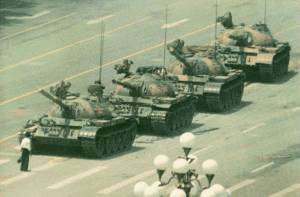
In the last couple of day’s I’ve been slowly winding my way through Frontline’s documentary, “The Tank Man“, which is now available online in its entirety. Only the first page is accessible in China, but the rest of the content and the video can be viewed through proxies.

The documentary is interesting, although it projects a bit with regards to what the Tank Man was thinking and why he did what he did. Perhaps that’s inevitable. Part of the power of the image of a lone man in front of a column of tanks is wondering about his motivations. Lack of an answer about that, or about whom he really is, gives the image an enduring timelessness. I suspect it would lose some of its power were he ever identified, and more were he to turn out to be still alive (as happy as that might be). As it is now, people can speculate about his martyrdom, and he can remain a comfortably anonymous symbol rather than an imperfect human being with all the complications that would entail.

Watching the documentary, and looking at the photographs, I was taken back to 1989, when I was a senior at UC Santa Cruz watching those events unfold on television at the end of the school year. China was a remote abstraction to me then, and never would I have dared imagine that I might someday end up living here. But living here gives those events fresh relevance. The locations discussed in the film –not just the square itself, but the surrounding areas and Muxidi Bridge– are all familiar now. In the documentary footage from 1989 I recognized buildings and neighborhoods. From one of my company’s office windows I can look down past the enormous, new Public Security Bureau headquarters and see the north end of Tiananmen Square and the Great Hall of the People. It’s hard to imagine what that view would have looked like 17 years ago.

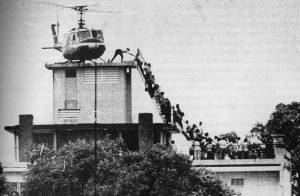
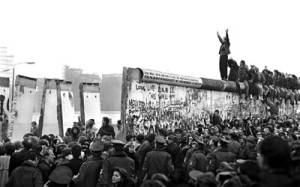
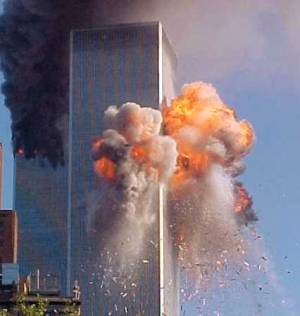
The documentary also made me consider the enduring power of iconic images, of which the photograph of the tank man is surely one. In a brief discussion with my wife I considered what the other most iconic news images of my lifetime have been. Here the first five that came to mind, in chronological order:

    saigon_small

The fall of Saigon (1975)
The swan-song of the Vietnam War. I was seven years old, so my first-hand awareness of these issues was pretty low. But this had been one of the defining events of my parents’ lives so far. My parents had been war protestors, earning me the distinction of being tear-gassed at age two at the Stanford anti-war demonstrations. There are other Vietnam pictures that are extremely powerful, including Nguyen Ngoc Loan’s execution of a Vietcong prisoner during the 1968 Tet offensive, and naked Phan Thi Kim Phuc fleeing her napalmed village 1972, but I was so young when those events took place that they didn’t register at the time. I do, however, remember the end of the war.

challenger_small

The Challenger space shuttle explosion (1986)
As historical events go this was hardly of global importance. Seven people died and a legion of “substitute teacher” jokes was spawned. But for an eighteen year-old college freshman, all idealism and big balls, it was a lesson in the limits of technological power. That dreadful “Bugs Bunny” cloud has been in my head ever since.

berlin_small

The fall of the Berlin Wall (1989)
This was the other great event of 1989, coming some months after Tiananmen Square. And, thankfully, it was a somewhat happier moment in history. This was something else that we all gathered around the dormitory television set for.

tiananmen_small

Tank Man (1989)
Covered above.

911_small

9/11 (2001)
I was watching the live broadcast when the second plane hit, which is what this is a photograph of. That was the moment we all knew that this was something bigger than a single attack, and that it would loom large in American consciousness. And the towers hadn’t even fallen yet. You might ask why not pick a photo of one of the towers collapsing. When I recall this event, it’s the two flaming towers that I always see in my mind first. It’s the threat of disaster that I remember, rather than the disaster itself.

Looking back at all of these images that have stuck in my head over the years, I notice two things. First, every single one is a humiliation of power, in one way or another. The mighty brought low, if only temporarily. Sometimes that’s joyous, as in Berlin, but most often it is tragic. The second thing is that three of these images are of humiliations of American power. But I guess that is to be expected. I am an American, after all, and those will be the images that remain in my head. You savor the triumphs for a while, but you remember the failures forever.

So what images stick in your head?

Posted in Uncategorized | Tagged , , , | Comments Off on Tank Man’s place amongst the iconic images of my lifetime

By chopstick to the moon

Imagethief was interested to read in today’s China Daily that China’s government is slapping a consumption tax on several items, including disposable chopsticks and luxury yachts. I think this is just and wise, and should be done. The reason why  think so is that, according to the article, China mills 1.3 million cubic meters of wood a year into disposable chopsticks.

That is, to use a technical term favored by engineers, a whole shitload of wood. Imagethief would like to help you visualize exactly how much wood that is:

  • Picture a block of wood one meter on each side.
  • Now imagine 1.3 million of those.

As you can see, that amount of wood fair boggles the mind. The other thing that fair boggles the mind is exactly how many disposable chopsticks that adds up to. According to the article, that much wood yields 10 billion “boxes” of disposable chopsticks.

How many chopsticks is this? Let’s play the visualization game again. After reading this article, Imagethief ran to his office pantry where, no joke, he fished a used pair of disposable chopsticks out of the trash in order to measure them. Science marches ever onward, and discovery is not for the faint of heart. And our office doesn’t stock disposable chopsticks, so I had to use ones that somebody brought from the food court downstairs.

A quick bit of ruler work revealed that your average disposable chopstick is 19cm long. Now, I have no idea how many chopsticks are in a “box” as referred to by the article. My statistical woes are further compounded by the fact that the caption in this article and the body text provide completely different numbers for the number of cubic meters of wood consumed every year, and the number of resulting chopsticks. The caption says 2 million cubic meters and 15 billion pairs (not “boxes”) of chopsticks. It just goes to show what a black art statistics is in China, where, apparently, almost everything is simply made up. The caption is sourced to AP and the body text to Xinhua, so take that as you will.

Erring on the side of being conservative, we’ll go with the 1.3 million cubic meters from the Xinhua body text and we’ll read “10 billion boxes” as 10 billion pairs of chopsticks, or 20 billion individual chopsticks (which provides, by the way, a surprisingly low per-capita disposable chopstick usage of 7.7 pairs per year — Imagethief alone probably buries about a pair a week).

At any rate, if you were to line up 20 billion chopsticks nose to tail, your chain of chopsticks would stretch 380 billion centimeters or 3.8 million kilometers (you may wish to check my math). The distance from the earth to the moon is 384,403 kilometers (according to the Internet), which means that, using China’s annual production of disposable chopsticks, you could built a bridge from the earth to the moon nearly ten chopsticks wide (9.885 to be exact – this may be a universal constant of some kind).

Now you know how the Chinese space program is going to get people to the moon.

By any reckoning that’s a pile of chopsticks, which leads Imagethief to discard all notions of cultural relativism and offer the following advice to the Chinese people:

Get a fork.

Barring that, even given that the majority of China’s disposable chopsticks are exported to the moo goo gai pan joints of America, a consumption tax sure sounds like a good idea. From what I see around Beijing, there isn’t enough wood left in China to support more than about another ten-days worth of chopstick production.

And god knows how many luxury yachts you could build with that many chopsticks.

Posted in Uncategorized | Tagged , , , , | Comments Off on By chopstick to the moon

Press releases with Chinese characteristics

In my job I am regularly exposed to Chinese press releases from various sources (often not my clients, I hasten to add). We sometimes send these releases for translation into English for our clients. As one of the few native English speakers in the office, I am often asked to edit the spotty results.

A translated Chinese press release does not read like one written in English. A tendency towards hyperbolic self-congratulation is aggravated by translators who reach for the grandest available English word. The result can be accidentally magnificent, like an imperial proclamation gone commercial. When forwarding translations to English speaking execs I often attach a warning that a Chinese release will not be what they are used to, in either language or structure.

The dismal nature of many press releases aside, translations don’t do justice to original authors. Translation is a dark art, and there is a big difference between a literal, word-for-word translation and a skillful transliteration that preserves both meaning and style. I can only read a thousand or so Chinese characters, so I can’t refer to originals when I am editing. At least, not easily. This adds a touch of divining to the task, as I try to gaze through the translation and perceive what the author meant to say. This is highly subjective, and sometimes the result is a punt.

But the vagaries of translation can’t hide the formula. And it’s not just Chinese press releases that are worthy of deconstruction. A cruise of the China websites of many multinationals reveals press releases written in English but often as odd and formulaic as their Chinese counterparts.

With that in mind, I have mocked up an abbreviated, “parallel” press release that shows the different ways in which Chinese and American partners companies might each announce the same event and identifies some of the classic China press release elements.

Shaanxi Veeblefetzer* (Joint Venture) Corporation and American partner General Widget plan joint product launch

Paragraph 1: The Lede

  • Chinese company opens with breathless enthusiasm, sings its own praises for a full paragraph before getting to the news hook, and begins machine-gun repetition of its own name. News (or lack thereof) takes back-seat to hyperbole. Translation creates appalling run-on sentences.

Beijing, March 10, 2006: Shaanxi Veeblefetzer* (Joint Venture) Corporation is China’s leading widget company, producing exquisite and widely admired widgets for incorporation into the products of many global enterprises. Shaanxi Veeblefetzer is a joint venture between Xiao Jing Hogfarms (twenty percent owned by Eurohog AG) and the Shaanxi Provincial Government Bureau of Pointless Devices. It has long been one of China’s most progressive organizations, achieving business success while properly adhering to the tenets of Mao Zedong thought, Deng Xiaoping Theory, the Three Represents, the Theory of Scientific Development, the development of the New Socialist Countryside, and any other political theories or frameworks that may be advanced by the Standing Committee between now and when this press release is issued, but excepting any that are later discredited.

Shaanxi Veeblefetzer (Joint Venture) Corporation today announced that its 2005 model widget, jointly produced with America’s General Widget Corporation, would be greeted with enthusiasm by a global market pregnant with expectation. Audiences from all nations have clamored indefatigably for Shaanxi Veeblefetzer widgets since first learning that the new model would be designed and manufactured to exacting standards, in order to meet the highest demands of the international widget marketplace.

  • American company opens matter-of-factly, lulling you with professionalism and numbers-driven news value.

Beijing, March 10, 2006: General Widget Corporation (NYSE: GWG) and Chinese partner Shaanxi Veeblefetzer (Joint Venture) Corp. today announced plans to jointly develop and manufacture the next generation of general purpose widgets. The combination of General Widget’s design expertise with Shaanxi Veeblefetzer’s low manufacturing costs will enable both companies to take advantage of a global widget market forecast to grow at more than 10% annually over the next five years.

Paragraph 2: Lofty Credentials

  • Chinese company demonstrates potential to command the global market. Ambition is laid bare.

Made from glittering and abundant Shaanxi raw materials, copiously provided by the enthusiastic and legally compensated laborers of Shaanxi Veeblefetzer’s extractive industry partners, the 2005 model Shaanxi Veeblefetzer widget is boldly designed to consolidate the fortunes of Shaanxi Veeblefetzer Corporation for many decades.

  • American company demonstrates current command of the global market. Jargon is laid bare.

Founded by widget inventor Ebenezer Sklyde in 1776, General Widget has been the world’s leading designer and manufacturer of widgets for over 200 years. The joint venture with Shaanxi Veeblefetzer will enable General Widget to leverage manufacturing synergies to capture an increasing share of the surging China market and to satisfy growing global demand for widgets that deliver more value to business and consumer widget users.

Paragraph 3: The Companies Quote Themselves

  • Chinese company inserts a CEO quote. Slight, institutional inferiority complex is revealed. Overzealous translation of already formal quote language yields Olympian sounding proclamation.

Wang Jinlong, Founder, Chairman, President and CEO of Shaanxi Veeblefetzer (Joint Venture) Corporation, said, “Shaanxi Veeblefetzer (Joint Venture) Corporation will provoke constant fascination in the global widget market by striding forward to assume the rightful place of Chinese widget manufacturers on the worldwide stage. It is without precedent that such a superlative widget is envisioned and fashioned by a Shaanxi company that now equates in operational excellence to many international leaders in the widget industry. This is the culmination of our strategic machinations, and the imminent showering of largesse upon our shareholders fills us with insuperable satisfaction.”

  • American company inserts a CEO quote. Designed to show that the American CEO is a China hand who understands a market impenetrable to less gifted souls. Complementary of China, in case government officials read the release. Demonstrates social commitment to China to minimize possibilities of a nationalist outburst.

Butch McSwindle, CEO of General Widget, said, “I’ve been coming to China since I was lad, and over the years I’ve had a chance to see first-hand the tremendous, economic progress of this great land. Now I’m pleased that General Widget will play such a critical role in helping China’s widget industry to take its next great stride.” Mr. McSwindle also announced that General Widget would be launching a new charitable program in China dedicated to rescuing rural orphans who have fallen into abandoned well-shafts. “It’s a gesture from the bottom of our hearts, and not cynical at all,” he added.

Paragraph 4: The Companies Quote Each Other

  • Chinese company writes a quote for the American CEO in which he lavishes praise on the Chinese company.

Leading executives from Shaanxi Veeblefetzer’s American joint venture partner, General Widget, a Fortune 100 company, also expressed their satisfaction at the impending release of the jointly developed widget. “We weep with joy at the prospect of this magnificent occasion for Shaanxi Veeblefetzer (Joint Venture) corporation,” said CEO Butch McSwindle. “I have directed our entire company staff to earnestly study Wang Jinlong thought that we may better understand Shaanxi management acuity.”

  • American company writes a quote for the Chinese CEO in which he lavishes praise on the American company.

Shaanxi Veeblefetzer CEO Wang Jinlong said, “We’re humbled to work with a surpassing, global leader like General Widget. This is a great opportunity for us to sit demurely at the feet of one of the world’s industrial colossi and be schooled in the intricacies of global business, which have long mystified us. General Widget’s timeless dedication to China is a source of pride and warmth for me and all employees of Shaanxi Veeblefetzer.”

-ends-
(mercifully)

The language above is exaggerated, of course, although not as much as you might think. But the formula is real enough, if slightly condensed. In truth, both Chinese companies and American companies in China are getting better, but enough dismal crap crosses my desk to remind me that there are always some offenders yet to be reformed.

Why does this happen? All press releases are formula to a degree. The objectives are usually clear, and there is a well established rhythm to getting through the essential elements; ledes, quotes, background, etc. a well written one does the job quickly, efficiently, and with a minimum of fuss. The reverse pyramid, as we all learn in flack school.

But in China, where companies often have to both deal with the vagaries of translation and reconcile the basic function of a press release –telling your story to the media– with a host of dueling concerns, from satisfying face-obsessed bosses to satisfying the government, the results can often be mysterious and fascinating. The state-owned pedigree of many companies and much media also means that different rhythms of communication and different expectations have evolved, although a more western model is slowly becoming prevalent. As a good friend of mine with long China experience once said, “the Chinese don’t understand PR. They understand face.” Think of it as another example of PR with Chinese characteristics.

Now, don’t get me started on boilerplates.

*Apologies to Mad Magazine.

Posted in Uncategorized | Tagged , , | Comments Off on Press releases with Chinese characteristics

Official: Lei Feng was “hip with his times”

It’s always a tragedy when your propaganda icons lose relevance to the younger generation. A couple of years past the fortieth anniversary of the original “Study Lei Feng” campaign, China’s propaganda moles are clearly hard-up for a way to make the much mythologized “ideal soldier” resonate with a generation of youngsters brought up on pirate “Friends” DVDs, MP3 players and Internet chat rooms. How else to explain this Xinhua article, which ran a couple of days ago, just before yesterday’s annual “Lei Feng Day” (don’t worry; I didn’t know it was coming either):

March 5 is an ordinary date on the Chinese calendar, but it’s the day when millions of young people across the country will do something good for someone else, following Lei Feng’s example.

“Lei Feng Day, honors a Chinese cultural icon who was immortalized by the late Chairman Mao Zedong as a selfless and model person serving the people heart and soul.

Lei Feng, who was just 22 when he was killed in an accident in 1962, inspired the nation after Mao called on people to “Learn from comrade Lei Feng”, and show the “Lei Feng Spirit”.

Born to a peasant family in Wangcheng of Central China’s Hunan Province, Lei Feng was orphaned before he was seven. At 20, he joined the People’s Liberation Army (PLA) and spent all his spare time and money helping the needy. Lei died after being hit on the head by a wooden pole that was accidentally knocked over by a fellow soldier.

Lei left behind him a remarkable legacy of diaries and poems detailing his hopes and aspirations. For emerging new China, which was rapidly evolving through the 1950′s and 60′s, Lei’s diaries are peppered with simple verses of inspiration that rang true for the masses who wanted to “make the world more beautiful everyday. “By the early 1970′s Lei was worshipped as a hero or even a god and millions of young people emulated his acts of generosity.

That adulation was certainly not the result of any orchestrated propaganda campaign, and it’s cynical of you to think so. You should be ashamed. Posters such as the one at left, which exhorts everyone to love Mao Zidong thought in the manner of Lei Feng, were simply the result of people’s spontaneous outpouring of love for a 22 year-old peasant truck driver who died a conspicuously unheroic death. Many more such posters –all equally sincere– are on display at the Lei Feng section of Stefan Landsberger’s superb Chinese propaganda posters website.

Lei’s new biographer is working hard to ensure that modern youth, notorious for their short attention spans and disdain for Soviet-style, floppy-eared winter hats, stay connected with Lei Feng, who obviously has many lessons left to teach. Most interesting is an attempt to portray Lei as stylish and contemporary. At least, by 1962 Maoist standards:

Shi Yonggang felt unwell with the situation, who is one of the editors of a new book [sic], “Lei Feng: 1940-1962″, that will be released to on Sunday’s Lei Feng Day to recall Lei Feng’s Spirit.

This latest edition of Lei Feng’s story is one of more than 1,000 books that have recorded his good deeds.

“It is a pity that the image of Lei Feng depicted in those books is hard for people, especially young people, to understand and accept nowadays,” said Shi, the editor.

Shi’s book includes more than 300 never-before-published photographs of Lei showing him as an obviously fun-loving young man who was hip with his times.

In fact, not only was Lei hip with his times, such as they were, he was, it turns out, the coolest kid in his platoon, and a veritable style maven:

“Lei Feng did almost all the fashionable things of his day ,” Shi said. When Lei was a farmer, he drove a tractor which is comparable to today’s BMW. When workers became the most respected segment of society in the 1950s, Lei became an iron worker in an Anshan factory in Northeast China’s Liaoning Province. He then upgraded his technical skills to earn a rarely-issued driver’s licence and began a career as a truck driver.

Shi’s two favorite pictures are of Lei riding a borrowed motorcycle on Tian’anmen Square in downtown Beijing, while the other shows Lei holding a trendy satchel as he stands by the WuhanYangtze River Bridge, in Central China’s Hubei Province.

The photographs also show that Lei wore fashionable sweaters, a leather jacket and wristwatch, all considered luxury items of the day.

Driving a tractor; working as an iron worker; flashing a trendy backback. The boy was out of control. I grant you it looks like a stretch to equate nursing your rusty tractor over some dessicated, rutted field with pumping your black BMW 7-series down the highway at asshole speeds or pulling it up in front of Bellagio so the princelings out for their pre-club snacks can see your supermodel girlfriend flash her panties as she ankles her way out of the shotgun seat in a skirt so short it could be mistaken for a wide belt. But you have to remember we’re talking about 1950s China here, and standards were different. Nobody had panties then. Cool was where you found it, even if that was, um, a tractor.

Finally, it turns out that the obedient and studious model soldier and worker was actually a rebellious hair farmer of the first degree:

Zhang said that Lei liked to look smart and he loved to wear long bangs even though they were prohibited in the army. “Lei was warned about his hair so he would hide his bangs under his cap when he was on duty, but when he was out of uniform he would let them hang loose,” Zhang said.

Astounding. It’s a complete reformation. He probably had a band on the side and smoked out under the bleachers. Lei Feng is clearly much more relevant to modern youth than anyone had dared dream possible. Can a new series of propaganda posters showing the iconic youth with shades, an iPod and a sexy girlfriend be far behind? After all, if modern China is all about the glory of getting rich, how can its icons miss the boat? With that in mind, I’d like to suggest a few updated slogans to accompany the new propaganda posters:

  • Seriously study fashion like Lei Feng, and get a nice shirt and some decent shoes.
  • Lei Feng says quit whining and get a grip.
  • Lei Feng wouldn’t be caught dead with his finger up his nose, asshole.
  • Only download legal music, in the manner of Lei Feng.
  • If Lei Feng caught you spitting, he’d bitch-slap you silly.
  • Live fast, die young, and leave a good looking corpse. Just like comrade Lei Feng.

Look out kids, it’s the all-new Lei Feng.

Hey there, good looking!

Hey there, good looking!

Posted in Uncategorized | Tagged , , , | Comments Off on Official: Lei Feng was “hip with his times”

The disappointing silence from the top

It’s been nearly two weeks since representatives of Cisco, Microsoft, Yahoo and Google testified before the House Subcommittee on Human Rights about their various entanglements with China. As expected, after blowing hot in the run-up to the testimony, coverage has cooled a great deal. Unless there is substantial progress with Rep. Chris Smith’s proposed legislation, the issue will probably stay cool until the next crisis moment emerges. But emerge it surely will.

I read the written testimony submitted by the four companies, although I’ve not read a full transcript of the Q&A. All the companies pretty much responded as expected. They all, without fail, talked about the transformative power of the Internet and the benefits it is bringing to China. They all tried to explain how they’ve weighed the implications of being in China.

They also all addressed the specifics of their individual cases. Cisco explained that it sells the exact same equipment to China that it sells to anyone else, without special modification, and that the technology that enables content filtering is the same that enables network security. Yahoo addressed the Shi Tao case, and the fact that operational control of Yahoo China lies essentially entirely with Jack Ma’s Alibaba.com (a risk that may haunt them in future, since it may place the brand at risk). Microsoft discussed the Michael Anti case. And Google, of course, discussed the considerations that went into the recent launch of their self-censored google.cn site, as well as the ongoing drop in their market share that they feel is rooted in filtering-based performance issues.

It was thoughtful, rational and articulate. It was full of motherhood statements about the Internet company values. It was, in short, exactly what you’d expect from three general counsels (Microsoft, Yahoo and Cisco) and a vice president of global communications (Google).

For instance, here is Microsoft Associate General Counsel, Jack Krumholtz:

Will the citizens of that country be better off without access to our services, or will their absence just vindicate those who see our presence in the country as threatening to their official or commercial interests?

And Yahoo General Counsel, Michael Callahan:

First, our principles. Since our founding in 1995, Yahoo! has been guided by beliefs deeply held by our founders and sustained by our employees. We believe the Internet can positively transform lives, societies, and economies.

These were all the messages that needed to be delivered. But I see two problems. First, as expected, they lost the war of imagery and emotion. Out of necessity, the companies needed to be defensive and rational. Unlike their interrogators, who are playing to voters only, they are playing to three separate constituencies: the general public who are their customers and advertisers; the shareholders to whom they have fiduciary obligations; and the Chinese government, who was no doubt watching very carefully. Addressing all three of those audiences requires a measured and diplomatic approach. But in the war for general public opinion, they are then left contending with statements like this from Representative Chris Smith:

Through an approach that monitors, filters, and blocks content with the use of technology and human monitors, the Chinese people have little access to uncensored information about any political or human rights topic, unless of course, Big Brother wants them to see it. Google.cn, China’s search engine, is guaranteed to take you to the virtual land of deceit, disinformation and the big lie.

But the worst came in an act of confrontational demagoguery from Congressman Tom Lantos, a man who represents Imagethief’s home constituency in the San Francisco Bay Area, who carries the unimpeachable aura of a Holocaust survivor (a fact cited in most articles I read about his participation in the subcommittee) and who has long taken a dim view of China’s government (opposed WTO entry, opposed awarding the Olympics, etc.).  Lantos notoriously called all four company representatives on the carpet, asking each in turn if he was ashamed of the actions of his company. From a longer transcript on CNET:

Rep. Tom Lantos: Can you say in English that you’re ashamed of what your company and what the other companies have done?

Google: Congressman, I actually can’t, I don’t think it’s fair for us to say that we’re ashamed.

Lantos: You have nothing to be ashamed of?

Google: I am not ashamed of it, and I am not proud of it…We have taken a path, we have begun on a path, we have done a path that…will ultimately benefit all the users in China. If we determined, congressman, as a result of changing circumstances or as a result of the implementation of the Google.cn program that we are not achieving those results then we will assess our performance, our ability to achieve those goals, and whether to remain in the market.

Yow. Trapped. A seven word question that will stick in everyone’s head, and an eighty-three word response that no one will remember, but precious few better options considering those three different constituencies. Maybe I’m getting conservative in my middle-age (I’m a longtime liberal Democrat), or maybe the CCP is spiking my drinking water, but I didn’t think much of Mr. Lantos’ approach. Here is another statement, from the press release Lantos issued the day before the hearings:

“The hugely successful businesses that come before Congress tomorrow will have to account for their complicity in China’s culture of repression, and to begin to make amends,” Lantos said. “Government can be expected to do only so much. It is up to these wealthy entrepreneurs to help ensure that the free flow of information from which they have profited is offered worldwide.”

Well, aside from the fact that the final statement is patently wrong, this does raise a very interesting question that cuts to the heart of my complaint about how the companies dealt with the hearings. While I don’t think the wealthy entrepreneurs have any obligation to ensure that a free flow of information is offered worldwide (that ignores political realities that extend far beyond China and in cases may simply not make business sense), I am a little mystified as to their silence.

Here is why. The technology industry suffers from an interesting syndrome. It is a time honored practice among tech companies to build founders and CEOs up as evangelical prophets of the transformative power of technology, which is promoted as revolutionary and encompassing in a way that, say, shipping, fast-moving consumer goods, cars, energy, and so on are not. No industry is more susceptible to the CEO/founder cult of personality or mystique, and no industry more flagrantly positions founders and CEOs as “visionaries” than the tech industry does. This is especially important in the Internet generation of companies, all of whom were created in the last fifteen years and are still led by founders. It is only slightly less true for Microsoft.

The cult of the youthful billionaire genius touches three of the four companies involved in these hearings. Bill Gates of Microsoft may be the pre-eminent technologist of the age. Jerry Yang and David Filo of Yahoo are famous and highly visible, as is CEO Terry Semel, a Hollywood veteran who knows a thing or two about showmanship. And Sergey Brin and Larry Page of Google are in a league all their own. Cisco may suffer from less of this syndrome because, although it is young and CEO John Chambers is well known, it is not first and foremost a consumer oriented firm as the other three are.

Where were all these Internet visionaries as this storm broke?

This is an important question because, Cisco aside, these firms are all, for better or for worse, closely associated with the personal values of their highly visible founders. Those values are part of what defines their public images and brands. This is especially true of Google, where the relationship between the founders’ values and the company’s values are formalized in the “Don’t Be Evil” mantra that has become such a millstone during the controversy. On page 211 of David Vise’s book, The Google Story (as unanalytical a bit of hagiography as you will find), it is recalled that:

Stanford Professor Terry Winograd says that Segey [Brin] has lead the way on three Ps: Policy, Politics and People. (When once asked what the motto Don’t Be Evil meant, CEO Eric Schmidt famously replied that evil is whatever Sergey says is evil.)

And on page 257 it says.

[Google’s] very motto, Don’t Be Evil, was a thinly veiled way of letting the technologists of the world know that Larry and Sergey were not just the Google Guys, but the Good Guys, who did the right thing for users and employees and had fun too.

That’s channeling founders’ values through the company, and using them to build the brand. Michael Callahan of Yahoo does the same thing in his testimony, quoted above. And it makes the silence of all these technology luminaries in the breach seem odd and  somehow discordant.

One of the most common requests that crosses Imagethief’s desk is for communication plans to help technology executives position themselves as “thought leaders”. Unfortunately, “thought leadership” is an often abused concept in PR, with salesmanship, cheerleading and banality often masquerading in its place. The most interesting proposals are often rejected as too risky. Certainly thought leadership is easier when times are good. But it’s important when controversy arises, such as now. On the table is one of the most important issues of our time: what is the relationship between a commercial Internet and the right to freedom of speech, and should the American companies who are driving the evolution of the Internet be considered international custodians of that right?

Leadership is about risk (something that these entrepreneurs all know). Thought leadership is about intellectual risk. If it is unlikely to be argued with or shouted down, it’s probably not thought leadership. This was an opportunity for thought leadership if ever there was one. But there was little thought leadership to be had. That is a shame, because I am sure that all of these phenomenally bright and opinionated technologists are thinking deeply about this issue and debating it inside their companies.

But maybe there was no other choice. As I noted above, the companies are burdened with three different audiences, each of which has a substantially different interest in this situation. Consumers and advertisers want to feel good about the brands of the companies they patronize. Shareholders want growth. China wants foreign firms to toe the line and avoid controversy. Employees may even constitute a fourth important group in this kind of situation. That puts the companies in a supremely delicate position, where every public communication has to be considered from multiple angles if a disaster is to be averted.

But if you build your brand on the company founders’ values and leadership, and they then remain silent when those values are being questioned and leadership is most necessary, then your brand is at risk. And, in the meantime, people with fewer stakeholders to please will hammer at you from all sides.

Posted in Uncategorized | Tagged , , , , , , , | Comments Off on The disappointing silence from the top