The risks of being able to bet on anything, anytime
One of the things that makes a good crisis comms person is being able to imagine bad situations. The benefit is that you can envision possible scenarios and plan accordingly. The drawback is that you will be a downer at office holiday parties.
Everyone: Merry Christmas!
Me [scrolling Bluesky]: Hey, have you seen how many people get violently sick from bad eggnog?
Everyone:…
Me: Noël! [Dumps eggnog back into punchbowl]
If you’re going to prepare for crisis communication, you need to be able to have frank discussions about the possible crises. Death. Crime. Disasters. Whatever. Does it seem silly to prepare for a global pandemic that shuts everything down for a while? Guess what!
There is an infinite number of bad scenarios, you can’t prepare for everything, and not all risks demand the same degree of preparation. There is a simple matrix that comms people (and our friends in risk management) sometimes use to think through which scenarios we should be spending time on:
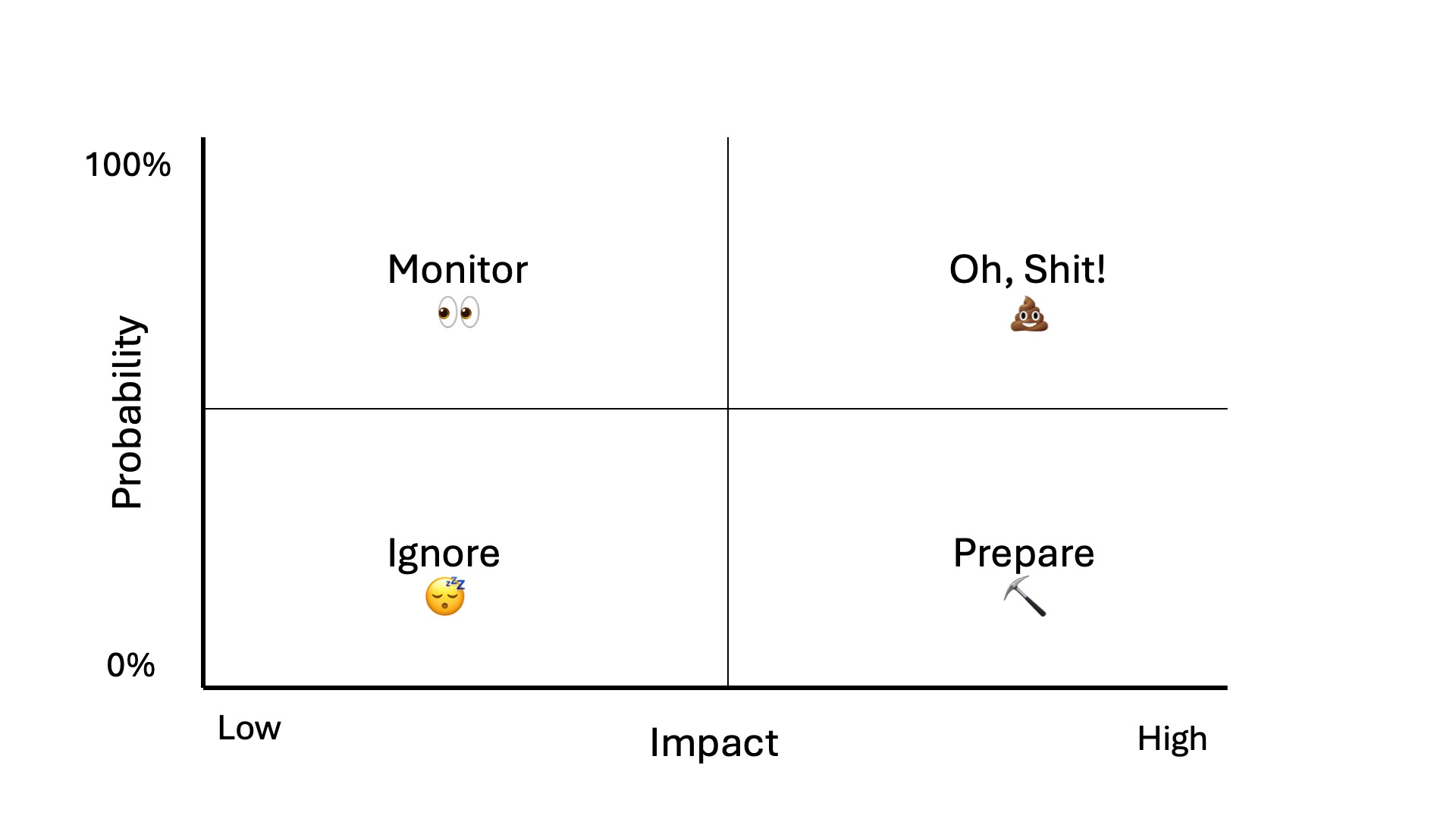
Obviously, this is oversimplified. “Probability” is timeline dependent and “impact” is contingent on various assumptions. You’re not so much plotting points as little clouds. People will argue about where in the matrix to place things. Sometimes they’ll argue for motivated reasons, like protecting a revenue stream. That’s another risk!
But it’s a useful heuristic. Alien invasion? High impact! Vanishingly small probability. Don’t worry about it. If it happens, no one will blame you for not having a comms plan and your boss will be too busy fleeing to his luxury bunker in Big Sur with a suitcase full of ketamine to give you a hard time.
The landscape is always changing and risk maps are dynamic. Two years ago, tariffs weren’t a major consideration. Today they are. What fun! We’re always assessing new risks, or considering what might be causing current risks to shift their position on the matrix.
Often, you’re just tweaking the map. This or that risk becomes incrementally more likely or potentially more damaging, so you move the plot a few pixels. But occasionally something novel sprouts on the map like a poisonous mushroom. The thing that made me realize there is a shift in the risk landscape was this tweet from NBA star Giannis Antetokounpo, a few weeks ago:
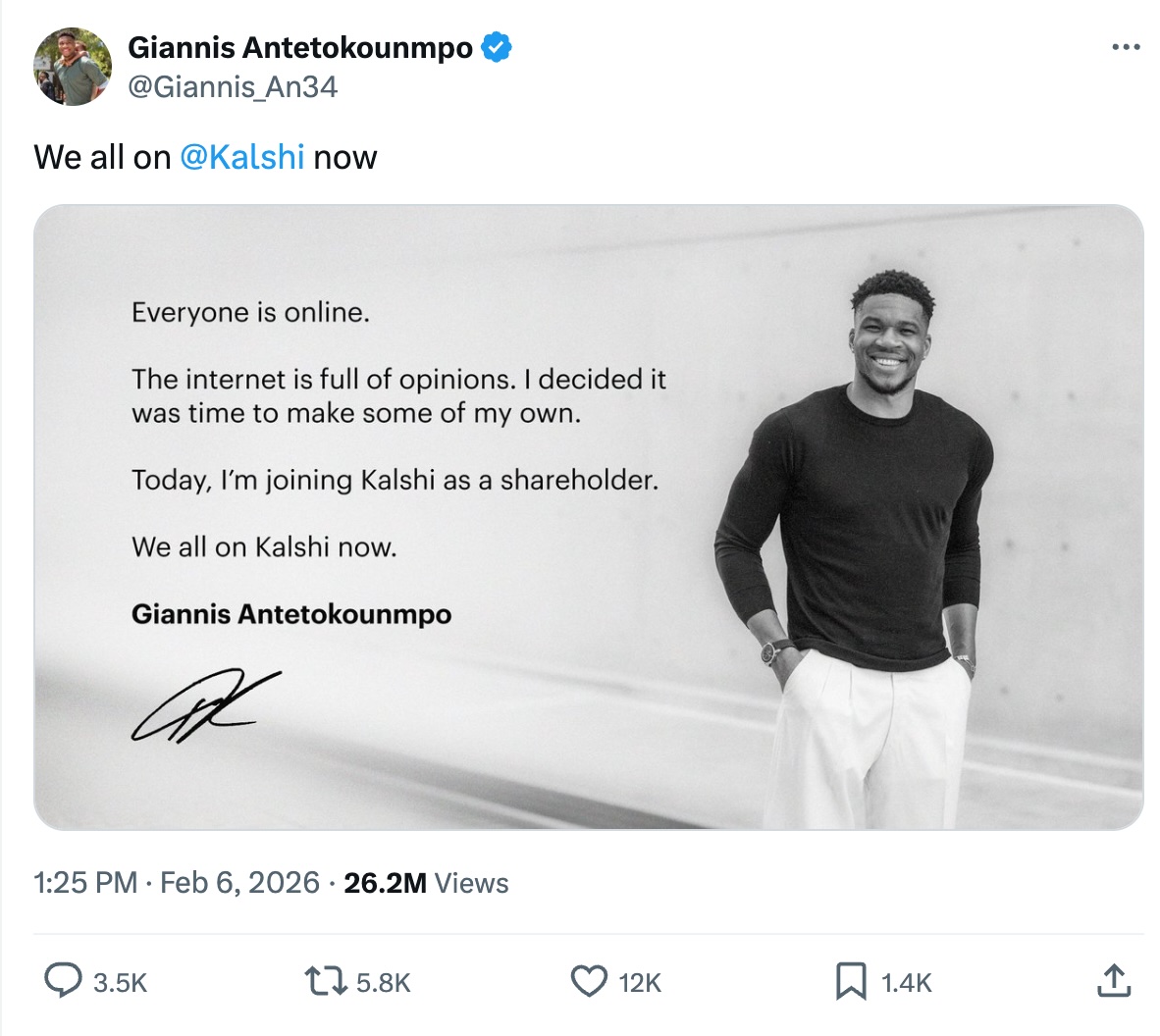
We not all on Kalshi, Giannis!
Giannis’ investment prompted reasonable questions, but maybe it will be fine! When has the collision of sports and gambling ever been a problem? And between the two main prediction markets, Kalshi is the sober option, as amazing as that is.
But a current star player becoming an investor in a lightly regulated prediction market app seems like hurdling the Rubicon and landing in brand new risk territory much broader than sports. Since that tweet, things have got weirder as the prediction markets have been implicated in several “insider trading” events and novel controversies:
- An anonymous account on Polymarket made suspiciously timed trades on the capture of Nicolas Maduro in Venezuela that netted more than $400,000.
- OpenAI fired an employee for trading on confidential information on Polymarket.
- Kalshi banned and fined an editor for mega-YouTuber Jimmy “Mr. Beast” Donaldson for betting on planned stunts he had knowledge of and a California gubernatorial candidate for betting on his own candidacy.
- Mystery bettors on Polymarket seemed to have the inside track on the start of American bombing in Iran. $529 million was wagered in total and six suspiciously new accounts cleared a million each with uncanny knowledge of the timing.
- Two Israeli reservists were arrested for using classified information to place bets on Polymarket.
Listed companies have always had insider trading risk. But the domains of insider knowledge that mattered were relatively constrained: financial results, major transactions, other material corporate developments. Such information is also often restricted to specific teams or departments. Venues for trading on that knowledge were also limited and tightly regulated, at least in the U.S.
 Imagethief