
In the grip of my darkest and most bourgeois moments I actually considered buying a car and hiring a driver. So, it’s come to this… I thought, as I hovered over a digital map of Beijing. I have to get one of those Buick vans. No matter how I traced the route or arranged the useless layers of meta-data in Google Maps I had to face up to reality. My new office was in the sticks.
More specifically, it was in Wangjing. North Wangjing, hard against the Fifth Ring Road. The Fifth is commonly accepted as the dividing line between the frothy, urban Beijing of Apple Stores and upscale dining and the great void of the Chinese hinterland where all is windswept grist for broody New York Times articles about how miserable the rest of the world has it. Well, and also Tongzhou. Never mind that when I moved to Beijing the Fourth Ring Road was that line.
You can tell the office is in a neighborhood that didn’t exist three years ago. The building is as gorgeous and new as a space station and just as isolated from amenities and comforts. The nearest Starbucks is at least two kilometers away. In Beijing in 2010 more than two kilometers from Starbucks is the qualification for a rural hukou. I brought a French press to office.
I am strong enough to confront my flaws (although weak enough wrap that confrontation in a layer of prickly humor). By the standards of my Chinese colleagues this is, I admit, jello-kneed schoolgirl bitching. Many of them live outside the Fifth and have commutes that sound lifted from the darker pages of Jack London novels, where people die freezing for want of a twist of jerky somewhere on the track from Fort Yukon to Unalakleet. Just substitute a bendy-bus for the dog sled. Against this, even the commute from Dawang Rd. to Wangjing is lower middle-distance at best, like one of those mid-range Olympic track races that is too long to be exciting but too short to be impressive and that nobody remembers who won.
I, however, have been spoiled. For six years my distance from the office has ranged from a five minute walk to a five-stop straight shot on subway line 1. Even the latter is the Beijing commute equivalent of schlepping from the couch to the fridge during a commercial break for a half-full can of Duncan-Hines frosting and a Pabst Blue Ribbon.
Although I toyed seriously with the idea of either buying a car or hiring a car and driver, in the end my socialist* pedigree won out. For my first day at the new job I decided to take public transport.
Man, was that stupid.
It looked good on the map, though. From my house I can take the line 1 subway one stop to Guomao. Then it’s a straight shot north on line 10 to the Shaoyaoju interchange and one more stop on line 13 to Wangjing West. From there a short bus ride. Simple!
If you read the New York Times you probably scan the occasional Tom Friedman column where he hyperventilates about how fast the Chinese are building infrastructure for which Americans have lost the blueprints. Subways, for instance. The statistics for Beijing are magnificent: Thirty lines planned, totaling over 1000 kilometers of track. Everyone living within the Fourth Ring to be able to walk to a station in fifteen minutes. Sounds like The Future!
Sure. It’s Logan’s Run. But with the subway system from The Warriors.
There are two reasons for this. First, adding more lines and interchanges has certainly made the entire system more useful. But the number of people riding has gone up as something like a cubic function of the number of track kilometers. In the course of two years my old line 1 commute went from crowded but tolerable to needing to lubricate yourself with Astroglide and use a prybar to get on or off the train. Combined with the casual Chinese disdain for off first, on second it’s a miracle the platforms aren’t entirely covered with bits of scalp and shards of broken teeth.
Second, the planners of the Beijing subway system haven’t really figured out the whole idea of the subway interchange. In Singapore, subway interchanges are designed such that trains that make the most natural connections pull up on opposite sides of the same platform. Walk thirty air-conditioned feet, get on the next train. Now that’s the future!
But why build an actual subway interchange when you can just build a long, sweaty tunnel between stations in adjacent neighborhoods? Changing trains in Beijing is a little bit like changing airport terminals, right down to the surprising number of people dragging luggage. Add the rush hour crowds and idiotic security screening chokepoints and it’s almost (though not quite) as bad as checking in at JFK.
It took me an hour to get from my house to Wangjing West station. When I finally staggered off the third train I was ready to bail on the bus and head for a taxi. Except that Wangjing West apparently serves as the informal transportation hub for the entire Wangjing new town, which means that at any given moment there are zero authorized taxis and about fifty black cabs. I don’t generally like taking black cabs, although I do it from time to time, so I reverted to the bus.
Big mistake. Should have taken the black cab. Beijing subway platform minders are good at cramming an apparently limitless number of people onto a train, but they have nothing on the bus drivers. Beijing’s bus drivers have taken that skill and extended it into a rarefied art form of otherworldly magnificence. The driver of the bus I took used a combination of eye-watering verbal abuse, physical bullying and backyard-steel-furnace socialist will power to get people stacked three deep in the bus. Mine was the Very. Last. Stop.
Except that I accidentally got off a stop early and had to walk the last kilometer. There isn’t much in Wangjing and they space out the bus stops like railroad towns. An hour and twenty minutes after leaving the house I got to the office, late and looking like I had been caught in a kitchen fire at a Bob’s Big Boy. I felt virtuous, but exhausted and dumber than a chicken on roofies. Some of my colleagues do this daily. In both directions. This, not the threat of cyberwar, is why America should be scared of China.
So I’ve been taking the taxi. I did the math. Sure, it adds up, but it’s still way cheaper than a regular car and driver, let alone buying my own car. About 25% of the taxi cost is offset by my having to brew my own coffee (which says something about the magnitude of my coffee habit). And it gave me the gossamer thin rationalization I needed to justify my iPad (thus instantly cancelling out something like two year’s worth of coffee savings). A quiet half-hour each way alone with my electronic newspapers. Well, quiet except for the ubiquitous radio story teller who makes wet lightning-and-thunder noises with his mouth.
I’ve come to terms with the cost. I’ve come to terms with my increased contribution to global warming. The only thing that really worries me is the feeling that a taxi-based commute in Beijing is actuarial equivalent of moving to Detroit and developing a habit for convenience store robbery. After all, few Beijing taxis have seatbelts and most are driven by people with the patience and deliberation of a fox terrier that has been whipped with car antennas. If you hear of a pileup on the fourth ring and a white man being whisked to hospital to have an iPad removed from his abdominal cavity that’ll be me. If you hear of a taxi driver being whisked to hospital with an iPad embedded in his skull and an angry white man being questioned by police, that will also be me.
*by American standards.
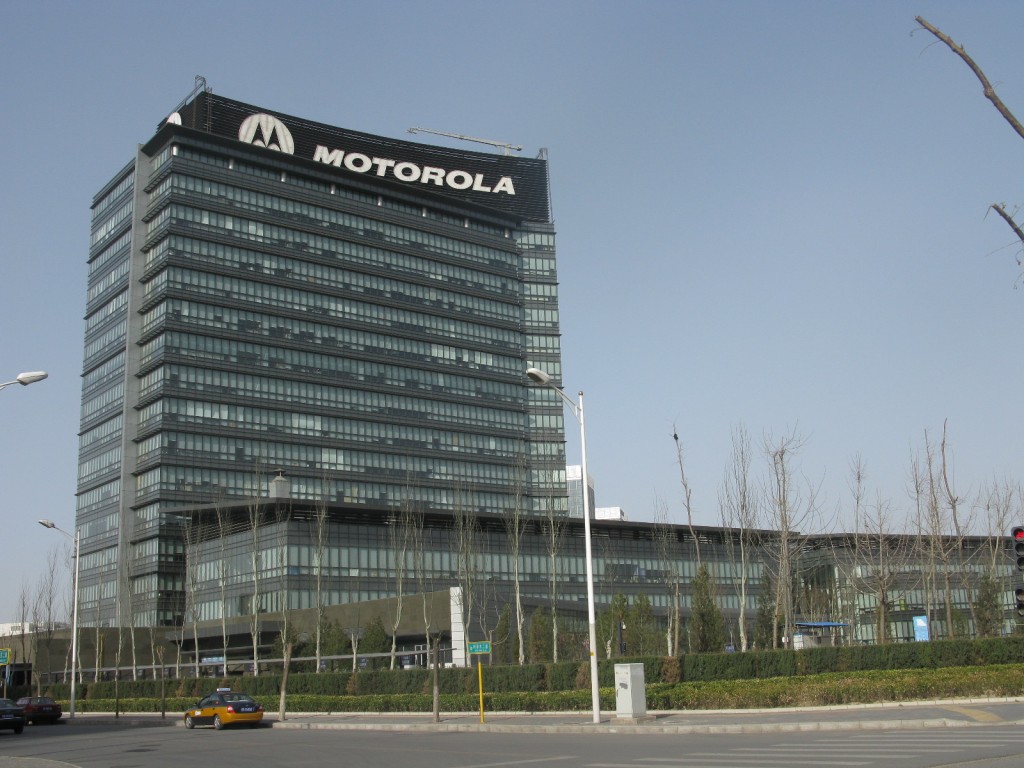


You’ve come a long way from catching the 3 AM bus from Noe Valley to downtown SF for that morning show producer gig…
Your picture needs the caption “my office” with an arrow pointing to it.
I made the mistake of reading that while brushing my teeth, so I’m going to blame Imagethief for the funny looks I get about smears on my laptop screen.
Classic.
As a guy who lives outside the fifth ring and drives his own car, I feel qualified to say that the taxi is the right move. All a car has gotten me so far is a helluva capital expense, enough automated tickets to threaten me with license revocation, and the sublime experience of spending 45 minutes in a gridlocked exurban intersection (no exaggeration, and another 1:15 to make the rest of the 7 mile commute home).
一路顺风!
It would be interesting to see how many people are on the road simply because of the sheer inadequacy of the alternatives. As the saying goes, “At least in a traffic jam I would have a seat!”
And it would be equally interesting to see how many people are buying their own car and driving it, simply because of the lack of / stress factor of trying to get, taxis.
This is just an awesome piece of writing.
Regarding taxis and seatbelts, there are usually seatbelts in the front seat, but then I find myself wondering if it’s safer to sit in the front seat with a seatbelt or in the backseat without. I usually choose the front seat, but then I also run the risk of getting a seatbelt-shaped dust stain across my shirt.
I also agree that a lot of people take taxis just for the seat, and buy cars to avoid the stress of taking public transportation or getting a taxi. Myself included.
@John: Thanks! Yeah, I usually sit in the back. I have dark memories of getting diagonal black stripes on my shirts on my way to job interviews at Burson back in 2004.
@Jose: Oh, god – the glamor of a job in radio. Never again. Fourteen floors up, kind of above the taxi, but inside the building, not at the window.
Absolutely loved this post, laughed the whole way through, nodding my head in agreement.
I used to commute to a private language school near Chaoyang Park by taking a 15min walk to the subway, riding up line 10, getting out and taking a bus to the school. Later, a local informed me I could take a bus the whole way — it was more convenient, but still took a while and a seat was no guarantee.
I finally wised up. Commuting in Beijing is absolutely awful, and I dread having to change subway stations once, nevermind two or three times. Found a private tutor on the Beijinger, pay less than I did at the school, and she commutes to my home to teach me. Pure bliss!
These commutes (which are becoming oh so common in most Mainland cities) represent the darkside of planners attempts at dispersing population from central cities into peripheral new towns. In some ways, their hearts were in the right place…with many older neighbourhoods being overcrowded,under serviced and jammed with poor housing stock. What they choose to do though never ceases to baffles me (as a planner myself). Instead of creating compact and mixed-use neighbourhoods developed around good transit routes, they opted for automobile-centric designs that emphasized single use employment zones (your office tower, for example) cut off from residential areas by long commutes (I think the idea was that one would drive their car…just like N.A.). Often high-level transit (subways, elevated rail etc.) would be slated for arrival to one of these new towns 5-10 years after development. Some of the older ‘new’ towns have matured into decent communities (Long Jiang in Nanjing comes to immediately to mind), but I’ve noticed that the increase in size of road and decrease in level of land-uses is proportional to the age of the development. I’ve also noticed that big-box stores (complete with associated parking) are becoming common in China as well. Ironically, this is the exact kind of thing that we are trying to fight in the planning community in Canada (with mixed-results, at best) and in China their planners are diving head long into it.
Dude, I am just impressed that you have rationalized an iPad. I’m not worthy….
It was a distinctly post facto rationalization. When you’re as much of a technophile as I am, you don’t need the rationalization to make the purchase. Just to assuage the lingering financial guilt that comes afterward.
I found this quite amusing as I used to live in Wangjing to save money and totally hated both the bad bus system and how spread out everything was. Unfortunately, long, grueling commutes are a reality for most Beijing (and Beijing suburb residents). I live past the 6th Ring Road because that’s where my job and free apartment are, but when I occasionally head to the CBD during rush hour, I’m shocked with how crowded the Longze subway station and arriving buses are with people who stand on sardine-packed transportation for two hours plus to commute to work. I think this phenomenon might be unique to Beijing because it’s more sprawling than most Chinese cities.
Why not ride a bike? It would be a 30-40 min commute, and quite often quicker than a taxi I bet. It beats sitting in traffic jams, which I absolutely hate.
@David: I did consider it. Two things dissuaded me. 1) heat and 2) death. If I lived around the Lido, I might well bike, though. Used to do it in Singapore.
100% right on the design-flawed subway interchange stations. I will offer my common sense for free to help. May be the first thing the cadres need to do is to take public transportation once in a while, instead of the black audis. Line 13 to lines 2/4 in xizhimen is the climax of inefficiency. They build a corridor in between but is not open yet because too many people. Well, you probably designed it poorly, and though we paid for it we can not use it. Then it comes line 13/10 interchange… excuse me! only one (yes one) 2m wide stair going down from the platform to take the other line… it means that in peak hours the first train commuters are still in the platfform (still queing in a 5m+ long quue) when thee next train is opening the doors for a new horde of communters. No one though about it? What abou: -wider staircase? or 2 / 3 different routes for interchange. No, only one… maybe be because unity is strength团结是力量!… who knows。
1) – iPad rationilization was a work of art. My friend’s Jewish mother would sign off on it.
2) – Own car – I’d vote no. Being stuck in a taxi is bad enough, but with your iPad you can get some work/surfing in at least.
3) – I used to work in PingGuoYuan and made weekend entreats to downtown to “unwind”. My first choice was taxi, unless it was between the hours of 7am to 10am or 3pm to 5pm, then I would take the subway. I learned quickly not to be efficient and get off “close” to my final destination, as the taxi drivers hate the low fare.
Whatever happened to the helicopter idea?
I’m basically facing exactly your situation, Will, with a commute from Nth 4th to Tianzhu (the Special Tax Zone right by the airport). It’s 80 kuai each way in a taxi, and finding the “coming home” taxi is a four volume novel *every single day*.
So I’m buying a car. 160 RMB a day is 800 a week is 3,600 a month is (easily) a car payment, and also easily cheaper than the car-and-driver option, which starts at about 250 a day.
Yes, I’m part of the problem. On the positive side, there will be a sharp localized increase in the failure of the “emergency lane dash” to work for the drivers trying it on. Homie don’t play dat.
If there is any possibility of working staggered hours, a bus or subway commute might be more bearable. I lived in Wangjing for two years, and commuted to Haidian — first to Tsinghua for about six months, and more recently to Sidaokou. Now I live in Lido which is a little better, but not much. Public transit is not so bad if you are up at 5:30 a.m and can beat the rush hour crowds. I currently try to take the bus from my house in the morning (learned to catch the SECOND one — first one is always packed), then I usually splurge on a taxi on the way home. The return commute would be impossibly long at 3pm, but by taking a taxi I get home in about 30-40 minutes, and have time to run errands or hit the gym before my kids get home from school.
BTW, I think you could take bus #852 all the way from Dawanglu to near your office — it stops at the Science Park. It would probably take over an hour, but at least you wouldn’t have to change multiple times. Doesn’t Motorola have a bus fleet for its workers? Many of the hightech companies in Wangjing do. Might be worth checking with HR…
Motorola does have employee-organized bus. The one nearest my neighborhood leaves Sihui at 7:55 AM and still takes an hour to get to the office. That means, including the walk and subway ride to sihui, an hour and twenty minutes door-to-door. At that point, it’s worth the taxi money to me to cut the ride in half and spend more time with my son. The taxi is just under RMB40 each way, which means I’m spending about RMB1,600 a month. In the end, to be able to leave at 8:45 (I can get in a bit late) and minimize the hassle, it’s pretty much worth it. We may still move in the next few months–we need a bigger place anyway–but then we have to factor in where our ahyi can get to. Plus where our son’s school is. Etc. The math, I swear…
imagethief.com’s done it once more! Incredible post.
Will, I lived in Shanghai for four years and had a company provided car and driver. Trust me, it’s the only way to go. Not only is the commute much more comfortable, but you have a driver with a lot of extra time which you can use to have him get extra tasks done for the family. Need some meat from a particular store? Send the driver while you’re at work. Wife needs her hair done at an inconvenient location. Have the driver take her. Son has a piano lesson? The driver can take care of it. Actually, when we repatriated I ended up missing the convenience of the driver more than I missed the ayi.
@Paul: I have no doubt that eventually (come the as-yet theoretical second child?) we’ll cave on the driver. It’s just a question of when.
@Zane: Gosh. Thanks.
Will,
I feel for you…..
I do an eerily similar commute each day from Dashanzi (I can wave at your office from the window of my apartment) to Xizhimen. Its expensive at 90 rmb a day for taxis, but cheaper than my own car, and I invest a lot less in blood pressure treatments as well. I lasted all of one week on the subway/bus combo. It wasn’t worth it on any level.
I’ve been at this for 9 months. I figure I spend more time with taxi drivers than I do with my friends each week. And I’ve finally caved and admitted that we need to move. My daughter will start school in the fall and its 300m from a station on Line Ten. And as much as I absolutely love my apartment and the community we live in, so long as the school works out as of Summer 2011 we’ll be moving again.
If you decide to give the bus another shot, I second that vote for the 852. Also look into the 973, which actually ends out near Riviera somewhere.
I work in Wangjing and live in Sanlitun. I tried getting to Wangjingxi and then getting a cab for a little while but the interchanges are a hassle. I now take line 10 to Taiyangong (spelling) and then get the bus (467 or 623). It still takes me an hour but at least I can get a seat on the bus for 30 mins and read.
Top ten things we love about crazy cross-town Beijing commuting:
10) If the bus or taxi driver hits someone, you don’t have to pay for the damages
9) Hours of free Beijing dialect practice on all kinds of topics, some of your own choosing
7) Learning exactly where to sit so that you are the absolute last person who will have to give up their seat to the older folks who cram on the bus at 5:30 am to go for their daily constitutional around Houhai
6)Being the only laowai on the bus
5)Learning where to stand on the subway platform/in the subway car so that you have the highest possible chance of snagging a seat on a particular route at a particular time of day
4) Managing to actually GET a seat on line two at Xizhimen during rush hour — better than winning the lottery!
3) That feeling of satisfaction you get as you swipe your yikatong and notice that your 20km commute just cost you a mere .80 RMB
2) Using the long commute as your excuse to buy new toys — I’ve already done the ipod, which has made the last 2+ years tolerable, and sometimes even enjoyable. Currently contemplating a nook.
1) Finally getting HOME and being able to recover for 12 hours before it all starts again…