Tag: Public Relations

  • Why I don’t care about the opening ceremony’s fraudulent footprints

    Or so you would start to believe from the press reports over the last day. Some have dwelt upon the lip-synched singing of hyper-precious Lin Miaoke, the impossibly apple-cheeked munchkin girl who “sang” the laudatory and self-referentially titled “I sing for my motherland” without toppling over in shock at the thought of being watched live by 90,000 people and countless millions on live television. She must have been on ketamine, because I would have frozen like fudge in Fargo. And I generally have no problem with public speaking.

    More reports have focused on the somewhat more scandalous replacement of the “giant footprints” fireworks display with a computer-generated special effect.

    Here is what Imagethief thinks of both of these revelations: So what?

    I got news for you: Li Ning wasn’t really flying either. If they’d really wanted him to fly they would have shot him out of an air cannon in a flaming suit and he could have lit the torch as he sailed over it and out of the stadium into the Great Beyond of the Olympic Green.

    Damn, forget Zhang Yimou. With ideas like that, I oughtta plan these events.

    The Olympic opening ceremony may have represented many things, but “veracity” was not among them. I thought it was a pretty good show. But let’s face it: it packaged Chinese culture as vulgar burlesque and reduced the legendary 5000 years of history to arena-rock light show. The whole thing was one giant special effect from beginning to end. But I don’t care. I like vulgar burlesque and arena-rock light shows. This was my kinda show!

    In fact, arguably Olympic Beijing, tarted up, hyper-sanitized, stripped of automobiles and resolutely micro-managed for two weeks, is something of a colossal special effect in and of itself. Among all this surely one digital process shot can be forgiven.

    Even the Olympics themselves can be thought of the same way. Overmarketed, pompous, awash in idiotic pseudo-religious symbolism (remenber the “priestess”-infested torch lighting ceremony?), and rife with doping and age scandals, they’re certainly a yard or two from what most of us would consider “reality”. It’s well off the deep-end of showbiz, and showbiz is all about illusion. And I write all of this as someone who’s relatively excited about the games! But you have to be clear-eyed about these things.

    The only grudge I hold about the footsteps is that it was a particularly cool idea. I even said, “That’s cool!” to Mrs. Imagethief while we were watching it on the immense TV that my landlord so graciously installed in my apartment. So, yes, I was fooled. My bad. But I was still entertained by the shot, which is more than can be said for the oxygen-destroying tedium of the totally un-retouched parade of national teams. If anything, I could have used a little less veracity there. (On that note, NBC denies editing the parade to make the US team come out later in the US broadcast. Imagethief suggests that the turgid pace of the parade simply made it seem like eternity before the US team came out.)

    As for munchkin girl, of course she was lip synching. While we were watching her I turned to Mrs. Imagethief and said, “The munchkin is lip synching.” This doesn’t make me a genius. It simply makes me someone who grew up watching Superbowl halftime shows, the Grammy Awards, and other lip-synch classics.

    In fact, on that note, and overlooking the two hour Grand March of Tedium and my various bitchy comments above, I give the opening ceremony pretty high marks. The first part was legitimately spectacular, and I enjoyed the finale as well. Yes, I think Zhang and the Gang could have done themselves a favor and left out the footprints if they didn’t think it would work. Or simply taken their chances on the helicopter chase. But I’m sure they were all biting their nails to quick during the entire four hour extravaganza already. Has anybody tracked sales of Tums (or the Chinese equivalent) in Beijing over the past month?

    In fact, the soporific parade aside, the only other things I’d have voted to remove from the ceremony were the absurd hand-doves of peace, the goose-stepping soldiers and slow march of the Olympic flag around the entire circumference of the field in the statium. The soldiers kindled unpleasant associations for many foreigners, and the flag march simply came way too late in the show for such draggy self-indulgence.

    But good marks on the whole. I’d say that the London 2012 crew (remember, there will be another Olympics after this one, assuming the sun doesn’t explode) has its work cut out for them. Imagethief has just one bit of advice for them: Keep it under two hours. At four hours, the Beijing ceremony was longer than the Oscars (speaking of fraudulent). Keep it short, leave ‘em wanting more. Everyone will love you for it. Or at least I will.

    And that’s gotta be worth something, right?

    What? Me? Sing?
    What? Me? Sing?
  • Let me tell ya about Edison Chen’s dirty photos

    With the possible exception of Disney villains, Imagethief cannot think of a group of people that more richly deserve their miserable fates than Hong Kong celebrity Edison Chen and his cavalcade of cupcakes.

    If I sound unsympathetic here, that is because I am unsympathetic. Really, how dumb do you need to be? On all sides? Girls, here’s a free piece of advice for you from your friendly neighborhood PR man: If you let a guy take digital nudie pix of you, sooner or later those pix are going to end up on the Internet. Not maybe. Not could be. Inevitably. The Internet is like a gravity well for nudity, and there is a 100 percent chance those pictures will end up there someday. Probably the week of your wedding.

    And the guy might not even mean to do it. Edison Chen presumably didn’t mean to plaster Gillian Chung’s ass all over the Internet, thus ensuring that formerly semi-wholesome pop group Twins is now destined to be remembered forever as some kind of tawdry porn-o-rama. (This is the same Gillian Chung who was a spokeswoman for premarital chastity, by the way, illustrating once again a timeless lesson about the value of celebrities as role models.) I’m sure he thought he’d keep those snaps as his private treat. Or maybe share them with just a couple of close friends over beers.

    But –and I say this with affection for my gender– dudes are stupid. We’re especially stupid when it comes to managing technology effectively. We like to portray ourselves as masters of technological realm, with amazing powers of digital wizardry. But a little knowledge is a dangerous thing and in reality we’re as screwed over by modern technology as your grandmother. Probably worse, because at least she doesn’t pretend to understand it. We’d rather die –or inflict crushing humiliation on our girlfriends– than admit weakness.

    This is important, because only someone who is totally screwed over by modern technology would think to leave hundreds of pictures of himself banging eight different starlets sitting on an unencrypted laptop hardrive. Laptops get lost. Laptops get stolen. Laptops get filched off the back seat of your Lexus when no one is looking. Laptops fall out of overhead bins on airplanes and land on people’s heads, causing the porn to fall right out of them. Laptops break spontaneously, like Chihuahua dogs, and need to be sent in for repairs.

    Edison Chen had a customized pink Macbook that broke. He took it in for repairs. I don’t know if you’ve ever had a computer repaired before, but certainly on the mainland many such repairs are handled by spotty young men who have never had sex and have no immediate prospects of having sex. A customized pink laptop might as well be stenciled, “raid me for porn”. If you didn’t know otherwise you’d probably think it belonged to a chick (or an incredibly flamboyant gay man, but odds favor a chick). And that’s pure temptation, because the kind of girl who would have a customized pink Macbook would probably also have vanity lingerie shots somewhere on the hard drive. You might as well hand a mirror with six lines of primo Andean nostril icing and a rolled up twenty to a Hollywood agent and say, “Dude, I’m going out to have my ass waxed. For the love of god, whatever you do, don’t snort this excellent coke!”

    For people who must indulge in personal porn, Imagethief offers two words: encrypted + files. It just ain’t that hard, even for troglodytes.

    And the stakes are high. There’s no getting the porn genie back in the bottle. Even the Chinese government and their splendiferous Golden Shield (which, now that I think about it, really sounds like a condom brand) can’t keep smut under control. Rabbits on Viagra and Benzedrine have nothing on the speed with which anything having to do with female nudity replicates on the Internet. Like the herpes virus, it can be driven out of sight for a while, but it’s always still there, waiting to erupt painfully at the worst possible moment. So, as always, an ounce of prevention is worth is a pound of cure, especially when what you’re preventing is every newspaper in Hong Kong running a four page spread (and I don’t use that word lightly) of gynecologically explicit photographs of you.

    Now, about the reaction to the photos. ESWN has posted an exhaustive chronicle of fifteen days of breathless (but certainly not breastless) Hong Kong media coverage of the scandal. Tianya is, I gather, now all Edison & Co., all the time. Nobody anywhere should be shocked. I come from the country that has documented the decline and fall of Britney Spears with a ruthless detail that would give Edward Gibbon the sweats, if he hadn’t died in 1794 when carrier pigeons were still all the rage in high speed communication. There is really nothing a society likes better than celebrities imploding. Especially if it’s imploding naked starlets.

    Just say it out loud once, to get the taste of the words in your mouth: Imploding, naked starlets. Then tell me how any free media anywhere is going to resist. Now, imagine in particular the Hong Kong media, with its tradition of restraint, good taste, and sober, intellectual journalism. Now stop tut-tutting and go pick up the latest Oriental Sunday. You know you want to.

    I suppose I would be slacking if I didn’t offer some PR advice to all of the affected parties. This should be taken lightly as I freely admit to being a corporate PR person with no experience as a celebrity publicist. No crisis I have ever worked on has involved public nudity (although I keep hoping. as long as it’s not my own public nudity).

    The sad fact is that it’s going to be much easier on Edison than on Gillian, Cecilia, Bobo (oddly named for a girl, even in Hong Kong) and the other women. That’s because the universal double standard will unfortunately apply. Dudes who bed strings of starlets are swinging studs who will be admired by other men everywhere. Even if, inexplicably for straight guys, they have pink laptop computers. (Although it does occur to me now that I read this back that the entire episode has an air of “prove you are straight” overcompensation about it.) Edison needs only issue a public apology to the fans and affected girls and retire from the limelight for an appropriate spell of restorative contemplation before re-emerging a better man and, purely by accident you understand, using the momentum of the scandal to plug his latest project.

    Unfortunately girls who allow themselves to be photographed in flagrante by their boyfriends and who are then unlucky enough to have those pictures sucked into the vortex of the Internet face a tougher path. Their public images will most likely not be enhanced, at least not in the circles that count for a mainstream career. Unless they’re Paris Hilton, who, in Imagethief’s book, is the exception that proves the rule. Remember, unless that camera was disguised as a riding crop or a tube of Astroglide, these weren’t sneak pix.

    Apologies all around then, and perhaps a confession that the pictures were taken at “a difficult time” (it’s going to be funny how many of these girls were dating Edison at “a difficult time”). This can be followed by a spell in rehab, which is the modern equivalent of slinking away to join a convent without the shaven head or any of the other obnoxious religious rituals and the added bonus that it is temporary. After that we’ll see how it goes. Gillian probably survives. As for Bobo, well, it’s anyone’s guess.

    So girls, next time the camera comes out in that moment of passion, remember the Internet porn gravity well, poor Bobo, and the fact that dudes are idiots. If a late-career resurrection is what you want, pose for a professional so you can reap the benefits of props, makeup and –most important– airbrushing. Otherwise, gently demure and preserve the element of mystery that is so critical to a woman’s public image. Nobody looks sexy photographed up close on a cheap digital camera under bedroom lighting with their lips wrapped around some guy’s, um, memory stick.

    And if your boyfriend insists, kick him in the pills. It’ll be much harder for him to take a steady picture while he’s staggering around holding his crotch and you’ll have time to make a quick getaway.

    See also:

    • John Kennedy’s piece on the police response to the scandal on Global Voices
    • The extensive Wikipedia page (B) on the scandal, which includes almost sixty references and an invaluable though slightly out-of-date chart of how many photos have been posted of each starlet (Cecilia Cheung led at press time). And to think some people say Wikipedia is a waste of time:

    Updates:

    • I knew this would happen and I didn’t control for it, which perhaps I should have. You should see the Google strings that are turning up in my referrals now. Example:http://google.com/search?q=edison+chen+eating+out+gillian&hl=en&start=10&sa=n

      I don’t think that string is looking for a picture of the two of them at a restaurant.

    • Further proof of idiocy. This clown sold his computer on E-bay with his illegally videotaped k!ddie p*rn still on it. One assumes he secretly wanted the pain to end. I think we can all be happy he *didn’t* encrypt his hard drive.
  • China problems create rewards (and disasters) for PR risk takers

    Note: This was originally two posts, published within a few days of each other.

    Part 1: China problems create rewards for PR risk takers (July 30, 2007)

    All PR has an element of risk to it. That’s one of the things that separates it from advertising. Ultimately, much as we might like to be able to control the press, we can’t. Any time we agree to an interview, or put an executive together with a journalist or reach out to a blogger there is a degree of uncertainly. The wrong thing said, a spot of bad luck, or someone simply having a bad day can turn what should have been good coverage bad.

    Risk is part of the PR bargain. We surrender final control over the message in return for the credibility that third party coverage can create and advertising cannot. We’re in the business of getting other people to say nice things about our clients. But other people continue to have minds of their own despite the best efforts of me, my dark brethren and the entire television industry.

    Much of PR is the art of managing communication risk. We look for journalists and publications that offer the right mix of favorable attitude and credibility. We coach executives to give interviews and speak publicly. We prepare briefings and talking points, trying strike the balance between preserving the liveliness that makes a discussion interesting and preparing for the curveballs that can derail a discussion. We develop crisis manuals so that less is left to chance in the heat of a corporate disaster.

    As is true in so many other aspects of life, larger risks are often the price of larger rewards. I can always do a softball interview in a small-circulation industry trade. Or I can try to get something in the Wall Street Journal, with a correspondent who will ask much tougher questions. I risk a less positive article or no article at all for much wider and more credible coverage. Willingness to assume a calculated risk can often be the key to a big payoff.

    I detected such a calculated risk last week when I came across a New York Times article on how the American toy company Mattel quality-controls the products it has manufactured in China. Written by Dave Barboza, who has been omnipresent on this issue, and the US-based Louise Story, the article is based largely upon a visit by Barboza to Mattel’s facilities in Shenzhen.

    The article drags up some bad memories from Mattel’s past in Asia, but it is largely positive. It sets Mattel up as an example of how to manage overseas manufacturing, dwelling at length on what the company has learned from its experiences and what distinguishes it as a leader today:

    [In] 1997, Mattel took a significant step to improve its image and working conditions. The company hired S. Prakash Sethi, a professor at Baruch College, part of the City University of New York, who had an international reputation as a critic of worker mistreatment.

    Mr. Sethi would make unannounced visits to Mattel’s factories and vendors’ plants. He insisted that he would only monitor Mattel if the toy maker let him post his reports publicly and uncensored.

    Mattel agreed.

    Ten years later, Mr. Sethi says Mattel, unlike most companies operating abroad, still gives him 100 percent independence in his reports, which are often critical. “Mattel is the gold standard,” he said.

    Today, industry analysts tend to mention Mattel’s commitment to worker conditions in the same breath as its commitment to product safety.

    “Mattel talks about this with a passion, and it is not just lip service,” said Sean McGowan, managing director and toy industry analyst at Wedbush Morgan Securities.

    That’s a nice boost for Mattel’s reputation in a way that no advertisement will ever buy.

    What makes this article interesting is that the topic of quality control in China was one that many companies wanted to stay away from. In response to a request from a journalist a couple of weeks ago I tried to find a client that would speak about how it ensures quality in Chinese supply chains. No one wanted to go on the record. Even an industry association told me it was too radioactive to touch. Companies didn’t want to remind the public back home that they manufactured in China, even if they were doing so to show how thorough their quality control was. They all judged the risk too high.

    Mattel, however, took the risk, based presumably on confidence in their QC systems and processes. They thought they had a good story to tell and they found a way to tell it to a journalist who was interested. That’s the essence of good PR, and to my eye it has paid off nicely for them. In fact, in the article Barboza and Story take pains to point out the companies that did not cooperate:

    Mattel was one of only two major toy makers that agreed to allow a reporter for The New York Times to visit one of its factories in China — or even to put an executive on the phone to discuss the issue of Chinese product safety. Hasbro, LeapFrog and Zizzle — the maker of Pirates of the Caribbean toys, among others — all declined requests.

    Lego does not manufacture in China, but it declined a request to visit factories elsewhere. Aside from Mattel, only MEGA Brands of Canada said it would permit a visit.

    Those paragraphs make Mattel look like a well-managed company with nothing to hide. By contrast, Mattel’s reticent competitors come off looking insecure by comparison even though they may simply have been being cautious.

    I wonder whether Mattel simply spotted the opportunity when they took a call from theTimes, or if they actively pitched the story. If the latter, they earn an extra measure of respect from me.

    I suppose this story could back to haunt Mattel if they have a China-based problem in the next few months. But that seems unlikely –or at least an acceptable risk– and in the meantime they’ve earned themselves good coverage out of a situation that many other companies simply hoped would blow over.

    Note: Mattel is not Imagethief’s client. Nor are any of the other companies named.

    Related:
    Dan Harris has also remarked on this article in China Law Blog, from a slightly different perspective.

    Part 2: …And sometimes they blow up in the faces of PR risk takers (August 2, 2007)

    A few days ago I wrote a post [above] about how Mattel appeared to have seized the opportunity to generate some good PR for itself out of the China product situation. I framed it as a PR risk vs. reward equation, and thought that Mattel had done a very good job of bolstering its reputation by taking the risk of inviting journalists to tour its facilities in China.

    The problem with those risks is that they are so darn risky. At the end of my post I wrote:

    I suppose this story could back to haunt Mattel if they have a China-based problem in the next few months. But that seems unlikely –or at least an acceptable risk– and in the meantime they’ve earned themselves good coverage out of a situation that many other companies simply hoped would blow over.

    I was wrong. It was not unlikely. It was, in a perfect illustration of Murphy’s Law (or Sod’s Law if you are anglicized), inevitable. The news broke this morning that Mattel is recalling nearly a million toys for problems with lead-based paint. It was first reported by AP, but one of the two journalists who wrote the story I commented on last week has written it upmore extensively for the New York Times:

    On July 18, Mattel took a reporter for The New York Times on a tour of a factory in Guanyao, China, and of Mattel’s toy safety lab in Shenzhen. At that time, Mattel executives say, it was unclear whether Mattel was facing a widespread lead paint problem, or if the European case was an anomaly.

    Last Thursday, the same day this newspaper ran an article on the subject of preventing safety violations in Chinese factories that focused on Mattel, the company’s executives say they received conclusive data that convinced them to recall the 83 products. Then, the company contacted retailers who stocked the toys.

    “This is a vendor plant with whom we’ve worked for 15 years; this isn’t somebody that just started making toys for us,” Robert Eckert, the chief executive of Mattel, said in an interview. “They understand our regulations, they understand our program, and something went wrong. That hurts.”

    Boy, does it ever.

    What does this mean for Mattel? They seem to be doing a pretty good job of handling the recall, and they have a history of managing this kind of situation fairly well. But the timing is disastrous and the episode will undo the reputational boost they got from the story last week. Furthermore, they now face the extra scrutiny that will come from having showcased (the PR man in me hesitates to use the phrase “boasted about”) their quality control mechanisms in such detail. If you’re so good, why didn’t you catch this?

    One of my regular commenters, a lawyer, pointed out:

    [You] raise a good point about what happens if a problem occurs in the future, e.g. a product liability claim based on their China-made toys.  Having established for broad public view their set of standards, the potential for deviation from those standards could form the basis for negligence issues.

    I wonder whether Mattel had internal communication issues. Last week’s article was apparently in development for about a week, before being published on the 26th. Today’s article notes that Mattel received information of the problems on same day that the report ran. Now that’s bad timing, and, if this was a surprising result from routine testing, perhaps just colossally bad luck. But if anyone in Mattel suspected problems or knew before the article ran –or, especially, before the journalists were invited to tour Mattel’s facilities–  that the results might be problematic, then Mattel had an internal communication breakdown that might have substantially affected their PR decision making. All this is simply speculation on my part, and should be taken as such.

    PR people should take calculated risks, and I still admire Mattel’s decision to work with the Times journalists for last week’s story. I think it was gutsy and had until now yielded good results. But PR people also need to do their own due-diligence on these kinds of risks. What test results do we have pending? Are there any known issues that might break in the next few weeks? What’s my level of confidence? Mattel’s PR squad may well have done this and more, but I’m still happy I’m not the person explaining the decision making to Mattel’s senior management this week.

    I’ll be interested to see how Mattel handles communication around the recall. I also hope that companies don’t take the wrong lesson from this and become even more cautious in communicating about their China QC and sourcing. In general I still think there is a lot to be gained from showing consumers what you do to protect them, even if the systems aren’t perfect.

  • How to work with interpreters

    I spend a lot of time working with interpreters, which can be trying. Interpretation is one of those things that it seems no one is ever entirely happy with. Someone always feels like some essential point or nuance didn’t make it through. This is occasionally true. But we work with some pretty skilled interpreters and most of the time the results are good.

    A client once asked me to provide some hints on working with interpreters. I often put a paragraph or so on this into briefing books, especially for foreign execs that haven’t worked with interpreters before, but I had never really thought systematically about it. Considering how crucial interpretation is to our work, it was overdue. A lot of this is common sense, as you will see, but I did receive some valuable feedback. I am indebted to several interpreters, translators (a different art altogether) and blog commenters who shared their thoughts with me as I developed this.

    Here are my guidelines for working with interpreters:

    Give the interpreter the time and materials they need to prepare

    Every company and industry has its own specialized set of language, terms and even jargon. Interpreters may not necessarily be familiar with this before working with your company. Make sure that interpreters are given a selection of printed materials in both languages that they can study prior to any event. The more specific these materials are to the substance of your speech or discussion the better. Technical materials can be especially important. Where possible, give them complete text of speeches and press announcements in advance. Even if you advise them to translate as actually delivered, the materials will help them prepare and provide the best possible translation.

    It is also a good idea to meet with interpreters for a few minutes prior to an event so they can get an idea of your spokesperson’s accent and rhythms of speech and ask any questions they may have.

    Find two or three interpreters you like and stick with them where possible

    Once an interpreter is used to your company, style and language, it will be much easier for them to prepare for subsequent events and deliver solid results, especially if you deal in highly specialized topics or terminology. Where possible, groom a pool of two or three interpreters over time so you have multiple options handy.

    Understand the differences between consecutive and simultaneous interpretation

    There are two kinds of interpretation, consecutive and simultaneous. Consecutive interpretation is where you say something and then wait while an interpreter nearby repeats it. Simultaneous interpretation (“UN-style”) is where you say something and it is translated simultaneously by an interpreter in a soundproof booth, who can be heard over headsets worn by audience members.

    Both consecutive and simultaneous interpretation are commonly used in China. Both have the same demands for preparation and familiarity. Simultaneous interpretation is more expensive, technically demanding and often a little less accurate (no do-overs, clarifications or correction). It does, however, preserve the flow of a speech or presentation since a speaker need not wait for interpretation to catch up. Consecutive interpretation is cheaper, more flexible and forgiving. It does require speakers to pace themselves, however.

    In general consecutive translation is used for smaller or more intimate events or where budget or technical constraints make simultaneous interpretation impractical. It is also often a better choice when translation has to be particularly accurate. Simultaneous interpretation is generally better for large events and mixed audiences where interpretation has to go in both directions, and where time constraints make consecutive interpretation impractical. It is also the only choice when something needs to be translated into multiple languages for an audience.

    Budget for time when using consecutive interpretation

    A forty-minute speaking slot with consecutive interpretation leaves time for roughly a twenty-minute speech. A twenty-minute Q&A with consecutive interpretation is really a ten-minute Q&A. And so on. Plan accordingly, especially when deciding how much time to allow for media or audience questions.

    When dealing with consecutive interpretation, mind your pacing

    Enthusiastic executives sometimes forget about the interpretation and ramble on. Stay mindful of the interpreter and keep each statement to a paragraph or a few sentences. Pacing is helpful for the interpreter, but a good interpreter can stay with you for a surprisingly long time and still often deliver a solid interpretation. An audience, however, will tune out very rapidly listening to something they don’t understand for too long.

    There is no hard and fast rule for how often to break. A greeting can be interpreted after one sentence. A complex chain of thought might go on for one or two minutes. Look for subject or pace changes as natural breaking points, and discuss with your interpreter beforehand if necessary. Don’t err too far on the side of caution and speak one sentence at a time. An interpreter will often require a few sentences for context in order to provide an accurate interpretation. While pacing for interpretation can feel like it disrupts the flow of a speech or presentation, spokespeople rapidly get used to it.

    If you are working from a prepared text, mark potential break points in advance. While a good interpreter can follow natural speech comfortably, make sure your pace stays measured. If you are delivering particularly technical or complex messages, ensure that you give the interpreter a little extra space to work with.

    It may not be a good idea to have someone from inside your company interpret

    Good interpreters are trained and experienced. Interpreting well requires more than simply knowing both languages; it also requires a systematic approach to note taking, capturing key points and preserving the essence of meaning in statements and idioms that may not cross cultures. Also, while someone from inside your company may know your terminology well, they may either forget they are interpreting or introduce their own biases into interpretation (both of which I have seen happen).

    There may be times when it makes sense to have an employee or PR consultant translate, if a professional is not available, if there are extreme confidentiality issues that can not be adequately addressed with outside personnel, or in informal situations such as a dinner where the discussion is casual or brief. But most of the time a professional interpreter is the best choice.

    Don’t be surprised if the interpretation isn’t exact

    Interpretation is an inexact science, especially as it is a “live” process. An interpreter at an event, who can see facial expressions and sense the atmosphere of an event, might interpret differently than a translator working from a written transcript of the event. Fast speakers may also find that details get filtered out in favor of key points.

    Good interpretation carries the facts and essential tone of a speaker’s message. It may not capture specific phrases or even the exact arrangement of ideas. This can be due to the demands of different languages, the need to work around cultural issues, or the fundamental limitations of the interpretation process. Warn spokespeople who may see their speeches or Q&A back-translated into English that what they are reading has been translated twice, and may not exactly reflect what they said.

    Although interpretation is inexact, it should be accurate and consistent. Don’t work with interpreters that are error prone or introduce their own biases or ideas into interpretation. But also do what you can to make the interpreter successful.

    Don’t daisy-chain interpreters

    People sometimes want to do this when they can’t find the interpreter they need in China. If they can’t find a Korean-to-English interpreter here, they consider using a Korean-to-Mandarin interpreter and then a Mandarin-to-English interpreter. In this situation you’d be better off flying somebody in from Korea. It will be worth the money. Your event will be an order of magnitude less awkward and your interpretation more accurate. Don’t play “telephone” when your reputation is on the line.

    Never assume an audience doesn’t speak your language just because you’re using an interpreter

    Many Chinese people, especially in professional circles, understand some English. They may understand it much better than they can speak it. Even when working with an interpreter, assume the audience understands you. Have a local staff member vet your English speech or presentation for cultural appropriateness beforehand, and don’t assume an interpreter will correct problems. Don’t discuss confidential or irrelevant information in front of the audience and assume that language will protect you.

    Review interpretation after an event and see what problems need to be addressed next time

    After working with an interpreter, sit down with your local team and the interpreters as well if possible and review the delivery for any problems or pitfalls that should be addressed in future. Go over the transcript if you have one. If local staff members complain about interpretation, make them be specific about their complaints. Complaining about interpreters is a favorite sport since the quality of interpretation is a rather subjective thing. Learn to differentiate real problems –issues of substance or accuracy– from disagreements over style or word-choice.

    Blaming the interpreter is not an acceptable PR defense…

    …unless you want to accuse your own PR staff or agency of incompetence in the process. A well-prepared interpreter should not cause you PR problems. If you are dealing with sensitive information, such as financial or crisis situations, pre-event preparation should be appropriately thorough and your own Chinese-speaking staff should monitor interpretation for accuracy during the event and intervene if clarification is necessary.

    For more advice see the International Association of Conference Interpreters’ (AIIC) guidelines at http://www.aiic.net/ViewPage.cfm/page29.htm. These are oriented toward simultaneous interpretation, but have some broadly applicable points. It includes such helpful hints as a reminder not to test microphones by tapping on them or blowing into them when simultaneous interpreters are listening to the audio feed over headphones.

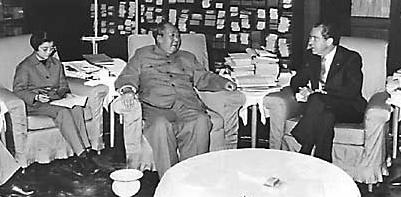
    The Chairman would like to ask you about "Laugh In".
    The Chairman would like to ask you about “Laugh In”.
  • Nobody said media-whoring would be easy

    If you follow the Internet in China, you may have heard of a young man who goes by the online name “Zola” (or “Zuola” to be perfectly correct). He has been billed as “China’s first citizen journalist“. Zola first attracted widespread attention when he blogged from the site of Chongqing’s famous (and now demolished) nail house in late March. He also popped upat the recent demonstrations opposing construction of a chemical plant in Xiamen.

    It all fit the model of the crusading online journalist/blogger quite nicely. Fame, fortune and –who knows?– perhaps even hot chicks beckoned. Then Zola decided he was going to take a crack at Google, and his fortunes took a turn for the worse.

    In what seems to be a move taken from the Michael Moore playbook, Zola showed up at Google’s Haidian R&D office in Beijing armed with a video camera and confronted a security guard and then a receptionist about a customer service problem. The gist of his complaint appears to be that he was victimized by click fraud and then, in resolving that, shortchanged about seventy bucks he claims he was owed by Google. Neither the bemused security guard nor the Google receptionist was much help. The security guard palmed Zola off onto the receptionist (possibly the best move he made that week) and the receptionist alternated between futile attempts to steer Zola into Google’s normal online customer service channels and sullen silence.

    Zola posted a ten-minute video of the confrontation on YouKu, which Bingfeng kindly posted a link to. It’s in Chinese, but a rough English transcript can be found on Reading China.

    If Zola was expecting to be lauded for putting a burr up Google’s ass, he was, as we used to say in college, on crack (I was going to say “in high school” but I went to high school before the crack epidemic). He was instead pretty ruthlessly savaged in comments to his blog and on the YouKu video. The situation appears to have been aggravated by a bout of petulance over lack of public appreciation for his efforts in the Xiamen PX incident and an admirably honest but image- tarnishing confession that, really, he’s just in it to get famous.

    China blogger and commenter-at-large Feng37 was helpful enough to send me a rough translation he did of some of the harsh criticism being launched in Zola’s direction. Here are three consecutive beauties in Chinese and English from Zola’s Bullog blog:

    4 支持
    [匿名] 火星 @ 2007-6-19 16:24:49
    你直言不讳求名求钱,足够坦诚。但你动机如此纯粹,作为公民记者,不免让人对你的职业操守和诚信额度担心。

    you’re straight up about wanting fame and money, that’s honest enough. But if your motives are so pure, as a citizen reporter, people can’t help worry about your professionalism, personal integrity and honesty.

    [匿名] emlary @ 2007-6-19 23:08:47
    网上那么多骂你的人,看来你离出名不远了,不知道你对客服是怎么理解的,不过看来在你之前已经有很多人去过google公司了,对于一点小事就睚眦必报,你觉得真的有这个必要吗?
    So many people cursing you out on the internet, it looks as though you’re not too far away from getting famous. I don’t know what your understanding of customer service is, but it looks as though many people have been to Google before you…do you really think it’s necessary to get revenge and report on something to small and irrelevant?

    [匿名] 给你一个警告 @ 2007-6-19 23:21:34
    你太SB了,小子北京不是你想进就进的更不是你想出就出的
    You stupid little cunt, Beijing isn’t a place you can just walk into when you feel like it and leave when you want.

    And it gets worse. It’s hard being a celebrity, isn’t it?

    As Feng37 pointed out, Bullog does not allow blog owners to delete comments (an interesting and debatably worthy policy). His new blog, http://www.alouz.com/, does allow that, and I am told he’s been making use of that function to purge the unfavorable comments.

    In our communications about this issue, Feng37 asked me what advice “a PR 高手” (flattering, if perhaps a tad exaggerated) such as myself would give to Zola at this stage. I am sucker for this kind of challenge, so as much as I hate to be the john to Zola’s media whoring I am going make some suggestions. This is free advice and it’s worth every penny Zola has paid for it.

    1) It’s not about you

    You were in a good situation when you were covering the Chongqing nailhouse story. You had a sympathetic subject colorfully personified in Wu Ping, a relatively clear villain in the sinister developers, and a nicely unfolding drama that encapsulated a serious issue facing China. The Xiamen PX case had much the same drama and similar social relevance. Then you followed up these two immense dramas by going to Google to complain about seventy bucks they owe you. Spot the inconsistency.

    By making yourself the focus of what was a comparatively trivial complaint, you also made yourself look petty and unsympathetic. People are generally not interested in sympathizing with the observer, but with the subject. If you wanted to complain about Google’s customer service, you should have found someone else trapped in their Kafkaesque customer service maze and gone to bat for that person. It’s OK for you be manipulative, that’s part of the art form, so pick someone as tragic and photogenic as you can find. A cancer-stricken orphan with a website, for instance. But you need to channel someone else’s misery, not your own. That enables you to remain comfortably heroic.

    2) Pick your villains carefully and don’t humanize them any more than you have to

    Google could make a good villain, heaven knows. In the space of three years they have gone from the plucky little startup everyone was rooting for to sprawling, secretive and vaguely sinister monolith that could be the next Microsoft assuming Microsoft knew every little thing about you right down to what kind of p*rn gets you off. But not everyone hates Google. They still have a lot of fans even here in China. Furthermore, it is possible to make a naturally unsympathetic entity (and Google has definitely become that) sympathetic by personifying it in a way that undermines your crusade. In this case, Google was personified by the receptionist who was clearly totally unable to resolve your situation no matter how much you harangued her. In the end I felt sorrier for her than I did for you (although this whole episode revealed some issues for Google China as well — more on that later). The lesson is to go after people who represent power or who are actual gatekeepers for power (like, gulp, their PR people). Next time pick on Kaifu Lee.

    3) Grow a thick skin

    As they say, the only thing worse than being talked about is not being talked about. If you’ve already confessed that your motive is fame then you better be prepared for the reality that just because people know who you are doesn’t necessarily mean they will like you. And the more you appear to be shamelessly self promoting, the more people will naturally lean toward disdain. Think Furong Jiejie, who never seemed to realize that the joke was on her and ended up being famous (briefly) and unintentionally tragic and embarassing. You don’t want your fame to be of the car-wreck variety.

    But even if you are at your best, people will criticize you for any of a number of reasons. Suck it up, dude, and show some confidence. Soak up the criticism and, indeed, revel in it. The price of being a lone crusader is being lone crusader. Show some spine and treat the unbelievers as gnats unworthy of swatting. And remember your basic blogging etiquette: Don’t delete comments or posts if it can be avoided. Consider the fact that controversy on your websites will attract readers and that perhaps you should be cultivating it.

    4) Never forget that the Internet is the lowest rung of celebrity

    American radio star Howard Stern once said that radio was the lowest rung of the celebrity ladder (and as someone who used to work in radio, I empathize). Fortunately for him, the Internet has finally given him someone to look down upon. Audiences are fickle and celebrity is volatile and often short-lived. That’s especially true of Internet celebrity, which lends itself to transient, “flavor of the moment” fads and freakshows (see Furong Jiejie, above). Durable Internet celebrity is surpassingly rare. We’re all disposable on the Internet. Sucks, doesn’t it? In 1968 a smart man named Andy Warhol said, “In the future everyone will be world-famous for fifteen minutes.” He may have envisioning an Internet-powered world like the one we live in today. Or he may simply have been on dope. It was 1968, after all. But the essential truth of the statement remains. It is important, therefore, not to let Internet celebrity go to your head. Whatever else, don’t act like a movie star until you actually become one.

    5) If you’re going to make it about you, consider the value of irony

    OK, so maybe you’re going to ignore that first piece of advice and make it about you. There is a way it can be done. I note that the front page of your new website has a picture of you gazing into a mirror while wearing a T-shirt emblazoned with–a picture of you. I desperately hope this is meant to be a gentle bit of self-satire. Because if it’s not self-satire then you really are headed for same lonely, post-Warholian purgatory currently inhabited by William Hung (look him up).

    If you are willing to mock yourself, then you can ignore most of the rules above. But you then need to recognize that your mission has changed from citizen journalist to comic entertainer. Not everyone has the fortitude to make a career out of irony or self-ridicule, and my guess is that’s not what you want. So think it over carefully because this route will take 100 percent commitment, and it will be hard to mix with the kind of stories that got you notoriety in the first place.

    Reflect upon Mr. Moore

    I mentioned crusading film-maker Michael Moore on purpose. In crafting this advice, I considered quite a bit what makes Mr. Moore successful. He seems to be in the mold to which you aspire (metaphorically speaking — I don’t think you’ll ever be that big). Michael Moore is an utterly polarizing artist, but whether you love him or hate him he is undeniably a hit. Moore injects himself into his stories, but he is never the subject, only a conduit or engaged observer of someone else’s plight. He chooses his villains wisely (from an American perspective), knowing that his choices will generate controversy that will attract attention. And he is teflon-coated when it comes to criticism. Millions of people hate him. But millions also love him and he is world famous.

    So that’s my advice. It is offered constructively. I think China benefits from having citizen journalists, and I encourage you to keep at it and get world famous. Don’t take the media-whore comment too seriously. You’ve already confessed. And, after all, many of us in the blogging and PR biz are media- whores ourselves. We can all whore together. That is what the Internet is all about, isn’t it?

    That doesn’t sound like PR advice…

    Readers may be thinking to themselves that the above is more advice on Zola’s craft than his PR. But for a media celebrity –even an aspiring one– the two are often related. The persona is the PR. The answer to Zola’s public perception problem doesn’t lie in anything he can say or write, but in how he defines his public persona. Looked at another way, we PR people are often accused of crafting slick, empty words to rescue people or companies from bad situations. Sometimes that’s true. But PR at its best is helping a client to find a genuine, constructive solution to a problem and then communicating the solution. This is especially true in crisis situations, and I think it’s safe to say that Zola has had something of a little crisis. Therefore I have proposed what I think is a solution

    Bonus advice for Google China:

    Despite the fact that Zola’s Google stunt went wrong, Google doesn’t get a free pass from Imagethief. A basic rule of PR is that in this day and age everyone is a public representative of your company. This is doubly true of a company like Google that is famous, controversial, and the subject of much discussion in China. That secretary was sitting in a Google lobby and wearing a Google T-shirt. How is it that she (and for that matter the security guard) wasn’t briefed on what to do when a journalist came to the front desk? And in the era of blogging and the Internet, anyone waving a camera around in the lobby, even if they are raising a customer service complaint, needs to be treated like a journalist. Especially by the world’s biggest Internet company, which happens to own a huge blogging engine and world’s biggest video-sharing website. Connect the dots, people.

    In fact, a good policy might be to assume anyone who comes into the lobby is a journalist until conclusively proven otherwise.

    So give the poor girl at the front desk some clear guidance on what to do in that situation, and a simple escalation path she can follow when she is dealing with someone with a camera. That doesn’t mean escalating to security or the police, unless the story you want going public is “How I was roughed up by Google”. Have someone on call who is media trained, savvy and knows enough about customer service to answer questions on the record. Who knows? You might find that these kinds of situations can be turned into PR opportunities.

    Hey, nice shirt!
    Hey, nice shirt!
  • China’s food crisis PR strategy: Blame everyone else

    A few weeks into China’s rippling food quality crisis a PR strategy is coming into view. It’s a classic one: blame everyone else. Unfortunately, it’s not likely to be all that effective because of two things. First, China does actually have long-standing problems with food and drug quality. Second, China’s poor history of transparency makes it hard for them to dispel suspicion (a problem that also dogs their disease-related communication).

    The recent affair began with the discovery that vegetable protein shipped from China to the USA and used in pet food had been contaminated with melamine, a plastic that can make the overall protein level appear higher. Melamine also destroys the kidneys of cats, as it happens, so the contamination was discovered.

    In classic fashion, China’s initial response was to deny everything. As a crisis PR strategy this sucked. Nothing makes you look sillier and less credible than retracting a categorical denial made in haste. It taints every following communication. In fact it wasn’t entirely China’s fault. Initially AQSIQ, China’s quality monitor, wasn’t looking for melamine, but another suspected contaminant. But obscure mitigating technical factors don’t tend to play well in the court of public opinion, or excuse prudence. In the face of further disclosure, the Chinese government’s subsequent choices were to appear dissembling or incompetent.

    Every country has its fair share of food quality problems. In my native USA E. coli bacterial contaminations are something of a national sport, and I can remember plenty of food poisoning scandals. Eric Schlosser’s book, Fast Food Nation, makes fine reading if you are interested in the topic. The FDA conveniently puts its “refusal reports” –the reports of imports rejected– online. If you want to be horrified, read the Mexican list. Food contamination is not an exclusively Chinese problem.

    China’s government has grabbed onto this idea as part of its defense. It has been helped by some recent developments, including the rejection of a shipment of Evian for alleged bacterial taint (a case that stokes the fire of another China PR issue, Danone’s legal war with Wahaha — see this interesting post from China Law Blog) and the discovery of Melamine in some US-manufactured animal feed ingredients. Li Yuanping, director general of the government’s Import and Export Food Safety Bureau, also pointed out that China has in the past rejected US products due to Salmonella contamination, and asserted that China’s record on food exports is slightly better than the United States. Li offered up some winning quotes:

    “Ninety-nine percent is a relatively high percentage of suitable goods,” Li Yuanping, director general of the government’s Import and Export Food Safety Bureau, said at a news conference. “Facts speak more loudly than anything. . . . From what I have told you, you can see China has a very sound system that can guarantee the safety of food exported abroad.”

    ***

    “No food-inspection system is foolproof,” he said. “It’s like an airplane. Flying is said to be the safest way to travel, but sometimes you have plane crashes.”

    Bad choice of words in Imagethief’s opinion. You think an airline would communicate that way? But I haven’t been hired to advise the Chinese government.

    Graceless rhetoric aside, Li might actually be right. But perception is everything. Frank Luntz, a conservative pollster, wrote a pretty good book about public communication called Words that Work in which he relentlessly drove home a key point: It isn’t what you say, it’s what people hear (in fact, that’s the subtitle). You say “99% are good”. Americans in bathed in relentless media coverage will hear, “1% might kill you”. Roll the dice and move your mice.

    Like a premature categorical denial, “everyone else sucks too” is considered a weak strategy around our office. You think China’s national ambition is to suck only as hard as everyone else? I think they want to be better. More importantly, as far as the audience is concerned we’re not talking about everyone else. We’re talking about export-driven China, which has a great deal at stake in overseas perceptions of its food quality. In international trade, food and drug safety issues get entangled with every other hot button issue. And in the US right now China is second possibly only to Iraq as the hottest of hot-button countries.

    To illustrate, let’s look at that Mexican example above. America simply doesn’t have as big an axe to grind about Mexican imports (except for immigrants) as it does about Chinese ones. Mexico isn’t the emerging strategic rival. Mexico doesn’t hold a trillion dollars worth of American debt. You don’t hear about America’s trade deficit with Mexico (about a quarter the size of the one with China in 2006). By and large, Mexico doesn’t threaten American agriculture so much as it props it up with cheap labor.

    You get the idea.

    Agenda hockey

    Following the great melamine scandal of ’07 a few other China-linked disasters have emerged into public view. In early May the New York Times ran a lengthy investigative report on tainted cough syrup in Panama killing people. The cause was toxic, cheap ethylene glycol from China sold as harmless but more expensive glycerine and used in the manufacturing. The ethylene glycol has been getting around, apparently, as it has also found its way into Chinese toothpaste (proxy link) exported to Panama, the Dominican Republic, Costa Rica (and, for good measure, smuggled into Nicaragua) and, it has been discovered, the United States.

    As far back as mid-May, Dave Barboza of the New York Times and International Herald Tribune was writing about China’s “credibility problem” surrounding food exports. The situation has not improved since then. Barboza points out that a thirty-billion dollar a year export business it at risk. And that’s where the agendas come into play. The Washington Post, among others, has run op-ed columns editorializing about Chinese food imports in pretty strong terms. Here’s a recent lede:

    And what is madame’s dining preference this evening? Scallops coated with putrefying bacteria? Or mushrooms laced with illegal pesticides?

    These delicacies and more were among the hundred-plus foods from China that our Food and Drug Administration detained at U.S. ports last month, Rick Weiss reported in Sunday’s Post. Detained and sent back to the importers, who ofttimes sent them back to us again.

    Yuck. The Rick Weiss story linked to in that op-ed piece is headlined “Tainted Chinese imports common”. That’ll stick in people’s heads.

    China is busy trying to persuade the United States to allow imports of Chinese frozen chicken, among other things. What stories do you think American chicken farming companies are busy reminding Congress of right now? The Boston Globe, which is not much of a China cheerleader (they regularly run op-ed pieces on China and Darfur and have played a big role in the “Genocide Olympics” campaign), was running gross-out stories on Chinese chicken farming way back in early May, before this whole episode even kicked into high gear. More recently, the American press has been reminding everyone that their vitamins all come from China. That story was by McClatchy’s Tim Johnson, who also wrote an interesting post about this on his blog. Check it out to see some interesting public reaction.

    So the picture that is emerging is of a food and drug supervision apparatus that is hopelessly broken and that has been for some time. This will be no surprise to anyone who lives in China, where food scandals fall from the skies like the Shanghai plum rains. But it’s making waves overseas now, with enormous business implications. You might think that a serious, soul-searching look at the state of domestic regulation and enforcement, vigorously communicated, would be China’s solution.

    You would be wrong.

    The blame game

    China certainly takes the situation seriously. In fact, seriously enough that English-language state media in China, in the form of the China Daily, excoriated China’s regulators for their crappy communication (here reported on by the AP). That is significant. In fact, suggesting something of an editorial slant, the China Daily also went so far as to publish a Wall Street Journal story titled “China confronts crisis over food safety” in its entirety on the China Daily website, with attribution and an external link.

    The popular Southern Metropolis Daily also ran a column by journalist and blogger Lian Yue, translated by Danwei, that linked the food safety problem to broader problems in China. I don’t know if similar commentaries ran elsewhere in Chinese language media. Anyone who has seen anything should post a comment.

    But the official response from the government, represented largely by AQSIQ, has been essentially to blame anyone and anything but the system.

    In the case of the Panamanian cough syrup, the deputy head of AQSIQ blamed Panamanian traders, an account disputed elsewhere. In the case of the tainted toothpaste, China is accusing the American FDA of sensationalizing the situation. In that same story the head of AQSIQ’s food safety division accused the foreign media of the same thing, describing their reporting on the scandals, in an exquisite choice of words, as “wanton”.

    The charge of media sensationalism may be justified to a degree, but blaming the media is almost never an effective PR strategy. It carries an inescapable whiff of Scooby-Doo, as in, “I would have got away with too, if wasn’t those meddling kid reporters!”

    Finally, the Chinese government is blaming its former drug chief, Zheng Xiaoyu, for the entire situation (interestingly, a Google search for his name this morning causes Nanny to issue the deadly “server reset” message). The unlinkable South China Morning Post drove the point home with a headline last Friday that read, “Corrupt drug chief blamed for scandals.” AQSIQ and the State Food and Drug Administration (SFDA) double-teamed on this one:

    SFDA spokeswoman Yan Jiangying said the agency should not be blamed for Zheng’s mistakes. “I want to highlight that we should not dismiss the entire drug supervisions system because of a single person, Zheng Xiaoyu, and we should not extend the mistakes made by a single person, Zheng Xiaoyu, to the mistakes of the entire system,” she said.

    So its Zheng Xiaoyu’s fault if you had any trouble reading between the lines. And people say the Chinese are cryptic.

    When China rolls somebody’s head over a scandal it’s not always a metaphor. To show how serious it is about that accusation, Beijing has sentenced the hapless Zheng to death. It has been a long fall for the man who was tasked with cleaning up in the wake of the awful Anhui baby formula scandal of 2004.

    Killing the wrong chicken

    Let’s go back to Frank Luntz’ point about it not being what you say but what people hear. Executions have a proud tradition as public communication. China thinks that the message that they are sending  with Zheng’s sentence is, “We are goddamn serious about this.” Imagethief is willing to bet that the signal received by overseas audiences will be, “We are so thoroughly corrupt that we had to execute our former top drug regulator.” The question going through heads overseas will be, “Well, whom haven’t they caught yet?”

    Executing a mandarin probably won’t have any effect at all on the small processors and exporters who seem to be responsible for most of the problems. Zheng is too far removed from them. Unless small companies feel the weight of enforcement landing squarely on their own shoulders, with an attendant shift in the overall risk/reward equation, their behavior won’t change.

    The lingering question is whether a combination of endemic corruption and industry fragmentation render the problem unsolvable. An Imagethief commenter named Jim recently made a good point. He wrote:

    Processing millions of tons of food, through millions of workers in tens of thousands of large and small companies, with high cost-cutting motivations, from millions of farms through thousands of transportation companies to millions of sellers to tens of millions of buyers, is hard.

    Yes, it is. But I’m an optimist and China needs to show that it is serious about regulating that very process and enforcing vigorously if they want to get past this episode. And they need to clearly communicate exactly what they are doing to both domestic and overseas audiences. Good crisis PR isn’t about bluffing your way past a real problem, it’s about explaining what you are doing to solve it. No one will expect China’s food problems to be fixed quickly, but people can be pretty forgiving in the face of some contrition and obvious effort.

    The other option is to keep pointing fingers elsewhere. That might save face and keep people at home happy, but it won’t influence overseas audiences who will keep hearing in the most visceral terms possible how broken China’s regulatory system is. Doors will slam on Chinese imports. Overseas manufacturers conscious of their own brands will look elsewhere for ingredients. And the Chinese government will look foolish and self destructive when the next scandal boils out of the bowels of a broken system.

  • Did the “Genocide Olympics” influence China?

    Propaganda and censorship are two sides of the same coin. Both share the same goal: to enable an individual or organization to shape consensus in a group. They often work together. Censorship eliminates competing ideas, creating a void in which propaganda can be more effective. Having a coup? Seize the transmitters and studios so you control the message. It’s a time-honored strategy. Propaganda and censorship are related in another way. They both work cumulatively, over time. It’s not usually the “magic bullet” that drives consensus so much as the patient steering of discourse over time via many channels.

    But propaganda and censorship do have one difference. I wrote recently that the most powerful censorship is what you don’t see. That’s not always the case with propaganda. Brilliant propaganda can certainly be subtle. Think of manufactured word-of-mouth campaigns that cultivate something that feels like a grass-roots public groundswell. But brilliant propaganda can also be right in your face. There was nothing subtle about the 1934 Nazi Party rallies, but they were brilliant propaganda, as was Leni Reifenstahl’s film of the rallies, Triumph of the Will. That was propaganda as sensory overload and religious experience. And it was devastating in cultivating the Nazi mythology.

    The 1936 Olympiad was also propaganda, designed to showcase the grandeur of the Third Reich and the physical superiority of Hitler’s Aryan race. Like the 1934 rallies it was also filmed by Leni Reifenstahl. There was a problem with the Olympiad, however. It was hijacked by Jesse Owens, the black American sprinter who won four gold medals and undermined the messages that Hitler wanted to send to the world. Owens was a powerful, visual symbol and he himself became the lynchpin of a public mythology.

    Now it’s China’s turn. China is not Nazi Germany, but the 2008 Olympic Games is as symbolically important to China as the 1936 Games was to Hitler, if not more so. It is a monumental affair staggering under symbolic baggage, and it will be, once again, propaganda as a religious experience. Like the 1936 Olympiad, however, it is also vulnerable to being hijacked. Jesse Owens didn’t mean to undermine Hitler’s message. He just wanted to win. But that didn’t change his impact.

    China won’t have it so lucky. The Olympics is more than a sporting competition. It’s a global platform that makes a seductive lever for anyone with an agenda that they want to propel into the public consciousness. The modern Olympics has always been seen as an opportunity to make political statements. Hence Owens in 1936, Tommie Smith’s and John Carlos’ “black power” salute in Mexico City in 1968, the Black September hostage drama in 1972 in Munich (Germany star-crossed again), and the reciprocating Russian and American boycotts of 1980 and 1984. China’s Olympic games isn’t even the first time an authoritarian Asian nation has used the Olympics to debut on the global stage. That honor goes to Korea, for the Seoul games in 1988, when Korea was at the tail end of its authoritarian regime. You can even make a case that Japan beat Korea to the punch in 1964 when its summer games served as the stage for Japan’s symbolic postwar rehabilitation less than twenty years after the end of WWII.

    If all of this makes you feel a little grimy, remember that the modern Olympics exists specifically as a propaganda vehicle (and here I include marketing as a kind of propaganda). The IOC may call it a “movement”, evoking images of grass roots participation and noble sporting ideals, but that is propaganda itself, designed to draw a graceful fig leaf over the reality that the Olympics is a vast business venture –reportedly US$4 billion in revenue over its previous quadrennial cycle– driven by sponsorships and advertising. Sponsors take the messaging opportunity seriously, as well they should considering what they invest.

    China, hungry to be seen anew as a great power, had its own agenda in mind with the Olympics. Unfortunately for China, all the debate and controversy that swirls around its human rights, environmental and geopolitical issues is being dragged along in the Olympic slipstream. People have China axes to grind, and that beautiful Olympic fulcrum is too enticing to pass up. The 2008 Olympics was politicized from the moment it was awarded to Beijing, and will be more contentious than any games in modern memory. That’s a big deal considering the Olympics’ propaganda-splattered pedigree. In the PR industry we refer to the 2008 Olympics as “issues rich”, which is a polite way of saying, “watch this space for crisis”.

    That’s why “the genocide Olympics” is such a brilliant piece of propaganda. It is as un-subtle as you can get, and it looks like being effective.

    The phrase has emerged into the popular consciousness thanks to a campaign by actress and activist Mia Farrow and her son Ronan, most recently in an op-ed piece (also here) published in the Wall Street Journal and Boston Globe (and possibly elsewhere) in late March. Mia Farrow is just one of a constellation of people and groups with a China issue. In fact, Ms. Farrow’s real problem is with the Sudanese government’s sponsorship of widespread destruction and killing in the Darfur region. But China’s support for the Sudanese government and its investment in Sudan make it a convenient pressure point, and the Olympics provide that all-important leverage. The editorial says:

    [There] is now one thing that China may hold more dear than their unfettered access to Sudanese oil: their successful staging of the 2008 Summer Olympics. That desire may provide a lone point of leverage with a country that has otherwise been impervious to all criticism.

    Whether that opportunity goes unexploited lies in the hands of the high-profile supporters of these Olympic Games. Corporate sponsors like Johnson & Johnson, Coca-Cola, General Electric and McDonalds, and key collaborators like Mr. Spielberg, should be put on notice. For there is another slogan afoot, one that is fast becoming viral amongst advocacy groups; rather than “One World, One Dream,” people are beginning to speak of the coming “Genocide Olympics.”

    Does Mr. Spielberg really want to go down in history as the Leni Riefenstahl of the Beijing Games? Do the various television sponsors around the world want to share in that shame? Because they will. Unless, of course, all of them add their singularly well-positioned voices to the growing calls for Chinese action to end the slaughter in Darfur.

    The Farrows don’t take immediate credit for “the genocide Olympics”, and in fact the phrase has been circulating since at least last December, when the Washington Post ran an editorial by that title. The Boston Globe, extends a degree of credit to a Smith University professor named Eric Reeves who advocated the Olympic-China-Darfur link on their own op-ed page, three days after the Post piece ran. A week after Reeve’s piece, theGlobe ran another editorial that cited Reeves and did use the phrase “genocide Olympics”. (The Globe has been banging the drum very hard, and it launched the phrase again in a new editorial from May 8th, here republished in the International Herald Tribune.) The phrase also had a bout of publicity in March thanks to the Farrows, and has been resurrected in the past week or so thanks to the efforts of US politicians, including long-time China critic Tom Lantos and others:

    “We don’t want these Olympics to go down in the history books as the genocide Olympics,” said Lantos, chairman of the House of Representatives committee on foreign affairs.

    ***

    “It is outrageous that China is using the very symbol of international unity and brotherhood to further grind down the Tibetans and the Taiwanese who simply want to live their lives without interference from Beijing,” Lantos said.

    Two things are making this a successful campaign.

    First, the campaigners have a brilliant slogan. The genocide Olympics. It sticks in the head and it conjures up the worst possible set of associations. It fits on a T-shirt (which you can order), and it is evocative and emotive at a visceral level.

    Second, in a classic PR strategy, the advocates have marshaled what we in the biz call “a chorus of voices”. One angry person heaving around an incendiary phrase does not necessarily make for PR disaster. An expanding group of celebrities, politicians, activists and editorial writers heaving that phrase around does. Over time they will imprint “the genocide Olympics” on the public consciousness. (Mr. Reeves writes more about the campaign here.)

    The Farrows did something else brilliant. They appropriated an intensely powerful advocate in Steven Spielberg, who is advising the Beijing Olympic Committee, and they did it in the most audacious fashion possible. The Farrows compared the Jewish film director and Shoah (Holocaust) Foundation founder to Hitler’s own cinematic propagandist, Leni Riefenstahl. The drew a direct and highly visual line from 2008 to 1936, right through Mr. Spielberg’s chest, and turbocharged the genocide concept. Mr. Spielberg obliged by apparently personally lobbying China to take tougher action on Sudan.

    So is it all working?

    This is debatable. China is notoriously impervious to outside pressure. But China doesn’t necessarily need to be directly persuaded. If the “genocide Olympics” idea gains enough currency, major sponsors and other national governments will start to become queasy. If the activists can pressure Visa, McDonalds, Coca Cola, GE, Samsung et. al. (Lenovo is probably a write-off) then they’ll pressure Beijing and the IOC in turn. And the sponsors, who depend upon the image of the Olympics, control the money that is the life-blood of the “movement”.

    Despite its tradition of hard-headedness, China last week appointed a special envoy dedicated to the Darfur crisis. Earlier, shortly after the Farrows and Mr. Spielberg ratcheted up the pressure, China dispatched a “senior official”, Mr. Zhai Jun, to Sudan to push the Sudanese government to accept a UN peacekeeping force in Darfur. On April 12, the New York Times reported on Zhai in an article titled “Darfur collides with Olympics and China yields”. (Behind the Times paywall but can be read on Ms. Farrow’s website.) The article suggested a direct link between the campaign and the mission. Lest you think China is getting soft, however, Mr. Zhai is quoted in the article describing boycott advocates as, “either ignorant or ill natured”.

    Perhaps the link isn’t as direct as it seems. Last week I had coffee with an experienced China journalist who said he felt the article was reaching in linking the campaign directly to Zhai’s visit, and that China had already been in motion on Darfur. Indeed, the article itself says:

    During closed-door diplomatic meetings, Chinese officials have said they do not want any of their Darfur overtures linked to the Olympics, American and European officials said.

    In an e-mail message on Thursday, a spokesman for the Chinese Embassy in Washington warned anew against such a linkage. “If someone wants to pin Olympic Games and Darfur issue together to raise his/her fame, he/she is playing a futile trick,” the spokesman, Chu Maoming, wrote.

    But the Chinese would say that. After all, if they admit having been pressured once, the floodgates will open. Darfur is only one of the agendas swirling around the Olympics, and other interested parties will be watching to see to what extent the Olympics can be used to pressure Beijing.

    In another discussion I had last week, the regional managing director for one of my company’s cross-town rivals wondered aloud to me if China is ready for a “multi-stakeholder world”. That’s a PR flack’s way of wondering if the Chinese can gracefully juggle the pressures that will accumulate from governments, activists, Olympic sponsors, celebrities and everyone else who has one of those China axes to grind. Not every pressure campaign will have the in-your-face impact of “the genocide Olympics”, but more are certainly on the way. I think the success or failure of the Olympics will be determined not by the campaigns themselves, but by the grace and sensitivity with which China can respond to them. Angry rhetoric aside, if there is any sincerity to them them then China’s recent moves with regard to Sudan are promising.

    Unfortunately, it will be hard for China to shed its authoritarian and reactionary instincts. Just this week the country responded to a recent Tibet-oriented protest on the slopes of Mount Everest by cracking down on individual tourism to Tibet. That self-destructive move will generate exactly the kind of negative publicity that will remind the world of all of China’s faults, and ensure that the shadows continue to linger over 2008.

  • How to turn one terrible scandal into two

    Note: This includes two posts originally published on back-to-back days.

    Part 1: How to turn one terrible scandal into two

    Imagethief loves watching companies hang themselves. Unless they are his clients, in which case he has fits watching them hang themselves because it means sleepless nights in the glow of the computer eating greasy dinners out of Styrofoam boxes.

    Fortunately for me, China Railway 12th Bureau Group Company is not one of my clients. For one thing, if they were, I’d advise them to change their name. I had to look at the original article twice to transcribe it. I’m sorry, but if you’re not a law firm you have no business having five nouns in your company name.

    More importantly, they have just committed one of the great PR sins: the busted coverup. From AP, via BusinessWeek:

    Police have detained 10 people in charge of building a new subway line for the 2008 Beijing Olympics after one of the project’s tunnels collapsed, trapping six workers, state media said Friday.

    ***

    Construction company China Railway 12th Bureau Group Co., was suspected of trying to cover up the accident and delaying rescue efforts that might have saved lives, Xinhua said.

    Police have detained 10 people including the project supervisor and the tunnel’s designers, Xinhua said. It did not give their names or say if they had been formally charged with any crime.

    Xinhua said the construction company sealed the site immediately after the accident, confiscated employees’ mobile phones and ordered people not to talk to police or media.

    The company did not report the accident to city authorities until eight hours after it occurred, it said, citing unidentified Beijing officials.

    You would think that after the great Songhua River disaster of ’05 people would have learned their lessons about this. But it’s hard to overcome those olde fashioned instincts, and probably even harder when you are working on a marquee project that is part of Beijing’s pre-Olympic rectification program.

    By definition, no one really knows how many successful coverups there are. However, I’d bet there really aren’t many. It all comes down to the old adage that two people can keep a secret if one them gets a lead tattoo. I am not sure any peer-reviewed scholarly work has been done in this area, but I am convinced that as the number of people involved in a coverup goes up, the risk of it being blown increases far more than in linear fashion. I betting that risk increases as at least the square of the number of people involved.

    So you can confiscate all the mobile phones you want, and you can order people not to talk, but sooner or later somebody will. And probably sooner. And even if they don’t, people –family members and friends for instance– tend to notice a lot of sudden deaths.

    Now China Railway 12th Bureau Group Co. (or CR12BGC as I like to think of it) has two crises on its hands: the possibly negligent deaths of twelve workers, plus a mass arrest of its executives and supervisors. Instead of looking negligent, they now look negligent, sleazy and criminal. Congratulations! It’s not easy to self-destruct that dramatically without being discovered trafficking in kiddie pr*n. Good luck explaining all this to the press.

    Unless the government bans all coverage of the situation. This is China, after all, and the rules remain a little different. I realize also that CR12BGC is probably not the most progressive company when it comes to communication. But despite the high level of government intervention, China now has a scrappy, modern media that loves a good scandal. The sooner Chinese companies learn how to deal with this, the better things will go for them.

    We PR people are widely unloved. There is some justification for this. As an industry we have a history of taking on unsavory clients and disagreeable jobs. But its also unfair in some ways. In crisis situations we spend a lot of time giving variations on the following straightforward advice to our clients:

    1. Don’t lie.
    2. Be mindful of your legal risk and prudent in communication, but don’t try to hide or distort the facts of what actually happened.
    3. Don’t lie. (Again.)

    Writ large or small, successful crisis communication is about clearly explaining your side of what happened and being publicly seen to take all practical steps to address the crisis and assist the people affected. You can’t bring back the dead, but you can take care of the living, understand what went wrong, visibly cooperate with authorities and demonstrate a commitment to learning from mistakes. It might not do anything about your legal liability, but it will help your reputation and generally costs less in the long run than the alternatives. And if you do get prosecuted, a constructive approach looks a lot better in court than an attempted cover up.

    Plus its hard to work a crisis when all your spokespeople are in jail.

    Gasp! It's the China Railway 12th Bureau Group Co.!
    Gasp! It’s the China Railway 12th Bureau Group Co.!

    Part 2: Beijing subway collapse: Whose crisis is it?

    Following up on yesterday’s post about the Beijing subway collapse, I saw an interesting article (subscription) by Mei Fong in yesterday’s Wall Street Journal, Asia. (I try to get that right ever since one of their journalists explained to our staff in Beijing that it’s not the “Asian Wall Street Journal” any more, and that we had better get with the times.)

    Because of its galvanizing effect on everyone with a China agenda, the Beijing Olympics has been described within my industry as “issues rich”. This is PR code for “shitstorm waiting to happen”, and is the kind of thing that usually leaves PR men cackling to themselves and planning expensive purchases. (Or, at my pay grade, grocery shopping.)

    Among the many China issues that people get in a twist about is migrant laborers. There are by the government’s own estimates 115 million of them. For perspective, that’s less than 10% of the population of China, but more than 35% of the population of the United States. And I’m not sure the government is counting everyone.

    A lot of these migrant workers are currently in Beijing, slaving away on extremely high-profile, deadline-sensitive projects that are part of the city’s pre-Olympic renovation. People have noticed this. Mei writes:

    [Beijing’s] haste to meet its construction deadlines has resulted in round-the-clock work for the armies of often poorly paid, badly equipped migrant workers who build most of these projects. Some work shifts that can last as long as 24 hours.

    The relatively poor working conditions of migrant workers has come under greater media scrutiny in recent months, causing international labor groups — many already critical of China’s poor human-rights record — to put greater pressure on the International Olympic Committee to improve the situation.

    IOC spokeswoman Giselle Davies said in an email that “our understanding is that all efforts have been made both in terms of safety — specifically putting precaution first, and also in terms of transparent management.”

    Does the IOC really believe that? Even if it doesn’t, is there anything else it could say without admitting culpability and precipitating its own crisis? How about:

    “The IOC is aware of the widespread exploitation of Chinese migrant laborers, the mistreatment they commonly suffer and the appalling and unsafe conditions they endure. We sympathize completely. But we also believe that during the pomp of the opening ceremony, amidst the pageantry, grandeur and fireworks, no one will be thinking about a few bones in the foundations.”

    Maybe not. OK, what Ms. Davies says isn’t as bad as my idiot scenario above. Note the weasel words, though: “Our understanding is…” That phrase is the IOC’s absolution. It transfers responsibility onto BOCOG and the Chinese government. They told us everything is OK. But for credibility it depends upon you and me believing that the chain of honest communication and transparency from labor contractors to construction subcontractors to primary contractors to the municipal government and BOCOG is intact. Do you really believe that? Of the Chinese construction industry? And if you don’t, then should the IOC?

    I realize I am dissecting one partial statement out of context here. But that’s what the public will see, so that’s what will inform people’s opinions.

    As for BOCOG, it has duelling priorities:

    Priority 1) Have a glamorous and untarnished Olympic Games that mark China’s emergence on the International stage.

    Priority 2) Get the goddamn thing done in time and on budget.

    So which priority will win, and whose reputations will get trashed in the process?

    493 days, 6 hours, 51 minutes and 17 seconds to go as of this posting.

    Gasp! It's BOCOG and the IOC!
    Gasp! It’s BOCOG and the IOC!
  • Olympics mean a softer touch for foreign correspondents, maybe

    Ed Cody of the Washington Post’s Beijing bureau has written an interesting story on a new decree from the Chinese government that will grant foreign correspondents in China significantly more freedom in the months before and after the games. The article is interesting for a few reasons. First, it suggests that the government might be working out a relatively more sophisticated approach to media management for the games; second it provides a window into some of the media management tactics they are preparing for; and third it explains how the current control regime has been more obnoxious than effective. Cody writes:

    A decree from Premier Wen Jiabao’s government said foreign reporters, whether assigned here permanently or visiting for the Olympics, will be allowed to roam most of the country freely and report without interference by local police or propaganda officials from Jan. 1, 2007, until Oct. 17, 2008. The Games are in August 2008.

    As explained by Foreign Ministry spokesman Liu Jianchao, the new rules departed clearly — if temporarily — from long-standing orders. They also marked a significant watershed for China, where information has long been treated as government property to be manipulated and controlled by propaganda officials.

    ***

    If followed by authorities across the country, [the decree would] for more than 21 months eliminate some major barriers to accurate reporting about China: regulations that legally oblige foreign correspondents to work through local propaganda officials when gathering news. Those restrictions, when followed, have limited frank conversation with Chinese people and emphasized the official version of news.

    I find this interesting because it suggests that the Chinese authorities are thinking a step beyond their normal control-oriented approach to information management. I don’t think much of how the Chinese government manages information. (I’m sure that statement does not come as a profound shock to regular readers of this site.) All governments want to control information and public perception, and all try to devise systems for doing so that reflect the realities of society, technology and the media environment. I think the Chinese government still drags along too much baggage from before China’s opening and subsequent economic boom, and the attendant explosion in the media and public access to information and communication tools. The CCP model still favors brute control of information over effective communication, and it shows in both domestic and international situations where better communication might be helpful.

    This is not just about the Internet. I am not a utopian when it comes to the power of the Internet to free people’s minds. If all Internet censorship in China was lifted tomorrow there would not be any significant change in China. (For some interesting analysis of related topics, see Ann Condi’s recent guest post in Danwei and Howard French’s comparison of the English and Chinese language versions Wikipedia, although the latter has also been fisked by Dave at Peking Duck.) But while the “un-story” approach works OK when there is a relatively small number of centralized media and limited options for personal communication, it works much less well in an era of blogging, instant-messaging, SMS and extensive international contact. At best China’s government would abandon the information control approach in favor of something more progressive. At the very least it needs to be supplemented by more effective communication. I do think the Chinese government is working on this, but they have a ways to go.

    I don’t for a moment believe the decree means that the government has abandoned its traditional approach to information management. It still hasn’t had anything meaningful to say about yesterday’s massive service interruption at Shanghai Pudong International Airport, for instance. But giving foreign correspondents more leeway in the run-up to the Olympics would accomplish two things. First, it’s a PR move in and of itself. “See? We’re improving!” But there is a second, deeper side to the move as well, and it has to do with what kind of incident would make the Olympics a PR failure for the Chinese government. And make no mistake: the Olympic Games are the most important external PR endeavor the modern Chinese government has ever embarked upon.

    Of course others know this. Because its a global event that attracts the eyes and ears of the world, the Olympic Games –especially the more popular summer games– are a convenient platform for people who have an issue they want to publicize. That’s why the US and Russia used boycotts of each others’ Olympics in 1980 and ’84 to make political points, why the 1976 Olympics were targeted by terrorists, and why any Olympic city is on guard against attempts to hijack the games for other agendas.

    China is, as we in the biz say, “issues rich”. And the Beijing Olympics will be the most “issues rich” (i.e. problematic) games since Los Angeles in 1984 (the Soviet boycott). No matter how you slice it, Seoul, Barcelona, Atlanta, Sydney and Athens just don’t compare. (When the Olympics were held in Barcelona, not all that long ago, Deng Xiaoping had just made the “southern tour” that marked China’s post-Tian’anmen reopening.) Aboriginal rights are great and all, but my China issues list is longer than the list of people Koko wanted to execute in The Mikado. Where do you want to start? FLG? Tibet? Uighur rights? Pollution? Censorship? Jailed journalists? Corruption? Rural poverty and migration? Activists are already sharpening their press releases and polishing their signs.

    But that’s expected. There will always be some kind of scandal. Atlanta even had a bombing. The games can survive a scandal, a protest, or even a bomb. What they can’t survive is a bad police reaction to such an event. Let’s put it this way: If a bunch of people assemble in Tian’anmen Square with pro-FLG banners, it’ll be annoying for the Chinese government, but not a disaster for the games. Even if a sweet-faced teenage girl douses herself in gasoline and sets herself on fire it will be tragic and sad, but not necessarily a catastrophe for the games. It is the government’s own actions during the games that will speak loudest, especially overreaction. If the Chinese cops bust up the demonstration, roust the TV crews and photographers and impound tapes and films it will then become a disaster, not least because every person in the vicinity with a modern mobile phone, Chinese or foreign, will have pictures and probably video anyway. (And if you want to start another revolution in China,  the best way to do it would be to try confiscating people’s mobile phones.) A harsh reaction means the story stops being about the protestors or even the originating issue and starts being about the what a bunch of thugs the Chinese government is and why did we give them the Olympics again? That’s a discussion the government will find hard to control once it gains momentum.

    I’m pretty sure the Chinese government and BOCOG know this, and if they don’t, their PR company –one of the major internationals and a competitor of my firm– is probably telling them (unless they’ve been told to keep their mitts off of strategy and are just grinding out press releases about the Fuwa). So telling authorities around the country to go easy on foreign correspondents is not only good PR now, but its a defensive move to guard against scandal escalation.

    There is however, a potential problem: provincial authorities have a flexible approach toward implementing central government decrees. Imagethief is willing to put real money down on the square that says, when push comes to shove, that provincial authorities will still detain and roust foreign correspondents that poke their noses into sensitive areas during the games, threats to call the Foreign Ministry notwithstanding. And hanging over this is the wide latitude for interpretation of what kind of reportage contravenes Chinese law. Also, the government probably knows that attempts to control the moves of something like ten thousand foreign correspondents will be like herding notepad and tape-recorder carrying cats. Indeed, Cody adds:

    In practice, foreign reporters in recent years frequently have managed to report on their own, speaking directly with Chinese people while using subterfuge and stealth to avoid getting caught by local police. Those who have been spotted, however, often have been detained, lectured and forced to write confessions that they broke the law. In many cases, their notes and camera equipment have been confiscated. At times, they have been shoved around by police.

    I believe the Washington Post has been on the receiving end of some of that shoving around, and I perhaps detect a bit of personal annoyance creeping through that paragraph. But maybe it’s just my conspiratorial nature. Since they don’t do much business coverage I don’t know any of the WaPo journalists personally, although I do like their China reporting.

    The  Chinese government is also, of course, making sure that the police are up to snuff on English and prepared with talking points (well, “dialogues” actually) in case they do run into any nosey foreign correspondents:

    A manual published by the Public Security Ministry and handed out to Beijing police, who are studying English in preparation for the Olympics, contained a dialogue making clear how ministry officials believe reporting should be approached. It described a hypothetical situation in which a policeman comes upon a foreign reporter inquiring about Falun Gong:

    “But Falun Gong has nothing to do with the games,” the policeman says.

    “What does that matter?” the reporter replies.

    “It’s beyond the permit.”

    “What permit?”

    “You’re a sports reporter. You should only cover the games.”

    “But I’m interested in Falun Gong.”

    “It’s beyond the limit of your coverage and illegal. As a foreign reporter in China, you should obey China law and do nothing against your status.”

    “Oh, I see. May I go now?”

    “No. Come with us.”

    Oh dear. Better work on that last part.

    A few hints for the Chinese authorities before the games. First, nothing is “beyond the permit”. Journalists are coming with their own agendas and they are going to write stories about anything and everything. When an emerging, baggage-laden country like China not only hosts the games, but intentionally makes them into a global coming-out party, every single issue in the country is automatically connected with the games. Like it or not. Covering the Olympics, which the Chinese government itself would probably admit are much more than a “sporting event”, is not just sports reporting. If the cops run in every journalist they find asking questions about topics the government finds uncomfortable, they’ll either build some new jails or have a fleet of 747s standing by to deport journalists who have their credentials revoked. I’d say start drafting the self-criticisms now and have them waiting in a stack ready to sign. That will save time.

    In the interest of making a contribution to the success of the games, Imagethief humbly suggests the following, improved approach to media management. It not only presents a better solution, it also more accurately reflects how an overworked foreign correspondent –especially one unused to working in China– might react to the situation:

    Cop: “But Falun Gong has nothing to do with the games.”

    Reporter:
    “Everything has to do with the games, Sherlock. That’s how it works.”

    Cop: “It’s beyond the permit.”

    Reporter: “Permit? What kind of happy horseshit is that?”

    Cop: “I’m sorry, I don’t understand your snappy English vernacular. You’re a sports reporter. You should only cover the games.”

    Reporter: “Say, Kojak, why don’t call up the Foreign Ministry? Tell them I’m going to publish a story on how local cops are harassing accredited journalists doing their jobs.”

    Cop: “It’s beyond the limit of your coverage and illegal. As a foreign reporter in China, you should obey China law and do nothing against your status.”

    Reporter: “My status? My status is pissed off, buddy. I gotta deadline here.”

    Cop: “Look! Over there! It’s Zhang Ziyi! And she’s naked!

    Problem solved. The Foreign Ministry can send payment to me care of this website.

  • Foxconn shoots themselves, Apple in foot

    Note: This post consolidates three original posts on this topic that were published on consecutive days. It was also cross-posted on my CNET blog, published in 2006 and 2007.

    Part One: Foxconn shoots themselves, Apple in foot

    You may recall Foxconn, AKA Honhai Precision Manufacturing, as the company at the center of a recent PR crisis for Apple Computer, when a British newspaper published reports that they were mistreating the workforce responsible for assembling luscious (and expensive) iPods. In the last few days Apple, ever image conscious, got round to publishing their own report on the situation, and it has largely faded from the public consciousness.

    But Apple isn’t the only company that was left scrambling to protect its reputation in the wake of the scandal. Foxconn too felt hard-done by, and is taking steps to assert itself. Unfortunately, rather than take constructive steps to reassure the international companies who’s own brands are propped on Foxconn’s labor practices, Foxconn has instead decided to make an example of two Chinese journalists. This looks like a move that has the potential for mighty backlash.

    China’s English Language Shanghai Daily broke the story in the mainstream. Here it is reprinted by Xinhua:

    BEIJING, Aug. 29 (Xinhua) – A Chinese court has frozen the personal assets of a reporter and an editor at a Shanghai newspaper after Apple iPod manufacturer Foxconn sued the pair for 30 million yuan (US$3.77 million) for allegedly damaging its reputation over reports of substandard work conditions.

    Foxconn’s subsidiary in Shenzhen reportedly petitioned the city’s Intermediate People’s Court on July 10 to freeze the property of Wang You, a reporter for China Business News, and Weng Bao, an editor at the newspaper. The locked-up assets include apartments, a car and bank accounts.

    The company also filed a lawsuit against the journalists, seeking 20 million yuan from Wang and 10 million yuan from Weng. The case is the biggest of its kind on the Chinese mainland in terms of the size of the compensation claim.

    I am not the only one who sees Foxconn’s response as being perhaps a bit disproportionate. Sentiment seems to be gathering that the lawsuit is a blatant press intimidation tactic rather than a dispassionate seeking of legal redress. Two excellent English language China blogs have taken Foxconn to task. Non Violent Resistance writes, in a post scathingly titled “FoxConn is not dumb, but downright vicious“:

    Words in the Chinese press circles are, that FoxConn, therefore Hon Hai, had deliberately picked the two journalists from China Business News to sue in a painstaking plot to harrass and intimidate media outlets and journalists. After all, China Business News was not the only newspaper that doggedly followed the iPod sweatshop story. It seems that FoxConn, before launching the much criticized lawsuit, had also considered targeting 21st Century Economic Herald, another popular business newspaper who had similarly covered the story. But FoxConn’s lawyers, after much investigation, found out that the 21st Century reporters who were involved in reporting the story had solid, formal employment contracts with the paper — therefore, unlikely to be held as legitimate defendants in a court.

    Roland Soong, of EastSouthWestNorth, writes:

    If I can make this case very simple.  This is not a question of whether the First Financial Reporter was right or wrong in his reports.  Either way, FoxConn is entitled to file a civil libel suit against the newspaper, which employs that reporter and his editor.  But since when does a civil libel suit involve freezing the assets of the reporter and the editor, including their bank savings accounts, stock holdings, homes and automobiles, to the tune of 10 million RMB for the editor and 20 million RMB for the reproter?  As the reporter noted, this amount is many more times than that which he can ever expect to make in his lifetime.  By comparison, how would the western media react if a prominent American newscaster such as Katie Couric were sued by a large corporation and have all her personal assets frozen for the duration of the legal proceedings?  The Chinese media workers are of the opinion that if this case were allowed to go through, it will be the end of any coverage of the doings of large corporations.

    More good information from Roland here.

    I can see the thought forming in your head. Dude, it’s China. Press intimidation? So what else is new? But it isn’t quite that simple. Yes, the press in China doesn’t operate with the same freedom that is does in the west, especially when it comes to political reporting. But what the government can get away with in the name of social harmony and what a Taiwanese corporation –even a connected one– can get away with are not the same.

    So what might the PR implications be? Well, the story is now being picked up by various foreign media, including specialized voices such as China CSR, and wire services like AFX,AFP (here on the International Herald Tribune) and Reuters, whose headline suggests that, despite what Non Violent Resistance fears, the newspaper will vigorously defend its journalists. Reuters has actually bothered to get out and do some reportage, and their story includes a quote from one of the sued journalists and a quote lifted from a party-managed Chinese newspaper’s editorial, and written apparently without irony:

    “(The case) has sent a dangerous signal to society, and means legal procedures could be used to suppress freedom of speech,” said an editorial in the official China Youth Daily.

    How about that. If China Youth Daily is complaining that you’re infringing freedom of speech, you have a problem. But journalists –even at official news organizations– will look after their own. Superb China media blog Danwei thinks the story has all the right ingredients to keep titillating western editors (and I agree). The China blogosphere is also gathering heat. Yesterday mega-portal Sina, smelling a juicy story, set up a blog for the two journalists, and the posts are attracting lots of comments and lots of readers. The momentum may not last, but its got off to a good start. The net result is that Foxconn is committing one of the great PR sins by busily making itself look worse than the people it is angry at ever did. And there is no damage worse than self-inflicted damage, which suggests stupidity.
    So if you’re Apple what do you think of this? Remember, this incident is descended from an Apple-related story, and MacWorld UK has also picked up the lawsuit story, so it’s creeping close to Apple’s own brand. The whole thing has now gone beyond simple libel lawsuit and in just 48 hours has spiraled into something nasty with a real whiff of media intimidation about it. Reputation damaging questions are also being asked about Foxconn’s relationship with the Shenzhen government and courts. Chinese press isrubbishing the case. Well, if I’m Apple (or their PR guy), the last thing I need is for the contract manufacturer who just gave me a mighty PR headache to give me another mighty PR headache just ten days after I’ve put the last one to bed (Apple’s report was released August 17). Despite their own recent, poorly thought out lawsuits, media intimidation is not something that resonates well with Apple’s cerebral, trendy brand. If I was Apple I’d be gently suggesting that Foxconn back off if they want to keep my business.

    But, hey, that’s just me, and I’m a nice guy who likes reporters, even though I do bug them with pitch calls from time to time.

    Part two: What was Foxconn thinking?

    Originally published August 30, 2006.

    Every now and then, Roland [Soong, of EastSouthNorthWest] dangles a PR question in front of me and, like a shark rising predictably to the bait, I pretty much always go for it. In yesterday’s post [above] about Foxconn’s fit of PR self destruction, Roland asked in a comment:

    What is the matter with FoxConn? Why is this “no comment” thing? Keeping their fingers crossed and hoping that it will all go away? Can you guess what is going on?

    Well, I am happy to guess. But I’d like to remind all readers that this is nothing more than speculation, innuendo and hypothesis. Of course, that’s never stopped me before.

    From a PR point of view, there are a few things going on here: the original foreign and Chinese newspaper reports about Foxconn’s labor practices, the subsequent lawsuit filed against two Chinese journalists, and the current (entirely predictable) coverage explosion over the lawsuit and refusal of Foxconn to comment. This would be a complex situation for any company to manage from a PR point of view. But it’s going to be even harder for Foxconn. I am going to make a sweeping generalization here: Chinese companies (including Taiwanese ones – please keep your “one China” screeds to yourself) by and large don’t “get” PR. As an old China hand friend of mine said, “They don’t understand PR. They understand face.” Well, just like face can get you into a fistfight that never needed to happen, it can also get you into a PR disaster that never needed to happen. But I think the Foxconn situation runs deeper than simple face.

    Putting the problems of Chinese companies with PR somewhat more scientifically, many of them are just learning what PR is and how to use it. As a Taiwanese company and contract manufacturer, Foxconn evolved in a somewhat more developed media market than mainland companies. It has also been around for more than thirty years, although its internationalization in earnest started in 1993. But as a contract manufacturer –and not, say, a consumer brand– Foxconn may also think that it is insulated from certain kinds of PR problems. This may have been true once, but today, when the bloom is off the outsourcing and contract manufacturing rose, and MNCs are under increasing scrutiny for the behavior of their partners, this is not the case. That lesson should have been made painfully apparent in the original Apple scandal of a couple months ago.

    But there is another complexity operating here: this isn’t just a PR crisis (yes, its an official crisis now). It’s a legal PR crisis. And legal situations are always particularly difficult. With all due respect to my good friends at China Law Blog (who may wish to comment upon some of the legal aspects of this case), lawyers and PR people often rub along poorly. A sound legal approach and a sound PR approach to a given situation do not always agree. I am perhaps nursing a bit of resentment here. Put a CEO, a head of PR and a general counsel in a lifeboat together and maroon them at sea until they begin to starve and see who gets eaten first. Nine times out of ten the CEO and general counsel will eat the PR guy. The CEO’s calculation may be that he’ll need a lawyer to keep him out of jail for cannibalism. Personally, I think that’s misguided. After all, who’s going to do a better job of explaining cannibalism to the public and protecting his reputation?

    My personal issues aside, the upshot is that legal decisions are often considered to trump PR decisions, and are thus taken without regard for the PR consequences. This is especially true in companies with an unsophisticated approach to PR, but it can happen to anyone. In China we see this with things like IPR lawsuits by MNCs against local companies, which make perfect legal sense but can sometimes have PR consequences far more damaging than the actual infringement. But somehow legal problems are considered “real” while PR is considered, well, just PR. So it’s possible that even if someone within Foxconn explained to the management that suing journalists directly was a stupendously bad idea PR-wise, it’s possible that they were simply dismissed as a touchy-feely PR type without the spine to face up to hard-boiled business issues.

    To which that PR person, if he exists, should be saying who’s laughing now, dumbass? Of course, now this poor flack is busy trying to deal with the PR crisis upon which he will probably be judged, so he has no time to gloat. It’s a hard life in the spin doctors.

    So that brings us to the “‘no comment’ thing” mentioned by Roland. Regardless of whether PR people were consulted prior to the lawsuit or not, it’s pretty standard practice for companies to refuse to comment on pending or ongoing litigation. Doing so can often create further legal problems, anger judges, etc. Unfortunately, this can also evolve into a sort of programmed, knee jerk response that is automatically given even in situations where companies really ought to comment. Personally, I think this is a situation that increasingly merits comment. Furthermore, my advice to clients is that you always return a journalist’s phone call, even if it’s just to tell them that you can’t comment, and even if you expect to get roasted for that. It’s a basic courtesy and “could not comment” or even “refused to comment” generally looks better in print than “could not be reached for comment” or “did not return phone calls”, both of which make it sound like you’re hiding and amplify the appearance of guilt. Next to the image of you cowering in a smoke-filled crisis room while unanswered phones ring away, the blandest of holding statements can seem like pure gold. In this case, Foxconn is apparently not returning any calls, so, true or not, they look like they’re hiding. It also makes it hard to know if they’re playing the “don’t comment on litigation” card or if they’re just being obtuse. I’m betting on obtuse.

    Ultimately the question of motivation looms here. Is Foxconn motivated by a sincere desire to address a slight to its reputation by seeking legal redress? Or is it seeking to intimidate the Chinese press as a way of buying future insurance against bad coverage? If it is taking the first course it has committed some serious PR mistakes. It is almost always a bad idea for corporations (or governments) to sue individuals who were working on behalf of an organization, such as a newspaper. For examples, see Apple’s lawsuits against leakers and the RIAA lawsuits against file sharers, both of which were PR disasters even if they were legally sound. Suing an organization looks like seeking redress. Suing an individual looks like petty vindictiveness. David v. Goliath. It’s not that difficult an equation. (Mind you, I am speaking strictly from a PR point of view, not a legal one.) Foxconn has sued the journalists rather than their newspaper. Not only that, it has sued them for far more money than either of them is ever likely to possess, and has had their assets frozen. This not only looks petty and vindictive, it also looks sleazy since they have somehow managed to engineer a presumption of guilt and, without the benefit of a judgment, inflict considerable misery on…a journalist and an editor. And we all know how much Chinese journalists are paid. So if Foxconn was seeking to address a slight to its reputation, it has failed monumentally and is now doing even more damage to its reputation.

    On the other hand, if Foxconn was seeking to intimidate journalists…it has also failed monumentally since the Chinese (and International press and, um, bloggers) are now going crazy.  Nice work guys. It’s Miller time.

    In addition to the China PR problem, Foxconn is also entering into extremely risky territory with regards to its foreign customers, like Apple. Anyone who has followed the recent problems of US Internet and technology companies in China knows that freedom of speech issues are weeping dynamite for foreign companies doing business in China. The last thing a company like Apple needs is a contract manufacturer being accused of media intimidation in China. Imagine:

    “Hey Apple! Your contract manufacturer was just accused of horsewhipping underage girls for sixteen hours a day and now they’re trying to intimidate Chinese journalists into silence on the issue. What’s your comment? How do you feel about the freedom of Chinese media to report on these kinds of issues?”

    Despite my advice above, I’m thinking Apple doesn’t return that phone call. Or if they do, they give a non-answer about how this is an issue for the Chinese courts to settle, Apple has taken great pains to blah blah blah noise noise noise. Apple, you will recall, has had its own problems with the media, and may not want to attract charges of hypocrisy. They will also, somewhat justifiably, want to get All The Facts first.

    But that’s tough for them, because this is their PR problem too and, as I wrote yesterday, if I’m Apple I’m on the phone to Foxconn right now telling them to drop the suit, save face by announcing that their point has been made and suck it up. Better yet, Apple should set a further example for MNCs using contract manufacturing in China and come out with a statement vigorously defending the right of the Chinese press to look into the practices of MNCs and contract manufacturers in China. Apple sells jack here and has essentially no market to lose in China, and can always shift its manufacturing to Vietnam or wherever, so why not retake some of the high ground it lost over the original scandal? What’s Foxconn going to do? They’re Apple’s vendor, and there are plenty of business-hungry contract manufacturers in line behind it.

    And this situation has begun to touch Apple. RSF is already on the case, with an open letter to Steve Jobs.

    But what if the journalists actually did libel Foxconn?

    Interesting question. But from a PR point of view (not a legal one, mind you) now irrelevant. The public opinion and reputational battles have already been lost. A legal victory would be Pyrrhic at best. Foxconn absolutely has a right to defend its reputation in the courts and to respond vigorously when libeled. But legal action in defense of reputation must be considered, planned and executed with an eye on further reputational consequences (this is where PR people and lawyers often diverge). And that is something that Foxconn did not do. Furthermore, Chinese journalists will, if anything, probably be motivated to scrutinize Foxconn even more closely from now on.

    So if I were Foxconn’s PR person what would I now advise them? Presumably after I got done berating them for not talking to me before they launched the lawsuit?

    Drop the lawsuit. It’s too late to salvage this one. Drop it, make a face saving announcement and let it go. And if you must pursue the lawsuit, admit that you were “overzealous”, have the court unfreeze the journalists assets and allow them to go on with their lives pending a judgment. And reduce the damages sought to something symbolic. Remember, this is PR advice, not legal advice. I have no idea how possible any of this would be in Chinese courts. But, at first glance, Foxconn’s relationship with the Shenzhen courts looks pretty cozy, so it shouldn’t be too hard.

    And, really, stop making life difficult for your customers. You don’t need a PR man to tell you that’s a crappy way to do business.

    Notes:

    • iSuppli analyst Adam Pick recently wrote a story hailing Foxconn’s success. Among the factors he noted, “making the most of the China advantage”. It scarcely needs be remarked that one can take “the China advantage” a bit too far if not careful.
    • I should note, by way of full disclosure, that I am not a litigation support expert. That’s a specialized PR field, like financial communications, best practiced by people with a good understanding of the legal environment in which they operate. So my observations are those of a PR generalist. Litigation support experts are welcome to comment.

    Updates:

    • Danwei with some more interesting background and opinions from Chinese media.
    • Sina’s tech news page (not the journalist blog) devoted to the situation, including a handy timeline graphic (Chinese).
    • One of my bosses, a very experienced Chinese PR professional, thinks that Foxconn will be forced to withdraw the litigation. He even thinks it is possible their chairman may have to apologise. We’ll see.
    • Roland’s excellent follow up on the PR war between Foxconn and the journalists includes translations of some of Weng Bao’s blogs (the sued editor). Roland also makes an excellent point that I should have, and which is key to how Foxconn needs to think about this PR battle. From a public communication point of view this PR war is assymetrical. Foxconn is an enormous, faceless corporation speaking in corporatese. The journalists are identifiable human beings able to muster emotion and personal sympathy and use press freedom (in an acceptable local context) as a rallying cry. That means that even if they are guilty, they have the upper hand in the PR battle. Foxconn needs to consider that in all of the their PR strategizing if they are to have hope of looking like anything other than relentless bullies. (Hint: get some real people front and center.) As I wrote above, whether or not libel was committed is now essentially irrelevant. Foxconn can win but still lose if they are not careful.
    • I hear that CCTV 2′s “Dialogue” program is planning a special segment on the affair.

    Part Three: All’s well that ends in retreat

    Originally published on August 31, 2006.

    According to ESWN Foxconn has reduced the damages requested to 1 yuan. Roland is citing a very brief Netease report, and I am not sure how authoritative it is. But if it is true, then it means that Foxconn has taken one of the possible paths I outlined yesterday: reduce the damages to a symbolic level but proceed with the lawsuit. Apple also interceded in the dispute, as I suggested they should. I’d like to claim credit for remote PR genius but, a) it’s not genius, it’s common sense; b) Foxconn and Apple are probably not reading this blog and c) we’ll see how things play out for Foxconn in the Chinese press over the next few days.

    Just as interesting as the Foxconn scandal itself is a sideline discussion that has broken out over the newsworthiness of the story with regard to western audiences. Roland was originally disappointed with slow uptake of the story by Western media. Do read his post above, which offers his point of view on this and lists many of the foreign news sources that eventually did carry the story. Then be sure (especially if you’re a China PR pro) to read this post from Richard Spencer, bureau chief of UK newspaper the Telegraph. Richard keeps one of the best journalist blogs in China and he explains very clearly what news value this story has and doesn’t have with regard to his (middle-England) readers. I should send this post to my clients when they ask why I don’t pitch their China business stories to general-interest Western media like the Telegraph, as opposed to specialist business media such as The Wall Street Journal, Financial Times and Business Week.

    I’m a technology PR man so I think in terms of brand and reputation with regards to technology companies. I wrote the story for my CNET Asia blog, but then I have a specific China technology mandate, no editing to speak of, and write for an Asian readership specifically interested in technology. More generally, I tend to judge a story this way: “If I was that company’s PR man, would I be worried?” For me this story had potential legs overseas for one reason: Apple. Apple is a hot brand that just navigated a China PR scandal involving Foxconn. With an Apple press story as the origination of the of the lawsuit this is potentially interesting to foreign audiences and thus a PR risk for them. If was Apple’s PR man, I would have been worried.

    I see that a lot of the overseas coverage was fairly narrow. Some of it is in journalist blogs (as in Barron’s and the San Francisco Chronicle) and much of it in specialist technology news (Slashdot, VNUNet, MacWorld) interested specifically in the Apple connection. I put “Apple” in my own CNET headline. Most of what might considered mainstream coverage with a broad impact is either from the wire services –which covered the story widely– or business media (The Wall Street Journal, Financial Times), many of which ran the wire coverage. That’s understandable; Foxconn is a large, listed company and a major supplier to many enormous, Western technology firms, so there are business implications.

    So it was a story outside of China, but a particular kind of story. It’s interesting what crosses borders and why. When I do internal training in foreign media relations for my company I spend some time on what different kinds of foreign media consider an interesting “China story”. It always raises some eyebrows among my local colleagues.

    A closing thought. I love my summer PR scandals. Last year: the Songhua River. This year Foxconn. Gotta love those crazy August days.

    Disclosure: I am not Apple’s PR man.

    Update: Xinhua has run a story on Foxconn’s claim reduction:

    Foxconn said it lowered the compensation claim so that the public could focus on the fact that “the untrue reports had damaged the reputation of our company,” and not just on the 30 million yuan compensation claim, Sina reported, citing company spokesman Edmund Ding.

    Damn straight. And the newspaper reports aren’t the only thing damaging Foxconn’s reputation now, and it’s a little late to refocus the public’s attention. Next they think they have been libeled, they can sue the newspaper. Then, if they win, the newspaper can discipline the reporters and it won’t be their problem. Hard lessons learned. Note that I have no opinion on whether the journalists did libel Foxconn or not. That’s something for an (ahem) impartial  court to work out.