Twenty years ago, I wrote a post on this old China blog, “Sanitized for My Protection,” in which I discussed my approach to self-censorship. The post was prompted by a reader comment asking me how I thought about the risks to myself as a resident foreigner blogging about China. The truth was, I hadn’t thought about it systematically, and it was interesting to give some shape to the risks and decisions that defined my writing.
I never felt like I had the luxury of shooting my mouth off with complete abandon. This was mostly professional caution. As I wrote last September, in the post inaugurating this Substack, my boss at the PR agency I was working for was not a fan of my blogging. She was a former Chinese diplomat, well attuned to Chinese government sensibilities, and conservative in matters of public expression.
I did get her into trouble once, in 2008. This was not through a blog post, but through a quote I gave to a reporter from The Guardian on China’s “50 Cent Party” (五毛党) of Internet propagandists. This is what ran in the story:
According to popular lore, and a number of Chinese bloggers, each post made pays 50 Chinese cents or five mao. It is not, by any stretch of the imagination, a lucrative occupation. William Moss, an account director at the public relations agency Burson-Marsteller, calculates that a post needs to be made every four minutes during a gruelling 72-hour working week if you are hoping to earn the bare minimum wage in one of the country’s bigger cities.
“Pocket money? Maybe. But I wouldn’t plan on sending the kids to college that way,” says Moss.
Sounds like me.
My sin was to imply that China’s nationalist astroturfers might not be receiving a living wage for their work in the service of the state. CIPRA, the government-linked China-International Public Relations Association, gave my boss an earful and she, in turn, gave me an earful. I probably laid low for a while after that, but, idk. It was a long time ago and I’m a fool.
Settling a score with style on America’s biggest stage
When I was in elementary school, there was a kid who teased me about my first name, which is Diccon. I’ll call him Eddy McNair. This is a made-up name because he’s probably a wonderful family man now and was just doing what ten year old kids did to other ten year old kids with funny names.
Imagine that I bore a grudge, and wanted to get back at Eddy with the biggest dis possible. The most epic dis in the history of epic disses.
I could work diligently my entire life to put myself in a position to become president of the United States. This would take decades of going to law school, clerking for some asshole judge, running for local office, clawing my way up to state Attorney General, being “tough on crime,” running for governor, serving a successful term or two with no major scandals, and then campaigning successfully for party nomination and the presidency.
Against all odds, this works! I’m no Obama, so let’s say I make it when I’m in my fifties. I’m inaugurated and give a moving speech of national reconciliation. They tell me how to use the nuclear “football” and read me in on all the secrets. I get to see the frozen alien corpses. I bring peace to the Middle East; guide the nation though transition to renewable energy; save the whales, the bees and whatever your favorite threatened animal is. I find homes for all the abandoned kittens of the world. I win the Nobel Peace Prize and the Nobel Kitten Prize, which is not a thing, but should be. I donate the honoraria to a charity that makes little prosthetic legs for landmine-sniffing rats that have had unfortunate accidents. Not once do I host the Kansas City Chiefs at the White House. I am a saint.
Two terms come and go. It is time for my final State of the Union address. Before a joint session of Congress and televised live to a national audience, with my adoring family and invited guests—authors, actors, statesmen—gazing on from the VIP box, I stride to the podium. I gaze across the crowd, and toward the camera, into the eyes of a grateful nation. In my most sonorous and comforting baritone, I deliver my message:
“My fellow Americans, members of Congress, honored guests. Today I stand before you, at the twilight of my career, to say just one thing.”
I pause dramatically and everyone leans in. Whatever is coming next is huge…
“Eddy McNair is a total dick. Fuck you, McNair! You know what you did.”
I tear open my suit jacket to reveal my “Ed McNair is a Total Dick!” T-shirt. Then I raise two middle fingers to the camera, and several huge “Eddy McNair is a dick!” banners drop from the rafters along with a cloud of a red, white and blue balloons. I Crip Walk2 off stage and all the way to the limo to the sounds of a John Philip Sousa march because that is how we roll now.
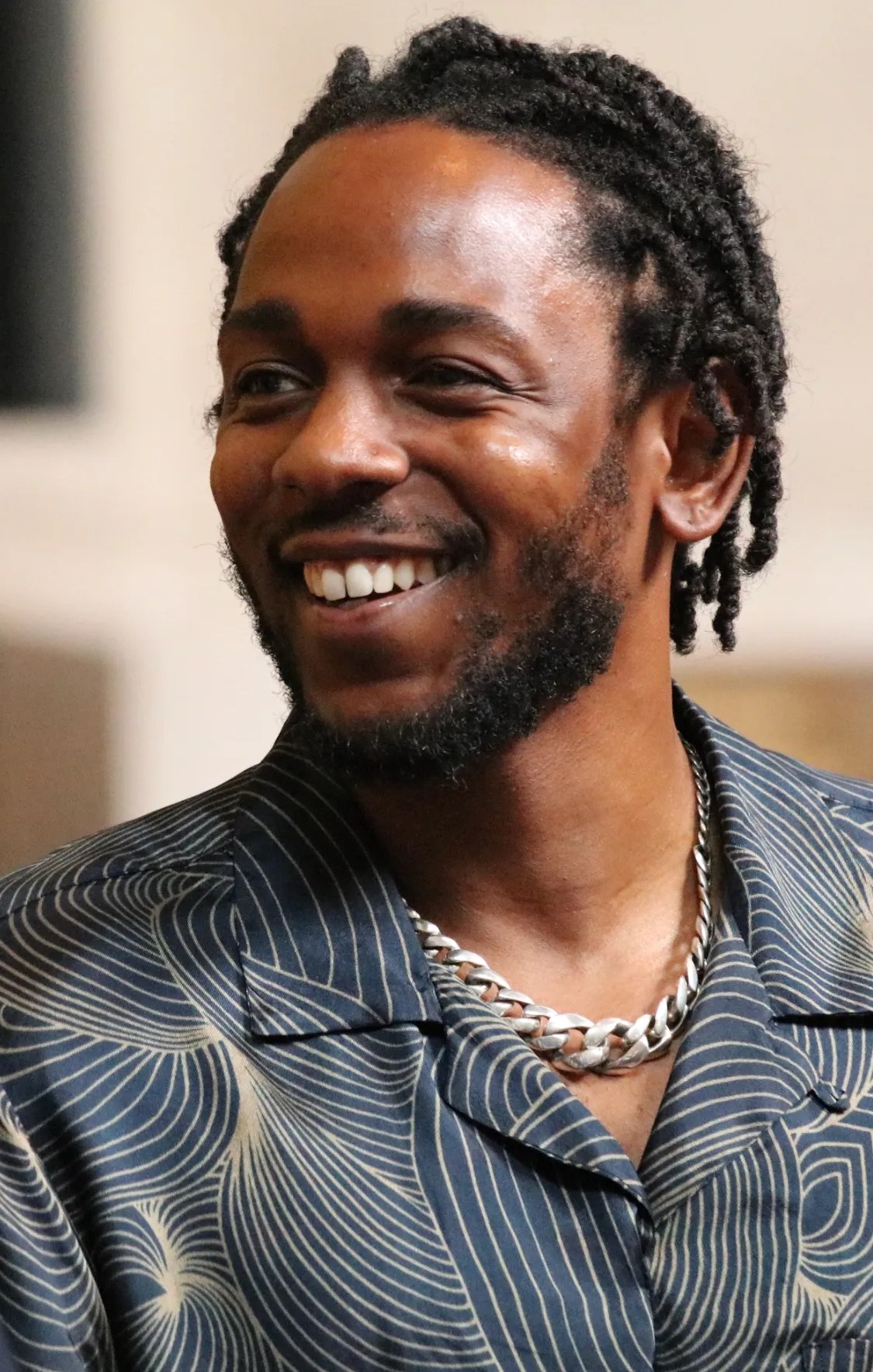
If this all worked flawlessly, I’d still have accomplished only one percent of what Kendrick Lamar pulled off on Superbowl Sunday a week ago.
When do the old rules of political communication become obsolete?
Note: There are two things that have been on my mind as I observe everything happening in U.S. politics right now. I am using this space to think through them out loud. This is the first topic. Second to follow when time permits. I am not sure how well this holds together. Feel free to debate!
On January 28th, 1986, the space shuttle Challenger exploded just over a minute after lift-off. This was one of the defining, “where were you when…?” moments of my youth. I remember stapling my eyes to the television in a common area at my dorm at UC Santa Cruz.
Later that day, President Reagan addressed the nation from the Oval Office. I’ve never been what you’d call a big Reagan fan—he wasn’t popular in the bong-littered halls of Porter College—but it’s good. A classic of public solace, delivered to a traumatized nation. Go watch it if you have five minutes.
The long tradition of shady PR knife work in dark alleys
A few years ago, I had the exquisite experience of having my emails read back to me by lawyers.
There had been a snafu involving disclosure of financial information at my then employer. In handling the communications aftermath, I had emailed with several people involved. The lawyers were doing due-diligence so they could be prepared for any legal consequences, and a number of us had these meetings. I wasn’t in trouble. I wasn’t being deposed. I hadn’t written anything wrong or embarrassing. But it was still uncomfortable.
What did you mean in this part?
Was this line a joke?
To whom were you referring here?
This was a valuable experience. When we train people in communication, we stress that you should write every email, chat and text message imagining it being read back to you at a deposition. All these communications are subject to legal discovery and “attorney-client privilege” in the header isn’t a magic incantation, though people sometimes treat it as one. An internal investigation is a reminder that the lawyers you have friendly chats with in the cafeteria aren’t your lawyers1 and, by the way, the company sees everything you do on your work computer, and someday it might be opposing counsel reading your emails back to you.
Two weeks ago, Brian Thompson, CEO of big health insurer United Healthcare, was gunned down in New York. This created an epic amount of Discourse on social media, aggravated by the mysterious nature of the killer and his temporary escape. This week, a suspect named Luigi Mangione was arrested. He turned out to be a bit of a snack, which is causing weird undulations in the fabric of the media continuum.
The trajectory of the social discourse was amazing. Immediately after the news broke, there was a wave of gleeful social media posts. That was followed by a second wave scolding those making jokes and celebrating Mr. Thompson’s death. Completing the ouroboros, there was then a wave scolding the scolds for not acknowledging the depth of popular hatred of big health insurers.
If a prominent executive in your industry is gunned down on a sidewalk and the public response is party-poppers and dancing in the streets, you should ask yourself some hard questions!
Toy manufacturer Mattel has apologized after mistakenly printing the web address of a pornographic site on the packaging of its newly launched “Wicked” dolls.
Instead of pointing readers to the official website of the movie adaptation of the Tony Award-winning musical, information found on boxes of the special edition dolls leads to a page that requires users to be 18 years or older to enter, according to social media users on X.
“Mattel was made aware of a misprint on the packaging of the Mattel Wicked collection dolls, primarily sold in the US, which intended to direct consumers to the official WickedMovie.com landing page,” the company said in a statement sent to CNN on Sunday.
“We deeply regret this unfortunate error and are taking immediate action to remedy this. Parents are advised that the misprinted, incorrect website is not appropriate for children,” it said.
People who have already purchased the dolls are advised to discard the packaging or obscure the link, Mattel added.
“Misprint.” Sure. Like the colors were out of registration. Could happen to anyone.
Honestly, this does not seem like a crisis. If Mattel had accidentally printed a porno URL on packaging for Barbie (25 percent of revenue in 2023), that would have been a crisis! And at that point possibly simpler for them to just go buy out the offending domain, though they’d be in a weak negotiating position. But on the “Wicked” movie tie-in dolls? I don’t anticipate a tearful CEO video apology for this, though I suspect some people in the packaging design and marketing teams got yelled at.
And rightly so! It was careless. Site unseen, what are the chances the domain “wicked.com” is a pornography website? Close to 100 percent, right? If you were doing the packaging for “Kinky Boots” dolls, you’d damn well check the URL before printing the packaging. (There does not seem to be either toys or a dedicated website for “Kinky Boots,” so this is academic.)
Cards on the table, I’m a fan of the administrative state. Societies are large and complex, and a little technocratic competence goes a long way in ensuring the availability of public goods and infrastructure. But there are some areas where the administrative state struggles. Sex, for one.
Like China, my adopted home of Singapore advocated for limited birthrates during the 1970s “population bomb” panic, when it was widely agreed we were destined to devour each other like starving jackals. Singapore realized its demographic error in the 1980s, as its birthrate plummeted, and went through policy whiplash. When I arrived, in 1995, there was an advertising campaign encouraging young couples to have larger families. I recall lots of slow-motion video and gauzy photos of attractive young couples with cherubic babies, and an omnipresent theme song. Alas, it was too early to be immortalized on the Internet, but there is evidence of later campaigns.
This is one of the greatest things I have ever read in a press statement:
First and foremost, our investigation has identified the root cause of the contamination as a specific production process that only existed at the Jarratt facility and was used only for liverwurst. With this discovery, we have decided to permanently discontinue liverwurst.
The emphasis is in the original and it sells the paragraph.
This comms masterpiece is from a statement released yesterday by the food company Boar’s Head, which is dealing with a crisis regarding listeria contamination of liverwurst manufactured at a facility in Virginia.
One general rule in crisis communications is that you should clearly explain the actions you will take to remediate the problem. “We have decided to permanently discontinue liverwurst.” That’s an action! This step was so important that it was the first of three remedial steps covered in that press release. The second was that they are permanently closing the facility and apparently laying off several hundred people. Naturally, that’s the headline the press went with. Still, if you’re going to bury the lede, bury it under liverwurst!
A little over 20 years ago, a man I respected offered me a job I was interested in. This sent me into a panic.
I had been living in Singapore for eight years and was going stir crazy. Following two imploded Internet startups and the collapse of the dot-com bubble, I had switched to public relations, where paychecks were more reliable. Singapore is great, but very small. In those days you could reach the entire Singapore technology press corps by standing on the right street corner and shouting, though this was frowned upon.
In the early 2000s, if you were casting around Asia for The Action, there was only one answer. China had just acceded to the World Trade Organization, was open for business and on a globalization rocket ride. A Singaporean friend of mine from startup number 2 had spent some time working in Beijing and came back with tales of adventure. It was big! It was booming! Keep one hand on your wallet!
David in his natural environment. From his Instagram.
In June 2004, I quit a perfectly good job at a little PR firm in Singapore and went to Beijing to do a three month language program. Eight years in Singapore had made me a bit stir crazy and China, freshly through WTO accession, seemed like the place to be. Astoundingly enough, Mrs. Imagethief, who had been my wife for all of two years, blessed this batshit scheme. To this day, I think her willingness to say, “Yes, by all means, fuck off to China for a while,” explains the healthy state of our marriage.
I had done a couple of years with a Mandarin tutor in Singapore but I needed a forcing function to get me to Beijing. I signed up for a summer program with a fairly bullshit and now defunct language program that was near the famous Beijing Language and Culture University without, you know, being actually affiliated with it. The language instruction was mediocre, but the program got me a visa and put a roof over my head for three months. I’ll never forget the orientation speech. “Don’t eat the roadside chuans. You have no idea what they’re made from.” I ate a lot of roadside chuans because I reject authority.
At the end of the summer, I lined up some job interviews. I had only been in PR for a couple of years (after two imploded Internet startups in Singapore) and was still learning the trade. It says something about that go-go era that a PR newbie with zero China skills could even dream of landing work beyond the evergreen English teaching gig.
As it often is, the secret was a connection. The then head of Burson Marsteller Singapore had tried to recruit me that spring. Over coffee I told him my China scheme and he said he would make an introduction when I was ready. I got the introduction and the interview. Four years later, during the 2008 melamine crisis, he and I would spend a National Day golden week miserably locked in the Beijing office of a global food corporation with a big dairy business. Good times.
On a hot August day, I flagged a cheap Xiali taxi in Wudaokou and took the forty minute ride to China World Trade Center, at the intersection of Jianguomen Wai and the Third Ring Road. When you see aerial shots of traffic in meltdown in Beijing, it’s often that intersection, which looks like a freeway cloverleaf imagined by Heironymous Bosch. During the ride I sweated through my white dress shirt. The sweat leached years of accumulated grime out of the seatbelt and I walked into Burson China for the first time with a greasy, diagonal black stripe across my chest. Roger, the head of HR, yanked me aside and said, “Next time take an air conditioned taxi. We’ll pay for it.”
I had four interviews that day, black stripe and all. In three of them, I was acutely aware of, and perhaps slightly defensive of, my ignorance of all things China. But David did what he was so good at; he put me at ease and drew me into a thoughtful conversation. He radiated enthusiasm and curiosity and it was easy to feel comfortable and engaged. I forgot about my Xiali tattoo. Later, David would tell me, “you aced that interview,” so I’ve always assumed he was an advocate for my hiring. Regardless, Burson hired me and David and I started working on technology accounts together.
David was large in body, personality and voice – a head taller than me and, in those days, quite a bit wider. If my career in China were a bad movie, he would have been the grizzled veteran who showed me, the green-ass rookie, the ropes.
And, man, I was as green as a shamrock shake. China was incomprehensibly huge. Beijing was incomprehensibly huge. The district I lived in had the same population as Singapore. My language skills were crappy. I was elated every time I managed some aspect of normal life, like shopping (I’m sorry – where do I weigh the vegetables?), buying bed linens or taking the subway. The biggest press event I’d ever run in Singapore had been eighteen reporters (the local launch of Microsoft Office XP), and I thought I’d belted that shit out of the park like Barry Bonds. In China we’d have hundreds.
As I was staggering around, punch drunk and ignorant, David was my guide and coach. He taught me the craft and showed me how we, as foreigners, could be useful to our mostly international clients and our very talented Chinese colleagues. He showed me how to navigate the murky ethics of China’s media environment and instilled in me the value that one of our essential roles as PR counselors is to be the conscience of the organizations we work for, a lesson that has been a touchstone of my career. He was also a connector of people. Breakfast or lunch with David and [this person you gotta meet!] was a staple of my life in Beijing.
I admired David’s experience and connections in China. I admired his rainmaking talent (the same talent had put me at ease in my interview) and the trust he inspired in clients and prospects. I admired David’s command of the language. He would joke in Mandarin with our Chinese colleagues and banter effortlessly with taxi drivers. When they complimented his Mandarin, he would tell them, “It’s good enough to fool the Japanese.” This line killed.
David wasn’t the only person I learned from. I was absorbing lessons from our boss and from my Chinese colleagues, who rescued me on several occasions. In those days we could hire the absolute best and brightest; young professionals who had propelled themselves through China’s brutal educational system and into the most elite universities. They were a huge amount of fun to work with. But David was who I returned to discuss and process the torrent of stuff that I was absorbing.
David and I only worked together at Burson for a bit over a year, but we stayed in touch after he left to set up his own shop. In 2010, I left Burson and joined Motorola Mobility to lead their regional comms, a job I came to through a David connection. I became David’s client. He and I flew to Hong Kong together for a meeting. We landed in the teeth of a typhoon and suppressed our nervousness by talking so loudly that a guy in the row in front of us had to tell us to STFU. We went to Seoul and the head of Motorola Korea took us out for a cracking traditional meal where I, always up for a culinary challenge, tried fermented stingray. The next morning, my innards melted as we were stuck in a town car in a traffic jam over one of the bridges across the Han River. David talked me through it like I was having a bad LSD trip. We made it to our destination before I [choose one] comprehensively defiled the town car or made social media history as the foreigner relieving himself on the Mapo Bridge in front of the aghast commuters of Seoul.
David would not eat fermented stingray. He was an observant Jew, and kept kosher. Fermented stingray did not meet the rabbinical bar. I am from a non-observant family, so I am eating the damned fermented stingray wrapped in fatty pork, or the mystery chuans they warned us about in language school, because I have the freedom to and because I am also an idiot who can’t back down from a culinary challenge.
As long as we both lived in Beijing, David and I would meet for lunch every month or so. No stingray. Wherever we went, it had to serve something that, even if not technically kosher, wasn’t obviously transgressive. That ruled out a lot of Chinese food, so our usual maneuver was Pete’s Tex Mex, in northeast Beijing. After a while, the waitresses knew both our orders, which was kind of tragic. The food was adequate, but the conversation was always excellent. I would walk in and, invariably, Dave would already be there, at his usual table, colossal 17” Macbook open, greeting me with a huge grin. Often, he would have been holding court for a while, with appointments before and after. But, just as in the job interview years before, he had the ability to make me feel like the center of the world when it was my turn.
A decade ago, David and I both moved back to the US, me to the Bay Area and him to Southern California. We’d still get together when he was in the Valley. China receded, slowly at first, and then, during covid, rapidly. The last time I saw David was shortly before the pandemic. In a pleasing bit of symmetry (or, depending on how you look at it, an act of blistering unoriginality), our last meal together was at a mediocre Tex Mex place near my office in Santa Clara. Old habits. He was much thinner, but he still towered over me, and his voice still vibrated the windows. And he still made me feel like the center of the world.
I didn’t have much contact with him after that, other than the occasional text message or back and forth on Twitter. I could blame covid, I guess. But covid didn’t stop email and my life is full of people I should be keeping in better touch with, especially as the actuarial funnel begins to narrow to Keynesian inevitability. David was only three years older than me. There’s a lesson there, if I grope for it.
David was a connector of people. In China in the mid-2000s, he was the node at the center of a generation of comms pros, foreign and Chinese alike. After his son shared news of his death, the old network emerged to remember him. David had the ability to make you feel special when you were with him. But he was expansive with his friendship and support, in the best way, and you could see that in the threads. You could also see how much of his network had moved on from China in the last ten or twelve years. Some are still there, but many are now in California, Washington, DC, Singapore, London…
Times change. When I think back on the most intense period of my friendship and work with David, it was very much a product of those go-go post-WTO years. China was growing 10 percent a year. The technocrats were ascendant and the Olympics were coming. One could be unapologetically optimistic about engagement. And a doofus like me could appear in Beijing and, with the help of someone like David, build a meaningful career and some lasting friendships.
That time is over, I guess. I tell people that I miss China, but I don’t regret leaving. I feel like there was an arc to my life there and it ended when it was supposed to. But I am nostalgic. David was a huge part of that experience, and a connection back to those days of adventure. Now he’s gone, and it’s a different world.
See also: PRovoke’s obituary of David with comment from me and many others who knew and worked with him.