Tag: Politics

  • What the “grass mud horse” means and doesn’t mean

    Warning: This post contains vulgarity in an academic context. Those with weak constitutions are advised to stop reading and visit this wholesome site instead.

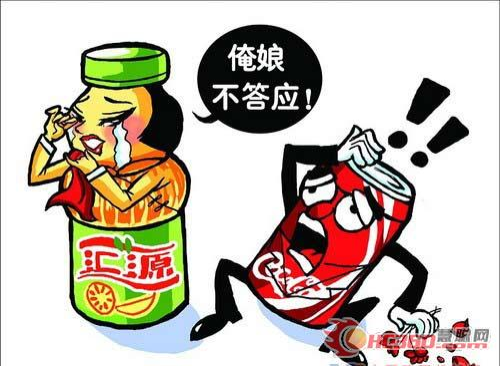
    The New York Times has an interesting story about Chinese Internet users putting a stick in government efforts to “purify the Internet” with various plays on a rude pun: 草泥马. Read “cáo ní mă“, it means “grass mud horse”. It’s also, however, a few tones away from the scorching but well-worn vulgarity “操你妈”, which is read “cào nĭ mā” and means (send the children out of the room) “fuck your mother”. From the Times:

    A YouTube children’s song about the beast has drawn nearly 1.4 million viewers. A grass-mud horse cartoon has logged a quarter million more views. A nature documentary on its habits attracted 180,000 more. Stores are selling grass-mud horse dolls. Chinese intellectuals are writing treatises on the grass-mud horse’s social importance. The story of the grass-mud horse’s struggle against the evil river crab has spread far and wide across the Chinese online community.

    Not bad for a mythical creature whose name, in Chinese, sounds very much like an especially vile obscenity. Which is precisely the point.

    The grass-mud horse is an example of something that, in China’s authoritarian system, passes as subversive behavior. Conceived as an impish protest against censorship, the foul-named little horse has not merely made government censors look ridiculous, although it has surely done that.

    Have a read, and make sure you visit some of the linked videos. One of them will ensure you never think about alpacas the same way again. Nasty looking beasts. [Original video now deleted, but re-uploaded by Rebecca McKinnon here.]

    Imagethief, a labored speaker of Chinese at best, is no expert on Mandarin profanity or puns, although I have an academic appreciation for the latter. But as with any passenger of Beijing taxis, I am well acquainted with “cào nĭ mā“, and its common accompaniment, the hissed “shaaaaabi!” (You can look it up on the Wikipedia page linked right above.) I hastily point out that these are generally directed at other drivers and pedestrians, and rarely at Imagethief.

    Sound-alikes and double entendres are important in Chinese (think of all the words that are auspicious or inauspicious because they sound like something else), and they certainly have played role in the ongoing dance between Chinese Internet users and censors. But I rather think this story reads a bit too much significance into what is, at the end of the day, a naughty pun:

    It has also raised real questions about China’s ability to stanch the flow of information over the Internet — a project on which the Chinese government already has expended untold riches, and written countless software algorithms to weed deviant thought from the world’s largest cyber-community.

    Perhaps. But the idiosyncrasies of the Chinese language cut both ways. Have a read of ESWN’s translation of a recent Southern Metropolis Daily article on “The Seven Possible Fates of an Internet Post” which talks about how many BBS postings get filtered because of accidental character combinations that look like forbidden terms. And also have a read of James Fallows’ excellent Atlantic Monthly article on China’s Internet censorship from almost exactly one year ago, perhaps the best analysis so far in mainstream media.

    The goal of Chinese Internet censorship is not absolute control, but sufficient inconvenience and management to keep most people people on the straight-and-narrow. In that context, some naughty puns, even ones that encode an implicit criticism of censorship, can probably be thought of as a feature, if an annoying one, rather than a bug. Poke some fun. Have some laughs. Don’t cross the red lines. I’d guess that the authorities are pretty comfortable waiting for people to get bored and move on to the next allegorical pun.

    See also:

  • 5/12, 9/11 and three minutes on Monday afternoon

    On Monday, May 12th, Imagethief was on the 27th floor of the Kerry Center for a meeting at 2:28PM. We all spent a couple of spooky minutes at the window watching Kerry and Fortune Plaza sway alarmingly, not knowing that it was just the faintest echo of a far-away unfolding catastrophe. As a San Franciscan who has been through countless little quakes and one whopper (1989′s Loma Prieta quake, during which I was living in heavily-hit Santa Cruz), I was at first convinced that our tedious and sweaty walk down endless flights of stairs was an overreaction to a trifling local quake. Only when my colleagues began getting SMS messages from friends in Shenzhen and Chengdu did I realize we’d been at the extremity of something terrible and distant.

    An amazing and heart-wrenching story has unfolded in the ten days since. Some of the images that have circulated are still stuck in my head. A journalist acquaintance that I bumped into on Saturday had spent time in devastated Beichuan. He said, simply and soberly, that it would stay with him for a while.

    My office is in Oriental Plaza, just about half a kilometer up the road from Tian’anmen Square. Since I had a bit of free time during the afternoon I decided to walk down to the square for last Monday afternoon’s three minute remembrance of the victims, held exactly one week after the quake. I thought it would be a nice way to book-end a sad week and, to be honest, I was interested to see the scene. I’d had lunch that afternoon with Chinese propaganda expert Stefan Landsberger, who had told me he felt that day’s ceremony was an historic public acknowledgment of a domestic tragedy (an opinion also argued by Paul Denlinger at The China Vortex). One only gets so many chances to witness history, especially when it’s unfolding just up the road.

    There was a big crowd flowing toward the square. I’d cut the timing close, and people were anxious to be out on the square when the ceremony began. In the final moments people were running through the underpasses that lead onto the square, hoping the beat the announcement and defying the police offers trying valiantly to maintain order in the tunnels. Even I, conspicuously overdressed in a jacket and tie, broke into a jog at the last few steps as I watched the time tick toward 2:18.

    There were thousands of people already gathered, with the crowd thickening toward around a roped off area that encompassed the main flagpole. I couldn’t see what or who else might have been there. It wasn’t any of the senior leaders, all of whom observed the ceremony from the fastness of Zhongnanhai. There were also several CCTV satellite trucks and many camera crews roaming about, including one camera high up on a crane, overlooking the crowd.

    That wasn’t surprising. The event had a made-for-TV feel about it. An abundance of the little, red, plastic Chinese flags that I associate with National Day made the mood seem at once reflective and oddly festive. Hundreds of people were holding camera phones above their heads, trying to capture the moment. I don’t doubt the sincerity or depth of feeling of the people there, or anywhere in China, but it occurred to me as I watched a camera crews scanning the crowd that I was participating in a moment of crafted post-quake propaganda.

    At 2:28PM an sonorous voice intoned Beijing time. The crowd fell silent and horns all around started blaring. There in the gaze of Mao’s portrait we all stood for three minutes with our heads bowed.

    At the end of the observance the crowd shifted into life. Some people started drifting back toward the underpasses. From the front of the crowd came a chant of “Go, China!” (中国加油!). In fact, what I heard near me initially was “Long live China!” (中国万岁!). It started scattered but gained strength, ebbing and flowing through the crowd. After a few moments the crowd was pumping fists into the air in unison. A photographer standing on the base of a lamp post nearby was particularly vigorous, rousing the people around him into the chant. Amidst the display of national pride I became acutely aware of my foreignness and decided to move out of the thickest part of the crowd. The chant was still going as I walked back toward the underpass. A video can be found here (H/T China Digital Times).

    Honestly, I was surprised. The fist-pumping chant seemed somehow inappropriate for the occasion. Not that the Chinese shouldn’t be proud of their nation and the response it has mustered to the quake. But a solemn remembrance had shifted in moments into a vigorous nationalist rally. I had expected something more restrained, along the lines of a candlelight vigil. But this is the first time the Chinese have had such a public memorial in the wake of a civilian tragedy. There is no template for how something like this should go here.

    The scene made me think that Twitter comments, articles and blog posts from earlier this week describing the quake as “China’s 9/11″ might be on to something. (For a spooky, visual 9/11 parallel, go to the NBC News site and watch the May 18 clip “First images of the quake”, showing the immediate aftermath in destroyed Beichuan). 9/11 was a devastating blow to American national pride and self confidence. Could this event reverberate similarly strongly through the Chinese national consciousness?

    Looking at the reaction across the country, it is easy to imagine so. The covers of the memorial newspapers, nicely collected in collage by Chinese blogger Hecaitou (H/TDanwei), are reminiscent of the stark and shocked reporting that followed 9/11. The nationwide outpouring of solidarity (also here) and charity and the celebration of heroic rescue workers is also reminiscent of 9/11.

    There are other parallels as well. China is no stranger to sweeping catastrophe and mass fatality, but this is the first disaster of this scope of China’s post-reform period. That makes it China’s first true mass-media disaster and, in parallel with 9/11 in the US, China’s first Internet disaster, shared in real-time across the entire country and around the world. In fact, considering technological developments since 2001, the Internet plays a much more important role in the public experience of China’s quake than it did for 9/11, which was largely defined by television images.

    The prospect of this being “China’s 9/11″ is perhaps a little worrying. In some ways, 9/11 drew America together. It even briefly brought America closer to much of the rest of the world, including some perennial rivals. But, as traumas will, it also unleashed pathologies. In the US those included the prosecution of a war of choice; elevation of security to national ideology; public justification of torture; a surge of angry nationalism (the Chinese don’t have a monopoly on it) that made questioning of government less acceptable even as fundamental freedoms and balances were eroded; an obsession with shallow symbols of patriotism such as lapel flags; and so on.

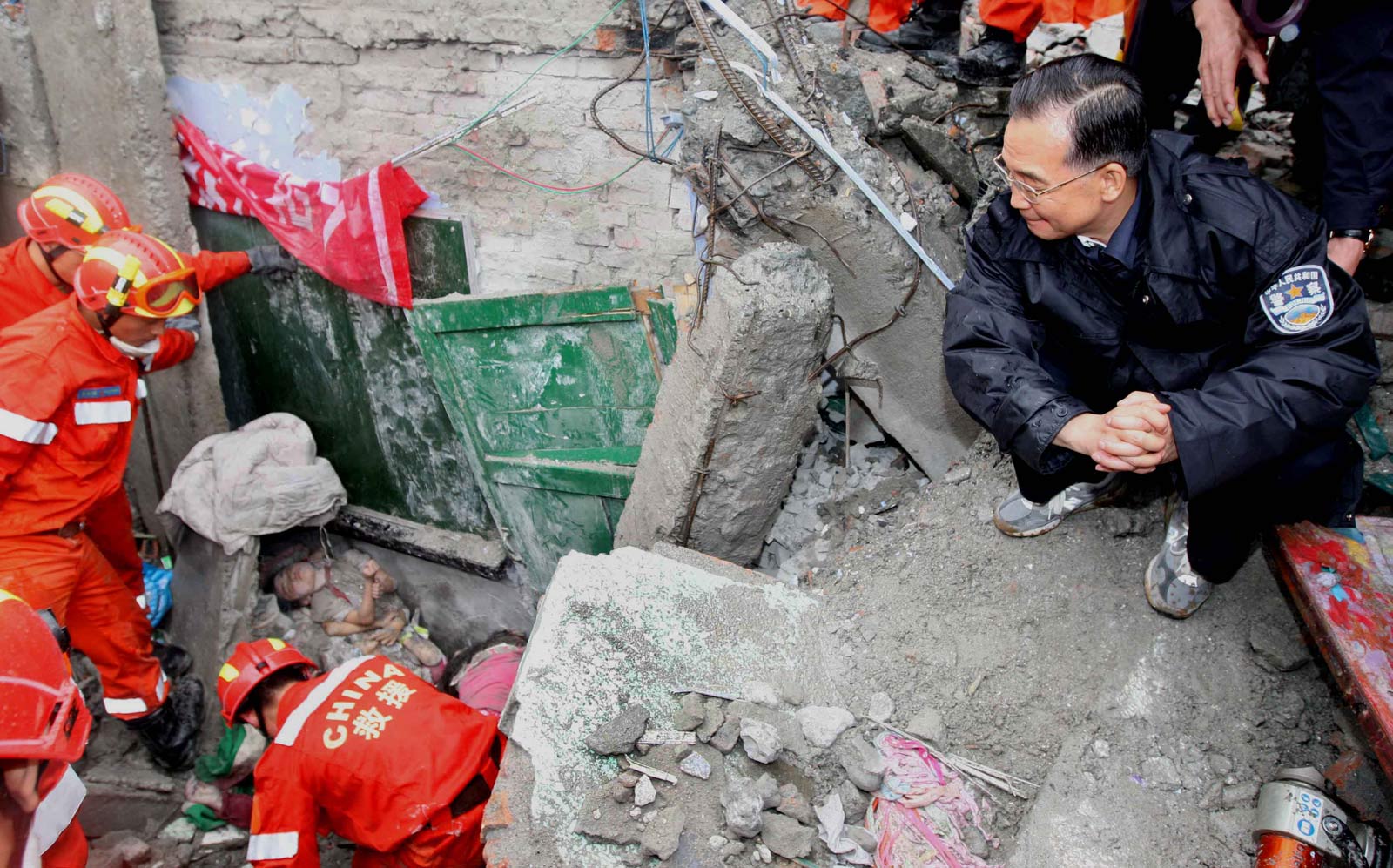
    9/11 was an external event that allowed much, though not all, of America’s anger and grief to be directed outward. China’s earthquake is an internal event. There are no plausible outside forces to blame. The burning questions being asked now are about why a reported 7000 schools collapsed. These questions are given urgency by the pathetic and politically powerful photos (warning: not for the sensitive) of the bodies of primary school students huddled in wreckage. Interestingly, that image was effectively co-opted by Premier Wen Jiabao when he was photographed amid the wreckage, looking at the bodies of students (also not for the faint of heart). An American president would almost certainly not be allowed by his communications team to be photographed in such graphic circumstances.

    So if this is China’s 9/11, where will the Chinese direct their anger and grief as shock begins to wear off? It occurs to me that the earthquake, a true national trauma, might have two possible effects on the current prevailing mood of prickly nationalism. Either it could feed into the nationalist sentiment, and possibly provide fresh impetus for it. Or it might make the nation take a breath and perhaps refocus its energies more constructively. With the Olympics less than three months off, I rather hope for the latter, but the reaction I saw on the square makes me wonder if the former is more likely. So does the degeneration of the nationwide charity drive into a competition in which job threats, Internet floggings and angry SMS campaigns are directed against individuals and companies, especially foreign ones, seen to have been slow or miserly in their contributions.

    One pocket of a nationwide observance is hardly representative, and a poor basis on which to draw sweeping conclusions. A chant is just a chant. Extreme Internet comments are notvox populi. China is not America, and 5/12 was a in the end a very different event than 9/11. The comparison can be easily overblown. Nevertheless, I wonder what place the quake will occupy in the Chinese national consciousness as we slog the rest of the way through this troubled year.

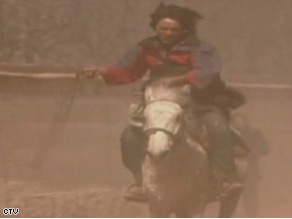
    Shrouded in dust: China's 9/11?
    Shrouded in dust: China’s 9/11?
  • Tibet and the trouble with unassailable national myths

    Outside of Young Frankenstein there isn’t really any such thing as a “good time” for rioting, but this might be an especially bad time for China to have a bout of punishing ethnic unrest. It hasn’t really been a banner start to the Olympic year so far, what with the worst storms anyone can remember, the Darfur activists on a tear, the bizarre Uighur terrorism story, and now this. Commentators are already linking this episode to China’s Olympic fortunes (see also the LA Times, Time, Asia Sentinel and Newsweek), and the French foreign minister has already been spotted talking about a partial boycott. Even Wen Jiabao has suggested that the riots were calculated to damage the games.

    Things seem to have quietened down in the last couple of days, although that may simply be because reporting has been stifled. Certainly the flow of news has dwindled a bit, and many publications have shifted into context and analysis mode. But we can probably expect bits and pieces of information to dribble out over the next few weeks, as refugees leave Tibet and a few intrepid journalists break the cone of silence that that the Chinese government has dropped over the troubled areas. In the past few days many of our favorite local correspondents have made a run for the Tibet border, but blog posts, such as fromTim Johnson and Richard Spencer (and again here), suggest it’s tricky getting any reporting done.

    The Foreign Correspondents Club of China has already petitioned the government for better access to the affected areas and circulated a list of incidents in which journalists and camera crews have been detained or hassled by the authorities. It would seem that Olympic pledges of greater openness were tested in the breach and found wanting. This, I suppose, shouldn’t surprise anyone. Old instincts die hard. The Chinese government has also reverted to its common tactic of belittling foreign coverage as intentionally biased. If this happens during the Olympics then, to borrow a line from Gerry Anderson, stand by for action.

    Over the past few days, China’s communication strategy with regard to the Tibet riots has become clear. It has consisted roughly of the following:

    • Ban all international access so that Chinese media can monopolize images and on-site reporting
    • Cinch down on the Internet (here too) and international news sources so that messaging to domestic audiences can be tightly controlled
    • Demonize the Dalai Lama as the black hand behind the rioting in throwback, Cultural Revolution language, and drive the point home with images of rioting monks

    These three are all true to type. But then it gets more interesting:

    For a good overview of the Chinese approach to all of this, see Mark Magnier’s interesting article on China’s PR efforts around the Tibet riots. It includes this damning quote from Chinese blogger and journalist Michael Anti:

    “The [Chinese] government is showing more confidence and learning more about spin,” said Michael Anti, a well-known Chinese blogger on a Nieman fellowship this year at Harvard. “They’ve learned more PR tactics from Western people. They see the way the White House and the Pentagon do it.”

    In some ways China’s strategy has been effective. They’ve certainly done a good job back-footing the Dalai Lama, who made the mistake of not condemning the violence forcefully and immediately. Domestically it’s been gangbusters as usual. But the Chinese government shouldn’t be too proud of itself yet, because there remains one substantial problem: China has invested so much in its narrative of Tibetan development and growth that it is reluctant take any actions that undermine this story. This prevents them from communicating internationally in a way that foreign audiences will be receptive to, and it stores up serious ethnic problems for the future.

    China’s prevailing narrative about Tibet is that China liberated it from feudal brutality and gave it all the wonders of development. The great mass of Tibetan people understands this and is duly grateful. This narrative has been thoroughly sold domestically, but it has never been widely accepted in the West.

    While there are elements of truth to China’s version, China’s ability to sell it internationally has always been hampered by the government’s time-honed credibility gap with western audiences. This is exacerbated by the difficulty of getting independent points of view. Reporting from Tibet was heavily controlled even before the riots. Furthermore, International opinion is subject to an effective PR campaign run by Tibetan exile groups and the charismatic Dalai Lama. It’s safe to say that International audiences will never be entirely convinced by a Chinese state narrative that doesn’t even allow for the possibility that there might be genuine discontent in Tibet. China is much better at dictating ideas to a captive audience than at selling them to an open one.

    Historically, it hasn’t really mattered to China’s government what International audiences think about Chinese domestic issues. But 2007 was the year in which China discovered the importance of International stakeholders. This began with the product quality crisis that erupted last summer, and it has gained strength over the Olympics in the past few months. The reality is that a global, economically integrated China that has invested hugely in hosting the world’s biggest sporting event is vulnerable to foreign public opinion. That’s why it stung so much when Steven Spielberg (who must be feeling pretty good about this right about now) withdrew from official participation in the Olympics. If it hadn’t stung, you’d have seen a lot less indignant Chinese press coverage about it.

    If foreign stakeholders can boycott your products, screw up your outbound investment or trash the most glamorous event you’ve ever hosted, you need to develop some PR game. Unfortunately the mechanisms that have served China’s government so well over the years, a combination of explicit control over domestic media and pervasive state propaganda, don’t translate well to International audiences, and it has yet to learn a new approach. The need to defend the national narrative at all costs means that foreign media have to be kept away from Tibet, lest they reveal the cracks in the edifice. Heaven forbid that those inconsistencies make their way back to domestic audiences and undermine the national myth of Tibetan success and perhaps even government legitimacy. Tibetan integration –or suppression depending on your point of view– is part of Hu Jintao’s personal legacy as former Tibetan party chief and author of the crackdown on the 1989 demonstration. Unfortunately, nothing says, “We have terrible things to hide” to a foreign audience like detained or harassed journalists.

    China’s growing international exposure aside, it must be tempting to wave away international concern as interference in China’s internal affairs. Unfortunately, another problem with defending the myth at all costs is that this approach seems calculated to inflame ethnic tensions rather than dispel them. Coverage of the riots suggests that much of the violence was Tibetans taking out their frustrations on Han who simply had the bad luck to be in Lhasa. That’s a shame, and the Chinese authorities are justified in seeking out and punishing those who have committed crimes against people and property. But the job of government is to ameliorate ethnic tensions within the country, not exacerbate them. Xinhua’s heavily spun coverage of the disturbances seems calculated to stoke outrage among the Han majority, and the Internet comment that has been allowed to stand echoes with that outrage, if not universally at least widely. Much of the Han comment reflects common colonial sentiment toward natives: Tibetans are lazy, ungrateful, intractable. Worrying signs for a country that disavows any colonial inclinations and preaches integration.

    This is where the “cost” element of maintaining the myth at all costs really becomes clear. If the national narrative leaves no room for entertaining the notion that regular Tibetans might have legitimate grievances, then there is no hope of recourse for Tibetans and no alternative for non-Tibetan Chinese but to see the unrest as pure betrayal and thuggery. It becomes impossible to even acknowledge underlying problems in any constructive way. All that is left is ruthless crackdown and an ever-widening gulf between the two peoples.

    Unfortunately, the more the Han majority sees Tibetans as ungrateful, violent dupes in the thrall of a sinister Dalai Lama, the harder any kind of real reconciliation will be. Mutual suspicion, hatred and racism-without-end loom. One wonders what will happen if Dalai Lama dies and there is still unrest in Tibet. Who will they blame then? There is a harder-line coterie of Tibetan exile leaders waiting in the wings, but none of them will fill the role of China’s “Goldstein” as well as the Dalai Lama does.

    The best thing China can hope for now is that things stay quiet and the episode fades from view over the next few weeks. But that isn’t a long-term solution. In the end the situation is a tragedy not just because it was violent and ugly, but because it was a wasted opportunity. China could have introduced some transparency, allowed foreign reporters in, and started earning itself greater international credibility at a time when it desperately needs it. China could also have used this as an opportunity to move beyond its propagandistic approach to the problem of Tibetan integration, and to kindle a real national discussion on how to address the concerns of Tibetans in a way that might make integration a reality rather than a propaganda slogan. Done correctly, this need not have looked like succumbing to foreign pressure.

    But that’s not how things are done here. That’s a shame, because no matter what wishful thinkers overseas want, Tibet will be a part of China for the foreseeable future. That will lead to continued problems. And as everyone knows, its hard to solve problems if you can’t admit to them.

    Horseman of the apocalypse.
    Horseman of the apocalypse.

    See also:

  • Was the China corruption website collapse story “newsiness”?

    The greatest contribution that comedian Stephen Colbert has made to modern society is the concept of “truthiness”. Reading from the Wikipedia definition, truthiness is:

    …a satirical term to describe things that a person claims to know intuitively or “from the gut” without regard to evidence, logic, intellectual examination, or facts.

    Miraculously, the entry goes on for another 3400 words on the concept of truthiness, proving not so much that truthiness is an important concept as that Wikipedia is balls-out for pop culture. Nevertheless, “truthiness” has transcended its comic-neologism origins to become a legitimate word, which says something about the zeitgeist.

    Imagethief wishes that Colbert had similarly enshrined the concept of “newsiness”. Borrowing from the definition above, newsiness could be described as a satirical term to describe things that a person claims is important or newsworthy without regard to evidence, logic, intellectual examination or facts. It feels like news, whether it really is or not.

    This is something that we flacks are familiar with. At our worst PR types trade in newsiness, packaging up bits of corporate dander and passing them off as significant. But we’re not exclusively to blame. Sometimes newsiness arises spontaneously in the form of a story that is less than meets the eye. Last week’s story concerning the collapse of the National Bureau of Corruption Prevention’s new website under apparently heavy traffic strikes me as an example of newsiness.

    Foreign coverage of this story can be traced backed to a Beijing Youth Daily article, which I don’t have a link for, and a subsequent English-language Xinhua report that was deftlymassaged into final form by our own Chris O’Brien of Beijing Newspeak. The story was that the recently constituted National Bureau of Corruption Prevention, a relatively toothless body set up to “collect and analyze information” on corruption, launched a new website that included a guestbook function enabling members of the public to post semi-anonymous comments. However the website crashed within hours of launch due to a “large number of visitors”.

    This fits very nicely into one of those social-issue memes that define much foreign news coverage of China, and that often take the form of “a nation struggling with [insert social issue here]“. Examples are a nation struggling with pollution; a nation struggling with censorship; a nation struggling with Internet addiction; and so on. The issues are set up via colorful or heartstring-yanking anectodes often involving stoic, salt-of-the-earth 老百姓 types recalling their woes, and rounded out with a mix of quotes from NGOs/overseas experts/local academics/old China hands and the kind of eye-popping statistics that China excels at generating and that make pretty much any problem here seem thoroughly intractable.

    In fact, much good journalism is done this way and it works well for the home audience that reads one newspaper. But if, like Imagethief, you are a news junkie living in China and you read vast troughs of China coverage from a range of publications, it’s hard not not to notice the formula.

    This system also promotes the dissemination of lightweight stories that simply fit into issues established by precedent. This particular story originated via the Xinhua article, which seems to have originated as a “why our website went down” disclosure formality. It plugged nicely into the “nation struggling with corruption” meme and was duly picked up by the foreign press, almost all of which cited the Xinhua article. The tone and detail of the foreign stories vary a bit, but looking at the headlines and ledes a clear mental picture emerges:

    Reuters:
    China anti-graft Web site felled by “too many hits”
    BEIJING (Reuters) – A Chinese government Web site encouraging citizens to report corruption crashed on its first day under the weight of too many hits.

    AFP:
    China anti-graft website crashes under public complaints
    BEIJING (AFP) — The website of China’s new anti-graft bureau crashed shortly after going online due to the huge volume of messages from the public complaining about rampant corruption, state media said Wednesday.

    Telegraph:
    China’s new anti-corruption website crashes
    A Chinese government website set up for the public to complain about corruption crashed within a day of launching under the volume of cases reported.

    The website was constructed by the National Bureau of Corruption Prevention to collect information on corrupt activities as part of an ongoing purge by the Beijing authorities.

    Associated Press:
    Anti-graft Web site swamped in China
    BEIJING: A new Web site created by China’s anti-corruption bureau crashed after barely a day because too many visitors had tried to log on to register complaints, state media reported Wednesday.

    Washington Post:
    Chinese Assail Official Misconduct With Fervor
    BEIJING, Dec. 19 — China’s new National Bureau of Corruption Prevention thought it would be a good idea to open a Web site for citizens to denounce crooked officials. The idea was so good that the site was immediately deluged this week by irate Chinese, overwhelming the system and causing several crashes during the first two days of operation.

    So what did you see in your head? Imagethief saw an image of zillions of oppressed Chinese people desperately clicking on the NBCP’s web page. This is image was helped along by the recent, widely publicized woes of BOCOG’s Olympic ticket sales website, which really did crash under the fevered clicking of zillions of people. But unlike the Olympic ticketing stories, in which the actual traffic and transaction load on the site was reported, the only figure in any of the stories above is the number of pages of comments, ranging from 16 to “more than 20″. Only the AP story lists a specific number of comments: 250. An NBCP official was quoted in the Xinhua article as saying, “The number of visitors was very large and beyond our expectations.”

    Well, yes, but what were your expectations?

    Hoping to find more information, Imagethief took himself to the site for a first-hand look. As of last Friday there were still about 20 pages of comments, each with fifteen individual posts, for a total of about 300. Anyone who has spent time on a popular Chinese blog or in the forums knows that this is pretty small beer. For comparison, when CCTV 9 anchor Rui Chenggang condemned the Forbidden City Starbucks on his Sina blog just under a year ago, he got 450 comments in 24 hours, on his way to nearly 3000. Sam Flemming’s CIC, which monitors Chinese online buzz, tracked over 4 million posts on automobiles in the three-month period from April-June of this year (full report — PDF, registration required).

    These are not entirely fair comparisons. The degree of freedom people feel to comment about corruption is not the same as they feel to comment on the Chery QQ or foreign coffee shops, and the overlap of corruption victims with Internet users is smaller than that of car aficionados. But it does introduce some perspective on what constitutes a “hot” online issue in China.

    Corruption is a real issue here. The corruption website collapse story is neat enough to tie a Christmas bow around, and the foreign reports are all factually accurate, insofar as they essentially relay the Xinhua report. But what does this incident really say about Chinese society and the problem of corruption? There is a big difference between a site that was designed to support tens or hundreds of thousands of simultaneous visitors and was still overwhelmed by crushing demand, such as the Olympic ticketing site, and a small-potatoes site that fell over under moderate traffic or because it was designed, programmed or tested badly. Imagethief designed and developed e-commerce sites for many years and can assure readers that this a common problem. But “China anti-graft website collapses under public complaints”, to borrow one of the headlines above, is going to get many more people reading than, “China anti-graft website collapses because of poor programming”.

    Fine. That’s the news business. Gotta get eyeballs on the page, and Imagethief, a subway commuter who reads on the way to the office, likes a punchy newspaper as much as the next guy. No harm in relaying a vacuous Xinhua story (sorry, Chris — not your fault), especially when it fits so neatly into an existing pigeonhole. It’s still “newsiness”, but if nothing else it can help keep our minds off of much more worrying things, like the ever dumber things American politicians are saying about China.

  • Why the Yilishen ant-farming scandal was the perfect China story

    Imagethief recently found himself huddled in a wintry hutong courtyard in conversation with two longtime Beijing-based foreign correspondents. During this discussion we came to the conclusion that the recent Yilishen ant-farming scandal is more or less the perfect China story. It brings together at a stroke all of the elements of the modern Chinese story. And surreal story it is.

    If you’re not familiar with this incident (and you really should be), you can go read Mark O’Neill’s comprehensive article on Asia Sentinel, or any of several other stories which, collectively, have generated something of a bumper crop in pun headlines.

    But if you’re pressed for time here is a synopsis: The Yilishen Tianxi Group, a Shenyang-based company, was manufacturing an allegedly aphrodisiac tonic made from ants, which are widely believed to have medicinal properties in traditional Chinese medicine. But rather than wrangle ants itself (nothing feels as good as bringing in a herd, I hear) Yilishen’s scheme was to sell would-be ant farming “investors” boxes of special medicinal ants at RMB10,000 for three. Along with the boxes came a promise that once the ants matured (read: died), about 14 months later, Yilishen would buy them back for RMB13,250. That’s a 30% guaranteed gain over 14 months which, while not quite pre-meltdown A-shares, kicks the ass of many a hedge fund.

    Except that the Yilishen ant trade was a pyramid scheme, and it went spectacularly bust, leaving tens of thousands of Dongbei punters short RMB10,000 and long three boxes of worthless ants. Not exactly Warren Buffet. Outraged ant farmers from across Liaoning province rioted in Shenyang, the government imposed a news blackout and the wujingarmed police headed north to diligently maintain a harmonious sociey, which is hard under these circumstances.

    You simply could not make it up. Ten Hollywood screenwriters locked in a closet with a kilo of blow, a brick of twenty dollar bills, your sister and a cigar-smoking chimpanzee in boxer shorts wouldn’t come up with this. Even if they weren’t on strike. Only China comes up with this. And not only does China alone come up with this, but the story also nicely draws together all the threads of the modern, Chinese narrative and ties them into a pretty bow. Just look at what this story offers:

    Social Issues
    The Dongbei is China’s rustbelt; a swathe of deep-frozen, fading industrial towns that were once the showpieces of Maoist industrial collectivization. While the cosmopolitan port city of Dalian has blossomed in China’s post-reform economy, much of the region has struggled to keep up with the go-go development of the two Deltas and the capital. Hence the “振兴东北老工业基地” (Revitalize Northeastern Industrial Base) campaign and those tragic stories of families’ life savings being sunk into ants and ant-aunties pooling the funds of their neighborhood taiqi group to go in on a few lucky boxes. Apparently about a million people bought into the ant-dream. Could ant farming be symbolic of the economic desperation of an entire region? Or might it just be a punt? Who cares, because there was also…

    Sex
    About 98 percent of Chinese medicines are aphrodisiacs. The average Chinese pharmacy is about half aphrodisiacs and half prophylactics with one or two boxes of nasty, herbal flu medicine just in case. The reason why rhinoceros and tigers have been hunted to near extinction is to make Chinese aphrodisiacs. Imagethief himself once appeared in a television commercial for a Chinese aphrodisiac. They’re that ubiquitous. You’d think the Chinese had never heard of p0rn. And what goes better with sex than…

    Corruption
    Yilishen Group turned out to be well connected throughout Liaoning provincial circles. This had apparently helped fuel its rise in the province, but also motivated embarrassed local officials to make the whole situation go away as soon as possible. That left bereft antherds with the usual channels of legal recourse available to the small-time victim under provincial Chinese jurisprudence: none. Therefore, the only alternative was…

    Mass incidents
    Ten thousand ant farmers rioted in a provincial capital. Imagethief asks you: What country other than China could cough up that lede? Mass incidents are the sine qua non of the modern Chinese scandal. In a rare and rapidly regretted moment of candor the authorities once admitted that there were 74,000 of them in 2004, up 28% on the year before (not quite as much as the pre-collapse return on ants, but still pretty good). No pressing social issue is complete without one. Chemical plant going up on your rice paddies? Shanty being expropriated for Olympic development? Local manufacturers turning your once limpid lake into a festering pool of PCBs and heavy metals? Two words: Mass incident! However, this may be the first one caused by…

    Ants
    Ants? Yes, Alice, ants. Imagethief tries to maintain a culturally sensitive respect for traditional Chinese medicine. Indeed, when I pinched a nerve in my shoulder two years ago I took traditional Chinese medicine and had a round of cupping (note to Americans: it’s not as dirty as it sounds). It worked, I believe, only because the medicine was so nauseatingly foul and the cupping so excruciatingly painful that I willed myself to recover so that I wouldn’t have to endure a second course of treatment.

    But, really, an ant-based sex tonic? Hasn’t this ground been trodden before? The image of so many fevered, Chinese investors hunched over their RMB10,000 boxes of magical ants is both funny and desperately tragic. Unfortunately it was all a bit too much embarrassment for the Chinese authorities, so naturally…

    The whole thing was harmonized
    Mainstream coverage evaporated and the search term “Yilishen” went down the Chinese Internet memory hole once the authorities decided they’d had enough. Previously uploaded videos and blog posts dropped gnats in a frost. China’s pre-eminent citizen journalist, Zuola, a veteran of the Chongqing nailhouse and Xiamen PX stories, wasescorted out of Liaoning. To add insult to injury he was apparently made to pay for his own plane ticket. No word on whether he had to pay for the tickets of the goons who escorted him.

    Imagethief has a friend from Shenyang who complained bitterly about the suppressed media coverage. “It’s not like we don’t all already know about it,” she said, admitting that her own parents had been among Yilishen’s legion of ant farmers. “It’s so…” she considered the English word she wanted to use…”insulting.”

    Meanwhile, many of the Yilishen riot videos harmonized from Chinese video sharing sites have found their way onto YouTube. You can’t keep a good story (or a bitter ant tonic) down.

    And that’s all there is to it
    Imagethief in no way wishes to minimize the plight of Yilishen’s investors. RMB10,000 is a lot of money by any standards. My friend from Shenyang also explained that her parents neighbors had invested RMB60,000, and they knew people who had invested a whopping RMB1,000,000. Imagethief also doesn’t think that investors in Yilishen’s ants were stupid. Scams and pyramid schemes thrive everywhere. Successful ones are cleverly engineered to appealed to the society in which they operate. Yilishen was a well known brand that had been in business for several years and had a good reputation. Traditional remedies are still widely used and respected in China, and ants are part of the pharmacopoeia. Virility tonics are popular. Combine all of that with a cultural affinity for gambling and a get-rich-now zeitgeist and you have a China story for the times.

    For sheer swoop and color it sure beats the rise and fall of China’s other great pyramid scheme, A-shares.

    Eat me.
    Eat me.

    Notes:

    • Photo copyright Alex Wild, from his superb ant and insect photography gallery.
    • Imagethief realizes he is a bit behind the story. This post has been in drafting for ten days. Darn those day-jobs.
  • Notorious MDA: The Singapore government raps

    From time to time someone will ask me why I left Singapore for China. This is a fair question. I lived there for nearly a decade, Mrs. Imagethief is Singaporean, and I have great affection for the place. Usually I give some longish explanation about various professional and personal frustrations that were beginning to set in. From now on, however, I’ll simply be able to point people at this video on YouTube:

    Via Singapore ultrablogger Mr. Brown, this is a four and  a half minute hip hop video produced by Singapore’s Media Development Authority. The MDA is the statutory board that regulates media content in Singapore and, as you would expect from its name, promotes the development of Singapore’s media industry. The video features the senior management rapping about their respective roles.

    God help me, I don’t know where to start on this one. But I’ll try. Remember how embarassing it was when you were in high school and your parents tried to act “cool” in front of your friends? Now imagine they did that and commited the results to posterity on YouTube. In your name.

    It is often remarked that the Chinese government considers the Singapore government a role model for successful technocratic authoritarianism. Whatever the Chinese government learns from Singapore, let us pray that it does not absorb the idea that rapping bureaucrats is a good idea. The State Council has enough on its mind what with the Olympics, mass rural-urban migration and the Yangtze silting up behind the Three Gorges Dam. They don’t need to be spending nights in the studio trying to figure out what rhymes with “Zhongnanhai” over a phat groove.

    Also, there are several people featured in this video, but not one of them has any discernible rhythm. Statistically you’d think one could carry a beat in common time. We’re not talking bebop here, or some kind of freaky experimental meter. One, and two, and three, hit the BEAT. Count it off, it’s not that hard. Not that they had much to work with. There must be some kind of award for coming up with hip hop lyrics that include the phrases, “KPI”, “service oriented architecture” and “beautify our fusionopolis”. If you can’t bring yourself to watch the whole thing, the lyrics are here. It’s not much easier to read than to watch or listen to.

    Having dispensed with the artistic criticism, let me approach this from a public relations point of view.

    Imagethief is all for using new media. If I squint hard enough and jam my thumbs into my eyes I can kind of see the rationale for doing this (although it could just be the flash of my retinas detaching). You want to explain the role of your bureaucracy in a catchy way that reaches out to youth and the creative industry. And some credit must be extended to the MDA for having, well, the balls to try this.

    Unfortunately, a pigeon with a nail through its skull would still have the brain power to predict the inevitable result of this project: a catastrophic piece of self-ridicule that drags out for four-and-a-half painful minutes every reason why government involvement in creative industries is a disaster. And why Singapore’s media industry is, like the site of a bad plane crash, so much lifeless wreckage. Seriously, these are the people promoting the development of Singapore’s creative industries? They hardly seem qualified.

    Mind you, this is not an internal video that leaked out. Apparently the video was originally distributed with the softcopy version of the MDA’s most recent annual report. It is also available straight from the MDA website, although as of this writing the site was down, possibly due to unintentionally high server load as people gape in slack jawed amazement and slight embarrassment. That’s why I haven’t been able to work out if there is a press release that explains their rationale.

    I’d like to take a moment and differentiate Singapore’s media industry and regulators from Singaporeans in general. There are many creative and talented people in Singapore. However it is my observation that they prosper despite the best efforts of the government,  not because of them. Indeed, it has long been Imagethief’s position that the responsibility of government with regard to art should begin and end at cutting cheques for the things that are so edgy, experimental or niche that the market won’t support them. For that reason I see the words “Singapore” + “media” + “development” + “authority” as oxymoronic.

    Good communication flows from sincerity, and part of sincerity is being true to who you are. This is especially true in music, where authenticity is essential to the message. That’s why a Mississippi John Hurt record sounds deep-down good but a Joss Stone record, despite her manifest singing talent, sounds a little like a con. One of the great joys of music is of course how genres transcend their origins and find mass acceptance. That has certainly been true of hip hop, where the musical tent has widened a great deal since the days of Kurtis Blow. The Beastie Boys proved long ago that Jewish kids from Brooklyn could do it too.

    But the tent still isn’t wide enough for Singapore government bureaucrats. Even bureaucrats need to be true to themselves in communication. It doesn’t mean that they always have to use soul-deadening PowerPoint or white papers. By all means they should roll up their sleeves, loosen their ties, mingle with artists and tell it straight. But just they should also recognize their limitations. Someone in their communications department should have worked this out and told truth to power. Unfortunately the communications director of MDA is one of the people in the video.

    The result is a lot snarky blogging (including here) and yet another example of the Singapore government getting itself written up as “odd news”. That is not communication success.

    The Singapore MDA is not the first bunch of suits to fall victim to siren call of hip hop as a tool for youth communication. They’re following a trail already blazed (if that is the right word) by Singapore’s ruling People’s Action Party. The Hong Kong Institute of Chartered Public Accountants also gave it a try with similarly dismal results. But at least they had some babes and “the ‘Tute” sounds like something you can smoke through.

    Anyway, having made it this far you probably have a bad taste in your mouth. Turn up your speakers and clear your palate with this.

    See also:

    The always funny Talking Cock’s wicked take on this, with photos.

  • The up is red

    Imagethief was enrocketed to read on Friday that China’s taikonauts –whom I prefer to call “astronauts” because “taikonauts” sounds like they should be exploring my sugar bowl– are considering starting a Communist Party cell in outer space:

    “If China has its own space station, the taikonauts on mission will carry out the regular activities of a CPC branch in space in the way we do on earth, such as learning the Party’s policies and exchanging opinions on the Party’s decisions,” said Yang, a delegate to the on-going CPC national congress in Beijing.

    “If we establish a Party branch in space, it would also be the ‘highest’ of its kind in the world,” said Yang, who is also deputy director of the China Astronaut Research and Training Center.

    It’s funny that Yang should say that, because the word “high” was definitely floating through my head as I read this. But Yang’s statement is a little unclear. Does he mean that that orbiting Communist party branch would be the highest Communist party cell in theworld universe, or the highest grass-roots political organization in the universe? He needs to choose his words carefully here. The former will be nothing more than a gentle slap in the face of the world’s less motivated communist parties. And, let’s be honest, no one really expects the Cubans, Laos or even the plucky Vietnamese to start lobbing cadres into orbit to compete with the Chinese ideological juggernaut. Heck, the Laos are happy when their national airline gets planes down in one piece (trust me, I’ve flown with it).

    But if it’s the former, well, that’s a direct challenge to Uncle Sam. You can expect a phalanx of red-blooded republicans to be launched into orbit James Bond/Moonraker style within moments. And I’ll bet you America will go one up. We’ll not only launch a party cell into space, we’ll raise money while we’re there. I’m not sure how, yet, but the Republican national committee will find a way.

    You may find it curious that I, a Democrat, mention Republicans here. After all, the American Lunar project was launched (metaphorically) by Kennedy, a Democrat. But somehow, I’ve always seen space flight as kind of a Republican project. Don’t ask me why. Maybe it’s the image of all those square-jawed Air Force types. Plus I am not sure the Democrats are organized enough to get a party cell into orbit.

    There is more in the story. It turns out that the Taikonauts wouldn’t be forming a party cell out of unfettered, Lei Feng-style loyalty to the cause. It’s more to do with the party charter:

    According to the CPC Constitution, a grass-root CPC organization should be established where there are three or more CPC members. The latest official figure shows that China has more than 73 million CPC members and about 3.6 million grass-roots CPC organizations.

    You got that? Three or more. That means you can’t even have your Communist Party friends over for a round of Poker without a party cell breaking out in your living room. How inconvenient. Having a road trip? Better limit yourself to two party members in your car unless you want to spend the whole drive to Guilin discussing dialectical materialism. Try drowning that out with Van Halen.

    “Like foreign astronauts having their beliefs, we believe in Communism, which is also a spiritual power,” said Yang. “We may not pray in the way our foreign counterparts do, but the common belief has made us more united in space, where there is no national boundary, to accomplish our missions.”

    I’ll pause here so you can inhale the aroma of full-bodied surreality drifting from this statement.

    Yep, that’s space. It’s either cowboy Jesus freaks or commies. Makes you wonder what the first lunar colonies will be like, and give thanks that you’re not likely to be living there. If this is who we plan on launching into the universe someday when the sun becomes a red giant (no pun intended) and consumes the Earth, then the rest of the universe had better look out. Frankly it’s amazing space aliens haven’t shown up to wipe us all out just as a precaution.

    And to think I wanted to be an astronaut when I was a kid. Those youthful dreams die hard. But I noticed another story last week as well (via the Wired blog). Coincidental timing? You be the judge:

    BEIJING (AP) — China hopes to join an international space station project that already counts leading space powers like the United States and Russia as its members, a government official said Tuesday.

    China takes great pride in its expanding space program and sees it as a way to validate its claims to be one of the world’s leading scientific nations. But China does not participate in the International Space Station, due in part to American unease about allowing a communist dictatorship a place aboard.

    ***

    “We hope to take part in activities related to the international space station,” Li Xueyong, a vice minister of science and technology. “If I am not mistaken, this program has 16 countries currently involved and we hope to be the 17th partner.”

    So, lemme get this straight. The Chinese are talking about starting Communist Party cells at the same time as they are asking for inclusion in the International Space Station? So much for “central planning”. This ain’t the strategy to get NASA to roll out the, um, red carpet. Try talking about how little oxygen Chinese astronauts needs or how they live for weeks on one tube of reconstituted porridge. But don’t talk about the Party. After all, the US government still holds the pink slip on the “international” space station, and the last thing they need floating through their overstretched, little heads is the image of zero-G Marxism study sessions.

    Come to think of it, it’s the last thing I need, too.

    He'll know what to do about this!
    He’ll know what to do about this!
  • Bullet in the head: Marquee executions and public communication

    As has been widely reported, the Chinese government has got round to making an official example of Zheng Xiaoyu, the disgraced former head of the State Food and Drug Administration who became the poster-boy for China’s rippling food and drug scandals. In their eagerness to send a message, they got round to it quite quickly; from sentencing to execution in about six weeks. American capital punishment supporters can only dream of being able to dispatch ne’er-do-wells with such efficiency. Zheng’s story is nicely recapped in a New York Times article by David Barboza.

    Everyone who comes to China or learns Chinese rapidly becomes acquainted with one of China’s entry-level proverbs, “killing a chicken to scare the monkeys”, meaning to make an example of someone. It’s a phrase that has been thrown around a lot with regard to this case. To Imagethief’s mind, China has probably killed the wrong chicken.

    Executions have a long tradition as public communication. That’s why, historically, executions have either been public or very well publicized. Look what we do to murderers/ robbers/ adulterers/ royalists/ deserters/ partisans/ corrupt mandarins/ spin doctors, etc. It could happen to you, so stay in line. Whether or not executions are effective as a deterrent is debatable (and widely debated). But that they are used as communication is indisputable.

    Imagethief is not a fan of the death penalty. I feel that it is often applied in my own country more as vengeance and social catharsis than justice, with substantial class and racial biases. I am also not convinced of its value as a deterrent. You can always tell which governments are really serious about using death as a tool of policy because they are the ones that skip the public communication element and simply disappear people. Word of mouth does the rest. If you really want to keep the public on its toes, that seems to be the way to do it.

    However I must concede that the public communication value of executions extends beyond deterrence. For example, a death penalty can be employed as a demonstration of government resolve or as proof of piety. Looked at that way, you might reword the hoary Chinese idiom into “killing a chicken to demonstrate institutional resolve to the monkeys,” but that doesn’t reduce elegantly to four characters.

    So was Zheng Xiaoyu’s execution supposed to be a deterrent or a demonstration of resolve? Looking at the (somewhat spotty) English translation of the People’s Daily editorial hailing the execution, perhaps a little of both:

    Death penalty handed to Zheng Xiaoyu has fully proven the will and desire of the people across China, eloquently showed the spirit of the fairness and justice of legal sanction as well as the firm resolve of the Party and the state. For corrupt officials, no matter whoever he is, what a high position he occupies and how deep he has hid himself, probes into the cases he is involved will be carried out resolutely and thoroughly, but no indulgence or soft hand will be granted to him.

    Death penalty handed to Zheng Xiaoyu indicates that laws are stipulated in explicit terms, penalty is meted out in strict compliance with his crimes, and punishments commensurate with his duty.

    ***

    As part of the effort to cope with corruption, no “extraordinary and special” Party members are allowed to stay aloof the laws and no corrupted elements permitted to have any place to hide themselves. Whoever daring to commit outrages and run amuck in defiance of state laws will be subjected to severe punishment of the Party disciplines and the state laws.

    Imagethief also particularly likes one throwback line in which conjures up the best of Maoist-style righteous, nationalist rhetoric:

    A few individual Party officials, prompted by interests and money, nevertheless, have gone crazy to the defiance of laws, and Zheng and his ilk belong to such jackals from the same lair.

    “Jackals from the same lair” is a slightly more advanced Chinese saying meaning roughly, “cut from the same nasty cloth”, and has been used before in Chinese government communication to describe people such as Richard Nixon and Hubert Humphrey, Indian reactionaries and British imperialists, and, as a variation on the same idea but with a shuffling of enemies, Soviet revisionists and US imperialists. It’s nice to see the People’s Daily reaching for some trusty, old tools.

    The question then remains, was Zheng’s execution effective as public communication? This depends who the audience was. If the audience was other senior cadres, possibly, but with qualifications. If the audience was the public, I think not.

    The problem with using punishment as a deterrent, besides having to communicate it, is that the threat needs to be credible and proximate. People need to believe that it if they transgress, punishment is likely to befall them. I’m not a criminologist or lawyer, I’m a communication expert, so I’ll stick to looking at this in terms of the beliefs that might exist and the messages that might be communicated and received around such situations.

    What makes the threat of punishment real to someone? I would suggest that a potential criminal has to believe three things: That the likelihood of being caught is high enough to factor into their calculations; that if caught the punishment will be enforced; and that the punishment itself will hurt.

    A lot of legislation and police work is bound with communication campaigns to ensure that the right people are convinced of these three things. For example, my own state of California produced the memorably titled and widely publicized “Three Strikes and You’re Out” law, whereby a third felony conviction is an automatic life sentence. (It was widely applied, too, and helped to clog up our jails to the delight of the California prison lobby.)

    Assuming a rational and intelligent actor (an immense assumption, I realize — after all, the world is rife with crimes of passion and moronic criminals) these three risk factors will be weighed against potential rewards in a decision as to whether or not to misbehave. So an authority that wants to encourage good behavior ought to communicate credibly on all three fronts (assuming that counting on people’s essential goodness is, ahem, sometimes not enough). You will be caught. You will be punished. And it’s gonna hurt. If any one of those three things isn’t believed, your communication is probably ineffective. This is true at any scale. It’s why governments advertise that they execute people (or even just fine them) and why your mom told you that she had eyes in the back of her head and that you’d lose your allowance if you fought with your little brother and that she was serious. And probably busted you once or twice just to prove it.

    Making a public spectacle of a punishment, say by widely publicizing it in the media, is part of this process. The problem is that when an occasional person is conspicuously made an example of, people are apt to discount the message. It was political. He was unlucky. He didn’t have good enough connections. He was stupid. He was a much bigger fish than I was. All of these rationalizations are ways that potential misbehavers might distance themselves from the person being made an example of, diminishing that sense of the likelihood of being caught.

    If you don’t think you’ll get caught, the other two factors –the likelihood and severity of punishment– are irrelevant. All that stands between you and tainted lucre is, well, your conscience. Furthermore, it’s easier to distance yourself from someone who is unlike you. That’s why Zheng’s execution might be a reasonably strong message to senior cadres and civil servants, and a fair demonstration of party resolve, but why it probably doesn’t mean much cadres out in the provinces or to the guy making counterfeit drugs in the suburbs of Bengbu. (This idea of identification works in reverse as well, and it’s why you use role models to advertise to people.)

    So if the occasional, high profile punishment is ineffective, what might work?

    Let’s start with an assumption: People have to believe that the institutions responsible for the processes of identifying transgressors and dispensing punishment cannot be easily short-circuited. This doesn’t mean that you need western-style rule of law for punishment to be effective, but it does mean you need to demonstrate consistency. The Taliban were ferociously effective based on the simple expedient of consistently shooting or beating to death anyone they thought wasn’t toeing their line. It was repulsive and barbarous, but it worked.

    China probably aspires to a less arbitrary process than the Taliban had, even if it sometimes doesn’t look that way. But this is where endemic corruption causes problems because it short-circuits the institutions and processes by which lawbreakers are identified and punished, rendering them terribly inconsistent. In the absence of consistent proof, communication is reduced to noise. Ultimately, it’s not enough just to say it. You need to do it regularly or people stop listening. The most effective PR, remember, is based on actual deeds.

    But you can’t line up everyone against the wall and shoot them (unless you’re the Taliban). So what should China do?

    What would be effective in the long term is to launch and visibly communicate a nationwide campaign of much tougher enforcement against garden variety businesses and businessmen who cut corners, make unsafe products or skirt the rules, and against local and provincial regulators and cadres who are found to be corrupt. If garden variety misbehavers believe there is a real chance they’ll get a painful fine or jail sentence, that their businesses will be closed or that they’ll be successfully sued, then they might reconsider the percentages. If they don’t believe that, they won’t care whose head gets rolled in Beijing.

    It won’t be the distant threat of execution that does the trick, but the immediate threat of a routine inspection. Beijing shouldn’t avoid punishing corrupt senior officials, but hearing that the guy up the street got raided despite being the cousin of the head of the local PSB will be much more effective than a distant guillotining in the capital. Many such examples –by which I mean thousands– would provide the basis for a much more broadly effective communication campaign.

    To China’s credit, the government is trying to do this. Recent announcements thathundreds of businesses have been closed for safety violations are a start. But ultimately it becomes a question of scale and that’s where the problems seem insurmountable. Without root-and-branch reform of its institutions, and there are eight involved in food alone, it may simply be impractical for China to enforce this kind of program at any meaningful scale. In that case, there is little alternative for the government to continue to rely on “showcase” prosecutions to make its case, ineffective though they are.

    This is also where government control of media and public expression exert a cost. If you can’t build credibility from the top down, an alternative might be to aid communication from the bottom up. Grass-roots anger from Chinese people who are the victims of many of China’s quality problems and scams could be a powerful thing. So could a less fettered media, free to range across the country and peer more deeply into dank corners. But the media is prone to many of the same problems as government institutions, compounded by regulations that make it difficult to report on issues that the government finds sensitive.

    Charitably, Zhen Xiaoyu’s execution shows the government’s resolve to attack its institutional problems as starting point for better enforcement at all levels. Less charitably, it will sail over the heads of the small-time crooks and entrenched powers responsible for so many of China’s problems and doom Mr. Zheng to being just one more in a line of long-forgotten high-profile examples.

    See also:

  • China’s food crisis PR strategy: Blame everyone else

    A few weeks into China’s rippling food quality crisis a PR strategy is coming into view. It’s a classic one: blame everyone else. Unfortunately, it’s not likely to be all that effective because of two things. First, China does actually have long-standing problems with food and drug quality. Second, China’s poor history of transparency makes it hard for them to dispel suspicion (a problem that also dogs their disease-related communication).

    The recent affair began with the discovery that vegetable protein shipped from China to the USA and used in pet food had been contaminated with melamine, a plastic that can make the overall protein level appear higher. Melamine also destroys the kidneys of cats, as it happens, so the contamination was discovered.

    In classic fashion, China’s initial response was to deny everything. As a crisis PR strategy this sucked. Nothing makes you look sillier and less credible than retracting a categorical denial made in haste. It taints every following communication. In fact it wasn’t entirely China’s fault. Initially AQSIQ, China’s quality monitor, wasn’t looking for melamine, but another suspected contaminant. But obscure mitigating technical factors don’t tend to play well in the court of public opinion, or excuse prudence. In the face of further disclosure, the Chinese government’s subsequent choices were to appear dissembling or incompetent.

    Every country has its fair share of food quality problems. In my native USA E. coli bacterial contaminations are something of a national sport, and I can remember plenty of food poisoning scandals. Eric Schlosser’s book, Fast Food Nation, makes fine reading if you are interested in the topic. The FDA conveniently puts its “refusal reports” –the reports of imports rejected– online. If you want to be horrified, read the Mexican list. Food contamination is not an exclusively Chinese problem.

    China’s government has grabbed onto this idea as part of its defense. It has been helped by some recent developments, including the rejection of a shipment of Evian for alleged bacterial taint (a case that stokes the fire of another China PR issue, Danone’s legal war with Wahaha — see this interesting post from China Law Blog) and the discovery of Melamine in some US-manufactured animal feed ingredients. Li Yuanping, director general of the government’s Import and Export Food Safety Bureau, also pointed out that China has in the past rejected US products due to Salmonella contamination, and asserted that China’s record on food exports is slightly better than the United States. Li offered up some winning quotes:

    “Ninety-nine percent is a relatively high percentage of suitable goods,” Li Yuanping, director general of the government’s Import and Export Food Safety Bureau, said at a news conference. “Facts speak more loudly than anything. . . . From what I have told you, you can see China has a very sound system that can guarantee the safety of food exported abroad.”

    ***

    “No food-inspection system is foolproof,” he said. “It’s like an airplane. Flying is said to be the safest way to travel, but sometimes you have plane crashes.”

    Bad choice of words in Imagethief’s opinion. You think an airline would communicate that way? But I haven’t been hired to advise the Chinese government.

    Graceless rhetoric aside, Li might actually be right. But perception is everything. Frank Luntz, a conservative pollster, wrote a pretty good book about public communication called Words that Work in which he relentlessly drove home a key point: It isn’t what you say, it’s what people hear (in fact, that’s the subtitle). You say “99% are good”. Americans in bathed in relentless media coverage will hear, “1% might kill you”. Roll the dice and move your mice.

    Like a premature categorical denial, “everyone else sucks too” is considered a weak strategy around our office. You think China’s national ambition is to suck only as hard as everyone else? I think they want to be better. More importantly, as far as the audience is concerned we’re not talking about everyone else. We’re talking about export-driven China, which has a great deal at stake in overseas perceptions of its food quality. In international trade, food and drug safety issues get entangled with every other hot button issue. And in the US right now China is second possibly only to Iraq as the hottest of hot-button countries.

    To illustrate, let’s look at that Mexican example above. America simply doesn’t have as big an axe to grind about Mexican imports (except for immigrants) as it does about Chinese ones. Mexico isn’t the emerging strategic rival. Mexico doesn’t hold a trillion dollars worth of American debt. You don’t hear about America’s trade deficit with Mexico (about a quarter the size of the one with China in 2006). By and large, Mexico doesn’t threaten American agriculture so much as it props it up with cheap labor.

    You get the idea.

    Agenda hockey

    Following the great melamine scandal of ’07 a few other China-linked disasters have emerged into public view. In early May the New York Times ran a lengthy investigative report on tainted cough syrup in Panama killing people. The cause was toxic, cheap ethylene glycol from China sold as harmless but more expensive glycerine and used in the manufacturing. The ethylene glycol has been getting around, apparently, as it has also found its way into Chinese toothpaste (proxy link) exported to Panama, the Dominican Republic, Costa Rica (and, for good measure, smuggled into Nicaragua) and, it has been discovered, the United States.

    As far back as mid-May, Dave Barboza of the New York Times and International Herald Tribune was writing about China’s “credibility problem” surrounding food exports. The situation has not improved since then. Barboza points out that a thirty-billion dollar a year export business it at risk. And that’s where the agendas come into play. The Washington Post, among others, has run op-ed columns editorializing about Chinese food imports in pretty strong terms. Here’s a recent lede:

    And what is madame’s dining preference this evening? Scallops coated with putrefying bacteria? Or mushrooms laced with illegal pesticides?

    These delicacies and more were among the hundred-plus foods from China that our Food and Drug Administration detained at U.S. ports last month, Rick Weiss reported in Sunday’s Post. Detained and sent back to the importers, who ofttimes sent them back to us again.

    Yuck. The Rick Weiss story linked to in that op-ed piece is headlined “Tainted Chinese imports common”. That’ll stick in people’s heads.

    China is busy trying to persuade the United States to allow imports of Chinese frozen chicken, among other things. What stories do you think American chicken farming companies are busy reminding Congress of right now? The Boston Globe, which is not much of a China cheerleader (they regularly run op-ed pieces on China and Darfur and have played a big role in the “Genocide Olympics” campaign), was running gross-out stories on Chinese chicken farming way back in early May, before this whole episode even kicked into high gear. More recently, the American press has been reminding everyone that their vitamins all come from China. That story was by McClatchy’s Tim Johnson, who also wrote an interesting post about this on his blog. Check it out to see some interesting public reaction.

    So the picture that is emerging is of a food and drug supervision apparatus that is hopelessly broken and that has been for some time. This will be no surprise to anyone who lives in China, where food scandals fall from the skies like the Shanghai plum rains. But it’s making waves overseas now, with enormous business implications. You might think that a serious, soul-searching look at the state of domestic regulation and enforcement, vigorously communicated, would be China’s solution.

    You would be wrong.

    The blame game

    China certainly takes the situation seriously. In fact, seriously enough that English-language state media in China, in the form of the China Daily, excoriated China’s regulators for their crappy communication (here reported on by the AP). That is significant. In fact, suggesting something of an editorial slant, the China Daily also went so far as to publish a Wall Street Journal story titled “China confronts crisis over food safety” in its entirety on the China Daily website, with attribution and an external link.

    The popular Southern Metropolis Daily also ran a column by journalist and blogger Lian Yue, translated by Danwei, that linked the food safety problem to broader problems in China. I don’t know if similar commentaries ran elsewhere in Chinese language media. Anyone who has seen anything should post a comment.

    But the official response from the government, represented largely by AQSIQ, has been essentially to blame anyone and anything but the system.

    In the case of the Panamanian cough syrup, the deputy head of AQSIQ blamed Panamanian traders, an account disputed elsewhere. In the case of the tainted toothpaste, China is accusing the American FDA of sensationalizing the situation. In that same story the head of AQSIQ’s food safety division accused the foreign media of the same thing, describing their reporting on the scandals, in an exquisite choice of words, as “wanton”.

    The charge of media sensationalism may be justified to a degree, but blaming the media is almost never an effective PR strategy. It carries an inescapable whiff of Scooby-Doo, as in, “I would have got away with too, if wasn’t those meddling kid reporters!”

    Finally, the Chinese government is blaming its former drug chief, Zheng Xiaoyu, for the entire situation (interestingly, a Google search for his name this morning causes Nanny to issue the deadly “server reset” message). The unlinkable South China Morning Post drove the point home with a headline last Friday that read, “Corrupt drug chief blamed for scandals.” AQSIQ and the State Food and Drug Administration (SFDA) double-teamed on this one:

    SFDA spokeswoman Yan Jiangying said the agency should not be blamed for Zheng’s mistakes. “I want to highlight that we should not dismiss the entire drug supervisions system because of a single person, Zheng Xiaoyu, and we should not extend the mistakes made by a single person, Zheng Xiaoyu, to the mistakes of the entire system,” she said.

    So its Zheng Xiaoyu’s fault if you had any trouble reading between the lines. And people say the Chinese are cryptic.

    When China rolls somebody’s head over a scandal it’s not always a metaphor. To show how serious it is about that accusation, Beijing has sentenced the hapless Zheng to death. It has been a long fall for the man who was tasked with cleaning up in the wake of the awful Anhui baby formula scandal of 2004.

    Killing the wrong chicken

    Let’s go back to Frank Luntz’ point about it not being what you say but what people hear. Executions have a proud tradition as public communication. China thinks that the message that they are sending  with Zheng’s sentence is, “We are goddamn serious about this.” Imagethief is willing to bet that the signal received by overseas audiences will be, “We are so thoroughly corrupt that we had to execute our former top drug regulator.” The question going through heads overseas will be, “Well, whom haven’t they caught yet?”

    Executing a mandarin probably won’t have any effect at all on the small processors and exporters who seem to be responsible for most of the problems. Zheng is too far removed from them. Unless small companies feel the weight of enforcement landing squarely on their own shoulders, with an attendant shift in the overall risk/reward equation, their behavior won’t change.

    The lingering question is whether a combination of endemic corruption and industry fragmentation render the problem unsolvable. An Imagethief commenter named Jim recently made a good point. He wrote:

    Processing millions of tons of food, through millions of workers in tens of thousands of large and small companies, with high cost-cutting motivations, from millions of farms through thousands of transportation companies to millions of sellers to tens of millions of buyers, is hard.

    Yes, it is. But I’m an optimist and China needs to show that it is serious about regulating that very process and enforcing vigorously if they want to get past this episode. And they need to clearly communicate exactly what they are doing to both domestic and overseas audiences. Good crisis PR isn’t about bluffing your way past a real problem, it’s about explaining what you are doing to solve it. No one will expect China’s food problems to be fixed quickly, but people can be pretty forgiving in the face of some contrition and obvious effort.

    The other option is to keep pointing fingers elsewhere. That might save face and keep people at home happy, but it won’t influence overseas audiences who will keep hearing in the most visceral terms possible how broken China’s regulatory system is. Doors will slam on Chinese imports. Overseas manufacturers conscious of their own brands will look elsewhere for ingredients. And the Chinese government will look foolish and self destructive when the next scandal boils out of the bowels of a broken system.

  • I say “tomato”, you say “massacre”, let’s call the whole thing off

    It is a truism of public relations and communication that he who controls the language with which an issue is defined controls the debate. If you can attach your terminology to a situation, you have leverage over public opinion. Don’t like the inheritance tax? Label it a “death tax”. Is that guy with the AK-47 a gunman or a freedom fighter? Is the person with the explosive vest a martyr or a terrorist? Which label works for you? Did that politician lie or misspeak? War or police action? “Dead-enders”, insurgency or civil war? If you can assign the language you can frame the discussion.

    The power of language is especially apparent when words are emotionally charged. There is a reason why there are grinding political conflicts about when and how to apply the word “genocide”. The word demands action and commitment. The obtuse language of diplomacy has essentially developed to allow governments to escape commitment when it is inconvenient. You can debate and prevaricate about “internal displacement”, “human rights” and even “ethnic cleansing”. Once something is accepted in popular discourse as “genocide” the debate is over. Act or be complicit.

    “Massacre” is a similarly charged word. The dictionary definition is: “The unnecessary, indiscriminate killing of a large number of human beings or animals, as in barbarous warfare or persecution or for revenge or plunder”. Indiscriminate killing. Barbarous. These are the things that “massacre” evokes. It is a word to describe a deed of evil.

    That’s why Imagethief has followed with some interest the controversy generated by Ma Lik, Chairman of Democratic Alliance for the Betterment and Progress of Hong Kong (DAB), one of Hong Kong’s political parties. The DAB is often described as “pro-Beijing”, and with his recent comment, Ma has left little doubt. Last Wednesday’s South China Morning Post* reported on Ma Lik’s statments on the front page, under the headline, “Fury at DAB chief’s Tiananmen tirade”. The lede said it all:

    Hong Kong will not be ready for universal sufferage until around 2022 because the people lack national identity and many still believe there was a massacre in Tiananmen Square in 1989, the leader of the main pro-Beijing party said yesterday.

    ***

    [Ma] said one example to show Hong Kong society was not mature was people’s belief that pro-democracy advocates were “massacred” in Tiananmen Square in 1989.

    The quotation marks are theirs. It is the word “massacre” itself that is in contention, as became clear when the story got to the quotes:

    “We should not say the Communist Party massacred people on June 4. I never said that nobody was killed, but it was not a massacre,” Mr. Ma told a media gathering less than three weeks before the 18th anniversary of the bloody crackdown on protesting students. “A massacre would mean the Communist Party intentionally killed people with machine guns indiscriminately.”

    Indeed. See the definition above. In addition to Ma’s own comments, the interesting thing in the paragraph above is the use of the word “crackdown” by the newspaper to describe the incident. Newspapers are, of course, wary of making emotional judgments about events, and language like “massacre” does render judgment. That’s why when you Google Tiananmen + crackdown you get a lot of newspaper articles. “Crackdown” has become an accepted, non-judgmental way of defining what happened on that late spring day in 1989.Google Tiananmen + massacre and you get plenty of returns, but fewer newspaper pieces. (You get a lot of CNN online articles, however.)

    For the sake of comparison, the dictionary defines “crackdown” as, “the severe or stern enforcement of regulations, laws, etc., as to root out abuses or correct a problem” or, slightly more forcefully, as, “an act or example of forceful regulation, repression, or restraint”. So we get as far as repression.

    Massacre or crackdown? You decide.

    I wasn’t there, but I’ll inject something judgmental into this piece. It’s part of journalist John Pomfret’s first-hand account of the events of that day from his excellent book,Chinese Lessons:

    The soldiers began to fire live ammunition low into the crowd, hitting people in the stomach and legs. The night, balmy with a calm breeze, crackled with automatic gunfire. People fled in all directions. Some returned, rocks in hand. Armored personnel carriers rolled onto the bridge and began cutting the busses aside, cutting a path into the inner city.

    I was petrified. Because I had never heard live gunfire before, it took me a few minutes to realize that I, too, could get shot. I was standing about one hundred feet north of the intersection. A crowd surrounded me and began yelling: “They are shooting us! They are shooting us! They are shooting the people!” I saw in their eyes a wild insistence. “You must report this to the world,” yelled one man. Then  the bullets zinged in our direction. I found what I took to be relative safety by lying flat on thw asphalt, pinne dup against a curb. Others ran. I remember thinking they must be crazy. As I lay on the ground with my cheek against the roadbed, I saw several demonstrators fall. The armored personnel carriers had done their work, ramming a channel through the burning busses. Then came the troop trucks, fifty of them rolling through the cumpled roadblock. Random gunfire killed a housekeeper on the fourteenth floor of one building. Another woman was wounded as she looked out of an eighth-floor window.

    So is it a massacre? These are the kinds of things we foreigners have to go on when we assign words to events like what happened in Tiananmen Square or elsewhere in Beijing on that day. (In the passage above Pomfret is writing about Muxidi Bridge, to the west of Tiananmen. Pomfret himself uses “crackdown”.)

    Citing the above won’t satisfy Ma Lik. Part of his complaint is that he feels that the events of 1989 are being defined by foreigners. Or so I interpret from this quote:

    “The government should say what actually happened on June 4… It is not something that teachers can teach whatever they want about. Are saying [what happened] should be decided by gweilos?

    The ellipsis and brackets are the Post’s.

    In fact Ma Lik is doing two things. One is an extremely clumsy but otherwise garden-variety political language control maneuver. He is attempting to define the language used to describe the events of June 4th 1989 in order to serve a particular political agenda. He may also believe what he is saying whole-heartedly. Attempts to manipulate language are not necessarily cynical or dishonest, although they certainly can be.

    But there is a second, and to my mind spookier, part of his statements that I have not seen remarked upon much in initial or follow-up coverage. It is hinted it at in that last quote. This is that Ma Lik wants not only to redefine the language that is used to describe the Tiananmen Square events, but that he wants to institutionalize that redefinition as a pre-requisite for universal suffrage in Hong Kong. According to the Post,

    [Ma] said local students had not received proper “national education” since the handover and many still “care nothing” about the mainland.

    And later,

    Mr Ma, who is not known as an outspoken, hard-core leftist, said universal suffrage could not be introduced before the public adopted “heart-felt” patriotism.

    In other words, “you’re not mature enough to be trusted with democracy”. This old saw, played to various melodies, is a favorite of undemocratic regimes across Asia.

    Ma has climbed down a bit from his initial statements. A follow-up Post story (paywall) reports:

    Mr Ma, who left for Guangzhou after speaking on the radio programme, said he was only trying to call for more rational and balanced views towards the incident. “I think what is most important is to find out the whole truth.”

    He also said it was not his intention to ask the Hong Kong government to issue a definitive guideline to schools on how the crackdown should be taught. He only thought teachers should not “teach whatever they wanted”.

    I don’t think any reasonable person would disagree with that. No one thinks teachers should have an unfettered reach to teach whatever they want. That’s why we have standards and curricula. In the US, school curricula, especially with regard to things like evolution, are the subject of vigorous, noisy debate. That is as it should be. The difference is that in the US no one who didn’t want to be labeled a crank would argue that a doctrinal viewpoint across society is a pre-requisite for a successful democracy.

    That’s the thing about democracy; by it’s very nature it accepts that people will have different viewpoints, different beliefs and different opinions about important events and topics. They will use different language to describe the same thing. They will fight compete vigorously with each other to define the political environment in the language of their choosing, in order to reflect their beliefs and politics. That’s the contest of ideas that is fundamental to healthy  democracy. It is the essence of democracy.

    If Ma wants to suggest that what happened in Tiananmen wasn’t a massacre that should be his right in a democracy or any society that allows freedom of speech. After all, you can’t have a true democracy without freedom of political speech, even if that sometimes yields ideas that are distasteful to some. To suggest, however, that homogeneous belief is a prerequisite for democracy is not only to utterly miss the point of democracy, it is also, sadly, to render the very idea irrelevant.

    See also:

    ESWN: Ma Lik’s comments on June 4th.

    *Sorry, I don’t have a link for this article. The South China Morning Post not only has an all-consuming paywall, but it also has the single worst search engine and archiving system of any online newspaper I have ever dealt with.