Tag: Media

  • What to make of Edwin Maher?

    Imagethief found the LA Times article on CCTV9′s western anchorman, Edwin Maher, quite interesting. I didn’t have time to comment on it when it first appeared, but in general I found the story balanced as it presented both criticisms and defenses of Maher’s choice to work for Chinese state-owned media. It was, thus, interesting to see some of the subsequent discussion that emerged, especially at Black and White Cat, which translated aGlobal Times article excoriating the western press for criticizing Maher.

    Rather than rehash old ground, I will point you to Cam MacMurchy’s latest post at Zhongnanhai, which, I think, does a very good job of answering the Global Timescriticisms and analyzing the original story. It’s well worth a read.

    I will, however, add a few other thoughts.

    What is it about westerners who appear on television that attracts our particular ire? Anyone wanting to look deeper into this phenomenon need only consider Dashan. If there is a foreigner who elicits more widespread contempt from fellow western expatriates I’ve yet to encounter him (or her). One friend of mine attributed this to latent racism. It’s all very well to live and work in China, but to be seen acting ridiculous for the entertainment of the Chinese is taboo. My friend memorably referred to this as the “Dance, monkey!” syndrome.

    Maher seems to have earned himself the same kind of contempt. Even Imagethief has written unkind things about him in past. But everyone who works in business in China is complicit with the Chinese government to some degree. We’re all doing our bit to prop up the State. An explicit part of my job is helping foreign companies to pander to the Chinese government. That’s why we’re always helping companies to talk about their “commitment to China”.

    It’s true that anything having to do with propaganda or censorship touches a particularly raw nerve in people from liberal democracies (including Imagethief), but there are plenty of other westerners working in the Chinese media. Imagethief has met many bright people who work or have worked for Xinhua, China Radio International and the China Daily.  One of them, Xinhua polisher Chris O’brien, writes Beijing Newspeak, one of the best China blogs around. The now defunct Positive Solutions gave us an entertaining inside look at the China Daily for nearly two years. (Positive Solutions author Charlie has since gone on to more glamorous things, like many other western veterans of Chinese media.) Cam himself is a Chinese media veteran.

    But both Chris and Charlie also excelled at taking their employers down a peg, and giving the rest of us amusing glimpses of the mechanisms driving state-owned English language media. I believe they were forgiven because they were seen as our spies inside; people who obviously didn’t buy into the product. And, of course, neither of them was in a publicly visible or bylined role.

    And this is where Maher is different. He is very visible and in the LA Times piece he is unapologetic. I believe that’s what leads those of us who don’t know him personally to dismiss him. We observers of China’s state-owned media have perfected our airs of cynical dismissal. We know how it works. We know the agenda. We can read between the big and clumsily drawn lines. We’re always happy to ridicule its amateurism and censorship. Armed with our prejudices, when confronted with someone who publicly buys into the mission of China’s English language media we are forced to see them as either dupe or collaborator. And also, if you want to be incendiary, as race traitor. None of those labels allows much room for nuance or charity.

    I don’t know Edwin Maher and I don’t think it is fair for me to judge him as an individual. On the other hand, I think it’s perfectly fair for me, or anyone else who watches CCTV9, to judge him as a media professional. Other than as a crude barometer of the Chinese government’s agenda I don’t have much time for CCTV9, or any of the state-run English language media. Their failure isn’t in presenting the Chinese government’s point of view, but in doing so spectacularly clumsily. Maher shouldn’t be criticized for helping the Chinese government to tell its story. If anything, he should be criticized for not helping them to tell it better.

    See also:

    Inside Chinese state TV (Informed Comment – H/T ESWN)

  • Bang! China shoots its own Olympic PR in the foot

    Imagethief, who has bid for something on the order of RMB12,000 worth of Olympic tickets, is trying resolutely to remain optimistic about the Games. Unfortunately, it’s proving harder as time goes by. Tomorrow marks the one-year-remaining milestone. This should be an opportunity for Beijing to highlight progress, turn the excitement crank, and demonstrate that has the patience and forbearance that will be necessary for a successful Olympics. However yesterday brought an important test of China’s patience and forbearance, and China failed it.

    The problem is that while tomorrow’s milestone date is a legitimate time for celebration and anticipation, it was inevitably also going to be a perfect date for a dry-run by the many activist groups that want to appropriate the Olympics for their own agendas or score points against China. Sure enough, that is what has happened. Reporters Sans Frontieres,Human Rights Watch, the Committee to Protect Journalists and Amnesty International all chose this week to release announcements or hold protests.

    Of these, the RSF protest yesterday was most provocative. Activists wearing T-shirts and carrying signs that portrayed the Olympic rings as handcuffs staged a demonstration on a highway bridge near BOCOG’s headquarters. To add an extra measure of discomfort for Beijing, IOC Chairman Jacques Rogge happens to be in China right now.

    Unfortunately, reports say that foreign correspondents covering the protest were detained by police for one or two hours afterward and “roughed up”. From the AP coverage:

    [Uniformed] and plainclothes police physically restrained reporters coming down from the pedestrian bridge, pushing and pulling them, seizing IDs and refusing to allow them to leave the scene. Reporters were detained in a parking lot directly opposite the Olympics office tower, facing the Beijing 2008 logo and Olympic rings on the outside of the building.

    Journalists were allowed to leave after about two hours, with no explanation from police about why they were detained.

    A woman in the spokesman’s office of the Foreign Ministry said she did not know about the case and would look into it. Liu Wei from the information office of the Beijing Olympics Organizing Committee said she was not aware of the situation and had no comment.

    If that isn’t playing right into RSF’s hands I honestly don’t know what is. I found the reports somewhat confusing and had to dig around to get a clear idea if the journalists detained on site were protest participants or locally credentialed reporters covering the event. But it appears to be the latter. RSF’s own release suggests much the same.

    The best thing for Beijing to do under these circumstances would have been to err on the side of tolerance and allow the protest to proceed under supervision. Credit is earned slowly, painfully and in tiny increments while setbacks come in great, heaving leaps, and activists can win the PR battle by baiting the Chinese authorities into overreacting. Detaining journalists on the scene, under any circumstances, was asking for trouble.

    The result is not only that the protest is probably getting more coverage than it would have otherwise, but that the tone is distinctly nastier from Beijing’s point of view. Coming on the heels of last week’s widely covered FCCC survey and at the same time as all the other reports listed above, it looks very bad and reinforces people’s fears of what might go wrong during the Games themselves.

    The PR rule of thumb operating here is that response to an issue can become the issue if it is handled badly. That is a rule that Beijing needs to stay mindful of. Unfortunately, it seems likely that not all of China’s bureaucracies will be on the same page about this. It is entirely possible that BOCOG and the Public Security Bureau will have different opinions on how these kinds of situations should be handled. This might be someplace where the IOC could provide a little visible leadership, but they have stayed silent until now.

    Fair or not, China will be judged differently than other countries that host the Olympic Games. Now matter how glamorous the venues, how exciting the games, or how successful China’s athletes, the Games will be judged in large part based upon how gracefully Beijing can manage the inevitable protests. That is the price China pays for hosting the Games in a political environment that disdains many of the freedoms that the Games’ primary audiences abroad take for granted. The Financial Times‘ Beijing Bureau Chief, Richard McGregor puts it nicely:

    Over more than a decade Beijing has gradually defused pressure over its human rights record. Through remorseless diplomacy and skilful use of its growing economic clout, it has sidelined western complaints about human rights and marginalised the non-governmental lobbies that seek to promote them.

    The Olympics, however, are offering China’s critics a moment in the sun, and they have grabbed it eagerly.

    McClatchy’s Tim Johnson also captures the risk Beijing faces nicely:

    Because of China’s history of quashing revolt, any protest has the potential to become an iconic image, like the moment when U.S. athletes Tommie Smith and John Carlos raised their fists in a “black power” salute at the 1968 games in Mexico City.

    That’s an important thought to bear in mind. It will be interesting to look back a year and a month from now and see what the iconic image of the Games is. I sincerely hope it will be a moment of athletic triumph or a moment of Olympic splendor in one of those magnificent venues.

    After all, the Olympics are a magnificent opportunity for China. An opportunity not only to showcase the country’s development and rightful place on the international stage, but also to explore a more constructive way of engaging with the activists and NGOs that, for better or for worse, will be interested in China for decades to come.

    But the heavier a hand that Beijing takes in dealing with dissent and protests before and during the games, the higher the chance that the iconic image of Beijing 2008 will be something that dispels the goodwill the Olympics could create and reduces those opportunities to dust.

  • Nobody said media-whoring would be easy

    If you follow the Internet in China, you may have heard of a young man who goes by the online name “Zola” (or “Zuola” to be perfectly correct). He has been billed as “China’s first citizen journalist“. Zola first attracted widespread attention when he blogged from the site of Chongqing’s famous (and now demolished) nail house in late March. He also popped upat the recent demonstrations opposing construction of a chemical plant in Xiamen.

    It all fit the model of the crusading online journalist/blogger quite nicely. Fame, fortune and –who knows?– perhaps even hot chicks beckoned. Then Zola decided he was going to take a crack at Google, and his fortunes took a turn for the worse.

    In what seems to be a move taken from the Michael Moore playbook, Zola showed up at Google’s Haidian R&D office in Beijing armed with a video camera and confronted a security guard and then a receptionist about a customer service problem. The gist of his complaint appears to be that he was victimized by click fraud and then, in resolving that, shortchanged about seventy bucks he claims he was owed by Google. Neither the bemused security guard nor the Google receptionist was much help. The security guard palmed Zola off onto the receptionist (possibly the best move he made that week) and the receptionist alternated between futile attempts to steer Zola into Google’s normal online customer service channels and sullen silence.

    Zola posted a ten-minute video of the confrontation on YouKu, which Bingfeng kindly posted a link to. It’s in Chinese, but a rough English transcript can be found on Reading China.

    If Zola was expecting to be lauded for putting a burr up Google’s ass, he was, as we used to say in college, on crack (I was going to say “in high school” but I went to high school before the crack epidemic). He was instead pretty ruthlessly savaged in comments to his blog and on the YouKu video. The situation appears to have been aggravated by a bout of petulance over lack of public appreciation for his efforts in the Xiamen PX incident and an admirably honest but image- tarnishing confession that, really, he’s just in it to get famous.

    China blogger and commenter-at-large Feng37 was helpful enough to send me a rough translation he did of some of the harsh criticism being launched in Zola’s direction. Here are three consecutive beauties in Chinese and English from Zola’s Bullog blog:

    4 支持
    [匿名] 火星 @ 2007-6-19 16:24:49
    你直言不讳求名求钱,足够坦诚。但你动机如此纯粹,作为公民记者,不免让人对你的职业操守和诚信额度担心。

    you’re straight up about wanting fame and money, that’s honest enough. But if your motives are so pure, as a citizen reporter, people can’t help worry about your professionalism, personal integrity and honesty.

    [匿名] emlary @ 2007-6-19 23:08:47
    网上那么多骂你的人,看来你离出名不远了,不知道你对客服是怎么理解的,不过看来在你之前已经有很多人去过google公司了,对于一点小事就睚眦必报,你觉得真的有这个必要吗?
    So many people cursing you out on the internet, it looks as though you’re not too far away from getting famous. I don’t know what your understanding of customer service is, but it looks as though many people have been to Google before you…do you really think it’s necessary to get revenge and report on something to small and irrelevant?

    [匿名] 给你一个警告 @ 2007-6-19 23:21:34
    你太SB了,小子北京不是你想进就进的更不是你想出就出的
    You stupid little cunt, Beijing isn’t a place you can just walk into when you feel like it and leave when you want.

    And it gets worse. It’s hard being a celebrity, isn’t it?

    As Feng37 pointed out, Bullog does not allow blog owners to delete comments (an interesting and debatably worthy policy). His new blog, http://www.alouz.com/, does allow that, and I am told he’s been making use of that function to purge the unfavorable comments.

    In our communications about this issue, Feng37 asked me what advice “a PR 高手” (flattering, if perhaps a tad exaggerated) such as myself would give to Zola at this stage. I am sucker for this kind of challenge, so as much as I hate to be the john to Zola’s media whoring I am going make some suggestions. This is free advice and it’s worth every penny Zola has paid for it.

    1) It’s not about you

    You were in a good situation when you were covering the Chongqing nailhouse story. You had a sympathetic subject colorfully personified in Wu Ping, a relatively clear villain in the sinister developers, and a nicely unfolding drama that encapsulated a serious issue facing China. The Xiamen PX case had much the same drama and similar social relevance. Then you followed up these two immense dramas by going to Google to complain about seventy bucks they owe you. Spot the inconsistency.

    By making yourself the focus of what was a comparatively trivial complaint, you also made yourself look petty and unsympathetic. People are generally not interested in sympathizing with the observer, but with the subject. If you wanted to complain about Google’s customer service, you should have found someone else trapped in their Kafkaesque customer service maze and gone to bat for that person. It’s OK for you be manipulative, that’s part of the art form, so pick someone as tragic and photogenic as you can find. A cancer-stricken orphan with a website, for instance. But you need to channel someone else’s misery, not your own. That enables you to remain comfortably heroic.

    2) Pick your villains carefully and don’t humanize them any more than you have to

    Google could make a good villain, heaven knows. In the space of three years they have gone from the plucky little startup everyone was rooting for to sprawling, secretive and vaguely sinister monolith that could be the next Microsoft assuming Microsoft knew every little thing about you right down to what kind of p*rn gets you off. But not everyone hates Google. They still have a lot of fans even here in China. Furthermore, it is possible to make a naturally unsympathetic entity (and Google has definitely become that) sympathetic by personifying it in a way that undermines your crusade. In this case, Google was personified by the receptionist who was clearly totally unable to resolve your situation no matter how much you harangued her. In the end I felt sorrier for her than I did for you (although this whole episode revealed some issues for Google China as well — more on that later). The lesson is to go after people who represent power or who are actual gatekeepers for power (like, gulp, their PR people). Next time pick on Kaifu Lee.

    3) Grow a thick skin

    As they say, the only thing worse than being talked about is not being talked about. If you’ve already confessed that your motive is fame then you better be prepared for the reality that just because people know who you are doesn’t necessarily mean they will like you. And the more you appear to be shamelessly self promoting, the more people will naturally lean toward disdain. Think Furong Jiejie, who never seemed to realize that the joke was on her and ended up being famous (briefly) and unintentionally tragic and embarassing. You don’t want your fame to be of the car-wreck variety.

    But even if you are at your best, people will criticize you for any of a number of reasons. Suck it up, dude, and show some confidence. Soak up the criticism and, indeed, revel in it. The price of being a lone crusader is being lone crusader. Show some spine and treat the unbelievers as gnats unworthy of swatting. And remember your basic blogging etiquette: Don’t delete comments or posts if it can be avoided. Consider the fact that controversy on your websites will attract readers and that perhaps you should be cultivating it.

    4) Never forget that the Internet is the lowest rung of celebrity

    American radio star Howard Stern once said that radio was the lowest rung of the celebrity ladder (and as someone who used to work in radio, I empathize). Fortunately for him, the Internet has finally given him someone to look down upon. Audiences are fickle and celebrity is volatile and often short-lived. That’s especially true of Internet celebrity, which lends itself to transient, “flavor of the moment” fads and freakshows (see Furong Jiejie, above). Durable Internet celebrity is surpassingly rare. We’re all disposable on the Internet. Sucks, doesn’t it? In 1968 a smart man named Andy Warhol said, “In the future everyone will be world-famous for fifteen minutes.” He may have envisioning an Internet-powered world like the one we live in today. Or he may simply have been on dope. It was 1968, after all. But the essential truth of the statement remains. It is important, therefore, not to let Internet celebrity go to your head. Whatever else, don’t act like a movie star until you actually become one.

    5) If you’re going to make it about you, consider the value of irony

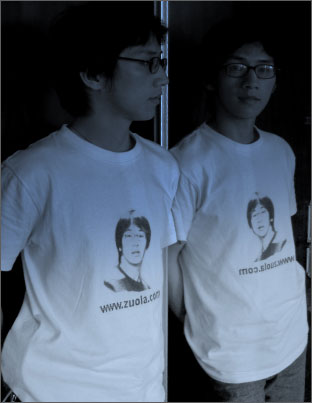
    OK, so maybe you’re going to ignore that first piece of advice and make it about you. There is a way it can be done. I note that the front page of your new website has a picture of you gazing into a mirror while wearing a T-shirt emblazoned with–a picture of you. I desperately hope this is meant to be a gentle bit of self-satire. Because if it’s not self-satire then you really are headed for same lonely, post-Warholian purgatory currently inhabited by William Hung (look him up).

    If you are willing to mock yourself, then you can ignore most of the rules above. But you then need to recognize that your mission has changed from citizen journalist to comic entertainer. Not everyone has the fortitude to make a career out of irony or self-ridicule, and my guess is that’s not what you want. So think it over carefully because this route will take 100 percent commitment, and it will be hard to mix with the kind of stories that got you notoriety in the first place.

    Reflect upon Mr. Moore

    I mentioned crusading film-maker Michael Moore on purpose. In crafting this advice, I considered quite a bit what makes Mr. Moore successful. He seems to be in the mold to which you aspire (metaphorically speaking — I don’t think you’ll ever be that big). Michael Moore is an utterly polarizing artist, but whether you love him or hate him he is undeniably a hit. Moore injects himself into his stories, but he is never the subject, only a conduit or engaged observer of someone else’s plight. He chooses his villains wisely (from an American perspective), knowing that his choices will generate controversy that will attract attention. And he is teflon-coated when it comes to criticism. Millions of people hate him. But millions also love him and he is world famous.

    So that’s my advice. It is offered constructively. I think China benefits from having citizen journalists, and I encourage you to keep at it and get world famous. Don’t take the media-whore comment too seriously. You’ve already confessed. And, after all, many of us in the blogging and PR biz are media- whores ourselves. We can all whore together. That is what the Internet is all about, isn’t it?

    That doesn’t sound like PR advice…

    Readers may be thinking to themselves that the above is more advice on Zola’s craft than his PR. But for a media celebrity –even an aspiring one– the two are often related. The persona is the PR. The answer to Zola’s public perception problem doesn’t lie in anything he can say or write, but in how he defines his public persona. Looked at another way, we PR people are often accused of crafting slick, empty words to rescue people or companies from bad situations. Sometimes that’s true. But PR at its best is helping a client to find a genuine, constructive solution to a problem and then communicating the solution. This is especially true in crisis situations, and I think it’s safe to say that Zola has had something of a little crisis. Therefore I have proposed what I think is a solution

    Bonus advice for Google China:

    Despite the fact that Zola’s Google stunt went wrong, Google doesn’t get a free pass from Imagethief. A basic rule of PR is that in this day and age everyone is a public representative of your company. This is doubly true of a company like Google that is famous, controversial, and the subject of much discussion in China. That secretary was sitting in a Google lobby and wearing a Google T-shirt. How is it that she (and for that matter the security guard) wasn’t briefed on what to do when a journalist came to the front desk? And in the era of blogging and the Internet, anyone waving a camera around in the lobby, even if they are raising a customer service complaint, needs to be treated like a journalist. Especially by the world’s biggest Internet company, which happens to own a huge blogging engine and world’s biggest video-sharing website. Connect the dots, people.

    In fact, a good policy might be to assume anyone who comes into the lobby is a journalist until conclusively proven otherwise.

    So give the poor girl at the front desk some clear guidance on what to do in that situation, and a simple escalation path she can follow when she is dealing with someone with a camera. That doesn’t mean escalating to security or the police, unless the story you want going public is “How I was roughed up by Google”. Have someone on call who is media trained, savvy and knows enough about customer service to answer questions on the record. Who knows? You might find that these kinds of situations can be turned into PR opportunities.

    Hey, nice shirt!
    Hey, nice shirt!
  • China’s food crisis PR strategy: Blame everyone else

    A few weeks into China’s rippling food quality crisis a PR strategy is coming into view. It’s a classic one: blame everyone else. Unfortunately, it’s not likely to be all that effective because of two things. First, China does actually have long-standing problems with food and drug quality. Second, China’s poor history of transparency makes it hard for them to dispel suspicion (a problem that also dogs their disease-related communication).

    The recent affair began with the discovery that vegetable protein shipped from China to the USA and used in pet food had been contaminated with melamine, a plastic that can make the overall protein level appear higher. Melamine also destroys the kidneys of cats, as it happens, so the contamination was discovered.

    In classic fashion, China’s initial response was to deny everything. As a crisis PR strategy this sucked. Nothing makes you look sillier and less credible than retracting a categorical denial made in haste. It taints every following communication. In fact it wasn’t entirely China’s fault. Initially AQSIQ, China’s quality monitor, wasn’t looking for melamine, but another suspected contaminant. But obscure mitigating technical factors don’t tend to play well in the court of public opinion, or excuse prudence. In the face of further disclosure, the Chinese government’s subsequent choices were to appear dissembling or incompetent.

    Every country has its fair share of food quality problems. In my native USA E. coli bacterial contaminations are something of a national sport, and I can remember plenty of food poisoning scandals. Eric Schlosser’s book, Fast Food Nation, makes fine reading if you are interested in the topic. The FDA conveniently puts its “refusal reports” –the reports of imports rejected– online. If you want to be horrified, read the Mexican list. Food contamination is not an exclusively Chinese problem.

    China’s government has grabbed onto this idea as part of its defense. It has been helped by some recent developments, including the rejection of a shipment of Evian for alleged bacterial taint (a case that stokes the fire of another China PR issue, Danone’s legal war with Wahaha — see this interesting post from China Law Blog) and the discovery of Melamine in some US-manufactured animal feed ingredients. Li Yuanping, director general of the government’s Import and Export Food Safety Bureau, also pointed out that China has in the past rejected US products due to Salmonella contamination, and asserted that China’s record on food exports is slightly better than the United States. Li offered up some winning quotes:

    “Ninety-nine percent is a relatively high percentage of suitable goods,” Li Yuanping, director general of the government’s Import and Export Food Safety Bureau, said at a news conference. “Facts speak more loudly than anything. . . . From what I have told you, you can see China has a very sound system that can guarantee the safety of food exported abroad.”

    ***

    “No food-inspection system is foolproof,” he said. “It’s like an airplane. Flying is said to be the safest way to travel, but sometimes you have plane crashes.”

    Bad choice of words in Imagethief’s opinion. You think an airline would communicate that way? But I haven’t been hired to advise the Chinese government.

    Graceless rhetoric aside, Li might actually be right. But perception is everything. Frank Luntz, a conservative pollster, wrote a pretty good book about public communication called Words that Work in which he relentlessly drove home a key point: It isn’t what you say, it’s what people hear (in fact, that’s the subtitle). You say “99% are good”. Americans in bathed in relentless media coverage will hear, “1% might kill you”. Roll the dice and move your mice.

    Like a premature categorical denial, “everyone else sucks too” is considered a weak strategy around our office. You think China’s national ambition is to suck only as hard as everyone else? I think they want to be better. More importantly, as far as the audience is concerned we’re not talking about everyone else. We’re talking about export-driven China, which has a great deal at stake in overseas perceptions of its food quality. In international trade, food and drug safety issues get entangled with every other hot button issue. And in the US right now China is second possibly only to Iraq as the hottest of hot-button countries.

    To illustrate, let’s look at that Mexican example above. America simply doesn’t have as big an axe to grind about Mexican imports (except for immigrants) as it does about Chinese ones. Mexico isn’t the emerging strategic rival. Mexico doesn’t hold a trillion dollars worth of American debt. You don’t hear about America’s trade deficit with Mexico (about a quarter the size of the one with China in 2006). By and large, Mexico doesn’t threaten American agriculture so much as it props it up with cheap labor.

    You get the idea.

    Agenda hockey

    Following the great melamine scandal of ’07 a few other China-linked disasters have emerged into public view. In early May the New York Times ran a lengthy investigative report on tainted cough syrup in Panama killing people. The cause was toxic, cheap ethylene glycol from China sold as harmless but more expensive glycerine and used in the manufacturing. The ethylene glycol has been getting around, apparently, as it has also found its way into Chinese toothpaste (proxy link) exported to Panama, the Dominican Republic, Costa Rica (and, for good measure, smuggled into Nicaragua) and, it has been discovered, the United States.

    As far back as mid-May, Dave Barboza of the New York Times and International Herald Tribune was writing about China’s “credibility problem” surrounding food exports. The situation has not improved since then. Barboza points out that a thirty-billion dollar a year export business it at risk. And that’s where the agendas come into play. The Washington Post, among others, has run op-ed columns editorializing about Chinese food imports in pretty strong terms. Here’s a recent lede:

    And what is madame’s dining preference this evening? Scallops coated with putrefying bacteria? Or mushrooms laced with illegal pesticides?

    These delicacies and more were among the hundred-plus foods from China that our Food and Drug Administration detained at U.S. ports last month, Rick Weiss reported in Sunday’s Post. Detained and sent back to the importers, who ofttimes sent them back to us again.

    Yuck. The Rick Weiss story linked to in that op-ed piece is headlined “Tainted Chinese imports common”. That’ll stick in people’s heads.

    China is busy trying to persuade the United States to allow imports of Chinese frozen chicken, among other things. What stories do you think American chicken farming companies are busy reminding Congress of right now? The Boston Globe, which is not much of a China cheerleader (they regularly run op-ed pieces on China and Darfur and have played a big role in the “Genocide Olympics” campaign), was running gross-out stories on Chinese chicken farming way back in early May, before this whole episode even kicked into high gear. More recently, the American press has been reminding everyone that their vitamins all come from China. That story was by McClatchy’s Tim Johnson, who also wrote an interesting post about this on his blog. Check it out to see some interesting public reaction.

    So the picture that is emerging is of a food and drug supervision apparatus that is hopelessly broken and that has been for some time. This will be no surprise to anyone who lives in China, where food scandals fall from the skies like the Shanghai plum rains. But it’s making waves overseas now, with enormous business implications. You might think that a serious, soul-searching look at the state of domestic regulation and enforcement, vigorously communicated, would be China’s solution.

    You would be wrong.

    The blame game

    China certainly takes the situation seriously. In fact, seriously enough that English-language state media in China, in the form of the China Daily, excoriated China’s regulators for their crappy communication (here reported on by the AP). That is significant. In fact, suggesting something of an editorial slant, the China Daily also went so far as to publish a Wall Street Journal story titled “China confronts crisis over food safety” in its entirety on the China Daily website, with attribution and an external link.

    The popular Southern Metropolis Daily also ran a column by journalist and blogger Lian Yue, translated by Danwei, that linked the food safety problem to broader problems in China. I don’t know if similar commentaries ran elsewhere in Chinese language media. Anyone who has seen anything should post a comment.

    But the official response from the government, represented largely by AQSIQ, has been essentially to blame anyone and anything but the system.

    In the case of the Panamanian cough syrup, the deputy head of AQSIQ blamed Panamanian traders, an account disputed elsewhere. In the case of the tainted toothpaste, China is accusing the American FDA of sensationalizing the situation. In that same story the head of AQSIQ’s food safety division accused the foreign media of the same thing, describing their reporting on the scandals, in an exquisite choice of words, as “wanton”.

    The charge of media sensationalism may be justified to a degree, but blaming the media is almost never an effective PR strategy. It carries an inescapable whiff of Scooby-Doo, as in, “I would have got away with too, if wasn’t those meddling kid reporters!”

    Finally, the Chinese government is blaming its former drug chief, Zheng Xiaoyu, for the entire situation (interestingly, a Google search for his name this morning causes Nanny to issue the deadly “server reset” message). The unlinkable South China Morning Post drove the point home with a headline last Friday that read, “Corrupt drug chief blamed for scandals.” AQSIQ and the State Food and Drug Administration (SFDA) double-teamed on this one:

    SFDA spokeswoman Yan Jiangying said the agency should not be blamed for Zheng’s mistakes. “I want to highlight that we should not dismiss the entire drug supervisions system because of a single person, Zheng Xiaoyu, and we should not extend the mistakes made by a single person, Zheng Xiaoyu, to the mistakes of the entire system,” she said.

    So its Zheng Xiaoyu’s fault if you had any trouble reading between the lines. And people say the Chinese are cryptic.

    When China rolls somebody’s head over a scandal it’s not always a metaphor. To show how serious it is about that accusation, Beijing has sentenced the hapless Zheng to death. It has been a long fall for the man who was tasked with cleaning up in the wake of the awful Anhui baby formula scandal of 2004.

    Killing the wrong chicken

    Let’s go back to Frank Luntz’ point about it not being what you say but what people hear. Executions have a proud tradition as public communication. China thinks that the message that they are sending  with Zheng’s sentence is, “We are goddamn serious about this.” Imagethief is willing to bet that the signal received by overseas audiences will be, “We are so thoroughly corrupt that we had to execute our former top drug regulator.” The question going through heads overseas will be, “Well, whom haven’t they caught yet?”

    Executing a mandarin probably won’t have any effect at all on the small processors and exporters who seem to be responsible for most of the problems. Zheng is too far removed from them. Unless small companies feel the weight of enforcement landing squarely on their own shoulders, with an attendant shift in the overall risk/reward equation, their behavior won’t change.

    The lingering question is whether a combination of endemic corruption and industry fragmentation render the problem unsolvable. An Imagethief commenter named Jim recently made a good point. He wrote:

    Processing millions of tons of food, through millions of workers in tens of thousands of large and small companies, with high cost-cutting motivations, from millions of farms through thousands of transportation companies to millions of sellers to tens of millions of buyers, is hard.

    Yes, it is. But I’m an optimist and China needs to show that it is serious about regulating that very process and enforcing vigorously if they want to get past this episode. And they need to clearly communicate exactly what they are doing to both domestic and overseas audiences. Good crisis PR isn’t about bluffing your way past a real problem, it’s about explaining what you are doing to solve it. No one will expect China’s food problems to be fixed quickly, but people can be pretty forgiving in the face of some contrition and obvious effort.

    The other option is to keep pointing fingers elsewhere. That might save face and keep people at home happy, but it won’t influence overseas audiences who will keep hearing in the most visceral terms possible how broken China’s regulatory system is. Doors will slam on Chinese imports. Overseas manufacturers conscious of their own brands will look elsewhere for ingredients. And the Chinese government will look foolish and self destructive when the next scandal boils out of the bowels of a broken system.

  • Asian media vows to make western media cry

    Imagethief was tickled to read today in Xinhua an article from the Boao Forum for Asia, an annual Chinese talking shop, on how Asian media will rise up to challenge western media juggernauts. It seems that Asians take umbrage that they are 96.2% of the world’s population and yet produce only 0.3% of its international media. Or something like that.

    The article makes many serious points:

    “The world is not flat actually,” Liu Jiang, deputy editor-in-chief of Xinhua News Agency, said at the annual conference of the Boao Forum for Asia (BFA), which was held over the weekend in the south China town of Boao.

    “The world is in reality a slop [sic] on which information flows downward from developed countries to developing countries and regions,” Liu said.

    “The World Is Flat” by the New York Times columnist Thomas Friedman has been frequently quoted to prove an alleged “magic power” of globalization by Bill Gates and other lecturers at the conference.

    The book figures out ten driving forces to grind the world flat, in each of which media play an important role.

    “Developed contrives, which have one seventh of the world population, have dominated two thirds of the total information flow,” Liu said. “However, globalization does not balance a horizontal world when it is grinding the world.”

    “Why do Asian media always yield to Western culture?” Felix Soh, deputy editor-in-chief of The Straits Times headquartered in Singapore, questioned in his speech at the sub-forum discussing globalization and the media.

    Imagethief has lived in Asia for over a decade and is a fan of Asia and things Asian. So he will try to address Mr. Soh’s question as delicately and constructively as possible.

    It’s because on average Asian media suck. Especially news media.

    Now this is not an entirely categorical statement. There are fine Asian newspapers and magazines, and, heaven knows, gifted Asian filmmakers and writers. But in general –and I am truly sorry for purely selfish reasons that this is the case– Asian commercial media is a desperate wasteland that teeters perpetually on the precarious knife-edge of irredeemability.

    Mr. Soh himself heads up one of the blazing test cases for the failed potential of Asian media. Imagethief needs to tread carefully here because he is really good friends with several Straits Times journalists, and they are hardworking, smart, talented people. But friends are honest with each other, so here it is: the Straits Times took the last train to dullsville and fell asleep in its seat and missed the stop. I know. I subscribed for years.

    The tragedy of this –the great, majestic, swooping tragedy– is that if any country was going to produce a credible pan-Asian newspaper it would be Singapore. It’s in the right place, it’s got the right people, and it speaks the right languages. It really is a regional hub. But it will never happen.

    I blame government. Governments, by and large, should not involve themselves in media. But Asia’s governments cannot, for the life of them, keep their grubby mitts off the media. And damned if they don’t have a near mystical talent for boiling the life out of it.

    I realize you can argue both aspects of the government involvement equation. The government-run chartered [see note below -WM] BBC, for its troubles, is one of the world’s great news gathering organizations. Too little government supervision of media and you get dangerously irresponsible or corrupt media.

    But too much government involvement and you get soul-destroying headlines like…well, just for fun, let’s see what the top story on the Straits Times website is right now:

    Need for S’pore to focus on sustainable construction: Grace Fu

    THERE is a scope to reduce the stockpile release price for granite from May onwards, Minister of State for National Development Grace Fu said.

    Gadzooks! And for good measure here’s the number two headline:

    Extraordinary govt, talent keep S’pore ahead, says MM (MM= Minister Mentor Lee Kuan Yew)

    Good gosh, two government headlines in a row. And this is typical. Back in Singapore we used to joke about what the above-the-fold government headline of the day would be.

    Arguably, this is what is important to Singaporeans (although this kind of stuff drives my Singaporean wife up the wall, but she married me so she’s probably deranged). And I realize it’s unfair to dump so much on the Straits Times. But if the editor is going to ask rhetorical questions about the subservience of Asian media, perhaps he should look close to home for the answer.

    This story is rewritten across the region. As long as Asian governments manage their news, censor their films, and interfere explicitly in culture then their newspapers will be treated as propaganda, their most talented artists will flee overseas and their people will wolf-down tawdry but lively foreign culture.

    So my recommendation for the governments of Asia is this: if you want a louder voice in the world, if you’re tired of being walked all over by imperialist western media, if you think you are being misrepresented on the global stage, then back the hell off. Set your own media free. It will probably rise to the challenge, and, I suspect, do it better without you breathing over its shoulder.

    But that’s a pipe dream. Here’s the end of that article:

    High level forums and meetings have been raised by media groups from China and members of Association of Southeast Asian Nations (ASEAN). An agreement of cooperation on communication signed by members of the Non-aligned Movement at Kuala Lumpur in 2005 has shown the developing countries’ strong willing to speak louder in the world.

    Delegates of Asian media attending the BFA conference reached the consensus that Asian media should shoulder a responsibility for broadcasting “a harmonious Asia” with “a harmonious Asian image” and provide a value of “harmonious region” to tell the world a real Asia.

    A “harmonious Asia”? Oh dear. Pass me the Financial Times.

    Note: I do give a tip of the hat to Singapore’s Chinese language daily, Lianhe Zaobao, which is popular in China.

    Update: Charlie (in comments below) [comments no longer available – WM] and another reader (by e-mail) have pointed out the important distinction between publicly funded media, such as BBC or NPR in the US, and state-managed media. I should have made that distinction clearer in the text. The BBC is, thus, probably used incorrectly as a positive example above. Unfortunately that kind of bottoms out the list of exceptions to thegovernment involvement = bad rule.

  • A funny thing happened on the way to political re-education

    Imagethief was morbidly fascinated to find a Reuters article over the weekend that explains how the Chinese Propaganda Ministry has launched a point-based “demerit” system to try to encourage proper behavior from the print media:

    CHINA’S Communist Party propaganda department has launched a points-based penalty system to try to rein in the increasingly muck-raking print media, a Hong Kong newspaper reported today.

    Media outlets will be allocated a dozen points that the propaganda department and the government media regulator can deduct one, three, six or all 12 at a time, the newspaper quoted unnamed sources as saying.

    It was not clear how the severity of a perceived infringement would be judged, but penalties would range from warnings and dismissals to closure of the publication, it said.

    ***

    “The new system is a clear message that the top leadership wants a peaceful social environment ahead of the 17th Party Congress and next year’s Olympic games,” the newspaper quoted a senior state media executive as saying.

    The media point system was similar to China’s driver license point system whereby deducted for moving violations.

    And, in fact, similar to systems used for penalizing motorists all over the world. This begs the question, for the first offence can a media organization send its staff to the Propaganda Ministry’s comedy media school and have the points restored, like going to comedy traffic school for a first offense in the US? After all, the government here has a tradition of political re-education. Why not work a few laughs in along the way?

    Sure, right now you’re thinking to yourself, I don’t think the propaganda ministry is a humorous organization. But with a little work it could be. For instance, a favorite disciplinary tool here is the “self-criticism”. Anyone who pays attention to comedy knows that self-criticism is at the heart of much comedy. It’s Woody Allen’s entire oeuvre, after all. Could it be that hard to work comedy into other aspects of media discipline? I don’t think so.

    Join me now as we look in on the Ministry’s comedy re-education school. An unnamed media organization has been slapped with three demerit points for unauthorized portrayal of a pig during the Chinese New Year Festivities, in contravention of recently announced regulations:

    Cadre: Good evening, comrades. I am Mr. Wei and I will be conducting your political re-education today.

    Editors and journalists: Good evening comrade Wei.

    Cadre: You know, it’s great to see you all here today. I hear you got sent up for showing an advertisement with a pig in it during New Year. Honestly, muslims, who can figger ‘em out? You know they don’t eat pork? They don’t eat pork! How crazy is that? Say, that reminds me of a joke. A man was walking by a village when he saw a pig with a wooden leg. Not quite sure of what he was seeing, he went up to the house and knocked on the door. A peasant answered the door and the man said, “I was walking by and saw a pig with a wooden leg and I just had to find out why!”

    “Well” the farmer answered,”that is a really special pig. Our house was on fire and that pig dragged my whole family out and saved our lives.”

    “But why the wooden leg?” asked the man.

    “Well,” the farmer replied,”a pig that special you wouldn’t eat all at once!”

    Uproarious laughter.

    Cadre: Yeah, the great thing about Hanification of the west is that you’ll finally be able to get a decent pork bun in Kashgar.

    Chuckles.

    Cadre: So how do you think the ministry found out about your pig advertisement?

    Editor: They read our newspaper?

    Cadre: Nah, somebody squealed! (Rimshot)

    Laughter.

    Cadre: Honestly, it’s not really your fault. The party believes that religion is the opiate of the masses. It just makes people crazy. (Twiddles index finger at temple.) Say, that reminds me of another joke. A Hindu, a rabbi and a capitalist are driving through thenongcun when their car breaks down. Fortunately they find a farmhouse nearby. The peasant tells them that he has only space for two more people to sleep inside the house. They are welcome to it, but one of them will have to sleep in the shed outside.

    Well, after much discussion, the Hindu volunteers to go to the shed. A few moments later there’s a knock on the house door. It’s the Hindu. He explains that there is a cow in the shed, and cows are sacred to Hindus and he can’t possibly sleep in the barn with a sacred cow.

    Annoyed, the rabbi volunteers to go sleep in the shed. A few moments later, a knock on the door. The rabbi explains that there’s a pig in the shed and that he, being orthodox, can’t spend the night in the shed with a pig.

    So the capitalist says that he will go to the shed. A few minutes later there’s a knock on the door. It’s the cow and the pig!

    Hearty laughter.

    Cadre: But, crazy or not, the big Hu says we have to promote a harmonious society, right? So what do you think will happen if you publish another pig advertisement?

    Journalist: We’ll lose another three demerit points?

    Cadre: No, you’ll all be dragged out to the quarry and shot in the back of the head.

    Stunned silence.

    Cadre: Hey, just kidding.

    Nervous laughter.

    Cadre: You guys should have seen the looks on your faces. But seriously, folks, you’re a wonderful audience. Give yourselves a big hand.

    Yes, it would be a laff riot.

  • I’m sorry, the government has killed your story

    Colleagues from American and European offices often ask Imagethief how PR in China is different from PR in the west. Usually I give a two-part answer. First I tell them that were they to step into our offices in China they would see many things that they would instantly recognize as garden variety PR. We write press releases, organize events, craft angles and pitch stories to competitive publications and journalists, develop communication strategies and train executives in how to handle the media, among other things. But then I tell them about what’s different, usually sticking to the highlights. In the best diplomatic, spin-doctorese I tell them that the Chinese media’s “ethical framework is not entirely developed”. By which I mean that it is, in many ways, a corrupt swamp. (This is something of a theme in the foreign media recently, having been covered by the Washington Post,New York Times and AP with the Lan Chengzhang case as catalyst.)

    The other difference is that the government has explicit power over the media agenda. Most of the time, self-censorship is the rule. However the propaganda ministry –中宣部– also sends out guidance on sensitive issues to major media. Editors who want to keep their jobs are expected to toe the line. Occasionally an acute issue will motivate a directive to halt coverage of a topic, as when media were directed to layoff the Foxconn-Apple scandalof last year. (Recently this has led to proscribed topics sloshing over into journalists’ and editors’ blogs, but that’s a topic for ESWN.)

    We were reminded of the realities of government management of the media agenda recently, shortly after arranging an interview between one of our MNC clients and a Chinese business magazine. The magazine in question had requested the interview, with an eye on exploring our client’s business and investments in China. The discussion was vigorous but reasonably balanced and we were expecting a decent article as a result, with publication planned prior to Chinese New Year.

    About two weeks after the interview, one of the editors involved called us and said the story would be “delayed”. Apparently the magazine had just received guidance from the Propaganda Ministry to be more “sensitive” in publishing stories that involved foreign investment, particularly around certain industries or well-known Chinese brands. We had not, at first blush, considered the story we were developing to be particularly risky or sensitive. But the journalists and editors at the magazine were, as you would expect, taking the ministerial guidance extremely seriously. So we had to wait, and so did our client.

    But clients who make busy senior (foreign) executives available expect explanations about these kinds of things. “Hey, dude, it’s China,” doesn’t really cut it, so we did a little poking around. The back-story is illustrative of one of the challenges of the PR biz in China.

    Anyone who follows current affairs in China will know that these are delicate times for discussing the topic of foreign investment. Questions are being raised about the quality of foreign investment and the intent behind it. Early last November the 11th Five Year Plan was published. It put a great deal of emphasis on the quality of foreign investment. In this English Xinhua article about the plan, the money graf –as far as we were concerned– is the very last one:

    In response to the rising concern over foreign acquisitions of leading Chinese firms in critical sectors, the document says China will speed up legislation and step up the supervision of sensitive acquisitions and takeovers to ensure critical industries and enterprises remain under Chinese control.

    Shortly thereafter, it seems the initial guidance to treat reporting around this topic sensitively was passed on to at least some Chinese media. The publication we were dealing with was government-linked, and had little wiggle-room as far as interpreting this directive to be “sensitive”. Unfortunately, apparently, they had somehow missed the memo and in their previous issue published an article that had raised eyebrows upstairs. This had resulted in a ministerial reminder to toe the line, which descended, Rumsfeldian snowflake fashion, into the in-boxes of the editors of the magazine we were working with the day before they called to tell us that they had to postpone.

    My initial response when the Chinese media-relations guru on my team told me that the magazine had to postpone the story because of a government directive was to assume they were giving me a polite brush-off. Similar, perhaps, to what you might get if a Western editor didn’t like the story a journalist had put together on your client, and the journalist in question wanted to tell you something more polite than, “The editor thinks your interview was crap on a stick.”

    “Are they yanking our chain?” was the first question I asked her. Some of our other Chinese team members, including one of our government relations people, had the same first reaction, so it wasn’t just foreigner-itis. But after some research and phone calls turned up the story above I changed my opinion. At the very least, if it was an excuse, it was a damn well substantiated one with abundant face-saving for everyone. In which case, my face duly saved, I could sleep well at night.

    The net result, however, is that our story went on the back burner, where it remains until the publication feels that it can once again broach the topic of foreign investment in certain industries, or hell freezes over (whichever comes first). And now I have one more piece of due-diligence to do when identifying Chinese media to work with in future.

    Such is one of the many things that make PR in China such a rush.

  • The elephant in the newsroom

    Imagethief was interested to read in yesterday’s People’s Daily Online a brief articlereporting on a conference to address the problems that China’s international news organizations face in reaching foreign audiences. The discussion focused on how China is portrayed by services such as Xinhua, , China Daily, CCTV9 and the English version ofPeople’s Daily, which are meant to reach out to foreign audiences:

    “The Chinese should develop more efficient ways of communicating with the outside world,” said Wu Jianmin, president of the Foreign Affairs Collegeand former Chinese Ambassador to France.

    “An acclaimed foreign expert on China once told me China’s distorted image would be the largest obstacle for its further development,” Wu said. “Sometimes, even when information is reported objectively, it can still send the wrong signals.”

    For example, some media focus too much on China’s GDP or exports growth, giving the foreign audience an impression that everything in China is rosy, but they forget the cost of the successes, for example harm to the environment, Wu said.

    ***

    Experts believe Chinese media are facing tough challenges in communicating with overseas audiences. “The most difficult thing is that the most talented professionals are gravitating towards higher-paid jobs,” said Ma Shengrong, vice president of Xinhua News Agency.

    “The voices of the Chinese media are still weak on the world stage due to various factors, including the difficulty of translating some Chinese values and phrases into English,” he added.

    I am inclined to agree with those “experts” cited in the second to last paragraph, above. However, while loss of talent and translation may be part of the problem, I think they fit into a much larger picture that is conspicuously ignored by the article.

    First, the general quality of China’s English language media is, by international standards, dismal. There are certainly talented people, both Chinese and foreign, working for China’s various international news services, but for various reasons the average level of quality in both print and broadcast is simply not up to international standards. This is true in the details, like copy editing in much of the English language print media and the foreign talent (in the broadcast sense) employed by CCTV 9, and in a broader sense, in the editing, story selection and frequent ham-fisting of the political slant.

    All of these issues, however, are descended from the larger problem, the elephant in the room studiously overlooked in the article above. China’s international news services are explicit state propaganda organs. It is pointless to discuss whether Chinese media organizations are following a balanced editorial line, especially on issues that impact the image of China abroad, when the editorial line is heavily influenced if not dictated by the state. Even the perception of that influence is damaging, and tends to drive foreigners away or make them wary.

    China isn’t unique in having state news organizations that fill a propaganda role. The United States maintains several state propaganda media agencies, and plenty of other nations do the same. And I would argue that there is a legitimate role for these kinds of organizations in the grand scheme of things. But China’s authoritarian government, with its reputation for micromanaging state public relations issues and zealous propaganda apparatus, will be seen by overseas audiences –correctly, I believe– as being much more deeply involved in the day-to-day operations of China’s international news services than the governments of liberal democracies are in most of their own. This is a problem for China, because I am sure that it wants CCTV9 to be seen as a peer of the BBC World Service or even the Voice of America more than as a peer of the North Korean KCNA. It certainly wants Xinhua to be seen as a credible global wire and financial information service, as we’ve all been recently reminded. But as long as its news organizations are seen as propaganda first and news second they’ll receive an immediate and steep credibility discount from foreign audiences.

    The propaganda link and the general stodginess and stuffiness of state media probably also play a role in the talent drain as well. When state media was the only show in town that wouldn’t have been a problem. But China has an increasingly lively commercial media that is competing with the state behemoths for talent, including some magazines and newspapers with very good reputations. They might be subject to tight state regulation, but that’s not the same thing as being state-run. Also, there is an increasing number of foreign media organizations (and PR agencies) in China that are also able to woo the best and brightest, especially if they have English or other foreign language skills.

    As for the ability to attract foreigners, I am acquainted with some smart and talented foreigners who have worked in Chinese state media. Many were fresh graduates or very young professionals for whom a year or two in Chinese state media was a reasonable way to work in China while moving toward a job in a foreign news organization or a grad school spot back home. Most of the older pros, however, had either grown an armor of cynicism or undergone a tortuous process of rationalization (or become embittered bloggers). And all foreigners working in Chinese state media, and especially the television presenters, had better reconcile themselves to being seen as complicit in China’s propaganda regimen, and to absorbing some of the bitter and often racially-tinged scorn that foreigners reserve for compatriots who are seen to have sold out their dignity or values to carry the Chinese government line. This scorn isn’t always fairly dispensed or justified, but it is there nonetheless.

    Glossing up the production values in both print and broadcast might help, but it won’t be a solution as long as the hand of the state is seen to loom over newsrooms. Singapore, which has tried to turn its Channel News Asia cable news station into a regional equivalent of CNN has experienced some of this. CNA is relatively slick, manned by native English speakers, and should be able offer unique insight into Asia. But as long as parent Mediacorp and CNA are perceived as subservient to the Singapore government’s agenda other governments will be suspicious of them and people –especially the educated, affluent international businesspeople who make advertisers’ mouths water– will reach first for CNN, the BBC or their local equivalent.

    The competition, every other English language print and television news source in the world, will be tough. Many of those organizations have cultivated reputations over decades. Ultimately success will come down to building a solid track record of good programming, editing and talent. China’s international media can’t be run like an English version of domestic media, which is what happens now. Foreign viewers won’t endure a stream of turgid articles reciting awkwardly translated political slogans and concepts, or news spots showing the Chinese leadership’s daily activities in protocol order. Even the Chinese seem to be growing considerably less patient with that, judging from the increasingly zippy and salacious Chinese language media. In fact, if the Chinese really want their global programming to fly, they might consider a significantly lighter government touch, perhaps just laying down some ground rules. That might enable them to do something else helpful, and hire top-flight, experienced foreigners or returnee Chinese from developed media markets to program or help edit. After all, Al-Jazeera has gleefully raided the BBC in its quest for respectability.

    Such a move seems beyond the pale for the Chinese leadership and for the moment it probably is. The instinct to closely manage the media is probably too strong for the government to trust foreigners or even returnees to get too close to levers of power, although they’re welcome to copy edit and be talking heads. But as long they keep sailing the same path they have been, Xinhua the People’s Daily, China Daily and other English print media are doomed to be little more than attributions in foreign news reports and CCTV9 is destined to be a station of some use to locals practicing English, but shunned by most foreigners with access to anything better.

    Note: See also the Peking Duck, especially the comment thread, in which a very good point is made. There is no monolithic “foreign” market, or even a monolithic “English language” market. Reaching out to Americans will be different than reaching out to Australians, Singaporeans or English speaking Italians for that matter. But every international broadcaster deals with that by either segmenting its programming, having different channels or publications, or targeting a narrower segment that crosses nationalities such as businesspeople. For the purposes of reaching a global audience, even via other country’s media, one of the best resources the Chinese ought to have at their disposal is savvy, quotable press officers with local knowledge stationed at embassies around the world. However one gets the sense that those people aren’t always the most quotable individuals around.

  • Dear lord, why not Paul Hogan?

    Or Yahoo Serious, for that matter?

    I was raised never to speak ill of the dead. Unfortunately that lesson, like so many others, didn’t really stick. So I thought I’d take a moment to reflect upon the early passing of Steve “The Crocodile Hunter” Irwin. I realize this is neither a China nor, strictly speaking, a PR story. But I do scuba dive a lot –and in some particularly risky circumstances– and I am always interested in situations where people meet a nasty end while in the ocean. I am also interested in how Irwin’s death is being described in the media.

    I was never a big Crocodile Hunter fan. I am a product of the Marlin Perkins era; an age of more restrained approaches to nature documentaries. (Ironically, Perkins’ show, The Wild Kingdom, was sponsored by Mutual of Omaha, an insurance company. Perhaps they were onto something.) Irwin’s shtick, on the other hand, seemed to consist of a lot of molesting of animals and insightful commentary along the lines of, “Wow, look at that [insert dangerous wild creature here]! He’s a whopper! Crikey! I’m just gonna grab his tail. If he gets those fangs into me, I’m a goner. Look at that! You’re alright, fella, you’re alright.”

    It’s like knowledge pouring into my head. If they’d known I’d someday be able to get that kind of information from the Discovery Channel, my parents probably wouldn’t have bothered spending all that money on my biology degree.

    My personal disregard for Irwin’s pedagogical style aside, any early death is a tragedy. Irwin leaves behind a young daughter and a toddler son who will only ever know his father through reruns (and who, you may recall, was once dangled perilously close to the snapping jaws of death in what, after his execrable “movie”, was Irwins’ biggest PR blunder). But my real interest in Irwin’s demise isn’t the circumstances per se, although they are somewhat unusual. Rather, it is that Irwin’s passing is being described as shocking, both by a random sample of Australians interviewed by CNN yesterday (indeed, the headline on the CNN web video story is “Australians Shocked“) and, most notably by Australian Prime Minister, John Howard, who said…

    …he was “shocked and distressed at Steve Irwin’s sudden, untimely and freakish death,” according to AP. “It’s a huge loss to Australia.”

    Untimely, yes. Shocking or freakish? No.

    Well, maybe it’s statistically freakish. From reports last night, I gather that there are approximately three confirmed stingray deaths in Australia since World War II. But it’s still not shocking. If Steve Irwin had died leading a hostage rescue mission on a plane full of tourists being held at gunpoint at Entebbe Airport in Uganda, or in a botched stage dive during a drag revue in Zagreb, that would have been shocking. Being killed by a wild animal was, well, predictable. Just like Roy Horn being mauled by a white tiger and Layne Staley dying of a drug overdose were predictable (my brother, gifted with a sense for such things, once described the then still performing Staley as, “clinging to life by his fingertips”). As Time noted of Irwin:

    He leapt fearlessly on to the backs of man-eating crocodiles, wrestled Komodo Dragons and deftly juggled snakes as they sought to plunge their venomous fangs into his arm or face, all the while keeping up a lively commentary for the cameras of his multimillion-dollar documentary operation. Scratched, bitten and bruised, he would display his wounds like trophies, casually using gaffer tape to bind up a severe bite from a large saltwater crocodile that he had been wrestling in a mangrove swamp.

    Yep, sounds like a man who stood a much higher chance of being killed by a wild animal than by, say, a Pushtun militia during a botched heroin deal on the Khyber Pass. Admittedly the animal involved was a bit of a surprise, but to be killed by a large stingray is not beyond the pale in the way that being killed by a hummingbird or a tree shrew might be. Big stingrays can be two meters across and have tail spines like those nasty, cheap serrated steak knives. The ocean is strange and wonderful, if slightly dangerous. Almost everything in it is pointy, venomous or both. In Southeast Asia people are periodically impaled by pointy, leaping trumpetfish or longtoms. That’s life. Or death, as the case might be.

    In fact, it’s not unusual for adventurers to be killed while adventuring. And, presumably, the rush of cheating death, or at least pushing the limits, is part of the motivation. Cave diver Sheck Exley died while trying to set a scuba depth record. Climber George Mallory died while trying to summit Everest (or Qomolongma if you’re not into colonial names). Test pilot Scott Crossfield died in an air crash. And the Crocodile Hunter died screwing with wild animals. He did, as they say, know the risks. And it’s a good bet his insurance company did too.

    So, RIP, Steve Irwin. I’m sure generations of children will see you in reruns. Unless, of course, the world simply shifts its attention to Austin Stevens, Jeff Corwin or the dangrously named “Shark Gordon”.

  • Tank Man’s place amongst the iconic images of my lifetime

    In the last couple of day’s I’ve been slowly winding my way through Frontline’s documentary, “The Tank Man“, which is now available online in its entirety. Only the first page is accessible in China, but the rest of the content and the video can be viewed through proxies.

    The documentary is interesting, although it projects a bit with regards to what the Tank Man was thinking and why he did what he did. Perhaps that’s inevitable. Part of the power of the image of a lone man in front of a column of tanks is wondering about his motivations. Lack of an answer about that, or about whom he really is, gives the image an enduring timelessness. I suspect it would lose some of its power were he ever identified, and more were he to turn out to be still alive (as happy as that might be). As it is now, people can speculate about his martyrdom, and he can remain a comfortably anonymous symbol rather than an imperfect human being with all the complications that would entail.

    Watching the documentary, and looking at the photographs, I was taken back to 1989, when I was a senior at UC Santa Cruz watching those events unfold on television at the end of the school year. China was a remote abstraction to me then, and never would I have dared imagine that I might someday end up living here. But living here gives those events fresh relevance. The locations discussed in the film –not just the square itself, but the surrounding areas and Muxidi Bridge– are all familiar now. In the documentary footage from 1989 I recognized buildings and neighborhoods. From one of my company’s office windows I can look down past the enormous, new Public Security Bureau headquarters and see the north end of Tiananmen Square and the Great Hall of the People. It’s hard to imagine what that view would have looked like 17 years ago.

    The documentary also made me consider the enduring power of iconic images, of which the photograph of the tank man is surely one. In a brief discussion with my wife I considered what the other most iconic news images of my lifetime have been. Here the first five that came to mind, in chronological order:

        saigon_small

    The fall of Saigon (1975)
    The swan-song of the Vietnam War. I was seven years old, so my first-hand awareness of these issues was pretty low. But this had been one of the defining events of my parents’ lives so far. My parents had been war protestors, earning me the distinction of being tear-gassed at age two at the Stanford anti-war demonstrations. There are other Vietnam pictures that are extremely powerful, including Nguyen Ngoc Loan’s execution of a Vietcong prisoner during the 1968 Tet offensive, and naked Phan Thi Kim Phuc fleeing her napalmed village 1972, but I was so young when those events took place that they didn’t register at the time. I do, however, remember the end of the war.

    challenger_small

    The Challenger space shuttle explosion (1986)
    As historical events go this was hardly of global importance. Seven people died and a legion of “substitute teacher” jokes was spawned. But for an eighteen year-old college freshman, all idealism and big balls, it was a lesson in the limits of technological power. That dreadful “Bugs Bunny” cloud has been in my head ever since.

    berlin_small

    The fall of the Berlin Wall (1989)
    This was the other great event of 1989, coming some months after Tiananmen Square. And, thankfully, it was a somewhat happier moment in history. This was something else that we all gathered around the dormitory television set for.

    tiananmen_small

    Tank Man (1989)
    Covered above.

    911_small

    9/11 (2001)
    I was watching the live broadcast when the second plane hit, which is what this is a photograph of. That was the moment we all knew that this was something bigger than a single attack, and that it would loom large in American consciousness. And the towers hadn’t even fallen yet. You might ask why not pick a photo of one of the towers collapsing. When I recall this event, it’s the two flaming towers that I always see in my mind first. It’s the threat of disaster that I remember, rather than the disaster itself.

    Looking back at all of these images that have stuck in my head over the years, I notice two things. First, every single one is a humiliation of power, in one way or another. The mighty brought low, if only temporarily. Sometimes that’s joyous, as in Berlin, but most often it is tragic. The second thing is that three of these images are of humiliations of American power. But I guess that is to be expected. I am an American, after all, and those will be the images that remain in my head. You savor the triumphs for a while, but you remember the failures forever.

    So what images stick in your head?