Tag: Media

  • Always Check the Link!

    Everything on the Internet is bad or porn until proven otherwise.

    Oops! CNN.com:

    Toy manufacturer Mattel has apologized after mistakenly printing the web address of a pornographic site on the packaging of its newly launched “Wicked” dolls.

    Instead of pointing readers to the official website of the movie adaptation of the Tony Award-winning musical, information found on boxes of the special edition dolls leads to a page that requires users to be 18 years or older to enter, according to social media users on X.

    “Mattel was made aware of a misprint on the packaging of the Mattel Wicked collection dolls, primarily sold in the US, which intended to direct consumers to the official WickedMovie.com landing page,” the company said in a statement sent to CNN on Sunday.

    “We deeply regret this unfortunate error and are taking immediate action to remedy this. Parents are advised that the misprinted, incorrect website is not appropriate for children,” it said.

    People who have already purchased the dolls are advised to discard the packaging or obscure the link, Mattel added.

    “Misprint.” Sure. Like the colors were out of registration. Could happen to anyone.

    Honestly, this does not seem like a crisis. If Mattel had accidentally printed a porno URL on packaging for Barbie (25 percent of revenue in 2023), that would have been a crisis! And at that point possibly simpler for them to just go buy out the offending domain, though they’d be in a weak negotiating position. But on the “Wicked” movie tie-in dolls? I don’t anticipate a tearful CEO video apology for this, though I suspect some people in the packaging design and marketing teams got yelled at.

    And rightly so! It was careless. Site unseen, what are the chances the domain “wicked.com” is a pornography website? Close to 100 percent, right? If you were doing the packaging for “Kinky Boots” dolls, you’d damn well check the URL before printing the packaging. (There does not seem to be either toys or a dedicated website for “Kinky Boots,” so this is academic.)

    Read the rest on Substack.

  • Valley of the Dinosaur Rockers

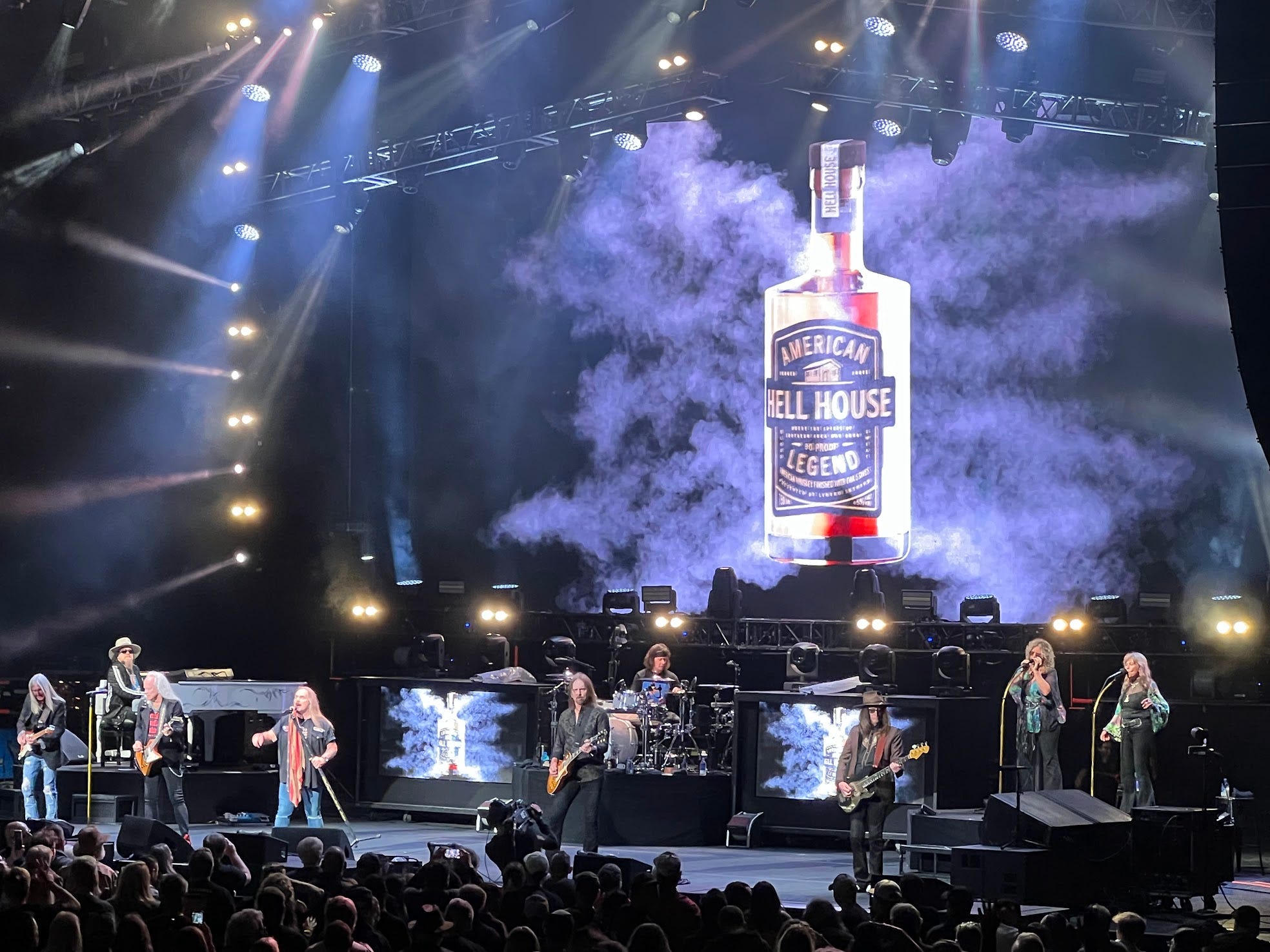
    A heady mix of raw sexual energy and whiskey marketing

    In retrospect, the mistake was going to a concert in Concord on a Thursday evening. We live in Redwood City and the 50 mile rush-hour drive to Concord took us two and a half crawling hours. But we’d bought the tickets six or eight months before, when the prospect of the drive was remote, and my son was excited to see a double bill of ZZ Top and Lynyrd Skynyrd.

    Yes, this was my 16 year-old son’s choice. He may be a half-Asian zoomer, but he has the musical tastes of a white boomer from Little Rock. His playlist is a mix of 70’s prog, southern rock and classic country. 

    I didn’t do this to him! If my influence won, he would be playing non-stop Pink Floyd and Led Zeppelin. I went to the University of California Santa Cruz in the 1980s and they wouldn’t give you a diploma until you could recite the discographies of both bands and debate the merits of their various eras. Was it all downhill after Syd Barrett left Floyd? These are the questions one grapples with in the ivory towers of the academy. Often as one also grapples with a four foot tall bong.

    Read the rest on Substack

  • Life, Death and Radio


    News today that longtime San Francisco music station KFOG is no more. It’s going to drop music and switch to simulcasting sports-talk from KNBR.

    Gen-X Bay Area natives, like me, may remember KFOG as one of the seminal music stations of the eighties. Along with the long-dead KOME, of San Jose, it was pretty much the soundtrack of my high school years. My friends I and I would sometimes hang out at the Campus Shell gas station at Stanford, where one of our clique worked, and listen to KFOG in the evenings.

    I barely listen to radio anymore. Commercial music radio is unlistenable, and even NPR’s Beltway-obsessed news has worn thin for me. Spotify and podcasts have filled the void. But I was a radio romantic when I was young. As a tween, I used to put the radio under my pillow at night and listen to AM talk radio and revivals of old radio dramas and comedies. For a few years, in the early nineties, I thought I might wind up working in radio. I did college radio while in grad school at SF State, and interned and later worked at the short-lived KDBK rock-talk station, a few other ill-fated music formats at the same transmitter, and later as a talk-radio producer at KSFO.

    Boy, did I dodge a bullet. The Internet emerged while I was a grad student, and I ended up going to Singapore in 1995 to make online computer games and the rest, as they say, is history. Seventeen years later I returned to the U.S., and people I knew who had been playing seventies rock standards at weird hours of the weekend were still playing seventies rock standards at weird hours of the weekend, but for different stations. Thank Christ I didn’t do that.

    Still, I look back on my brief flirtation with broadcasting with some affection. I met some lovely people, played some terrible music, and worked some ferociously shitty hours.

    In 1992, before I started interning at KDBK ,I went down to their studios to interview one of their most famous DJs, M. Dung, for a school assignment. I was reminded of this today because Dung had spent essentially all of the eighties as a fixture on KFOG, doing morning shows and mid-days. I spoke to Dung for a couple of hours in between mic-breaks while he was doing his show. He was amazingly gracious and patient, philosophical, and a bit melancholy at the age of 35 after an already long career in radio.

    A couple of years ago I stumbled on the transcript of the interview and I emailed Dung (real name: Mike Slavko) to ask if he would mind if I published the transcript here. I never heard back. Today, upon hearing the KFOG news, I checked online and it turns out that Dung died just a little over two years ago, following long-running health problems.

    So long KFOG, and so-long, Dung.

    Anyway, below is the transcript of that interview. This is 7000 words, so probably suitable only for radio hard-cores. But a bit of a time capsule of early nineties life in Bay Area radio.

    Away!

    December 3rd, 1992:

    WM: I want to start with the basics. I’ve listened to you on and off since ’81 or ’82 I guess, when KFOG did its format switch… 

    MD: January of ’83. 

    Early high school for me. A long time. That’s one of the reasons why I was interested in talking to you, because I can remember you further back than just about anybody else on the air in the Bay Area. So, how did you come to be in radio? Why radio? Were you always attracted to it, or did you stumble [into it]? 

    Well, actually, I used to listen to radio a lot when I was a kid, but it never occurred to me to be a DJ. I was going to be an actor. I started in theater in high school and continued that through college. I’ve always loved rock and roll, and a friend of mine —when I moved to college you had to spend your first year in the dorms, so I met this guy who worked in the radio station at the college—I started hanging out with him, and I started hanging out there, and one thing lead to another and I got an airshift, and that’s how I started being a DJ. I just kind of fell into it. I learned everything that I know by just hanging out and watching people do their thing. I never took a broadcasting class. Ever. From there I got my first job while I was still in school. That was in 1979. I started out at a tiny little AM daytime station doing adult contemporary music. It was the worst man, but it was big fun because it was my first job in radio, so that was exciting. 

    And were on air from the beginning? 

    Oh yeah. I started out doing the night-time shift 7 to midnight. I was just really tickled to be doing it, but it was the worst. They had a top 20, and you played all twenty every hour. Then you had a few oldies —golds as they called them— and you threw those in. By the end of the shift you’re ready to shoot yourself because you’re so sick of that music. And actually, while in college my dad worked at Chrysler in Detroit, and they had a student program that they would hire temporary people to fill in while others were on vacation, and so I would work at Chrysler in the summer. They would let you go just before you got seniority so you couldn’t join the union. You were just a temp. But I made some pretty good dough. Actually that experience of working on the line helped me in commercial radio because it’s the same trip. Put on one thing, take it off. Put another thing on, take it off. So that got me through my first gig in radio. From there I got a job —the station I worked at was an an AM and FM in the same company—WLAV AM was where l started, and then the FM was a 50,000 watt rock and roll station which served all of western Michigan. I was lucky enough to get a job there too, and I left the AM, and the guy that hired me had heard from several people that I was doing this crazy show on college radio called the All-Night Idiot Show.

    [Mic break]

    You had a transmitter though. 

    Yeah. It was on top of our campus center. Ten watts isn’t that big of a deal, but Michigan is flat, so the signal goes out pretty good. 

    Couldn’t do that around here. 

    No. Not at all. That’s why radio reception is so fucked up in this place, because of the terrain. Anyway we could never figure out why we couldn’t get to Grand Rapids, which was only twelve miles away. Finally we figured it out. The first engineer who set up our station turned the antenna so he could listen to it where he lived. It was one of those antennae that was directional. So the FM signal [illustrates]—there’s the antenna—came out like this, and there was a blank space facing Grand Rapids. So we had to turn the antenna around so our reception was better in the city. That was pretty wild. Really had a lot of good times doing that college stuff. I literally lived at my radio station for a couple of months because I lost this place I was living in. It got demolished. It was this old farmhouse. Fucking thing just fell down. I had to move out, and it took me a while to get a place, so I was living in the campus center, which was totally weird. But it was a lot of fun.

    [Mic break]

    Anyway, it was great experience. The best thing about radio is that you learn a lot about people, because it’s like a family, all the people that work there.

    [Answers calls]

    I enjoyed getting to know all these different people, because everybody’s attracted to a radio station. It’s this whole mystique. Did you ever see the movie American Graffiti?

    Long ago. 

    Well there’s this scene where the kid goes to meet Wolfman Jack at the radio station, and he comes in there, and he’s talking with this guy who is Wolfman Jack, but he doesn’t realize it. And he’s going [imitates Wolfman Jack] “Yeah, the Wolfman gave me my job when I was just starting out…” And the kid says “I got to have this song played for this girl. It’s a major thing in my life.” And Wolfman goes [Wolfman voice] “Alright, I’ll try to play it for you.” Anyway, he’s walking down the hall, and the kid looks back in the mirror and he sees the guy talking into the mic, and he realizes that he was talking with the Wolfman. That’s the essence of radio, man. That’s the best scene about radio I’ve ever seen in my life. 

    Still a little romance to it, I guess, depending on where you look. 

    Well, you know, in this era a lot of that has been stripped away. I’ve been fortunate enough to be able to do what I do. I don’t understand it. Anyway, became the program director of my student station. I worked my way up in my senior year. My overnight guy quit showing up, and I really wanted the station to be on 24 hours, so I just did overnights myself. That lasted about a week. Then I got sick of just  being the normal guy playing the tunes, so I decided to have some fun. If I gotta be here all night I might as well have fun. So I got all my old records, and just went crazy…yelling, and playing music and just getting nuts. Just to get some kind of reaction, because everyone was half asleep. You always figure “no one is listening to me, right? I’m going to make them call me.” So that was my whole deal. I took the phone calls live on the air. It used to be pretty wild. I got some tapes somewhere of that stuff. It got me my job. The show was so out there that I never figured it could be on commercial radio. But my friend Dave gave me a break. I was on this FM station from midnight to 6 playing oldies. A six hour show! Yow! And all my songs were two minutes long, these old rock and roll tunes! So it was pretty wild. And [Dave] left to go here [San Francisco] to start up KFOG. KFOG started in September of ’82. In January he offered me the job to come out here to be assistant production director, and he gave me the weekend show on Sunday nights. So, I was told that San Francisco was real hard to break into…

    They’re still saying that. 

    I guess so. I don’t know. But I’ve been very lucky. I stayed at KFOG for almost ten years, and that helped to establish me. 

    A ten year tenure in radio is pretty remarkable. It’s a notoriously volatile industry. 

    Well, it can be. There are people who’ve been on the same station for fifty years, thirty years. It’s not that unusual, but it’s kind of uncommon. It depends largely on who you work for. There’s a lot of shitty places to work in radio. There’s a ton of radio stations over the country. Not all of them are owned by reputable companies. Some of them are. So if you can get in with a good company, if you want, you can stay there. [Answers phone] Hello KFOG…uh, KDBK…

    I have you thinking retro now.

    Yeah. So, KFOG was owned by NBC when I first started working there. They sold it to Susquehanna, which owns several radio and TV stations throughout the country. Their main thing was making stoneware, plates and stuff. But then they also had a radio division. So they had great benefits and all sorts of stuff. 

    So you actually came to the Bay Area through a contact, then. That was your in-road. 

    Yeah. The guy who gave me my break right out of college hired me to come out here, and gave me my big break. 

    So you did ten years at KFOG, and all of a sudden you came here [KDBK), and it was actually in the papers. You’ve become sort of a fixture. Now, a lot of my memories of you are from doing the morning show at KFOG. When did you move from just doing Sundays into doing a regular shift, and then into the morning? 

    Lee “Baby” Simms was the original morning guy on KFOG, and they had a dispute of some sort where the relationship deteriorated. They wanted to get rid of him, but at the time KFOG was union shop so they couldn’t just fire him outright. They had to go through this large process of memos and reprimands, and it’s just a drag. So it took them a while, and Lee would fuck with them all the time. He’d call up a half hour before he was supposed to be on the air and say “I’m not coming in,” and that’s how I got my break doing mornings. They called me to fill in for him, and I’d never done mornings so it was all new to me. Then they finally got rid of him, and they figured, let’s just put Dung in the mornings. And they didn’t want me to be “Dung.” I had to be “M.” They figured that Dung was a bit offensive. They figured the advertisers wouldn’t want to buy time on “Dung’s” show. But everybody knew it was me anyway. It was kind of silly, but that was the deal. So my first morning stint was from ’84 to ’87, then I was totally burned out, and I said “I cannot do this anymore.” So I went to nights and then I went to afternoons, which was a great shift. I love doing afternoons. I like doing this shift [10:00-2:00]. And then they talked me back into going on the mornings, so I did that from ’89 to ’91 I was the morning guy. For two more years. Five years of mornings. 

    When you were doing the morning show at KFOG and you were still doing the Idiot Show too, did you do that live Sunday evenings and then come back and do the morning show Mondays? 

    Yup. 

    That would kill me dead. 

    It wasn’t a great way to start the week, that’s for sure. They wanted me to give it up, but I wouldn’t do it because I got to do what I wanted.

    I guess the music you play on the Idiot show —a lot of the old R&B and Motown— doesn’t have much of an outlet on radio anymore.

    Hardly any except for public stations. See that’s the thing with oldies and presenting music. A lot of music is as vital and exciting as it was back then. It’s all in the presentation. Most oldies stations, it’s always these “golden memories…remember when…” You make the people who do remember feel like fucking fossils, and the people who don’t remember you totally alienate…the young people. They can’t relate to that at all. How can you relate to that when you’re fifteen? It’s meaningless! So they tune it out. They don’t want to hear that stuff because it’s for old people. So if you just come on and say “Hey! Yow!” And just play, people get into it because it’s great music. So that’s how I try to present it, and it seems to work because I get listeners, old folks, and I get kids calling up. 

    So after 10 years of KFOG, what was it like to suddenly end up here [KDBK]? 

    Well, my contract was up, and they said they didn’t want to renew it. They had a new boss coming in, and he changed the station around. 

    Didn’t they get a new music director too? 

    Well, they just figured that I didn’t fit in there anymore. So it was a big trauma for me man, but it was cool, because it got to the point where I thought “God, am I going to work here for the rest of my life?” After I got let go they still had to pay me through the summer, so I was getting money coming in, and I got a huge severance check from them because I had worked for them for so long. So I took the money i went to Hawaii for a month and just hung out. I needed to really relax and just get away from everything. So I came back, and then Chris [KDBK program director Chris Miller], my boss now, called me up and said, “You want to do this, we got a whole new thing happening here?” And I said sure, let’s do it, so I got a job second day I was back in town. [Takes calls

    We were talking about how it felt to switch after ten years at ΚFΟG. 

    Oh, it’s all different here, you know. KFOG had really nice studios. We had just recently moved into the place—they’re a block away, just up the street. It was exciting. It was kind of scary. It was nice though, because this is a new format, and it’s always great to break in a new format so you can make it your own. It’s a new time period, a new station —Viacom owns this station— and after the first [of the year] we’re going to get new studios and new equipment, which we really need. 

    They’re going to be in the same suite, here? 

    Same space, just different. I don’t know what they’re going to do, but they’ve gotta do something. 

    Yeah, I notice you’re playing everything on cartridge except for one CD player. I always thought that was sort of a top-forty station thing. 

    Technically this place is in the stone age, man. That room in there is like a nightmare [gestures at adjacent production studio]. They have one turntable in this station. When I do the Idiot Show all my stuff is on records. So they had to bring in a new turntable. They have no remote starts, I have to start them by hand. It’s like I’m doing college radio. Worse than college radio. Half the shit here doesn’t work. It’s not that the engineers here aren’t…[pauses], they just haven’t had to do real radio here before. Everything was just real mellow and almost automated. It’s frustrating, but you’ve just got to roll with the punches. 

    Well that leads into something else. This is a new format, and I know that at the radio program at San Francisco State it’s become very popular with the DJs. This station, by and large, actually stopped me channel switching. I bought a remote control receiver because I write for a living, and I just zap, zap, zap, every chance I get. When they switched format from Double 99, I stopped going zap. We’re all thrilled by it, we like it a lot, but I’ve heard that the books are still sort of weak, and it hasn’t been around long, and of course this transmitter doesn’t have the most storied history. Didn’t this used to be KQAK way back and ΚΚΟΥ?

    Yeah. The quake and the City, and it used to be KMPX. 

    So is KDBK going to have better luck? 

    I hope so, man. I hope it takes off. This business is crazy the way it’s run. I mean, it’s just insane. Every ratings period you just throw your fate to the wind, you know? It’s like you’re going to school, study your ass off, pass all your tests, you get your report card, and you get an ‘E’. That’s what it’s like man, you work hard at something, but it’s not up to you. It’s up to this bizarre…thing, that this is where you stand, you know? It really is crazy. But you have to develop a little thick skin being in this business, and realize that that’s the nature of the business. And unfortunately, whether or not you like it, that’s the way it is, so you’re going to have to deal with it. It’s nice being in public radio because you don’t have to deal with that aspect of this job, but once you make the transition it can be scary, because your job is on the line. If the ratings say that you’re not happening, you’re not happening. That’s the deal, and it’s kind of hard to take sometimes. And it’s really frustrating when it never seems to happen, you know? So I hope we have some luck here. It takes a while. When I started working at KFOG they had no ratings either, man. They had a point six. That’s like nothing. And this place right now is at a point nine. However the Double was not doing well, and that’s why they switched the formats, and this place has only been on since August, which is not that long. There’s been no real promotional blitz; we got to wait ’till January for our new budget, and then I would expect you’re going see some TV ads, some billboards, shit like that. Bumper stickers would be nice. So it will all happen when it’s time. It took KFOG a good two years to make a dent in the ratings, and I think the company [Viacom] realizes that, and they’re going hang in here with us. Hopefully we’ll get some numbers. 

    I hope it sticks around.

    Me too. [Laughs

    So, Bay Area radio. You’ve had an ear to it for the last ten years. Have you seen any dramatic overall changes or shifts in the whole radio scene in the Bay Area? 

    Not really, you know. Except, I like Live 105 [KITS]. I think they’re a great station. I love Big Rick [Stewart]. Alex [Bennett]…actually he’s grown on me. I still don’t listen to [Alex] because I think he sucks…but actually Alex is very close to what’s happening in L.A. radio. If you go down to Los Angeles and listen to the morning shows there, it’s all talk. All they do is talk. Nobody plays any music. It’s all talk, comedy, that kind of shit. Alex is really the only one doing that, except for Blake and B.J. [KDBK’s then morning-show hosts], these guys who’ve just started up. Alex is good, I guess, but he’s not a D.J. I have my own personal…[pauses] He’s been my nemesis for ten years, man! I don’t want to get in trouble and say anything, but he’s an OK guy. But radio in general…it seems the bigger the market the more bland the radio gets, and the more sterile it gets. Predictable. Really just like background music. I don’t know what’s going to happen. Video…MTV…did a lot to shake radio up. 

    Before you continue on that line of thought let me inject something else, because this is related to radio, the business as a whole and where it’s going, what with the advent of things like digital radio on the horizon, and DMX-which is being carried on Viacom now— and our orientation as a very visual society. We like our mediated messages to be visual. How do you think that’s going to affect radio into the future? 

    Oh, everything like that is going to affect radio. The digital stuff…it depends on what age group you’re looking at. It’s pretty complicated when you think about it, but basically in radio you have morning drive and you have afternoon drive. Those are your two big dayparts. That’s when you want the big ratings because then you can command the most dollars for your spots…for your air time. Mid-days, doesn’t matter. Nights, forget about it. Overnights, you’re in the twilight zone. None of that shit matters. The two big dayparts are mornings and the afternoons. And basically, most of the audience is a commute kind of thing. It’s people in their cars listening to the radio…mostly. So you’re dealing with somebody who’s getting up, going to work on the morning… Now I’m going to play my Dave Edmunds tune, and I’m going to rock out. Can we talk after the Dave Edmunds song is over? 

    [Pauses for mic break. Rocks out.]

    Like I said, a lot of it depends on what age group the station is trying to reach. Traditionally, top 40 stations and stations like KMEL –urban— get big listenerships because a lot of their listeners are teenagers. And I think teenagers and younger people listen to radio more than people in their thirties and forties, or at least listen to the radio longer. You get into a situation where, with a classic rock station, or an oldies station especially, it’s like you’re appealing to an older audience that doesn’t listen to the radio that much anymore, so your ratings aren’t going to be that hot to begin with. You’re relying mostly on your personalities, which today is rare to have an established personality. And record companies, they don’t give a shit about oldies stations…classic rock. They want you to play new material because that’s how they make their dough. And if you’re playing catalog stuff they virtually ignore you. So if you’re playing current music like we’re playing, it’s somewhat of an advantage because people will listen to hear new songs that they wouldn’t normally hear. And I really believe that people will hear a new song on the radio before they see it on MTV. You’ll hear it on the radio or in a club. That’s probably where you’ll hear new music first. There’s only so many pieces of the pie. San Francisco has a large amount of radio, and actually AM radio does better than FM because of the terrain. FM signals don’t work well with mountains and shit, whereas with AM that doesn’t matter. That’s why AM is so strong here.

    I guess KGO is the number one rated station here. 

    They’ve been number one for twenty years. So you’ve got a long row to hoe if you’re going to be playing oldies on an FM station. It’s going to be an uphill struggle. 

    KDBK not only plays new music, but they seem to reach for, not a hardcore alternative sound, but at least a mildly alternative sound. 

    Well it’s still evolving. What we’re playing now is pretty different than what we were playing when we first started out. We’re being compared a lot to Live 105, but were basically a rock and roll station, whereas Live 105 plays mostly pop, new wave dance shit. Which is OK! I like that too. But it’s a little different. We don’t really play any of that…well we play some of it, but not like they do. The stations are different in that respect, but they’re similar in that we play new music. 

    Did you ever listen to old time radio or radio drama?

    I was a little too young for that. I grew up listening to the boss jocks back in the sixties. I grew up in Detroit. CKLW was a monster. Back in the old days you could tell what station you were listening to not because the DJ said the call letters every five minutes, but because of who was on…the personality. It was an entertainment thing, and DJs were almost as big and popular as the fucking rock stars back in the old days! So, you’re listening and you say “Oh, there’s so and so! This is the station I’m listening to.” Unfortunately, they’ve got consultants and all these test marketing, sampling, audience things. It’s just insane. Either you’re good or you’re not! You just get on there, and you can either do it or you can’t! No amount of posturing or rotation of music…that’s all beside the point as far as I’m Concerned. 

    The reason that I ask about the old radio theater is because… obviously it hearkens back to the forties and fifties, and it expired in the early sixties I guess… But that was one of the things that I discovered when I was young —10, 12, 14— and I was still firmly convinced that I was going to be a scientist. They used to rerun them on KSFO AM here in the city, and that was one of the things that seduced me into radio, and I spent a lot of time making audio plays, and that led into my interest these days. 

    Oh really? Well, when I was in college…as I said, I was in acting, and I kept up my acting career. I appeared in several plays, and for my senior project I directed and wrote my own play. While at SRX [student station WSRX] I taught a course in radio drama. So I was the instructor…with a regular teacher. But I was the guy who taught the class, with his help. Basically, what we did was every week we wrote a one act play radio script and we produced it on the radio station with sound effects, and it was just like radio drama. That was for a whole semester. It was a great experience. It’s a lot of fun. Radio is a very potent medium. Hearing is perhaps your strongest sense. It’s the last to go when you die, as opposed to sight and smell. It’s a direct link to your brain. And that’s how it [radio] differs from TV, which is a passive thing. You watch TV and you don’t have to think because its just laid out there. Radio gets inside your head, and you have to use your imagination. And you can really do some stuff, man! It’s like theater of the mind. That’s why radio makes such an impression on people if it’s done correctly. 

    [Breaks to talk with his producer, who has brought an admiring friend to meet him.]

    It’s your celebrity, man. 

    When people meet me they freak out! I mean, who I am and what I do are two different things. I don’t walk around screaming and saying “Oday!” [An M. Dung signature exclamation.] But when I’m on the air it’s what I do. For my listeners that’s who I am. In their minds they have this image of what M. Dung is. On the Idiot Show I’m larger than life, so when they meet me it’s like ‘ak’ [feigns awe]. It’s really weird you know! I’ve come to terms with it, man. It used to freak me out so much that I became a hermit. I wouldn’t even go out because I couldn’t handle it. But they only react that way because they like me and they don’t know any other way to react because they don’t know me. So either I play up to it and become what they think I am so they feel good about this, or I just totally confuse them and be myself, which throws them off. It’s funny. It’s just one of the things that comes with this job. 

    That’s funny because you were talking a moment ago about how radio forces you to use your head and develop a picture. One thing that is very strong is that when people listen to an air personality for any length of time they will always develop some sort of image of who that personality is. It’s often interesting when they first encounter each other. My father thought you were Asian because of the last name “Dung”. I told him I was going to interview you, and I said something about Mimi Chen being at this station now, and he mentioned something about you both being Asian, and I said “I don’t think so!” So for various reasons, be it the name or the accent, or whatever, people really do develop an image. 

    Sure, and there’s no way around that. That was my saving grace in college, because I was so obnoxious on the radio that a lot of people threatened me with physical violence. When I first started out I got death threats…all sorts of weirdness, man. It was pretty intense to garner that kind of reaction from people. But that’s good! I think the worst thing in this business is to have people who have no opinion of what you do. I mean a negative reaction is just…[pauses] That’s why Alex [Bennett] is so popular. Everyone I talk to says “I hate him! He’s an asshole!” But everyone listens to the guy! Some people just listen to people to hate them. So a good or bad reaction…if you get a reaction you’re doing a good job as far as I’m concerned. Whether or not I like what you do. Like Howard Stern! I hate the guy, you know. That’s not my style. But he’s number one in fucking New York and L.A. in morning drive!

    And Philadelphia too. 

    I know! I may not like him personally, but I can’t deny that he’s good at what he does. 

    So I’m curious. What exactly did you do in college radio to garner death threats?

    Not much different than what I’m doing now. I wasn’t [imitates soporific FM DJ voice] “WLAV FM with…Styx…” I was screaming my brains out and playing Little Richard. Whoever called up, I would put ’em right on the air and if I didn’t like their request I wouldn’t play it, or I’d force ’em to listen to something else. If somebody was saying “God I hate you!” I’d stick the phone receiver right in the trash can and shake it up. Made a great noise over the radio. I just used to be…not a dick…but just obnoxious. That’s the only way I can say it. And it rubbed a lot of people the wrong way. Once, I remember, this group of jocks came down, and they were going to beat the shit out of Dung. They were sick of Dung. I had just ended my shift and I was coming out, and there was a group of guys in front of the station, and they say “Where’s that Dung guy?” And I said “He’s in there!” And they went in there! They didn’t know it was me! And that’s the best thing. I don’t look like whatever they think Dung is! So that was great. And actually, before I started getting real popular here and getting my face on billboards and doing TV —once you do TV everyone knows what you look like, so your cover is blown—but until that point I was relatively anonymous. No one would know it was me, so it was kind of fun. 

    So speaking of your wild college radio days, a friend of mine —and this might be apocryphal— told me not to ask you about the hot dogs. So I’m going to ask you about the hot dogs. 

    Hah! Well, at one point I was program director at WSRX, the student station, I did a shift at WEHB which was a community radio station in Grand Rapids, and I also worked at commercial station WLAV. Like this radio Czar! WEHB…the call letters stood for “Where Every Hour’s Better”. Right! It was run by all these liberals. Nobody could make a decision, and they knew absolutely nothing about radio. After hanging out at the station and trying to get to know people, nobody would commit to letting me do a show. It was this insane politics to get on the air. I was this controversial character in their eyes. They had to deal with me, but they didn’t really want me to be on the station because they thought I was some kind of subversive or something. All I was doing was playing oldies and yelling. I mean, it’s not that big of a deal. But this is back in 1980, and nobody was doing that. I don’t know, I don’t think what I do is that big of a deal. Anyway, they finally gave me a shot. It was during the week sometime. I was on for an hour from like four to five or something like that. And I got a pretty big reaction, mostly negative. And these guys were so lame they couldn’t even tell me to go away. It got so that they had a member of their committee outside the studio taking notes while I was on the airl I just thought, “Man these people are fucking ridiculous!” So WEHB was right across the street from this place called Yesterdogs, this hot dog joint. So I ate a ton of hot dogs, and I went to work to do my show, and I said, “well I’m going to throw up on the air to raise money for the station, so make your pledges.” This is at dinnertime! Some guy calls and says “I’ll give you five bucks if you throw up!” So I stuck my finger down my throat and puked into a bucket on the air. That was my last show at WEHBI. [Laughs] But I’ve got an aircheck of it somewhere. It’s pretty wild. 

    I don’t think I’ll go quite that far, myself. 

    Well, you know. I was twenty-one years old. What do you know when you’re twenty-one years old? [Laughs] I wouldn’t do that today. 

    Well, okay. That might have been the nadir. What was your best moment in radio? What stands out something you really enjoyed, or just a seminal moment in the studio? 

    Well, you know, there’s lots. Getting my first job was a lot of fun. That was exciting. Coming here to San Francisco was very exciting. That was very scary. I was totally out of sync, coming from Grand Rapids to San Francisco was like culture-shock to the max. I didn’t know a soul in this place, but it was really exciting. I always enjoy meeting people that I admire and like. Meeting Wolfman Jack was big thrill for me. I met him a few years ago. He did a show at the Concord Pavilion, and I got an interview with him. And the thing that blew me away was that he had heard of me. [Imitates Wolfman Jack] “I’ve heard of you, baby!” And it was so…I almost shit in my pants, man. It was heavy! Going to London a couple of times. Doing my show from London and New York was a lot of fun. It’s a fun job you know. There can be a lot of good moments. But it’s work you know? Sometimes I just don’t want to do it. But, you just do it. 

    How about the worst meltdown you ever experienced in a radio studio? 

    I don’t…[pauses] I’m my worst critic. I’m not as bad as I used to be. If I made a mistake or flubbed a word…that’s basically how I started making all my stupid noises, you know: “Ayy!” All that stuff. 

    That’s good. I was going to ask you about the evolution of Dung-speak. 

    Well, it’s because I was such a lousy DJ, I kept making mistakes and mispronouncing words, flubbing my words. So to cover my slips I’d make dumb noises because you can’t swear on the air. I’ve since gotten better. 

    You also seemed to have toned it down. 

    Well, you know, I’m thirty-five years old now. I started doing this when I was nineteen. I still like it. I can’t really do my show [the Idiot Show] in here [KDBK]. My show now is different. They don’t have a way for me to talk to the phone. There’s no phone in there [gestures at the production studio]. I gotta do my show from the production studio [because of the turntables], and there’s no phone in there to put on the air, so I can’t do the listener request thing I always do. And it’s hard to do my show because I have to reach [no remote starts]…It’s just a struggle. So instead of talking with people all the time, I just play music. I don’t know. I hate to say I’m getting older, but that’s basically what the deal is. I love rock and roll, but it’s like, you can’t maintain a hard-on that long, you know what I mean? I’ve been doing this for so long. I mean, I still dig it and stuff, but I’ve been doing this for a long time. And I still dig it, and I still have great shows and stuff, but it’s not like earlier. Listen to tapes of me when I was in college or even when I was on KFOG, and it’s totally different.

    [At this point, I go on the air with Dung and do a Mic break. During the break, Dung explains how he got his name.]

    …and that’s how I got the name Dung. Because the guy who was station manager at the time hated my guts. It was a personality clash. It was not really anything we’d done to each other, it was just like, you meet people and “I don’t like you!” It was that kind of thing. But he couldn’t make me go away! So that was great, you know? So I would just not go away! So he had to deal with me, and they finally put me…they figured out “Alright, we’ve got to deal with this guy.” They put me on Sunday morning from 3 AM to 6 AM. That was my shift. Like the absolute twilight zone! They figured no one on Earth is gonna be listening to this guy. 

    So who did you dredge up at those hours? 

    Oh, well, at the time WSRX was a ten watt FM station in Allendale Michigan, which is basically a farm community in Western Michigan. So I talked to a lot of farmers who were milking cows, and there were a few students in the dorms. And I had a lot of people basically like these farmer guys, man. It was a trip. And when they finally gave me my shift it was like, “Alright, I know I’m the low man on the totem pole, but I’m gonna make the best of it, you know.” So I gave it all i got and I finally worked myself up and got a decent shift. Actually I became the program director of the station eventually. But I wanted to irk this guy off, so I wanted to come up with a name that would be very offensive to him, particularly, yet I could say on the air. So I was trying to figure out what I was going to call myself, and I was looking through the dictionary and I found “dung,” and I thought, this is perfect man! It means “crap,” but I can say it on the air. And it worked! He hated it! But he’s gone now.

    The name’s still around! 

    I’m still around, so I can’t complain. So my advice to all you guys over there at the [college] radio station is just, if you want to do your thing, don’t let anybody get in your way, or tell you you’re not good enough, or tell you that you can’t do it, you know. Just stick to your guns and keep on going. That’s what I did.

    [Back to the Interview.]

    Your daughter. I’ve heard you bring her on the air a couple of times. If she was to come to you and tell you, “Dad, I want to work in radio,” what would you tell her? 

    I’d be as supportive as I could and try to give her some advice. 

    Which would be? 

    Which would be…listen to radio, listen to music, practice your diction. Believe it or not, you know, with my style and everything —you were talking about it earlier and how I’ve toned down— I’ve listened to airchecks man, and Dung was such an intense character, it’s hard to listen to it for a long period of time, because it’s like [makes loud buzzing noise]. There was very few valleys and hills. It was like this one barrage of sound. And I used to be totally schized, because I was like shy and quiet, but when i was behind the mic I would just scream my brains out, and people would go, “What’s this guy’s trip?” But over the years I guess they kind of incorporated themselves in my psyche, so I don’t know. I try to be myself more rather than trying to portray someone I’m not. But, as far as my daughter goes, coming from a theater background helped out a lot. Projecting your voice, learning how to speak properly. That’s a very essential skill in this business. You have to enunciate and be able to be understood, because you’re trying to communicate. And I would try to help her develop those skills if that’s what she wanted to do. 

    So how long do you think you’ll continue to work in radio? You said you’ve been doing it since you were nineteen. You’re thirty-five now.

    Just had a birthday. The 22nd [of November].

    Well, happy birthday! 

    Thank you. I don’t know man. I never wanted to be a DJ, I never expected to be one. I never thought I’d be in San Francisco. I never wanted to come here. I’m just going to do it for as long as it happens, you know. I like it. It’s a good way to make a living. It’s great working with people. I enjoy what I do. I’d kind of like to get back into acting at some point, to do something different. I can’t picture myself being fifty years old saying “Oday!” and “Away!” So I don’t know. Nobody stays the same all their life. Things change. That’s the only thing you can really count on. Things are going to change, and I’ll change along with them.

    ###

    Note: Also on Medium.

  • Adventures in audio tape

    Yesterday Bloomberg ran what was essentially a PR piece for Ballfinger, a German maker of rarefied audio equipment, including reel-to-reel stereo tape decks that start at $11,000. The thesis: reel to reel is making a comeback.

    This is of course a bullshit trend story. I am sure the people who buy $10,000 glass-platter turntables will give these a look, but there is no way that reel-to-reel tape is coming back in any meaningful way. I say this as a recent returnee to vinyl (at a somewhat lower price point), and as someone with a fair tolerance for fiddly audio-visual equipment. But these are beautiful decks, and they remind me of a long-dormant soft-spot in my heart for reel-to-reel.

    I’ve always appreciated the inherently mechanical aspect to music, and therefore I have some affection for elaborately mechanical analog reproduction methods. One of my earliest musical memories is my great-uncle David playing “Abbey Road” on a reel-to-reel deck when I was ten or so, sitting on the carpet in front of the stereo. To this day the opening measures of “Come Together” call to mind dreamily turning tape reels.

    Uncle David was a German Jewish immigrant, a Holocaust survivor by way of the East End of London who found his way to business success and, ultimately, Palo Alto. He and my great aunt Anne, who was English, traveled extensively and radiated sophisticated late-seventies cosmopolitanism in an era when my own family was scruffily academic. David had the first electronic calculator that I ever saw, a delightful piece of technological sorcery. I will forever associate visits to his house with Japanese prints and the aroma of ginger ale. In such a context, reel-to-reel was almost inevitable.

    David also used that reel-to-reel deck to introduce me to “The Goon Show”, the legendary BBC radio comedy starring Spike Milligan, Peter Sellers and Harry Secombe. He ran me a cassette copy of his reel of four episodes, and I listened to that cassette for twenty-five years until, when it was on the threshold of disintegration, I finally digitized it.

    David’s was the only reel-to-reel deck I ever saw that was part of someone’s everyday stereo setup. However, after a long detour through the benighted era of cassette tape (Mix tapes! Dolby B noise reduction!), reel-to-reel came back into my life during grad school, in the early nineties, when I did college radio. Most of our audio production was done on quarter-inch reel, and I spent countless pre-digital hours slicing up Ampex 456 with razor blades, hanging the clips from wires, and splicing them back together with Scotch Tape. I even made some money on the side editing for Antenna Theater, an outfit from Marin that recorded books on tape using reel-to-reel.

    In those days my friends and I also used reel-to-reel for music production. My buddy Gabe and I had been college bandmates in my undergraduate days. That was the era of four-track cassette recorders, the production media of choice for threadbare ‘80s garage bands everywhere. If nothing else, four-tracks enforced a certain ingenuity, as you figured out how many generations you could ping-pong tracks before the only thing you heard was tape noise. Fortunately, this was a skill I’d honed in junior high school, recording audio science fiction epics on dual cassette decks with my nerdy tween friends.

    After college Gabe and I kept jamming, and there was a brief moment between the Tascam four-tracks and the rise of digital when he had an eight-track reel-to-reel in his bedroom. This was the coolest bit of band equipment that any of my friends had ever owned, and it expanded our production horizons dramatically. We mixed down to Digital Audio Tape (DAT) cassettes, another short-lived tape format that inhabited the lacuna between the fall of analog and the rise of accessible digital audio workstations.

    Gabe’s eight-track also taught us the eternal lesson that, no matter how many recording tracks you have, it’s always exactly one less than you need. This was especially true when you had to give a track up to SMPTE time code, which we used to synchronize the analog tape deck with a digital keyboard and drum machine. SMTPE time code sounds like something Jeff Goldblum would tell you portends an alien invasion, and it would inevitably bleed into the neighboring tracks because we couldn’t spare a guard track between the time code and the music. I can still hear it when I listen to those songs. Gabe would soon abandon the analog eight-track for an Alesis ADAT, a contemporary of DAT that used VHS tapes to record eight digital audio tracks. This worked every bit as well as you imagine a recording technology based on VHS media would, but it had a digital sync clock and didn’t need SMPTE, so there’s one more recording track for you if you can un-jam the machine.

    In that era I also spent time in SF State’s recording studio, working with two-inch, 24-track tape on a giant, two-horsepower deck. It was a beast the size of a Viking stove — the reels alone weighed ten pounds when fully wound. All of us with long hair, men and women alike, were advised to keep our ponytails and dreads well away from the reels during transport if we wanted to go through life with scalps. It was huge fun. Finally, we had all the tracks! The instructor, John Barsotti, who’d been a professional engineer, had a first-generation copy of the Billie Jean master on a half-inch stereo reel at 30-inches-per-second, basically the maximum useful ratio of tape surface area to signal achievable. He played it for us in the control room over the big Tannoy monitors and it absolutely blew my mind. I’d heard the song dozens of times before then and been indifferent to it, but I’ve been a fan of Billie Jean ever since. Ah-HOOO!

    But, as anyone who remembers “be kind, rewind” knows, tape is a pain, and not just because it has to be rewound. Tape degrades. Tails in? Tails out? Where on the reel is the cut you’re looking for? Tape is not just the platonic example of a linear media, it’s actually linear. The deck jams and tape stretches and snaps. It’s bulky and weighs a ton. It fouls during rewind or fast forward and suddenly the studio is knee deep in tangles of it. Digital tape formats were only ever awkward placeholders for something better. For production purposes, tape was rightly displaced by random access digital. I went from cutting 456 to using SoundTools on an Intergraph workstation and it was like being born again.

    I’m sure these new reel-to-reel decks will find their place. There is an eccentric for every audiophile market, no matter how niche. People do buy old TEAC decks and scour flea markets and e-Bay for secondhand reels. And I am sure there are people out there who will buy these Ballfinger decks, if for no other reason than they are gorgeous objects that also play analog music at ridiculously high quality. (And I live in Silicon Valley, a place with a well documented weakness for gorgeously over-engineered frippery.)

    But it won’t be me. My wife has already warned me that under no circumstances am I to buy an expensive German tape deck. Or, for that matter, any tape deck. I’ve been enjoying my LPs, but, nostalgia notwithstanding, the old razor-nicks on my hands say I gotta draw the line at tape.

    Also posted on Medium.

  • Godzilla vs. the SARFT Monster

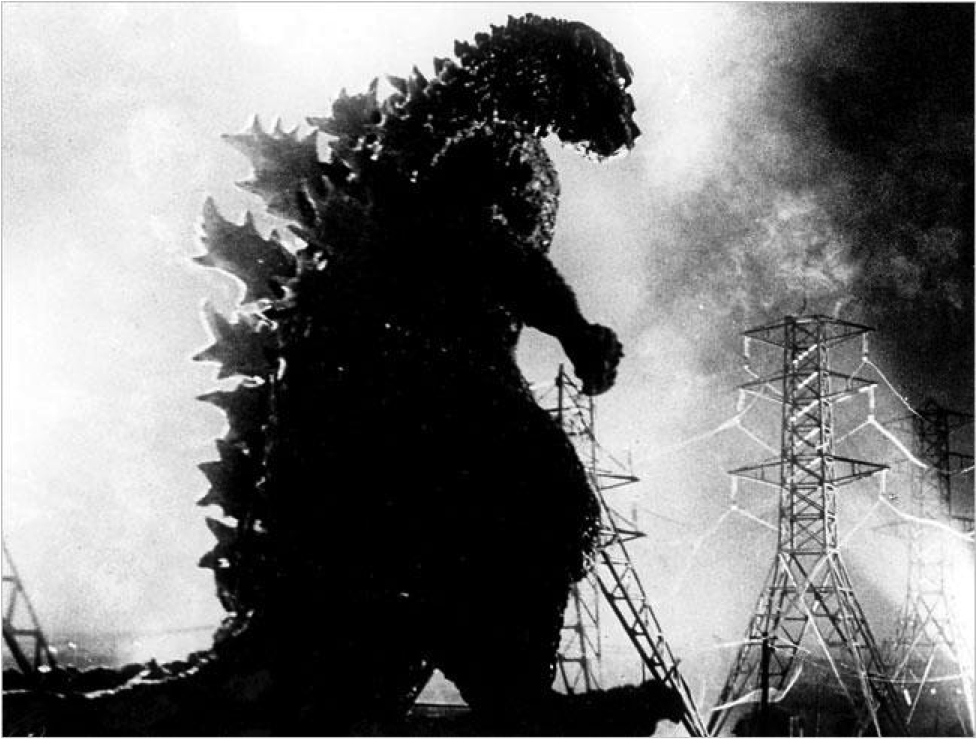
    I’ve been watching a lot of Godzilla movies recently. This isn’t some kind of weird Cable TV accident, like stumbling onto “Barbarella, Queen of the Galaxy” at 2AM when you have a microwave burrito in one hand and a vodka cranberry in the other, and thus, tragically, no ability to change channels. It’s on purpose. I’ve loved Godzilla ever since I discovered him on the afternoon sci-fi serials as a small boy. They spoke directly to the primitive part of the small-boy brain stem that wants desperately to rampage through a model city with a flame thrower. That part sometimes survives into adulthood.

    I’m mostly nostalgic for the “classic” Godzilla movies, from the 1954 original up to about the late 70′s, when I was in my tweens. I haven’t seen many of the modern films from the 80’s, 90’s and naughties, and the 1998 Matthew Broderick Hollywood obscenity is history’s second most flagrant case of pissing indifferently on a beloved piece of popular culture, after the new Star Wars movies. To this day I can’t watch “Ferris Bueller’s Day Off” without weeping.

    Back in the early 90’s I had a well-worn VHS tape of the Americanized version of the 1954 original, “Godzilla: King of the Monsters,” in which the Japanese footage is intercut with shots of “journalist” Raymond Burr calling the destruction from nonspecific locations like a sportscaster: Godzilla has just incinerated Yokohama. Three and two with the bases loaded. Looks like the Japan Self Defense Forces are going to make a change on the mound… But, with an eye on my own son’s cultural indoctrination, I figured it was time to refresh the collection and to finally see Ishiro Honda’s original, Burr-free version of the first movie. It turns out that Amazon sells most of the classic Godzilla oeuvre at knockdown prices. I ordered eight DVDs and I’ve been watching them about one a week for the last couple of months.

    Godzilla movies are still good fun. The joy of watching grown men in rubber suits going all WWF on fabulously intricate model cities never goes away. But watching the movies as an adult is a very different experience than it was when I was young. First, they are, as you’d expect, spectacularly cheesy in virtually all respects: set design, special effects, writing, acting, you name it. In the age of “Avatar” there’s something charming about the pre-digital, in-camera crudeness of the latex, cycloramas, piano wire, little model tanks, and such. It’s a dated look that invokes the 60′s and 70′s like Ray Harryhausen’s stop-motion creatures invoke the 50′s.

    The series also evolves quickly. The 1954 original was released less than a decade after the Second World War and the same year that Japan experienced radioactive rain from American nuclear tests in the Pacific. Fittingly, it is a moody metaphor for nuclear annihilation and human powerlessness. But the geniuses at Toho figured out approximately instantaneously that the future was in monster-on-monster action. By the second movie, 1955’s “Gozilla Raids Again,” Godzilla is fighting a giant, spiky turtle. The pattern is thus set for the next fifty years.

    Godzilla himself rapidly goes from truly sinister to googly-eyed and almost huggable, as though Cookie Monster suddenly grew 400 feet and traded chocolate chips for infrastructure. As Godzilla moves into hero status he’s replaced as villain-in-chief by a motley assortment of other monsters, evil property developers, gangsters, robots, and disco aliens featuring some of the most awesome space-couture since Sean Connery wore a red bikini for “Zardoz.”

    Nobody seemed to care much about this curious transition in Godzilla’s motivations. I guess it was a bit like sports free agency in the US. When Deion Sanders was an Atlanta Falcon, he was a gigawatt hate-magnet that sucked bile out of my pores and toward the Georgia Dome. But when he came to the Forty Niners and started running punts back for us I would have airmailed him my sister, if I’d had one. Of course, just as Deion slid back into villain status when he moved on to the hated Dallas Cowboys, Godzilla himself was reborn as a menace in his modern filmography, but that’s outside the scope of this essay.

    The other thing that struck me upon watching the movies was that there is no way in hell that similar ones could have been made in China, or would be now.

    As I wrote in 2005, no city has ascended the Olympian heights of popular culture until it has been ravaged by a giant monster. Tokyo is clearly way out in front in this regard. It’s taken for granted that monsters are drawn to Tokyo like frat boys to Jaeger shots. Monsters have also afflicted New York, London, San Francisco, Seoul, Paris, Rome, Los Angeles and even Bangkok (look it up). But as far as I can tell, Beijing has been blissfully free of giant monsters. Mothra was reported to be attacking Beijing in “Destroy All Monsters,” but it was never shown on screen, so it doesn’t count. Neither does “Mighty Peking Man,” which was made by the Shaw Brothers while Hong Kong was still British and, despite the name, had no action in Peking (the Chinese name was “Gorilla King”).

    Why hasn’t there been a Chinese giant-monster film with a Chinese giant monster? While armies, police forces and parliaments have crumbled before Godzilla and his brethren, there is one bureaucracy that is apparently entirely impervious to giant monsters: the State Administration for Radio, Film and Television. SARFT has apparently erected a monster-proof shield around Beijing and indeed around all Chinese cities. This is not because giant monsters are particularly scary, obscene or conducive to social unrest. It is because they are politically unacceptable.

    To understand why China never had a giant monster phase you have to understand something about SARFT itself. SARFT administers all of the state-owned media organizations in China and it sets the guidelines for broadcast and film censorship, ensuring that morals, political ideology and good taste are upheld. It takes the latter mission very seriously, as anyone who watches television or goes to the movies in China knows. This mandate includes approving the screenplays for all films to be produced in China, as well as approving films for distribution and exhibition.

    I’m not aware of any official list of SARFT’s decisions, which is too bad because I’m sure it would be fun and educational. You can, however, get an idea of what rings their bell by reviewing their decisions concerning domestic television shows over the last few years and referring to this handy list of foreign films that have been banned or edited for Chinese release. Some recent edits are especially illustrative: removing scenes of ethnic Chinese “space aliens” from “Men in Black III”; culling Chow Yun Fat’s Chinese pirate from “Pirates of the Caribbean III”; garbling references to Shanghai in “Transformers II”; and so on (maybe they just don’t like sequels). Similarly, you can get a pretty good idea of what passes muster simply by going to the cineplex, or, god help you, channel surfing. A few generalizations:

    • The police are incorruptible
    • The People’s Liberation Army is heroic and, ultimately, invincible
    • The modern government is composed of benevolent technocrats who want the best for you
    • No one in China ever gets away with any kind of wrongdoing in the long term
    • There are no superstitions (or they end badly)
    • No one has any sex, though chaste kissing and longing gazes are OK
    • All of history is either dudes with swords and ponytails, famous PLA victories, or the Monkey King (whoever can combine all three without breaking the “no time travel” restriction will do well)
    • Everyone is ultimately happy, and doesn’t complain about news, politics, housing, infrastructure, inflation, rural migrants, pollution or the poor state of television
    • Chinese people are not “space aliens”

    So what does this have to do with giant monsters? Everything. Think about what Japan’s giant monsters perpetrated. They stomped every famous Japanese landmark. They crushed ageless castles and temples. They smashed the Diet (possibly while it was in session). They nested in Tokyo Tower. They repeatedly incinerated the capital. They dug huge, nasty burrows into the flanks of sacred Mount Fuji.

    Japanese monsters also rendered the Japan Self Defense Forces totally impotent. Is there a movie in which the JSDF doesn’t get its ass handed to it on a radioactive plate? Actually, that’s a trick question. In 1955’s “Godzilla Raids Again,” the second in the series, the JSDF has its one and only significant triumph against Godzilla, using fighter planes to bury him in ice (at least until the third movie). But rival monster Anguirus had already done the heavy lifting. Otherwise, it’s a total wash. In the first Godzilla movie, the government and army are completely trampled and Godzilla is ultimately vanquished by an iconoclastic, reclusive scientist so tortured by the weapon he has created that he commits suicide rather than entrust the government with it. Not exactly the communist hero archetype (except maybe for the suicide part, a la Dong Cunrui).

    By the mid 1970’s the JSDF has traded F-86 Sabres for laser tanks (laser tanks!) and rocket ships, but it’s still getting owned by every monster that heaves itself out of Tokyo bay. In fact, the main job of humans in most of the movies is to flee in panic, be appalled by the destruction or supply Raymond Burr-style color commentary:Look! It’s a flying saucer! Is it? I didn’t know. Oh no! It’s Godzilla! Really? I hadn’t noticed.

    Now envision a Chinese monster movie that goes by the classic Godzilla formula. Something scaly and awful emerges from, let’s say, Miyun reservoir, where it has been awakened by decades of polluted agricultural runoff. It follows the Jingmi Road down to the capital, pausing only to snack on the new Expo Center and T3 (we can hope). In Beijing it proceeds to stomp the Forbidden City, trash Zhongnanhai, incincerate the Great Hall of the People and leave nasty footprints all over Tian’anmen Square despite the best efforts of the PLA. It is only defeated when an iconoclastic rebel unveils a weapon so powerful that he tragically kills himself to ensure it doesn’t fall into the Party’s hands.

    Who here thinks SARFT greenlights that one?

    That’s what I thought. If SARFT had approved a Chinese giant monster movie, it would have gone something like this:

    • Reel one: The Chinese people are peacefully minding their domestic affairs and improving their lives under the guidance of the Party.
    • Reel two: The Japanese (can’t use the Americans – the Japanese and Koreans have gone there already) do something horrible that creates a monster that emerges from the Bohai Bay, skips Tianjin like every other tourist, and heads straight for Beijing.
    • Reel three: The PLA uses domestically innovated technology and socialism to kick its ass before it can damage any historic sites, Party monuments or Famous National Brands. Ba yi, motherfucker!

    I think even Zhang Yimou would have spotted that as a loser.

    It’s too bad that giant monster films have never got traction in China. Giant monsters are wonderfully flexible metaphors for modern ills like atomic technology, pollution, industrialization and disagreeable political systems. Even the North Koreans saw the political angle when they created Pulgasari as a metaphor for capitalism and had him attack Kaeson. They couldn’t bear to have him rampage through Pyongyang –that’s just going too far– but they found someplace to put him, thus returning the cinematic favor of the communist space melons from “Invasion of the Body Snatchers.” Surely there must be some appropriate metaphorical deployment of giant monsters with Chinese characteristics. Corruption? Runaway Maoism? Runaway capitalism? Soviet revisionism? The dairy industry? And think of the soft-power angle! Where have you gone, Han Sanping? A nation turns its lonely eyes to you!

    But alas, even with the monster-bait of Guomao Tower 3, Yintai, the new CCTV Center, the Egg and the Bird’s Nest it seems we’re destined to be monsterless in Beijing. That’s a shame. Like political cartoons, tolerance of the cinematic destruction of treasured symbols is a sign of political and cultural maturity and confidence. If you can watch a rubber-suit monster smash a tiny representation of your society and not worry that it will somehow erode faith in the actual society, then you’ve taken an important step. And you’ve done a wonderful thing for every small boy in your country.

    See Also:

    Wikipedia’s list of Kaiju films

    Note: This post originally published on the defunct group blog Rectified.name.

    Politically unreliable.
    Politically unreliable.

  • Good News! The Press is Out to Get You

    A couple of weeks ago I gave a talk about PR in China to a journalism class at Beijing Foreign Studies University. In any student talk the Q&A is always the most fun, and this group was no exception. Among the many good questions asked was whether it was easier to do PR in China because, as I had discussed in my talk, the Chinese media is generally cozier with businesses than their Western counterparts.

    Easier to get stories? Yes. Easier to achieve meaningful results with the public? No.

    I was reminded of this question by the recent expulsion of hard-charging Al Jazeera English correspondent Melissa Chan, and subsequent closure of the AJE bureau in China after the Ministry of Foreign Affairs refused to accredit another AJE journalist. I didn’t know Melissa well, though I had met her, but I respected her reporting and willingness to insert herself into uncomfortable situations, and I was disappointed to see her go. Reporting on China will be impoverished a bit.

    That, of course, was the point. The Chinese government has never been comfortable with an adversarial media, and Melissa’s reporting was, like that of much of the foreign press corps, pretty adversarial from their point of view. This discomfort is deeper than cursory annoyance at embarrassing foreign gadflies (although I presume that is part of it). It arises from one of the fundamental philosophies of Leninist political parties: the media are considered Party organs and, as with other Party organs, expected to serve the interests of the Party first and foremost. Media that don’t fit into that model are suspect by definition. You can see this philosophy expressed in the mechanisms of control that the Chinese government maintains over all domestic media, and in the government’s struggles to come to terms with the rise of social media that resist conformity with established power structures.

    The Party’s model is rather different from the fundamental philosophy of Western media: that it should be the fourth estate, entrusted with challenging the business and government establishment in the interest of the people. You are welcome to argue about how effective Western media have been in this role in recent years, and there are plenty of exceptions, but as a founding principle the idea of the fourth estate is alive and well and inextricably bound up with our Western ideas of what the media should be (and with the value judgments we render on media that doesn’t conform to that principle). A functional, adversarial media is a necessary component of Western-style liberal democracy, unless you have total faith in politicians and institutions.

    I am not going to comment further on the specifics of the Al Jazeera situation (some links to good articles below), but in light of the Chinese government’s recent struggle with rumors and trust issues, it’s worth reflecting on why an adversarial media is sometimes useful, even to the establishment. This is what I discussed with the students at Beiwai.

    As a news junkie who still pays for several subscriptions, I’m most definitely a fan of adversarial media model (you could also call it an “independent media” model, but independence is only valuable in that enables an adversarial position). There is nothing like a fantastic piece of investigative reporting that rips the lid off of some secret or scandal or that illuminates the dark corners of business or politics. As long as it’s not my dark corner, that is.*

    As a PR practitioner with a company reputation to defend, I’ve experienced firsthand the adversarial media model’s short-term ability to create sleepless nights and great puddles of cubicle sweat. But nevertheless, I still appreciate its value in the long-term. That’s because people are more likely to trust media that challenges me than one they know to be compliant with me, and I need media that the public trusts to get my message out, whether that message is a corporate one, a product review or whatever. If I have to do more work to get coverage in that kind of media, and tolerate some negative coverage as well, so be it.

    In China, on average, relationships between businesses and the media tend to be closer and less adversarial than in the west. There is also a range of ethical problems, including poor separation of advertising and editorial, the “transportation claim” subsidy-in-disguise, and more. Together, these make it easier for companies to earn –or buy– good coverage in local media than it would be in many other markets. But they also mean that the public is relatively more skeptical of much of the coverage and turns to alternative voices for much of its information and insight, many of them on microblogs . The result is a devalued media that makes even our best earned coverage less useful and influential, and that makes it harder for me to manage misinformation and rumors about my company.

    Sound familiar?

    These are generalizations. There are excellent journalists and excellent media in China, and crappy ones in the west. But the overall gap in trust is real. The real sign of progress here will not be in the government showing more tolerance for confrontational Western media, but in its tolerating the emergence of a fully independent, professionalized and adversarial Chinese media. That change, when it happens, will be driven by Chinese journalists. In some ways, it’s already happening.

    For those of us in the establishment, there is value in learning to deal with an adversarial media, and in being good at telling our stories and getting our messages across in media that are willing to challenge us, and that therefore lend credibility to the claims that survive their scrutiny. But if you’ve never had to deal with that kind of media, you haven’t developed the skills necessary to do so, and you rely on a tradition of control and management to get your message across, then you are in the realm of propaganda and will face the consequences in terms of diminished trust.

    And if your situation is so precarious that there is no way to tell a positive story when engaging with adversarial media? Well, then, your problems are much bigger and deeper than PR skills. Or one uppity journalist.

    * Just kidding. Naturally, I have no actual dark corners.

    See also:

    On the Al Jazeera situation:

    On the difficulty of reporting in China:

    Note: This post originally published on the defunct group blog Rectified.name.

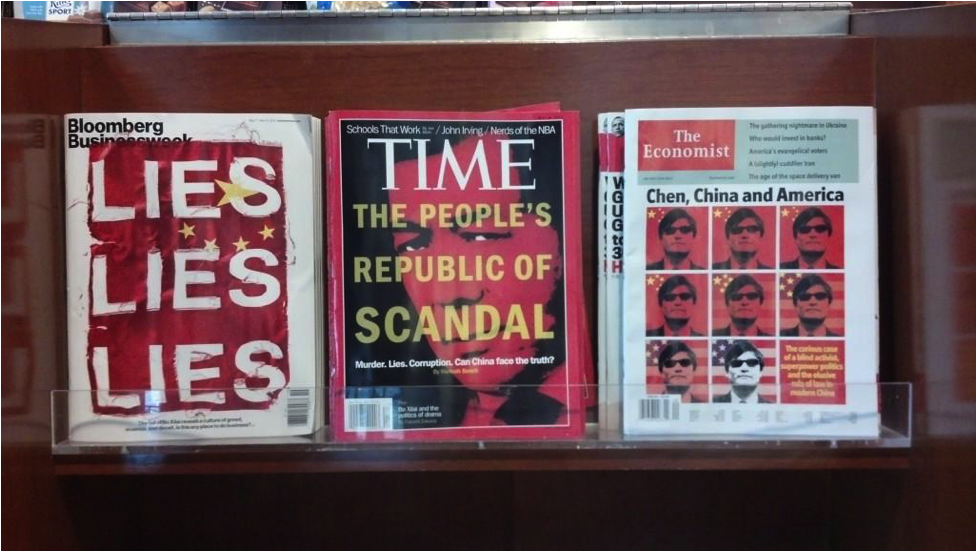
    Good news? A magazine stand at SFO's international terminal on Monday.
    Good news? A magazine stand at SFO’s international terminal on Monday.

  • What I learned from Dashan

    I don’t have much time for social Q&A site Quora, I confess. It seems to combine the narcissism of blogging (I should know!) with the politics of Wikipedia editing in all sorts of odd ways. I signed up early, lurked for a while, and then more or less forgot about it despite its popularity among several of my friends. But this morning I read a very good post on Quora by longtime Canadian China resident Mark Rowswell, aka TV performer “Dashan.” The question he was answering was: Why do so many Chinese learners seem to hate Dashan?

    And a good question it is.

    I myself have heard the outrageous lie, “Your Chinese is as good as Dashan’s!” often enough over the years to have had to suppress a gag reflex on many occasions. But I find both the comparison and Dashan-hate in general to be much less prevalent than they were six or seven years ago. I am not sure if this because there is actually less of them, or simply because I now move in circles that have graduated to other concerns. When one is a parent, one spends less time pondering Dashan and more time pondering how to keep one’s children from developing silicosis from the air. Or, at least, I do. Just writing about Dashan feels a bit like turning the clock back a few years.

    But for a long time, Dashan was a guaranteed conversation starter. As you can see in the Quora entry, my old friend Kaiser Kuo actually wrote a That’s Beijing column in 2006 in praise of Dashan (he called me, among others, in researching it). It’s not worth recapping all of the pro- and con-Dashan arguments here. Rowswell gets into most of them in his Quora answer. But I would touch on one factor that I think is important. Rowswell writes about what he calls “stereotyping”:

    This even borders on racism in more extreme cases. The logic seems to go like this: white guy – speaks Chinese – Chinese people laugh – he must be making an ass of himself. Of course, the only way a white guy could possibly entertain a Chinese audience would be to be a complete buffoon.

    It’s the “race traitor” syndrome, and it’s always been a huge part of expat perceptions of Dashan. We all like to think we’re enlightened, but there are things that push deeply buried emotional buttons, including the notion that a compatriot (or, for Americans, near compatriot) might be demeaning us racially in front of –pardon my language– the natives. This is, of course, a completely colonial, racist and unworthy attitude, but that doesn’t mean it isn’t there. And it says something about how, deep down, many of us view our relationship with our Chinese hosts.

    When the media is involved I think there is also a political reaction, where we see participants as selling out to or somehow collaborating with the regime in a way that crosses some imaginary line of decorum that the rest of us have respected. Both of these reactions also had a great deal to do with a bout of hate directed at CCTV 9 news anchor Edwin Maher a few years back, following an LA Times profile.

    Rowswell’s entire Quora response is thoughtful and worth a read. There was, however, one other part that stood out to me, and is particularly relevant to anyone who communicates in China on behalf of a foreign entity (such as PR people, just to name a random example):

    …I work within Chinese cultural norms – the limits of what is culturally acceptable to a Chinese audience. That doesn’t necessarily mean you pander. You can challenge the norms and push limits here and there, and I believe I have done and continue to do that, but in large part you work within a cultural acceptable limit. Chinese don’t go for shock humour, nor do they tend to accept what is commonly accepted in the West – that it’s OK to be offensive as long as you are offensive on an equal opportunity basis. That’s just not part of the Chinese comedy or media scenes.

    Also, in many instances what would be acceptable for a Chinese performer to say is not considered acceptable for a foreign performer, especially when it comes to social or political satire. Even in a comedic exchange between individuals, you have to be aware that the audience may not perceive this as Character A making fun of Character B, but instead as Foreign Character making fun of Chinese Character, which goes over like a ton of bricks.

    So I work within cultural norms. This spills over into the political realm, because, to be honest, Chinese cultural acceptance of foreign political criticism is almost nil. In short, I don’t have to worry about what government censors might say because Chinese audiences would never let me get that far anyway.

    So, I could make a short public statement like that of Christian Bale recently or Björk a few years ago. It’s very easy to do and ensures you get very good coverage in the Western media. You go home and everyone thinks you are a person of moral conviction who stood up to the great Chinese monster. But the fact is that these kinds of statements elicit almost no sympathy whatsoever from ordinary Chinese citizens. They simply are not culturally acceptable to the broad Chinese audience. And it’s very difficult to see what impact they have other than to further convince ordinary Chinese people that China is misunderstood and that the Western world is antagonistic towards China and resentful of China’s development. What use is that?

    Indeed. Whatever you think of Dashan, there are broader lessons in there for those who care to look.

    Update:

    In retrospect, and after hearing from some friends who feel differently, it occurs to me that I should have called this post, “Excuse me while I refuse to hate on Dashan.”

  • Four lessons from the Burson-Facebook fiasco

    I’m ridiculously late to this, as usual, but people keep asking me about the Burson-Facebook thing because of my years at Burson, so I thought I’d post the gist of the response I’ve been giving. If you’re not familiar with the story of Burson’s ill-fated project stirring up FUD about Google on behalf of Facebook, you can read about it here.

    But first, some housekeeping. I worked for Burson-Marsteller for six years, all here in China. It was a great experience. Much of what I know about PR and virtually all of what I know about doing PR in China I learned at Burson. I still use Burson-Marsteller China as an agency, and hold the people there in the highest regard. All agencies make mistakes. No one in PR wants to damage the reputation of a client, or their own agency. When it happens, we try to learn from it.

    I don’t know what the chain of events involved in the Burson-Facebook project was, and I don’t know any of the people involved. I have no inside track. But as an industry observer, and in the spirit of learning from the situation, here are four lessons to take from this episode:

    If it will embarrass you to have a pitch go public, it’s a bad pitch

    The art of selling stories or viewpoints to journalists, bloggers or the public is a pitch. In writing or verbally, a pitch should stand alone as something you’d be comfortable going public on its own. If a pitch doesn’t pass that test, and its public release would embarrass you, your agency or your client, it’s a bad pitch. Any pitch that doesn’t identify the interest behind it is by definition a bad pitch, because lack of disclosure in a pitch suggests that someone would be embarrassed to be connected with it.  Rethink the strategy. Yes, this tars a whole branch of political PR based on anonymous leaks. So be it.

    There’s nothing wrong with criticizing a rival…transparently

    It’s silly to pretend that slamming competitors isn’t part of PR. In the industry it’s called “depositioning”, a sanitized word that suggests some lingering discomfort. Outside it might be called smearing or, for those in the tech industry, FUD (fear, uncertainty and doubt). So what’s the difference between a smear and a legit piece of competitive PR? Transparency, for one thing. There is nothing wrong with criticizing a rival (or a client’s rival) or pointing journalists at their shortcomings. But you’d better be prepared to stand behind your claims, and that means being well researched and transparent.

    PR instincts and journalism instincts are not the same

    PR agencies hire a lot of ex-journalists for their story instincts and their usefulness in media relations due to their contacts and credibility with other journalists (more on this below). But the fit isn’t always natural. Someone senior from a global agency other than Burson told me recently that they have about a ten percent long-term stick-rate from their senior journalist hires in the US. I’m not surprised.

    One problem is that although they overlap, journalist instincts and PR instincts are not the same. Oversimplified, journalistic instincts emphasize spotting and piecing together stories while PR instincts often emphasize identifying and managing risks. We spend as many years and as much work developing our instincts as journalists spend developing theirs. Any crossover in either direction means a learning curve. The risk that should have been spotted in this particular case was that the backstory of the pitch –an anonymous client paying a major PR firm to slam Google on privacy– was more interesting than the pitch itself.

    Set a thief to catch a thief

    Despite the blurring of the line between mainstream media and blogging, journalists and bloggers are different. If you send a bad pitch to a mainstream journalist, generally it just dies (perhaps along with some of your credibility). If you send a bad pitch to a blogger, there’s every chance it’s going to published and ridiculed. Welcome to blogging. This isn’t 2003, and everyone should be up on this. I understand hiring mainstream journalists to pitch other mainstream journalists, but it seems to me that the PR industry has been slow to embrace using bloggers the same way. As a blogging PR person I don’t think bloggers are particularly more resistant to working in PR, but I definitely think they respond to PR differently than mainstream journalists. And that’s definitely true for tech bloggers.

    Thoughts? Feel free to argue with me.

    See also:

    Lou Hoffman’s “Ishmael’s Corner”: More to the Facebook PR campaign against Google story

  • Alibaba’s Alizila is PR. Be proud!

    I just read a post from Forbes’ Hana Alberts on Alizila, a homegrown company news site for the Alibaba Group. Alibaba has hired an experienced journalist, Time Magazine veteran Jim Erickson, to develop the articles for the site:

    Erickson isn’t “selling out” in the traditional sense of the word, that is, he’s not morphing into a press release writer or a corporate communications executive. He will instead remain a reporter — just one who’s getting a paycheck from the only company on his beat. Call him a corporate journalist.

    Erickson, who co-wrote a biography of Bill Gates, is the managing editor of the site — and, at the moment, its only writer. Alibaba, which believes this initiative is the first of its kind, say it’s not a marketing tool but rather a “quasi-independent news outlet.”

    “All my life I’ve known journalists who have gone over to what we call ‘the dark side,’” Erickson says. After 25 years in journalism and a brutal layoff, he felt Alibaba offered him a middle ground: “I could still be a journalist, but I wouldn’t be subject to the same constant financial pressures.”

    I’ll give this to Alibaba Group: I think they’re one of the few Chinese firms that gets international PR. Granted Alibaba is not cut from the same cultural cloth as the big SOEs and red-chip firms, but even controlling for that they’ve done a good job telling their story.

    Although it still feels like a work-in-progress (and is labeled “beta”), Alizila is a good idea. This is the digital age, and as mainstream media are stretched ever more thinly companies need to get better at telling their own stories directly to the audiences that matter to them.

    But I wonder about two things. First is the effort taken to stress that Mr. Erickson remains a journalist and not a PR person. As a PR person, when I look at this site I see PR: A house platform for telling stories about the company and making the company more visible.

    In the end, can you be a journalist in the sense most of us understand it and report impartially on a daily basis on the company cutting your paycheck? What will happen when there’s a real crisis or serious problem that demands coverage or investigation? What will happen the first time someone in an executive suite wants to kill or amend one of Mr. Erickson’s stories?

    Some of the stories on Alizila do delve into Alibaba’s challenges, but none of them is what I would call confrontational. Ms. Alberts quotes Mr. Erickson remarking on an Alizila article he wrote on Alibaba’s efforts to tackle counterfeits on the site, saying, “I’m certainly not going for the jugular, but if you’re in PR it goes against every instinct in your body, because you are drawing attention to the fact that there are fakes on the website.”

    I’m in PR, and as an outside observer it doesn’t go against every instinct in my body. The availability of pirate goods on Alibaba isn’t a secret that’s being suddenly revealed. Personally, I’d see a post on steps the company is taking to control a known problem, even one that embeds some criticisms or discusses past problems, as generally positive. If that story had been on a third-party news site, I’d grade it as positive with regards to Alibaba because of the emphasis on the company’s actions to resolve the problems and the positioning of the piracy problem as a widespread issue afflicting the entire industry (a classic PR technique, “broadening”). If it had been a story earned through PR, it’d be good PR.

    The second question is why jump through hoops to make this look like a news site rather than harnessing Mr. Erickson’s talent and experience as a straightforward company blogger? He could cover the same topics, dig into general industry news, use a more engaging voice, and probably achieve similar visibility results for the company, without having to maintain what to me seems like an unsustainable air of impartiality. He could be an advocate in the best possible way.

    Perhaps it has to do with how the audience they’re trying to reach will perceive a blog as against something that looks like a news site (although they’re also active on several conspicuously American social media networks). Or perhaps it’s simply the approach that everyone is comfortable with. There is a blog on Alizila, but although the posts seem shorter than the “news” articles, the voice is similar.

    Ultimately, Alizila is PR. There’s nothing wrong with that. They should embrace it and be proud. Get past the “dark side” stuff. Good, honest communication and good storytelling are both part of good PR. And there is certainly a role for journalistic skills in good PR, nutting out the stories and telling them well (which is why our industry is full of ex-journalists, although Imagethief is not among them). But trying to distance such efforts from PR strikes me as disservice to PR and journalism alike.

    With all that in mind, I think Alizila is interesting, especially coming from a Chinese company. I’m curious to see where they take it and if they launch a Chinese version.

  • Unsolicited advice for Xinhua’s new CNC TV news outfit

    To listen to people moan about the fact that China has sixty “Confucius Centers” in the US to America’s zilch-nada in China you’d think the Chinese were wrapping up hearts and minds around the planet while America gets relegated to the public diplomacy junk-heap alongside the usual despotic malcontents. While I’ll concede that China has an advantage in being able to roll out cultural centers in the US while smothering our own poorly funded efforts in red tape, I’m inclined to see that imbalance as the result of the tolerance and openness that have been part of America’s strength for the last 234 years. Give or take.

    Readers in America: When was the last time any of you went to a Confucius Center? I thought so. How about watched a Chinese television program or a Chinese movie that wasn’t directed by Zhang Yimou or Chen Kaige? See any Chinese brands last time you walked down the street? Ever had an American tell you they think Hu Jintao is super cool? Driven a Chinese car lately? Right. Whereas here, people feast on American pop culture (especially TV and movies), the street corners are a plague of American fast food labels and Buick is an aspirational brand. Leaving aside your opinions as to the value of McDonalds and Starbucks as ambassadors of American values, let’s not get all hysterical about the Confucius Centers or wallow in insecurity about America’s cultural influence until poor American refugees start seeking a better life in Fujian.

    In fact, China’s government is well aware of its soft-power deficit with regard to the US (see also this article on Danwei), and has been investing in building up its capabilities. International news is one of the key areas of investment, thus the revamping and expansion of China’s foreign-language media organizations. This has included a refresh of the venerable China Daily, the launch of the surprisingly interesting English edition of theGlobal Times, the revamping of CCTV’s English language station, and more. Most recently, the Wall Street Journal has an interesting story about Xinhua’s plans to roll out an international television news service:

    China’s state news agency announced the launch of a global English-language television channel, part of a broader international push by the country’s government media aimed at countering the dominance of Western news outlets and conveying a Chinese perspective on events.

    Xinhua news agency said trial broadcasts of the new 24-hour TV service, called China Network Corp., or CNC, will start Saturday, and the station will be fully operational July 1. CNC will be available by satellite, cable systems, the Internet and cellphones, Xinhua said, and will carry a range of programming on news, business and lifestyle issues.

    “CNC will offer an alternative source of information for a global audience and aims to promote peace and development by interpreting the world in a global perspective,” Xinhua quoted its president, Li Congjun, as saying at a launch ceremony Friday.

    Well, maybe.

    I fully understand and even support the motivation behind this. China is a globally important country and has a right to be represented in international media. And as American news media continues its slow-motion implosion, you’d think this would be a good time for them to make their move. Nevertheless, I have a history of rolling my eyes at Chinese efforts to improve their international media efforts. This is not because I am some kind of cynical bastard (although that might also be true) or because I doubt China’s technical competence (I do not). It is because I feel that the natural control-freak inclinations of the Chinese government toward media essentially preclude any ability to develop a news organization with real, international credibility.

    The objective–the real objective–is important. If the goal is simply to further disseminate the usual propaganda, then fine, they can do whatever they want. They’ll all feel good about themselves. But no one will watch.

    If, on the other hand, the goal is to develop an international media organization that can compete with what’s already offered in English and offer a legitimately different but respectable perspective, then they’ll need to break their traditional mold a bit. Al Jazeera is perhaps the model here. It emerged from a country and region not known for a liberal approach to media and established itself as a serious and credible news organization largely on the back of its Iraq and Afghan war coverage. It did so while still presenting a point of view that was a clear alternative to most western media. They were helped along by some good journalism and slick packaging.

    I don’t want to overwork the comparison. For one thing, Al Jazeera has had its problems (including serious personnel issues at their English service a couple of years ago). China certainly has the resources to try something similar to Al Jazeera, but it has some very different political and institutional factors to wrestle with than Qatar did. Also, the world isn’t necessarily screaming for an Asian alternative. Remember, Singapore has already tried the international TV news stunt with Channel News Asia, and it has had only modest international success at best. Even Al Jazeera kind of limped along for several years until it found its purpose and voice after 9/11 and the Afghanistan and Iraq wars. One hesitates to imagine a Chinese news organization blossoming in the heat of such a controversial international incident.

    So with all that in mind, here are a few things I think China should do if it is really serious about launching a successful international television news network.

    Base it in Hong Kong
    Let’s face it, as wonderful as Beijing is, nobody is going to take a Beijing-headquartered international news organization seriously. By my thorough calculations, credibility will increase by the square of the distance from Zhongnanhai. This will be especially true if your parent organization is formally a branch of the Central Publicity Department, as Xinhua is. Technically that probably makes Lima or Buenos Aires the best option, but since those might be impractical, how about Hong Kong? Hong Kong is an established media hub with a veneer of press freedom that will be important in helping a new network to establish itself. It’s visa situation will be easier for pundits and professionals, especially the foreigners (see the next point). And, hey, it’s still China, right? Beijing has no trouble calling the shots in Legco, so it could probably manage a Hong Kong-based media organization without too much headache.

    Hire pros to do it
    Al Jazeera raided the BBC Arabic service when it started, and then raided the BBC again when it started its English service. China should do something similar. There are a lot of good, unemployed journalists around these days, including TV journalists. Avoid the second-stringers and discount talent and hire some heavy hitters for the editing and mainstream talent. Go for some recognizable brand-names. This will be hard because most such people won’t want to work in a Chinese news organization. Basing it in Hong Kong will help, but people will have to believe it will be doing serious journalism.

    Also, make sure the production values are competitive with the best out there. No college broadcasting, please.

    Cover China for real
    This is another area where the Al Jazeera comparison breaks down. Al Jazeera was able to concede limits to its ability to cover its patron’s country, Qatar. Fortunately for them, nobody outside Qatar much cares what happens there, and there are plenty of sexier, more powerful and weirder places in the Gulf, let alone the broader middle East.

    This won’t work for China, however. China is pretty much story number one out of Asia these days. How a Chinese international news network covers China will be a key part of how it is evaluated by audiences. The real test will come when, inevitably, such an organization has to cover a serious disaster or bout of civil unrest in China. What plays domestically will not play internationally, especially when people are comparing the coverage to other international media organizations. With all due respect to the Chinese people, who have been poorly served by foreign media on more than one occasion, most people outside of China–even non-Westerners–don’t spend their time grumbling about how crappy and one-sided coverage of China is. So don’t waste too much energy tilting at that particular windmill.

    I’m not sure how China could manage this. It might have to credential its own news organization’s China journalists as foreign media. Now wouldn’t that be something.

    Less scolding, more seduction
    We understand that this operation is there to present China’s point of view, but a little bit of nuance is called for. Sometimes, the organization is going to have to cover the Dalai Lama, or Rebiyah Kadeer, Taiwan’s DPP, or other people the Chinese government finds distasteful. The moment the announcers start slipping into hostile language about black elements, jackals (jackals always get a bad rap), splittist criminals, etc. it’s all over. By all means, be more sympathetic to the Chinese government point of view, but do without with the theatrical, throwback language that alienates foreigners and reminds people that the propaganda mission always comes first. Find articulate, polished spokespeople to present the Chinese government point of view and let them, rather than the journalists or newsreaders, present the government’s points.

    Don’t forget the rest of the world
    It shouldn’t be all China, all the time. Global news organizations report on, yes, the globe. If the big news of the day is from somewhere outside of China, let’s make sure we don’t lead with what the Standing Committee did today, in protocol order, and doesn’t Uncle Wen look nice with the bouquet those schoolgirls gave him. That means opening a lot of bureaus and sending hardcore journalists to interesting places. With many western media organizations in retreat, there are plenty of parts of the globe that could and should be covered better, and where China might get better access than Western media organizations. Africa and Central Asia come to mind. China has the resources and can do this if it wants to.

    Or it could all be a fantasy. I’d be interested to see China come up with something polished, interesting and watchable. There have certainly been signs of life from corners of the Chinese English-language media in the last few years. But given the history, especially in the heavily state-managed regime of television, it’s hard to be optimistic.