• Reverse Culture Shock and Other Myths

    Early last year I moved back to the San Francisco Bay Area after seventeen years in Asia. The number one thing people here asked me about that was, “What do you think of the Niners this year?” because, when push comes to shove, most of them would rather have a biopsy than hear about my weird foreign adventures in Far Far Away.

    Occasionally, someone would be reckless enough to express polite interest. In these rare cases, they often asked the same thing: was there reverse culture shock coming back to the United States after so long away? The answer they wanted was, “Yes. After my time in the far Orient, your customs and ways are strange to me. Please, what is a ‘Chipotle’?”  Unfortunately for them, the answer they got was: Maybe.

    It all depends what you mean by “culture shock.” If you mean grand mal culture shock, that overwhelming alienation and disorientation that leaves you babbling and wide-eyed, the answer is no. I know what that kind of culture shock feels like because I had it when I moved to Singapore in 1995 and again when I moved to Beijing in 2004. In both cases I was incoherent for weeks. I spent my first months in Beijing staggering around in a daze with my language school classmates like a herd of stunned, white sheep who could communicate only by bleating and clustering together for safety. Just ordering successfully in a restaurant was a nerve-wracking triumph.

    It was also a huge amount of fun. Culture shock is inextricable from adventure, and I’m nostalgic for that time. One reason I moved to Beijing was to recapture the excitement that faded over the years in Singapore.

    As cultural stunts go, China was an epic win. I became competent at living and working there, but the sense of adventure never did fade. One of China’s charms is an enduring, vaguely hallucinatory quality that drapes over even mundane experiences, like a paisley bedspread over an old, vinyl sofa. It has a way of keeping you just a bit off balance, which makes life interesting.

    Or maybe it’s just me. But, at any rate, after nearly a decade there I left and returned to Silicon Valley, which has hallucinatory qualities of its own. Hence, one might think, reverse culture shock. America! Guns, God and Google busses!

    But for modern expatriates I don’t think reverse culture shock is a thing. Maybe if, in the days of the British East India Company, you spent six months sailing around the Cape of Good Hope and thirty years in the malarial subcontinent surrounded by glowering sepoys while your family died of cholera one-by-one, you might have reverse culture shock when you got home to find that James Watt had invented the steam engine in your absence.

    But in the twenty-first century? Hallucinations notwithstanding, I had the Internet, regular visits home, and easy if not always entirely legal access to the bounties of American media and pop culture. Say what you will about Facebook, but it keeps you from feeling all that far away. When I moved back to Palo Alto everything was pretty much right where I left it. The town was richer, sleeker and more self-infatuated, but, under the surface, recognizably the same place I’d grown up in.

    The essence of expatriate life in China is overcoming friction and petty annoyances. Air. Traffic. Dubious food. Spitting. Temporary residence certificates. Endless massage and pirate satellite TV flyers under the front door. Banks. God help me, the banks. Ability to reconcile oneself all of this, and even to find the humor in it, separated the foreigners who would thrive in China from those who would stagger back to Hong Kong or home after six months.

    With a few exceptions, like a nonexistent credit rating, life back in Palo Alto felt frictionless. And we didn’t just move back to my hometown, we moved back into my actual childhood home. Specifically, my mother’s house, where I had last lived in 1988. We did this because we were advised to not change our address while Mrs. Imagethief was applying for her green card, an experience that is not hallucinatory in the slightest unless you hallucinate paperwork.

    Extended-family living led to some tension, several awkward weeks and a few intense discussions about boundaries and space. I’d venture that family shock was more traumatic than culture shock for me and Mrs. Imagethief, who had to deal with that most delicate of Asian family dynamics, that of the daugher-in-law parachuted into the mother-in-law’s home turf.

    Still, it worked out OK, and proximity to family has been one of the great joys of the return. Especially since we got our own place, which is, neatly, close enough to my mother to be filial, but far enough away that she can’t smell the sambal frying.

    As I think back on my first year back in the Valley, there were really only two moments when I was flummoxed into total immobility in a way that happened to me on a more or less daily basis my first few months in China. Both times involved that particular American pathology, overwhelming choice.

    The first time was in the beer aisle of the Noe Valley Whole Foods in San Francisco, on my way to watch the 2013 Superbowl at my father’s house in the city. When I left the United States there was no craft beer movement, per se. In college we drank two-liter Sapporo mini-kegs. The less said about that the better. If we were particularly flush we might pick up a case of Henry Weinhardt’s or Moosehead, which was exotic because it was from far Canada. When I moved abroad, in 1995, you could demonstrate your upscale credentials by drinking Sam Adams, or Anchor Steam, or, if you were feeling dangerously sexy, Red Hawk or Sierra Nevada.

    In Singapore we didn’t drink beer because it was too expensive. In China all we drank was Yanjing, the local brew from Beijing’s northern suburbs. It was cheap, watery swill, but that meant you could pack it away pretty much all evening long without becoming too wasted. This had certain advantages when devouring some incandescent Hunanese feast on Beijing’s sultry, summer evenings.

    In the Noe Valley Whole Foods I stood staring at label after label, each of which was some variation on the formula eccentric behavior + humorous animal + character-filled-location + IPA. Prancing Piglet Barn Brewed IPA. 10% alcohol by volume, 90% hops. Take that, you lager-sipping, orientalist pansy. I hope your skull doesn’t cave in.

    I stood there gawping at the beer menagerie for five minutes. As god was my witness, I had no idea what to buy. There wasn’t a case of Henry’s in sight. Mrs. Imagethief suggested I, you know, ask for a recommendation. But asking a supermarket clerk for a beer recommendation is like asking another man to measure your penis. It’s just not something you do outside of the Frat House. I’m an adult American man. I’m supposed to know which fucking beer to buy.

    Mrs. Imagethief broke the logjam by picking more or less at random. It was fine (though hoppy), and after a year of intense counseling from my brothers I’ve developed a working familiarity with craft brews that enables me to function in San Francisco social circles without making too much of an ass of myself.

    The second time I was paralyzed in my tracks was the first time I ate at one of the free employee restaurants at a glamorous Silicon Valley company that shall go nameless. I finished my meal and dutifully carried my tray to the drop-off, where I was confronted with the most dizzying array of waste receptacles I have ever seen. In China there was pretty much one waste receptacle. About two thirds of the time, it was the ground or a randomly placed pile. In the rare places that had multiple receptacles discipline was loosely observed since everyone understood that, regardless of what you threw where, China’s informal economy was going to handle the sorting more efficiently than you ever could.

    In the employee cafeteria I gawped at six color-coded bins like a thunderstruck hillbilly while sleek young people effortlessly navigated according to some politically correct recycling code that my decrepit, Yanjing-poisoned brain failed to resolve. I waited for a lull, checked to see if anyone was looking, furtively tipped everything into “landfill”, and sidled out while trying to maintain a facade of earnest, environmental conscientiousness.

    Beer and recycling. That’s what counted for culture shock upon returning to the Bay Area. There have been other struggles, but most of them have been logistical in nature rather than cultural. Coming home doesn’t have the glamour or romance of hurling oneself into the smog shrouded, neon-lit nights of Beijing. In its own way, the Valley may be every bit as strange. But even after so many years away, it’s still home.

    Note: I have copied forward the comments from the original post.

    10 Responses to Reverse Culture Shock and Other Myths

    1. Pingback: As Cultural Stunts Go | Simpson’s Paradox
    2. 阿江 says:

      Just to be an @$$, I make sure people know I’m foreign by asking about Chipotle, but pronouncing it as “Chuh-poe-tuhl”. Then, watch their eyes widen, and jaws drop.

      But seriously, even if you started getting a hankering for things from China, there are so many Chinese enclaves in California. You got a 99 Ranch Market in Mountainview, you can get your 火鍋 fix in Milpitas (where there’s another 99 Ranch market), the only difference would be paying bay area prices–that’ll make your wallet cry.

    3. Jen Brown says:

      What a great post. Great description of the joy of serious Asian culture shock. I laughed out loud at the bit about real reverse culture shock being returning and finding that the steam engine had been invented!

    4. Michael says:

      A very thoughtful post. Well done. I have sometimes wondered what going home would be like. Well, only wondered. Not enough to actually pack up and return the way you have.

    5. Loved this post! Thanks or sharing. I have no plans to return to the US anytime soon, but I often wonder what would “shock” me back there.

      I’ve experienced the craft beer reverse culture shock on trips home, too! Fortunately I’ve always gone to the grocery store armed with beer recommendations for friends, and didn’t get too beerstruck.

      Interesting about the cafeteria thing… Google in Shanghai has probably 2-3 waste receptacles in their cafeteria, which I imagine is a compromise between “normal China” and what happens in the California Google campus.

    6. Ryan says:

      Great post, 18 months was a long wait, but well worth it.

    7. Kate says:

      Great post! Most people that moved to California from China don’t seem to have culture shock, I’ve observed. Try moving somewhere else, it is a bit more difficult. China has a fuzzy, warm hallucination – any problems and ayi will take care of it. In the U.S., the hallucinations are like cold water in the face: Home Depot staff, insurance brokers. What language are they speaking? Good luck!

    8. FOARP says:

      Good post. Personally, if there was anything resembling reverse culture-shock, it was back in 2005 when I first returned to the UK for a few months after finishing my Chinese studies, when I discovered that:

      1) No-one wants to hear your humble-brag-laden expat stories.

      2) That protective blanket/fish-in-a-goldfish-bowl feeling you have as an expat is gone.

      3) People genuinely aren’t that impressed by the fact that you’ve lived overseas and learned the language. If anything it marks you out as a bit strange.

      Back in my Taiwan days, in 2001, when British beers and foods were almost impossible to come by, and when calling home involved standing in the middle of the street using the pay-phone at my local 7/11 waiting for my phone-card to run out, yeah it was just about possible to feel pretty far away from home. Globalisation and technological advances pretty much did away with that.

    9. Andy says:

      Interesting that your examples are both to do with choice. I also happened upon this TED talk today, that provides a window into cultural differences in perceptions of choice:http://www.ted.com/talks/sheena_iyengar_on_the_art_of_choosing

      For my part, I found that it was more of a ‘shock’ moving back to the UK from the US, than it was moving from China back to the UK. I put this down to my expectations of similarity – making the differences stand out all the more.

    10. GP says:

      Hi Will, we met a few years ago at AmCham’s MAP Forum through Zeke. I just moved back to Georgia a few months ago. Georgia feels pretty much the same as when we left. Most obvious changes to me were all related to food — similar to what you mentioned. My father-in-law remarked that his generation was all about the music. Ours is food. When in China, I loved calling myself a foodie. Here, I just whisper, “I love eating, that’s all”.

      Though my most embarrassing thing so far is going shopping, thinking I was signing up for one of those membership cards that give you discounts, and then exiting the store 15 mins later with a bloody new credit card, much to my husband’s chagrin.

      I miss China sometimes, but America’s pretty awesome. Have fun in San Francisco!

  • I’m leaving China and it doesn’t mean a thing

    It started with the oven. In Singapore in 2001 I bought a used Sharp R-8H50(B)T Rotisserie combination microwave and convection oven from my buddy, Tuck Wai, for S$200. Say what you will about the Sharp Corporation, which is struggling, but that oven was The Bomb. It followed us from Singapore to Beijing to Shanghai and back to Beijing, proving its worth repeatedly in a country where most apartments don’t have ovens. It even survived one front panel change. It was the best S$200 I ever spent in my life. Tuck always regretted selling, a sure sign of a good deal.

    Earlier this year the panel started to fail again, and no transplants were available. It was a protracted death, like a person with progressive organ failure. One by one, over the course of a couple of months, the buttons stopped working, slowly narrowing the list of things the oven could do. First we lost the grill. Then the convection function. Then the microwave time entry. The last gasp was the quick start. Goodnight, sweet prince, and flights of angels sing thee to thy rest.

    Anyway, I’m not superstitious, and I don’t generally believe in portents, but if the death of our trusty Sharp Rotisserie isn’t a sign that change is in the wind, what is? So after eight and a half well-documented years in Beijing and 17 in Asia for me, we’re moving back to Palo Alto in January. I’m going because my company has asked me to move to the Silicon Valley office, very near where I grew up and where most of my family still live.

    For a long time I resisted the idea of moving back to the United States. My self identity is largely based on being “the one who’s in Asia.” I was 27 when I left the US in 1995, six months out of graduate school and in most measurable ways a complete doofus. My personal and professional development has pretty much all been in Asia, and most of my friends and virtually all of my experience and network are out here.

    Which, when you think about it, seems like a really good reason to do something different, even if that something is going home. Sometime in the last year or two my previously steadfast resistance to going home started to soften. Last May, when my boss proposed I come back to Sunnyvale, which is now where most of our senior execs are based, I found myself much more receptive to the idea than I would have expected.

    There is no greater message behind our departure. I’m not disappointed in China. I haven’t been involved in public slanging matches with any Chinese celebrities. There is no shroud of legal action looming above me. I am, in fact, profoundly grateful to have been able to live and work in China for as long as I have. We all take it for granted, and piss and moan about the air and traffic and censored Internet and sketchy food because that’s our version of water-cooler sports talk. And we all rationalize a bit to be here. But step back and think about it for a moment. From your average suburban American perspective, who gets to live in China? Nobody, that’s who. It’s the stuff of fantasy and scarcely-believable tales from exotic relatives, like my mysterious uncle Stephen, who lived and worked in Hong Kong in the late 1980s. It has been a gift, and under other circumstances I would have remained here at least for a while.

    But I was never in danger of staying forever, and nor are most other western expats. That’s why I was amused by the mass fluster that surrounded the public departures of Mark Kittoand Charlie Custer. All of a sudden foreigners were abandoning China! I know and like both Mark and Charlie, and admittedly much of the fluster was within our particular echo chamber, but, seriously, coverage in the New York Times, BusinessWeek and The Economist? Both of their personal experiences can be used to tell larger stories about life and power and business in China (and maybe I’m just jealous that my own departure is about as newsworthy as a bad air day), and both of their articles were great reads. But “foreigner departs China” is the very definition of dog-bites-man. The satirical site China Daily Show nailed it with a funny “dear John” letter from a foreigner to China.

    “Foreigner stays in China,” now that’s a story. For an increasingly cosmopolitan and globally interconnected country, China isn’t really a place encourages foreigners to settle down. In fact, it goes out of its way to keep us at arm’s length. I should make a collage out of eight years of temporary residence certificates arranged around the confession I had to sign for registering my son’s birth with the police a few weeks late. Economic migrants bleed across the borders in search of something better, and perhaps some Vietnamese mail-order brides wind up here for the long haul, but in general foreigners don’t immigrate to China. We just visit, sometimes for a very long time.

    In the end, there are only two possible outcomes for a foreigner in China: you either stay here for the rest of your life, or, sooner or later, you leave. If you were to diagram it, it would look something like this:

    Fig. 1
    Fig. 1

    That little dot encompasses the handful of old communists who settled here for ideological reasons, such as Israel Epstein and Sidney Shapiro, and maybe Carl Crook, who was born in Beijing. One or two businessmen I’ve met have been here for thirty or more years, and a couple of journalists I know are edging in that direction. Maybe Kaiser is here forever(though I doubt it). But even Sidney Rittenberg, famously “The Man Who Stayed Behind,” didn’t actually stay behind. He retired to Washington State in 1980. Of course, he was thrown in jail in China. Twice. You’d probably retire to Washington State, too. According to the People’s Daily, China has granted permanent residency to less than 5000 foreigners since it started doing so in 2004, and it made the news when Shanghai issued its first batch of green cards in 2005. It’s a safe bet that granting citizenship is even rarer.

    We leave. That’s what we do. But just because leaving China is normal doesn’t mean something isn’t going on. Among my friends there has been a tangible change in mood in the last couple of years. A sense of excitement about being here that endured for many years has in many cases given way to a sense of weariness or indifference. The most common reaction when I tell people my company is moving me back to California is, “you’re so lucky!”

    There’s nothing sinister happening. It’s just a generational change. My cohort is largely mid-career expatriates, many of whom, like me, had their children in China. As our lives have changed, so in many cases have our expectations and needs. At the same time, the China we arrived in has also changed profoundly. Change is part of what makes China exciting, and on balance much of the change has been good. But people come looking for different things, and for some China today is less appealing or simply different than whatever they arrived looking for.

    So they move on, and new people come in. That’s as it should be. Out with the old, in with the new. One thing that has not changed is the number of students and young professionals interested in working in China or studying Chinese. One of the fun parts of my job is speaking to MBA and undergraduate student groups, and I always ask who actually wants to live and work in China. Trust me; the supply of young westerners interested in China is not in danger of drying up.

    I quit a perfectly good job in Singapore in 2004 and came to China with rudimentary Mandarin and the dream of living here. It was a crazy stunt that worked out better than I could have ever imagined. I’ve not lived the hard-boiled life of my journalist friends, many of whom are forever getting tossed out of some hardscrabble village by local thugs. Nor did I arrive in the FEC era or spend two or three years in the boondocks. But I’ve had my share of adventures. I’ve bargained for long distance taxis in Yanji and ridden through the Zhalong Wetlands in the back of a xiaobengche, surrounded by crates of live fish. I got caught in a youthful waterfight in the alleys of old Kashgar. I’ve been invited into a Uighur house in Tuyoq for tea and sweets, and into the one-room hutong apartment of a family from Shanxi for homemade noodles. I stood on Tian’anmen Square with tens of thousands of Chinese people during the memorial a week after the Wenchuan earthquake. I was in the Bird’s Nest during its Olympic pomp. I helped companies wrestle with the melamine crisis and the acrimonious collapses of their Chinese joint ventures. I had huge stretches of unrestored Wall all to myself on spectacular, blue-sky days. I scuba dived on a sunken village in the dark and freezing depths of Qiandaohu, on sunken Great Wall in Tangshan, and with a whale shark in Dalian’s morose Tiger Bay aquarium. I walked from one-side of Beijing to the other and discovered neighborhoods I’d have never found any other way, and went for runs in the pre-dawn winter darkness when the city is as still and quiet as it ever gets. I spent a year in Shanghai and learned that it is every bit as cool as Beijing, in its own way. I made great friends and worked with amazingly talented Chinese colleagues who disabused me of every stereotype of Chinese employees. I wrote a silly blog that people actually read. And I raised a little boy who calls Beijing home and speaks Mandarin with an effortless fluency that I am scandalously jealous of.

    They’re the experiences of a lifetime. Some scruffy air and occasional difficulty with Facebook seems a small price to bear. I’ll miss it, but it’s time to go. Here’s to the next generation of young westerners who are dreaming of living in China. May they all get the chance, and may their lives in China be as amazing and rewarding as mine has been.

    See Also:

    Note: Because of the significance of this post to me I have copied forward the comments from the original.

    54 Responses to I’m leaving China and it doesn’t mean a thing

    1. “Who gets to live in China? Nobody, that’s who.” A great line from the post and one that reminds me of how fortunate I am to have lucked into my own “crazy stunt” to show up mid-career in China–with 3 kids and wife in tow–hoping to make a difference here. Hope your next leg of your journey is as exciting as your last, and that we get to share more of this next leg together as well!

    2. Pingback: 4 Recent Trends In China Expat Blogging | MandMX.com
    3. Kai says:

      Great post, Will. You already know I’ve always enjoyed your blog posts and your humor. Hope you’ll still be in Silicon Valley whenever I make the big move back to the Bay Area! Cheers!

    4. Anna Coffeysays:

      Oh Will! I’ve loved reading your blog as I’ve moved back and forth from China. I’m sad to see it end. Thank you so much for your delightful commentary on the vagaries of life in China!

    1. Kevin Mcgeary says:

      Actually, I preferred this to Mark Kitto and Charlie Custer’s farewell articles.

    2. Ryan says:

      Best of luck with what comes next Will. Imagethief has been an insightful source of commentary on living and working in China. I hope we get to follow you into the next chapter here too.

    3. Will –

      And so the world turns. Life’s like that. I am sure the move back to the US will have new experiences that I’m sure you will write about and I look forward to reading.

      Harish

    4. Excellent farewell post Will. Must be a good feeling to know that so many people were reading this article that your server couldn’t handle the traffic right after you posted it.

      I wish you a good transition to the Valley and I hope you’ll keep documenting your experiences on Imagethief. Good luck!

    5. Liz Choi says:

      This is so fascinating considering I’m a 26-year old from California who just moved to Hong Kong three months ago. I must be part of the trend of young westerners aspiring to live in Asia. In my mind I’ve only given myself a few years to live here but in the end, who knows? Thanks for sharing your experience.

    6. Ben Ross says:

      Excellent post Will. Glad our paths crossed in summer of 2008. Best of luck in the Bay Area, and hit me up if you ever pass through Chicago.

    7. Erica Jiang says:

      Best of luck Will~~~ You are one of the most interesting people in the B-M office~ Salute to the “moldy” pears ^^

    8. Thanks for the writing. Your piece on wiring money out of China was truly inspired. All the best.

    9. Great post, Will. It’s been a pleasure to know you and your family both on a personal and on a blogging level. I’m sure we will be keeping in touch!

    10. Great post, Will. I’ll always regret that we never met up during that year you were in Shanghai. (As I remember it, you pretty much left right after you arrived… I only had time to get like one text message in.)

      And, in keeping with the “no drama” tone of your post… you can always come back.

    11. Kedafu says:

      Another one bites the dust.

    12. I’ve never posted a comment on this blog, but I wanted to wish you the best on your transition and let you know that you’ve provided some wonderful insights across the years. They will be missed.

    13. Hey Will, just stumbled across your blog today via a RT on twitter. This is my first visit to your website, your a great writer and look forward to reading more of your posts. You give an interesting insight into the long term life in China! Great Article!

    14. Braedon Links says:

      Sad that your particular insights will be missed on the Sinica podcast. Best of luck!

    15. You’ll be dearly missed, Will. Imagethief has been one of the best blogs on China. You have written a beautiful post.

    16. I’ve really enjoyed following your posts about China over the years. As you say, we mostly end up leaving after a time – in my case because of the children’s education. At the moment it only seems possible to live short term in China (10 years at most), and there is a predominance of people who are either just out of college or have retired. expats are . I do wonder whether China will ever become residence- friendly for those of us in the 30+ age group.

      Michael

    17. Will says:

      Big thanks to everybody for the kind words here. With any luck, moving home will give me a rich, new vein of material to mine. After nearly two decades away the US seems approximately as weird to me now as China did when I first got here.

      It’s been a serious ride.

    18. Clay Burell says:

      Bless your heart, you’re one of the few fellow Westerners in China whose drama-queening departures haven’t made me feel I owe China an apology for the rude-guest behavior of my compatriots. Thanks for going out with grace, and good luck.

    19. Alex says:

      Many thanks for hours of laughter and thinking. You’ve deepened all of our stay with insightful anaecdote as I’m sure you do wherever you go. Much appreciated.

    20. Sergio says:

      What a cool laowai. You seem to leave China happy and full of some wonderfull experiences. I wish you a happy life in California!

    21. Elyssa Rae says:

      I really appreciate how you articulated how so many of us really feel about China – we all complain about the air quality, the traffic, the sketchy food … but, in the end, I’m so grateful for the unbelievable experience I had living in one of the most fascinating countries in the world (though I could have done without the bug in my 西红柿炒鸡蛋 ;) .

      I’m also grateful for being one of the young professionals you spoke with – your insights and wisdom into both China and the PR realm has had a large effect on me and has helped me as I continue my journey. China may not have been forever, but it was an incredible and insightful chapter.

      Good luck in Palo Alto. Let me know if business ever brings you to DC!

    22. Ann Lynch says:

      Will, I so enjoyed your BLOG post about leaving China. My husband and I lived in Shanghai for 3 years – 2008-2011 – LOVED IT. We are now back in Pittsburgh – living the life of grandparents and missing the mei meis and our fabulous Chinese friends. I think of them often and wonder if I will ever see them again. I hope so. Good luck in Sunnyvale – repatriating is very difficult.

    23. Pingback: » Top-of-the-Week Links: More sex tapes of Chongqing officials exist, if you can stand them; China is killing manta rays, and Ai Weiwei screws with Party Congress Beijing Cream
    24. Enjoyed your articles over the years, your articles along with Alan Paul’s gave me a different point of view and more insight into life in other parts of China other than Dongguan where I was based. If I had a written a “Why I Left China” post back in 2009 when I left it would have been a lot like this. Without the broken oven part. Sometimes, like when you’re at a good party, or visiting relatives, it’s just time to leave.

      Keep writing though, the transition to living in U.S. is going to be a surprise, be interesting to see your take on the changes.

    25. Shannon says:

      Great post, Will! Glad that the decision you were pondering has been made, and looking forward to catching up just about as often, now that I’m in Chicago and you’re in the Bay Area, as we did when we were both in Beijing! ;-)

    26. Ac says:

      You hit the nail on the head right about here:

      “There’s nothing sinister happening. It’s just a generational change. My cohort is largely mid-career expatriates, many of whom, like me, had their children in China. As our lives have changed, so in many cases have our expectations and needs. At the same time, the China we arrived in has also changed profoundly. Change is part of what makes China exciting, and on balance much of the change has been good. But people come looking for different things, and for some China today is less appealing or simply different than whatever they arrived looking for.”

      I thought the same to myself when the first round of “leaving China” letters did the rounds. People are just growing up.

    27. That´s a way to say goodbye to China… congratulations!! and thanks for sharing it!!

    28. David Fieldman says:

      Will,
      I regret that during my 15 years in China, 13 of them in Beijing, we have never met. But thank you for this uplifting post of your experience and the knowledge that you are leaving with a happy heart full of memories that you cherish and which will linger for the rest of your life.
      Easy transition to your hometown.
      Warm regards,
      David

    29. claudia says:

      Great comment I could feel how is your relationship with Asia and China, you have had amazing advedntures so you know china inside and out if that is possible but at least you can said you saw China more than others and the most important you had an open mind about China no an idea what China should be and you are not leaving with a bitter taste you are leaving with sorrow. China will always be in your heart and your boy who knows if he would be one of those future western to come back to his child coutry. Good luck back to EEUU, long life, I will look for you blog.

    30. Justin Mitchell says:

      Vaya con Doritos. I’m sorry we never met, but have enjoyed your blog immensely and learned a helluva lot from it. You are one of the good guys and will be greatly missed.

    31. Michael & Cynthia says:

      Well written Will – as always.
      All the Best for you and your family back home. Enjoy the rest of your time here and hopefully see you again sometime.

      Michael & Cynthia

    32. JH says:

      A great post, and I wish you all the best. I’ve enjoyed your posts for years and hope you keep writing on Asia-related topics.
      If you were six months out of grad school today and planning a career in Asia, what would be your advice? How are the opportunities different in China today for someone at that stage of life than they were in ’95?
      Best wishes for life back in the US…

    33. What a fantastic read. Thanks Will. As a fellow expat in Asia, I wish you all the best. You’re very inspiring.

    34. Pingback: Another expat leaves Beijing » The Peking Duck
    35. Richard Lai says:

      This isn’t a goodbye (you know how much I travel these days), but I’m just super grateful to have met you while you were still in town. This blog post is a prime example of what one can learn from you, and that’s what makes you awesome, wise buddy.

      Now I’m going to vomit in penance for saying something nice.

    36. Edna says:

      You were one of the first China expats I followed on twitter way back before twitter was cool, and it’s great to see you finish your China years on a sweet note, with little fanfare or drama. Life moves on, people move on. Shame we never met during my three years in Asia, though. Best of luck in California!

    37. Bob Page says:

      Will, thank you for this blog and for writing about your experience in China.

    38. Eric says:

      Happy trails, Will. And I am sure you are right: the U.S. will be every bit as weird as China, and then some. Hope to hear about it on the blog.

      Cheers!

      Eric

    39. Michael D. Wallace says:

      Wow, just finished reading you are leaving China and heading where I live and work. I only spent three years living in China and still consider it my second home. In fact I brought part of China with me on my return, my wife. Welcome back to the Silicon Valley grind.

    40. steven says:

      you’ll regret it. there’s so much more to do in china !

    41. n says:

      i moved to china in 1998 when i was 21 and will leave in early 2013 after 15 yrs. thx for the encouraging words and evoking poignant memories. good luck.

    42. Thanks for this post, Will — I wish I found your site earlier.
      As someone who has lived in China off and on since 1996 and has witnessed nearly three decades of changes there, I certainly agree with many of your points, especially that “There’s nothing sinister happening. It’s just a generational change.” I wrote about this very topic in a recent essay entitled ‘The China Expat in Exile’ in The World of Chinese Magazine (http://www.theworldofchinese.com/2012/09/the-china-expat-in-exile-a-response-to-the-mark-kitto-debate/). To me, it seems arbitrary to talk about expats ‘leaving China’ as if the only way we are connected to China is by living there permanently. Many of us do not have that *luxury* (due to family or work), but China is always a part of our lives; in fact, I find that living between borders had allowed me even greater access and understanding of both sides of the Pacific, something I may be too jaded to see if I lived permanently in the PRC.
      Thank you for adding to the dialogue and I look forward to reading more here soon. And welcome to California — I’m sure you’ll like it here.
      Best,
      Kaitlin Solimine
      Los Angeles, CA

    43. Pingback: Links for Your International Career Launch – December Edition | Leslie Forman, Global Citizen
    44. Pingback: 中国,我走了 | 墙外楼
    45. Pingback: 墙外楼 | 中国,我走了 – 中国数字时代
    46. Samuel Yu says:

      Many people are keeping moving, that’s true.
      You are lucky you can back home easily.

    47. Frank Fomby says:

      Will – Great post. I’ve been back a little over 4 years now, and trust me in that you will find no shortage of material when you get back :) When I left I had spent (at that time) 30% of my life in Asia. Obviously the number will only get smaller, but the experience remains larger than life.
      I wish continued success in the future!

    48. Pingback: Bittersweet Beijing (苦甜 北京) | Chinglish Diaries
    49. Xavier R says:

      Best of luck for what comes next.
      I’ll be landing in Beijing around the time you’re leaving, we might even bump into each other at the airport :)
      I plan on staying there for at least 5 years, already landed a job there, I consider myself among the lucky one in this regard.

      I sure hope my time (that I hope will be much longer than 5 years, but it’s the girlfriend who’ll decide on that ;-) ) will be at least 25% as great as what you’ve just told us, and I would be pretty happy with less :)

      This was a much better post than the two previous “expats leaving china” you were mentioning, and it bodes well for my future, so thank you again :)

      Wish you continued success in the future (not being native english, I’m getting my inspiration from previous comments :D ), and please please please continue on writing like that. I’m sure Palo Alto is no less source of wonder than China was :)

      Best,

    50. Pingback: Beijing Wintering Lessons » Nutritioneer
  • How Shanghai Saved the Jews

    I spent National day in Shanghai with my family, our first leisure trip back since we lived there in 2007. Like Beijing, Shanghai has caught a serious case of fabulous in the past five years. The French Concession, already precious when I lived there, now has more coffee houses, boutique bakeries and fashionable bars per hectare than San Francisco’s Mission District, which is no mean feat given SOMA’s hipster factor.

    Case in point: the street behind the apartment I lived in while I was in Shanghai used to be a wet market where you could have your Sunday chickens slaughtered and plucked while-u-wait (very convenient). It’s now a strip of coffee houses, boutique bakeries and fashionable bars. The apartment block itself is as dingy and miserable as ever, but I’m sure rents have gone up.

    I have no philosophical objection to this transformation. Wet markets and Shanghai summers go together exactly like you’d expect a bunch of unrefrigerated animal carcasses, dismembered frogs and fish innards to go with 35C temperatures and relentless humidity. And I have a taste for coffee and fine baked goods. Anyway, such is progress.

    My mom, who had never been to Shanghai, was in tow, so we made a round of The Sites, braving the staggering holiday crowds at the Bund, Luzjiazui, and so on. But one place where the crowds were not staggering was the Shanghai Jewish Refugees Museum, in stubbornly un-fabulous Hongkou district. Jews, it turns out, have an extensive history in Shanghai, originating from the Iraqi Jews who established trading houses there in the 19th century. Although I’m not observant, I am mostly Ukrainian Jew by ethnicity — Moss comes from my great grandfather, Abraham Mosiusnik, who emigrated at the turn of the 20th century — so it seemed something worth exploring.

    Before and during World War II tens of thousands of Jews fled Europe and arrived in Shanghai. Stateless, and disconnected from the established Jewish communities, they were settled in a ghetto in Hongkou, north of Suzhou Creek. Constructed in 1927, the elegant, brick Ohel Moishe synagogue served the Russian Jewish refugee community in the ghetto. About ten years ago it was converted to a museum with the support of the Shanghai city government.

    I don’t generally hold Chinese museums in high regard (though there are some exceptions, such as the Shaanxi Provincial Museum in Xi’an). Many Chinese museums have spectacular artifacts, whether lacquerware or locomotives, but, regardless of language, they are often bad at explanation and storytelling and beholden to the imperatives of The Official Narrative. This is a minor tragedy. The Forbidden City should be one of the great museums of the planet. It’s not. It’s a glorious structure holding a bunch of disconnected and poorly explained stuff. And, no, it’s not because Chiang Kai Shek took a lot of the good stuff to Taiwan (although he did).

    Following a Chinese volunteer docent on a tour, it didn’t take long to see that the Shanghai Jewish Refugees Museum suffers from a variety of the Chinese museum syndrome. Among other things, the tour led off with a comprehensive review of the awards and honors that have been bestowed upon the museum by Jewish groups and diplomats, and a recounting of the Chinese notables who have graced the premises. Always a worrying sign.

    The museum does, however, have a very clear and effectively transmitted narrative. It is this: the east-European Jewish refugees were saved by the charity and benevolence of China, welcomed in Shanghai when the so-called leaders of the free world, the United States and the United Kingdom, turned them away. This point is drummed home by multiple exhibits, including a brief but eye-catching movie presented on multiple overlapping translucent screens.

    The story is accurate, insofar as it goes, but as with many Chinese museums the Shanghai Jewish Refugees Museum is interesting less for what it includes than for what it elides. For example, it is true that Shanghai accepted the Jewish refugees at a time when the US and UK shamefully didn’t. But that was because Shanghai didn’t require an entry visa, so anyone could (and did) land there. Left unmentioned is that the open borders were the result of Shanghai’s status as foreign treaty port under the infamous Treaty of Nanking (the same one that ceded Hong Kong to the British after the First Opium War – and we know how the Chinese felt about that).

    Also absent is a full explanation of the reason why the Hongkou Jewish ghetto wasn’t liquidated late in the war, as the Germans were demanding. The decision to spare the Jews was made by the Japanese, who actually administered the city during the war. As the story goes, the Japanese were persuaded by the Shanghai rabbi Shimon Sholom Kalish. When asked by the Japanese government why the Germans hated Jews, the rabbi replied it was because, “we are orientals.” Or words to that effect; exactly what he said is a matter of dispute. But Chinese museums aren’t in the business of giving credit to the Japanese. It’s not their thing.

    Finally, due recognition is given to Ho Fengshan, the Chinese diplomat in Vienna who defied the orders of his superiors and distributed possibly thousands of exit visas to European Jews, allowing them to depart Europe for Shanghai. Nowhere, as far as I recall, is it mentioned that he was a Nationalist diplomat (or that he retired to the United States). This strikes me as a missed opportunity, given that defying the orders of your Nationalist superiors in support of something the Communists claim as a triumph would seem worth mentioning. (It’s also possible I misremember that display, as I didn’t take notes when I was there.)

    Whether or not the museum is worth a visit depends upon what you’re looking for. The ghetto is still there, in a row of tenements with graceful, Georgian facades, but it’s an unreclaimed Chinese ghetto now. The building housing the Ohel Moishe synagogue is beautiful, and some of the exhibits are interesting despite the layer of Chinese-style political correctness. The third floor is a sort of mini-Holocaust museum, which doesn’t add much to the story of the Jewish refugees in Shanghai, but does illustrate the perfidy of Europeans toward each other and explains why the refugees fled. The history of the Jews in Shanghai is genuinely interesting, and I was inspired by the museum to learn more about it, which is a good thing.

    Ultimately the Shanghai Jewish Refugees Museum may teach you less about the Jewish ghetto in wartime Shanghai than about how the Shanghai government wants to use that part of history in service of its own agenda. Still, if you’re willing to read between the lines, that’s pretty interesting in itself.

    Note: This post originally published on the defunct group blog Rectified.name.

    In the ghetto.
    In the ghetto.
  • Coverup? Huawei Should Send Its PR Bill to ZTE

    I’ve never been much for conspiracy theories. Not that I don’t like a touch of the fantastic in my daily life (I live in China, after all). But when you think about the sheer logistics involved in most of the major conspiracy theories things start to break down pretty quickly.

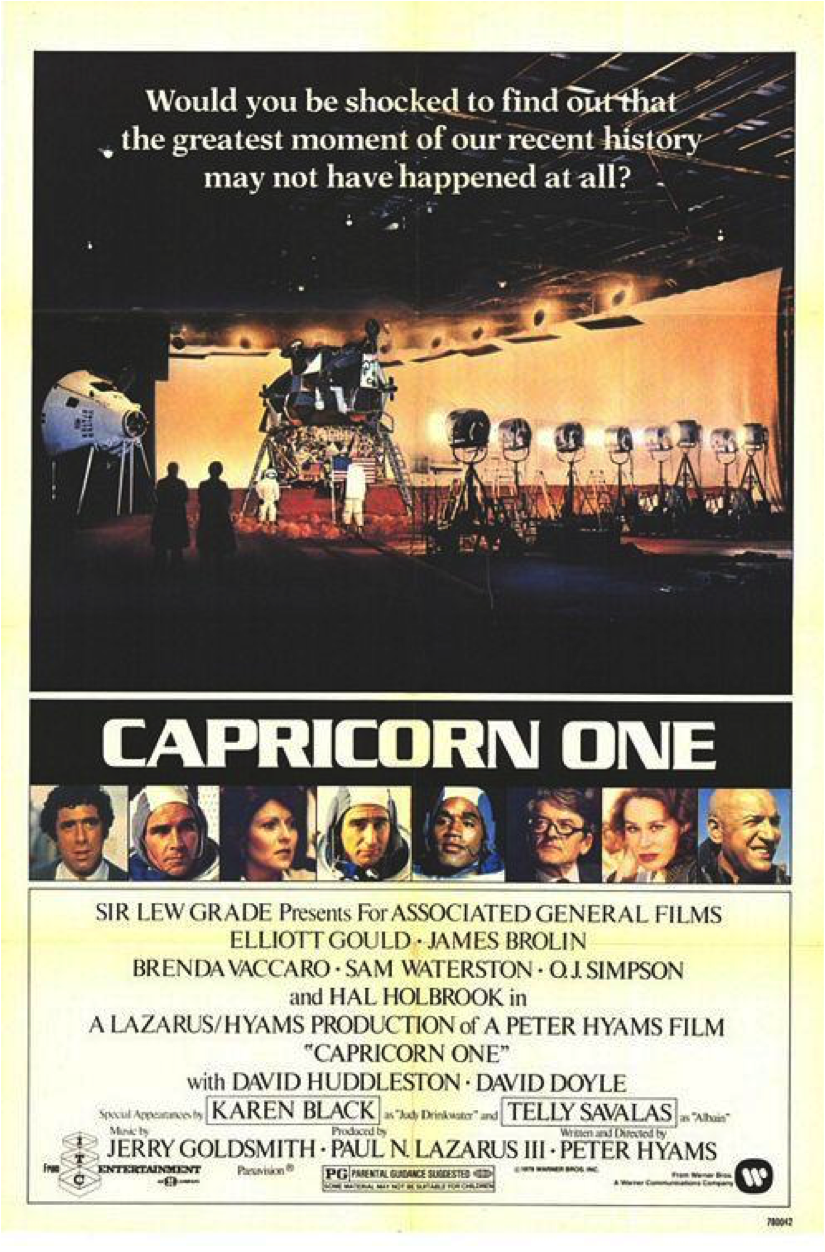
    Consider that old favorite of the tinfoil hat brigade, that NASA faked the American moon landings, and think about what it would have required. It’s not just the fakery of the photographs and video, but also that everyone who worked on all the aspects of the fakery, from the astronauts to the guys who would have had to doctor the photos and fake the moon rocks and telemetry (depending upon whether you think mission control was in on it or not) would have had to keep their mouths shut. For going on 45 years. For six successful lunar landings involving eighteen astronauts, twelve of whom have allegedly walked on the moon. Not only does everyone who knows about the fraud have to keep his mouth shut, but everyone who has a public face has to keep his story aligned. Especially that attention-junkie Aldrin. It only takes one person to blow the lid off, intentionally or accidentally. Frankly, it’s just easier to go to the goddamned moon.

    I’m not particularly interested in getting into a pissing match with conspiracy theorists (like thermonuclear war, it’s not “winnable” in the conventional sense of the word), so much as I am in setting up a problem. Coverups pose similar problems to conspiracies in that, like a big pile of sweaty dynamite, they are unstable by nature and easily detonated, sometimes by the tiniest of disturbances. That’s why they don’t tend to make good PR strategy.

    Of course, by definition no one knows when a coverup succeeds. Small ones involving one or two people? Probably a fair number. Big ones involving lots of people and big stakes? Not so many, I’d guess. “Three may keep a secret if two of them are dead,” wrote Benjamin Franklin, perhaps optimistically. In most cases, the participants aren’t Navy Seals or the CIA or other kinds of people who are indoctrinated and trained into cultures of secrecy (and yet still sometimes blow it). We’re talking about just folks who are easily pressured by law enforcement, or who just get drunk on lychee martinis at Centro and shoot off their mouths. Sooner or later someone is going to slip up and the dynamite is going to blow.

    Then everyone in serious trouble because, as the old truism goes, the coverup is worse than the crime. Technically, it’s more accurate to say that the coverup significantly aggravates the crime. Coverups turn mistakes into crimes and crimes into enormities. Think of the devastation inflicted on Penn State by the recently published Freeh inquiry, which was most damning for revealing the efforts taken to protect the institution over the victims. Or think of your own toddler, if you have one. If he uses a sharpie to draw all over the wallpaper, you’re angry. If he lies about it, well, then you’re disappointed. Anger is over in minutes. Disappointment leads to years of therapy and careers in bitter standup comedy.

    A big pile of sweaty dynamite might be blowing up in the face of Chinese telecoms equipment company ZTE right now. The fuse was lit by a Reuters report back in March (blocked in China), which showed how ZTE was acting as a middleman for relaying restricted American technology to Iran for use in a national Internet monitoring system. The explosion may have started last week when the aptly named website The Smoking Gun reported that the FBI has launched a criminal investigation into the sale. The FBI has not confirmed the investigation, but The Smoking Gun has posted an affidavit that makes fun reading because it includes grubby details of the alleged covering-up. Much of it has the desperate, furtive feel of the third reel of an Abel Ferrara film (or, apropros of the lunar landing discussion above, a Peter Hyams film). You can feel the options narrowing as they talk through them. I don’t know how this situation will turn out, but I do know this: As bad as ZTE looked for shipping US surveillance gear to Iran, they look worse for the discussion of the coverup.

    Two other thoughts about this case. First, the FBI case is apparently based on the deposition of a young, American lawyer who was in ZTE’s employ. I find myself reminded of something I heard from a relative who was once highly placed in the empire of a wealthy Hong Konger: White people don’t handle the money. One wonders how much trust ZTE will invest in its white people after this.

    Second, the organization that should be most annoyed about this alleged coverup isn’t the US government, the FBI or Internet-freedom activists; it’s ZTE’s Chinese competitor and Shenzhen neighbor, Huawei. Huawei has been busting its assthrough an extensive lobbying and PR campaign to impress US politicians and regulators with its trustworthiness and thus extend its limited access to the huge American market. So far it has met with conspicuously limited success not least because US politicians stubbornly refuse to trust it due to its, well, Chineseness.

    Huawei and ZTE are different companies, and illegal shipments to Iran aren’t spy-friendly backdoors in routers, but it will be very easy for American politicians and lobbyists to conflate the two Chinese companies and use this situation against Huawei as well. After all, they’re both giant, state-linked Chinese telecoms equipment companies. From an American political point of view, both carry all the reputation baggage that comes with the pedigree. They’re suspected –sometimes with a dose of hysteria– of being instruments of Chinese policy and possibly vectors for cyberwar attacks. If one is caught with an uncapped sharpie…well, the argument will be, you do the math.

    Given the effort its expended over the last few years and the collateral damage it is likely to sustain if the investigation of ZTE’s alleged coverup gathers steam, perhaps Huawei should send its PR and Lobbying bill for the last few years to ZTE. And as for the rest of us? I’m sure we’re all very disappointed.

    Note: this post originally published on the defunct group blog Rectified.name.

    Not shocked. Just disappointed.
    Not shocked. Just disappointed.
  • Godzilla vs. the SARFT Monster

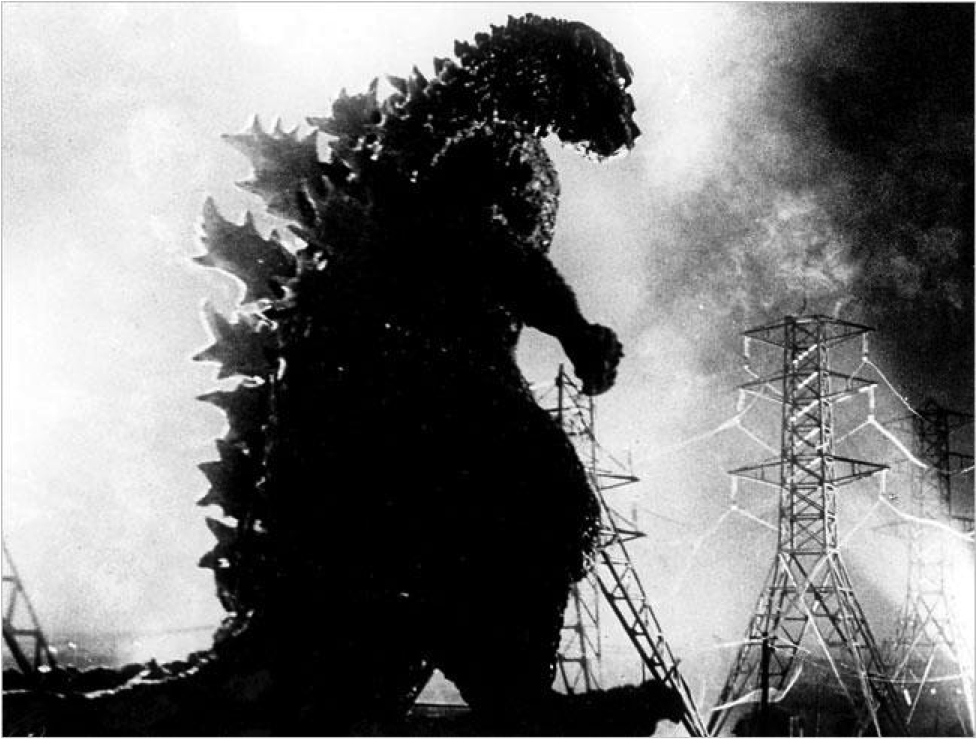
    I’ve been watching a lot of Godzilla movies recently. This isn’t some kind of weird Cable TV accident, like stumbling onto “Barbarella, Queen of the Galaxy” at 2AM when you have a microwave burrito in one hand and a vodka cranberry in the other, and thus, tragically, no ability to change channels. It’s on purpose. I’ve loved Godzilla ever since I discovered him on the afternoon sci-fi serials as a small boy. They spoke directly to the primitive part of the small-boy brain stem that wants desperately to rampage through a model city with a flame thrower. That part sometimes survives into adulthood.

    I’m mostly nostalgic for the “classic” Godzilla movies, from the 1954 original up to about the late 70′s, when I was in my tweens. I haven’t seen many of the modern films from the 80’s, 90’s and naughties, and the 1998 Matthew Broderick Hollywood obscenity is history’s second most flagrant case of pissing indifferently on a beloved piece of popular culture, after the new Star Wars movies. To this day I can’t watch “Ferris Bueller’s Day Off” without weeping.

    Back in the early 90’s I had a well-worn VHS tape of the Americanized version of the 1954 original, “Godzilla: King of the Monsters,” in which the Japanese footage is intercut with shots of “journalist” Raymond Burr calling the destruction from nonspecific locations like a sportscaster: Godzilla has just incinerated Yokohama. Three and two with the bases loaded. Looks like the Japan Self Defense Forces are going to make a change on the mound… But, with an eye on my own son’s cultural indoctrination, I figured it was time to refresh the collection and to finally see Ishiro Honda’s original, Burr-free version of the first movie. It turns out that Amazon sells most of the classic Godzilla oeuvre at knockdown prices. I ordered eight DVDs and I’ve been watching them about one a week for the last couple of months.

    Godzilla movies are still good fun. The joy of watching grown men in rubber suits going all WWF on fabulously intricate model cities never goes away. But watching the movies as an adult is a very different experience than it was when I was young. First, they are, as you’d expect, spectacularly cheesy in virtually all respects: set design, special effects, writing, acting, you name it. In the age of “Avatar” there’s something charming about the pre-digital, in-camera crudeness of the latex, cycloramas, piano wire, little model tanks, and such. It’s a dated look that invokes the 60′s and 70′s like Ray Harryhausen’s stop-motion creatures invoke the 50′s.

    The series also evolves quickly. The 1954 original was released less than a decade after the Second World War and the same year that Japan experienced radioactive rain from American nuclear tests in the Pacific. Fittingly, it is a moody metaphor for nuclear annihilation and human powerlessness. But the geniuses at Toho figured out approximately instantaneously that the future was in monster-on-monster action. By the second movie, 1955’s “Gozilla Raids Again,” Godzilla is fighting a giant, spiky turtle. The pattern is thus set for the next fifty years.

    Godzilla himself rapidly goes from truly sinister to googly-eyed and almost huggable, as though Cookie Monster suddenly grew 400 feet and traded chocolate chips for infrastructure. As Godzilla moves into hero status he’s replaced as villain-in-chief by a motley assortment of other monsters, evil property developers, gangsters, robots, and disco aliens featuring some of the most awesome space-couture since Sean Connery wore a red bikini for “Zardoz.”

    Nobody seemed to care much about this curious transition in Godzilla’s motivations. I guess it was a bit like sports free agency in the US. When Deion Sanders was an Atlanta Falcon, he was a gigawatt hate-magnet that sucked bile out of my pores and toward the Georgia Dome. But when he came to the Forty Niners and started running punts back for us I would have airmailed him my sister, if I’d had one. Of course, just as Deion slid back into villain status when he moved on to the hated Dallas Cowboys, Godzilla himself was reborn as a menace in his modern filmography, but that’s outside the scope of this essay.

    The other thing that struck me upon watching the movies was that there is no way in hell that similar ones could have been made in China, or would be now.

    As I wrote in 2005, no city has ascended the Olympian heights of popular culture until it has been ravaged by a giant monster. Tokyo is clearly way out in front in this regard. It’s taken for granted that monsters are drawn to Tokyo like frat boys to Jaeger shots. Monsters have also afflicted New York, London, San Francisco, Seoul, Paris, Rome, Los Angeles and even Bangkok (look it up). But as far as I can tell, Beijing has been blissfully free of giant monsters. Mothra was reported to be attacking Beijing in “Destroy All Monsters,” but it was never shown on screen, so it doesn’t count. Neither does “Mighty Peking Man,” which was made by the Shaw Brothers while Hong Kong was still British and, despite the name, had no action in Peking (the Chinese name was “Gorilla King”).

    Why hasn’t there been a Chinese giant-monster film with a Chinese giant monster? While armies, police forces and parliaments have crumbled before Godzilla and his brethren, there is one bureaucracy that is apparently entirely impervious to giant monsters: the State Administration for Radio, Film and Television. SARFT has apparently erected a monster-proof shield around Beijing and indeed around all Chinese cities. This is not because giant monsters are particularly scary, obscene or conducive to social unrest. It is because they are politically unacceptable.

    To understand why China never had a giant monster phase you have to understand something about SARFT itself. SARFT administers all of the state-owned media organizations in China and it sets the guidelines for broadcast and film censorship, ensuring that morals, political ideology and good taste are upheld. It takes the latter mission very seriously, as anyone who watches television or goes to the movies in China knows. This mandate includes approving the screenplays for all films to be produced in China, as well as approving films for distribution and exhibition.

    I’m not aware of any official list of SARFT’s decisions, which is too bad because I’m sure it would be fun and educational. You can, however, get an idea of what rings their bell by reviewing their decisions concerning domestic television shows over the last few years and referring to this handy list of foreign films that have been banned or edited for Chinese release. Some recent edits are especially illustrative: removing scenes of ethnic Chinese “space aliens” from “Men in Black III”; culling Chow Yun Fat’s Chinese pirate from “Pirates of the Caribbean III”; garbling references to Shanghai in “Transformers II”; and so on (maybe they just don’t like sequels). Similarly, you can get a pretty good idea of what passes muster simply by going to the cineplex, or, god help you, channel surfing. A few generalizations:

    • The police are incorruptible
    • The People’s Liberation Army is heroic and, ultimately, invincible
    • The modern government is composed of benevolent technocrats who want the best for you
    • No one in China ever gets away with any kind of wrongdoing in the long term
    • There are no superstitions (or they end badly)
    • No one has any sex, though chaste kissing and longing gazes are OK
    • All of history is either dudes with swords and ponytails, famous PLA victories, or the Monkey King (whoever can combine all three without breaking the “no time travel” restriction will do well)
    • Everyone is ultimately happy, and doesn’t complain about news, politics, housing, infrastructure, inflation, rural migrants, pollution or the poor state of television
    • Chinese people are not “space aliens”

    So what does this have to do with giant monsters? Everything. Think about what Japan’s giant monsters perpetrated. They stomped every famous Japanese landmark. They crushed ageless castles and temples. They smashed the Diet (possibly while it was in session). They nested in Tokyo Tower. They repeatedly incinerated the capital. They dug huge, nasty burrows into the flanks of sacred Mount Fuji.

    Japanese monsters also rendered the Japan Self Defense Forces totally impotent. Is there a movie in which the JSDF doesn’t get its ass handed to it on a radioactive plate? Actually, that’s a trick question. In 1955’s “Godzilla Raids Again,” the second in the series, the JSDF has its one and only significant triumph against Godzilla, using fighter planes to bury him in ice (at least until the third movie). But rival monster Anguirus had already done the heavy lifting. Otherwise, it’s a total wash. In the first Godzilla movie, the government and army are completely trampled and Godzilla is ultimately vanquished by an iconoclastic, reclusive scientist so tortured by the weapon he has created that he commits suicide rather than entrust the government with it. Not exactly the communist hero archetype (except maybe for the suicide part, a la Dong Cunrui).

    By the mid 1970’s the JSDF has traded F-86 Sabres for laser tanks (laser tanks!) and rocket ships, but it’s still getting owned by every monster that heaves itself out of Tokyo bay. In fact, the main job of humans in most of the movies is to flee in panic, be appalled by the destruction or supply Raymond Burr-style color commentary:Look! It’s a flying saucer! Is it? I didn’t know. Oh no! It’s Godzilla! Really? I hadn’t noticed.

    Now envision a Chinese monster movie that goes by the classic Godzilla formula. Something scaly and awful emerges from, let’s say, Miyun reservoir, where it has been awakened by decades of polluted agricultural runoff. It follows the Jingmi Road down to the capital, pausing only to snack on the new Expo Center and T3 (we can hope). In Beijing it proceeds to stomp the Forbidden City, trash Zhongnanhai, incincerate the Great Hall of the People and leave nasty footprints all over Tian’anmen Square despite the best efforts of the PLA. It is only defeated when an iconoclastic rebel unveils a weapon so powerful that he tragically kills himself to ensure it doesn’t fall into the Party’s hands.

    Who here thinks SARFT greenlights that one?

    That’s what I thought. If SARFT had approved a Chinese giant monster movie, it would have gone something like this:

    • Reel one: The Chinese people are peacefully minding their domestic affairs and improving their lives under the guidance of the Party.
    • Reel two: The Japanese (can’t use the Americans – the Japanese and Koreans have gone there already) do something horrible that creates a monster that emerges from the Bohai Bay, skips Tianjin like every other tourist, and heads straight for Beijing.
    • Reel three: The PLA uses domestically innovated technology and socialism to kick its ass before it can damage any historic sites, Party monuments or Famous National Brands. Ba yi, motherfucker!

    I think even Zhang Yimou would have spotted that as a loser.

    It’s too bad that giant monster films have never got traction in China. Giant monsters are wonderfully flexible metaphors for modern ills like atomic technology, pollution, industrialization and disagreeable political systems. Even the North Koreans saw the political angle when they created Pulgasari as a metaphor for capitalism and had him attack Kaeson. They couldn’t bear to have him rampage through Pyongyang –that’s just going too far– but they found someplace to put him, thus returning the cinematic favor of the communist space melons from “Invasion of the Body Snatchers.” Surely there must be some appropriate metaphorical deployment of giant monsters with Chinese characteristics. Corruption? Runaway Maoism? Runaway capitalism? Soviet revisionism? The dairy industry? And think of the soft-power angle! Where have you gone, Han Sanping? A nation turns its lonely eyes to you!

    But alas, even with the monster-bait of Guomao Tower 3, Yintai, the new CCTV Center, the Egg and the Bird’s Nest it seems we’re destined to be monsterless in Beijing. That’s a shame. Like political cartoons, tolerance of the cinematic destruction of treasured symbols is a sign of political and cultural maturity and confidence. If you can watch a rubber-suit monster smash a tiny representation of your society and not worry that it will somehow erode faith in the actual society, then you’ve taken an important step. And you’ve done a wonderful thing for every small boy in your country.

    See Also:

    Wikipedia’s list of Kaiju films

    Note: This post originally published on the defunct group blog Rectified.name.

    Politically unreliable.
    Politically unreliable.
  • I’ll Be the Judge of the Air Quality in These Parts

    When I was young, lithe* and had elastic knees I studied the Japanese martial art Aikido. Aikido is interesting for a couple of reasons. First, despite what you saw in all those Steven Segal movies, it is very much bound with a philosophy of acting in defense only. Second, in keeping with that philosophy, much of Aikido is designed around using an attacker’s energy against him. The harder you swing, the more you give an Aikido master to work with.

    The Vice-Minister of Environmental Protection swung hard two days ago when he called out the US Embassy for monitoring air quality and publishing the results through its well-known @BeijingAir Twitter feed. The Vice-Minister said:

    “Some foreign embassies and consulates in China are monitoring air quality and publishing the results themselves. It is not in accordance with the Vienna Convention on Diplomatic Relations and the Vienna Convention on Consular Relations, as well as environmental protection regulations of China.”

    For “some foreign embassies” you may read, “The Embassy of the United States of America,” which launched its Twitter feed back in 2008, that marvellous Olympic year when everything seemed possible.

    The Chinese government first complained about @BeijingAir in 2009, so this isn’t a new issue. The latest demand seemed like a classic soft-power own-goal: a prickly and legalistic attack on a service many people, foreigners and locals alike, rely upon. Journalist James Fallows, who has written at length on China’s soft power challenges, summed it up: “The country is better than this.” But leave it to the US State Department, which runs the embassy, to take the Ministry’s mighty swing and apply a little soft-power Aikido:

    [State Department spokesman Mark Toner] denied on Tuesday that publishing US air quality readings was in violation of the Vienna Convention as far as he was aware. He also said that Washington would have no problem if Chinese embassies wanted to start monitoring air quality in the US capital and sending out their own reports.

    That’s a nice bit of work, not only rejecting the legal argument but also reinforcing the relative openness of American society by extending a reciprocal invitation to the Chinese. Naturally, the Chinese wasted no time in declining the invitation and reiterating their argument:

    The Chinese government has no interest in monitoring and releasing air-quality readings for US cities, Foreign Ministry spokesman Liu Weimin said at the ministry’s regular news conference on Wednesday.

    “Foreign embassies and consulates are not legally qualified to conduct environmental monitoring and release this sort of data in China, nor do they have the professional capacity and conditions to do so,” Liu said. “

    There is a less charitable reading of the US comments, which could be interpreted as rubbing in the faces of the Chinese that the US is fully developed and has awesome air. (I have no idea what the air in DC is like, but it’s undoubtedly better than here.) But given the expressed interests of the Chinese people in better air and better information, Mr. Toner’s invitation seems ultimately an effective and graceful way to redirect the energy of the Ministry’s attack.

    What’s the Ministry’s main beef here? Is it legalistic? The Ministry claims that US monitoring is illegal under the convention that governs the establishment of diplomatic missions. Is it the publication of the data? Is it the application of international standards to the categorization of the data? Is it all of the above? Despite my admiration for the State Department response, the Chinese government does have some legitimate complaints. The US Embassy has only one monitor for an immense city. The Chinese have improved and expanded their own monitoring, including publishing hourly readings of PM2.5 information (see the second tab). And it is unfair to expect China to achieve today the same level of quality that the US had to implement the Clean Air Act to achieve. That was a 27year process.

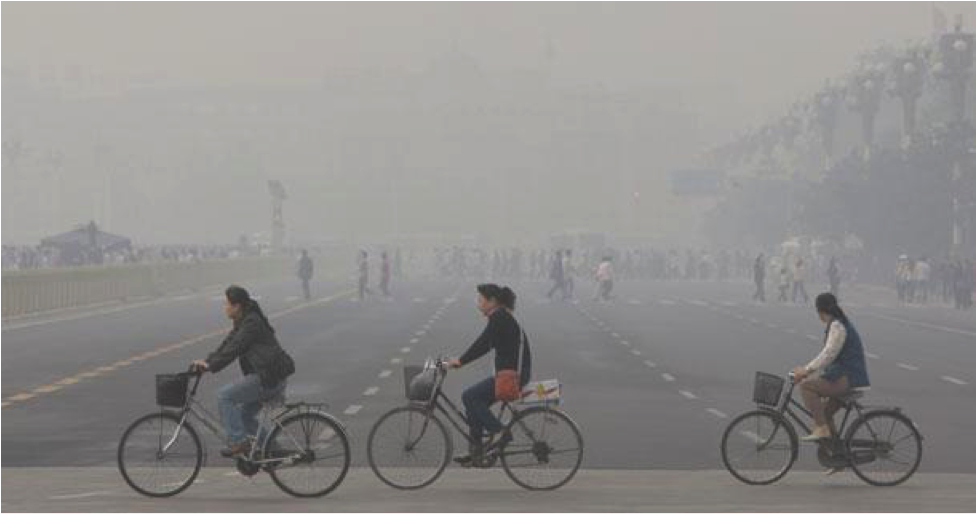
    But air pollution in Beijing isn’t just bad, it’s Ben Hur chariot race epic. And it isn’t just pampered foreigners that care about the air, as a burst of Chinese outrage demonstrated last year. Despite a certain amount of desensitization, the air pollution issue in Beijing encroaches on two of the most sensitive areas of public communication: public health and your kids. For a public health risk communication program, trust and interpretation are critical. And they’re both at the heart of the reaction to @BeijingAir.

    Trust is in short supply these days, as we’ve seen from the rumor campaigns, and anything that calls into question the level of trust invested in official government information is likely to be considered sensitive. I’d guess that the biggest thorn in the Ministry of Environmental Protection’s side is not just that the US government is tweeting its own air quality readings, but that its readings appear to be more trusted than MEP’s own. There have been several instances of divergence between the Chinese and US readings, and this is a country where data have a history of being suborned to politics, even in air quality. Every time the US results are conspicuously worse than the Chinese results, it’s a slap in the face.

    Interpretation is what enables you to act on data. AQI numbers and “micrograms per cubic meter” are pretty abstract without some kind of framework for interpretation. The Chinese framework (bottom of the first tab) is conspicuously more liberal than the US one. The Chinese “acceptable” limit for micrograms per cubic meter of PM2.5 is up in territory that the US considers “unhealthy.” The Chinese AQI band for “moderately polluted” covers territory that any normal person considers awful. As for the bad days, the less said the better.

    People will drive without seatbelts, drink themselves into the gutter and smoke a carton of Zhongnanhai Lights a day, and still get bent about the air quality. But air quality is an imposed risk, and people always react more forcefully to imposed risks than risks of choice. Especially when those risks are imposed on their children and aged parents. (At least air pollution isn’t exotic. You want to have a major crisis? Have an imposed exotic risk like a nuclear power plant disaster or pandemic.) In such situations, a conservative framework seems much more appropriate, but it is politically more dangerous because you spend more time with the needle in the outrage-generating red zone. It’s telling that although the Chinese government now reports hourly PM2.5 data there is no framework for interpreting it on the page. All you get is raw milligrams-per-cubic meter and an unexplained “limit” of .075 mg/m3 in the fine print at the bottom. Pretty binary. Meanwhile, @BeijingAir merrily tells you how you should feel about the air from hour to hour, using unfortunate words like “hazardous” when things get thick. And let us not forget the infamous and murky “crazy bad” episode.

    Given that @BeijingAir is apparently both more trusted and painting a darker picture of the situation in Beijing, it seems likely that it will continue being a sore spot with the Chinese government. Maybe this is the real reason Twitter was blocked, although the rise of dozens of Chinese smartphone applications that relay proxied versions of the Twitter feed has rendered the block moot as far as @BeijingAir goes.

    As for me, if I could pick one thing to change in Beijing, I’d fix the air quality. Beijing on a clear day is a genuinely nice city. The colors pop, the parks look beautiful and you can see a huge stretch of the mountains from my office. Also, I long ago gave up the martial arts for running, which I find similarly meditative and a lot less bruising. When I get up at 6AM the first thing I do is check the Chinese Android appthat relays the latest @BeijingAir information to my phone in a very easy-to-interpret graphical format (it has a handy homescreen widget, too!). The information has to be hourly, and it has to be accurate. I have very strict rules: If AQI is below 100, I run. If it’s between 100 and 150 it depends on how long my planned run is and how long since my last run (the less running I have been able to do and the shorter my planned run, the more liberal I am). If it’s above 150, I go to the gym and lift weights instead.

    I go to the gym a lot more than I used to, and I run a lot less. This sucks for my running and peace of mind, but on the bright side, check out the shoulders on me.

    Another moderate day!
    Another moderate day!

    *OK, I was never really “lithe.”

    Note: Originally published on the defunct group blog Rectified.name.

  • The Devil’s Air Conditioner and Other Tales of Woe

    Sometimes life in Beijing is like one of those Japanese game shows where they see how much torture people are willing to endure for surprisingly mediocre prizes. Picture the following and you’ve more or less got it:

    “Mr. Ishihara, for a new desktop dumpling fridge you’ve been strapped naked to a hospital gurney in the burning sun for twelve hours. You’re pinking up nicely. Do you wish to continue?”

    “Yes!”

    “Then it’s time to raise the bar! Here comes a team of lingerie models to glue Gabonese fire ants to your testicles!”

    “I can take it! Must…have…tiny…fridge!”

    “Great! While they prepare the ants, let’s watch this secretly recorded video of you confessing erectile dysfunction at last week’s office drinking party!”

    That’s us on the gurney. We’re all in it for the rush and the dubious prize while an oddball assortment of it-could-only-happen-here, Rube Goldberg discomforts repeatedly jabs its three-fingered cartoon glove into our sensitive bits. As long as you can take it, you live in Beijing. When, like Popeye the Sailor Man, you can’t stands no more, you pack up and head for more congenial shores. With a dumpling fridge, if you’re lucky.

    This weekend’s finger to my sensitive bits involved the air conditioner in my apartment.

    Let me tell you a bit about my apartment. Nominally in a “luxury” development, it’s horrendously expensive and situated in one of Beijing’s most fabulous areas. The amenities are good. There’s even a French bakery in the courtyard. But construction-wise it’s less luxury and more like what would happen if you got a pack of wild monkeys just drunk enough on Snow Beer to almost read a blueprint and fenced them into ten hectares of land with a pile of grade-B residential fittings and free-flow concrete. The caulking wanders off in random directions, the hot and cold indicators on the faucets are reversed, the “hardwood” flooring buckles in weird places, the towel racks droop, and when the wind blows, a majestic assortment of Jurassic aromas billows from the drains. There’s more, but you get the idea.

    Still, I was hardened by a year in Shanghai, so in most ways I consider it pretty good as Chinese apartments go. The worst that can be said of the landlord is that she’s totally disinterested, which is way better than totally venal, which is always a possibility here. The landlord situation reminds me a bit of the shopworn parable about Confucius, the widow and the tiger:

    One day the Master came upon a woman weeping at a grave. He said, “You weep as one afflicted by great sorrow.”

    The woman replied, “It is true. My husband’s father was killed here by a tiger, and my husband also. Now the tiger has killed my son.”

    “Why do you not leave this place?” asked the Master?

    The woman replied, “The government here is not cruel.”

    Replace “government” with “landlord” and it’s still more or less valid.

    But the air conditioning problem is serious. Our apartment is hot and stuffy year round. Even in Beijing’s Siberian winter we pick up so much waste-heat from the neighboring apartments and poorly insulated piping that we often end up running a fan in our bedroom at night. As for summer, well, if you haven’t experienced August in Beijing you can simulate it by tying yourself to a burning coal stove and then having your friends hurl you into an open sewer. If you actually try this, put it on YouTube so everyone can benefit from your sacrifice. That’s how knowledge is born.

    Anyway, we rely on our air conditioner. This sucks for us, because it is an enormous, fiddly contraption that looks like what might happen if Lockheed Corp. and Hubei People’s Steam Propulsion Systems Factory No. 182 jointly bid on air conditioners for TEPCO. This model, which is standard in our apartment complex due, one can only assume, to graft, is approximately the size of a 1968 Volkswagen Camper, and takes up the entire balcony outside my son’s room. Unlike a Volkswagen Camper, it uses water as a coolant, making it complex and prone to breakdown. But it does have the Camper’s woeful lack of power and tendency to choke in the face of modest demands.

    In a masterstroke of engineering, our air conditioner also manages to combine the worst attributes of central and split air conditioning. Like central air conditioning, it has to be switched from “heat” mode to “cooling” by the property office, which puts us at the mercy of the government rather than the climate. The switchover involves one big button and just enough fiddling with valves to be complicated, but the good news is that regardless of official dates the property office usually folds in the face of a little hectoring.

    Like a split aircon, however, the compressor draws on our household electricity (our breaker box emits an alarming buzz every time it turns on), and coolant pipes run through the ceiling to the vents in all the rooms. In our previous apartment, in the same complex, the pipe over the kitchen dripped condensation. During summer it reliably shorted out the gas leak detector in the kitchen ceiling about once a month, usually at three in the morning (we ran the aircon at night), triggering an electronic shriek that could curdle the fluid in your eyeballs. I would deal with this problem by blearily jamming a screwdriver into the alarm until it shut up, and then having the property office replace it. If we’d ever had an actual gas leak, the sparks created by my screwdriver surgery would have blown us all into the courtyard like Ed Norton’s furniture and condiments in “Fight Club.”

    The compressor unit on the balcony is wired to a set of high-tech thermostats, all of which insist that every room in the house is always 25C regardless of actual temperature. When the sun expands into a red giant and incinerates the Earth a billion years from now, these thermostats will insist it is 25C right until the moment they evaporate. Whether you set the thermostats to 30C or 5C (which is where ours are all set), you get the same anemic trickle of semi-cool air from the vents.

    But we take what we can get. Spring in Beijing is a season of hot days and cool nights. And dust and fuzz and pollution. The apartment warms up during the day and stays warm pretty much all night, forcing us to run the air conditioning even though the outside temperature has dropped. Any cooling is better than no cooling.

    At 2AM on Saturday night I woke up bathed in sweat. The outside temperature was a crisp 12C, but our room had crept up to a broiling, humid 28.5C. The aircon vent was cheerily pumping out a stream of toasty, warm air.

    Well, you say, turn it off and open the windows, genius. And in many places in the world this would be sound advice. But on Saturday night the air pollution AQI reading was 212. In China an AQI of 212 counts as “moderate,” but in the rest of the world it’s more like, Holy Jesus, Martha, it’s the apocalypse! Get the kids into the fallout shelter while I shoot the dog! You don’t really want to sleep in it. What’s the point of having $3,000 worth of Swedish air filters (yes, really) in the apartment if you’re just going to throw open the windows and let the scuzz in?

    We let the scuzz in, at least for a while. But that led to another problem. Our previous apartment faced the courtyard from the 7th floor. Other than the occasional raving drunkard or 160db Phil Spector wall-of-sound throat-clearing hawk, it was reasonably quiet. On the rare clear-air nights we occasionally slept with the windows open just for the hell of it (although always with the risk of waking up to find the loess plateau in our bed).

    Our current apartment faces the road between our complex and the neighboring ultra-mall. This road is small, but punches way above its weight in terms of congestion, perma-honking and random cacophony. To add insult to injury, when they built the mega-mall they somehow neglected to design in a loading dock. The result is that all deliveries to the mall are made at the entrance to the parking lot, which is just below our 16th floor apartment. This happens at the only time when they can partially block the road, which is the middle of the night. For a mall that sells a huge amount of really expensive stuff, these deliveries are not gentle. They often sound like someone backing a flatbed truck with busted shocks and a full load of plate glass and live hogs over a row of two-by-fours.

    As long as our hermetically-sealing, double-paned windows are buttoned up, the noise doesn’t bother us. And, anemic as it is, if the air conditioning is working, we can keep the windows closed. But if the air conditioning fails, our choices rapidly dwindle to dying of heat exhaustion in our own bed, opening the windows and admitting the din and miasma of Satan’s workshop, or suicide.

    At two in the morning, suicide doesn’t look all that bad, but we resisted. After my wife went out and poked futilely at the buttons on the compressor for a while, we went for heat exhaustion, turning off the compressor but keeping the windows shut. On Sunday morning the property office showed up, declared that we had somehow switched the air conditioning unit to “heat,” switched it back, and left. On Sunday evening the aircon ran refreshing and cool, as much as it ever does. Maybe it was our fault, I thought. Maybe we did something wrong.

    And then Sunday night at 2AM we woke up bathed in sweat again. With a flashlight I went out to the balcony where the Beast lives and examined the controls. Outside it was pleasantly cool. The air conditioner had switched itself to “heat.” I switched it back to “cool.” The mechanics might be complex, but the controls are simple. There are only three buttons: On/Off, Heat and Cool, and an LED that displays “HE” or “CO” and the coolant temperature. It ran in “cool” mode for a minute or so. I watched the coolant temperature drop. And then it switched itself back to “heat.” I repeated this five times. Every time the air conditioner switched itself back to “heat.”

    On top of all its other problems—the fiddly complexity, the anemic output, the buzzing breaker box—this cursed thing apparently thinks it’s smarter than us. When it’s warm outside, in the early evening or right at dusk, it chugs along merrily in cooling mode. The moment the temperature outside drops too much, it figures we must be freezing in our booties, and spontaneously switches itself into heat mode. Damn the thermostats (25C), full speed ahead!

    Or, worse, it’s actually trying to kill us, like the possessed laundry press in the old Stephen King story, “The Mangler.” It wants to roast us to death in our sleep and let the cats feast on our remains, just for the sheer sport of it. I don’t know what happened to the previous tenant in our apartment. I do know that he left a fair amount of his stuff behind when he “moved out.” Coincidence?

    I just made the last rent payment on our current contract. In about two months, we have to decide whether to move or to stay in the same place and accept the inevitable rent increase. On the one hand, the apartment is expensive and noisy and the air conditioning unit is apparently possessed by Satan and determined to destroy us all.

    On the other hand, there are croissants downstairs and the government is not cruel.

    It’s a tough call.

    Note: This post originally published on the defunct group blog Rectified.name.

    But it's refreshingly cool!
    But it’s refreshingly cool!
  • Good News! The Press is Out to Get You

    A couple of weeks ago I gave a talk about PR in China to a journalism class at Beijing Foreign Studies University. In any student talk the Q&A is always the most fun, and this group was no exception. Among the many good questions asked was whether it was easier to do PR in China because, as I had discussed in my talk, the Chinese media is generally cozier with businesses than their Western counterparts.

    Easier to get stories? Yes. Easier to achieve meaningful results with the public? No.

    I was reminded of this question by the recent expulsion of hard-charging Al Jazeera English correspondent Melissa Chan, and subsequent closure of the AJE bureau in China after the Ministry of Foreign Affairs refused to accredit another AJE journalist. I didn’t know Melissa well, though I had met her, but I respected her reporting and willingness to insert herself into uncomfortable situations, and I was disappointed to see her go. Reporting on China will be impoverished a bit.

    That, of course, was the point. The Chinese government has never been comfortable with an adversarial media, and Melissa’s reporting was, like that of much of the foreign press corps, pretty adversarial from their point of view. This discomfort is deeper than cursory annoyance at embarrassing foreign gadflies (although I presume that is part of it). It arises from one of the fundamental philosophies of Leninist political parties: the media are considered Party organs and, as with other Party organs, expected to serve the interests of the Party first and foremost. Media that don’t fit into that model are suspect by definition. You can see this philosophy expressed in the mechanisms of control that the Chinese government maintains over all domestic media, and in the government’s struggles to come to terms with the rise of social media that resist conformity with established power structures.

    The Party’s model is rather different from the fundamental philosophy of Western media: that it should be the fourth estate, entrusted with challenging the business and government establishment in the interest of the people. You are welcome to argue about how effective Western media have been in this role in recent years, and there are plenty of exceptions, but as a founding principle the idea of the fourth estate is alive and well and inextricably bound up with our Western ideas of what the media should be (and with the value judgments we render on media that doesn’t conform to that principle). A functional, adversarial media is a necessary component of Western-style liberal democracy, unless you have total faith in politicians and institutions.

    I am not going to comment further on the specifics of the Al Jazeera situation (some links to good articles below), but in light of the Chinese government’s recent struggle with rumors and trust issues, it’s worth reflecting on why an adversarial media is sometimes useful, even to the establishment. This is what I discussed with the students at Beiwai.

    As a news junkie who still pays for several subscriptions, I’m most definitely a fan of adversarial media model (you could also call it an “independent media” model, but independence is only valuable in that enables an adversarial position). There is nothing like a fantastic piece of investigative reporting that rips the lid off of some secret or scandal or that illuminates the dark corners of business or politics. As long as it’s not my dark corner, that is.*

    As a PR practitioner with a company reputation to defend, I’ve experienced firsthand the adversarial media model’s short-term ability to create sleepless nights and great puddles of cubicle sweat. But nevertheless, I still appreciate its value in the long-term. That’s because people are more likely to trust media that challenges me than one they know to be compliant with me, and I need media that the public trusts to get my message out, whether that message is a corporate one, a product review or whatever. If I have to do more work to get coverage in that kind of media, and tolerate some negative coverage as well, so be it.

    In China, on average, relationships between businesses and the media tend to be closer and less adversarial than in the west. There is also a range of ethical problems, including poor separation of advertising and editorial, the “transportation claim” subsidy-in-disguise, and more. Together, these make it easier for companies to earn –or buy– good coverage in local media than it would be in many other markets. But they also mean that the public is relatively more skeptical of much of the coverage and turns to alternative voices for much of its information and insight, many of them on microblogs . The result is a devalued media that makes even our best earned coverage less useful and influential, and that makes it harder for me to manage misinformation and rumors about my company.

    Sound familiar?

    These are generalizations. There are excellent journalists and excellent media in China, and crappy ones in the west. But the overall gap in trust is real. The real sign of progress here will not be in the government showing more tolerance for confrontational Western media, but in its tolerating the emergence of a fully independent, professionalized and adversarial Chinese media. That change, when it happens, will be driven by Chinese journalists. In some ways, it’s already happening.

    For those of us in the establishment, there is value in learning to deal with an adversarial media, and in being good at telling our stories and getting our messages across in media that are willing to challenge us, and that therefore lend credibility to the claims that survive their scrutiny. But if you’ve never had to deal with that kind of media, you haven’t developed the skills necessary to do so, and you rely on a tradition of control and management to get your message across, then you are in the realm of propaganda and will face the consequences in terms of diminished trust.

    And if your situation is so precarious that there is no way to tell a positive story when engaging with adversarial media? Well, then, your problems are much bigger and deeper than PR skills. Or one uppity journalist.

    * Just kidding. Naturally, I have no actual dark corners.

    See also:

    On the Al Jazeera situation:

    On the difficulty of reporting in China:

    Note: This post originally published on the defunct group blog Rectified.name.

    Good news? A magazine stand at SFO's international terminal on Monday.
    Good news? A magazine stand at SFO’s international terminal on Monday.
  • In defense of the fuzz

    For many years I lived in Singapore, which is right on the equator and has roughly two seasons: slightly more rainy, and slightly less rainy. Otherwise, it was pretty much hot and humid throughout, which always used to freak me out a bit at Christmas. To an American, encountering Santa Claus in 30C heat is unexpected, like finding a live rattlesnake in your refrigerator. It’s always struck me as somewhat unnatural that Australians see Christmas as a summer phenomenon. What else do they do backwards? Maybe on Christmas morning, they randomly steal things and slap people.

    One of the things I enjoyed about moving to Beijing, besides being further away from the antipodes, was clearly demarcated seasons. Winter was a genuine novelty. Summer was like Singapore, except with air that could delaminate plywood. Spring and autumn were glorious interludes, as long as you didn’t mind having the Gobi Desert airmailed to you from time to time. Seasons are the demarcations on the great clock of the year, the way you internalize the passage of time. So are television shows, the National People’s Conference and the ebb and flow of denim hot-pants on the teenage girls of Beijing, of course, but seasons are a more poetic way of doing it.

    Since moving to Beijing I’ve found myself thinking in terms of how many winters and summers I’ve seen here. How many sandstorm seasons, and piling up of the throngs at Xiangshan. And how many times I’ve experienced the fuzz.

    If you have ever been in Beijing in spring, you will know the fuzz. This is the floating shroud of gauzy puffs that blankets the city every April, thanks to Beijing’s large population of poplar and willow trees. It’s not a problem exclusive to Beijing. The offending species of poplars are widespread (you might know them as cottonwoods in the US), and where there are poplars there are poplar catkins and, thus, poplar fuzz.

    And poplars are Beijing’s municipal tree, planted in rows along every median strip, bike lane and windbreak in the city, in great shivering ranks. A 1992 paper on the forestry of urban Beijing identifies two species of poplars as accounting for about 25 percent of the surveyed stock of trees, far outstripping the Chinese juniper trees in second place. It’s hard to imagine that their share has dwindled since then. Apparently, Beijing Forestry University even has an institute devoted to the study of Chinese white poplars, which confirms either the importance of the species, or all your worst fears about the treacherous vortex where the navel gazing currents of academia and municipal bureaucracy swirl together.

    Willows aren’t as common as poplars, but based on my own observation what they lack in numbers they make up for in sheer fuzzogenic enthusiasm. In fact, it took me a long time to catch up to the fact that the willows were contributing. Years ago, when I asked a local what he called the trees that made the fuzz, he said “yangshu.” This confused me because I thought he meant willow, and I was pretty sure he was wrong. Fortunately I bit my tongue, or I’d have made an ass of myself on at least two counts. The problem comes from the similar names of the trees in Chinese. The white poplars are baiyang (白杨) or yangshu (杨树), the willows are yangliu ( 杨柳). The trees are not of the same genera, so perhaps in the antiquity of the Chinese language there is some lost etymological connection between 杨 and fuzz.

    A further search of the literature reveals that ours are not the first generations to dwell upon the fuzz. A poem from the Six Dynasties period, in the first millennium AD, invokes the inherent eroticism of the poplar catkin thus:

    We break off a branch of poplar catkins.
    A hundred birds sing in the tree.
    Lying beneath it in the garden,
    We talk to each other,
    Tongues in each other’s mouths.

    Fuzz in their mouths, too, and any other orifices exposed during this little episode, but somehow that doesn’t make it into the poem.

    Erotic charms aside notwithstanding, it is easy to hate on the fuzz. Apparently, it can entrap airborne pollen from other species, and become something of a little, allergenic bomb. I don’t have allergies, but I have to admit that, while I find the fuzz pleasant enough while it’s wafting in the air, it tends to collect into stodgy, grey piles the moment it hits ground. In this way it is rather like Beijing’s snow, which can blanket the city in a dreamy, white veil for a vanishingly brief moment before collapsing into verminous, sooty piles that skulk in the shade for weeks while collecting suspicious, yellow pockmarks.

    A couple of years ago I took my son to play on the rides at Tuanjiehu Park, which are shaded by a particularly vigorous stand of white poplars. He and I both a good time watching the aunties use cigarette lighters to set great drifts of fuzz alight. It combusts like rocket fuel, so perhaps this wasn’t the best thing to be doing around dozens of toddlers, but it was entertaining. I have heard (though never confirmed) that the fuzz has been implicated in automobile fires after collecting in radiators. It has definitely contributed to yard and household fires, and the Internet has plenty ofearnest warnings urging homeowners to diligently police the fuzz.

    To address Beijing’s share of these fuzzborne woes, the city government in 2007hatched a scheme to convert the offending, female poplars into docile, fuzz-free male poplars. Apparently, this has been a semi-regular endeavor. They should have consulted with me first as I have my own experience with quixotic nature-control plans. When I was in college I spent two years as part of my university’s ultra-secret ground squirrel control program. We used air rifles, traps and poison in an attempt to control a ground squirrel population that had exploded because, in a triumph of natural selection, ground squirrels have a much higher tolerance for drunk college students and acid rock than all of their natural predators. This program was an utter failure and in the end we signed articles of surrender and turned over our weapons. The ground squirrels are still there, 25 years later. We who dared take them on are all long gone. Poplar trees don’t move as fast as ground squirrels, but on the evidence of Beijing’s obvious failure to control the fuzz, they are equally crafty.

    Personally, I like the fuzz. True, it catches on my head-stubble, gets all over the house and lurks under the couch, where it collects into dust-bunnies the size of Saint Bernards. But while airborne it’s cheery, and transient and a damn sight more congenial than the other harbinger of spring, the sand storms. It has also become one of the ways I mark time in Beijing. Another April of fuzz, another year gone by. A few more crows-feet around the eyes. Another sweaty, corrosive summer to grit my teeth for.

    A few years ago I was driving to the airport for an early morning flight. Just outside the Fourth Ring Road, deep stands of white poplar line both sides of the airport expressway. It was the height of fuzz season, and a breeze was carrying dense flurries of the stuff across the road. The morning sun from the east backlit the fuzz, endowing it with a luminous, warm corona. For a moment I forgot all the anticipated miseries of economy-class domestic travel and just watched the fuzz. The moment it hit the ground it was dirt, but while it was in the air, it was magic. And anything that can bring a touch of magic to that benighted road is worth at least a little appreciation, isn’t it?

    A little bit of magic.
    A little bit of magic.

    See also:

    Note: Originally published on the defunct group blog Rectified.name.

  • Facebook + Instagram + China = Take a Deep Breath

    So, Facebook bought Instagram for a billion bucks. Awesome for those guys. I, alas, did not get rich in either of the Internet startups I participated in. But you can’t put a price on experience, right?

    Deep sigh.

    Anyway, Instagram is freely accessible here in China, at least for the moment, and apparently has a small but growing user base. It’s been limited to a certain slice of the China market by being an iOS-only app until last week. It may get picked up more now that it’s on Android as well, especially given Android’s whomping share of the smartphone market in China.

    Because Instagram is accessible from China there has been some speculation that it might provide a back-door into the market for Facebook. Well, color me embarrassed, because when I looked at how Facebook might get into China a couple of weeks ago, one scenario I didn’t explore was Facebook buying another, unblocked western social network.

    Instagram certainly functions as a posting back-door to both Facebook and Twitter. Instagram posts route to Facebook, Twitter and other social networks through Instagram’s unblocked servers (actually, Amazon’s cloud servers for the moment). There are similar middleman workarounds for posting on blocked social networks, such as Ping.fm, but none come close to providing full access to Twitter or Facebook. And, from what I can see, neither does Instagram. That’s important.

    The question that wins you the brand new car is: Will Instagram now be blocked in China? The reason why you don’t have the car yet is that the answer is complicated. China doesn’t block all foreign social networks. It does block the established, heavy-hitting, horizontal sites like Facebook, Twitter and Google Plus. But many vertical social networks and newer sites are unblocked. I can get on LinkedIn, Quora, Path,Flickr and Pinterest just fine, without a VPN (your mileage may vary). I can even get on MySpace.

    I cannot read the minds of the bureaucrats who decide what gets blocked and what doesn’t, and if I could I’d probably be in a position to be less wistful about the fates of the startups I joined. But there do seem to be a few key factors in determining who stays safely outside the firewall. These include size, perceived influence, how closely the network has been associated with political movements, power to function as tool of mass organization, and whether or not the network has been explicitly associated with content or activities that the Chinese government considers sensitive. On all three counts, I’d rate Facebook and Twitter considerably higher than the rest of the pack. As for Google Plus, I trust this audience doesn’t needmuch explanation.

    So, what happens with Instagram now that it is part of planet Facebook?

    It depends. Assuming people don’t suddenly start posting pictures that annoy the Chinese government, maybe nothing. At the moment, Instagram seems pretty harmless, and its one-way posting features to other social networks don’t look like a big red flag. Posts to Chinese social networks like Sina Weibo essentially outsource the content monitoring and censorship. Of course, Twitter once looked pretty harmless. In 2007 I even wrote a short article mocking its triviality, possibly betraying the lack of vision responsible for my current un-billionaire status. Twitter has been blocked for a while now. So much for harmless. The fact that Instagram is essentially mobile only has also probably helped keep it under the radar.

    But if Instagram is integrated more tightly into Facebook’s core service and stops looking and feeling like an independent platform, then the risks go up fast. Everything hinges on where Facebook sees the value in Instagram, and whether or not it pulls Instagram into the mothership. The more integrated Instagram is, the more powerful it is as “back door into China” for Facebook, but the more likely it is to be blocked. And if Instagram is suddenly used to post a lot of pictures of a sensitive event in China, it might not even matter if Facebook doesn’t change a thing.

    Meanwhile, local photo-sharing clones have been blossoming for a while. Early enthusiasm for foreign social networks in China does not reliably translate into long-term success, while mainstream success in China often does translate into closer scrutiny. Instagram may indeed be a back door into China for Facebook, but if it wants to stay open, it might have to stay a rather small door indeed.

    Other links:

    Note: Originally published on the defunct group blog Rectified.name.

Thank you for subscribing!

Please check your email to confirming your subscription.